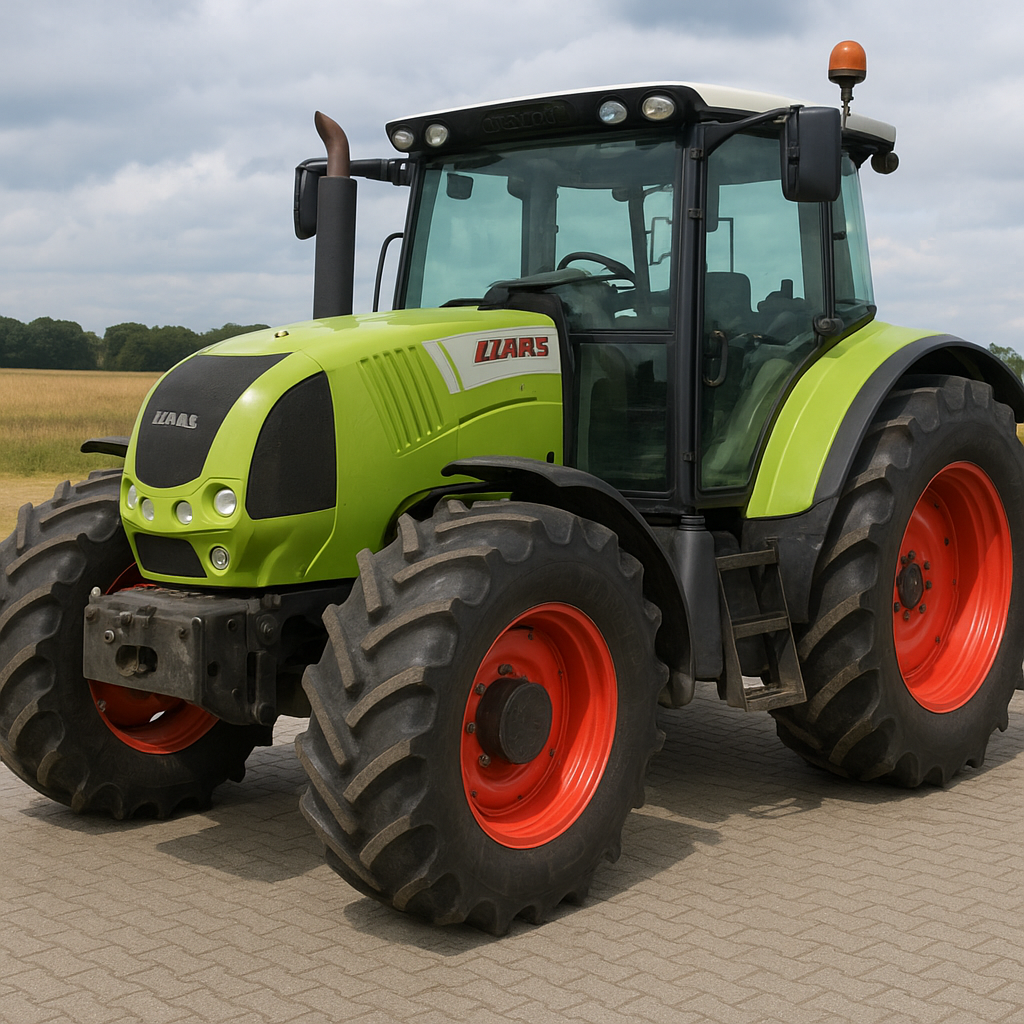
The Claas Arion 640 is a mid-range agricultural tractor that blends modern engineering with practical versatility for a wide variety of farm tasks. Designed to serve both arable and livestock operations as well as contractor work, the Arion 640 stands out for its balance of power, efficiency, and operator comfort. This article examines the tractor’s design philosophy, typical applications, technical characteristics, and useful operational data—highlighting what makes the Arion 640 a popular choice among farmers and contractors.
Overview and design philosophy
The Arion family from Claas is positioned to offer robust performance in a compact package. The Arion 640 is part of the Arion 600 series, introduced by Claas to fill the gap between compact workhorses and larger flagship tractors. The design emphasizes a blend of reliability and modern systems that enable farmers to complete a broad range of tasks without the complexity and fuel costs of very large machines.
Key design aims for the Arion 640 include mechanical simplicity where desirable, modularity for a range of implements, and integration of modern electronic and hydraulic systems to support precision farming. Claas focused on a tidy front-end layout for good visibility, a well-appointed cab for extended-day comfort, and robust driveline components for durability under repeated heavy use. The Arion 640 is often chosen for its favorable ratio of output to ownership cost, making it a practical investment for mid-sized operations.
Engine, transmission and drivetrain
At the heart of the Arion 640 is an engine tuned to deliver steady torque across a useful rpm range, allowing efficient work with PTO-driven implements and when hauling loads. Depending on year and market, engine outputs for the Arion 600 series span mid-range horsepower classes; the Arion 640 typically sits in the mid-to-upper part of that range and is commonly quoted with around 130–140 hp (approximately 97–104 kW) in many configurations. Claas and its engine partners have equipped these tractors to meet current emissions regulations, including the relevant Stage/Tier levels for diesel engines in Europe and other markets.
Transmission options on the Arion 640 have historically been offered to suit diverse user preferences: from straightforward synchronized gearboxes and shuttle transmissions to multi-range powershift systems and, on some variants or newer updates, stepless or continuously variable options. This flexibility enables buyers to prioritize simplicity and serviceability or to select higher-end transmissions for smoother operation and improved fuel economy during transport and fieldwork.
The drivetrain normally includes selectable four-wheel drive with locking differentials and strong axles designed for repeated heavy-duty cycles. PTO configurations are typically standard (540/540E and 1000 rpm options) to match the majority of agricultural implements, while optional front PTOs and linkages support loader and front-mounted tool use.
Applications and practical uses
The Arion 640 is deliberately versatile. Its typical applications include:
- Primary tillage and secondary cultivation with ploughs, discs and cultivators.
- Sowing and planting operations where steady wheel traction and precise speed control are important.
- Baling, cutting and forage harvesting as a tractor for mid-sized mowing conditioners, balers and wrappers.
- Transport and logistics on the farm—trailers, slurry tankers and feed wagons—where consistent road speed and fuel economy matter.
- Livestock farm operations: feed handling, bedding distribution and general yard work.
- Loader work when fitted with a front loader: pallet handling, material loading and stacking.
- Contractor work on small to medium contracts—hedge cutting, mowing communal areas, and small-scale landscaping.
Because the Arion 640 balances lifting capacity, hydraulic performance, and traction, it is especially suited to mixed farms that need a single machine capable of handling both field and yard duties rather than having separate machines for each task. Its adaptability for front loaders, both mechanical and electro-hydraulic controls, increases its value on farms with varied daily tasks.
Cab, ergonomics and operator features
Claas places strong emphasis on operator environment in the Arion range. The Arion 640’s cab is built for long working days: it typically features good all-around visibility, a comfortable air-suspended or mechanically suspended seat, climate control (heating and air conditioning), and ergonomically arranged controls.
Technological aids found in many Arion 640 tractors include electronic forward and reverse shuttle control, integrated joystick options for loader operation, and compatibility with ISOBUS standards for implement communication. This makes it easier to use modern precision implements and helps reduce time spent adjusting settings in the field. Many units also offer optional factory-fit or dealer-fit guidance-ready kits, enabling satellite-assisted steering and section control systems that save input costs and improve repeatability when sowing or spraying.
Hydraulics, linkage and implement handling
Hydraulic capacity is a central factor in the Arion 640’s utility. Typical hydraulic systems offer multiple remote valves (with flow rates up to and often around 100–120 liters per minute in many configurations) to run complex implements such as balers with electronic controls, hydraulic seed drills, or multi-function loaders. The rear linkage is engineered to provide a robust lift capacity appropriate for mid-sized mounted implements—commonly around the 4,500–6,000 kg range depending on configuration and model year—allowing it to handle heavy seed drills, sprayers and mounted cultivators.
Front linkage options and front PTO availability increase the Arion 640’s versatility for snow clearing, front-mounted mowing units, and coordinated loader plus rear implement workflows. The precise control of both hydrauliс flow and electronic linkage settings makes implement setup quicker and more repeatable.
Fuel economy, emissions and maintenance
Fuel efficiency is a selling point for operators balancing output with operating costs. The Arion 640’s engine tuning emphasizes usable torque at lower engine speeds, which helps reduce fuel consumption during draft and PTO work. Many owners report improved specific fuel consumption when using engine rpm-based control and optimized transmissions that keep the engine in its most efficient band.
To meet modern environmental standards, Claas equips the Arion range with aftertreatment systems as required by regional legislation (e.g., selective catalytic reduction and particulate filters in markets where these are mandated). These systems add maintenance considerations—periodic checking of SCR fluid levels and adherence to regeneration cycles—but are now standard across contemporary agricultural machinery and are managed by onboard diagnostics that assist the operator with service reminders.
Routine maintenance on the Arion 640 follows expected intervals: engine oil and filter changes, hydraulic oil checks, PTO and gearbox service, and air filter replacement. Claas and its dealer network provide diagnostics and service packages intended to maximize uptime, and many operators opt for manufacturer service plans to simplify operational budgeting.
Technology, precision farming and telematics
The Arion 640 is frequently configured with technology packages that enable precision farming. Depending on the model year and dealer options, typical technology features include:
- ISOBUS implement compatibility for plug-and-play control of compatible implements.
- GPS guidance and autosteer readiness to improve accuracy and reduce overlap during sowing, spraying and spreading.
- Section control and rate control that reduce input costs by avoiding over-application.
- Telematics and fleet management tools (CLAAS TELEMATICS or similar) allowing operators and managers to monitor location, fuel usage, hours and maintenance needs remotely.
These technologies contribute to improved efficiency, lower input waste and better documentation for compliance or optimization studies. Telemetry also supports second-hand valuation by maintaining digital service records that can be transferred with the machine.
Performance numbers and typical statistics
Specific numbers vary by year, market and factory configuration, but typical reference figures for an Arion 640-class tractor include:
- Engine power: roughly 130–140 hp (approx. 97–104 kW), depending on tuning and year.
- Maximum torque: engine-specific; tuned to provide strong low-end torque for draft work.
- PTO options: standard rear PTO at 540/540E and 1000 rpm; some units offer front PTOs.
- Hydraulic flow: common configurations provide around 100–120 L/min from combined or separate pumps; optional high-flow systems may be available.
- Rear lift capacity: typically in the region of 4,500–6,000 kg, suitable for mid-sized mounted implements.
- Fuel tank capacity: commonly in the range of 200–300 liters depending on spec.
- Top road speed: often rated around 40–50 km/h depending on gearing and local regulations, with some higher-speed options for transport-focused variants.
- Operating weight: generally in the low-to-mid several tonnes range, often around 4,500–5,500 kg depending on equipment and ballast.
These statistics should be interpreted as typical ranges; precise figures for an individual Arion 640 will depend on market, model year and optional equipment. For example, adding a front loader, heavier wheels, or extra ballast changes the operating weight and may affect fuel consumption and transport speed ratings.
Market position and economic considerations
The Arion 640 competes in a crowded mid-range tractor segment where buyers look for machines that deliver dependable performance without the acquisition and operating costs of larger tractors. Key economic considerations for prospective buyers include:
- Acquisition cost versus expected lifetime task coverage—many farms find one Arion 640 plus a couple of implements replaces a larger fleet of specialized machines.
- Fuel and maintenance costs—engine efficiency, aftertreatment upkeep and transmission design impact total cost of ownership.
- Resale value and service network—Claas has an established dealer network in many countries, which supports resale value and parts availability.
- Flexibility and implement compatibility—the more tasks a single tractor can cover well, the greater its overall value to a mixed farm.
For contractors, the Arion 640 offers a blend of road speed, implement versatility and quick servicing that helps maximize billable hours. For family farms, the tractor’s ease of use and comfortable cab can reduce operator fatigue and increase daily productivity.
Maintenance tips and operating best practices
To maximize the life and efficiency of an Arion 640, operators commonly follow these practical tips:
- Adhere closely to fluid and filter change intervals to protect the engine and hydraulics.
- Use recommended lubricants and DEF (if applicable) to maintain emissions equipment reliability.
- Balance tyre selection and pressure to match field and road duties—this affects traction, soil compaction and fuel usage.
- Calibrate hydraulic and electronic implement settings regularly to ensure efficient implement operation and to avoid excess wear.
- Leverage telematics and onboard diagnostics for preventative maintenance and to plan service windows during low-activity periods.
Final assessment and suitability
The Claas Arion 640 is well-suited for operators who need a reliable, mid-powered tractor that can handle a wide range of agricultural tasks without excessive complexity. Its strengths are versatility, robust implement handling, and operator-friendly controls. Optional technology packages and compatibility with precision systems make it future-ready for farms moving toward digital agronomy.
Ultimately, choosing an Arion 640 makes sense for mixed farms and contractors who value an efficient balance between performance and total cost of ownership. Potential buyers should compare specific equipment lists, transmission choices, and dealer support packages to ensure the selected configuration matches their workload, terrain and budget.