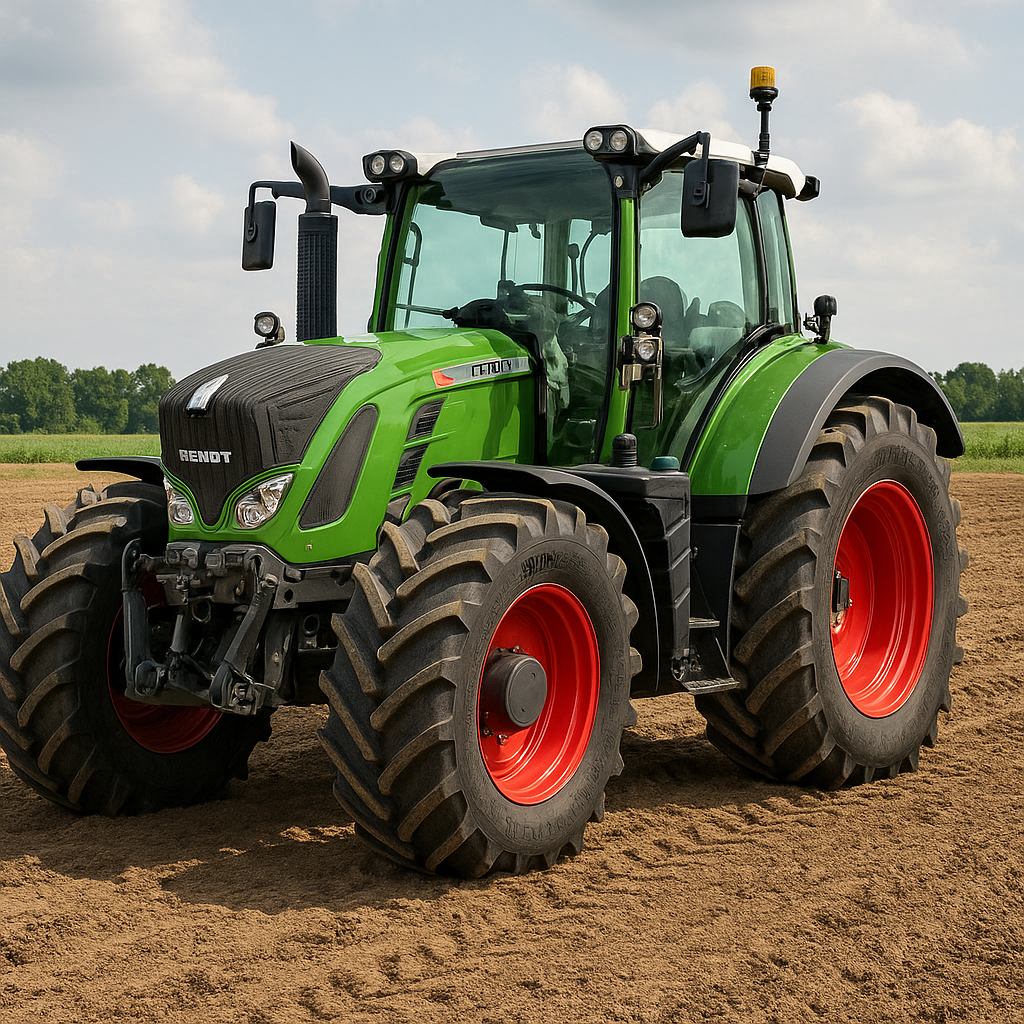
The Fendt 738 Vario is part of Fendt’s renowned Vario family of tractors, designed to blend powerful performance with modern electronics, operator comfort, and flexible use across a wide range of agricultural tasks. This article explores the 738 Vario’s design philosophy, typical applications, technical highlights, and the practical value it brings to farms and contractors. Where numerical figures apply, they are presented as typical ranges or examples because exact specifications can vary by model year, market, and optional equipment.
Design and engineering philosophy
Fendt has built its reputation on combining robust mechanical engineering with advanced electronic systems. The 738 Vario continues that tradition by integrating a high-efficiency powertrain, intelligent hydraulics and linkage systems, and a comprehensive electronic control environment. The core of its appeal is the continuously variable transmission concept — the Vario drive — which provides seamless speed control, improved fuel economy under varying loads, and easy operation for precision tasks.
Powertrain and drivetrain
- The Vario CVT (continuously variable transmission) allows infinitely variable speeds from creep pace up to road speeds without gear shifts, which improves operator comfort and productivity during field and transport work.
- Many modern Fendt models use low-rev, high-torque diesel engines that prioritize efficiency and reduced fuel consumption under load. This approach (often referred to as the iD low-rev concept) keeps engine speeds lower for typical operations while delivering strong torque when needed.
- Four-wheel drive and electronically controlled differentials deliver strong traction management. Electronic traction control and differential lock strategies help to optimize performance on slopes and in soft ground.
Hydraulics and PTO
Hydraulic performance is a major factor for tractors used with heavy implements. The 738 Vario’s hydraulic system typically supports a high flow rate to meet the demands of modern seeders, planters, sprayers, and hydraulic-driven harvest attachments. A range of PTO options (commonly including 540 and 1000 rpm speeds) supports versatile implement compatibility.
Chassis, axle and lifting capacity
Fendt tractors in the 700 series are built to handle substantial rear linkage loads and provide stable front-end behavior when fitted with loaders or heavy front-mounted equipment. The combination of a robust rear linkage, optional front linkage, and strong axle design results in high lift capacity and versatility for both fieldwork and transport.
Where the Fendt 738 Vario is typically used
The strengths of the 738 Vario — smooth power delivery, intelligent hydraulics, and operator-oriented controls — make it suitable across many agricultural and contractor applications. The machine is often selected by larger farms and vocational contractors that need a multi-purpose tractor capable of pulling large implements and performing long daily cycles with minimal operator fatigue.
- Arable farming: Primary tillage, seedbed preparation, and high-capacity seeding operations benefit from consistent power delivery and strong hydraulic support for mounted or semi-mounted tools.
- Planting and seeding: Precision seeding with ISOBUS-compatible planters and variable-rate technology ties into the 738’s electronics and guidance systems for efficient input use.
- Spraying: The smooth speed control and hydraulic capacity facilitate stable boom control and pump operation for large-crop spraying tasks.
- Baling and forage: High towing and hydraulic performance support large balers, forage wagons, and PTO-driven forage pickups.
- Transport and logistics: Road speed capability and comfortable cabs make these tractors suitable for haulage tasks on farm and public roads.
- Loader and material handling: When equipped with a front loader, the 738 provides a stable platform with strong hydraulic flow and responsive control for stacking, loading, and yard work.
Technology, cab and operator environment
Fendt places strong emphasis on the operator’s environment. The 738 Vario, like other Vario models, is engineered to reduce operator fatigue while enabling precise control over implements and tractor behavior. These features translate into greater productivity and better job quality across long workdays.
Fendt control systems and connectivity
- FendtONE or equivalent integrated control platforms allow in-cab and office-based job planning, monitoring, and documentation. This integration supports precision farming workflows and simplifies fleet management.
- ISOBUS compatibility ensures plug-and-play connectivity with a wide range of implements, reducing the time needed for setup and increasing reliability of communication between tractor and implement.
- Guidance and auto-steer systems (e.g., VarioGuide) improve field accuracy and reduce overlap, which saves fuel, seed, and agrochemical costs while improving field uniformity.
- Telematics and remote services are typically offered, enabling remote diagnostics, machine monitoring, and data transmission for service planning and operational oversight.
Cab comfort and ergonomics
Comfort features are a major selling point for modern tractors. The cab of the 738 Vario is designed for long operating hours with features such as ergonomic controls, air-suspended seats, low noise levels, climate control, and excellent visibility. The control layout is designed to provide intuitive access to frequently used functions, helping operators to stay focused and efficient.
Assistance systems and safety
Driver assistance functions — such as automated headland management, cruise control for field work, and advanced braking systems — increase safety and reduce operator error. Camera options and better lighting packages are commonly available, improving visibility during night work or trailer maneuvering.
Performance figures and typical specifications
Exact specifications for the 738 Vario can change by year of manufacture and by market (EU, North America, Australia, etc.). The numbers below represent typical ranges or examples for tractors in the high-power Vario class, and they should be checked against the specific model year and configuration you are considering.
- Top road speed: up to about 60 km/h (depending on gearing and local regulations).
- Hydraulic flow: high-flow options commonly provide well over 150 liters per minute to support demanding hydraulic implements; some configurations offer flow rates nearer to 200 l/min.
- PTO options: standard PTO speeds include 540/540E/1000 rpm combinations to match a wide range of implements.
- Fuel capacity: medium-to-large tanks designed for long working days, often in the range of a few hundred liters to limit refueling stops.
- Rear linkage capacity: modern heavy tractors often provide rear lift capacities measured in several tonnes — strong enough for large mounted implements and for pulling intensive tillage equipment.
- Weight and ballasting: curb weights and permissible total weights vary according to trim and options; correct ballasting is essential for traction and wear reduction.
These technical traits are backed by a focus on fuel economy: the combination of the Vario CVT and low-rev engine strategies frequently results in improved fuel efficiency per hectare compared to older stepped-gear tractors. Operators often report better fuel use under mixed workloads where the CVT keeps the engine in an optimal efficiency band.
Maintenance, lifecycle and total cost of ownership
When evaluating a high-spec tractor like the Fendt 738 Vario, a key consideration is the total cost of ownership (TCO). TCO includes purchase price, fuel, routine maintenance, service intervals, spare parts, resale value, and downtime risk. Fendt tractors are generally positioned as premium products; they often command higher upfront costs but can deliver payback through lower fuel use, higher uptime, and strong resale prices.
- Service intervals: modern engines with advanced emission controls may have longer scheduled service intervals but sometimes require specific service routines (e.g., for aftertreatment systems). Following manufacturer recommendations helps to ensure reliability.
- Diagnostic tools and telematics: integrated diagnostics and remote service capabilities reduce the need for multiple on-site service visits and speed up troubleshooting.
- Parts availability and dealer network: the presence of an established dealer and service network is crucial for keeping downtime low. Fendt’s dealer network is well-established in many regions, which supports maintenance and parts logistics.
- Resale value: premium tractors such as those in the Fendt Vario line often retain value better than lower-tier alternatives, especially if maintained with records and telematics data.
Practical tips for buyers and operators
Choosing and operating a tractor like the 738 Vario should be guided by intended use, local conditions, and long‑term farm plans. Below are several practical tips for prospective buyers and current operators:
- Assess the full specification: compare hydraulic flow, available PTO options, lift capacity, and cab features, not just the nominal engine power.
- Consider telematics and precision farming compatibility: modern tractors are most efficient when integrated into a farm’s data and guidance ecosystem.
- Plan for service and training: ensure the local dealer can support service needs and provide operator training to exploit the machine’s features fully.
- Match implements to capability: ensure that the implements you own or plan to buy take advantage of the tractor’s hydraulic and PTO capacities without overpowering or underutilizing the machine.
- Use correct ballasting and tyre configurations: optimize traction, reduce soil compaction and maximize fuel economy by matching ballast and tyre pressure to field conditions and tasks.
Market position and competitive context
Fendt positions its Vario series as a high-end choice within the tractor market. Compared with competitors, Fendt’s strengths often include sophisticated electronics, a refined CVT system, and a premium operator environment. Key competitors in similar power classes include established brands offering strong dealer networks and comparable technology packages; buyers typically choose based on local service support, specific feature preferences (e.g., particular guidance or ISOBUS integrations), and brand familiarity.
For many large-scale farms and contractors, the critical decision point is whether the operational efficiencies, reduced fuel consumption, and comfort justify the initial investment. Where mission-critical reliability and long operating hours are the norm, premium tractors often prove economical over a full lifecycle.
Interesting facts and innovations associated with the Vario line
- Vario transmission technology is a hallmark of Fendt: the continuously variable gearbox concept has evolved over decades to provide smooth, responsive power control across field and transport tasks.
- Integration of office and vehicle: platforms allow farm managers to plan, send jobs, and monitor machine productivity remotely — a trend that has accelerated across the industry.
- Focus on operator wellbeing: reduced noise, climate control, and intuitive control layouts are part of a broader recognition that operator comfort translates into productivity and fewer mistakes during long shifts.
- Reduced environmental impact: through improved fuel efficiency and possible compatibility with precision application tools, modern tractors help reduce the environmental footprint per hectare.
Summary
The Fendt 738 Vario represents the attributes farm managers and contractors look for in a modern, high-capacity tractor: flexible power delivery through the Vario CVT, advanced electronics for precision farming, comfortable and safe operator environments, and strong hydraulic and linkage performance for a wide range of implements. While exact specifications vary with year and market, the general value proposition emphasizes efficiency, reliability, and versatility. For those considering a machine in this class, a cost-benefit analysis that includes fuel use, service support, and resale projections — combined with a test of the cab and controls — will help determine whether the 738 Vario is the right fit for your farm or contracting operation.