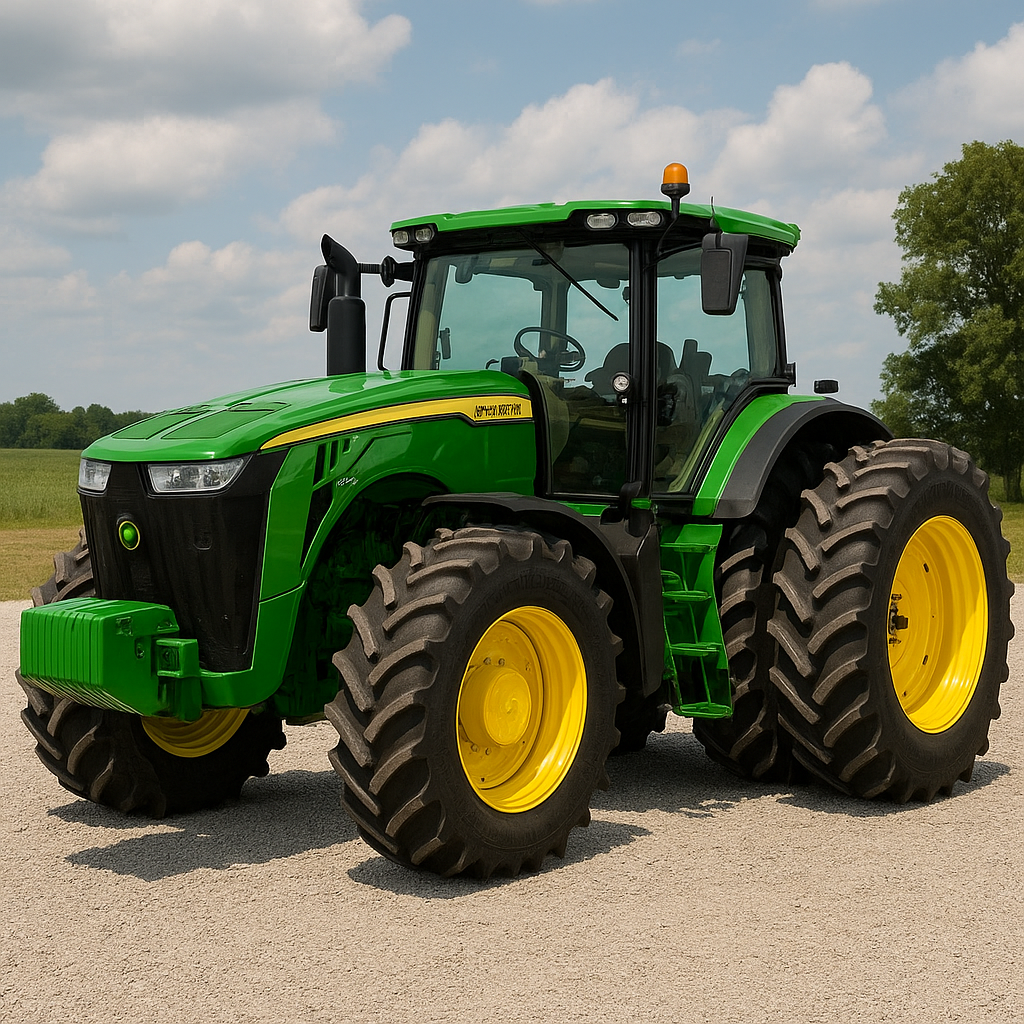
The John Deere 8R 370 is a high-capacity agricultural tractor designed to meet the demands of modern farming operations that require a mix of raw power, advanced controls and long-term reliability. Positioned in the mid-to-upper range of the 8R series, the 8R 370 is intended for a broad set of tasks — from heavy tillage and large-scale planting to hauling and high-horsepower PTO-driven work. This article explores the machine’s design, capabilities, real-world applications, technology features, serviceability and economic considerations. Wherever precise values are available or widely recognized, they are given; where configurations vary by market or optional equipment, general guidance is provided.
Design, Power and Key Specifications
The 8R 370 reflects John Deere’s emphasis on combining horsepower with modular features and operator-focused design. The model number (370) indicates the tractor’s nominal engine power class — roughly 370 mechanical horsepower (approximately 276 kW) at rated engine speed — although effective field power can vary with boost systems, transmission configuration and environmental conditions.
Engine and Performance Characteristics
- The 8R 370 is powered by a John Deere PowerTech engine family, built for durability and continuous high-load operation. These engines use modern aftertreatment systems to meet emissions standards in many regions, typically combining selective catalytic reduction (SCR) and diesel particulate filtration strategies.
- Rated engine power: approximately 370 hp (about 276 kW). Peak or boost power available under certain conditions will be higher for brief periods, depending on the implement and transmission settings.
- Design focus: strong low-end torque for pulling heavy implements and maintaining speed in draft work, plus smooth engine response for PTO-driven equipment and road transport.
Transmission and Driveline
One of the strengths of the 8R family is flexible drivetrain options that match operational needs:
- Transmission choices often include efficient powershift variants (for example, 16-speed/ e23-style options in some model years) and John Deere’s continuously variable transmissions (CVT/IVT) for infinite speed control with high efficiency. The IVT option is prized for precise ground speed control during seeding, spraying and other precision operations.
- PTO configurations: standard rear PTO with multiple speed options (540/1000 rpm or equivalent) and optional front PTO for mounted equipment, enabling a wide range of implement compatibility.
- Hydraulics and hitch: high-capacity hydraulic systems and robust three-point hitch capability allow the 8R 370 to operate heavy mounted and trailed implements reliably.
Chassis, Axles and Weight
The 8R 370 is built on a heavy-duty frame with axle and tire options to match soil conditions and loads. Ballasted weight and tire selection are critical to optimize traction and minimize soil compaction; the tractor can be configured with large flotation tires or dual/triple wheel arrangements when necessary. For high draft work, front-axle suspension options and front ballast improve ride quality and implement control.
Applications and Field Performance
The 8R 370 is a versatile workhorse suited for large-acreage farms and contractors. Its real-world applications span several categories:
Tillage and Primary Cultivation
- Heavy discing, chisel ploughing and deep cultivation are well within the 8R 370’s capabilities when properly ballasted. The tractor’s torque profile and hydraulic flow support large implements and consistent field speed, which is essential for depth control and fuel efficiency.
- Modern control systems aid in maintaining consistent working depth across variable soil conditions, reducing overlapping passes and improving fuel use.
Seeding, Planting and Fertilizer Applications
- With precise ground speed management (particularly when equipped with IVT), the 8R 370 excels in planting operations where accurate seed placement and spacing are critical.
- High hydraulic flow and ISOBUS-compatible electronics allow the tractor to run large planters and air seeders while managing variable-rate fertilizer application through integrated farm-management systems.
Hay and Forage, Mowing and Baling
- For PTO-driven forage harvesters, large mowers and balers, the 8R 370 delivers dependable power and PTO torque. The front and rear PTO options increase flexibility with mounted or trailed harvest equipment.
Transport and Haulage
- Large fleets often use 8R 370 tractors for haulage tasks: seed, chemical and grain transport or pulling heavy trailers and tankers. With on-road gearing and comfortable cab features, they serve dual roles between fieldwork and transport missions.
Specialty and Contracting Use
- Contractors value the 8R 370 for demanding daily schedules — the machine’s capacity for sustained operation, relatively straightforward service access and telematics support make it a popular choice where uptime is critical.
Precision Farming and Technology Integration
One of the major value propositions of the 8R 370 is its integration with John Deere’s suite of precision agriculture technologies. These features provide improved productivity, better input use efficiency and decision support.
Guidance and Autonomy
- AutoTrac guidance and other GNSS-based steering systems allow repeatable, high-accuracy pass-to-pass guidance. This reduces overlaps, optimizes field coverage and lowers fuel and input wastes.
- Compatibility with guidance accuracy classes (RTK/RTK network) enables centimeter-level steering precision for high-speed seeding and spraying operations.
Telematics and Fleet Management
- JDLink telematics provides real-time monitoring of machine health, location and performance. Fleet managers and contractors can leverage telematics to schedule preventive maintenance, reduce downtime and make data-driven decisions.
- Remote Diagnostics: dealer connectivity can enable remote updates and diagnostics, helping to troubleshoot issues quickly and dispatch parts or technicians more efficiently.
ISOBUS and Implement Control
- ISOBUS compatibility means that the 8R 370 can interface with a wide variety of implements using standardized electronic communication. This simplifies implement setup, reduces errors and allows single-console control of complex toolbars and applicators.
- Section control and variable-rate application maps save inputs by turning implement sections off in already-treated zones and adjusting application rates by prescription maps.
Operator Environment and Comfort
Long workdays require tractors that reduce operator fatigue and increase productivity. The 8R 370’s cab and controls aim to deliver that:
- Spacious, climate-controlled cab with noise reduction and ergonomic seating to reduce fatigue during multi-hour operations.
- Intuitive console design (including optional CommandPRO/armrest controls in certain configurations) allows operators to manage hydraulics, transmission and guidance without shifting position frequently.
- Optional air suspension seats, panoramic visibility packages and advanced lighting systems facilitate safe operation in low-light conditions and improve situational awareness.
Maintenance, Serviceability and Reliability
Farmers and contractors expect high uptime and straightforward service procedures from tractors like the 8R 370. John Deere addresses this through design choices and dealer networks:
- Accessible engine compartments, grouped service points (fuel/water separators, oil filters, fluid fill ports) and extended maintenance intervals reduce downtime and service complexity.
- Robust construction in high-wear areas (axles, hitch points, driveline components) increases service intervals and resale value.
- Large dealer service networks and telematics-enabled remote diagnostics shorten troubleshooting cycles and help to proactively manage machine health.
Environmental Performance and Emissions
Modern 8R models are built to meet current emissions standards in their target markets. Typical approaches include SCR for NOx reduction and diesel particulate filters for soot management, allowing high-performance engines to comply with regulations while preserving fuel efficiency. Operators should be aware of maintenance tasks tied to emissions systems, such as AdBlue (DEF) refills and periodic filter service, as these affect running costs and uptime.
Operating Economics and Total Cost of Ownership
Choosing a tractor like the 8R 370 requires analysis beyond purchase price. Total cost of ownership includes fuel consumption, maintenance, implement compatibility, downtime risk and resale value.
- Fuel efficiency: Larger modern engines and advanced transmissions reduce specific fuel consumption during heavy draft or PTO work compared to older designs. Use of precision guidance and auto-steer reduces application overlaps and saves fuel indirectly.
- Depreciation and resale: John Deere tractors generally maintain strong resale values due to brand reputation, dealer networks and broad parts availability. Properly maintained machines with telematics logs and service history command higher resale prices.
- Financing and Service Contracts: Many customers leverage extended warranties, service contracts and dealer financing to manage cash flow and reduce unexpected repair bills.
Safety and Regulatory Considerations
- Modern safety features include ROPS-certified cab structures, improved lighting packages, integrated camera options for rear implement visibility and systems preventing inadvertent PTO engagement.
- Operators should follow local regulatory guidance regarding emissions systems, on-road transport axle limits, and implement coupling safety. Ballasting and tire selection affect legal axle loads and soil compaction; careful configuration helps meet both legal and agronomic requirements.
Comparisons, Market Position and Alternatives
The 8R 370 competes with similar high-horsepower tractors from other major OEMs. When comparing, consider:
- Powertrain efficiency and transmission technology (IVT/CVT vs conventional powershift).
- Precision-agriculture ecosystem compatibility and telematics offerings.
- Dealer network, parts availability and local service capabilities.
- Attachment and implement ecosystem, including ISOBUS support and front-hitch/PTO options.
For operations that require extreme tractive effort on the heaviest soils, tracked alternatives (8RT-series within John Deere or comparable models from competitors) might offer better flotation and reduced soil compaction. For slightly smaller operations, the lower-rated 8R variants or the 7R family may present lower acquisition and operating costs while still offering many modern features.
Known Statistics and Typical Figures (General Guidance)
Specifications vary by year and market, but a general summary for the 8R 370 class includes:
- Rated engine power: approximately 370 hp (~276 kW).
- PTO capability: commonly sized to match rear-mounted implements; effective PTO power will be somewhat less than engine-rated horsepower and depends on PTO speed selection and drivetrain losses.
- Transmission options: powershift and IVT/CVT choices available; top road speeds 40 km/h or higher with appropriate gearing.
- Cab: multi-function console, precision-guidance capable, telematics-ready.
- Hydraulic flow: high-flow options for large planters, sprayers and auxiliary functions.
Because configurations differ (tire/wheel choices, ballast, front axle options and hydraulics), curb weight, fuel capacity and hydraulic flow ratings are best confirmed on the specification sheet for the specific year and build you are evaluating.
Practical Tips for Buyers and Operators
- Define your primary tasks: If your operation spends most days in planting and spraying, prioritize IVT and guidance accuracy; if you do heavy primary tillage, prioritize torque, ballast capacity and heavy-duty axles.
- Evaluate the precision agriculture ecosystem: Confirm compatibility with your existing guidance, mapping and farm-management systems to avoid integration headaches.
- Consider telematics and service plans: Remote monitoring and a proactive maintenance program increase uptime, especially for contractors and large operations.
- Optimize tire selection and ballasting to balance traction and soil compaction. Consider flotation tires or tracks for fragile soils and duals for maximum traction in heavy draft work.
Final Observations and Long-Term Value
The John Deere 8R 370 fills an important niche for farms and contractors who need sustained high performance combined with modern control systems. Its ability to integrate into precision agriculture workflows, deliver consistent field results across multiple applications and offer dealer-backed service and telematics support makes it a compelling choice in its class. Ultimately, matching the tractor’s configuration to specific agronomic conditions, implements and business models determines whether an 8R 370 will deliver optimal total cost of ownership and field productivity.