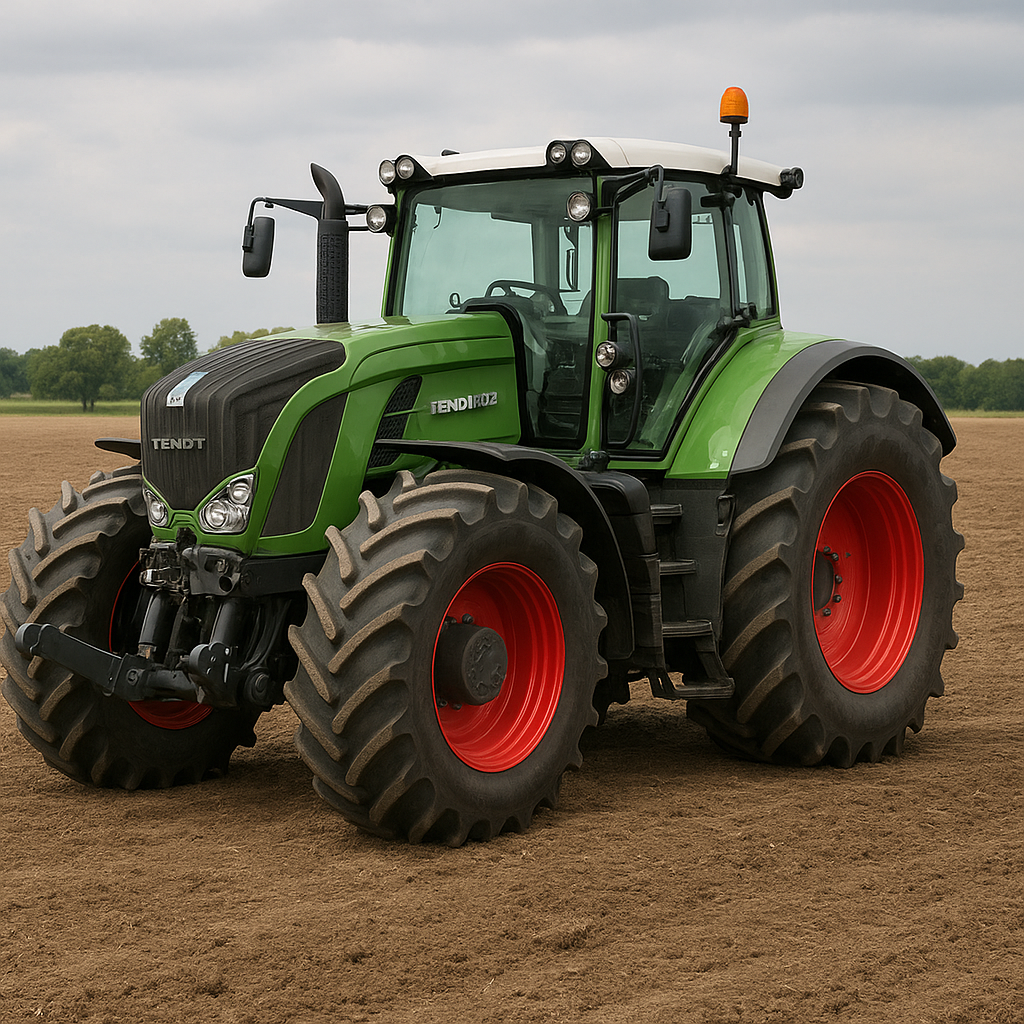
The Fendt 936 Vario is a high-performance agricultural tractor designed to bridge the gap between heavy-duty fieldwork and road transport duties. Built by the German manufacturer Fendt (AGCO Group), the 936 Vario combines robust mechanical components, advanced electronic systems and operator-focused ergonomics to deliver a versatile machine suited for large-scale farms, contracting businesses and mixed agricultural operations. This article outlines the key characteristics, typical applications, technical highlights, and other interesting aspects that make the Fendt 936 Vario a valued asset in modern agriculture.
Overview and positioning
The Fendt 936 Vario belongs to the 900 Vario family, a range of tractors engineered for heavy traction tasks and high productivity. The model name identifies its approximate power class: the 936 sits in the upper-medium to high-power segment often required for implements like large seed drills, heavy cultivators, wide mowers, slurry and manure spreaders, and for transporting heavy loads at road speeds.
Manufacturer and production context
- Manufacturer: Fendt (AGCO Group), produced in Germany, known for precision engineering and integration of in-house drivetrains and electronics.
- Series role: flagship-class workhorse in the 900 Vario lineup, offering a balance between field power and on-road capability.
- Typical buyers: large farms, contractors, agricultural service providers and users who need both high traction and advanced comfort/automation features.
Design philosophy
The design of the 936 Vario emphasizes three pillars: efficiency, operator comfort, and implement compatibility. The tractor combines a high-torque diesel engine, Fendt’s proprietary continuously variable Vario transmission, and a hydraulic/lift system capable of handling modern large implements. Electronic controls and optional precision-agriculture systems further enhance productivity and reduce operating costs per hectare.
Technical characteristics and performance
The technical layout of the 936 Vario is engineered to maximize drawbar and PTO performance while maintaining fuel economy and serviceability. Below are the fundamental mechanical and electronic features that characterize this model.
Engine and driveline
- Engine: six-cylinder diesel unit tuned for high torque at low rpm, optimized for PTO and traction work. (Specific displacement and tuning can vary by production year and emission stage; many versions are built to meet relevant EU emissions standards with exhaust after-treatment systems.)
- Power class: positioned around the mid- to upper-300 horsepower range (approximate nominal engine output often cited in the mid-300s HP range, depending on exact model year and rating).
- Torque: engineered to provide substantial low-end torque to maintain travel and PTO speed under heavy load; torque optimization is a key attribute for tillage and heavy transport tasks.
- Transmission: Fendt’s Vario continuously variable transmission (CVT) provides seamless speed control without conventional gear steps, enabling efficient field speeds and comfortable road travel up to high road speeds (many configurations allow 40–60 km/h, depending on gearing and regulations).
PTO, hydraulics and hitch
- PTO: multiple PTO speed settings are typically available (e.g., standard 540/1000 rpm and variants such as 540 ECO or 1000 ECO depending on configuration) to suit a wide range of implements.
- Hydraulic system: powerful closed-center or open-center hydraulic systems are available with high flow rates designed to operate large implements; flow rates and pump capacity vary by specification but are engineered to meet the demands of contemporary mounted and trailed equipment.
- Lift capacity: rear three-point hitch and optional front linkage are rated to handle very heavy implements, enabling efficient work with heavy seeders, cultivators and transport trailers.
Cab and operator environment
The cab in the 936 Vario is built for long hours. Features commonly highlighted include excellent all-round visibility, ergonomic joystick controls, air-suspended seats, and climate control. Fendt’s integrated multifunction armrest and intuitive terminal allow operators to control transmission, hydraulics, PTO and precision systems from a single interface, minimizing fatigue and maximizing productivity.
Applications and field use
The Fendt 936 Vario is a versatile tractor used across a variety of agricultural tasks. Its combination of high power and sophisticated controls makes it suitable for both heavy field operations and transport. Typical applications include:
- Heavy tillage: pulling large ploughs, cultivators and subsoilers where sustained power and traction are critical.
- Seeding and planting: driving large seed drills and planters; the smooth speed control of the Vario transmission helps maintain consistent seeding rates.
- Harvest support and transport: hauling grain trailers, forage wagons and tankers at road speeds while providing reliable PTO power for pumps and conveyors.
- Forage and grassland work: powering large mowers, tedders and balers; robust hydraulics and PTO options assist in efficient forage handling.
- Spreaders and slurry tankers: delivering consistent traction and pump drive for liquid and solid manure applications, often combined with precision application systems.
- Contracting: the flexibility, speed and comfortable cab make the 936 suitable for contractors who need to switch tasks and operate long hours across multiple farms.
Technology, automation and precision agriculture
Fendt integrates a variety of electronic and precision-farming technologies into the 936 Vario platform. These systems are designed to reduce operator input, cut overlap, and improve overall input efficiency—especially important when operating large implements on wide fields.
Key technology features
- Guidance systems: optional GNSS-based auto-steering and guidance solutions reduce overlap and streamline repeated field passes.
- ISOBUS compatibility: enables plug-and-play communication between tractor and implements, centralizing control and data exchange.
- Telematics and fleet management: optional fleet monitoring systems provide remote diagnostics, fuel monitoring and usage statistics to optimize uptime and operational costs.
- Engine management and emission control: modern exhaust after-treatment (e.g., SCR, particulate filters) maintains compliance with emissions standards while optimizing fuel consumption.
Benefits of integrated automation
Automation features help achieve precise application rates, consistent seed placement, and efficient route planning. For large-scale operations, these advantages translate into measurable savings on fuel, seed, fertiliser and time, while also improving yield consistency. Many operators report improved comfort and productivity when using Fendt’s integrated systems because they reduce fatigue and allow longer, more accurate working windows.
Maintenance, serviceability and life-cycle considerations
Long-term ownership of a Fendt 936 Vario typically revolves around predictable maintenance and authorized service networks. The tractor is engineered for accessible routine checks and modular component replacement. A few points to consider:
- Maintenance intervals: typical diesel engine and hydraulic maintenance intervals are set to balance uptime and component life. Filters, oils and inspections must be scheduled according to operating hours and load cycles.
- Service network: Fendt’s global dealer and service network provides parts and diagnostic tooling, which simplifies major repairs and warranty support.
- Total cost of ownership: although acquisition cost for a high-spec 936 Vario can be significant, operators often find that fuel efficiency, resale value and uptime deliver favorable lifecycle economics on large farms and contracting fleets.
Performance indicators and typical figures
Exact numbers for power, weight, hydraulic flow and lift capacity vary across model years and optional packages. The following are typical ranges and widely reported figures for tractors in this class, intended as illustrative examples rather than guaranteed specifications for all production variants:
- Engine power: generally in the mid-300s horsepower range (nominally around 300–380 HP depending on rating and year).
- Top road speed: many configurations are rated for up to 40 km/h or optionally up to 50–60 km/h with appropriate gearing and legal permissions.
- Hydraulic flow rate: high-flow pump options frequently deliver well over 150 l/min to satisfy modern implement demands; some versions offer pump flows in excess of 200 l/min.
- Rear lift capacity: often in the range of several tonnes—sufficient to handle large mounted implements and heavy three-point attachments.
- Fuel tank: generous capacity to reduce refuel stops during long field shifts (capacities vary with year and options).
Note on model variations
Over the production life of any tractor model, manufacturers release updates for emissions conformity, electronics, comfort features and optional equipment. Therefore, potential buyers should consult official Fendt documentation or local dealers to obtain the precise specification for a given serial number or production year.
Market, resale and competitor context
The 936 Vario competes in the premium segment of the tractor market. It is often compared with equivalent tractors from other major manufacturers that produce high-horsepower machines for large farms and contractors. Buyers choose the Fendt 936 for its blend of drivetrain efficiency, build quality and integrated technology. Resale values for well-maintained 900-series machines tend to be robust, reflecting the brand’s reputation and durable components.
Choosing the right machine
When deciding whether a Fendt 936 Vario is appropriate, consider the following factors:
- Farm scale and implement size: the greater the implement width and weight, the more justification there is for a high-power tractor like the 936.
- Operating profile: if the tractor is expected to alternate between heavy tillage and high-speed transport, the Vario CVT and robust transmission are significant advantages.
- Service access: proximity to an authorized dealer and parts availability affects uptime and ownership experience.
- Precision requirements: if precision farming and telematics are priorities, Fendt’s integrated systems can reduce total input costs and improve management data.
Interesting features and innovations
Several aspects of the Fendt 936 Vario make it noteworthy beyond raw power:
- Vario transmission: smooth power delivery without gear shifts, improving traction control and fuel economy across varied workloads.
- Integrated electronics: centralized control reduces operator steps and enables advanced automation like headland management and multi-function ISOBUS control.
- Operator ergonomics: a cab designed for long-duty cycles with low noise levels, visibility and comfort-focused seating and controls.
- Adaptability: multiple configurations and option packages enable tailoring the tractor to a wide range of agricultural tasks and regional transport rules.
Safety and environmental considerations
Like all modern tractors, the 936 Vario incorporates safety features including cab protection, braking systems suitable for high road speeds, and operator-presence sensors that prevent unintentional PTO engagement. Environmental design focuses on emissions control through after-treatment systems and on improving fuel efficiency via drivetrain and engine management technologies.
Conclusions
The Fendt 936 Vario is a powerful, technologically advanced tractor designed to meet the demands of large-scale agricultural operations and professional contractors. Its engine and drivetrain pairing, combined with sophisticated hydraulics and a comfortable cab, make it an effective tool for heavy tillage, seeding, transport and specialized tasks. While specifications vary by year and optional equipment, the core strengths of the model are efficiency, implement compatibility, and operator-centric design. Prospective users should confirm exact technical data and options with a dealer to ensure the chosen configuration aligns with their operational needs.