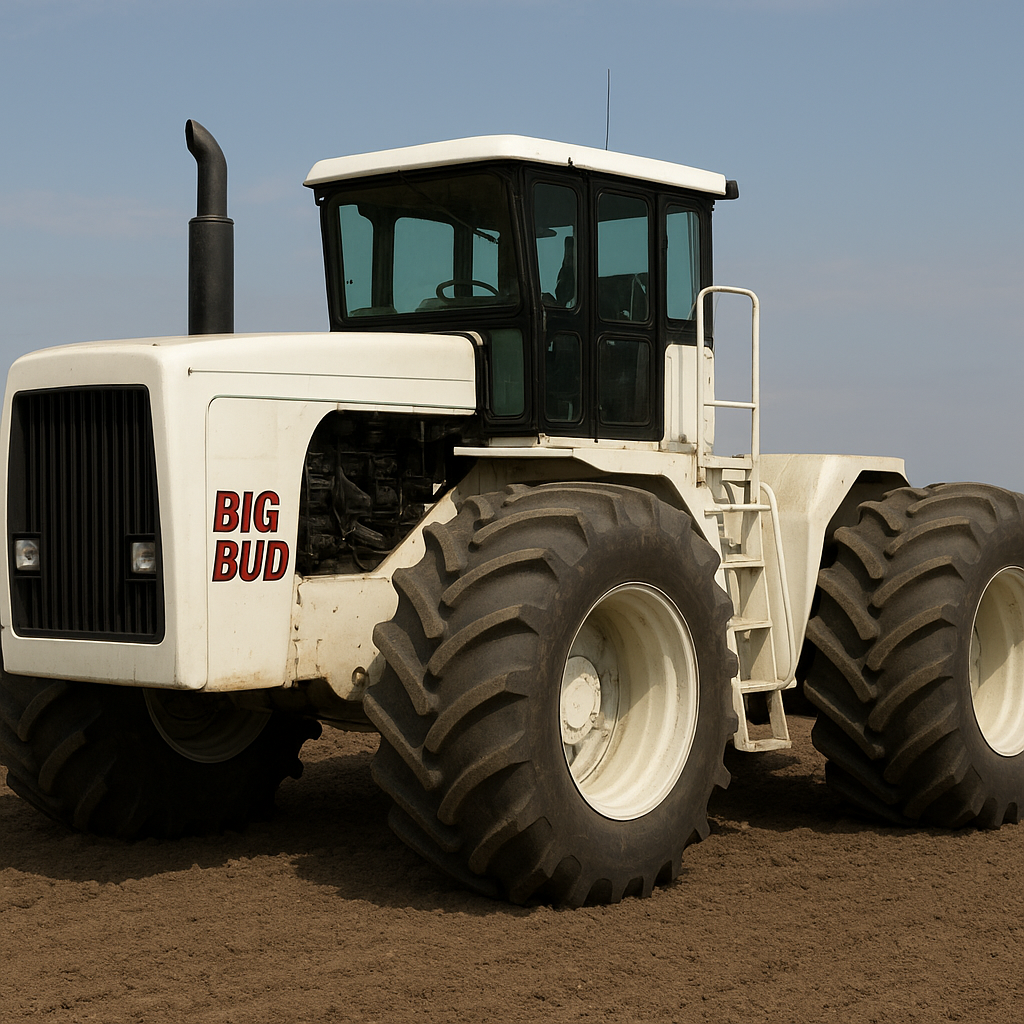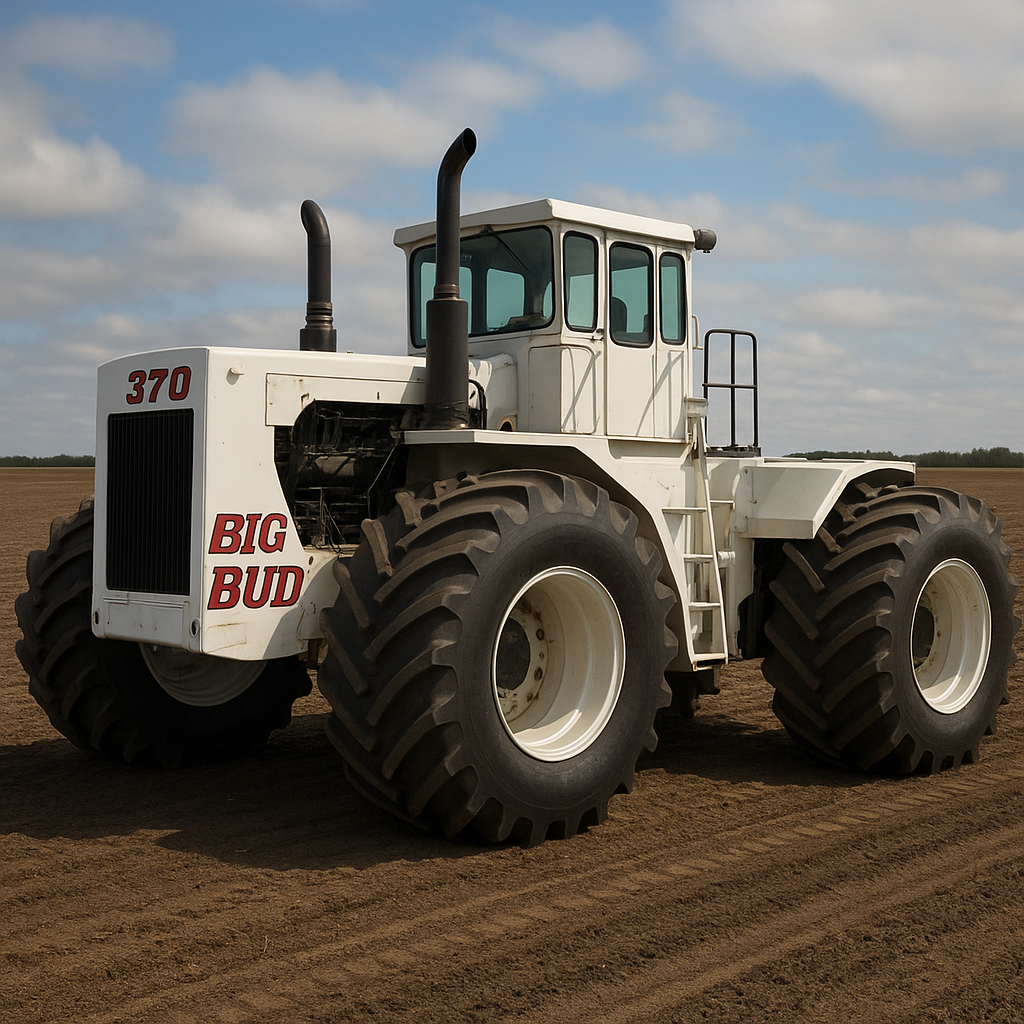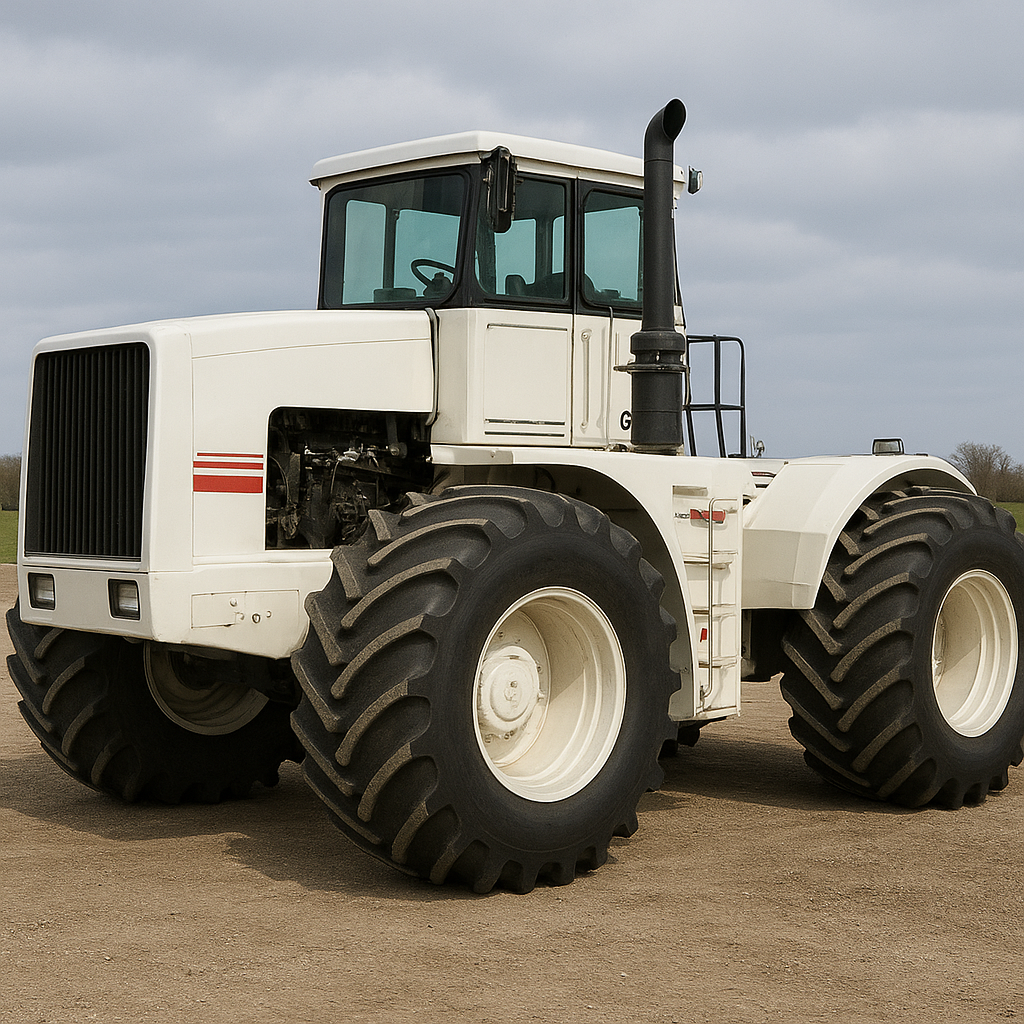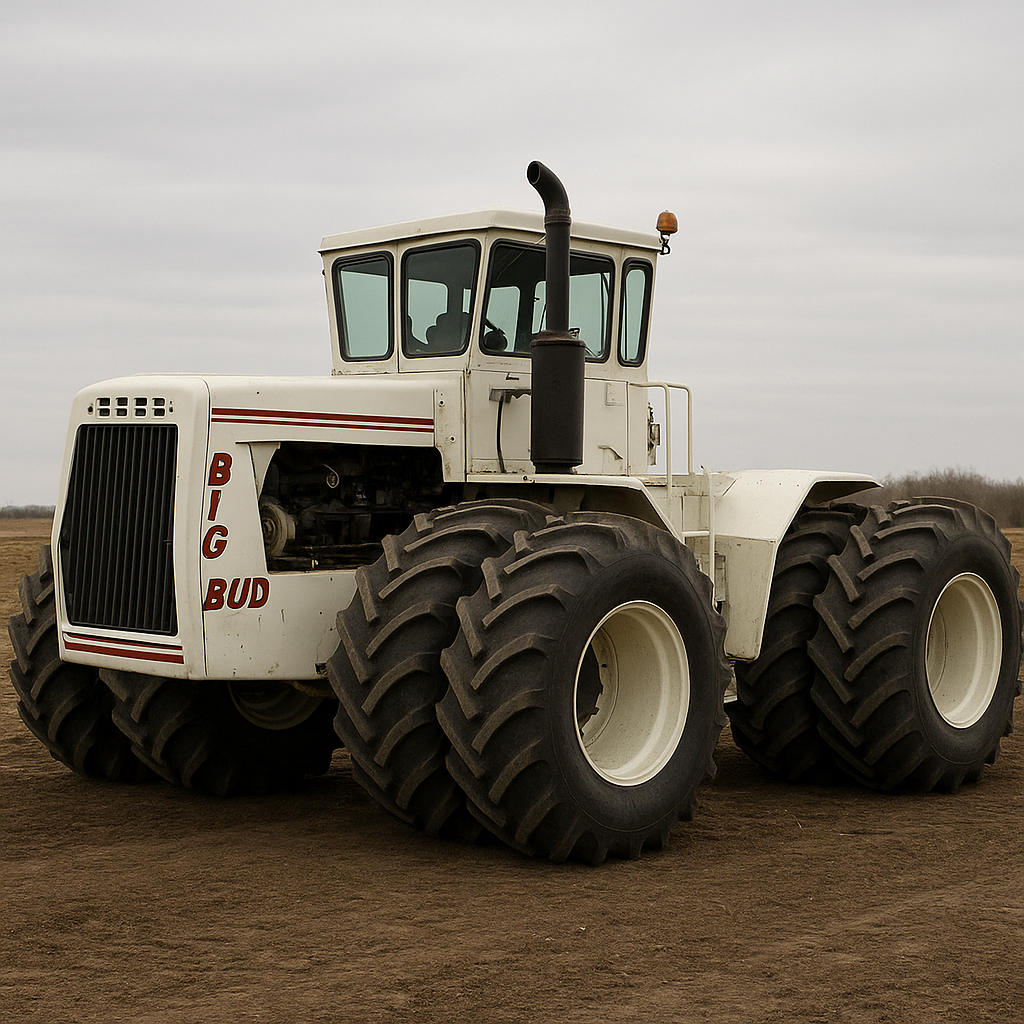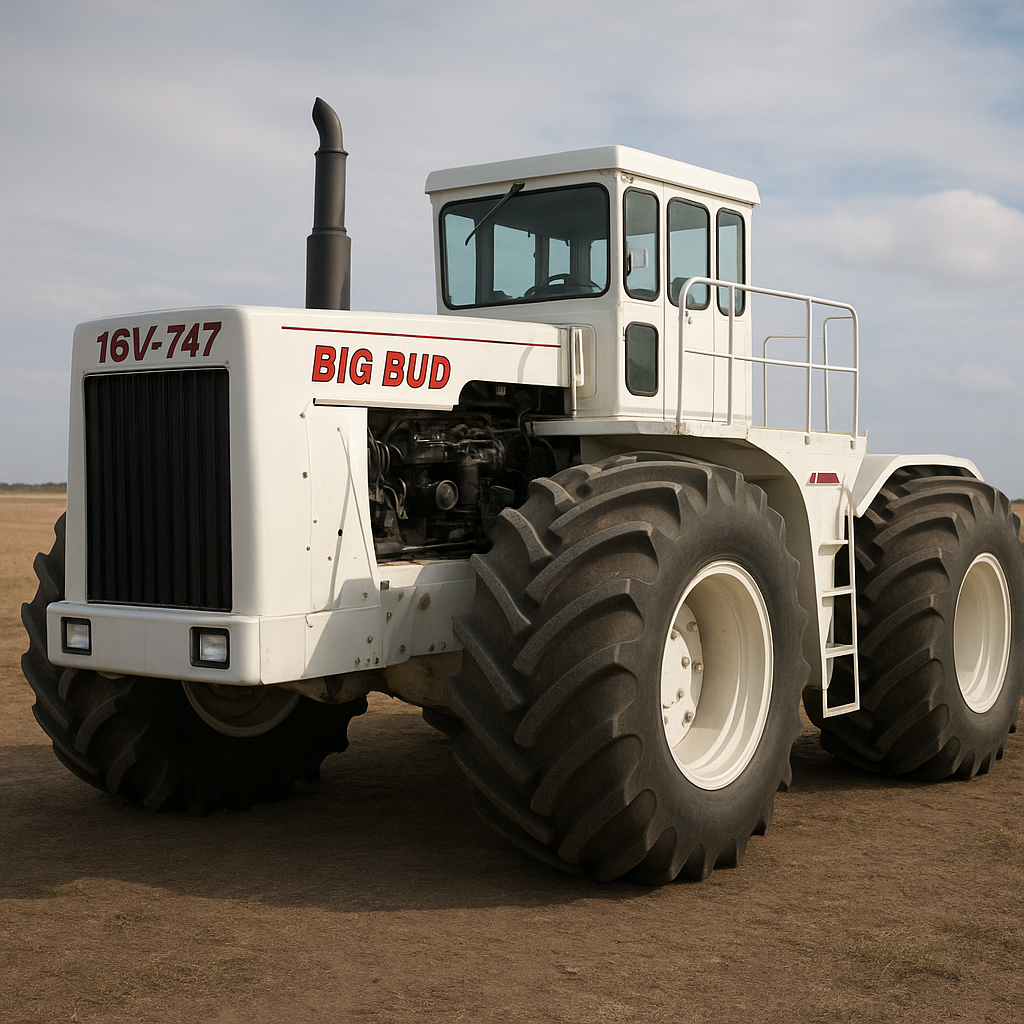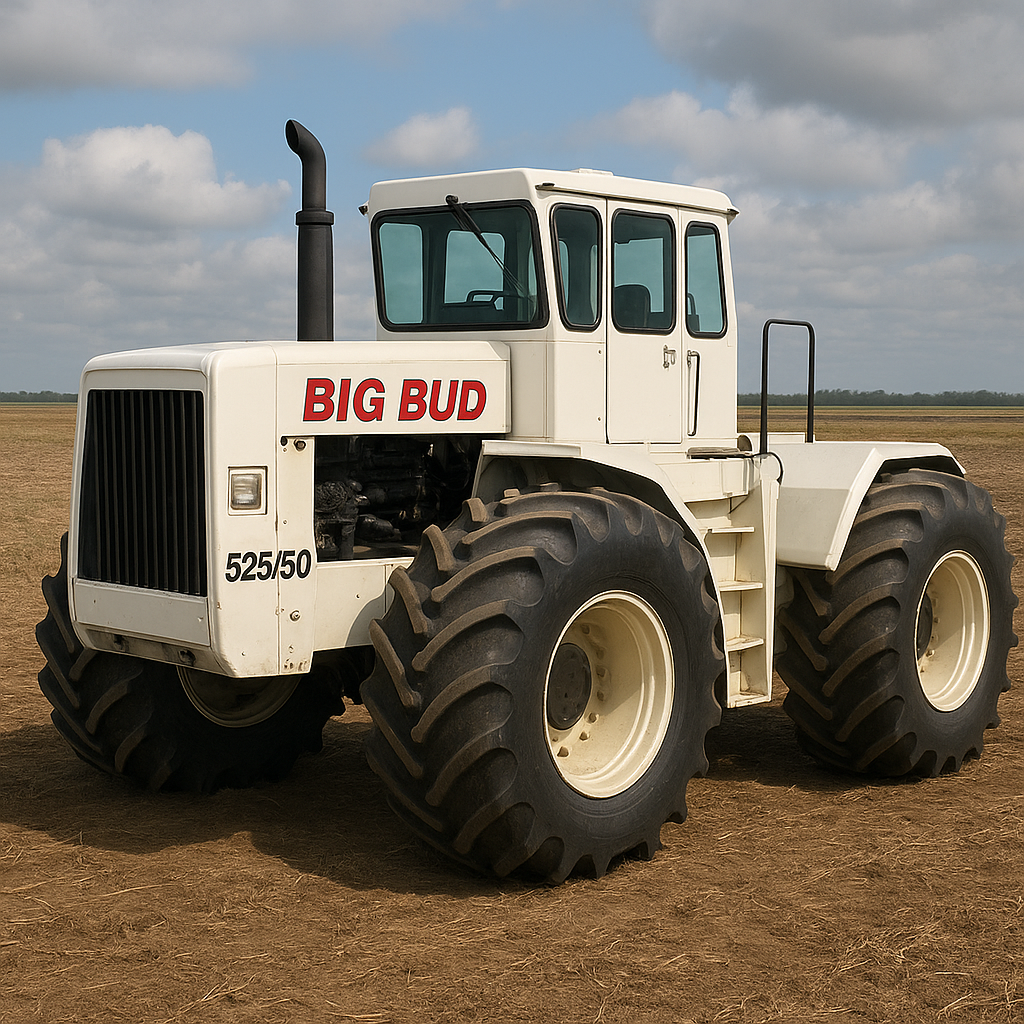
The Big Bud 525/50 is part of the family of massive agricultural tractors known for tackling the largest jobs on modern farms. Designed for high‑power, high‑area operations, this machine is both a symbol of industrial farming and a practical solution where enormous traction and output are required. Below you will find an in‑depth look at the Big Bud 525/50: its background, design and technical characteristics, typical uses, and operational and economic considerations for farmers and contractors who work at large scale. The article combines commonly reported specifications, practical observations from field use, and contextual comparisons to other large tractors.
Background and development
The Big Bud name has long been associated with some of the largest row‑crop tractors ever built. Originating in the United States, Big Bud tractors were developed to meet the needs of farmers who required extraordinary pulling power to work very large implements across wide swaths of land. The model designation 525/50 commonly appears in literature and field reports to indicate a tractor developed around the mid‑to‑high horsepower class within the Big Bud lineup.
Historically, Big Bud tractors were produced by small, specialized manufacturers rather than by the major global OEMs. These manufacturers focused on custom builds and on pushing the limits of size, power and durability. The Big Bud 525/50 emerged as a response to the demand for a tractor that could bridge the gap between very large single‑engine machines and multi‑unit setups (twin tractors or tractors pulling multiple implements) on farms in the Great Plains, the Canadian Prairies and in other regions with large fields such as parts of Australia and Argentina.
Because Big Bud tractors were often produced in small numbers and sometimes refurbished or modified multiple times, precise production counts and a single factory specification sheet can be hard to pin down. Many details circulating in farmer communities and historical registries are based on reported measurements, restoration records and manufacturer notes from the original builders and later owners.
Technical characteristics and performance
The Big Bud 525/50 is characterized by a combination of size, robust drivetrain components and a design oriented toward long‑duration heavy draft work. Below are the typical technical features and performance metrics reported for machines in this category. Note that values may vary between individual tractors depending on factory options and later modifications.
Engine and powertrain
- Engine type: Large displacement diesel engines—often inline 6‑cylinder or V‑configured diesels from major engine makers or custom‑installed industrial engines—are common. Engines are chosen for durability, torque and sustained output.
- Rated power: The numeric model designation suggests a nominal power class in the region of 525 horsepower. In practice, rated engine horsepower for the 525/50 is commonly reported in the range of roughly 500–550 HP, depending on tuning and measurement method.
- PTO and drawbar: PTO horsepower is typically lower than engine flywheel horsepower but remains substantial; drawbar pull and continuous traction capability are the critical performance measures for the Big Bud type, often optimized through gearing and heavy axles rather than PTO output alone.
- Transmission: Heavy‑duty multi‑range transmissions (powershift or synchronized gearboxes) with multiple ranges to allow precise ground speeds while maintaining high torque are typical. Some builds use hydrostatic or electronically controlled transmissions for smoother operation under heavy load.
Chassis, weight and traction
- Weight: These tractors are very heavy to provide traction and stability; reported operating weights for machines in the 500–600 HP class generally fall between 25,000 to 40,000 kg (55,000 to 88,000 lb) for fully ballasted configurations, although lighter or heavier examples exist depending on ballast and attachments.
- Tire and track options: The 525/50 often runs on very large agricultural tires—dual or triple configurations are common—or on wide tracks where soil protection and flotation are prioritized. Tire sizes and footprint are chosen to balance traction and soil compaction concerns.
- Traction: The combination of weight, low gearing and differential control produces extremely high straight‑line pulling power; these tractors are designed to pull very large tillage implements, seeders and planters with minimal slugging under load.
Fuel system and consumption
- Fuel capacity: Large fuel tanks are standard—often several hundred liters—to allow long field days without frequent refueling. Tank sizes are often in the range of 600–1,200 liters (160–320 US gallons) depending on configuration.
- Fuel consumption: Under heavy continuous draft, specific fuel consumption is significant. Practical field reports and manufacturer figures for tractors in this class suggest fuel use commonly ranges from 40 to 90 liters per hour (10–24 US gallons per hour) during high‑load operations. Actual consumption depends on load, ground speed and gearing.
Hydraulics, hitching and electronics
- Hydraulic flow: High‑capacity hydraulics to operate large implements and multiple control circuits are typical; flow rates exceeding 200 liters per minute (50 gpm) are common for late‑model or upgraded systems.
- 3‑point hitch and drawbar: Heavy‑duty drawbar assemblies and hitch interfaces are reinforced to withstand large draft forces. Many Big Bud machines use custom or heavy standard hitch connectors to match industrial implements.
- Electronics: Modernized examples often receive GPS guidance packages, field mapping capabilities and engine management upgrades to improve fuel efficiency and precision during seeding and tillage operations.
Applications and operational use
The Big Bud 525/50 is purpose‑built for large‑scale, heavy‑duty tasks where sustained traction and power are essential. While smaller tractors are more versatile for diversified farming operations, the 525/50 excels in specific contexts.
Primary uses
- Primary tillage: Deep ripping, heavy discing and chisel ploughing across wide passes. The Big Bud 525/50 can pull very large tillage implements that would require multiple smaller tractors working in tandem.
- Seeding and drilling: When paired with very large planters or air drills, the tractor enables rapid seeding of many hectares per hour—critical in regions with short planting windows.
- Land reclamation and earthmoving: On some sites, the machine is used for non‑crop heavy work such as reclaiming rough ground, doing initial land shaping, or pulling specialized attachments for industrial agriculture.
- Heavy hauling on farm: Shuttling large wagons, pulling heavy trailers and moving implements between fields—especially on big estates where road and field conditions allow.
Advantages in large‑scale operations
The main operational advantages of the 525/50 are related to scale. When time windows for fieldwork are tight—due to weather, crop cycles or labor constraints—a single high‑power tractor can significantly reduce the number of passes and the time required to complete work. This leads to potential gains in efficiency and reduced wear on soil from repeated traffic if operations are properly planned.
Soil management and compaction considerations
One downside to very large single machines is the risk of soil compaction. The tractor’s mass concentrates pressure on the soil, which can negatively affect root growth and water infiltration if not managed correctly. Operators mitigate compaction through:
- Using wide tires or tracked undercarriages to increase footprint and reduce ground pressure;
- Controlled traffic farming (CTF) to keep heavy passes confined to permanent lanes;
- Applying ballast and tire pressures carefully to balance traction and flotation;
- Timing operations when soils are sufficiently dry to avoid excessive soil structure damage.
Maintenance, logistics and economic aspects
Owning and operating a Big Bud 525/50 is materially different from operating a mid‑size tractor. The scale of maintenance, logistical planning and capital expense requires specific management practices and a clear cost‑benefit analysis.
Maintenance and servicing
- Routine maintenance: Because of the heavy loads and extended field hours, frequent inspections of driveline, transmission, cooling systems and hydraulics are necessary. Oil and filter change intervals may be shorter under continuous heavy duty use.
- Parts and specialized service: Some Big Bud components are custom or sourced from industrial suppliers, which can increase lead times for replacement parts. Many owners keep a stock of critical spares (belts, filters, hydraulic seals, bearings) on hand during peak seasons.
- Workshop requirements: Lifting, servicing and storage require larger facilities: heavy‑duty lifts, reinforced floors and overhead clearance to remove large engines or transmissions.
Transport and field access
- Road transport: Moving a Big Bud between jobs or fields often requires permits and specialized trailers because of width, height and weight restrictions. In some regions, oversized load escorts are mandatory.
- Field infrastructure: Gate widths, bridges and yard layouts must be planned for easy movement. In some cases, narrower access points or soft ground impede movement and require temporary modifications.
Economic considerations
- Capital cost: Purchase price and depreciation can be high. However, when compared to the combined acquisition and operational cost of multiple medium tractors doing the same work, a single high‑power tractor may be competitive for very large acreages.
- Operational cost per hectare: Fuel consumption and maintenance are significant components, but economies of scale can reduce per‑hectare costs when the tractor reduces total field hours and operator labor across the season.
- Resale and longevity: These tractors are often kept in service for many years; well‑maintained units can retain value in specialty markets and among collectors or contractors.
Cultural relevance, variations and examples
Beyond their on‑farm utility, Big Bud tractors—including variants often denoted by numbers such as 525/50—have achieved a place in agricultural history as engineering statements. They appear in trade shows, museums and collector circles. Farms that operate such tractors are frequently visited by peers and researchers interested in large‑scale mechanization.
Variations and customizations
Because the Big Bud line historically included many custom builds, the 525/50 designation can cover machines with differing configurations:
- Different engine makes and tune levels to match local fuel and emissions considerations.
- Wheel vs. track options to optimize for soil types and climate.
- Electronic and GPS upgrades for precision agriculture applications, including auto‑steer and section control on wide implements.
Comparisons to other large tractors
Compared to other large single‑engine tractors (from mainstream brands or bespoke builders), the 525/50 is positioned as a middle to upper tier in terms of sheer horsepower and mass. It is smaller than the absolute giants (for example, models that are custom‑rated above 700–1,000+ HP) but larger than the conventional agricultural tractors found on many mixed farms. The practical sweet spot for a 525‑class machine is where owners need robust continuous tractive effort without the logistic and operating complexities of the very largest multi‑engine solutions.
Practical tips for potential owners and operators
If you are considering operating or purchasing a Big Bud 525/50 or a similar high‑power machine, keep the following practical points in mind:
- Assess acreage and operations: Ensure your annual workload justifies the purchase. These machines make most sense where very large implements and high field throughput are needed.
- Plan infrastructure: Check access, storage, lifting capacity and fuel handling on your property. Invest in secure and weather‑protected storage to preserve asset value.
- Budget for parts and service: Factor in higher maintenance costs, potential spare part lead times and the need for specialized technicians for major repairs.
- Manage soil health: Implement controlled traffic or other compaction mitigation strategies. Wide tires, track systems and timing during favorable soil conditions reduce long‑term soil damage.
- Consider leasing or contracting: For many farms, contracting services or leasing a high‑power tractor for short windows of the year is more economical than ownership.
Summary
The Big Bud 525/50 exemplifies the class of large, high‑power agricultural tractors engineered to maximize productivity on very large farms. With reported engine power around 500–550 HP, heavy ballast and high‑capacity hydraulics, machines in this class deliver sustained traction for primary tillage, seeding and other demanding tasks. Ownership requires attention to maintenance, field management to limit soil compaction, and logistical planning for transport and servicing. For operations that can utilize their scale, these tractors are powerful tools that can reduce time in the field and enable the use of very large implements—making them an enduring feature of mechanized large‑acre agriculture.