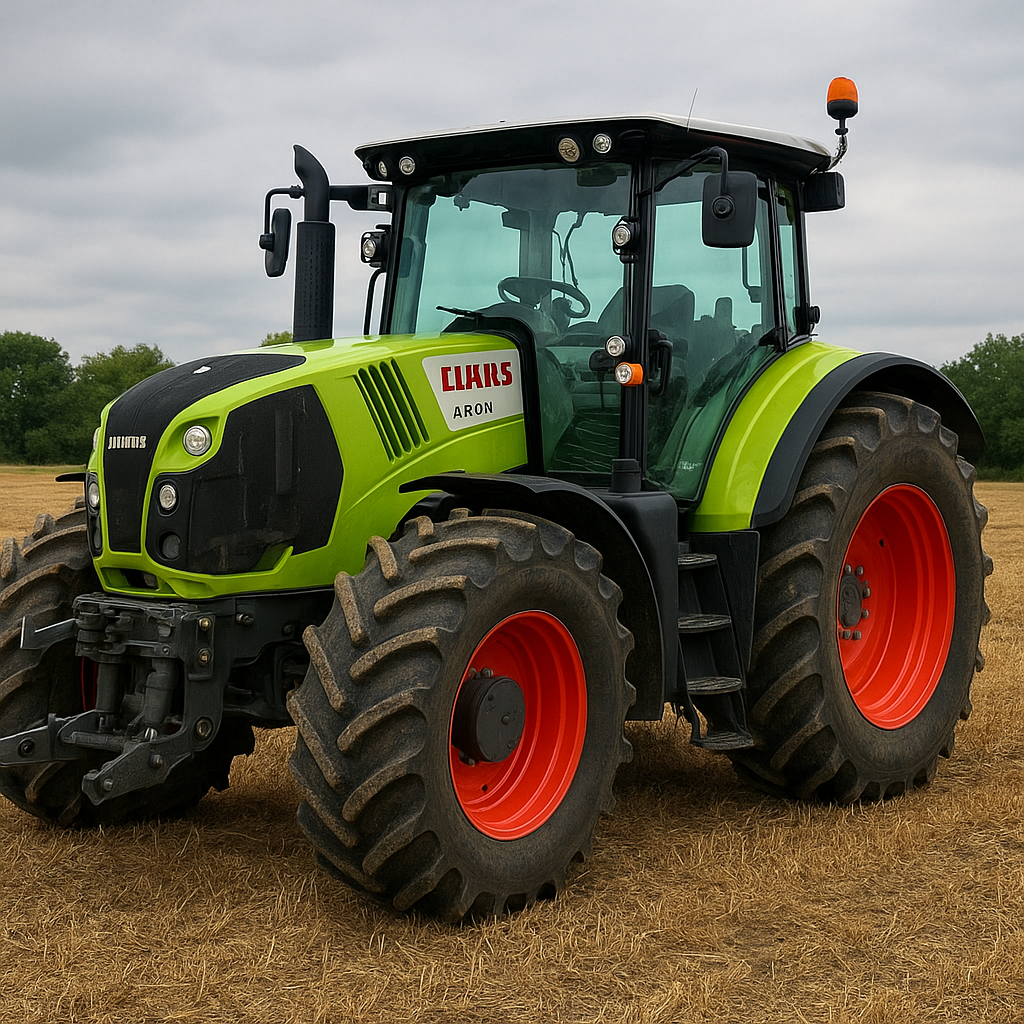
The Claas Arion 650 CMATIC occupies a prominent place among mid‑sized modern tractors, combining robust mechanical design with advanced transmission and operator comfort systems. Designed for mixed farms, arable work, contractor tasks and loader operations, the Arion 650 CMATIC aims to be a versatile, efficient machine that meets the needs of demanding agricultural workflows. This article explores its design, typical applications, technical characteristics, operational strengths and economic considerations, providing a comprehensive look at what makes this model attractive for professional users.
Design and powertrain
The Arion 650 CMATIC is part of the Claas Arion 600 range and is engineered to deliver a balance of power, reliability and smooth drivability. The CMATIC label denotes Claas’s continuously variable or stepless transmission concept tailored to medium‑power tractors. Unlike traditional stepped gearboxes, the CMATIC system provides seamless speed adjustments, which is particularly useful for tasks requiring fine speed control, such as soil cultivation, mowing or transport with heavy loads.
Under the hood, depending on model year and regional configurations, the Arion 650 is typically offered with a mid‑range diesel engine that provides horsepower in the upper mid‑range for its class. This power is optimized for torque delivery at low engine speeds, improving fuel efficiency and traction under load. The integration of engine management, exhaust aftertreatment (to meet respective emission stages) and transmission control allows for refined response to operator inputs and implements.
CMATIC technology is the tractor’s core advantage for applications that demand both field finesse and road speed. The system enables the operator to maintain a target engine speed or ground speed while the tractor automatically adjusts transmission ratios. The result is reduced operator fatigue and improved consistency in tasks such as seed placement, spraying and baling.
Applications and typical use cases
The Arion 650 CMATIC is a true all‑rounder. Its prime applications include:
- Arable farming: ploughing, subsoiling, power harrowing and seedbed preparation where steady power and traction are essential.
- Transport and haulage: due to the stepless transmission, the tractor performs well on country roads and while towing trailers, offering smooth acceleration and controlled top speeds.
- Baling and forage: operations that require consistent PTO speed and precise ground speed match—CMATIC helps maintain those parameters.
- Loader work: front loader tasks benefit from responsive hydraulics and visibility from the cab, making material handling and stacking efficient.
- Livestock farms and mixed operations: versatile coupling options and implement compatibility make the Arion 650 CMATIC suitable for slurry spreading, feeding systems and barn maintenance.
- Municipal and contract work: mowing, roadside maintenance and snow clearance can be performed when fitted with appropriate attachments.
Because of its flexibility, the Arion 650 CMATIC is often chosen by medium‑sized farms that require one strong, adaptable tractor rather than multiple specialized machines. Contractors also value its balance between mobility and field capability.
Key technical characteristics and specifications
Exact specifications depend on production year, market and optional packages, but typical figures and capabilities for the Arion 650 CMATIC class include:
- Engine output: commonly in the range of roughly 130–160 hp (varies by year and emission level).
- Maximum torque: tuned to deliver strong pulling power at low RPM, which improves fuel economy in heavy draft tasks.
- Transmission: CMATIC continuously variable drive with electronic control for smooth ground speed selection and configurable drive modes.
- PTO options: 540/540 ECO/1000 RPM choices to suit different power demands from implements, with soft start and rpm management.
- Hydraulics: open‑center or load‑sensing systems depending on configuration, with typical flow capabilities in the medium to high range (often around 100–180 l/min with optional pumps).
- Rear lift capacity: commonly between 5,000 and 7,000 kg, enabling operation of heavy mounted implements.
- Fuel tank capacity: often around 200–300 liters for extended operating range without frequent refuelling.
- Top road speed: up to 40 km/h (market dependent), with finely controllable low‑speed operation suitable for precise field work.
- Weight: unladen weight typically in the region of 4,500–6,000 kg depending on options, which affects ballast and traction choices.
The above numbers are indicative. Claas often offers configurable packages (hydraulic, hitch, cab options) so exact specs should be confirmed for a specific unit or year. The relationship between engine speed, PTO stability and the CMATIC transmission control system is central to operating efficiency and implement performance.
Cab, ergonomics and operator features
Operator comfort and control are areas where the Arion 650 CMATIC is designed to stand out. Key elements include:
- Cab design: a spacious, ergonomically arranged cab with broad glazing for excellent visibility — especially important for loader and front‑implement tasks.
- Controls and displays: user‑friendly terminals (Claas CEBIS or other display options depending on trim) provide implement management, transmission settings and diagnostics. Configurable multifunction levers and joystick controls reduce hand movement and speed up routine tasks.
- Suspension: cab and/or front axle suspension options improve ride comfort over rough terrain and during transport.
- Climate and noise: efficient HVAC systems and sound insulation contribute to lower operator fatigue during long working days.
- Lighting and visibility: LED or halogen work lights and a well‑designed window layout enhance operations during low light conditions.
From a day‑to‑day perspective, these features translate into faster cycle times, less operator strain and fewer mistakes when performing precision tasks. The ability to set and recall operating modes means different operators or jobs can quickly resume optimal settings.
Hydraulics, hitching and implement integration
Implement compatibility is a major selling point. The Arion 650 CMATIC supports a range of hydraulic and hitch options that broaden its functional envelope:
- Rear linkage: powerful electronic linkage control for precise depth and height management of mounted implements.
- Front linkage and PTO: available for mounting mowers, front power harrows and other implements—useful for loader balance and multi‑implement setups.
- Hydraulic valves: multiple mid‑mount and rear remote valves with proportional control allow complex implement hydraulics to be handled smoothly.
- ISOBUS compatibility: many units can be specified with ISOBUS electronics, enabling plug‑and‑play implement control and easier farm management system integration.
Because many modern implements require steady hydraulic flow and precise control, the combination of responsive hydraulics and electronic control systems on the Arion 650 CMATIC ensures compatibility with a wide range of contemporary attachments.
Fuel economy, emissions and maintenance considerations
Fuel efficiency is a central concern for any tractor owner and Claas designs aim to optimize fuel use through engine management, transmission efficiency and effective PTO matching. The CMATIC transmission helps by allowing the operator to choose an optimal engine speed for a given task and have the gearbox find the appropriate ratio, which often reduces fuel burn compared to less adaptive transmissions.
Emissions compliance varies by market and model year; later Arion 650 CMATIC tractors incorporate aftertreatment systems to meet Stage V / Tier 4 Final standards in many regions. These systems improve environmental performance but also require attention to maintenance schedules — for example, periodic checks of diesel particulate filters and AdBlue/DEF levels if present.
Maintenance intervals for engine oil, filters and hydraulics will depend on operating conditions. Routine checks, scheduled services and adherence to manufacturer guidelines preserve resale value and ensure optimal uptime. Claas dealer networks typically offer service packages and extended warranties for owners seeking predictable operating costs.
Economic and operational advantages
The Arion 650 CMATIC promises several economic benefits for its target users:
- Versatility: one machine can handle a wide spectrum of tasks, reducing the need to invest in multiple specialized tractors.
- Productivity: smoother speed transitions and precise implement control reduce pass counts and improve job consistency.
- Operator efficiency: comfort and ergonomics reduce fatigue and improve throughput over long working days.
- Resale value: well‑maintained Claas equipment tends to retain value well in the used market due to brand recognition and build quality.
When calculating total cost of ownership, buyers should weigh initial purchase price against fuel consumption, maintenance costs, expected utilization and potential resale value. For many mid‑sized farms and contractors, an Arion 650 CMATIC can deliver a favorable balance when matched to the right fleet strategy.
Telematics, software and precision farming
Modern Claas models often integrate telematics and precision agriculture support, enabling fleet monitoring, remote diagnostics and data‑driven decision making. Features that may be available include:
- Telematics connectivity: remote tracking for location, utilization and basic diagnostics to improve fleet management.
- Guidance and auto‑steer: compatibility with GNSS systems for straight and contour guidance, increasing efficiency and seed/chemical application accuracy.
- ISOBUS and implement control: centralized control of seeders, sprayers and balers allowing for seamless data exchange between implement and tractor.
These digital capabilities make the Arion 650 CMATIC more attractive to farms adopting precision farming, helping to reduce overlaps, optimize inputs and document field operations for compliance and traceability.
Comparisons and market position
Within the mid‑power tractor segment, the Arion 650 CMATIC competes with models from other major manufacturers that offer stepless transmissions and similar power levels. Its strengths are its blend of Claas engineering, ergonomic cab design and the CMATIC transmission which favors operators who seek both field precision and road performance. Buyers should compare:
- Transmission type and performance under load
- Hydraulic flow and linkage capacity for intended implements
- Cab ergonomics and control logic (CEBIS vs competitors’ interfaces)
- Service network and parts availability in their region
For many users, Claas’s reputation in combine and forage technology adds confidence that their tractors will integrate well with other Claas equipment and service networks.
Final considerations when choosing an Arion 650 CMATIC
When evaluating a purchase or lease, consider the following practical aspects:
- Assess the typical tasks and ensure the tractor’s power, hydraulics and linkage capacity match implement requirements.
- Choose the right transmission and software options for the expected operating profile (field‑heavy vs transport‑heavy).
- Factor in telematics and precision farming options if data capture and guidance will be used.
- Review maintenance schedules, warranty offers and dealer support to minimize downtime.
- Consider fuel tank size and service intervals relative to daily work cycles to avoid frequent refuelling or servicing interruptions.
Overall, the Claas Arion 650 CMATIC is a flexible, operator‑friendly tractor suited to a wide range of agricultural roles. Its stepless transmission, combined with modern hydraulics and cab features, positions it well for farms that need a dependable, multi‑purpose machine. Prospective buyers should verify the technical specification of the exact model year and regional variant they consider, since equipment levels and emission systems can alter performance and service needs.
Key words highlighted for emphasis
Claas CMATIC power torque hydraulics lift capacity fuel efficiency comfort telematics ISOBUS