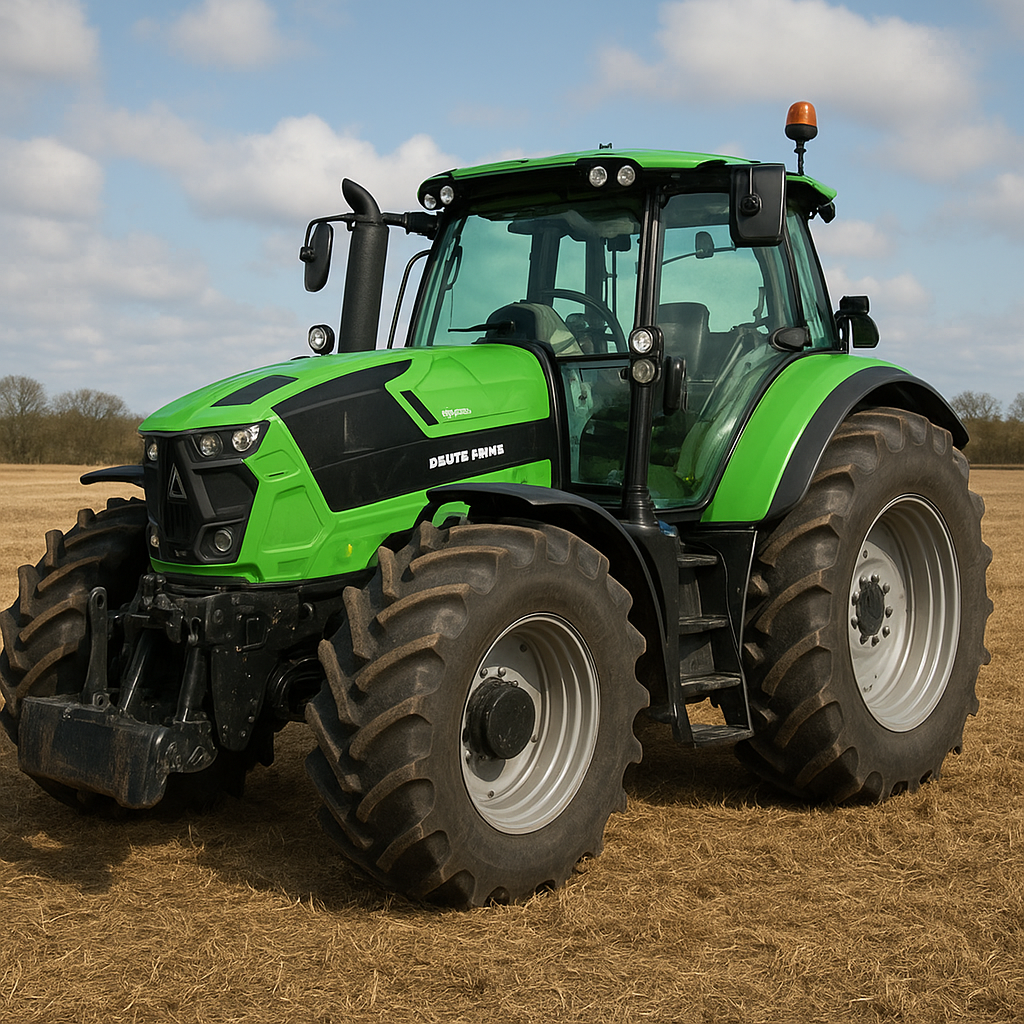
The Deutz-Fahr 6180 is a versatile agricultural tractor that combines modern engineering, operator comfort, and adaptable performance for a wide range of farming tasks. In this article you will find a detailed look at its origins, typical technical characteristics, field applications, operator ergonomics, maintenance considerations, and its position in the market. Where exact figures vary by year and factory configuration, I note common ranges and explain how choices such as transmission type or hydraulic options affect real-world performance. This overview aims to be practical for farmers, fleet managers, and anyone interested in contemporary agricultural machinery.
Overview and background
The Deutz-Fahr brand is long-established in European agriculture and known for integrating advanced engine technology, comfortable cabs, and efficient drivetrains. The model number 6180 places this tractor in a power class frequently used for medium-to-large mixed farms, contractors, and livestock operations. The 6180 is typically built to satisfy the needs of operators who require substantial drawbar and PTO power while still maintaining good maneuverability and fuel economy.
Design philosophy and evolution
Deutz-Fahr tractors are designed around a few core principles: reliable engines, robust transmissions, intuitive operator environments, and flexible hydraulic systems. The 6180 follows this philosophy by offering a balance between raw capability and ease of use. Across production years the model has been updated to meet stricter emissions standards, incorporate more advanced electronics and telematics, and improve operator visibility and comfort.
Model positioning
In typical lineup logic, the 6180 is positioned above lower-powered utility tractors and below the largest heavy-duty models. It often competes with similar offerings from other European manufacturers in the 150–200 horsepower segment. Customers choose tractors like the 6180 when they need a machine durable enough for intensive tillage, efficient for transport, and flexible enough for loader work, seeding, and baling.
Technical characteristics and variants
The specific technical specification of any individual Deutz-Fahr 6180 depends on year, market, and optional equipment. Below are the common technical themes and typical ranges you will encounter when evaluating this model.
Engine and emissions
- Engine type: Most modern Deutz-Fahr tractors in this power class use turbocharged diesel engines with intercooling. Cylinder counts vary with design, but a six-cylinder configuration is common for smooth torque delivery in the 150–200 hp class.
- Power output: The nominal engine power for models designated 6180 is typically around the 170–190 horsepower range. Exact power figures vary with year and tuning, and marketed “engine power” may differ slightly from declared PTO power.
- Emissions compliance: Depending on the production year, the 6180 conforms to EU Stage IV / Tier 4 final or other regional emission standards, achieved through diesel particulate filters (DPF), exhaust gas recirculation (EGR), or selective catalytic reduction (SCR).
Transmission options
- TTV/continuous variable transmission: Many buyers prefer the smooth, stepless TTV for fuel-efficient road transport and precision field speeds. TTV allows the operator to maintain optimal engine rpm for implements while varying ground speed.
- Mechanical/powershift variants: Powershift transmissions remain popular for their robustness and predictable behavior under heavy draft loads. They often include creep ranges and multiple shuttle options for loader and front-end work.
PTO, hydraulics and hitch
- PTO: Standard PTO speeds include 540/1000 rpm, with one or more electronically controlled PTO modes. Some configurations offer economy PTO or ground-speed PTO for specialized applications.
- Hydraulic capacity: Typical rear linkage lift capacities for tractors in this class commonly range from approximately 5,000 to 7,000 kg, depending on specification. Fully optional packages may increase lift performance for heavy implements.
- SCVs (selective control valves): Multiple SCVs are usually available (2–4 standard), with joystick options for loader control and flow-sharing hydraulic circuits for responsive implement operation.
Electrical systems, cab and electronics
- Modern versions of the 6180 include advanced instrument clusters with touchscreen displays, ISOBUS compatibility, and integrated GPS- or telematics-ready interfaces.
- Lighting packages, camera integration, and power options (12V/24V) allow customization for contractor or intensive-farming uses.
Applications and typical uses
The Deutz-Fahr 6180 is a polyvalent tractor suited to many agricultural and related tasks. Its flexibility is one of the model’s major strengths.
Tillage and soil preparation
With its robust torque curve and substantial rear linkage lift, the 6180 is well-suited for primary and secondary tillage. It can comfortably pull medium-to-large ploughs, heavy cultivators, and disc harrows. Farmers using the 6180 for tillage benefit from the option to run higher engine loads without excessive rpm, especially with TTV transmissions that match ground speed to implement load efficiently.
Seeding and planting
Precision planters and seed drills often require stable ground speed and responsive hydraulics. The PTO and hydraulic systems on the 6180 support a wide variety of planting equipment. ISOBUS compatibility in many configurations helps integrate precision agriculture components such as variable rate control.
Baling, forage and harvesting support
The 6180’s power and hydraulic output make it a common choice for towing balers, forage wagons, and supporting combine operations with trailers, chaser bins, and auxiliary equipment. Its front loader options and joystick controls also make it effective for handling bales and feed.
Transport and contractor work
Contractors value tractors that deliver consistent power for road transport and heavy implements. With optional heavy-duty transmissions and braking systems, the 6180 can be equipped for frequent road travel, towing trailers, and quick implement changes between jobs.
Specialized operations
In orchards or specialty farms, narrower track configurations or front linkage options may be used to adapt larger tractors to tighter row work. While the 6180 is not primarily designed as a narrow-framed orchard tractor, with the right setup it can still perform specialized tasks such as sprayer transport, loader work, and heavy lifting.
Operator environment and ergonomics
Deutz-Fahr places emphasis on cabin comfort and operator productivity. The 6180 typically features a well-insulated, ergonomically designed cab, with controls laid out for intuitive use.
Cab features
- High-visibility panoramic windscreen and rear windows for better implement monitoring.
- Comfort seats with multiple adjustments and air suspension options for reducing operator fatigue during long shifts.
- Climate control and soundproofing to maintain a comfortable working environment.
- Easy access to controls: logically grouped lever clusters, a multifunction armrest (on many variants), and clear display screens.
Telematics and precision farming
Many modern 6180 tractors are offered with telematics systems that enable remote diagnostics, fleet monitoring, and data logging. Combined with GPS guidance and ISOBUS functionality, these features allow growers to implement precision agriculture workflows such as auto-steer, section control, and variable-rate applications, increasing both efficiency and traceability.
Maintenance, operating costs and durability
When evaluating the total cost of ownership for a tractor like the 6180, buyers consider fuel consumption, service intervals, parts availability, and resale value. Deutz-Fahr tractors are generally designed for relatively straightforward maintenance with modular components.
Servicing and intervals
- Regular oil and filter changes, fuel system maintenance, and DPF regeneration schedules vary with duty cycle but are typically similar to other European manufacturers.
- Accessible service points and diagnostics reduce downtime: onboard diagnostics and dealer service networks streamline troubleshooting.
Fuel efficiency and economics
Fuel consumption depends heavily on the task and transmission choice. The TTV transmission can improve fuel economy in mixed-use operations by keeping the engine in an optimal band while varying speed. Operators targeting lower operating costs often balance engine tuning, payload, and field technique to maximize liters-per-hectare efficiency.
Longevity and resale
With proper maintenance, tractors in this class can remain productive for many thousands of hours. Deutz-Fahr’s reputation and dealer network in many regions typically support good resale values compared to lesser-known brands, especially when machines are maintained with full service records.
Safety and environmental considerations
Modern tractors like the 6180 integrate safety systems and emissions controls to meet both operator protection and environmental regulations.
- Rollover protection structures (ROPS), advanced braking options, and lighting packages enhance safety during field and road operations.
- Exhaust after-treatment systems used to comply with emissions standards reduce particulate and NOx emissions. Proper management of these systems (e.g., DPF maintenance) is important for performance and regulatory compliance.
Comparisons and how to choose
Choosing a tractor such as the Deutz-Fahr 6180 involves assessing the primary tasks, desired features, budget, and dealer support.
Key decision factors
- Primary use: If most work is high-draft tillage, prioritize torque and robust hitch capacity. If precision planting and long transport are common, prioritize TTV and telematics.
- Transmission preference: TTV for smooth variable-speed requirements and potentially better fuel economy; powershift for direct mechanical feel and heavy-load predictability.
- Hydraulics and linkage: Match lift capacity and flow rates to the heaviest implements you plan to use.
- Cab and comfort: For long seasonal hours, invest in comfort and ergonomics (air-suspension seat, low noise levels, climate control).
Competition
Comparable tractors in the market are offered by major manufacturers in the same horsepower band. Buyers should compare warranty, dealer service networks, financing terms, and available options (telemetry, loader packages, specific hydraulics) in addition to raw performance figures.
Real-world statistics and performance notes
Exact production and performance statistics for a specific Deutz-Fahr 6180 vary by year and market. Below are conservative, general observations based on the tractor class and reported owner experiences:
- Typical rated engine power: around the 170–190 hp window, depending on tuning and model year.
- PTO power: often slightly lower than engine power—expect a PTO output in the approximate range proportionate to engine rating (subject to drivetrain efficiency).
- Rear lift capacity: commonly in the 5,000–7,000 kg range for fully specified units.
- Fuel tank capacity: on many tractors in this class the tank size ranges from about 250 to 400 liters depending on optional equipment.
- Transport speed: top road speeds typically up to 40–50 km/h depending on transmission and regional homologation.
When acquiring concrete performance data for a particular 6180, request the factory specification sheet for that model-year configuration and verify PTO power, drawbar pull, lift capacity, and emission equipment. Those figures are the most relevant for matching implement performance and legal operation in your country.
Conclusion
The Deutz-Fahr 6180 is a capable and flexible tractor suited to a wide range of farming operations—tillage, seeding, forage work, transport, and contractor tasks. Its strengths lie in a robust engine family, flexible transmission choices (including TTV), operator comfort, and modern electronics that enable precision agriculture. When evaluating the 6180 versus alternatives, focus on the specific configuration (hydraulics, transmission, PTO options) that matches your primary tasks and confirm exact technical specifications from the vendor. Properly equipped and maintained, the 6180 can be a long-lasting and productive asset for medium-to-large farms and contracting businesses.