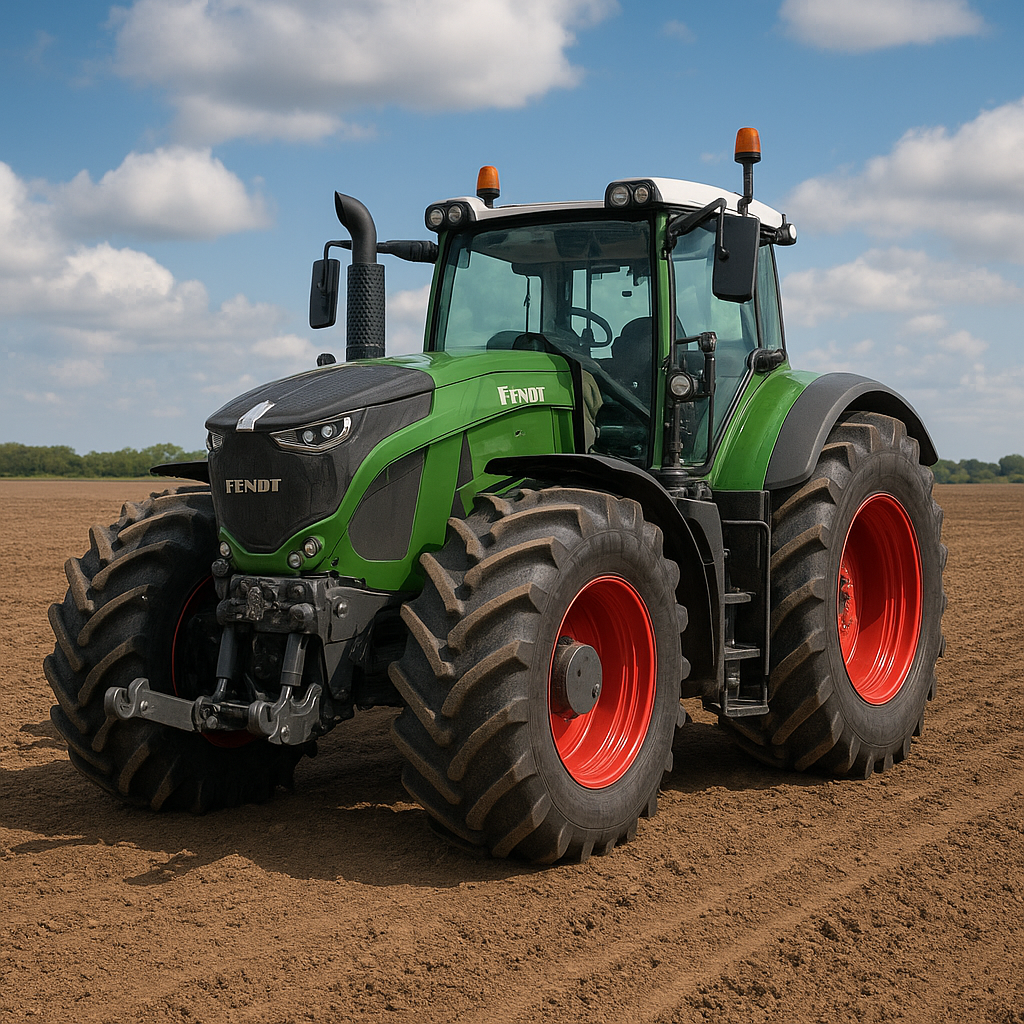
The Fendt 1022 Vario represents a pinnacle in modern agricultural engineering: a high-horsepower, versatile tractor designed for demanding fieldwork, heavy transport and specialized applications where power, comfort and precision matter. In this article we explore the 1022 Vario’s design philosophy, typical uses, technical highlights, operational advantages and practical considerations for farmers, contractors and fleet managers. Where possible, approximate specifications and commonly reported figures are provided to give a realistic picture of what this machine delivers in everyday work.
Overview and positioning
The Fendt 1022 Vario belongs to the Fendt 1000-series — a family of tractors created to meet the needs of large-scale farming, contract work and mixed operations that require sustained high power and reliable performance. Built with a focus on efficiency, operator comfort and advanced electronics, the 1022 Vario is often chosen by users who need a machine capable of handling heavy tillage, large seeding implements, forage harvesting support and heavy transport on road or farm tracks.
The model is commonly positioned as a near-top offering within the series, balancing high continuous output with the robust chassis and systems necessary for sustained heavy-duty use. Typical buyers include arable farms with large hectareage, contractors performing large-scale soil preparation or harvesting, and enterprises requiring a tractor that can both pull large implements and serve as a high-capacity loader or transport vehicle.
Key technical characteristics
The 1022 Vario combines a high-displacement diesel engine, advanced continuously variable Fendt Vario transmission, and heavy-duty hydraulic and PTO systems. While exact specifications may vary by model year and market, common technical highlights are:
- Engine output: approximately in the upper 400s to around 500 horsepower range (peak and rated outputs vary by configuration).
- Torque: high torque at low engine speeds to enable heavy pulling and efficient PTO-driven work.
- Transmission: Fendt Vario CVT providing seamless acceleration, precise speed control and improved fuel economy compared to stepped gearboxes.
- PTO options: multiple PTO speeds (typically 540/1000 rpm) with robust drive shafts and clutch management for large implements.
- Hydraulics: high-flow hydraulic systems (often in the range of several hundred liters per minute) to operate large planters, sprayers, loaders and other hydraulic implements.
- Lift capacity: strong rear hitch and three-point linkage with high lifting capacity suitable for heavy mounted and trailed equipment.
- Weight and axles: heavy chassis with ballast options; available with heavy-duty axle configurations to handle high loads.
These combined systems make the 1022 Vario capable of handling the largest farm implements and performing long shifts under load without sacrificing drivability or operator comfort.
Applications and typical use cases
The versatility of the Fendt 1022 Vario allows it to operate across a broad spectrum of tasks. Key applications include:
- Primary tillage: pulling deep plows, heavy cultivators, and disc harrows over extensive acreage. The 1022’s torque and traction systems allow effective soil inversion and preparation even in heavier soils.
- Sowing and planting: providing stable drawbar and hydraulic support for large seed drills and planters, enabling consistent seeding depth and row spacing across fields.
- Spraying and fertilization: towing large booms and tank units where smooth speed control and stable hydraulics are essential for uniform application rates.
- Forage and harvesting support: towing large forage wagons, pulling heavy header trailers, and serving as a high-capacity loader tractor for silage operations.
- Transport and road work: moving heavy loads between fields and yards, often at relatively high road speeds permitted by the Vario transmission.
- Specialized operations: tasks such as deep ripping, subsoiling, and heavy land reclamation where a combination of weight, power and traction is required.
Because of its high horsepower and flexibility, the 1022 Vario is often the centerpiece of mixed fleets where both raw pulling power and electronic implements are in use.
Technology, automation and operator environment
Fendt places strong emphasis on integrating advanced electronics and operator aids into the 1000-series tractors. The 1022 Vario typically features:
- Fendt VarioDrive or Vario CVT control with smart engine-transmission management to optimize fuel use and power delivery.
- Advanced operator cab with high levels of comfort, climate control and visibility, designed for long hours of use.
- Precision farming compatibility: ISOBUS-ready interfaces, GPS guidance, section control and data logging to support precision seeding, spraying and variable-rate applications.
- Multifunction joysticks and programmable controls to reduce operator fatigue and speed up implement changes.
- Telematics and fleet management options for remote monitoring of hours, fuel consumption and location; useful for contractors and large operations.
These technologies improve productivity by reducing overlap on headlands, ensuring repeatable passes, and enabling remote support and diagnostics — all of which are prized in high-hour operations where downtime and inefficiency are costly.
Performance and efficiency considerations
One of the most important attributes of the 1022 Vario is its combination of high output with systems designed to deliver that output efficiently. Key efficiency features include:
- Continuously variable transmission that keeps the engine in the optimal power band for fuel efficiency.
- Engine management and aftertreatment systems tuned to balance emissions compliance with usable power.
- Hydraulic systems that allow precise flow control and reduced parasitic losses when implements are idle or under partial load.
- Weight distribution and tire/track options that improve traction and minimize soil compaction under heavy loads.
Operational studies from similar high-horsepower tractors indicate that when matched correctly to implements and field conditions, machines like the 1022 Vario can deliver favorable fuel consumption per hectare compared to older tractors performing the same tasks — primarily because higher power allows larger implements to be used and work speeds to increase while keeping engine load moderate.
Maintenance, serviceability and operating costs
Large tractors such as the 1022 Vario are designed with accessibility and service intervals in mind, but their complexity and scale mean that maintenance planning is essential:
- Regular servicing of the engine, transmission and aftertreatment systems is critical to preserve performance and emissions compliance.
- Periodic checks of hydraulic and cooling systems are important, especially when operating in dusty or hot environments.
- Wear items such as tires, final drives and linkage components should be inspected frequently under heavy-use conditions.
- Because of integrated electronics, firmware updates and diagnostic checks by qualified technicians may be necessary to maintain reliability and implement compatibility.
Operating costs for a 1022-class tractor include fuel, consumables, major scheduled services and depreciation. For contractors, the total cost of ownership is typically amortized across high annual hours, making uptime, quick service turnaround and high daily output essential to profitability. Investing in telematics and predictive maintenance can reduce unexpected downtime and optimize servicing intervals.
Safety and regulatory aspects
Safety features commonly found on the 1022 Vario and models in its class include stable cab structures, robust braking systems, rollover protection integrated into the cab design, advanced lighting and camera systems for improved visibility, and electronic aids that prevent wheel slip and trailer oscillation. Additionally, modern tractors must comply with emissions regulations (e.g., Tier 4 Final / Stage V standards in many markets) which influence engine design and aftertreatment systems.
Operators should also consider road safety when transporting heavy implements: proper hitching, braking systems for trailers, and adherence to local weight and dimension regulations are essential. Training and operator familiarity with electronic aids can prevent misuse or accidental damage to implements and field crops.
Comparative strengths and considerations
Strengths of the Fendt 1022 Vario include its combination of power, traction capability, comfort and the integrated precision-agriculture systems that make it particularly effective in large-scale and high-efficiency farming operations. Its strong hydraulics and PTO options make it adaptable to a wide variety of implements.
Considerations before purchase typically include:
- Initial cost and financing versus expected productivity gains.
- Maintenance and repair network availability in the operator’s region.
- Compatibility with existing implements and whether upgrades to ISOBUS or hydraulic circuits are required.
- Potential need for specialized tires, tracks or ballast to protect soil structure and achieve desired traction.
Practical tips for operators and fleet managers
To get the best value from a 1022 Vario, operators and managers should:
- Match implement size to the tractor’s power band — oversizing or undersizing both reduce efficiency.
- Use guidance and section control systems to reduce overlap and save on inputs (seed, fertilizer, spray).
- Monitor fuel consumption and telematics to evaluate task-specific efficiency and plan preventive maintenance.
- Train operators on the tractor’s electronic systems and ergonomic controls to reduce mistakes and fatigue.
- Plan for seasonal peaks: ensure spare parts and service support are available during high-use windows such as planting and harvest.
Market perspective and typical statistics
While specific production and sales numbers for individual tractor models vary by year and region, the Fendt 1000-series has been positioned as a premium offering in many markets. Typical statistics and expectations for a tractor in this class often include:
- Operating power ratings in the mid-to-upper hundreds of horsepower (the 1022 designation commonly signaling a tractor near the 500 hp class, depending on model year and rating).
- Gross vehicle weights comfortably exceeding 10 tonnes when configured with ballast and implements; operating weights can be much higher depending on counterweights and attachments.
- Average fuel consumption that depends heavily on task: fieldwork at high load may see significantly higher hourly consumption than transport or light-duty tasks; efficiency gains are maximized with correct implement matching and Vario transmission strategies.
- High residual value in regions where large-scale mechanized farming is common and dealer service networks are strong, due to brand reputation and integrated systems.
Conclusion
The Fendt 1022 Vario is a robust, technologically advanced tractor designed for high-demand agricultural and contracting work. Its primary strengths are the integration of powerful driveline components, sophisticated electronics, and operator-focused design that together support high productivity and improved efficiency. For large farms and contractors, the 1022 Vario can be a central workhorse — provided that operating strategies, maintenance planning and implement matching are carefully managed. Whether pulling the largest tillage implements, supporting harvest logistics or acting as a precision-enabled platform for modern input application, the 1022 Vario embodies the capabilities expected from a modern high-horsepower tractor.