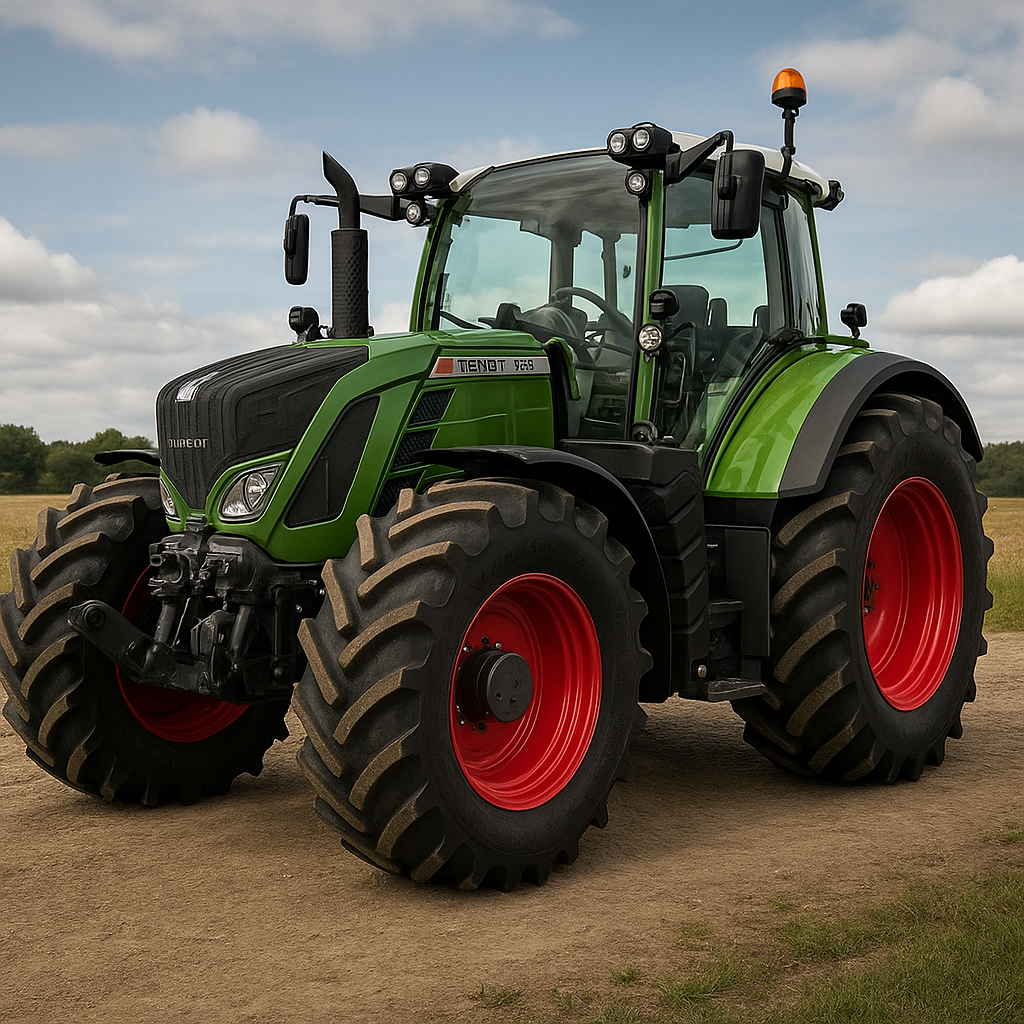
The Fendt 726 Vario is a versatile, mid-to-high-power agricultural tractor designed to meet the demands of modern farming. Combining advanced drivetrain technology, ergonomic operator comfort, and strong hydraulic and PTO capabilities, this model is a popular choice for large arable farms, mixed operations, contractors, and specialized tasks. The following article explores the key features, typical applications, technical highlights, and practical considerations for the Fendt 726 Vario, along with general statistics and comparative context relevant to buyers and operators.
Design, Engine and Powertrain
The Fendt 726 Vario is built around principles of continuous power delivery and operational flexibility. At its heart lies a reliable six-cylinder engine supplied by the AGCO family of power units, tuned to provide a balance of torque and fuel economy for heavy fieldwork as well as road transport. The exact engine displacement and emissions control package vary by model year and market; however, the model is typically positioned in the class offering approximately 240–265 horsepower (depending on rating method and optional boost functions). This powerband places the 726 comfortably between lighter utility tractors and the largest, high-horsepower articulated units, making it suitable for a wide range of implements.
The tractor uses Fendt’s signature continuously variable Vario transmission. Unlike stepped transmissions, the Vario system provides truly seamless speed changes and precise ground-speed control, which improves fuel efficiency, reduces wear on implements, and simplifies tasks that require constant working speed (seeding, fertilizing, spraying). Typical top road speeds for the Fendt 700 series can reach up to 60 km/h with suitable gearing and tires, making the tractor viable for long-distance transport between fields or to customers.
- Engine: Six-cylinder AGCO-based power unit (around six liters displacement in many configurations)
- Power: Roughly 240–265 hp rated, with short-term boost offered on some configurations
- Transmission: Fully variable Vario drive for continuous acceleration and precise speed control
- Road speed: Up to 60 km/h (market and configuration dependent)
Hydraulics, PTO and Implement Compatibility
One of the Fendt 726 Vario’s strengths is its implement-handling capability. The tractor typically features powerful load-sensing hydraulics with multiple spool valves and optional high-flow pumps. Hydraulic flow rates commonly available on tractors in this class range up to around 200 liters per minute on high-spec variants, enabling efficient operation of large sprayer booms, active tillage equipment, and front-mounted loaders.
The rear linkage is robust, designed to lift heavy modern equipment. Typical maximum lift capacities for this category of tractor are in the range of up to 9–10 tonnes at the hitch, allowing the 726 to handle large planters, seeding rigs, and heavy cultivators with confidence.
PTO (power take-off) options usually include the standard 540 rpm and 1,000 rpm speeds, plus an economy 1,000 rpm mode on some models for lower engine speed operation with the same output at the driven implement. This flexibility helps reduce fuel consumption and wear during tasks such as mowing, baling, spreading, and pumping.
- Hydraulics: Load-sensing systems with multiple outlets; high-flow options up to ~200 l/min
- PTO: 540 / 1,000 (and 1,000 ECO in some configs)
- Rear linkage lift capacity: up to approximately 9–10 tonnes (depending on specification)
- Front linkage and front PTO often available as options for loader and front-mounted implements
Cab, Controls and Operator Experience
Fendt is widely recognized for its emphasis on driver ergonomics and intuitive control layouts, and the 726 Vario is no exception. The cab provides excellent visibility to the front and rear, an adjustable seating and steering environment, and low noise levels for long shifts in the fields. The multi-function armrest integrates driving and implement controls, allowing the operator to keep hands on key functions without reaching for separate controls.
Fendt’s terminal and software suite—often known as FendtONE and the Varioterminal interface—allow machine configuration, ISOBUS implement control, GPS guidance integration, and fleet management features. Autosteer and section control options improve accuracy in field tasks, reduce overlap, and save input costs.
- Cab: Spacious, climate-controlled environment with low noise and high visibility
- Telematics and control: FendtONE, Varioterminal, ISOBUS compatibility, and autosteer options
- Operator aids: automatic headland management, cruise control, and memory settings for frequent tasks
Applications and Practical Use Cases
The Fendt 726 Vario’s combination of power, hydraulics, and transmission flexibility makes it a true multi-purpose tractor. Typical applications include:
- Arable farming: Pulling ploughs, cultivators, planters and heavy seed drills. The constant speed control of the Vario transmission is particularly useful during precision seeding and when operating draft-sensitive implements.
- Crop care and spraying: Paired with trailed or mounted sprayers, the 726 delivers stable engine power for consistent boom pressure and pump operation. Autosteer reduces overlap and optimizes chemical use.
- Hay and forage: Mowers, tedders, rakes, and balers benefit from the tractor’s PTO options and responsive hydraulics.
- Transport and logistics: High road speeds and comfortable cab make it suitable for transporting loads between fields, to market, or between sites.
- Contracting: Contractors appreciate the machine’s broad capability envelope: it can switch quickly between heavy soil-working in the morning and transport or loader work in the afternoon.
- Livestock and mixed farms: The 726’s lift and PTO capacity make it a useful focal machine for feeding, bedding, manure spreading, and general farm maintenance.
Fuel Efficiency, Emissions and Sustainability
Fendt has focused on fuel efficiency across its model lines. The combination of an efficient engine, the Vario transmission’s continuous adaptation to load, and optional automatic engine management systems helps reduce fuel use during many common tasks. Exact fuel consumption varies greatly with task, soil conditions, operator habits, and implement choice; however, fleet users often report improved economy relative to similar power-class tractors without continuously variable drives.
Emission controls on modern Fendt 700-series tractors follow regional regulatory requirements (e.g., EU Stage IV / Stage V for European markets, Tier 4 in North America where applicable). These systems often include selective catalytic reduction (SCR), diesel particulate filters (DPF), and exhaust gas recirculation (EGR) depending on year and specification, balancing performance with regulatory compliance.
Maintenance, Reliability and Total Cost of Ownership
Large-scale operators and contractors consider not only acquisition cost but also uptime and overall cost of ownership. The Fendt 726 Vario is engineered for long-duty cycles with components designed for heavy use. Key considerations for maintaining reliability include:
- Regular service intervals for engine, transmission, and hydraulic systems as recommended by the manufacturer
- Use of genuine parts and approved lubricants to protect sensitive electronic and hydraulic systems
- Proper operator training to maximize fuel efficiency and reduce mechanical stress
Resale values for Fendt tractors have historically held strong in many markets, reflecting brand reputation, dealer support networks, and wide adoption among professional users. Telematics solutions and service contracts can help fleets monitor machine health and plan preventive maintenance, further improving availability and lowering unexpected repair costs.
Safety, Visibility and Driver Assistance
Safety features include excellent sightlines from the cab, lighting packages for early-morning or night work, and integrated braking and differential lock systems that assist in challenging traction conditions. Modern guidance systems and lane-keeping aids reduce operator fatigue and enhance safety near roadways or around obstacles.
Advanced assistance
Optional driver assistance and automation features—such as precise GPS guidance, headland automation, and ISOBUS implement control—reduce operator workload and improve repeatability of field passes. Such systems are particularly valuable in precision agriculture workflows where repeatable overlap control reduces input use and protects yields.
Market Positioning and Comparable Models
The Fendt 726 Vario sits in the competitive mid-high segment of row-crop and general-purpose tractors. Its direct competitors are models from other major manufacturers that offer similar horsepower and implement-handling capabilities. Buyers typically compare:
- Power and torque curves
- Hydraulic flow and linkage capacity
- Transmission characteristics and driveability
- Cab comfort and integrated electronic systems
- Dealer support, local parts availability and resale values
Fendt’s strengths often cited by users include a smooth, highly efficient transmission, a premium cab environment, and advanced electronics integration. Potential buyers should evaluate local dealer service, warranty options and the availability of certified telematics services in their region.
Statistical and Technical Summary (Typical Values)
Listed below are typical specifications and statistics that describe machines in the Fendt 726 Vario class. Values vary by model year and optional equipment; verify exact figures with local dealers or manufacturer documents for the specific configuration.
- Rated power: Approximately 240–265 hp (model/market dependent)
- Engine: Six-cylinder AGCO-derived unit, roughly around 6.0 liters displacement in many configurations
- Transmission: Continuously variable (Vario)
- Hydraulic flow: Load-sensing systems; high-flow options often ~150–200 l/min
- Rear lift capacity: Up to ~9–10 tonnes
- PTO speeds: 540 / 1,000 (plus economy modes depending on configuration)
- Maximum road speed: Up to 60 km/h (with appropriate gearing)
- Operating weight: Typically in the 7–9 tonne range, depending on options and ballast
- Emission standard: Compliant with current regional standards (Stage IV/Stage V in Europe for recent years)
Buying Considerations and Options
When evaluating a Fendt 726 Vario, consider the following:
- Intended primary tasks: match hydraulic and lifting specs to implement needs
- Transmission and gearing options: selecting top speed and economy settings for transport-heavy operations
- Cab packages and comfort options if long daily operating hours are expected
- Telematics and precision farming options such as guidance, section control and ISOBUS compatibility
- Warranty and service package choices; availability of local dealer support for repairs and updates
Optional equipment such as front loaders, additional work lights, active suspension seats, or high-flow hydraulic packages can significantly extend the tractor’s versatility but should be balanced against total cost and actual usage patterns.
Conclusion
The Fendt 726 Vario is a powerful, feature-rich tractor well suited for demanding agricultural tasks where a blend of traction, hydraulic capacity, and operator comfort is required. Its continuous Vario transmission, modern cab environment, and broad implement compatibility make it a productive choice for arable farmers, contractors, and mixed operations seeking a reliable mid-to-high-power machine. While exact specifications vary by year and market, the model’s positioning around the 240–265 hp range, robust hydraulics and advanced electronics make it a compelling option for those looking to invest in a versatile and efficient workhorse.