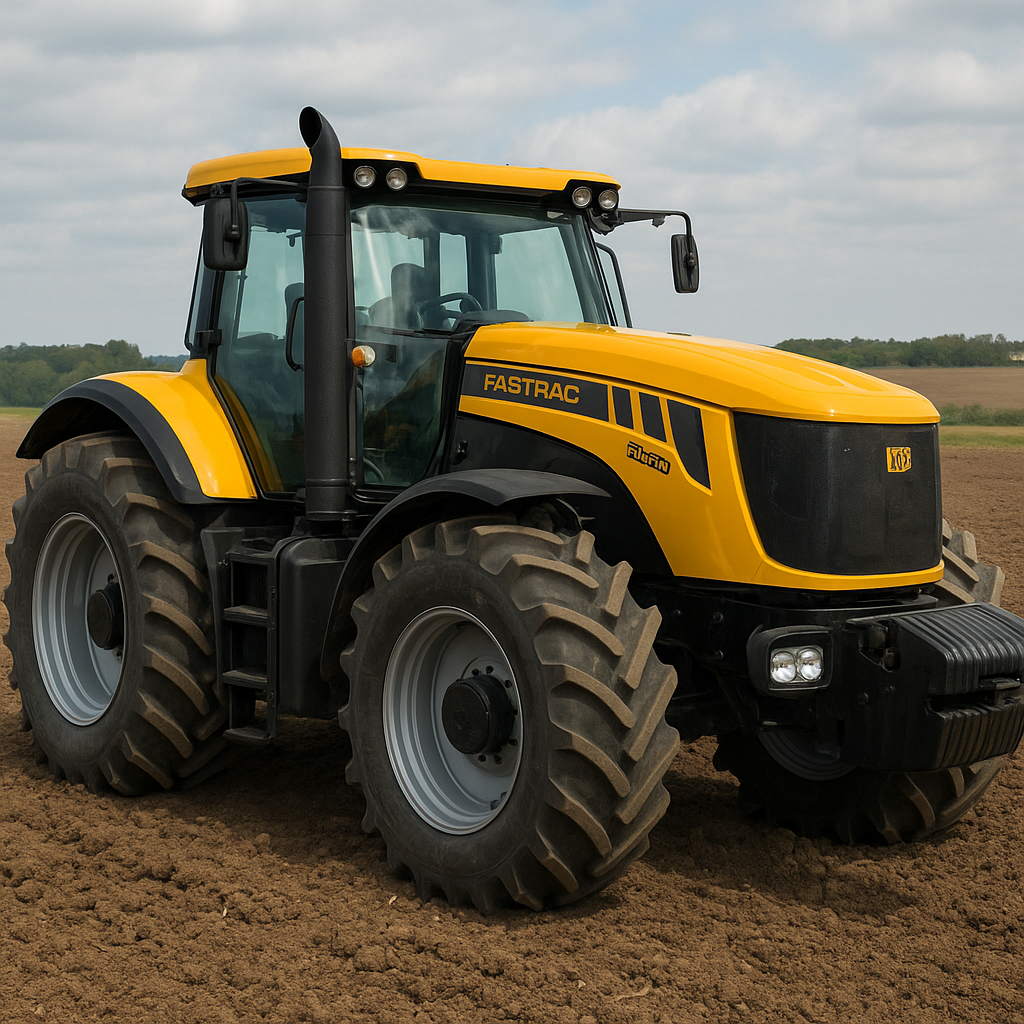
The JCB Fastrac 8250 stands out as one of the most recognizable tractors in modern agriculture and specialist contracting. Combining road-going speed with genuine field capability, the Fastrac range has long challenged conventional tractor design by prioritizing mobility, comfort, and multi-role functionality. In this article we examine the 8250’s design philosophy, technical highlights, practical applications, economic and environmental considerations, and real-world performance metrics. Throughout, key terms are emphasized to guide attention to the most important aspects of this machine.
Origins and design philosophy
JCB introduced the Fastrac concept with the goal of delivering a tractor capable of traveling at high road speeds while retaining full agricultural performance. The 8250 inherits that philosophy and refines it with modern materials, electronics, and ergonomic improvements. Rather than treating the tractor solely as a field machine, designers created a true mobile workhorse that reduces transit time between jobs, improves operator comfort on long runs, and increases productive hours per day.
The Fastrac’s most distinctive elements are its full-length chassis and suspension system. Unlike conventional rigid-frame tractors, the 8250 typically features independent or semi-independent suspension on both axles, yielding better ride quality at high speeds and improved traction over uneven terrain. This design improves stability on-road and reduces operator fatigue during long-distance moves—an advantage when moving between fields, yards, or job sites.
Key technical features and typical specifications
The JCB Fastrac 8250 is positioned as a high-powered, road-capable agricultural tractor. Specifications can vary by market and optional packages, but the following points summarize the most relevant technical characteristics typically associated with this model:
- Power: The model number 8250 conventionally indicates a power output around the 250 horsepower class, making it suitable for heavy tillage and large mounted or trailed equipment.
- Drive and chassis: Full-time four-wheel drive is standard, combined with a robust chassis designed for both traction and high-speed stability.
- Suspension: Both axle and cab suspension options are typically available, giving the 8250 exceptional comfort at road speeds—often cited as a unique selling point compared with conventional tractors.
- Top speed: One of the Fastrac’s signature capabilities is its high transport speed; many variants are capable of reaching up to 60 km/h (or around 37 mph) depending on legal limits and gearing options.
- Transmission: The 8250 is offered with robust transmissions engineered for smooth power delivery across field and road work. Configurations range from powershift units to continuously variable-type systems or advanced electronic transmissions in some markets.
- Hydraulics: High-flow hydraulic systems support a wide range of implements, with options for multiple remote valves and lifting capacities suited for heavy implements and rear-mounted equipment.
- Weight and dimensions: Kerb and operating weights vary with configuration and ballast, but the 8250 is a heavy, stable machine designed to carry large loads and tow substantial trailers or implements.
- Cab and ergonomics: A modern, climate-controlled cab with advanced controls, visibility, and comfort is a hallmark of the model—features which contribute to long-term operator productivity.
- Telematics and electronics: Integrated telematics, GPS compatibility, and electronic implement control help maximize efficiency and enable precision farming workflows.
Applications and workplace versatility
The JCB Fastrac 8250 is a multi-role machine whose strengths are most evident where transit speed, high power, and comfort converge. Typical applications include:
- Agricultural field operations: primary and secondary tillage with heavy ploughs and cultivators, drilling and seeding with large seed drills, and harvesting support roles where towing capacity and hydraulic power are essential.
- Transport and haulage: its speed advantage makes the 8250 highly effective for moving trailers, slurry tanks, and equipment between farms or from fields to storage or markets.
- Contracting and specialist work: contractors value the model when tasks require both field performance and rapid repositioning across distances—e.g., road verge mowing, contractor seeding, or multi-farm operations.
- Forestry and construction support: with proper tyres and protection packages, the 8250 can tow heavy loads, power hydraulic attachments, and support site logistics.
- Municipal and emergency roles: some municipalities and services use high-speed tractors for sweeping, snow clearing, and rapid response to rural incidents where speed and ruggedness are advantageous.
Operational advantages compared with conventional tractors
The Fastrac 8250 brings several tangible benefits that influence farm workflows and overall economics:
- Reduced downtime and transit time: moving at higher permitted speeds reduces the time the machine spends travelling, increasing productive field hours.
- Improved operator welfare: superior suspension and cab comfort decrease fatigue and can increase daily effective operation time.
- Flexible tasking: the blend of hydraulic capacity, PTO power, and towing capability allows the 8250 to handle a wide variety of implements without changing machines.
- Safety on-road: chassis and braking systems are engineered for higher-speed stability and controlled braking when loaded, improving safety during public-road transit.
Fuel use, efficiency, and environmental considerations
Given its size and power, fuel consumption on the 8250 will be higher than smaller tractors, but operational efficiency often offsets absolute fuel volume by enabling fewer passes, quicker transit, and quicker job completion. Key considerations include:
- Task-oriented fuel efficiency: heavy tillage or large seeding operations will consume more fuel, but completing operations faster can reduce total machine-hours and overall fuel per hectare.
- Engine emissions and compliance: modern versions of the Fastrac 8250 typically meet current emissions regulations (EU Stage IV/V, Tier 4 final, where applicable) through exhaust after-treatment systems and engine management—a factor that affects operating costs and environmental footprint.
- Precision farming integration: compatibility with GPS guidance, variable-rate application, and telematics enables more efficient use of inputs (seed, fertilizer, fuel), contributing to sustainability goals.
Maintenance, uptime and lifecycle costs
Maintenance strategies for a machine like the 8250 focus on maximizing uptime and protecting expensive components such as the drivetrain, suspension, and electronics. Practical maintenance points include:
- Preventative maintenance schedules for engines and transmissions reduce the risk of catastrophic failures and extend component life.
- Suspension and axle checks: because the Fastrac uses sophisticated suspension systems, regular inspection of bushes, dampers, and seals is necessary to maintain ride and steering precision.
- Hydraulic system health: regular filter, fluid, and hose inspections keep actuator and valve performance reliable, especially under heavy implement loads.
- Telematics-enabled servicing: remote diagnostics and fleet monitoring can help predict failures and schedule service during low-demand windows, increasing effective availability.
Comfort, ergonomics and operator environment
The Fastrac 8250 was developed with long days and mixed tasks in mind. Cab design pays special attention to:
- Ergonomics: intuitive controls, adjustable seating, and clear display layouts reduce operator strain and improve task accuracy.
- Visibility: elevated seating and large glass areas give good visibility for implement guidance, hitching, and road movement.
- Noise and vibration reduction: advanced cab mounting and suspension reduce noise and vibration levels, which benefits operator health and concentration.
- Climate control and amenities: heating, ventilation and air conditioning systems, plus optional infotainment and comfort packs, support long shifts in varying weather conditions.
Technology, automation and connectivity
As agriculture moves toward data-driven and precision systems, the 8250 supports a range of technologies that enhance productivity and decision-making:
- Telematics: fleet management tools transmit location, utilisation, and fault codes, enabling remote monitoring and efficient scheduling.
- Precision guidance: compatibility with auto-steer systems reduces overlap and operator error, conserving inputs and improving coverage consistency.
- ISOBUS and implement integration: modern control architectures allow the tractor to communicate directly with implements, automating depth control, seeding rates, or sprayer functions.
- Advanced diagnostics: onboard systems can provide predictive maintenance alerts and ensure rapid troubleshooting when problems occur.
Safety systems and regulatory considerations
Because the Fastrac 8250 is often used at higher speeds on public roads, safety features are emphasized:
- Enhanced braking systems are designed to handle the loads and speeds typical of the Fastrac’s multi-role use.
- Lighting and visibility packs ensure compliance with road regulations and improve safety during low-light moves.
- Operator protection: rollover protection, cab integrity, and ergonomic restraint systems align with contemporary safety standards.
- Regulatory compliance: machines sold in different regions are configured to meet local emissions, lighting, and speed-limit regulations; understanding the local legal frame is essential for operators.
Real-world performance and user experience
Farmers and contractors who operate the 8250 frequently cite several recurring advantages in testimonials and field reports:
- Significant time savings from fast transfers between jobs, often allowing a single machine to cover the workload of two traditional tractors in larger operations.
- Reduced operator fatigue during long transport, making the machine preferable for large estates or multi-site contractors.
- Strong towing capability and hydraulic performance that enable efficient use of large implements without compromise.
- High initial purchase cost can be offset by enhanced utilization rates and reduced need for additional transport vehicles.
Case studies and use scenarios
Illustrative scenarios show how the 8250 can change operational planning:
- Large arable farmer: With significant distances between fields, a farm replaces two older tractors (one for fieldwork, one for transport) with a single Fastrac 8250, completing both implements work and road transfers faster and reducing total fleet maintenance costs.
- Contractor operation: A seed-and-apply contractor uses the 8250’s speed to service multiple clients in a day, reducing mobilization time and increasing billable hours while maintaining large-seed drill and slurry application capability.
- Mixed farm with seasonal peaks: The Fastrac is used for heavy tillage during spring and then re-tasked to long-distance transport in harvest, optimizing capital by matching machine capabilities to seasonal demands.
Buying considerations and resale value
When evaluating a purchase, buyers should weigh:
- Intended usage profile—whether frequent road travel and multi-site work justify the premium for high-speed capability.
- Options and configuration needs—axle, suspension, hydraulic flow, and PTO options can materially affect performance and price.
- After-sales network—local dealer support and parts availability influence long-term operating costs and downtime.
- Resale prospects—a well-maintained 8250 often retains value well in markets where contractors and large farms prize the Fastrac attributes.
Environmental and community impact
While the 8250 is a large, powerful machine, its design can have positive environmental outcomes through improved efficiency:
- Fewer machine-hours for the same amount of work can reduce aggregate emissions per hectare.
- Precision farming integration reduces fertilizer and pesticide waste.
- High-speed transit reduces time on public roads, potentially lowering emissions during long transfers and reducing traffic disruptions.
Summary and concluding observations
The JCB Fastrac 8250 is a specialist tractor that challenges traditional assumptions about what a tractor should be. With its focus on mobility, comfort, and multi-role capacity, it is particularly well-suited to large-scale arable farms, contractors, and operations that require rapid repositioning combined with heavy implement capability. Typical strengths include higher road speeds (up to around 60 km/h in many configurations), a comfortable suspended chassis, and power in the vicinity of the 250 horsepower class—making it a compelling choice for those who prioritise productivity per machine-hour.
Decision-makers must balance the higher purchase price against lifecycle productivity gains, potential fuel and time savings, and the strategic flexibility of a single machine handling multiple roles. When configured and maintained properly, the Fastrac 8250 can deliver substantial economic and operational benefits across a wide range of agricultural, contracting, and specialist applications.
Selected highlighted terms
- JCB
- Fastrac
- 250 (horsepower class)
- 60 km/h (typical top speed)
- Suspension
- Transmission
- Telematics
- Hydraulics
- Productivity
- Versatility