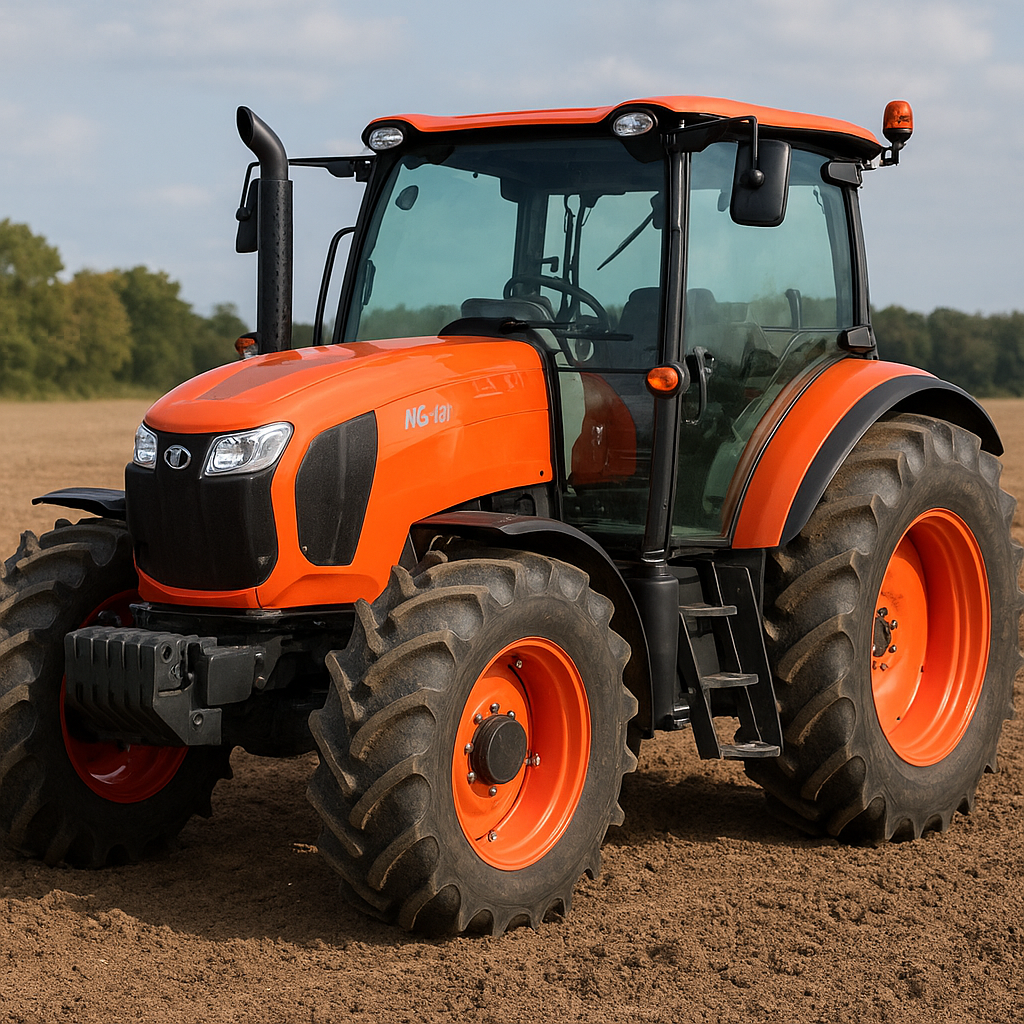
The Kubota M6-141 is a modern utility tractor designed to bridge the gap between compact workhorses and full-sized agricultural machines. Combining robust mechanical architecture with operator comfort and a wide range of implement compatibility, the M6-141 is aimed at medium to large farms, contractor operations and specialized agricultural tasks. This article explores the tractor’s design, practical applications, technical highlights and ownership considerations, providing a comprehensive picture for potential buyers, fleet managers and machinery enthusiasts.
Design and Technical Specifications
The Kubota M6-141 is engineered to deliver reliable performance across demanding tasks while remaining intuitive to operate. At the heart of the machine is a diesel engine tuned for steady torque delivery, matched to driveline and hydraulic systems engineered to handle heavy implements.
Engine and powertrain
- The M6-141 is typically rated in the neighborhood of 140 horsepower at the flywheel, making it suitable for a broad range of agricultural and contracting duties.
- Kubota equips its M-series tractors with engines designed for durability and efficient combustion, featuring modern fuel injection systems and emission control solutions to meet contemporary regulatory standards.
- Transmission options commonly offered on tractors in this class include synchronized, powershift and continuously variable systems (CVT/IVT), giving operators a choice between proven mechanical robustness and seamless speed control. The M6-141 is offered with transmission choices that prioritize both productivity and ease of use.
Hydraulics, PTO and three-point hitch
- Hydraulic flow and circuit versatility are critical on tractors used with modern implements. The M6-141 is specified with a hydraulic system capable of supporting multiple remote valves and mid-mount circuits for loaders and specialized tools.
- The rear three-point hitch is engineered to provide substantial lift capacity—typically in the several-thousand-kilogram range—sufficient for heavy tillage equipment, large mowers and bale handlers.
- PTO configurations (540/1000 rpm) are available to match a wide variety of implements, with the PTO delivering usable horsepower close to engine ratings under load.
Cab and operator environment
- Comfort and ergonomics are central to the cab design: features include an adjustable seat, clear instrument layout, effective climate control and low noise levels for long workdays.
- Visibility and access are optimized for loader work and implement monitoring, with well-placed windows and optional camera systems.
Applications and Typical Use Cases
Because of its power and equipment compatibility, the Kubota M6-141 is a highly versatile machine. Below are the most common sectors and tasks where this tractor excels.
Arable farming and field work
- Tillage operations such as ploughing, heavy cultivations and seedbed preparation. The tractor’s hydraulic capacity and lift strength make it suitable for large discs, cultivators and seed drills.
- Planting and fertilizing tasks where consistent power and precise speed control are essential for uniform application and efficient field coverage.
Hay and forage operations
- Mowing, raking, baling and bale handling are common uses. The M6-141 can run large mowers and disc mounts, pull balers and operate bale spears or grabs with its loader.
- Its PTO and hydraulic systems allow operation of self-loading trailers and forage harvest heads in mixed livestock or forage enterprises.
Livestock and mixed farms
- Feeding, manure handling and bedding work benefit from the tractor’s loader capacity and maneuverability. The cab comfort and visibility make repetitive tasks less fatiguing.
- Transport tasks around the farm—moving feed, bedding or equipment—are simplified by strong drawbar and hitch configurations.
Contracting and municipal tasks
- With optional attachments like front loaders, pallet forks, hydraulic breakers or sweepers, the M6-141 is commonly used by contractors and municipalities for road-side maintenance, small excavation tasks and urban services.
- Snow clearing and transport tasks are made possible by the tractor’s combination of power and implement compatibility.
Performance, Efficiency and Field Results
The M6-141 balances raw power with operational efficiency. Operators and fleet managers often evaluate tractors not only by horsepower but by usable PTO output, fuel consumption at working loads and the machine’s ability to maintain traction under load.
Fuel consumption and operational economy
- Actual fuel consumption varies with duty cycle, implement type and driving conditions. For a tractor in the 130–150 hp class, typical consumption under moderate load can range from roughly 12 to 25 liters per hour; in heavy draft conditions this can be higher. The M6-141 benefits from engine tuning and modern fuel systems aimed at optimizing fuel economy relative to power output.
- When evaluating whole-life costs, consider fuel, scheduled maintenance, tire wear, hydraulic fluid and resale value. Kubota’s dealer network and parts availability can reduce downtime and associated expenses.
Tractive performance and ground protection
- Large tractors like the M6-141 are designed to deliver consistent tractive effort with ballast options and tire choices that trade off between floatation and traction. Selecting appropriate tires or duals is crucial for minimizing compaction while maintaining grip in wet soils.
- Advanced traction control systems and differential lock options improve field performance, especially in variable conditions.
Productivity features
- Features such as cruise control, headland management and electronic linkage control improve repetitive task efficiency and reduce operator workload.
- Telematics and connectivity options—available on many modern Kubota models—allow fleet managers to monitor fuel usage, location and maintenance schedules remotely, improving uptime and operational planning.
Comfort, Safety and Operator Aids
Long shifts in the cab demand a balance of comfort and safety. The M6-141 addresses these with both passive and active features to protect operators and simplify operation.
Cab ergonomics and visibility
- Adjustable seats, clear control layouts and low sound levels make long hours more comfortable. The cab typically provides excellent all-around visibility for loader work and implement monitoring.
- Heating, ventilation and optional air conditioning systems keep the operator comfortable in varied climates.
Safety systems
- ROPS-certified structures, reliable braking systems and multiple lighting options ensure safety during road transit and nighttime work.
- Modern models offer easy access steps, handholds and well-placed switches to reduce the risk of slips and fatigue-related incidents.
Electronics and convenience
- Intuitive instrument clusters, joystick options for loader control and straightforward hydraulic mapping reduce training time for new operators.
- Optional integrated cameras and advanced lighting packages help operators maintain precision and safety in challenging visibility conditions.
Maintenance, Reliability and Ownership Considerations
Purchasing a tractor like the Kubota M6-141 is a long-term investment. Understanding maintenance needs, expected uptime and residual value will help owners make economically sound decisions.
Scheduled maintenance and serviceability
- Easy access to service points—filters, fluids and belts—reduces routine maintenance time and costs. Following manufacturer-recommended intervals for oil, coolant and filter changes protects engine life.
- Using genuine parts and lubricants can extend component life, improve performance and protect warranty coverage.
Durability and common wear items
- Hydraulic components, PTO clutches, transmissions and axles can be subject to high wear in heavy usage. Periodic inspections and proactive replacement of hoses, seals and bearings reduce the risk of unscheduled downtime.
- Tires are a major operating cost; choosing the right specification and monitoring pressures extends service life and preserves soil structure.
Resale and fleet planning
- Kubota’s reputation for reliability and strong distribution networks can help maintain resale value compared to lesser-known brands. Regular documented maintenance and low operating hours are key resale drivers.
- When planning a fleet, consider utilization rates: over- or under-sizing a tractor relative to typical tasks reduces fleet efficiency. The M6-141 suits operations where a single higher-hp unit replaces multiple smaller machines for improved productivity.
Comparisons and Market Position
Within the mid-range to high mid-range tractor market, the Kubota M6-141 competes with models from other major manufacturers that offer similar power and features. Buyers should weigh brand support, dealer presence, total cost of ownership and specific feature sets when evaluating alternatives.
Key strengths
- Versatility: effective across crop, livestock and municipal roles.
- Operator comfort: cab ergonomics and low noise levels for long shifts.
- Implement compatibility: robust hydraulics and PTO choices enable a wide implement range.
- Dealer support: Kubota’s global network provides parts and service infrastructure in many regions.
Potential considerations
- Initial purchase price relative to lower-powered alternatives; ensure the machine is right-sized for typical workloads.
- Availability of specialized options (e.g., specific transmissions or telematics packages) can vary by market and may affect lead times or final cost.
Statistics and Real-World Data
Exact numerical specifications can vary by market and model year. Below are representative figures and performance indicators commonly associated with a tractor in the 140 hp class such as the Kubota M6-141. Where precise numbers depend on configuration, ranges are provided.
- Nominal engine power: approximately 135–145 hp (ISO) depending on configuration.
- PTO power: often slightly lower than engine rating—typical usable PTO power might be in the 120–135 hp range under load.
- Rear lift capacity: many tractors in this segment offer lift capacities roughly between 4,000 and 6,500 kg at the hitch points; specific figures for the M6-141 are dependent on hitch and linkage options.
- Hydraulic flow: combined hydraulic flow rates for implement circuits commonly fall between 80 and 140 liters per minute on tractors of this class.
- Fuel consumption: operational fuel use varies widely; a mid-load typical range can be 12–25 L/h, while efficient transport or light work can fall below this range.
- Weight: operating weight typically ranges from around 4,000 to 6,000 kg depending on ballast, tires and options.
For the most accurate and up-to-date specifications—engine displacement, exact lift capacity, hydraulic flow rates and optional equipment—consult your local Kubota dealer or the official product documentation for the specific model year and market variant.
Buying Tips and Final Considerations
Choosing the right tractor involves more than comparing horsepower numbers. The M6-141 is a strong candidate for operators needing a reliable, versatile machine capable of handling a broad workload. To make the most informed decision:
- Match tractor capabilities to the majority of tasks rather than occasional extremes; a tractor that is correctly sized for typical workload will generally be more economical.
- Consider total cost of ownership: fuel, maintenance, tires, insurance and expected resale value.
- Inspect service networks and parts availability in your region; prompt service support minimizes downtime.
- Request a demonstration or rental period where possible to evaluate visibility, comfort and compatibility with your implement fleet.
Overall, the Kubota M6-141 offers a balanced combination of power, durability and operator-focused design. It is well-suited for farms and contractors that need a single, flexible tractor capable of performing a wide spectrum of agricultural and utility tasks while providing comfortable and safe working conditions for operators.