
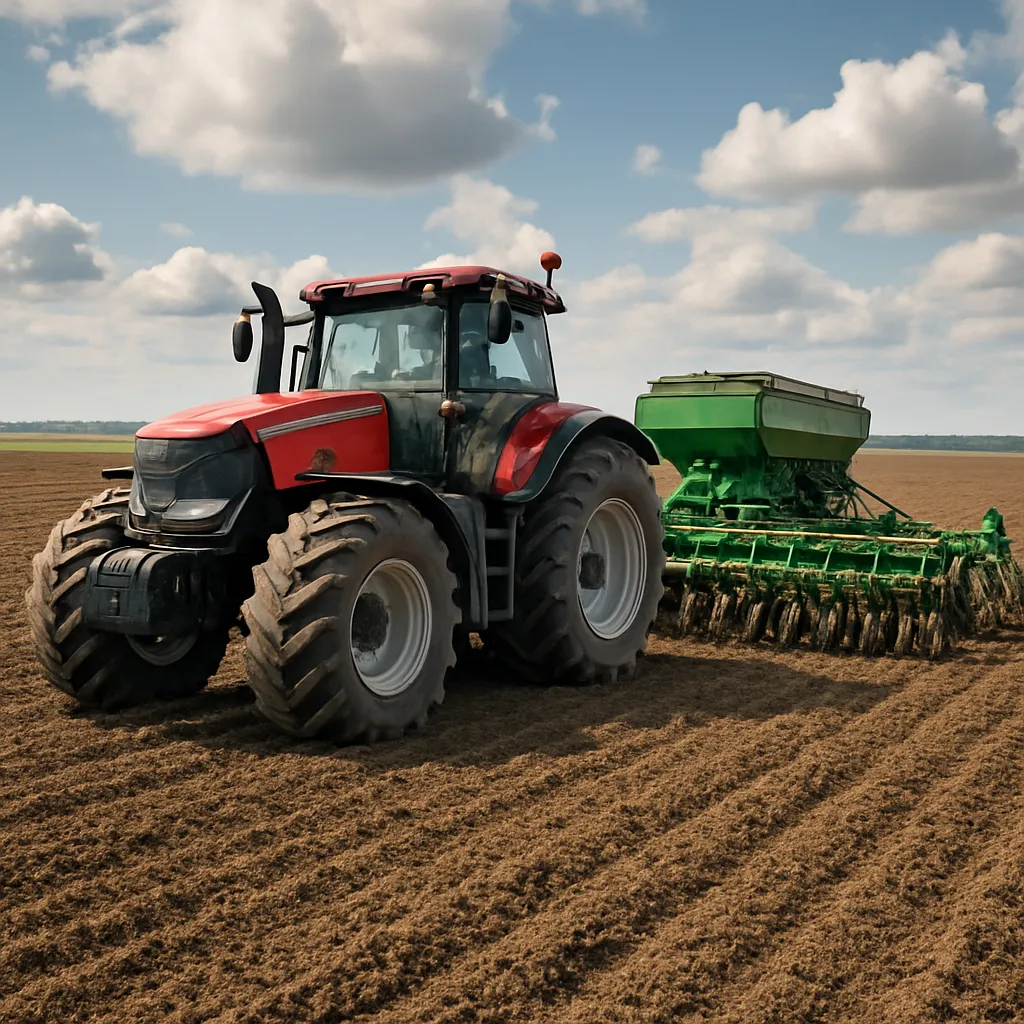
Across the world, the race to boost food production has driven a revolution in modern farm equipment. Among all the machines that dominate today’s fields, the largest and most powerful tractors stand out as the true workhorses of large-scale farming. These giants combine extreme horsepower, intelligent electronics and advanced hydraulics to handle tasks that once required entire fleets of smaller machines. From ripping through heavy soils to pulling the widest seeders and planters, they allow farmers to cover vast areas in tight seasonal windows. As climate variability grows and margins tighten, high-horsepower tractors are becoming not just a symbol of technological progress, but a critical tool for efficiency, precision and long-term sustainability in global agriculture.
Why the Biggest Tractors Matter in Modern Agriculture
Large-scale farms run on tight schedules, complex logistics and narrow planting and harvesting windows. On such operations, the biggest tractors play a strategic role. Their massive pulling power allows farmers to operate wider implements at higher speeds, reducing the number of passes over the field. This saves fuel, time and labor while limiting soil compaction in comparison with running multiple smaller tractors over the same area. The ability to do more in fewer passes is key when weather conditions suddenly change and farmers must plant or harvest before rain, heat or frost damages the crop. In addition, high-horsepower machines can handle deeper tillage, heavy subsoiling and large grain carts, operations that support high yields and operational reliability.
Key Technologies Behind High-Horsepower Tractors
The biggest tractors today are far more than just engines on wheels. Their performance comes from a combination of technologies that work together to deliver power, traction and control with impressive precision. High-capacity engines with advanced fuel injection and turbocharging generate enormous torque at low revolutions, enabling the tractor to pull heavy loads without stalling. Continuously variable transmissions and powershift gearboxes transfer this energy efficiently to the wheels or tracks, optimizing fuel use and keeping the engine in its most efficient operating range. Modern hydraulic systems supply the flow and pressure needed to control wide implements, seeders and planters with multiple sections and depth-control systems, ensuring consistent operation across every meter of the field.
Equally important are the digital systems that govern this power. GPS-based guidance, automatic steering and section control reduce overlap, gaps and operator fatigue. High-resolution displays inside the cab bring together data from the engine, transmission, hydraulics and implements, giving operators a clear picture of how their machine is performing. Telematics solutions send real-time information back to the farm office, allowing managers to track fuel consumption, location and machine health. Many of the largest tractors also provide sophisticated traction-control systems that automatically adjust power distribution between wheels or tracks to prevent slip and protect soil structure. As a result, these machines are both powerful and precise, allowing very fine control even when working with enormous implements.
Articulated Tractors: Powerhouses for Heavy Draft Work
Articulated tractors are the classic image of high-horsepower power units on sprawling farms. Their design, with a pivot in the center of the chassis, allows the front and rear frames to turn relative to one another, steering the whole machine through articulation rather than front-wheel steering. This architecture spreads the weight of the tractor across a long wheelbase, providing excellent traction and stability when pulling heavy tools. Articulated machines often operate with dual or triple tires, or on large tracks, to reduce ground pressure while still transmitting huge amounts of torque to the soil. The result is a tractor capable of pulling some of the widest cultivators, rippers and air seeders available on the market.
Because they are usually deployed on wide open fields, articulated tractors tend to be equipped with the highest horsepower ratings and the most robust drivetrains. They can maintain consistent working depth even through variable soil conditions, ensuring that deep tillage and primary cultivation are done properly on every pass. In large grain-growing regions or expansive mixed-crop farms, one articulated tractor may complete work that would otherwise demand multiple mid-sized machines. This reduces the number of operators required and simplifies scheduling. However, these advantages also come with the need for highly trained drivers and careful maintenance routines, as the mechanical stresses and operating costs are considerable.
Tracked Giants: Reducing Compaction and Maximizing Traction
Another important category of big tractors consists of large tracked models, either with two main tracks or four independent track units. Tracked tractors distribute their weight over a larger surface area than wheeled machines, lowering ground pressure and reducing deep soil compaction. On heavy soils or in wet conditions, this can make the difference between working the land on time or being forced to wait, sometimes missing the ideal planting window. Tracked machines also deliver exceptional traction, allowing full use of extreme horsepower without excessive wheel slip, which wastes fuel and damages soil structure. For many large farms, the choice between wheels and tracks depends on climate, soil type and the type of crops grown.
Modern tracked tractors incorporate sophisticated suspension systems to smooth the ride and keep as much of the track in contact with the ground as possible. This not only protects the operator from excessive vibration but also improves power transfer and steering response. Steering is achieved through differential track speed, supported by advanced hydraulic controls and electronic sensors that ensure smooth turns even under heavy load. Because of their excellent traction and reduced compaction, tracked giants are especially valued in high-value crops, conservation tillage systems and operations where soil health and long-term productivity are top priorities. While they require specific maintenance, particularly of the undercarriage and track components, their benefits in difficult conditions can outweigh the added complexity.
Precision Agriculture on a Massive Scale
The biggest tractors are natural platforms for precision agriculture technologies. Their large size and extensive working hours make them ideal carriers for advanced sensors, communication equipment and automated control systems. Auto-steering based on satellite correction signals allows these machines to follow straight and curved lines with sub-inch accuracy. This reduces overlap during spraying, seeding and fertilizer application, directly improving input efficiency and lowering operating costs. Section control systems turn individual sections of implements on and off automatically as the tractor crosses previously treated areas or field boundaries, decreasing double application and minimizing environmental impact.
Variable-rate technology takes this a step further by adjusting seeding density, fertilizer rates or crop protection doses according to detailed field maps. The largest tractors, with their powerful electronics and generous hydraulic capacity, can handle complex variable-rate prescriptions in real-time while pulling wide implements. On large farms, the economic impact is significant: less waste of expensive inputs, more uniform crop emergence and better matching of inputs to the yield potential of each part of the field. Data collected by these tractors during every operation can be analyzed later to refine agronomic decisions, providing a continuous improvement cycle where machinery and agronomy support each other in search of higher efficiency.
Operator Comfort and Safety in High-Power Machines
Running the biggest tractors often means spending long hours in the cab during critical seasons, making operator comfort and safety essential design priorities. Modern cabs are engineered as quiet, climate-controlled work environments with suspension systems that isolate the operator from shocks and vibrations. Spacious interiors, ergonomic controls and fully adjustable seats help reduce fatigue, which in turn supports better decision-making and safer operation over long shifts. High-visibility windows, well-placed mirrors and multiple camera feeds provide a comprehensive view of the surroundings, essential when maneuvering large machines with wide implements at field entrances, roadways or near obstacles.
Safety systems extend beyond physical protection to include digital assistance. Integrated monitoring alerts the operator if engine parameters, transmission temperatures or hydraulic pressures move outside safe ranges. Some tractors can automatically reduce power or activate limp-home modes to prevent catastrophic damage. Headland management systems automate repetitive sequences at the end of each pass, such as raising implements, reducing speed and switching direction, lowering the chance of operator error. As these machines become more connected, remote diagnostics and over-the-air software updates further improve reliability and reduce downtime, ensuring that the tractor can keep working safely during the most demanding periods of the season.
Economic Considerations: Cost, Efficiency and Return on Investment
Investing in the largest tractors requires careful financial planning, as purchase prices, maintenance costs and fuel consumption are substantial. However, for large-scale farms, the economics can be favorable when the machine is used to its full potential. The ability to work wider implements at higher speeds means more hectares covered per hour, which directly reduces the number of machines and operators needed. Lower labor requirements, fewer support vehicles and simplified logistics can offset the higher initial cost. Additionally, operating one well-utilized large tractor may be more fuel-efficient per hectare than several smaller machines performing the same tasks separately.
To achieve a positive return on investment, many farmers analyze their field sizes, cropping patterns and seasonal workload requirements before choosing a tractor class. Factors such as expected annual hours, fuel prices, hiring availability and local service support all influence the decision. Leasing and cooperative ownership models are emerging in some regions, allowing multiple farms to share access to the largest units while splitting costs. With careful planning, big tractors can become central assets that stabilize production capacity, improve the ability to respond to weather challenges and support strategic expansion of cultivated area over time.
Environmental Impact and Sustainable Use of High-Power Tractors
The environmental footprint of big tractors is a growing concern, especially regarding fuel use, emissions and soil health. Manufacturers have responded by adopting advanced emission-control technologies that comply with strict regulations, significantly reducing particulate matter and nitrogen oxides. Engine management systems optimize combustion across varying loads, improving fuel efficiency and cutting greenhouse gas emissions per unit of work done. When integrated with precision agriculture, these machines contribute to more targeted input use, reducing over-application of fertilizers and crop protection products, which indirectly benefits water quality and biodiversity.
Soil protection remains a critical topic. While the weight of the biggest tractors is substantial, design solutions help mitigate compaction risks. Wide tires, duals, triples and tracks spread the load over a larger area, decreasing ground pressure. Automatic tire inflation systems adjust pressure according to field or road conditions, lowering compaction in the field while preserving tire life during transport. Coordinated planning of field traffic, including fixed traffic lanes and reduced passes through precision-guided operations, further protects soil structure. By combining high power with careful management practices, large-scale farms can use these machines in ways that support long-term sustainability rather than undermine it.
Future Trends: Automation, Electrification and Connectivity
The future of the biggest tractors is closely linked to broader trends in automation and digital agriculture. Autonomous capabilities are expanding, with prototypes already able to perform tasks under remote supervision or even operate without an onboard driver in specific conditions. While full autonomy on large mixed-use farms may still take time, incremental features such as automated turning, obstacle detection and path planning are gradually reducing the operator’s workload and improving efficiency. In parallel, connectivity is deepening, turning tractors into mobile data hubs that communicate continuously with farm management software and other machines.
Electrification is another emerging frontier. Although fully electric large tractors face challenges related to battery capacity and charging infrastructure, hybrid systems and more efficient drivetrains are being explored to reduce fuel consumption. Additional gains may come from integrating tractors more tightly with renewable energy production on farms, such as biogas or solar power, to offset fossil fuel use. As regulations, technologies and economics evolve, the design of high-horsepower tractors will continue to adapt, balancing the need for extreme power with a growing emphasis on sustainability and resource efficiency.
The Strategic Role of Big Tractors in Global Food Production
As the global population grows and diets change, agricultural systems must produce more food on existing land while facing climate uncertainty and environmental pressures. The biggest tractors powering large-scale farming are central tools in this effort. They provide the capacity to prepare soil, plant, fertilize and harvest at the scale and speed required to meet modern demand. When combined with smart planning, precise agronomy and responsible management of soil and water, these machines help farmers increase yields without proportional increases in resource use. Their strength lies not only in raw horsepower but in the integration of mechanical, electronic and digital technologies into cohesive, efficient systems.
Ultimately, the future of these giant tractors will be shaped by how well they serve both productivity and stewardship goals. Their design and operation will continue to evolve under the influence of farmers’ practical experience, engineering innovation and societal expectations. In this context, the biggest tractors are more than impressive machines; they are key components in a complex, interconnected agricultural landscape where performance, resilience and sustainability must advance together.


Leave a Reply