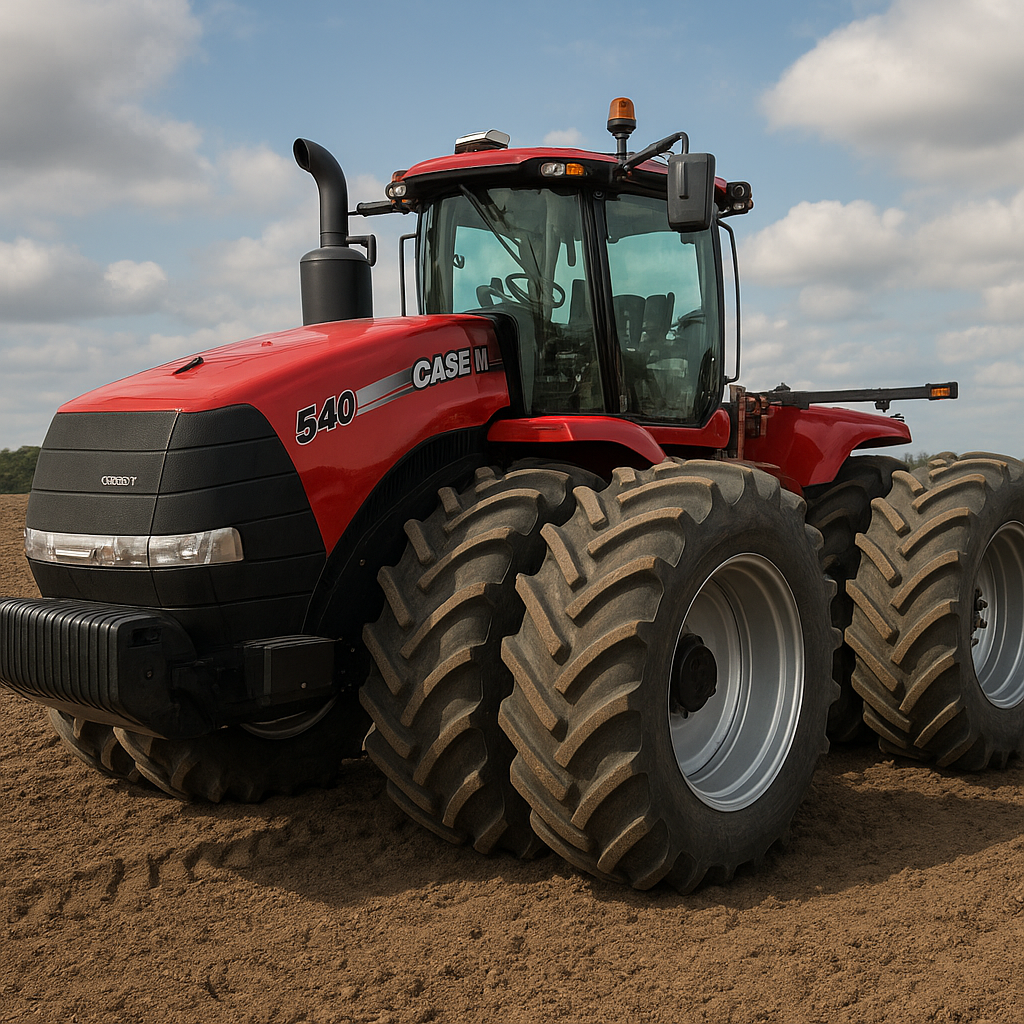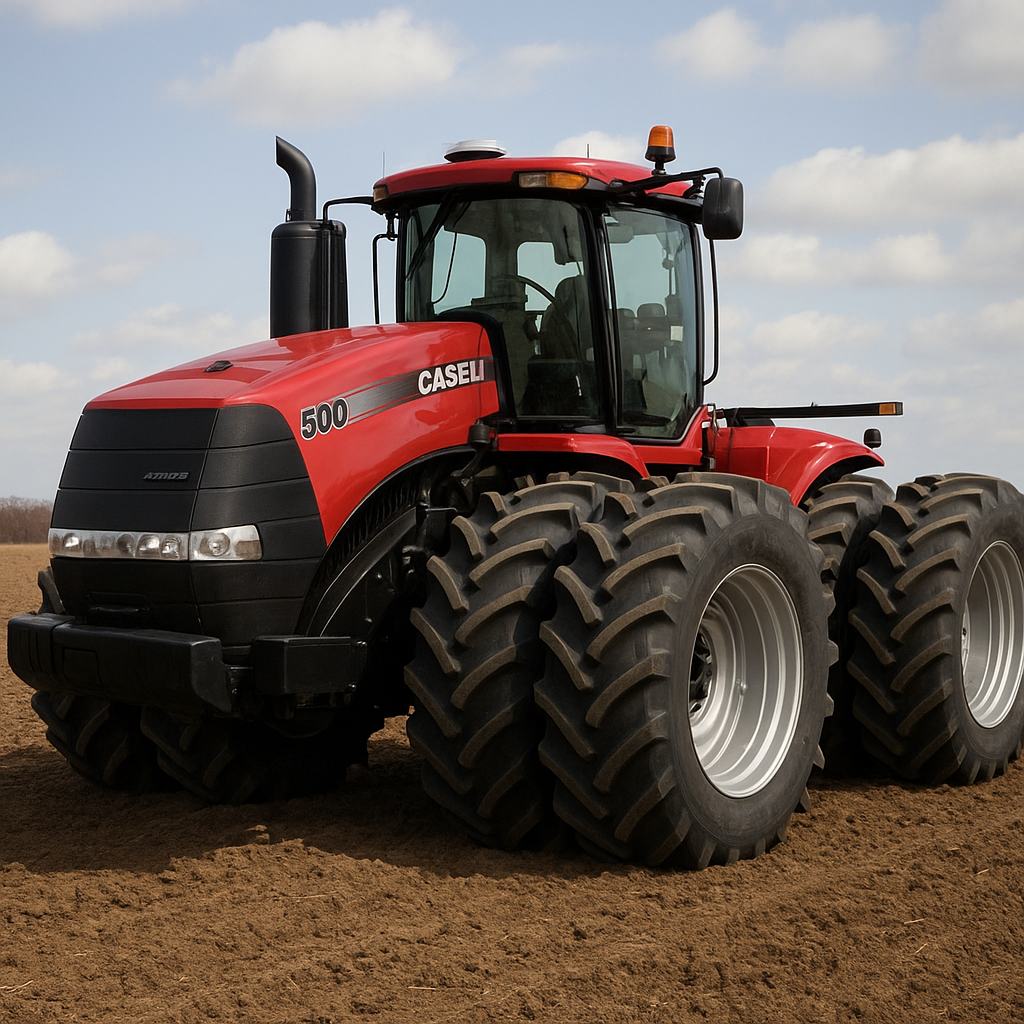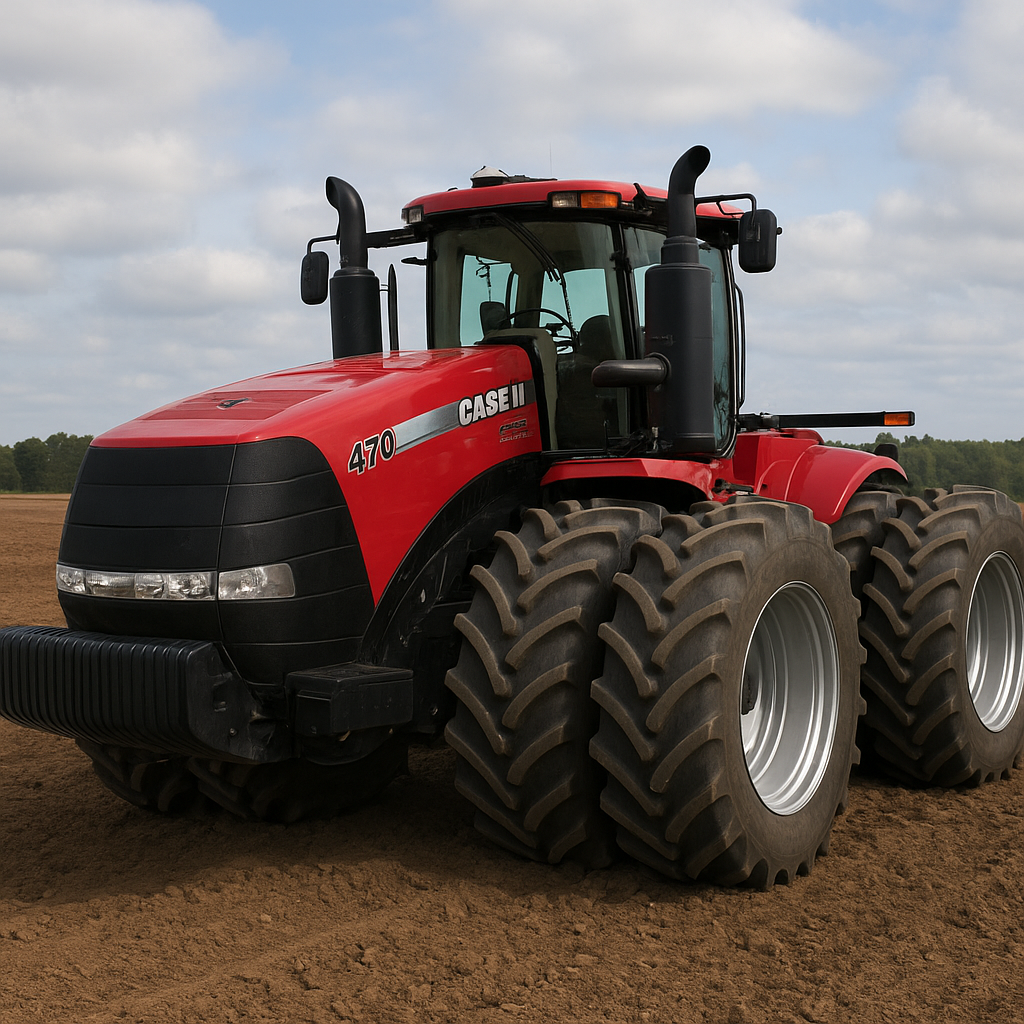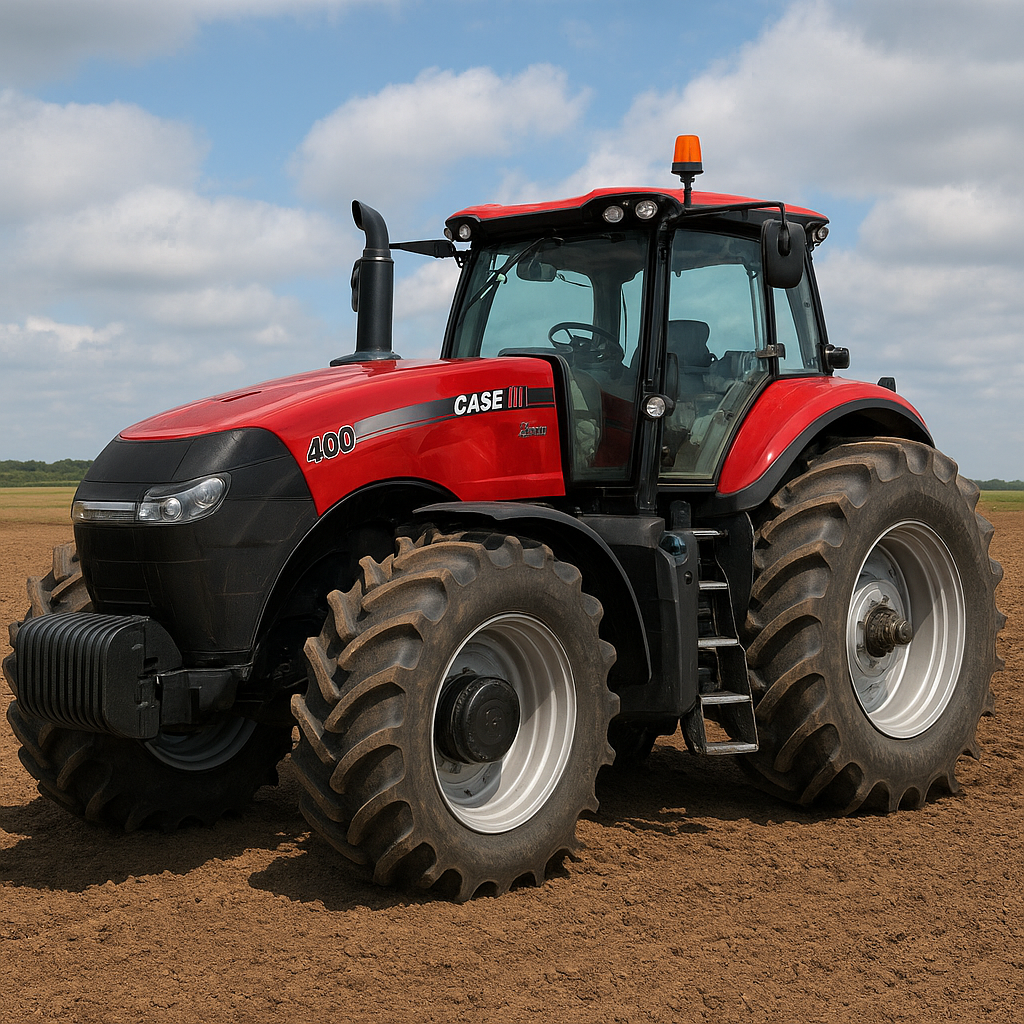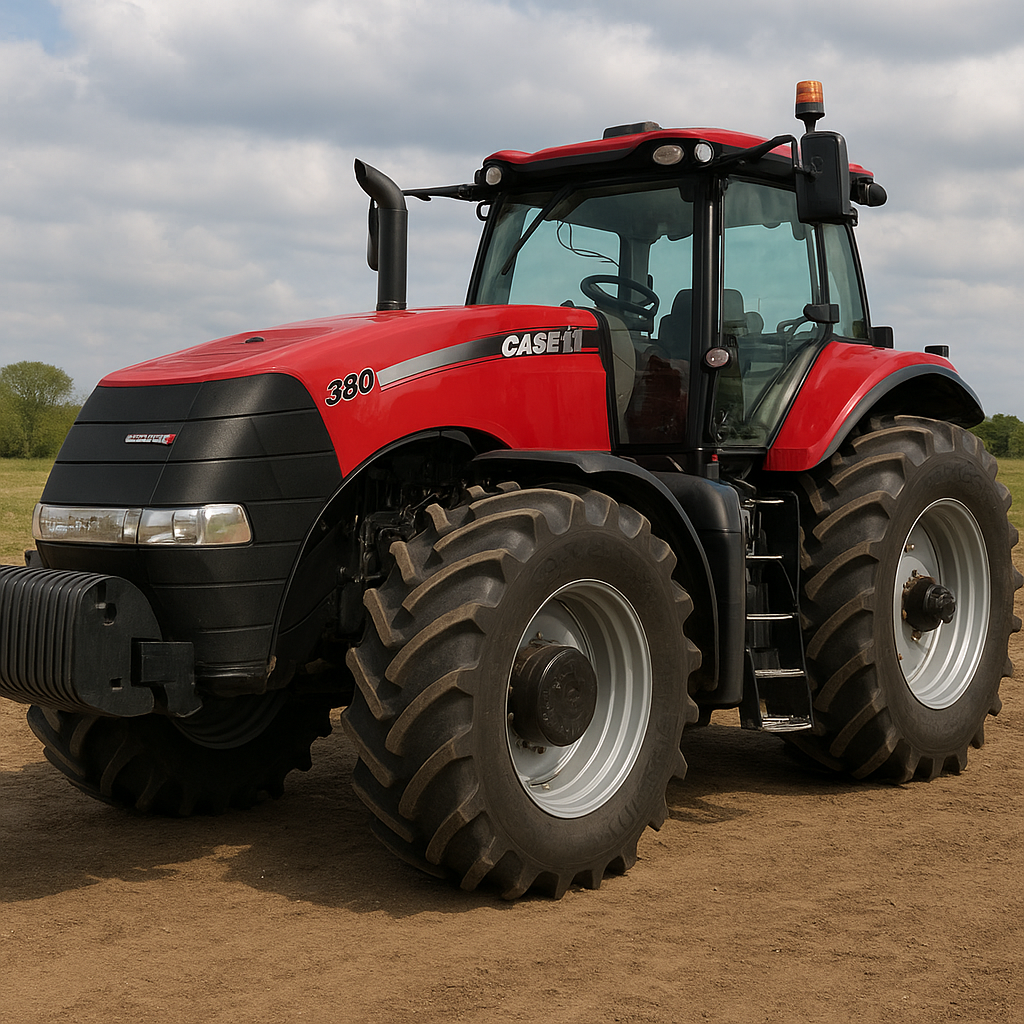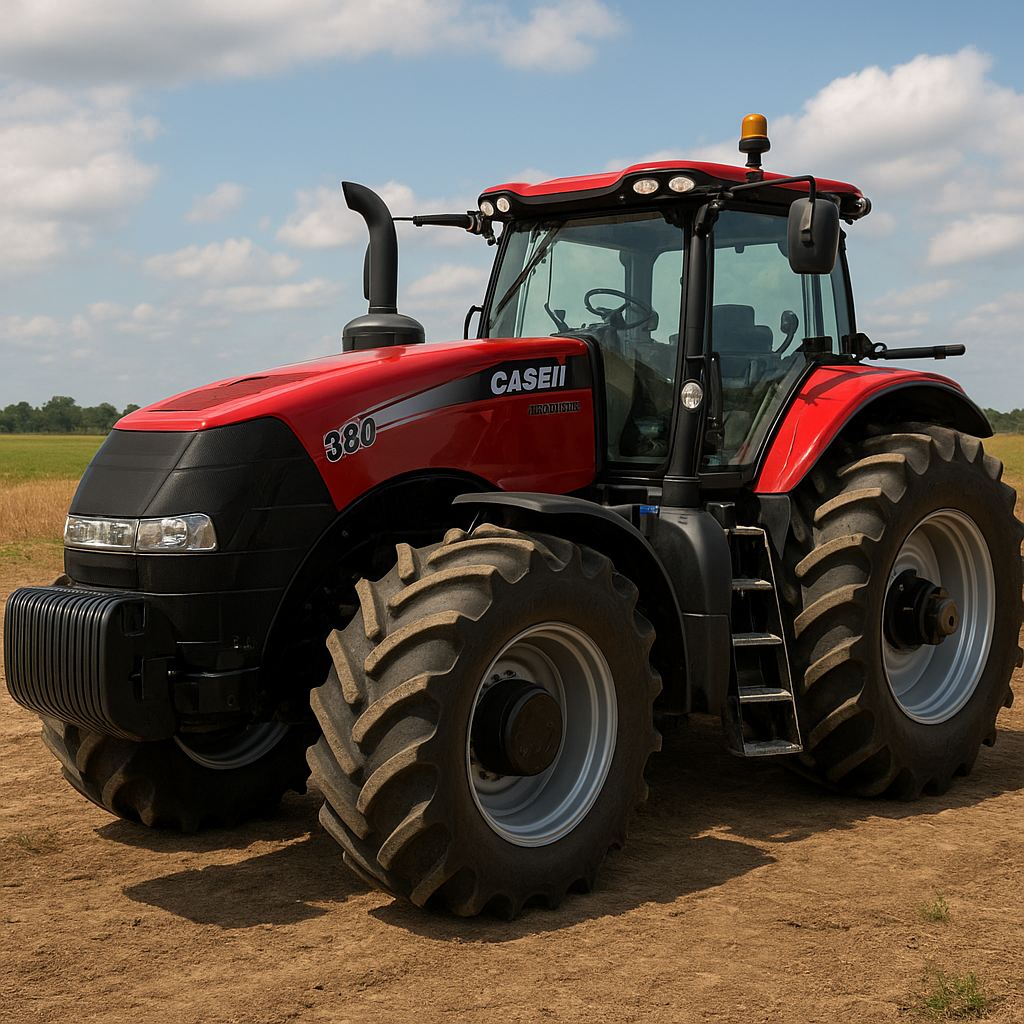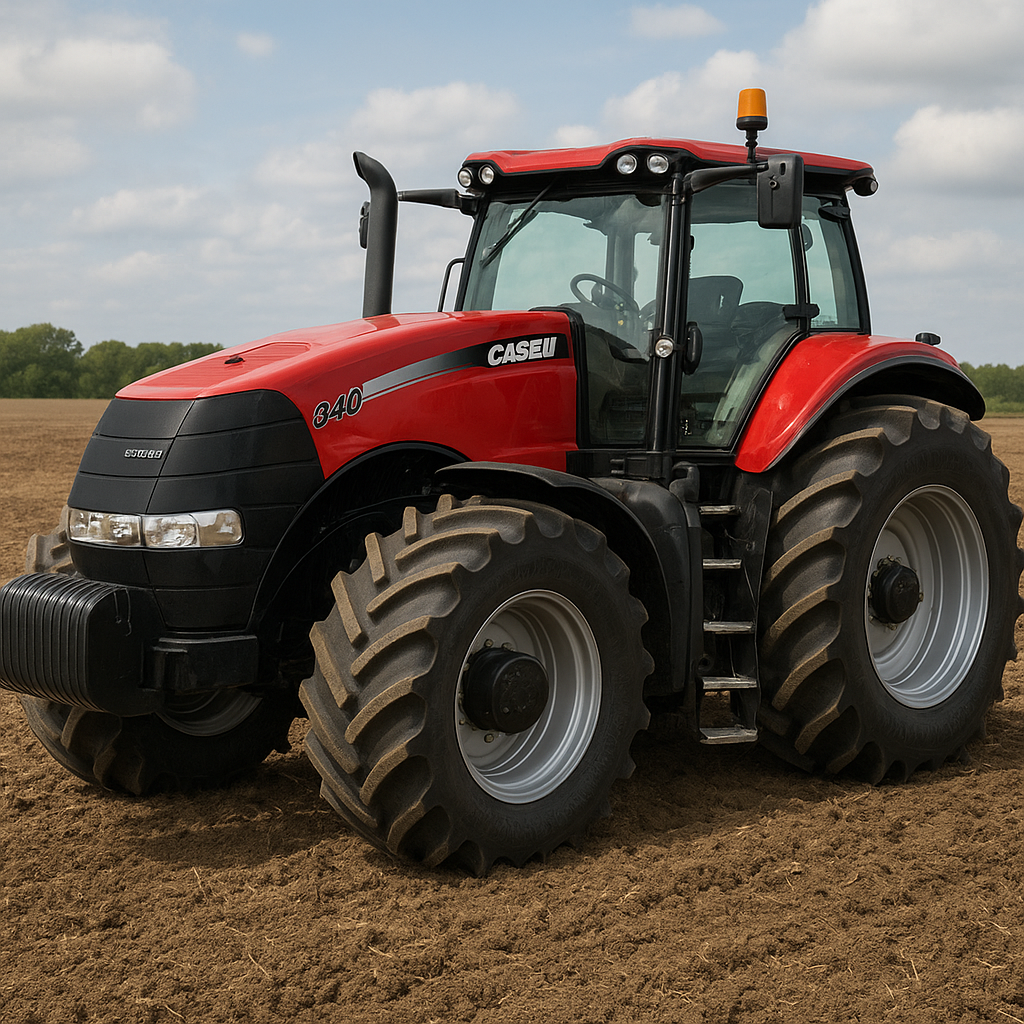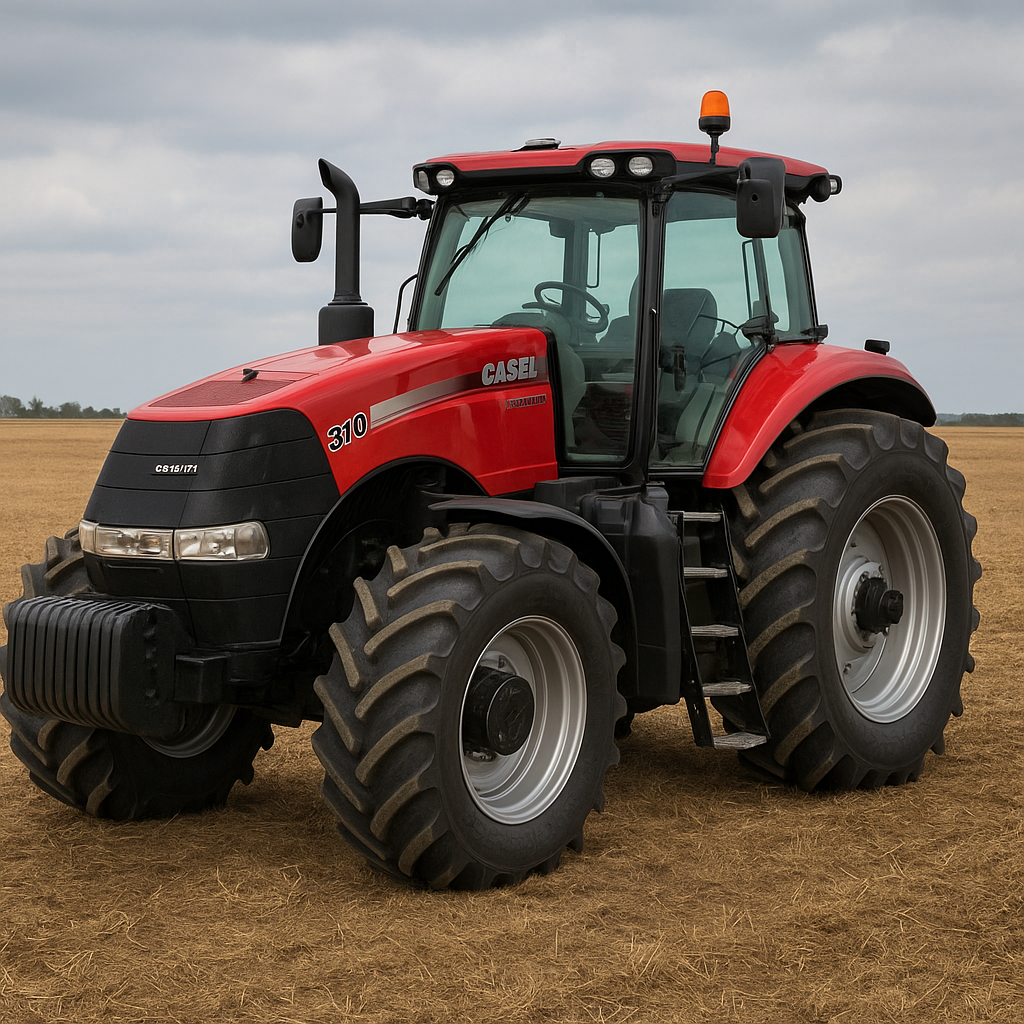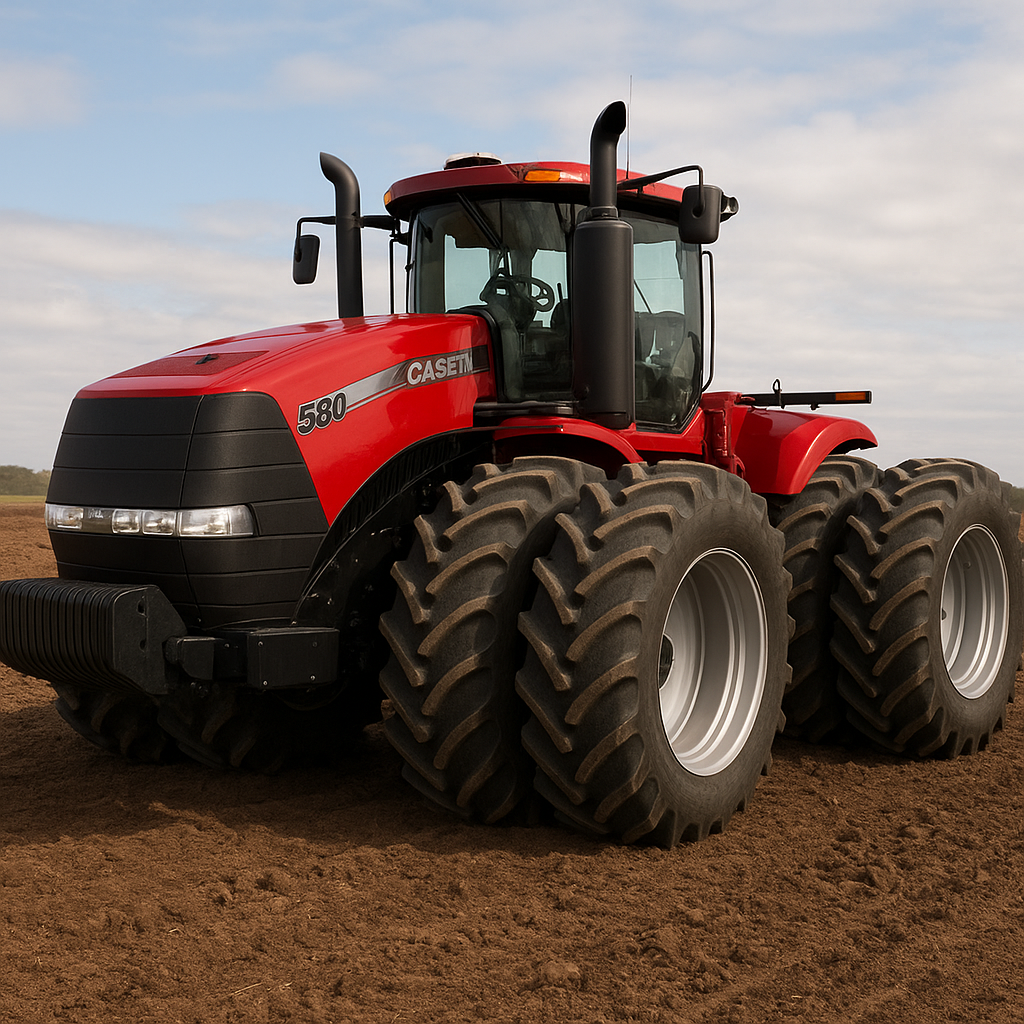
The Case IH Steiger 580 represents a class of heavy-duty agricultural tractors designed for the most demanding field tasks. Combining immense power, robust construction and modern electronics, the Steiger 580 is aimed at large-scale farms, contractors and operators who require sustained performance across a variety of implements and soil conditions. This article explores the tractor’s design, typical uses, technological features and practical considerations — including commonly cited specifications and operational data — to give a comprehensive picture of where and how the Steiger 580 fits into contemporary farm operations.
Design and engineering philosophy
The Steiger family has been synonymous with high-horsepower, four-wheel drive tractors for decades. The Steiger 580 follows that lineage with an emphasis on structural strength, driveline durability and serviceability. At the core of its design is a heavy-duty frame and reinforced axles, engineered to withstand repeated high-load cycles experienced when pulling large tillage tools, planters and heavy trailers.
Powertrain and drivetrain
The Steiger 580 is built around an engine and transmission package that prioritize both raw force and the ability to modulate that force under varying load. The model designation (580) refers to nominal engine power, making 580 horsepower a defining figure for prospective buyers. This places the tractor in the top tier of agricultural traction machines where continuous high power is required.
- Engine: Large-bore diesel engine tuned for high torque at low rpm, optimizing fuel burn during heavy draft conditions.
- Torque characteristics: Designed to maintain pulling power through large implements without frequent gear changes.
- Transmission: Often offered with advanced step-less or efficiently stepped options to provide smooth speed control and maximize tractive effort.
Manufacturers and distributors often pair the engine with sophisticated cooling systems and heavy-duty air intake arrangements to ensure reliability during long working days in hot conditions. Chassis and axle design focus on minimizing frame flex to preserve traction geometry and extend component life.
Operator environment and controls
At this power level, operator comfort and control systems matter. The Steiger 580 typically includes a spacious cab with ergonomic controls, integrated monitoring displays and climate control. Modern variations may offer precision-farming interfaces, allowing connection with GPS guidance, variable-rate implement control and telematics solutions. These features reduce operator fatigue and enable more consistent field work over multi-hour shifts.
Primary applications and field roles
The Steiger 580 is a workhorse for large-scale agriculture and contracting. Its combination of power and traction makes it suitable for tasks that require sustained drawbar pull and the ability to haul heavy implements over varied terrain.
Typical uses
- Primary tillage: pulling deep ploughs and large cultivator arrays across extensive acreage.
- Seeding and planting: combined with large seed drills and planters for high-acreage, time-sensitive operations.
- Heavy hauling: moving loaded grain carts, tanker trailers and large transport implements between fields and storage.
- Land preparation and finishing: leveling, packer operations and large harrow configurations where uniform ground contact is critical.
- Specialized roles: conversion to ballast carriers, self-propelled sprayer platforms, or integration with high-capacity seed and fertilizer systems.
Contractors and large farms value the Steiger 580 for its ability to cover more acres per hour, especially in regions where planting and harvest windows are short and weather-dependent. In traction-limited conditions — wet soil, heavy residues or slopes — the tractor’s weight distribution and tire/track options help maintain forward motion where lesser machines would stall.
Wheel vs. track configurations
One key choice for operators is between conventional dual-wheel/ballasted axle configurations and tracked or row-track variants. Tracks distribute weight over a larger area, reducing soil compaction and improving traction in soft ground. Wheel configurations, on the other hand, typically have lower rolling resistance and can offer slightly higher transport efficiency on roads. The Steiger 580 platform has been offered in multiple undercarriage variants to match client needs.
Key features and technology
Modern examples of the Steiger 580 incorporate a suite of features that improve productivity, reduce operating costs and streamline maintenance.
Precision agriculture and automation
Integration with precision guidance systems is a major productivity enhancer. Autosteer, section control and variable-rate application systems allow a Steiger 580 to:
- Reduce overlap and skips in field passes, saving seed, fertilizer and fuel.
- Maintain consistent implement depth and orientation, which improves seed placement and tillage uniformity.
- Enable remote diagnostics and monitoring through telematics, helping reduce downtime and optimize service schedules.
These technologies make the tractor a central node in data-driven farm management, enabling operators to link field telemetry with operational planning.
Hydraulics and PTO capability
High-flow hydraulic systems and robust PTO (power take-off) capacity are critical when powering large air seeders, hydraulic motors and auxiliary equipment. The Steiger 580 typically features multiple hydraulic circuits with high-flow options to match implement demands. This flexibility allows simultaneous control of complex implements and quick response when using load-sensing systems.
Fuel and fluid systems
Large-capacity fuel tanks extend operating windows between refuels — an important factor when covering many acres in a single day. Advanced fuel-management strategies, including electronic control modules and particulate after-treatment systems, improve emissions performance without sacrificing the efficiency demanded by heavy-duty use.
Specifications and commonly reported statistics
Below are commonly referenced figures and performance targets associated with tractors in the 580-horsepower class. Exact values vary by production year, optional configurations and regional emissions packages, but the listed numbers provide a realistic operational profile for the Steiger 580 platform.
- Rated power: approximately 580 hp (around 430–440 kW) at rated engine rpm.
- Peak torque: substantial low-end torque designed for draft work — typically in the high hundreds to low thousands Nm range depending on engine tuning and turbocharging.
- Displacement: large-capacity 6-cylinder diesel within the 12–16 liter range in similar-class machines (model-specific displacement may vary).
- Operating weight: contingent on configuration (wheels vs. tracks, ballast) — can range from roughly 12,000 kg to over 18,000 kg for fully ballasted or tracked units.
- Transport speed: many modern Steiger tractors are configured for a top forward speed of up to 40–50 km/h depending on gearbox choice and market regulations.
- Fuel capacity: large tanks to allow full-day operations; typical capacities often exceed several hundred liters (e.g., 800–1,200 L on high-capacity configurations).
- Hydraulic flow: high-flow options often exceed 200 liters/min for implements requiring large hydraulic power.
- Drawbar pull and PTO power: engineered to sustain full power at the PTO and drawbar simultaneously, allowing the operation of power-demanding implements.
Note: Exact model-year specifications should be verified against manufacturer data sheets or local dealer documentation when making acquisition or operational decisions.
Operational considerations
Operating a high-horsepower tractor like the Steiger 580 requires attention to logistics, fuel use, maintenance and operator training.
Fuel consumption and economy
Large tractors consume significant fuel when operating at or near rated power. Fuel economy depends on load profile, field conditions and matching gear ratios to the task. Effective strategies to reduce fuel per hectare include:
- Using GPS-guided field planning to minimize empty travel and overlap.
- Matching implement size to optimal machine capacity (oversized implements can increase slip and fuel use).
- Using electronic engine management modes and economy strategies to reduce rpm where possible while maintaining required power.
Operators often measure efficiency in liters per hectare for seeding and tillage tasks; the absolute numbers vary widely with application and soil conditions.
Maintenance and service
The complexity of modern high-power tractors necessitates proactive maintenance. Routine service items include engine oil and filter changes, cooling system checks, hydraulic fluid and filter replacement, and inspection of driveline components and tires/tracks. Telematics systems can assist by monitoring engine hours, fuel usage and component health indicators.
- Scheduled maintenance intervals should be adhered to, as heavy-duty use accelerates wear compared to smaller machines.
- Component modularity and dealer support networks are important considerations when purchasing — availability of parts and experienced technicians reduces downtime.
Transport and regulatory issues
Transporting the Steiger 580 between fields or jobs may require attention to width and weight restrictions on roads. In some regions, special permits are necessary for wide loads. Operators must verify local regulations for maximum axle loads, permitted road speeds and lighting/marking requirements for slow-moving or oversized agricultural equipment.
Environmental and economic impact
Large tractors like the Steiger 580 have a pronounced environmental and economic footprint. While they enable economies of scale by covering more acres per hour, they also consume more fuel and can contribute to soil compaction if not managed carefully.
Soil health and compaction
Weight distribution and the choice between wheels and tracks matter for soil structure. Tracks and dual configurations are used to mitigate compaction, but operators must consider field traffic patterns, tyre pressures and timing of field operations (avoiding overly wet conditions) to preserve soil porosity and crop root environments.
Emissions and regulatory compliance
Modern engines include after-treatment systems such as SCR (selective catalytic reduction) and particulate filters to meet contemporary emissions standards. These systems add complexity but are essential for compliance in many markets and for reducing the environmental impact of high-horsepower machinery.
Cost of ownership and return on investment
High initial acquisition costs are balanced by productivity gains on large operations. Return on investment depends on:
- Acreage and crop value — high-acreage operators tend to see faster payback.
- Utilization rate — contracted work or multi-season use increases the value extracted from the machine.
- Fuel and maintenance costs — these ongoing expenses must be accounted for in budgeting.
Leasing, custom-hire and collaborative ownership models are common ways to spread the capital expense across multiple users while maintaining access to high-powered capability.
Real-world performance and user perspectives
Farmers and contractors operating tractors in the 500–600 hp range consistently cite three strengths: pulling capability, reliability under heavy loads and the ability to reduce field time. Users emphasize that matching implement selection, ground conditions and operator skill is crucial to unlocking the full benefit of such a powerful tractor.
Common user feedback themes
- Dependable traction in high-residue and heavy soil conditions when properly ballasted or equipped with tracks.
- High productivity when running large planters and high-capacity seeders, especially during narrow planting windows.
- Need for attentive maintenance and experienced operators to manage complex systems and maximize uptime.
Case studies from large row-crop operations show that the right match of tractor and implement can reduce passes across a field, conserve soil structure and accelerate seasonal tasks — but equipment must be used intelligently to avoid excessive fuel use or soil damage.
Summary
The Case IH Steiger 580 embodies the priorities of large-scale, high-efficiency agriculture: significant power, durable engineering and advanced control systems that integrate with precision agriculture practices. It is best suited to extensive operations, contractors and any situation where high drawbar power and sustained PTO output are necessary. While the machine brings productivity advantages, operators must balance these gains against considerations of fuel use, soil management and maintenance intensity. With correct configuration and informed operation, the Steiger 580 remains a leading choice for farms and contractors seeking to move large volumes of work quickly and reliably.