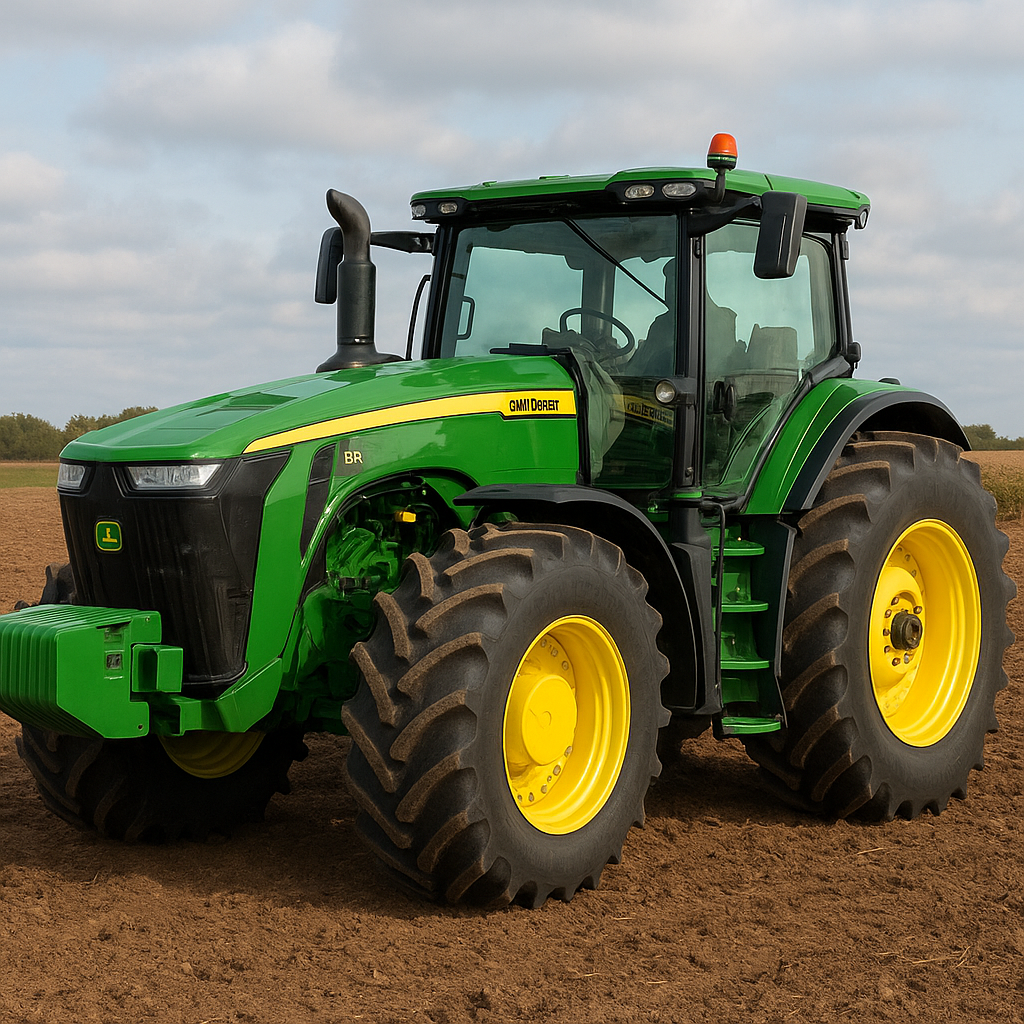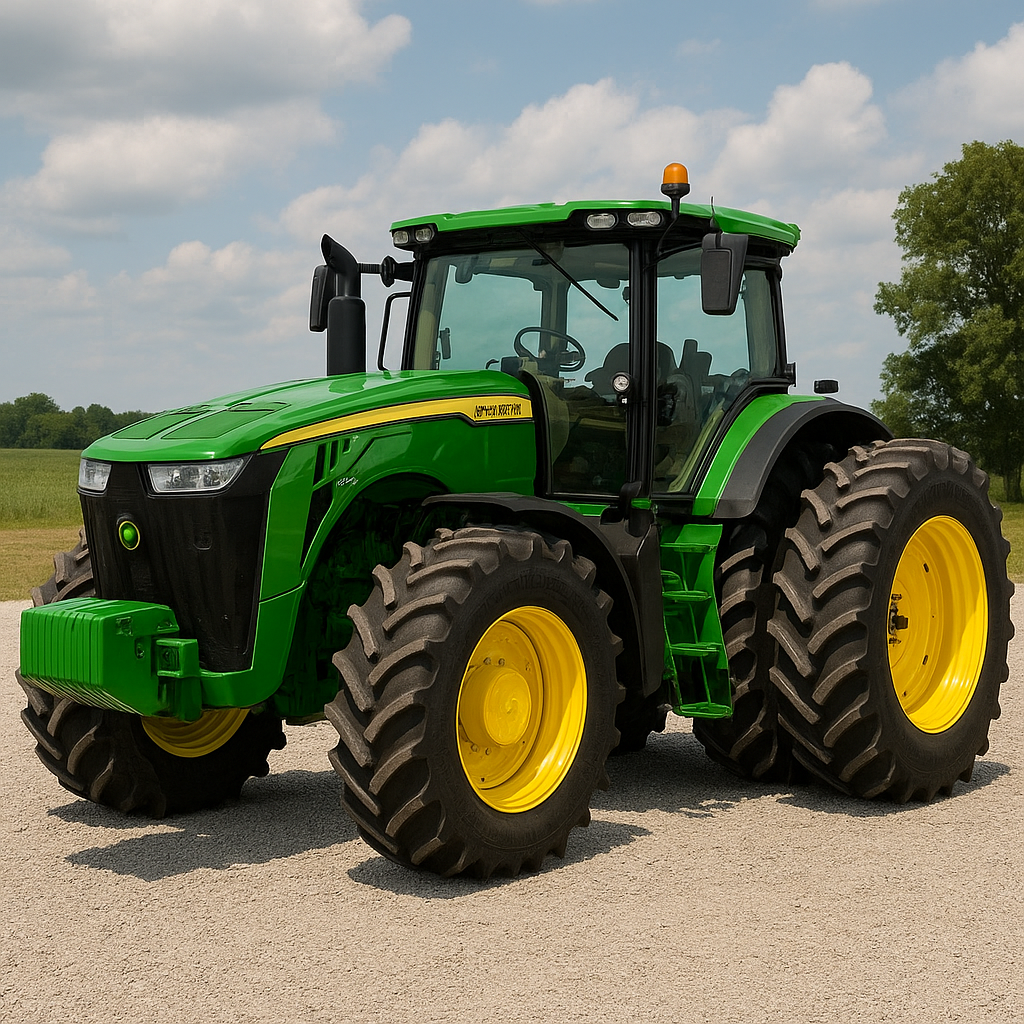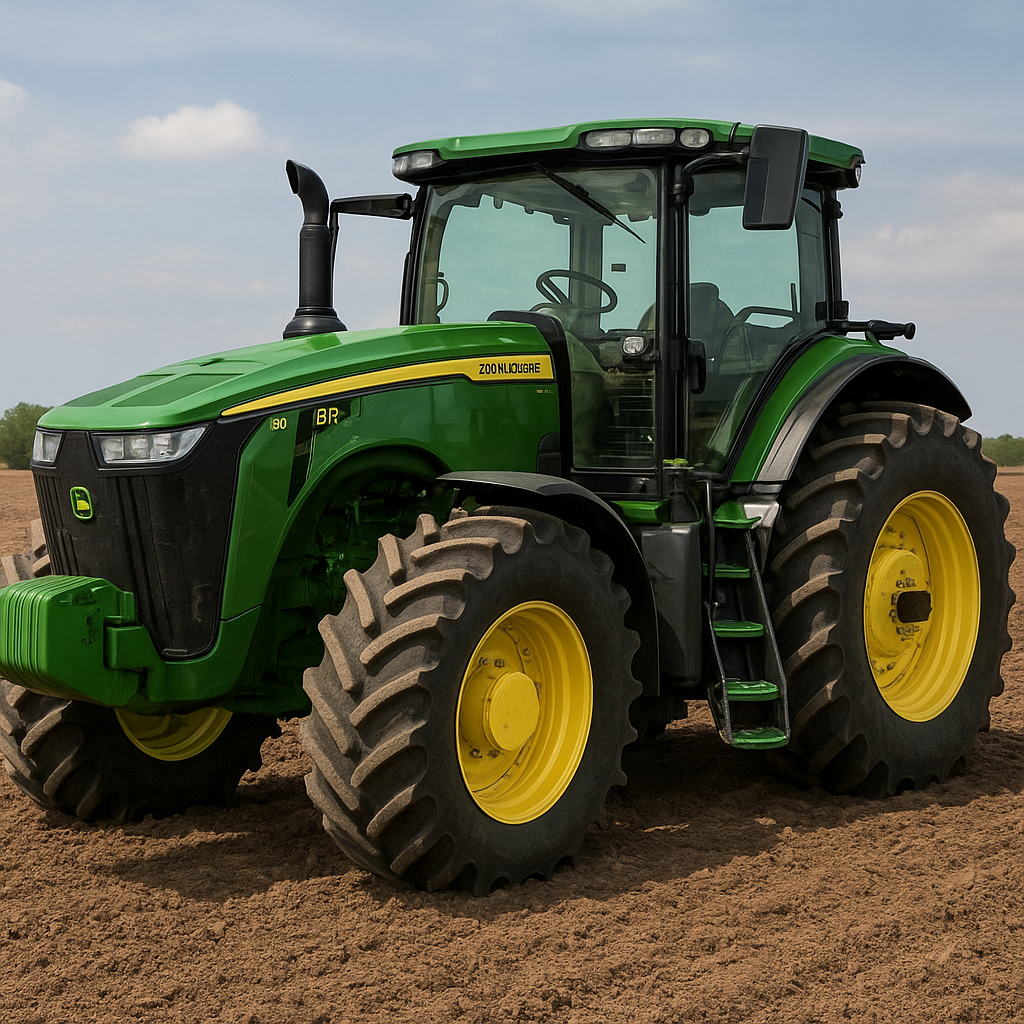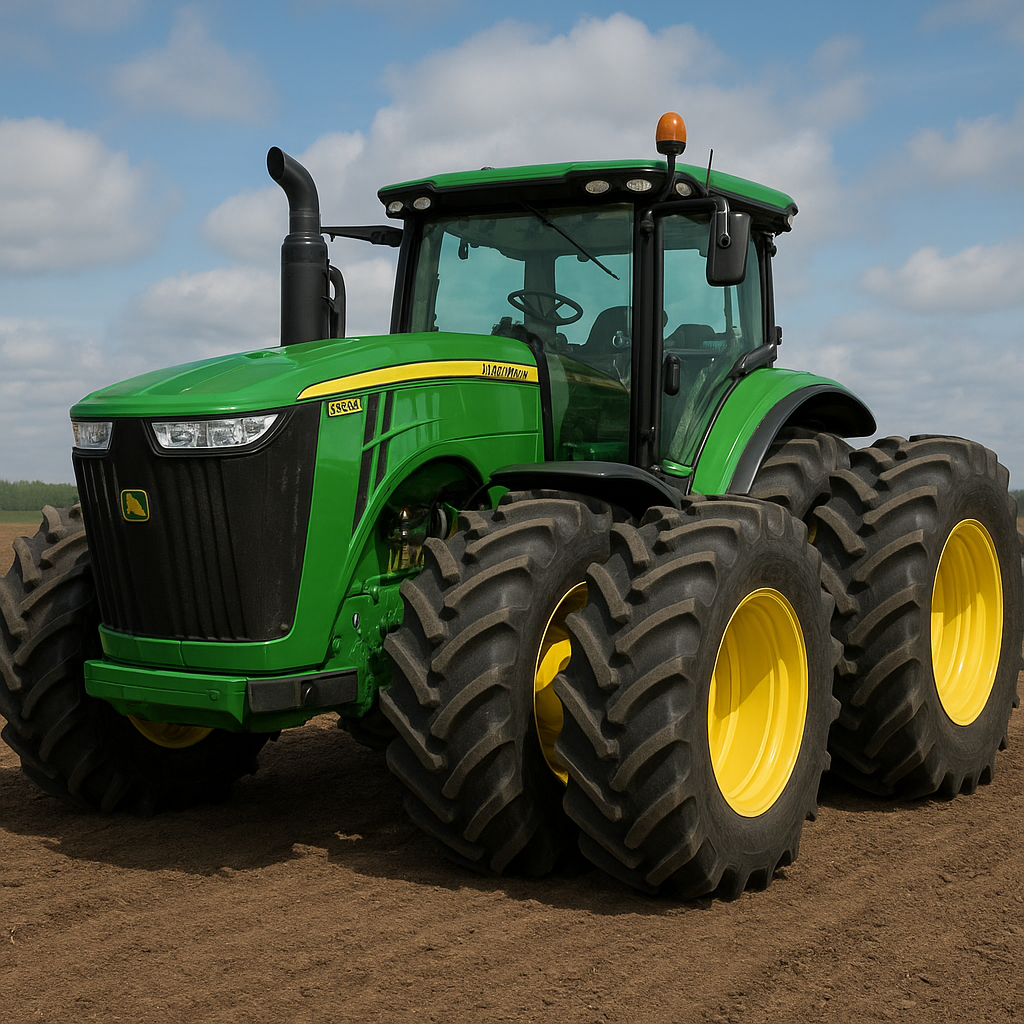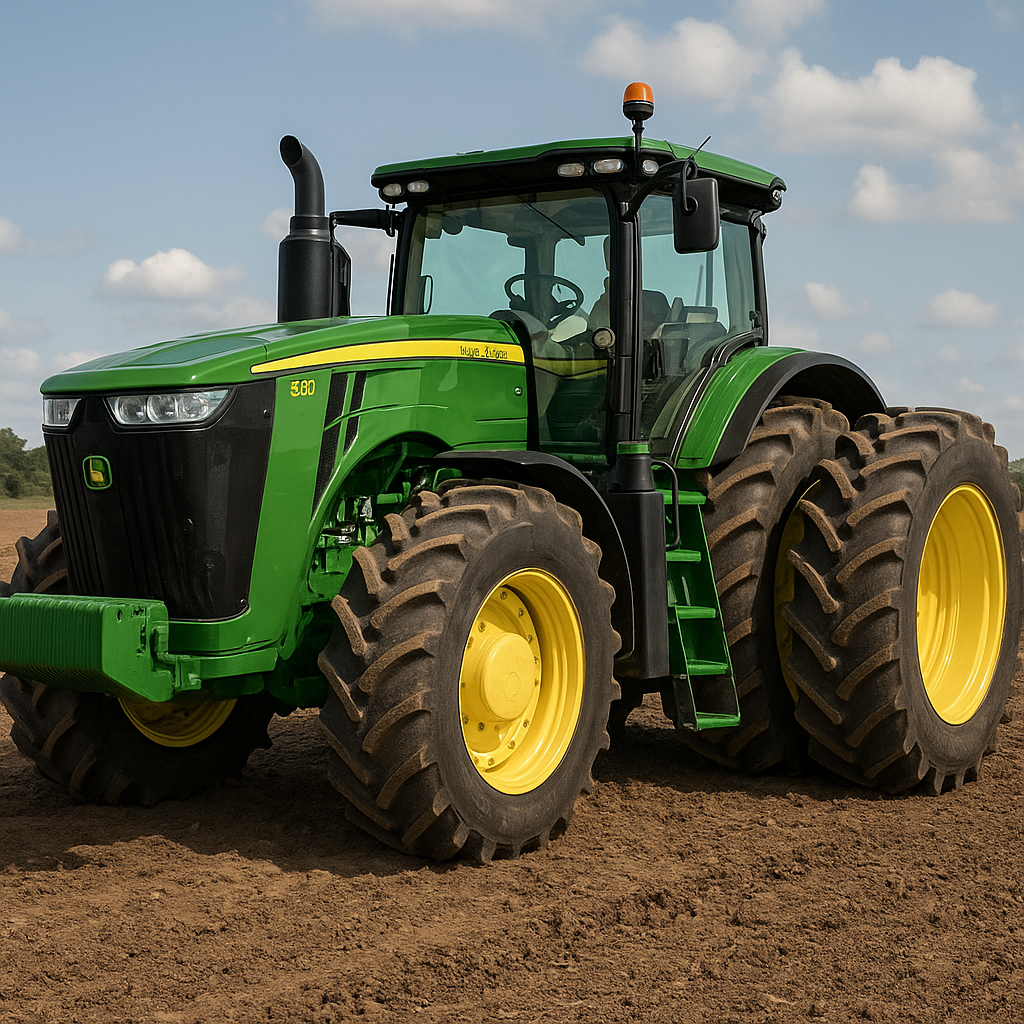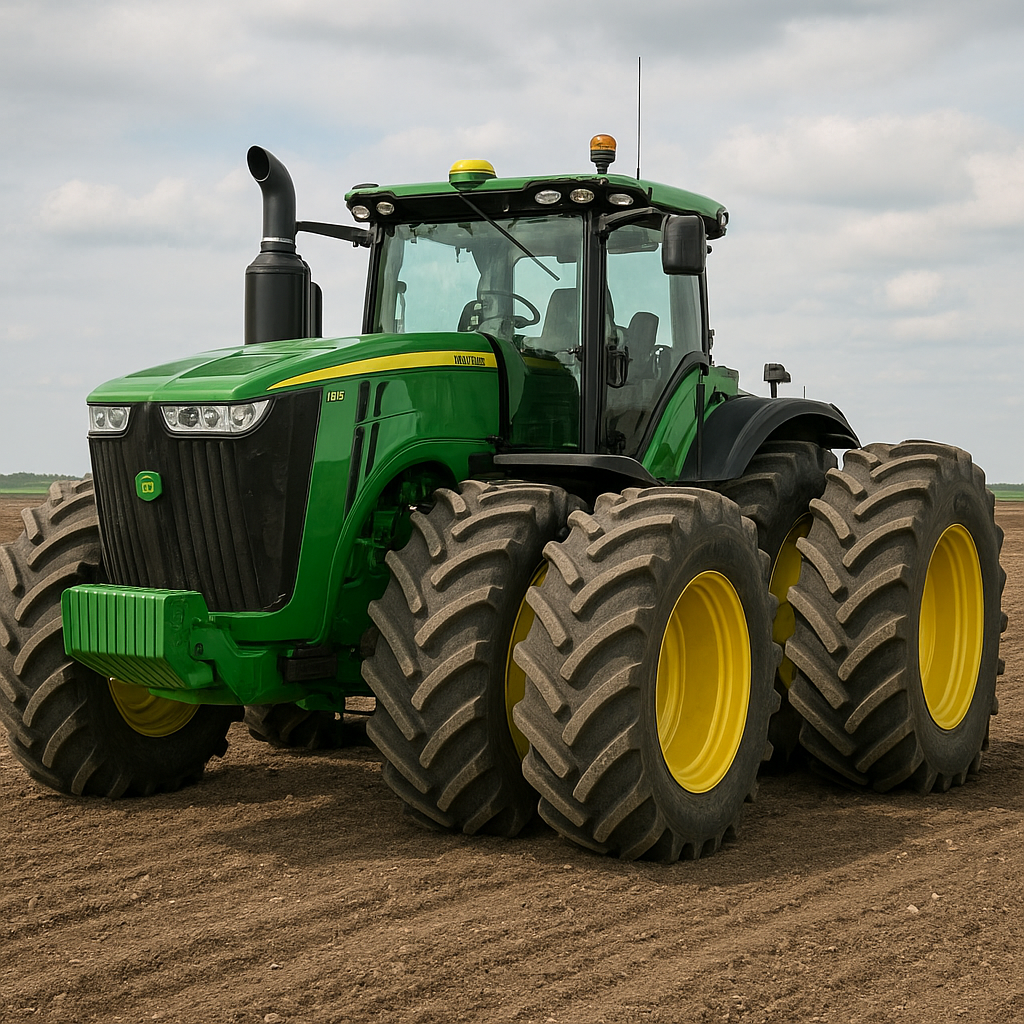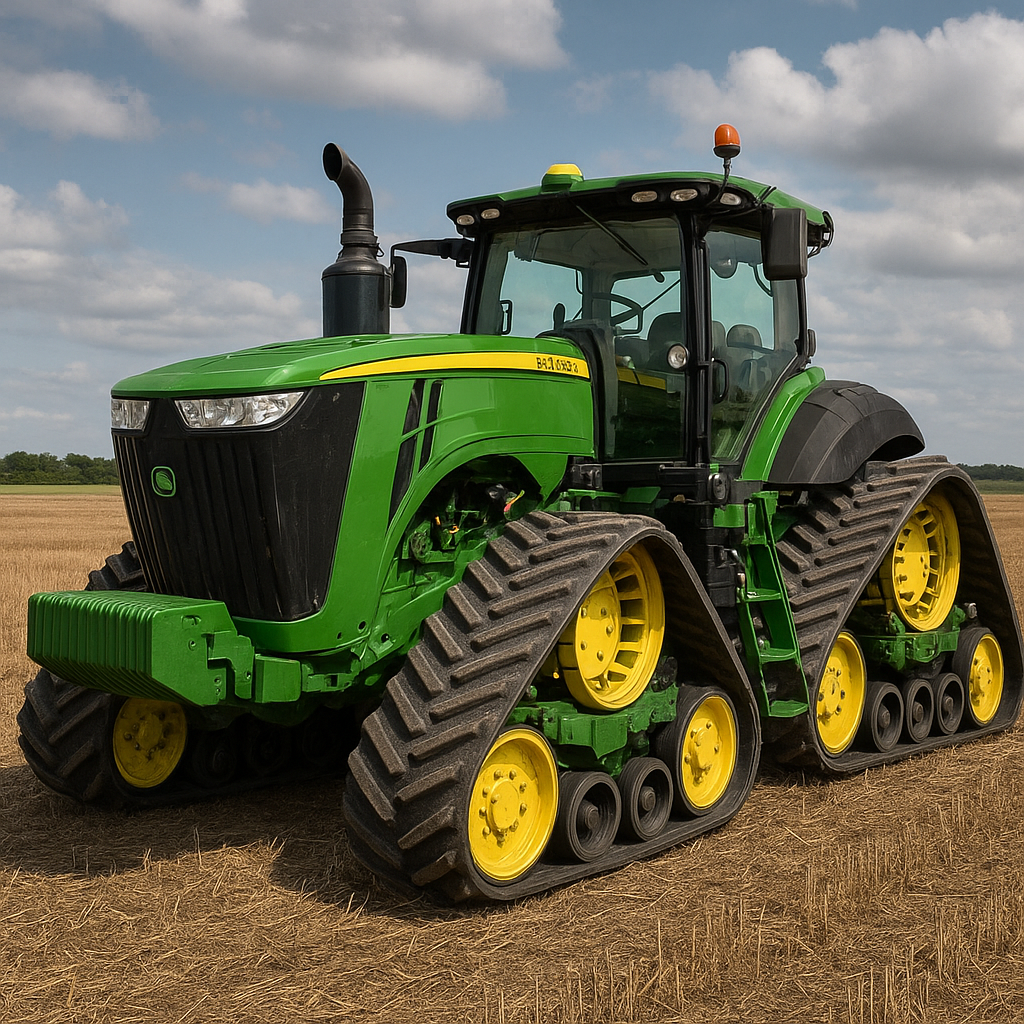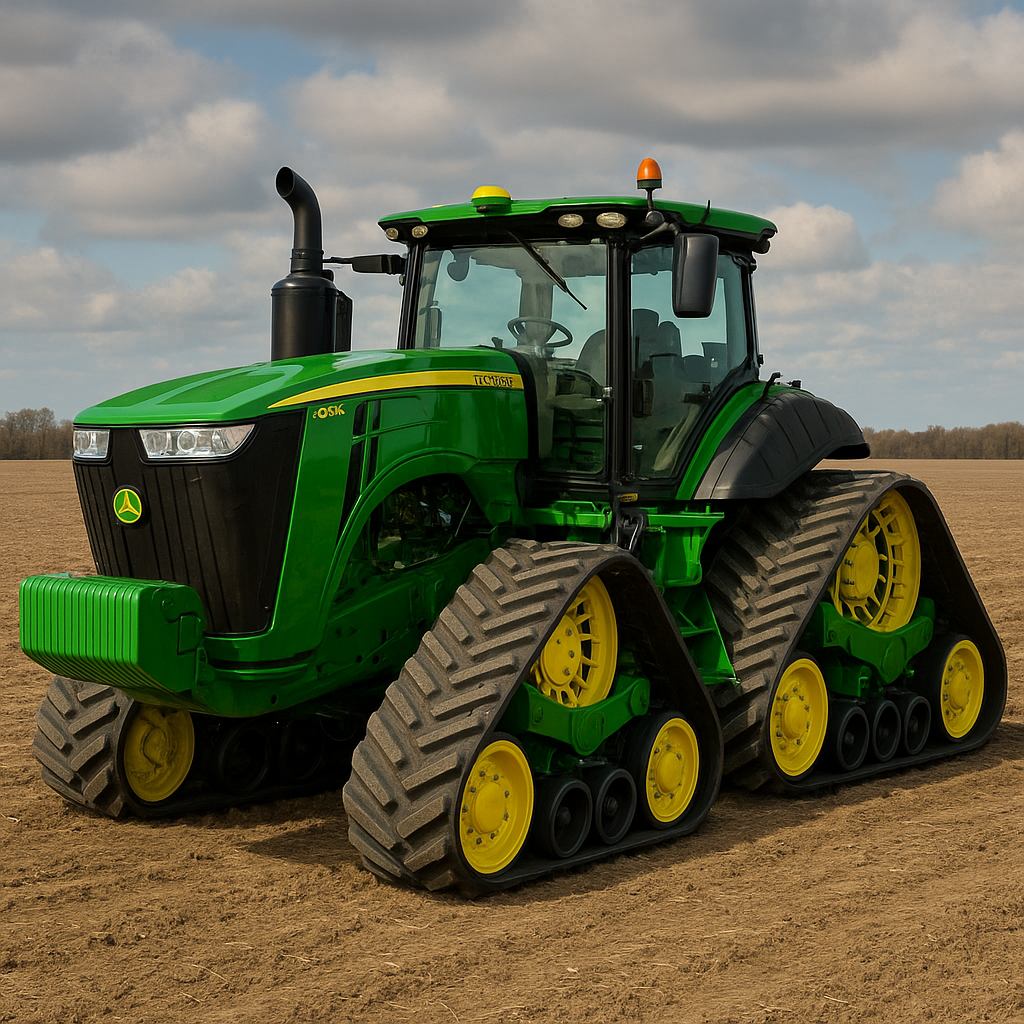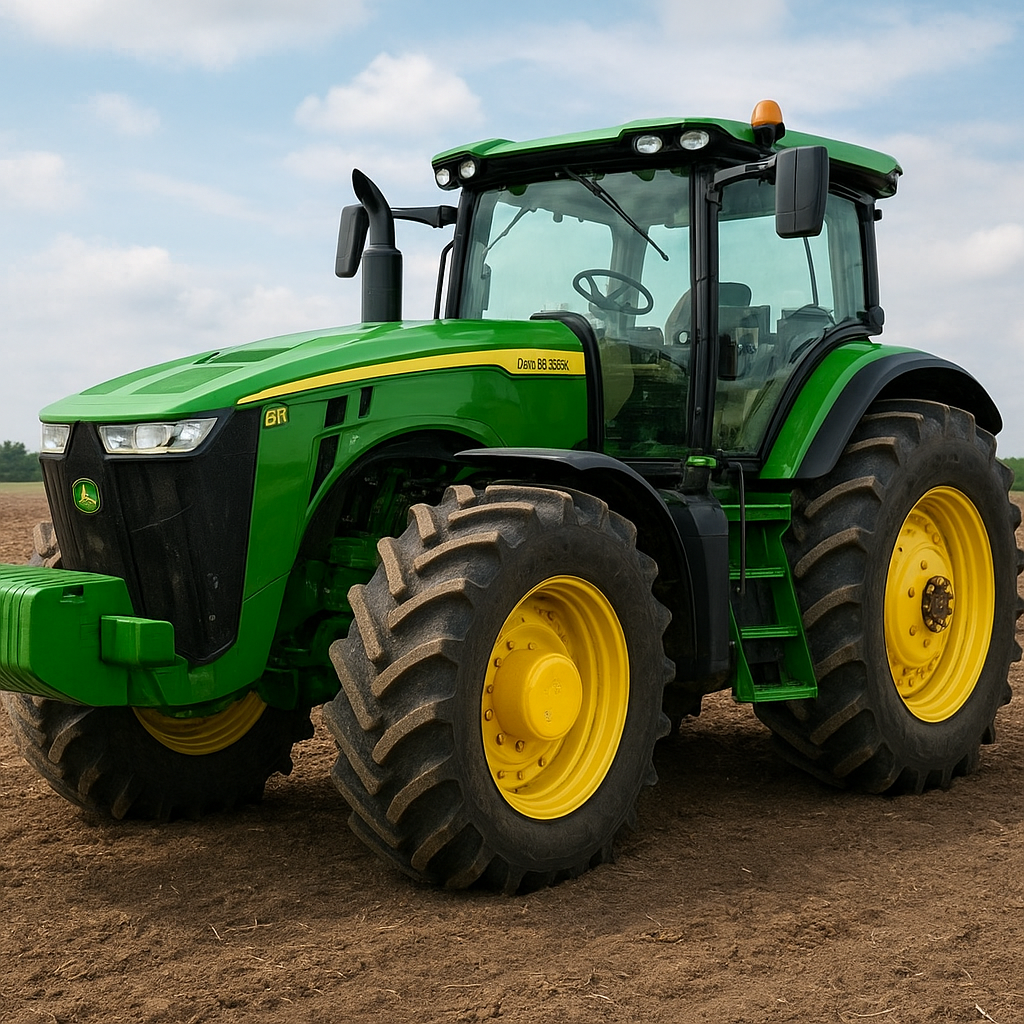
The John Deere 8R 310 is a high-performance row-crop and heavy-field tractor that blends robust mechanical design with advanced precision agriculture technology. Designed to meet the demands of large-scale farming operations, contractors and mixed-use enterprises, the 8R 310 aims to deliver a balance of steady power, efficient fuel use, modern telemetry capabilities and operator comfort. In the following sections, we examine where this tractor fits in contemporary agriculture, highlight its most notable technical and operational features, and present practical considerations for purchase, operation and maintenance.
Overview and design philosophy
The John Deere 8R series targets customers who require a machine that can handle sustained heavy-duty work across a variety of tasks: deep tillage, heavy planter and seeder work, large sprayer or spreader pull, baling and transport. The ‘310’ in the model name indicates the tractor’s position in the power band—around 310 engine horsepower—placing it among mid-to-high power offerings in modern row-crop tractors.
John Deere engineered the 8R line with a focus on modularity and system integration. That means the chassis, driveline, hydraulics and cab systems are all designed so customers can select options that match their operation: from robust mechanical powertrains for simple, reliable field work to fully integrated IVT (Infinitely Variable Transmission) and precision ag electronics for high-efficiency, data-driven farms. Key design goals include enhanced reliability, easy serviceability, and high operator visibility.
Applications and typical uses
Arable and row-crop farming
The 8R 310 excels in large-scale cereal and row-crop systems where long operating days, heavy draft implements and accurate field coverage are required. Typical tasks include:
- Primary and secondary tillage with heavy plows and cultivators.
- High-capacity planting and seeding operations where consistent ground speed and implement control are critical.
- Precision fertilizer application and variable-rate seeding or top-dress applications using hydraulically driven air seeders or planters.
Contracting and heavy transport
Contractors value the 8R 310 for its combination of traction and towing capability. It’s often used for large-scale transport with trailers and implements that demand continuous torque and robust braking systems. The high-horsepower rating and available heavy-duty axles make it suitable for road moves at legal speeds while hauling heavy loads between jobs.
Livestock and mixed farms
On mixed farms, the 8R 310 is frequently utilized for loader work, bale handling and manure application. The combination of hydraulic flow options and front linkage compatibility allows it to operate front loaders or specialty implements without sacrificing field capability.
Key technical features and systems
While model configurations vary by year and market, some recurring technical strengths of the 8R 310 include an emphasis on driveline flexibility, operator ergonomics, and integrated electronics.
- Engine and torque: The model’s nominal power rating centers on approximately 310 hp, providing ample torque for heavy draft requirements. Engine design emphasizes smooth torque delivery across the working RPM range to improve implement performance and fuel economy.
- Transmission options: Customers can typically choose among a stepped PowerShift variant (e.g., e23) or an IVT/Continuously Variable option that enables seamless speed changes and optimized efficiency for specific tasks like planting and transport.
- Hydraulics and hitch: The 8R series supports high-flow hydraulics and multiple SCVs (selective control valves) to power large seeders, air carts, and controlled traffic implements. Rear linkage capacity is sized for heavy implements, and front linkage options exist for loader or front-mounted tools.
- Traction and axles: Heavy-duty axles and optional suspension systems help maintain traction in varied soil conditions and improve ride comfort when transporting implement loads at speed.
- Cab and ergonomics: John Deere’s cabs for the 8R focus on all-day comfort—suspension seats, climate control, low noise levels and intuitive console layouts. Visibility to implements and field edges is prioritized to reduce operator fatigue and increase precision.
- Emissions and efficiency: Engines comply with contemporary emissions regulations using aftertreatment strategies tuned for field reliability. Emphasis on fuel efficiency reduces per-acre operating costs in long seasons.
Precision agriculture and connectivity
One of the defining aspects of modern John Deere tractors, including the 8R 310, is the integration of precision agriculture systems that increase productivity while reducing input costs. These systems are often available as factory-installed or dealer-fitted packages.
- AutoTrac guidance: Automated steering systems maintain consistent passes, reduce overlap, and improve accuracy for planting and chemical applications, saving seed, fertilizer and time.
- JDLink and telematics: Remote monitoring provides live data on location, fuel consumption, fault codes and performance metrics. Fleet managers can optimize machine deployment and schedule preventive maintenance with real-time insights.
- Section and rate control: Integrated control systems allow automatic shutoff of implement sections and variable application rates based on prescription maps, which cuts waste and improves crop uniformity.
- Data management: Compatibility with common farm management information systems (FMIS) enables operators to collect, analyze and act on field-level data to refine agronomic decisions year-on-year.
Representative specifications (typical values and notes)
Specifications depend on the specific year, market and selected options. Below are representative values intended as a general guide; exact figures should be verified with local John Deere dealers for the chosen configuration.
- Engine power: ~310 engine horsepower (model designation)
- Transmission: Options typically include e23 PowerShift or IVT (Infinitely Variable Transmission)
- Top road speed: Often configured for up to 40 km/h or local legal road speeds
- Hydraulic flow: Multiple pump options available to meet implement flow requirements
- PTO: Rear PTO standard (540/1000 rpm options depending on configuration)
- Axle and hitch capacity: Heavy-duty rear linkage capable of handling large implements; front suspension and axle options for improved ride and traction
- Cab features: Climate control, air suspension seat, touchscreen displays and integrated GPS/receiver
Fuel efficiency, operating costs and economics
Operating a high-horsepower tractor like the 8R 310 involves balancing purchase cost with daily productivity and input savings. Key economic considerations include:
- Fuel consumption: Fuel efficiency depends on duty cycle, terrain and transmission choice. IVT transmissions can improve fuel economy in variable tasks by maintaining optimal engine RPM, while PowerShift units offer proven durability for steady load work.
- Implement matching: Correctly matching implement size to tractor horsepower avoids wasted fuel and prevents unnecessary wear. Oversized implements increase draft and fuel burn; undersized implements underutilize the tractor’s capacity.
- Precision tools payoff: Features like guidance, section control and variable-rate applications usually have measurable returns—reduced overlap, lower seed and fertilizer usage, and improved input efficiency can offset technology costs over a few seasons.
- Resale and lifecycle: John Deere tractors historically maintain relatively strong resale value, especially when equipped with well-documented service histories and factory-installed technology packages.
Maintenance, serviceability and uptime
Minimizing downtime is essential for operators who run the 8R 310 in long seasonal windows. John Deere emphasizes serviceability and dealer support to ensure high uptime:
- Routine maintenance: Scheduled checks include engine oil and filter changes, air filter replacement, hydraulic fluid and filter maintenance, and cooling system inspections. Easy-access service points reduce labour time.
- Telematics-driven servicing: JDLink and related systems can push diagnostic codes to dealers, enabling predictive maintenance and faster troubleshooting. Remote updates for certain electronic systems are often possible.
- Parts support: Wide dealer networks and parts availability shorten repair times for critical components. Long service intervals for key items reduce overall maintenance time.
Practical tips for operators
To get the most from an 8R 310, operators should observe these practical suggestions:
- Match implement and weight distribution—use ballast and tire selection to maintain traction while minimizing soil compaction.
- Employ guidance systems—AutoTrac and section control reduce overlap and operator fatigue, which collectively increase per-hour productivity.
- Monitor fuel and engine load—set appropriate cruise and implement settings to keep engine RPM in its most efficient range.
- Follow scheduled maintenance and leverage telematics to anticipate repairs before they cause downtime.
- Train operators on the tractor’s electronic systems and data workflows to capitalize on technological investments.
Safety and environmental considerations
Modern high-horsepower tractors like the 8R 310 incorporate numerous safety and environmental features. Safety elements include robust rollover protection, lighting packages for work-at-night, adaptive braking with heavy loads and improved cab ergonomics to reduce operator errors. Environmentally, the engine and aftertreatment systems are designed to meet emissions regulations, and precision application systems help reduce over-application of fertilizers and chemicals, lowering the farm’s environmental footprint.
Comparisons and competitive context
Within the large-tractor market, the 8R 310 competes with models from several other major manufacturers. Its strengths often include factory-level precision agriculture integration, a comprehensive dealer support network, and a broad suite of transmission and hitch/hydraulic options that allow customization. Buyers typically weigh long-term serviceability, technology ecosystem compatibility (particularly for farms already using John Deere equipment), and resale value when choosing among brands.
Concluding remarks
The John Deere 8R 310 is positioned as a versatile, high-capacity tractor for operations that require sustained horsepower, advanced precision-ag capabilities and reliable service support. Its combination of integrated technology, transmission flexibility and robust mechanical systems makes it attractive to large arable farms, contractors and mixed operations. As with any major farm investment, potential buyers should evaluate total cost of ownership, tractor-implement matching, and the expected return on precision systems to ensure the machine aligns with their productivity and economic goals.
Note:
Model specifications and available features vary by year and region; for exact technical data, local options and up-to-date statistics, consult an authorized John Deere dealer or the manufacturer’s official documentation.