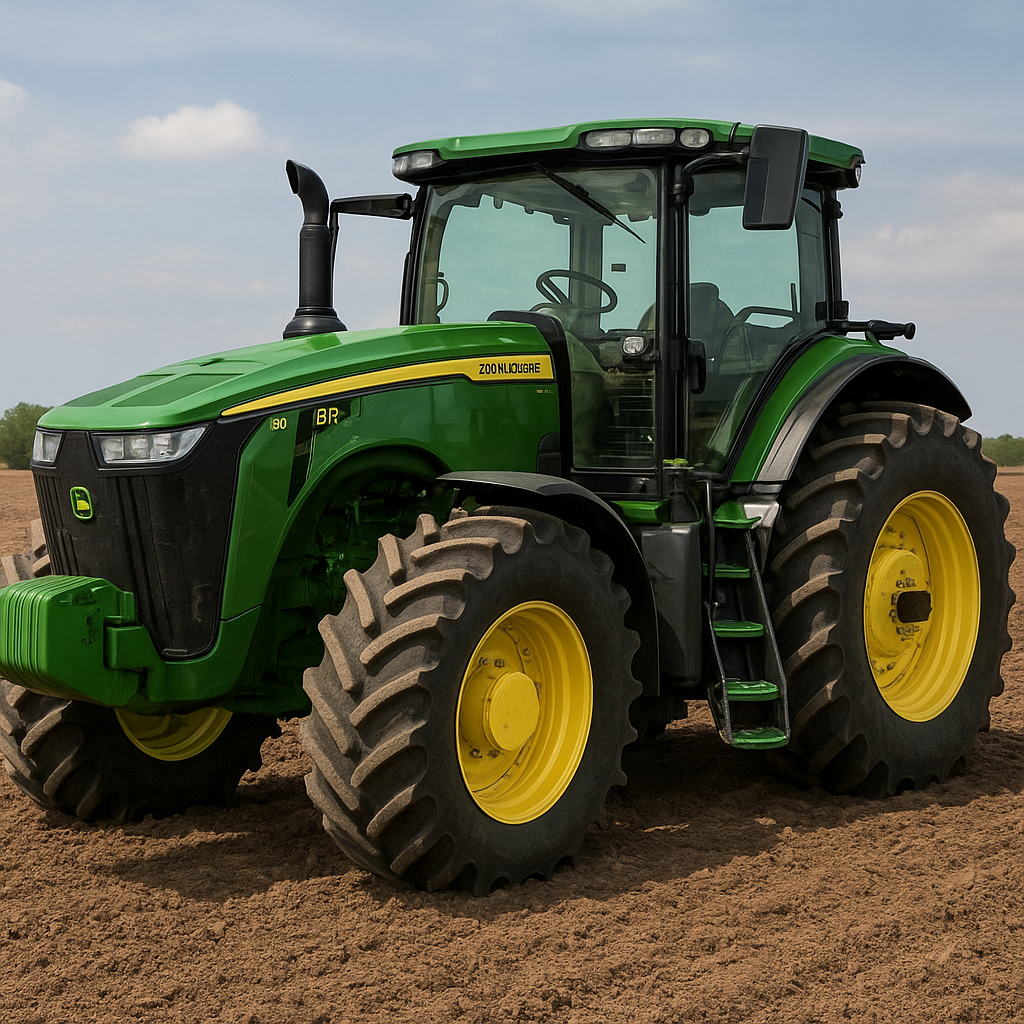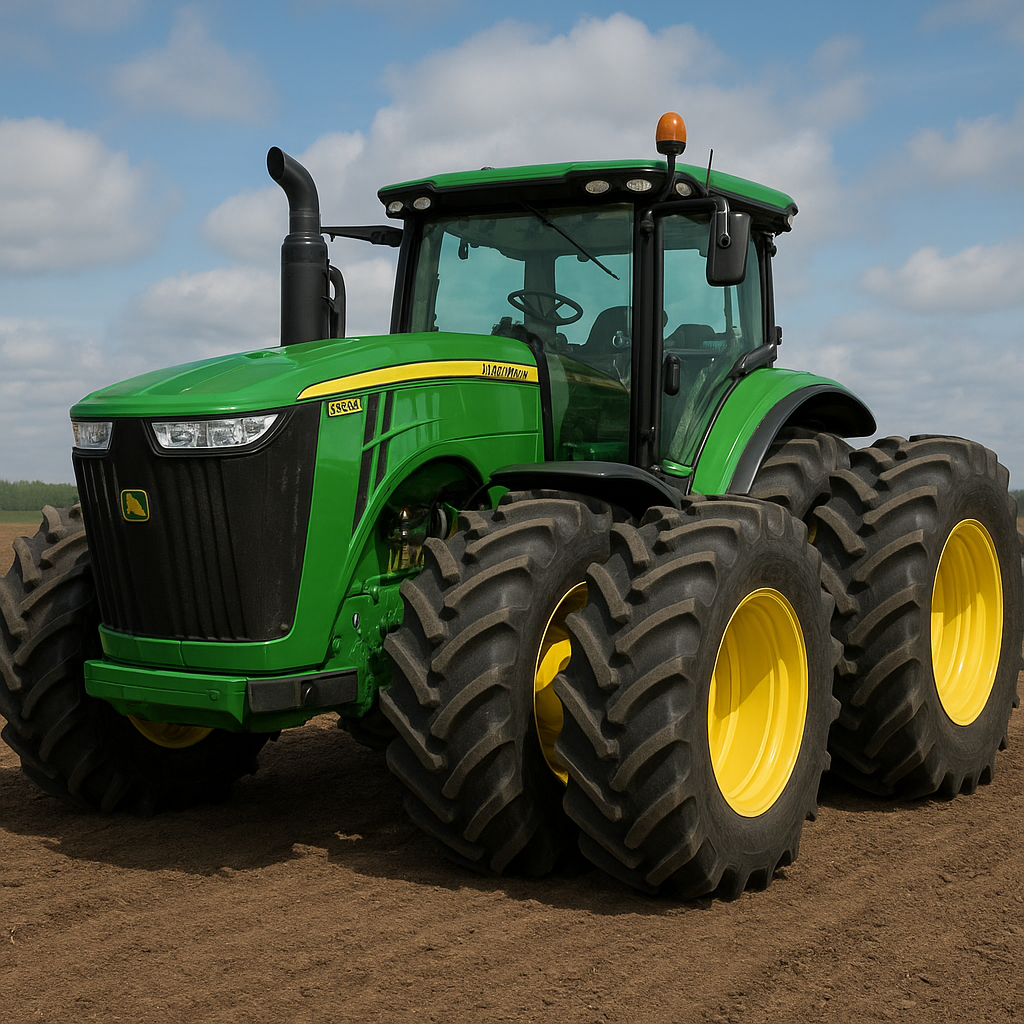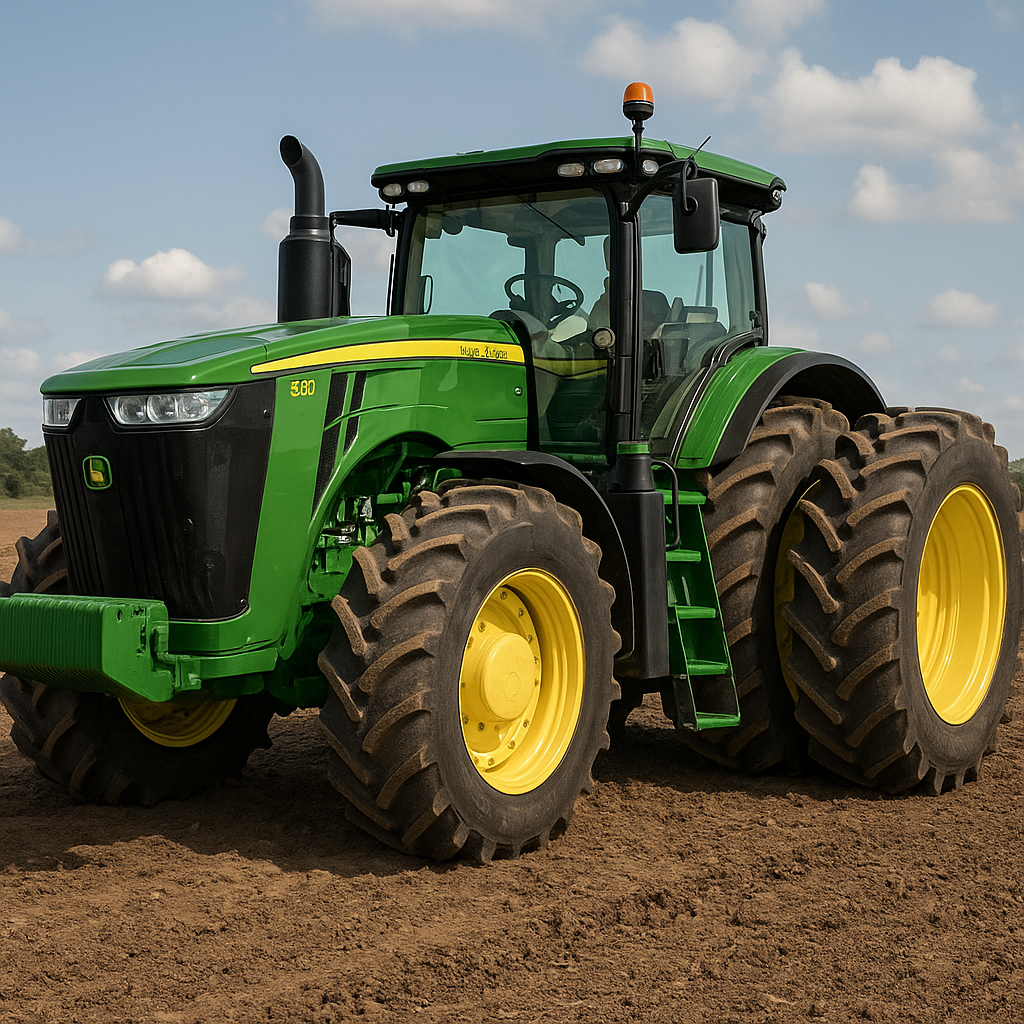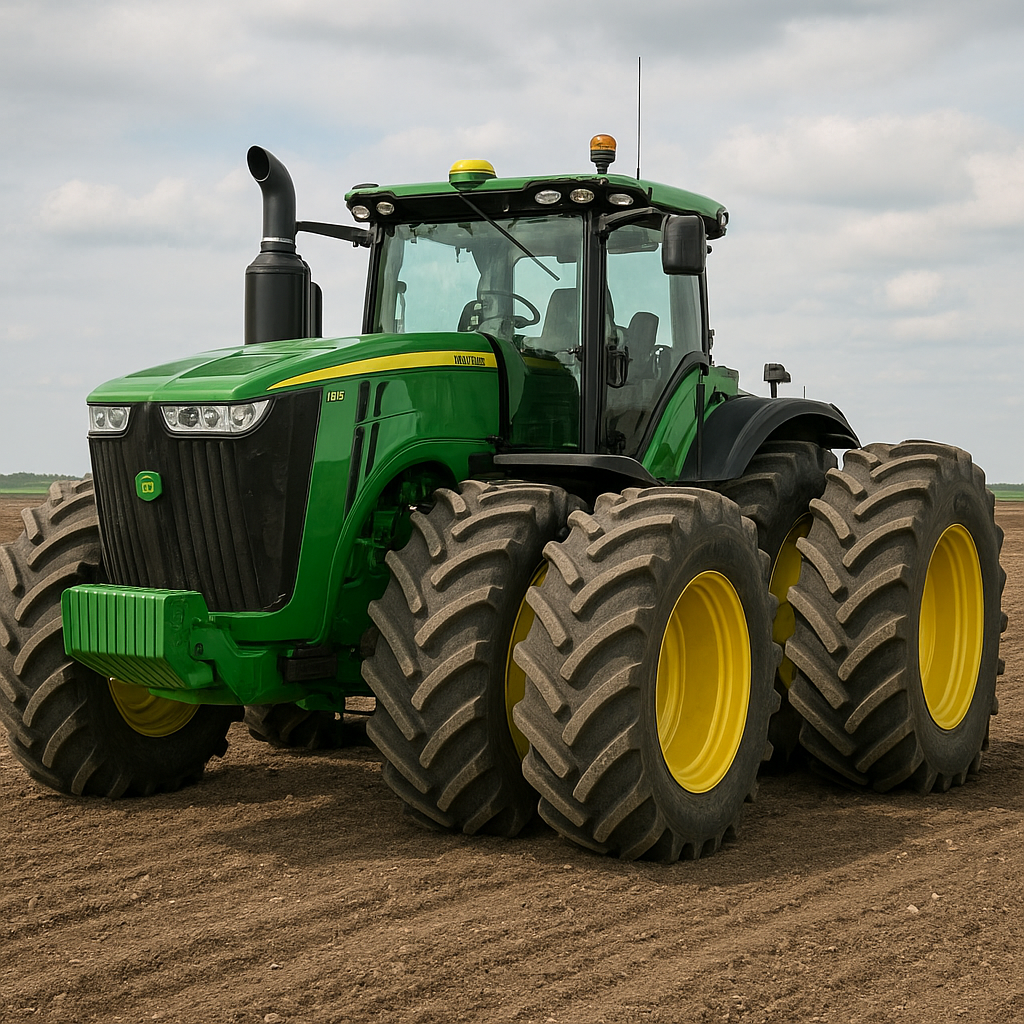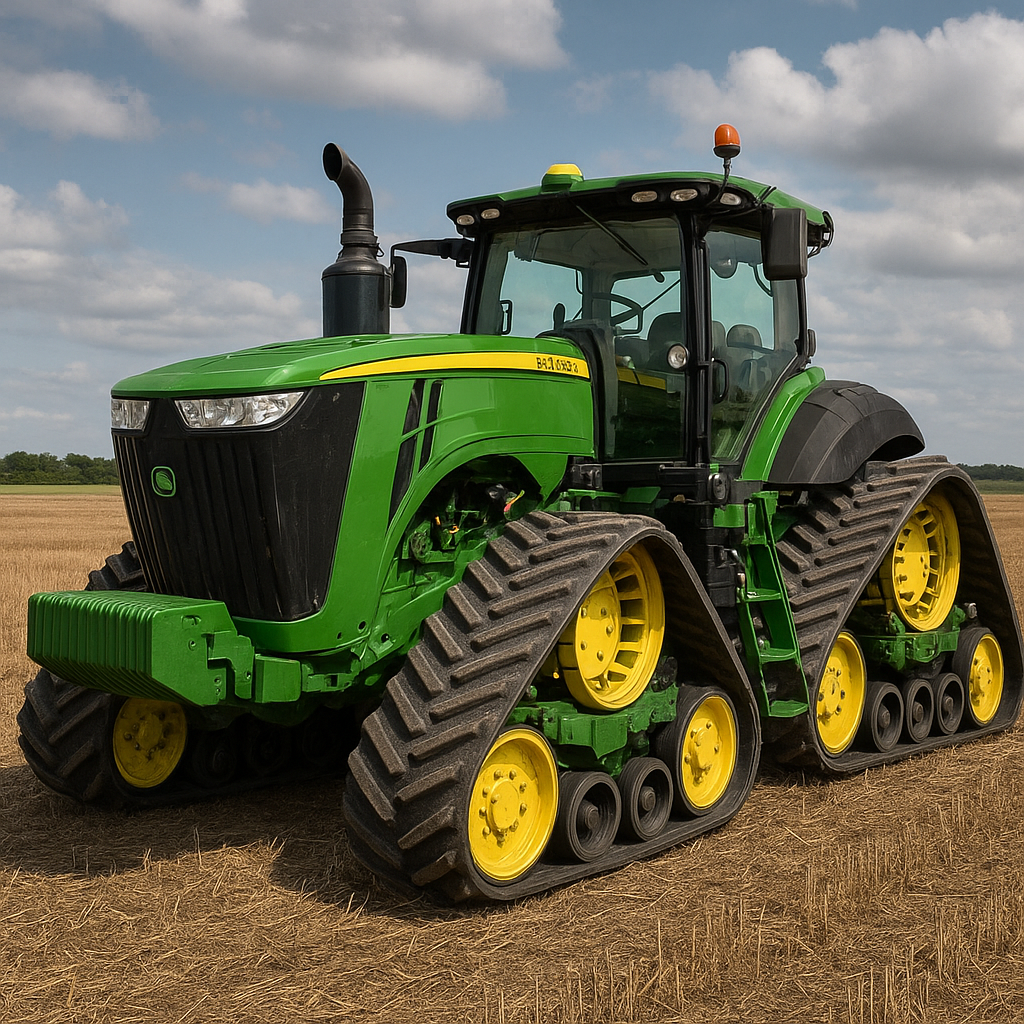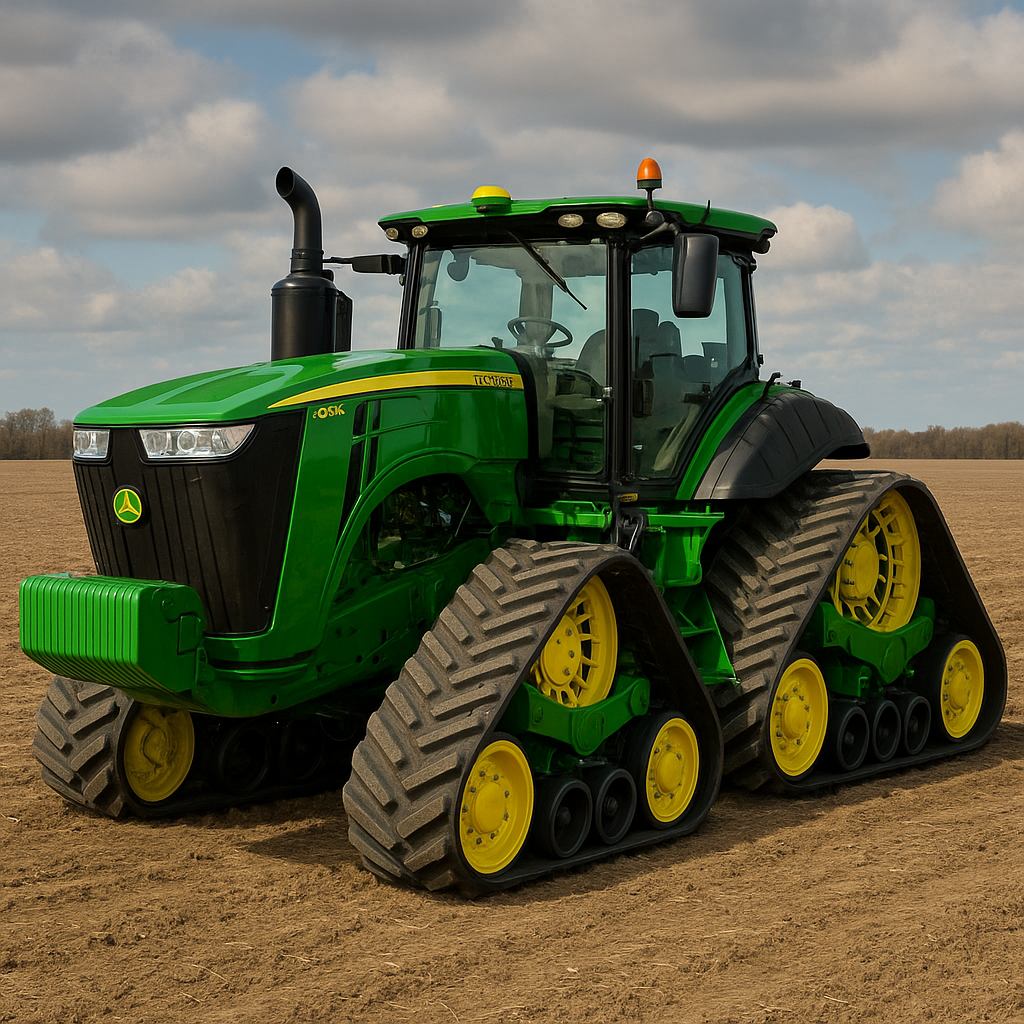
The John Deere 9RX 640 is a flagship, high-horsepower, four-track agricultural tractor designed for farmers and contractors who demand maximum traction, low ground pressure, and advanced precision capabilities for large-scale fieldwork. In this article we will examine the machine’s design and technical characteristics, its primary applications in modern agriculture, the technological features that set it apart, practical considerations for operation and maintenance, and the economic and environmental impacts of employing a 9RX 640 on a commercial farm. The goal is to provide a comprehensive, practical overview that highlights why this model is often chosen for demanding soil-engaging tasks.
Design and technical overview
Engine and powertrain
The John Deere 9RX 640 is powered by a high-displacement diesel engine tuned to deliver a rated output of 640 hp (approximately 477 kW). This level of power places the machine in the top tier of row-crop and traction-focused tractors, allowing it to drive large tillage rigs, deep rippers, and heavy planters with consistent performance. The engine design emphasizes torque delivery across a broad rpm range to maintain implement performance under variable load conditions.
Four-track configuration and undercarriage
One of the most distinctive features of the 9RX family is the four-track layout. Instead of conventional wheels or a two-track arrangement, the 9RX 640 uses four independent track modules that provide a large contact patch with the ground. This configuration yields several practical benefits:
- Improved traction and reduced wheel slip under heavy draft loads.
- Lower ground pressure compared with large dual-wheel setups, reducing compaction risk.
- Enhanced stability when pulling wide implements or working on side slopes.
- Smoother ride over uneven terrain due to the distributed contact area.
Transmission and driveline
To manage the 640 hp output, the tractor is equipped with a heavy-duty transmission and driveline components engineered for high torque transfer and durability. The driveline includes advanced hydraulic and electronic controls for smooth power delivery, efficient operation across speed ranges, and compatibility with modern implement control systems.
Chassis, weight and ballast considerations
The weight distribution and chassis design are optimized to balance flotation and traction. The 9RX 640 carries substantial mass forward and rearward to ensure effective traction while keeping axle loads within limits for the tracks to function efficiently. Ballast management and ballast placement are critical when configuring the tractor for different implements and soil conditions.
Primary applications and field performance
Tillage and primary soilwork
The 9RX 640 shines in heavy tillage operations. Farmers and contractors use it for:
- Deep ripping and subsoiling where high draft force and consistent traction are required.
- Large tandem and heavy disc harrows that create significant draft loads.
- Primary tillage on soils that demand large horsepower to maintain operating speed and quality.
Its combination of power and four-track traction allows large implements to work at productive field speeds with reduced slip and less fuel penalty from repeated wheel spin.
Seeding, planting and high-horsepower seeding systems
When configured for seeding, the 9RX 640 can pull wide planters across many rows in a single pass. Maintaining consistent ground-engaging speed improves seed placement uniformity and overall planting quality. The machine is particularly suitable for very large farms where minimizing time in field is essential.
Transport, specialty tasks and heavy hauling
Although primarily an implement-pulling machine, the 9RX 640 can be used for heavy transport tasks on-farm, such as moving large wagons or supporting contractor operations that require a robust, high-traction platform. On paved public roads and for long-distance moves, proper speed-, ballast- and tire/track adjustments are necessary to comply with regulations and to protect the undercarriage.
Use in wet or marginal conditions
One of the clearest advantages of the 9RX 640 is its ability to operate in wetter or softer soils where wheeled tractors would either compact the soil excessively or become mired. The large track footprint reduces soil pressure and preserves field structure, allowing work to continue during tighter windows of opportunity.
Technology, comfort and precision agriculture features
Precision guidance and automated control
John Deere integrates a suite of precision farming tools into the 9RX 640. Systems commonly fitted include AutoTrac guidance, section control, and variable-rate application integration. These systems reduce overlap, increase operational efficiency, and contribute to input savings. The tractor’s electronics architecture supports high-speed data transfer between implement and tractor for real-time adjustments.
Telematics and connectivity
Integrated telemetry platforms such as JDLink provide remote monitoring of machine health, location, and utilization. Fleet managers can track hours, fuel usage, fault codes and maintenance intervals, enabling proactive service planning and reducing downtime. Remote diagnostics help technicians triage issues before attending the machine.
Operator environment and ergonomics
The cab is designed for long hours in the seat: climate control, low-noise insulation, advanced seating options, and an intuitive console for monitoring key systems. Comfort features contribute directly to operator productivity and allow accurate management of complex precision controls. Many operators appreciate the large visibility and layout for implement monitoring.
Safety systems and operator aids
Modern safety systems are part of the package: cameras for implement and rear visibility, automatic parking and brake aids, and operator-alert systems tied to engine and hydraulic parameters. The overall design prioritizes safe engagement and disengagement of implements and protection against overloads.
Operational considerations and maintenance
Track care and undercarriage maintenance
Tracks and undercarriage systems require different maintenance routines than wheeled tractors. Key considerations include:
- Regular inspection for wear or damage to track pads, joints and rollers.
- Proper tensioning to avoid premature wear and to maintain performance.
- Cleaning and debris removal to prevent track misalignment or component damage.
Planned maintenance intervals and access to trained service personnel are important to keep downtime low for machines of this scale.
Fuel consumption and efficiency management
High-horsepower tractors consume significant fuel under load. Efficient field practices—such as matching implement size to tractor capability, using precision guidance to avoid overlap, and maintaining the engine and driveline—can optimize fuel consumption. On high-resistance operations the extra traction often translates to lower fuel per hectare compared with a wheeled tractor that is suffering from wheel slip.
Implement matching and hitching
Correct hitch configuration and hydraulic settings are critical. The 9RX 640’s hydraulics and hitch systems are sized to control large implements; however, correct matching ensures the implement receives adequate hydraulic flow and control precision. Prospective buyers should plan implement upgrades to fully leverage the tractor’s capability without under- or over-sizing attachments.
Serviceability and dealer support
Given the complexity of high-horsepower, four-track tractors, access to manufacturer-trained technicians and parts inventory is a decisive factor for owners. Dealers often provide support packages including scheduled maintenance, telematics-based service alerts, and warranty extensions that make owning and operating such machines more predictable.
Economic and environmental impacts
Cost of ownership and productivity considerations
The initial capital cost of a 9RX 640 is substantial, reflecting its heavy-duty construction, electronics and track systems. However, when assessed on a per-hectare basis in large operations the productivity gains can justify the investment. Factors that influence economic returns include:
- Area farmed per season (large-acreage operations benefit most).
- Type of work (heavy tillage and wide implements deliver more value).
- Fuel and maintenance costs balanced against reduced field passes and time savings.
- Resale value and the presence of a secondary market for high-hp tracked tractors.
Soil health and compaction
Tracks reduce peak soil compaction by spreading weight over a larger area. Lower soil compaction improves root growth, water infiltration, and long-term yield potential in some cropping systems. Decisions about whether a 9RX 640 benefits soil health depend on local soil types, tillage regimes, and crop rotations.
Emissions and regulatory considerations
Modern versions of John Deere’s high-horsepower engines meet stringent emissions standards through aftertreatment systems and engine management strategies. Owners should be aware of local emissions regulations and keep exhaust aftertreatment systems properly maintained to ensure compliance.
Practical examples and real-world performance
Case: large-scale tillage contractor
A contractor operating across thousands of hectares values machines that minimize downtime and complete wide-front work quickly. The 9RX 640 enables pulling very large tillage rigs at productive speeds, reducing overall job time and allowing more fields to be completed within optimal windows between weather events.
Case: farm transitioning to conservation systems
On farms moving toward reduced passes and conservation practices, a 9RX 640 can permit the use of larger implements to reduce the number of passes required for seeding and tillage. The reduced soil compaction from tracks aligns with conservation goals when operations replace multiple smaller passes with fewer, larger-capacity operations.
Case: wet-season emergency work
During late-season windows or in wet soils, the four-track configuration often allows continued operations when wheeled tractors must wait. This flexibility can be crucial for timely planting or fall fieldwork.
Buying considerations and alternatives
Assessing fit for farm scale
Before investing in a 9RX 640, operators should evaluate the scale of their operations, the types of implements they intend to use, and the frequency of heavy-draft tasks. Farms under a certain acreage threshold may find that a smaller high-horsepower wheeled tractor or a two-track solution delivers a better return on investment.
Alternatives and comparative choices
Alternatives to the 9RX 640 include high-horsepower wheeled tractors with duals or triples, or other manufacturers’ track-based offerings. Comparative criteria include:
- Fuel economy in typical working conditions.
- Ground pressure performance and soil impact.
- Operator comfort and control features.
- Service network and total cost of ownership.
Specifications snapshot and commonly cited figures
Below are widely reported, high-level specifications or attributes typically associated with the 9RX 640 platform. Exact values can vary by configuration, market and optional equipment, so buyers should consult official dealership literature for final numbers.
- Engine rated power: 640 hp (~477 kW).
- Engine family: high-displacement diesel platform (typical 13–14 L class engines in similar models).
- Undercarriage: four independent track modules providing broad contact area and low ground pressure.
- Primary applications: heavy tillage, large-capacity seeding, heavy transport on farm.
- Key technology: integrated precision guidance, telematics (e.g., JDLink), and advanced hydraulics/electronics for implement control.
Conclusion
The John Deere 9RX 640 is engineered for large-scale agriculture and contractor operations where power, sustained traction and minimal soil disturbance are priorities. Its four-track design addresses compaction and flotation in ways wheeled tractors cannot, while advanced precision and telematics systems make it a modern platform for efficient, data-driven farming. While the purchase and operating costs are significant, the productivity and field-capacity benefits often justify the investment for very large farms or contractors who require robust, reliable performance across demanding tasks.