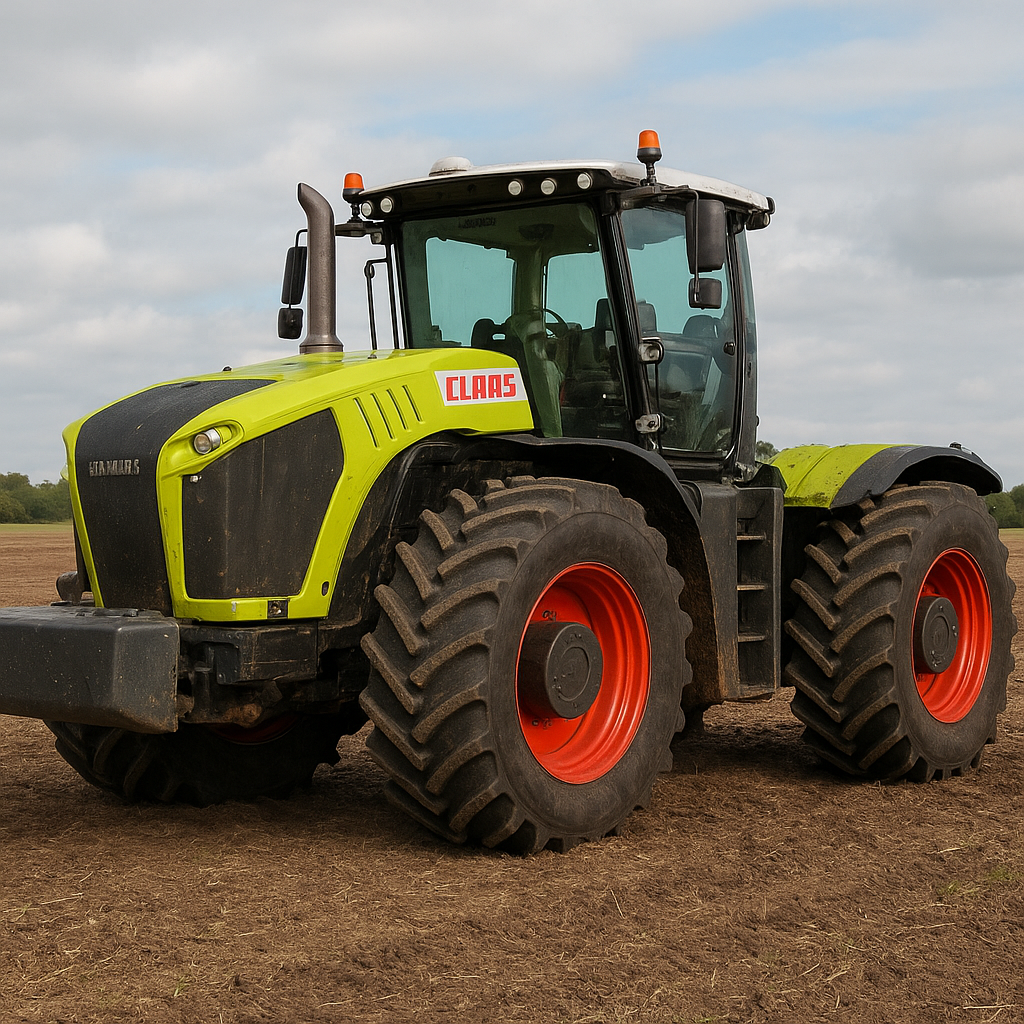
The Claas Xerion 4500 Terra Trac represents a high‑power, versatile platform designed for large‑scale farming and specialised tasks where soil protection, stability and sustained performance under heavy load are essential. Combining Claas engineering with a continuous evolution of traction systems, the Xerion 4500 Terra Trac offers a blend of raw engine capability, reduced ground pressure from tracks and operator‑oriented technology. This article examines the machine’s design, practical applications, technical characteristics, operational advantages and economic and environmental considerations.
Design philosophy and core features
The Xerion series is built around the idea of a multi‑role powerhouse that can perform a wide range of field and transport duties without compromise. The 4500 Terra Trac version adapts that concept to situations where tyres cannot deliver the required performance or where soil compaction must be minimised. The machine’s architecture focuses on stability, even weight distribution and modularity so implements and attachments are supported efficiently.
Chassis and traction system
At the heart of the Terra Trac variant is the tracked undercarriage. Unlike single or dual wheels, the continuous track system spreads the machine’s weight over a much larger area. This reduces peak soil pressure and improves flotation on soft or wet surfaces. The track configuration also enhances lateral stability on slopes and when carrying heavy rear implements.
- Continuous rubber track system for reduced ground pressure and improved flotation.
- Robust underframe and reinforced attachment points to handle high draft forces.
- Hydraulic systems tuned to deliver smooth torque transfer and controlled traction management.
Cab and operator environment
Claas places emphasis on operator ergonomics and visibility. The cab layout is arranged for intuitive controls, long working hours and a clear view of both front and rear implements. Integrated control interfaces, comfortable seating and effective climate control help reduce operator fatigue during extended operations on large farms.
Performance and technical characteristics
The Xerion 4500 Terra Trac is positioned at the top end of the Claas tractor range. It is engineered to deliver high continuous output required for large power‑hungry implements such as large tillage rigs, deep cultivators and heavy seeders, as well as for primary tillage and transport tasks.
Engine and drivetrain
The tractor is powered by a high‑output diesel engine tuned for sustained performance under load. Typical published ratings for the Xerion 4500 model class are in the region of power outputs around 500–530 hp (approximately 370–395 kW) at rated engine speed, which places it among the most potent agricultural tractors available. The drivetrain is calibrated to deliver steady torque for draft work and for operating hydraulic pumps and PTO‑driven implements.
Mobility and speed
Top road speeds for machines in this segment are normally governed for safety and transport efficiency and often reach around 40 km/h. The track system is designed to support both field operation and transport; while tracks limit top speed compared to wheels, they provide superior traction and controlled handling under heavy loads and varying ground conditions.
Ground pressure and compaction
One of the chief advantages of the Terra Trac system is reduction of ground pressure. Depending on track width, contact length and machine load, continuous tracks can reduce soil pressure by a notable margin — commonly in the range of traction and soil protection improvements of approximately 30–50% compared with equivalent wheeled configurations. Reduced compaction translates to long‑term benefits in root development, drainage and crop yield consistency on sensitive soils.
Hydraulics, PTO and implement compatibility
Large implements demand high hydraulic flow and robust PTO driveline design. The Xerion 4500 Terra Trac is specified to support large hydraulic loads, with multiple valve banks, high‑capacity pumps and implement control systems enabling precise management of seeders, sprayers, tillage equipment and other hydraulic implements. The rear linkage and PTO are dimensioned for heavy implements, enabling a broad spectrum of agricultural and non‑agricultural tasks.
Applications and typical use cases
The versatility of the Xerion 4500 Terra Trac makes it suitable across a spectrum of demanding operations. Because of its combination of torque, continuous traction and weight distribution, it excels where large acreage operations, heavy implements and sensitive soil conditions intersect.
Primary tillage and deep cultivation
Large disc harrows, subsoilers and cultivators impose high draft demands. The Xerion Terra Trac’s ability to maintain traction and transfer engine output to the soil without excessive wheel slip makes it well suited for primary tillage on heavy or uneven ground.
Seeding and sowing on large acreages
During sowing, consistent soil contact and precise implement control are crucial. Tracks provide stable drawbar forces and smoother forward motion, which help maintain uniform seeding depth and spacing when paired with wide seed drills.
Heavy transport and multi‑task operations
Large farms and contractors often require a single machine that can switch rapidly between field duties and road transport. The Xerion 4500 Terra Trac’s power and PTO capability enable it to tow heavy trailers, operate stationary PTO‑driven equipment and act as a prime mover for specialized applications such as fertilizer or lime spreading.
Wet, marshy and slope environments
Where soil is soft or prone to rutting, tracks reduce slippage and rut depth. This is especially valuable in regions with high rainfall or where seasonal work windows are narrow. The improved lateral stability on slopes also makes certain operations safer when terrain is undulating.
Operator technology and comfort
Claas integrates a suite of technologies aimed at increasing productivity and lowering operator workload. Advanced displays, automated guidance compatibility and machine monitoring systems are common on modern Xerion models.
- Precision guidance compatibility (GPS/RTK) for accurate field passes and overlap reduction.
- Telematics for remote diagnostics, performance tracking and fleet management.
- Operator assistance features such as implement presets and flow/rate control to lock in settings across tasks.
The combination of automated guidance and the tracked platform’s consistency improves overall task accuracy and reduces input waste, enhancing the machine’s effective return on investment.
Economic considerations and operating costs
Large tractors such as the Xerion 4500 Terra Trac represent a significant capital investment, but their economics must be judged against productivity and lifetime operating costs. For large farms and contractors the capacity to complete more hectares in narrower seasonal windows, reduce ground damage and lower the need for repeated passes can justify the higher initial price.
Fuel and operating consumption
High‑power tractors consume substantial fuel under load; fuel consumption varies with the task, but efficient powertrain calibration and consistent traction can reduce wasted energy from wheel slip. In practice, operators report that the reduced slip of tracks and the ability to maintain effective draft loads often leads to better fuel‑use-per‑hectare figures compared to wheeled tractors performing the same heavy tasks under challenging conditions.
Maintenance and lifecycle
Tracks introduce different maintenance needs compared with tyres. While tyres may require replacement or repair due to punctures and wear, track systems need attention to tensioning, drive components and undercarriage wear elements. Scheduled maintenance and correct track alignment are key to maximising service life. For many operators, predictable maintenance cycles and lower field repair rates offset the increased complexity.
Environmental and agronomic impacts
The Terra Trac configuration targets a primary agronomic goal: preservation of soil structure. By lowering peak ground pressure and distributing load, tracks help protect topsoil porosity and reduce compaction layers that impede root growth and water infiltration. On farms practicing conservation tillage or growing root crops sensitive to compaction, this benefit can translate to higher yields and reduced need for deep tillage remediation.
Comparisons and alternatives
When choosing between a wheeled Xerion and the Terra Trac variant, operators should weigh the environment, tasks and transport needs. Wheeled tractors typically offer higher road speeds, lower initial purchase costs and simpler undercarriage maintenance. Tracked machines provide superior traction and lower ground pressure. In some regions a hybrid approach — using a tracked flagship like the Xerion 4500 Terra Trac for primary tillage and a wheeled fleet for lighter tasks — can optimise capital allocation.
Practical tips for operators and fleet managers
- Plan tasks to exploit the machine’s strengths: heavy draft work and operations on soft soils.
- Use precision guidance to limit overlaps and decrease fuel and input consumption.
- Adopt a preventative maintenance schedule for the track system and monitoring for wear patterns.
- Train operators in track tensioning and ground pressure management to maximise track life and soil protection.
Real‑world performance and statistics
Publicly available comparative statistics for specific operating costs and productivity can vary by country, soil type and implement choice. As a reference point:
- Model class rated power for the Xerion 4500 is commonly quoted at around power levels of 500–530 hp (≈370–395 kW).
- Maximum road speed for this class is typically up to 40 km/h.
- Ground pressure reduction with a typical Terra Trac setup versus equivalent tyres is often reported in operational practice as a 30–50% improvement, depending on track width and ballast.
These figures should be treated as indicative: exact specifications depend on factory configuration, local market variants and optional equipment.
Maintenance, support and resale considerations
Maintenance infrastructure and dealer support are important for machines of this size. Claas maintains an international dealer network, spare parts supply and service programmes aimed at keeping uptime high. When considering resale value, machines with documented service histories, factory options such as telematics and well‑maintained track systems generally retain better value in the marketplace for specialised, high‑power tractors.
Summary and outlook
The Claas Xerion 4500 Terra Trac is designed for operators who require high continuous output combined with minimal soil compaction and superior stability. Its tracked undercarriage positions it as an ideal choice for heavy primary tillage, large‑scale seeding operations and jobs on wet or soft ground. While the initial cost and specific maintenance needs of tracks must be factored into purchasing decisions, the agronomic benefits, improved field productivity and reductions in remedial tillage make it a compelling solution for large farms and contractors. As precision agriculture and sustainability priorities grow, platforms like the Xerion 4500 Terra Trac are likely to remain central to modern large‑scale crop production strategies, particularly where soil preservation and operational windows are critical.