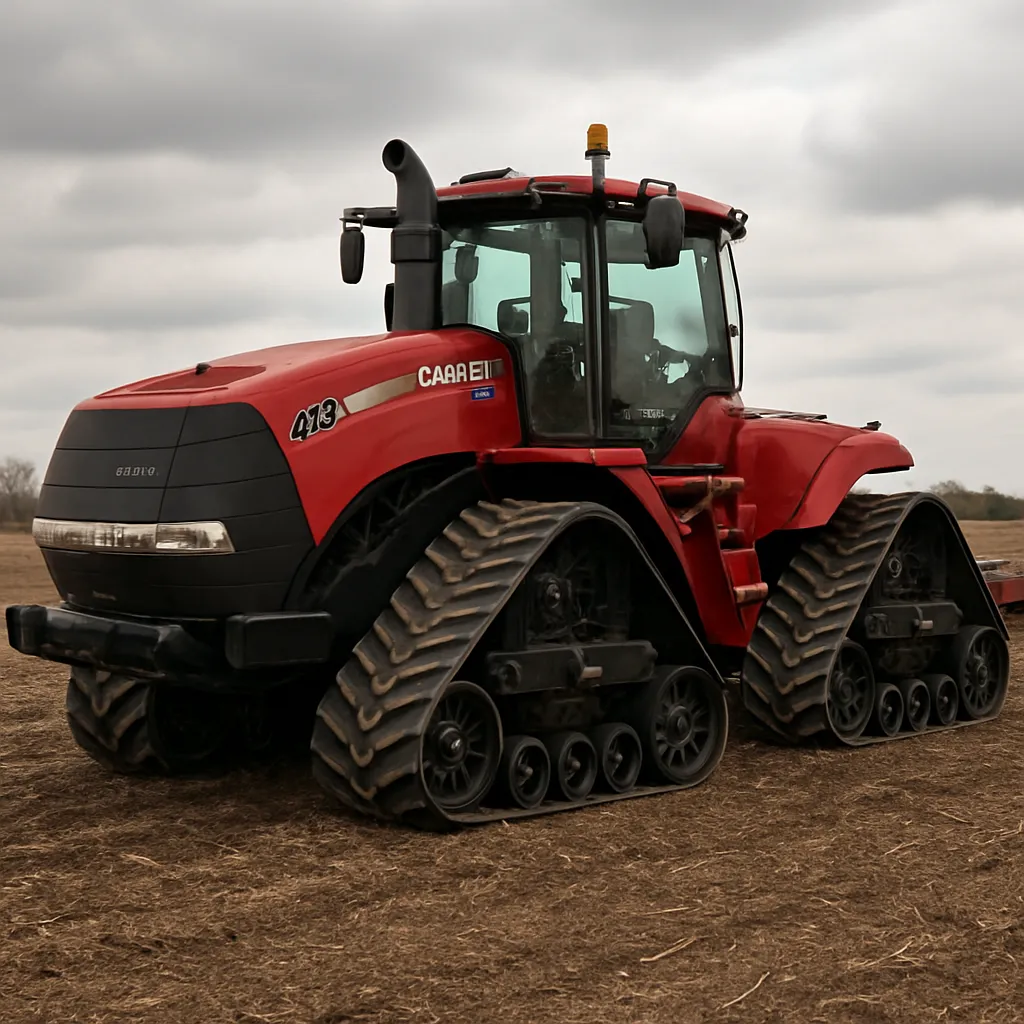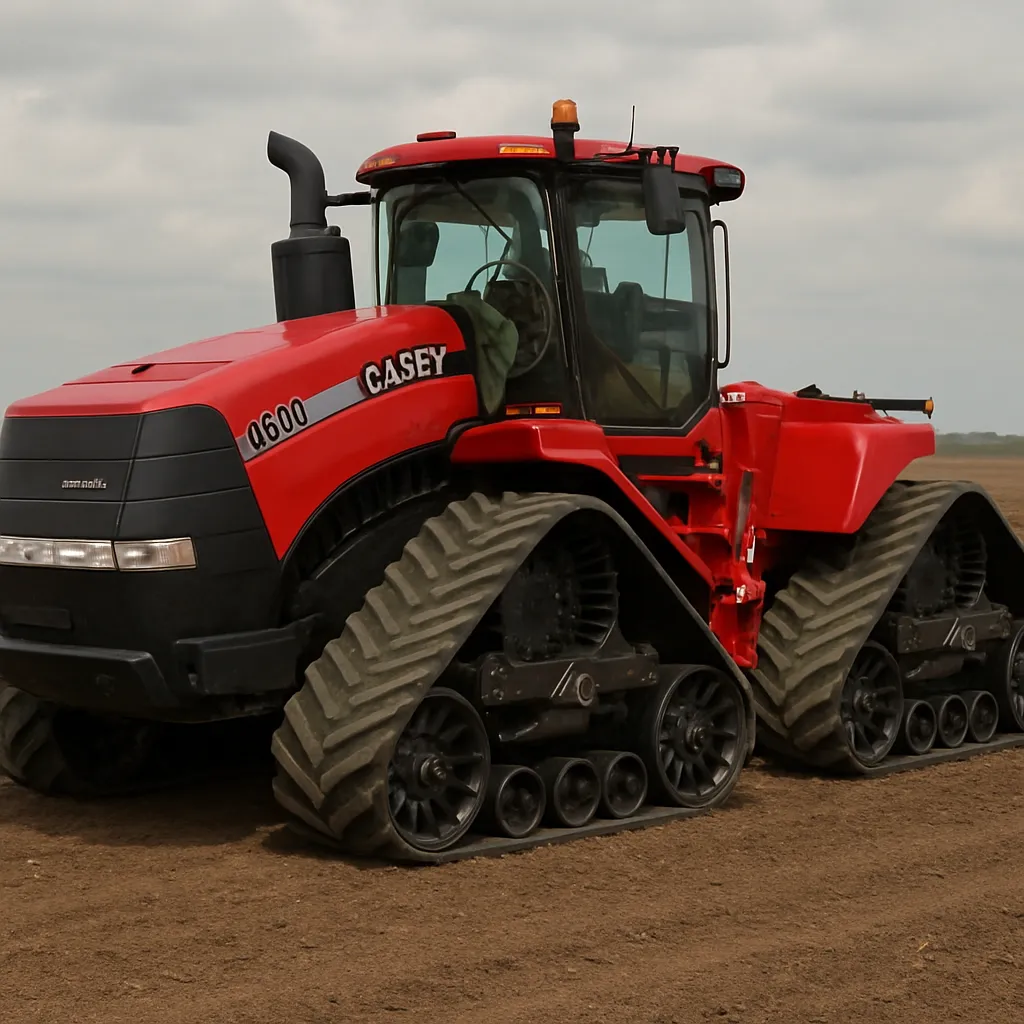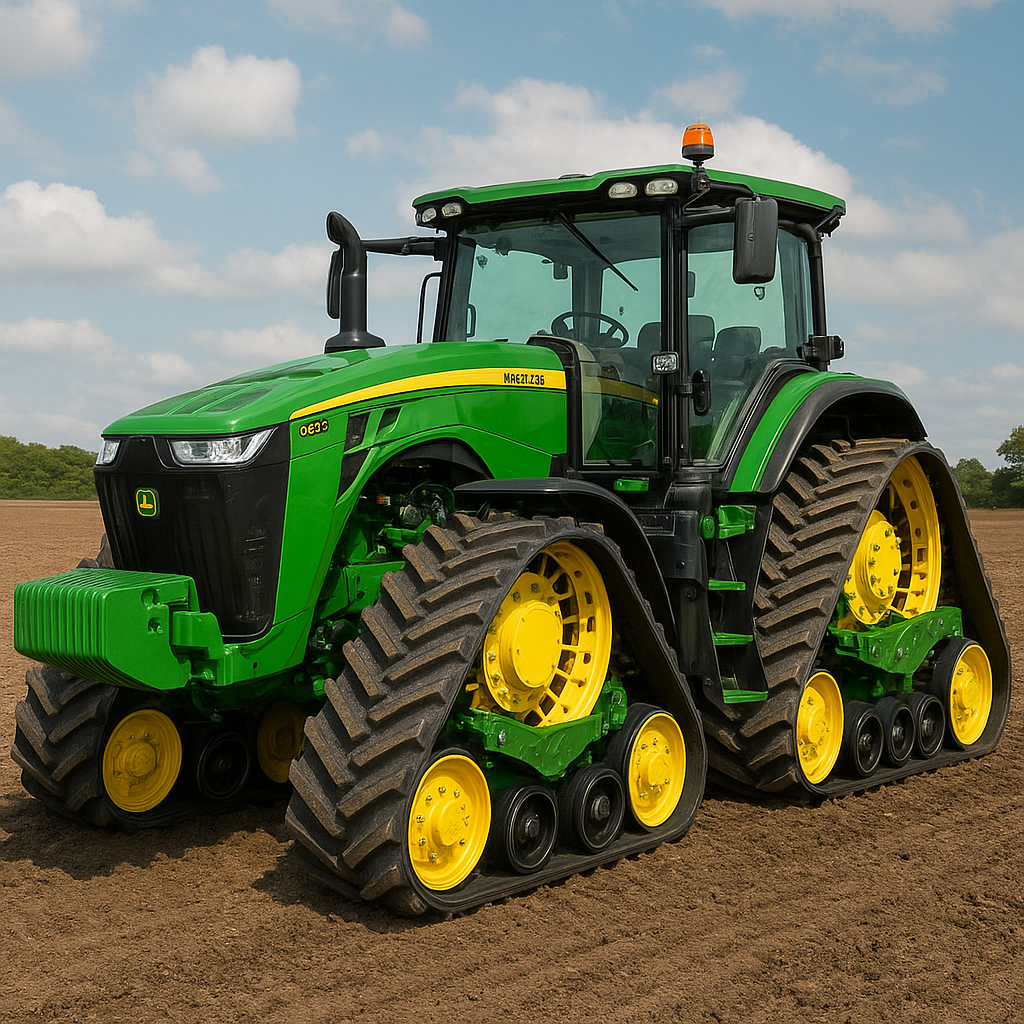
The John Deere 8RX 340 represents a modern answer to the increasing demand for high-horsepower tractors that combine soil-friendly ground contact with the pulling power required for large-scale farming. Designed to deliver dependable field performance, stable transport behavior and advanced precision-farming capabilities, this machine has been adopted by contractors and farmers who manage expansive acreage and want to minimize soil compaction while maximizing efficiency. The following article explores the tractor’s design philosophy, typical applications, technology features, operational data and practical considerations for owners and operators.
Overview and design philosophy
The John Deere 8RX 340 is part of the 8RX series, a line of high-power tractors featuring a factory-integrated four-track system rather than conventional wheels or dual wheels. The four-track layout is engineered to distribute weight more evenly across a large contact area, improving flotation and reducing soil compaction compared with narrow tires or even dual wheels. That is particularly valuable on heavy soils, in wet seasons and when carrying heavy implements.
From a design standpoint, the 8RX 340 balances three key objectives: reliable high-drawbar performance, reduced ground pressure for better soil health, and operator ergonomics combined with modern precision-farming electronics. The chassis geometry, track suspension, and powertrain are optimized for pulling heavy planters, large tillage equipment and trailed applicators while maintaining consistent traction across diverse field conditions.
Technical characteristics and typical specifications
Model names like 8RX 340 communicate approximate rated engine power; the 340 designation corresponds to the tractor’s nominal output class. Exact specifications can vary by model year, regional configuration and optional packages, but the following elements characterize the platform and its capabilities:
- Engine: high-displacement, turbocharged diesel engine tuned for sustained torque across a wide RPM range. The powerband is optimized for heavy draft work and for powering hydraulics and PTO-driven implements.
- Rated power: in the 340-horsepower class (approximately 250–255 kW nominal). Peak and boost figures depend on transient boost systems and factory calibrations.
- Transmission: often a powershift or eAutoPower/IVT-type control (depending on configuration) that allows seamless changes in speed and efficient power use under load.
- Tracks: factory-installed four independent tracks with suspended bogie systems; track widths and undercarriage configurations available in multiple options to match soil types and transport requirements.
- Hydraulics: high-flow hydraulic systems with multiple SCV options and flow rates capable of running large seed drills, air seeders and implement control systems.
- PTO: rear PTO available at industry-standard speeds for heavy implements; capability varies with optional front PTO installations.
- Weight: curb and operating weights are higher than wheeled equivalents due to the track system; ballast and undercarriage choices further affect overall mass and axle loads.
- Cab and operator systems: climate-controlled, low-vibration cabin with integrated displays, touchscreen consoles and steering systems compatible with precision guidance.
Because manufacturers update components, electronics and calibrations year to year, prospective buyers should consult the official John Deere specification sheet for the model year and market region of interest. The values above describe the general class and capabilities rather than a single immutable spec table.
Applications and use cases
The 8RX 340 is engineered for large-scale, high-productivity operations. Typical applications include:
- Tillage and seedbed preparation: pulling heavy cultivators, chisel plows and power harrows across wide passes at working depths that demand consistent traction.
- Planting and seeding: hauling large planters and air seeders that require stable drawbar pull and consistent ground speed to maintain seed placement accuracy.
- Spraying and spreading: towing large sprayers and manure/slurry tankers or bulk spreaders where traction and stable towing platforms improve safety and application uniformity.
- Heavy transport and logistics: moving heavy equipment between fields or on-site tasks where the lower ground pressure of tracks allows passage across delicate soils.
- Contracting work: contractors value the versatility of the 8RX 340 because it can trade between fieldwork and transport with good ride stability on roads and fields.
In regions with high rainfall or where soil structure conservation is a priority, the four-track solution offers tangible agronomic benefits: less compaction in seed zones, better water infiltration and the ability to work fields earlier in the spring without excessively rutting.
Advantages of the four-track configuration
The hallmark of the 8RX line is its factory-installed, fully integrated four-track chassis. This configuration provides several advantages over traditional tires or dual-wheel setups:
- Reduced ground pressure: Track contact area is significantly larger than tire contact area, lowering pounds-per-square-inch stress on the soil and protecting soil structure.
- Improved traction: Continuous contact and higher friction tend to reduce wheel slip under heavy draft conditions, translating into fuel savings and consistent field speeds.
- Smoother ride: The suspended track bogies and larger footprint smooth out bumps and provide improved operator comfort compared with rigid axles under heavy loads.
- Lower compaction risk in wet conditions: Better flotation allows work in marginal conditions where wheeled tractors would either create deep ruts or be unable to operate at all.
- Stability with wide implements: A wider stance and low center of gravity improve lateral stability when pulling large-winged implements across contours.
There are trade-offs: tracks add weight and cost, can reduce top travel speed slightly compared with wheels, and under some conditions maintenance complexity and wear on track components can be higher than tires. Nevertheless, for many large-acreage operations the agronomic and traction benefits outweigh these drawbacks.
Precision farming and on-board technology
Modern 8RX tractors are built to work as the technological core of precision farming systems. They integrate various solutions that increase productivity and reduce input costs:
- GPS-guided steering and auto-section control: Integrated guidance systems reduce overlap and increase effective field capacity by maintaining precise passes even under low visibility or at night.
- ISOBUS compatibility: Many machines support ISOBUS standards for implement control, allowing seamless communication between tractor and attached implements regardless of brand.
- Telematics and remote management: Fleet managers can monitor fuel consumption, location, work hours and diagnostic codes remotely, enabling proactive maintenance scheduling and optimized fleet use.
- Variable-rate application: Through precision maps and sensor inputs, the tractor can modulate seeding, fertilization and spraying rates to match field variability.
These features translate into lower input waste, improved crop uniformity and better tracking of field operations for compliance and record-keeping.
Operator comfort and safety
Operator environment is an area where manufacturers have invested heavily. The John Deere 8RX 340 features a spacious cab designed for long shifts, with ergonomically arranged controls, good visibility and active climate control to reduce fatigue. Key elements include:
- High-visibility windscreen, roof hatch and optional camera systems to monitor implements and rear attachments.
- Adjustable suspension seating and steering column to accommodate a range of drivers.
- Noise and vibration reduction through isolated engine mounts and track undercarriage tuning.
- Advanced safety systems such as automatic park-brake engagement, beacon lights and road-speed limiting functions for secure transport.
These improvements are more than creature comforts: better operator conditions typically lead to fewer mistakes, reduced downtime and higher overall productivity.
Maintenance, serviceability and lifecycle considerations
Proper maintenance is critical to getting the best return on an 8RX 340. While track systems are robust, they introduce additional service items compared with conventional tires:
- Undercarriage wear: Track pads, rollers, sprockets and tensioning systems require routine inspections and scheduled replacements based on hours and operating conditions.
- Hydraulic and electronic components: Modern tractors have complex hydraulic circuits and electronic control units that benefit from manufacturer-recommended service intervals and software updates.
- Engine and drivetrain: Regular oil, fuel filter and air filter changes, along with cooling-system checks, maintain reliability under heavy-duty cycles.
- Telematics subscriptions: Full-value remote diagnostics and data services may require subscription fees—budgeting for these services contributes to predictable lifecycle costs.
Operational best practices — such as avoiding continuous high-slip conditions, cleaning track components to prevent debris buildup and following recommended tensioning procedures — extend component life and reduce total cost of ownership.
Economic considerations and total cost of ownership
When evaluating the 8RX 340, purchasers should look beyond purchase price to understand lifetime economics. Factors that influence cost-effectiveness include:
- Fuel consumption and efficiency: Better traction and lower slip often reduce overall fuel burn per hectare, especially in demanding tasks like deep tillage.
- Field efficiency: The ability to work earlier in the spring and to sustain higher effective field speeds can increase the number of hectares completed in optimal time windows.
- Resale value: Well-maintained, high-spec tractors with full-service records and telematics history retain value better in the used equipment market.
- Maintenance costs: Track replacement and undercarriage service add to running costs relative to a wheeled tractor, but reduced implement wear and fewer passes (due to better efficiency) can offset some expenses.
- Financing and uptime: Service contracts, extended warranties and dealer support networks reduce unexpected costs and help maintain productivity during peak seasons.
Decision-makers should perform a total cost of ownership analysis that includes fuel, maintenance, expected hours per year, resale projections and potential gains in field timeliness and crop outcomes.
Environmental and agronomic benefits
Soil health is an increasing concern in modern agriculture. The use of four-track tractors like the 8RX 340 can play a constructive role in conservation-oriented systems:
- Reduced compaction: Lower ground pressure helps maintain soil porosity and root development, which benefits crop yields and long-term soil productivity.
- Less need for remediation: Minimizing deep compaction reduces the need for subsoiling and other intensive remediation practices that consume fuel and time.
- Precision inputs: The tractor’s ability to support variable-rate application means fertilizers and pesticides can be applied more efficiently, reducing environmental load.
While tracks themselves can result in more concentrated wear in specific areas if turns are frequent, proper field management and occasional alternating of headland patterns help avoid localized over-compaction.
Comparisons and where the 8RX 340 fits
Compared with wheeled 8R-class tractors, the 8RX 340 is best suited for operators who prioritize soil protection and traction under heavy loads. Compared with dual-wheel setups and radial tires, factory-installed tracks provide a tailored undercarriage that often delivers more consistent results and a unified warranty/service pathway.
For operators who need absolute maximum transport speed and lower upfront cost, a wheeled tractor may still be preferable. For those prioritizing field efficiency, early-season access and long-term soil conservation across large acreages, a four-track tractor like the 8RX 340 typically makes economic and agronomic sense.
Practical tips for operators
To maximize the utility of an 8RX 340, operators should consider the following practices:
- Plan field passes to minimize tight turns and excessive pivoting that can accelerate track wear.
- Use integrated guidance to reduce overlap and maintain consistent work speeds, benefiting both efficiency and implement performance.
- Monitor undercarriage condition and clean tracks regularly to prevent debris damage and uneven wear.
- Work with a dealer to ensure timely software updates, calibration and diagnostic checks—especially before critical seasonal windows.
- Keep detailed records of fuel use, implement setups and field conditions to inform ongoing decisions about setup and attachments.
Performance statistics and real-world observations
Exact manufacturer statistics depend on model year and configuration. Publicly available figures typically list the 8RX 340 in the roughly 340-horsepower category, with gross power and peak torque ratings optimized for heavy draft operations. Real-world reports from farmers and contractors emphasize:
- Noticeable reductions in field compaction when switching from dual wheels to four tracks, particularly on clay and loamy soils.
- Improved effective hectares per hour during planting and tillage seasons due to steadier traction and reduced slip.
- Comparable or slightly reduced fuel consumption per hectare in high-draft tasks owing to less wheel slip, though absolute fuel consumption may be higher simply because larger machines pull bigger implements and cover more ground.
- Higher initial acquisition and undercarriage maintenance costs, balanced in many cases by productivity gains and agronomic benefits.
Operators evaluating the model are encouraged to seek local demonstration data and peer testimonials, as soil types, climate and cropping systems significantly influence outcomes.
Conclusion
The John Deere 8RX 340 embodies a modern, high-power approach to large-scale agriculture where minimizing soil compaction and maximizing field efficiency are priorities. With its factory-integrated four-track system, advanced precision technologies, and a design focused on heavy draft performance, the machine is well suited for operators who manage broad acreages and demand consistent results in varied conditions. While up-front costs and undercarriage maintenance differ from wheeled alternatives, many users find the trade-offs acceptable due to improved seedbed preservation, better traction and increased effective working time. Prospective buyers should balance their agronomic needs, annual hours, implement sizes and service network availability when considering the 8RX 340 for their fleet.