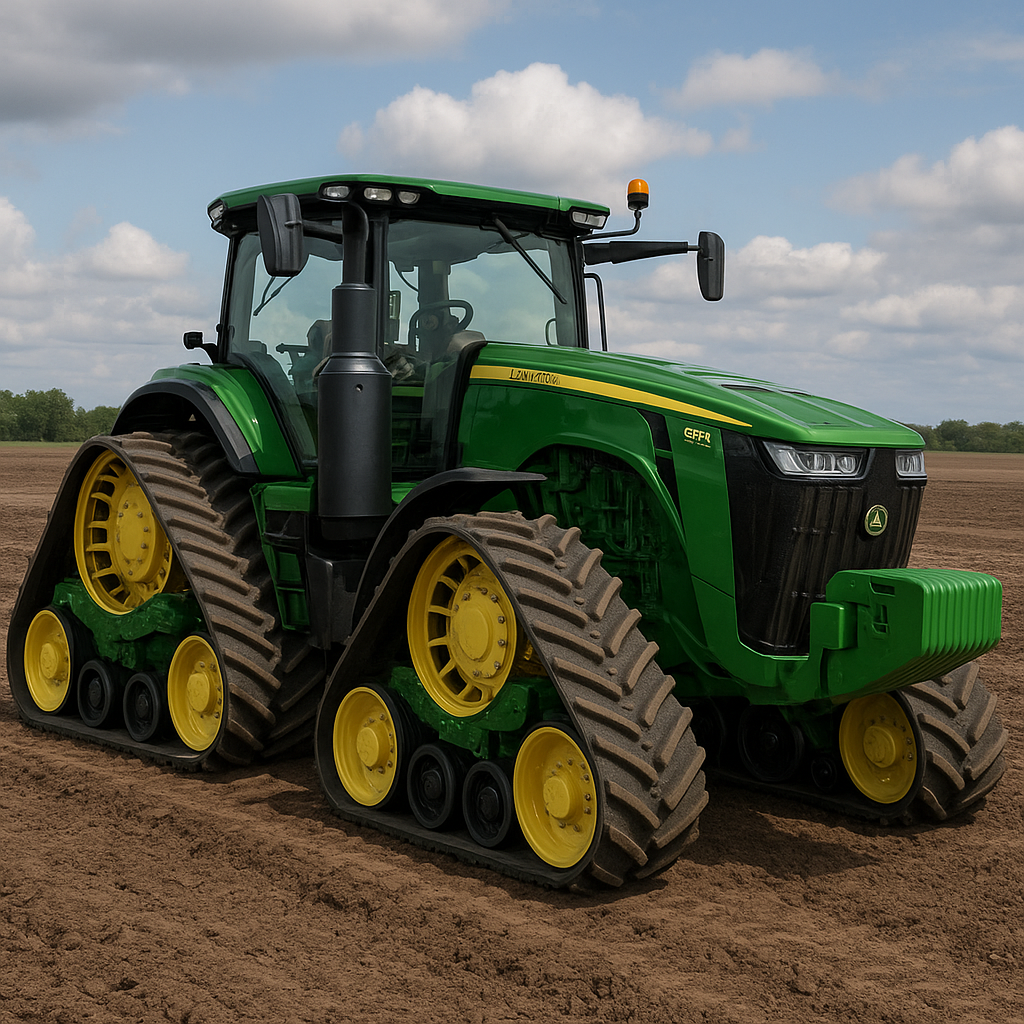
The John Deere 8RX 410 represents a modern approach to high-horsepower farming machinery: a four-track, high-performance tractor built to deliver consistent power, reduced soil compaction and exceptional traction across varying field conditions. Designed for large-scale arable work, heavy tillage and high-speed transport, the 8RX 410 combines robust mechanical systems with advanced electronics and precision-agriculture features. This article examines the machine’s design, practical applications, technical attributes, operational economics and maintenance considerations to give a comprehensive picture of where the 8RX 410 fits in contemporary agriculture.
Design and concept: what makes the 8RX series different
The 8RX family departs from traditional dual- or single-wheel agricultural tractors by adopting a four-track configuration. This layout is engineered to deliver uniform ground contact, increased surface area and improved weight distribution compared with conventional wheeled tractors or two-track tracks. The 8RX 410 is built around several core design goals: maximize usable field time, minimize harmful compaction, and provide predictable handling in a variety of soil and weather conditions.
Key design characteristics include a low center of gravity, four independent track assemblies, heavy-duty final drives and a frame configured to handle high drawbar pull. The machine’s architecture supports both heavy draft implements and modern precision-application equipment, allowing contractors and large farmers to run broad fronts at higher forward speeds. The emphasis on modularity and electronic integration makes the tractor suitable for both traditional tasks and the rapidly expanding set of precision-agriculture workflows.
Main applications and field uses
The 8RX 410 is aimed at operations where power, traction and soil preservation are critical. Typical applications include:
- Primary and secondary tillage with large cultivators and disc harrows
- Seedbed preparation and seeding operations over wide working widths
- Transporting heavy implements and trailers over varying terrain
- Spraying and fertiliser applications over large acreages where speed and stability matter
- Specialised row-crop and broad-acre operations where controlled soil compaction preserves yield potential
Because of its four-track configuration, the 8RX 410 also provides advantages in wet or marginal conditions where wheeled tractors may struggle. Contractors who need reliable performance when deadlines are tight, or farmers on heavier soils who must protect topsoil structure, often select tracked tractors to extend workable days and reduce rutting.
Technical overview and notable specifications
The John Deere 8RX 410 is named for its approximate rated engine output—about 410 horsepower at rated engine speed—making it one of the higher-powered models in the 8RX range. The appliance of this power is controlled through modern transmission and electronics sets that optimize torque delivery, traction and travel speed. Key technical aspects (typical and model-dependent) include:
- Engine and power: Rated at approximately 410 hp (ISO), with torque characteristics tuned for heavy draft work and transport. Actual available power can vary with transient boost/torque management systems on certain configurations.
- Powertrain: Often offered with either a stepped or continuously variable transmission (depending on market and specification), and refined for smooth power delivery to the tracks and implement hydraulic systems.
- Track system: Four independent tracks with multiple width options and track-tensioning systems. Track choices allow operators to balance flotation and transport performance.
- Hydraulics and hitch: High-flow hydraulic systems capable of driving large implements and multiple remote functions; robust three-point hitch and drawbar options for heavy attachments.
- Cab and electronics: A climate-controlled, ergonomically arranged cab with integrated precision-ag technology such as AutoTrac guidance, ISOBUS support and telematics connectivity for fleet management and remote diagnostics.
- Top speed: Road transport speeds commonly up to around 40 km/h (depending on country regulations and transmission choice).
Exact figures for weights, fuel capacity and dimensions change with equipment choices (tracks, ballast packages, hitch and implement setups). Operators should consult the manufacturer’s specification sheet for precise numbers matched to their region and year model.
Tracks, traction and soil impact
The most visible and functionally important feature of the 8RX 410 is its track system. Tracks increase the contact area between the machine and the ground, which reduces the pressure per unit area compared to small tires and improves traction on soft soils. The four-track approach offers several operational advantages:
- Reduced soil compaction — By spreading machine weight over a larger area, the tracks reduce peak soil pressure and the risk of deep compaction that can limit root growth and reduce yields over time.
- Improved traction — The extended contact footprint provides better pull for heavy implements, meaning less slip, more efficient fuel usage in high-draw tasks and steadier forward momentum during field passes.
- Smoother ride and stability — The four independent contact points help keep the chassis more stable over ridges and contours, which improves operator comfort and reduces implement oscillation.
- Adaptability — With different track widths and pad types available, the tractor can be configured for wetter conditions, higher flotation or faster transport.
These benefits translate directly into more working days across the season, fewer passes required to complete the same task and, ultimately, the potential for improved crop performance due to protected soil structure. However, tracks also introduce specific maintenance tasks and different wear patterns compared with tires.
Operator experience, controls and precision agriculture
Modern high-horsepower tractors are as much about data and operator support as they are about brute strength. The 8RX 410 embraces this trend by offering an array of electronic assistance and connectivity features designed to boost productivity and simplify work management.
- Integrated guidance systems such as AutoTrac reduce overlap and operator fatigue during long passes and enable precise implement steering for high-efficiency coverage.
- ISOBUS compatibility allows plug-and-play control of many contemporary implements, simplifying setup and enabling section control, variable-rate application and advanced implement diagnostics.
- Telematics and remote services (e.g., JDLink) provide fleet managers with real-time metrics on location, fuel use and system alerts that facilitate preventive maintenance and optimized machine allocation.
- Cab ergonomics focus on visibility, low noise levels and user-friendly interfaces. Comfort features increase productivity during long operations and support better decision making in complex jobs.
Precision systems contribute directly to lower input costs, reduced environmental impact and improved resource use efficiency. For large-acre operators, the combination of reliable precision systems and the tractor’s sustained power means fewer wasted passes and better utilization of expensive crop inputs.
Maintenance, serviceability and lifecycle considerations
While tracks and heavy-duty drivetrains deliver meaningful benefits, they also alter the maintenance profile compared to wheeled tractors. Typical maintenance and lifecycle points to consider:
- Track wear and replacement intervals depend heavily on soil type, ground conditions and transport distances. Abrasive surfaces and extended road travel accelerate wear.
- Regular inspection and correct track tension are essential to avoid premature wear of undercarriage components and to ensure predictable handling.
- Engine and drivetrain maintenance intervals follow manufacturer recommendations but are also influenced by duty cycle. Heavy draft operations will increase consumable usage (filters, oils) compared with light transport jobs.
- Telematics and onboard diagnostics help plan maintenance proactively, reducing unplanned downtime and allowing for better parts inventory management.
- Resale values for specialty tracked tractors can be strong in markets where they are well understood, but variation exists by region and the condition of the track systems in particular.
Capital costs for a four-track high-horsepower unit tend to be higher than for wheel tractors in the same power class. That makes thoughtful lifecycle planning—matching machine capacity to farm scale, contracts and implement size—important to achieve strong returns on investment.
Economic performance and productivity factors
Purchasing an 8RX 410 is often driven by the economic trade-off between increased operating capability and higher acquisition and maintenance costs. Factors that influence the economic outcome include:
- Field workdays extended by better traction and lower sensitivity to wet conditions, allowing more timely operations and reduced yield losses from delayed planting or application.
- Reduced fuel consumption per hectare in heavy draft tasks due to lower wheel slip and more efficient transfer of engine power to ground.
- Lower compaction-driven yield penalties over time, which can raise average productivity per hectare on sensitive soils.
- Increased capacity per pass (wider implements, higher forward speeds), which reduces labour and equipment hours per hectare in large farms.
While exact numbers vary by farm and region, large-scale arable farms and contractors often report meaningful per-hectare gains when replacing underpowered wheeled tractors with high-horsepower tracked units—especially in heavy soils or climates with frequent wet windows. A careful cost-benefit analysis should weigh purchase price, financing, fuel use, track replacement costs and the value of extended seasonal windows.
Environmental and agronomic impacts
The 8RX 410’s design intends to minimize harmful effects of heavy machinery on soil structure. Reduced compaction helps preserve infiltration rates, root development and long-term soil health. Secondary environmental benefits include:
- Potential for reduced tillage intensity due to stable traction and implement control, supporting conservation agriculture practices.
- Improved fuel efficiency in heavy draft tasks can lower CO2 emissions per hectare when compared to tractors experiencing high wheel slip.
- Precision application technologies enabled by the tractor reduce overlap and narrow the variance in input application, which lowers nutrient and pesticide use.
These agronomic and environmental benefits are context-dependent, but they align with broader goals of sustainable intensification—producing more from existing farmland while reducing adverse environmental impacts.
Comparisons and alternatives
When evaluating the 8RX 410, operators typically compare it with: large wheeled tractors in the 8R class, two-track tracked tractors and steerable four-wheel drives. Trade-offs often center on:
- Flotation and compaction — four-track designs typically outperform wheeled tractors and two-track setups in flotation and compaction control.
- Transport efficiency — wheeled tractors can be faster and more efficient on long road hauls; track wear can make long road travel costly on a tracked machine.
- Initial cost vs. productivity — four-track tractors tend to command a premium but can deliver higher daily output on demanding tasks.
- Field versatility — some operations that require frequent road moves or narrow access might prefer wheels; others prioritize field traction and soil protection and therefore choose tracks.
Choosing the right machine requires reviewing the operation’s soil types, typical weather windows, average implement sizes and transport needs.
Practical tips for operators
To maximize the performance and life of an 8RX 410, operators should consider the following best practices:
- Configure track width and pad type to match soil conditions and the balance between flotation and transport needs.
- Monitor track tension and wear frequently; small misalignments can cause accelerated component wear.
- Use precision guidance to reduce overlap and optimize pass planning, saving fuel and inputs.
- Plan transport routes and minimise unnecessary road travel to reduce abrasive track wear.
- Keep telematics enabled and utilise dealer or factory diagnostics for preventive maintenance scheduling.
Training for operators on track-specific handling and maintenance pays off quickly through improved uptime and lower repair bills.
Summary and broader outlook
The John Deere 8RX 410 is a purpose-built, high-horsepower machine for large-scale arable operations, contractors and farms that need to extend working windows, protect soil structure and move heavy implements with confidence. Its four-track layout advances the goals of higher traction, improved flotation and controlled soil impact while coupling these physical benefits to advanced electronics and precision-ag features that raise application accuracy and operational efficiency. While acquisition and maintenance costs for tracked systems require careful consideration, many large operations find the productivity gains, reduced compaction and enhanced reliability provide a compelling return over the machine’s lifecycle.
Overall, the 8RX 410 is best suited to operators who need sustained power, broad implement compatibility and lower soil disturbance on demanding soils. When matched to the right farm size, implements and management practices, it can be a transformative piece of equipment for modern, precision-focused enterprises.