
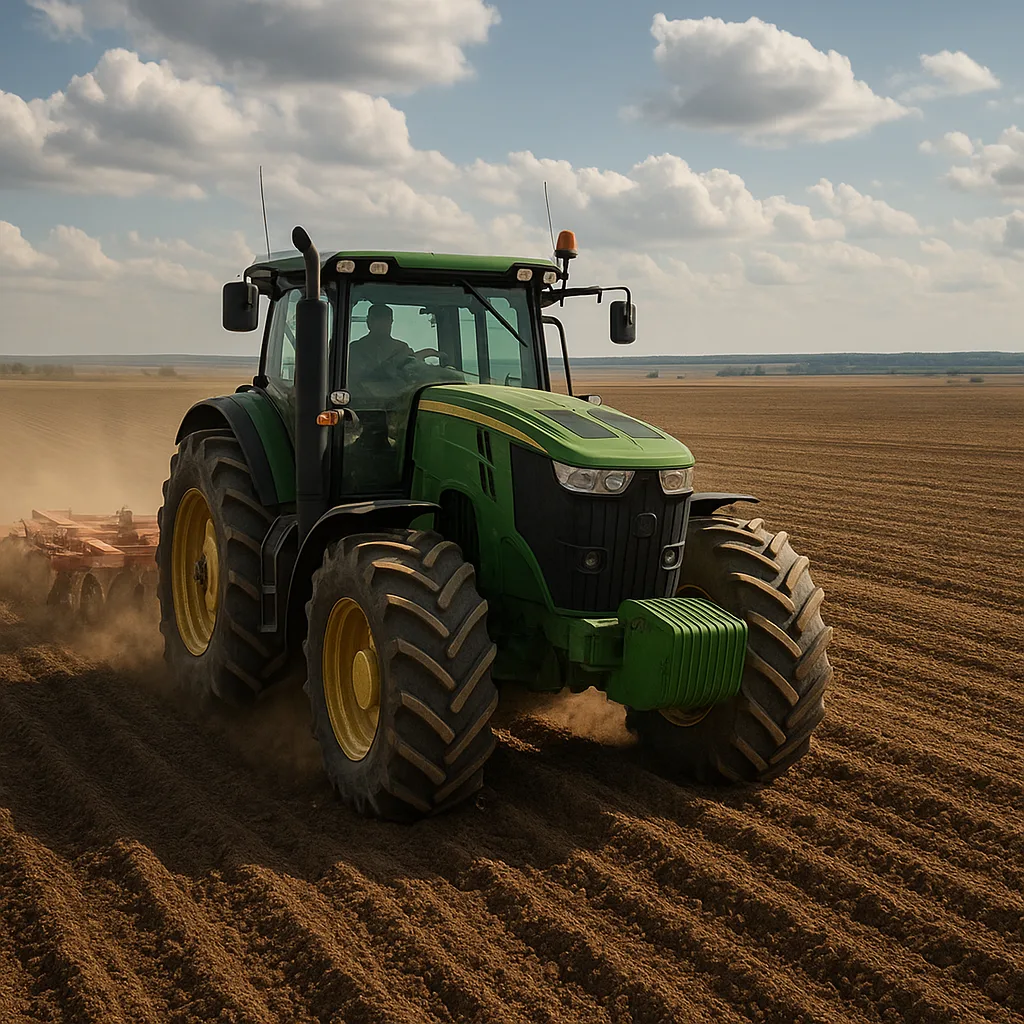
In modern agriculture, the scale of operations has expanded dramatically, demanding machinery that is both robust and intelligent. Large fields, tight seasonal windows, labor shortages, and rising costs push farmers to seek solutions that combine productivity with reliability. Powerful tractors are at the center of this transformation, enabling farms to cultivate more land, manage complex tasks, and operate efficiently in challenging conditions. To understand how crucial these machines have become, it is enough to look at specialized platforms like machines-at-work.com, where professional equipment is matched with real on-field needs. Yet the importance of high-horsepower tractors goes far beyond sheer force. They integrate advanced technology, protect soil health, and create new economic opportunities. Exploring these aspects reveals why powerful tractors are no longer a luxury, but a strategic necessity for large-scale farming.
The evolution of large-scale farming
Over the last decades, farms have grown in both physical size and organizational complexity. Consolidation of smaller plots into vast agricultural enterprises has become common, especially in regions where profitability depends on economies of scale. Modern farms often manage thousands of hectares, with multiple crops, rotating schedules, and strict deadlines linked to weather and market conditions.
Traditional, low-powered tractors were designed for smaller, fragmented fields and slower working rhythms. On a large farm, this approach is no longer feasible. When a field covers hundreds of hectares, every pass across it represents many hours of labor, fuel, and machine wear. The need to cover these distances quickly and efficiently has driven demand for tractors with higher horsepower, stronger drivetrains, and advanced transmissions.
This evolution is not just about size. Large-scale farming uses more complex machinery attached to tractors: wide cultivators, high-capacity seed drills, multi-row planters, and heavy sprayers. Each of these implements imposes significant load. Without a powerful tractor, their potential cannot be fully used. Modern agriculture therefore relies on tractors that combine strength, traction, and technology into a single working platform.
Why power matters in field performance
On large fields, the relationship between tractor power and time efficiency is direct and obvious. Higher horsepower allows the use of wider implements that work across a greater width with every pass. This reduces the number of passes needed to complete tillage, sowing, fertilizing, or spraying. As a result, the total time to finish a field decreases dramatically.
Imagine a farm that must prepare 1,000 hectares for seeding within a short optimal window. A low-powered tractor pulling a narrow cultivator will take many days, potentially missing the best soil moisture or temperature conditions. A powerful tractor, in contrast, can pull a much larger implement at a stable working speed. The field is covered faster, while the machine stays within its optimal performance range, reducing mechanical stress.
Power is also crucial when working in challenging conditions, such as heavy clay soils, hilly terrain, or wet patches. Tractors that struggle under load may bog down, slip excessively, or even damage the soil structure by repeatedly passing over the same areas. A high-horsepower unit coupled with the right ballast and tire setup maintains steady traction and speed, preventing unnecessary passes and preserving the field surface.
Matching tractors with heavy implements
Modern implements are designed to maximize efficiency by covering as much area as possible in a single pass. Wide cultivators, deep rippers, high-capacity seed drills, and spreaders require both strong pulling power and reliable hydraulic systems. A mismatch between tractor and implement leads to lower working speeds, uneven depth, and poor field quality.
Powerful tractors are equipped with reinforced frames, advanced transmissions, and high-flow hydraulics that can handle heavy-duty implements without compromise. This is particularly important for deep tillage and subsoiling operations, where significant force is needed to break compacted layers. Without adequate power, the implement may not reach the desired depth, leaving compaction zones untouched and compromising root development.
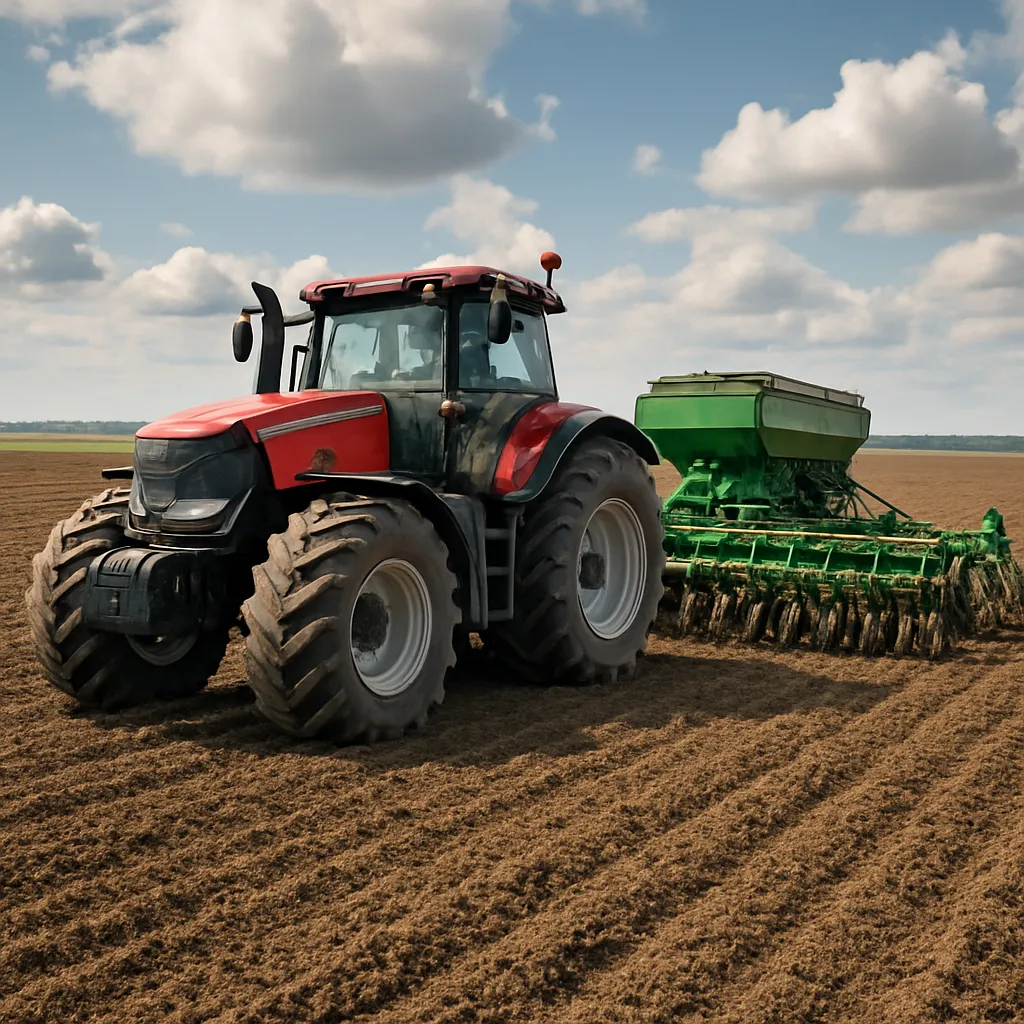
Another advantage is the ability to use combined or integrated tools. For example, a tractor may pull a cultivator with an attached seeder and fertilizer spreader in one pass. This reduces the number of tramlines, saves fuel, and shortens the working window. Only a tractor with sufficient power, weight, and hydraulic capacity can manage this type of complex, combined setup at a professional level.
Time windows and climate challenges
Climate change intensifies the pressure on farm schedules. Unpredictable rainfall, sudden heat waves, and shorter periods of ideal field conditions force farmers to react quickly. When a window for sowing or harvesting opens, there is often no time to waste. Here, powerful tractors become a strategic tool to beat the weather.
In practice, this means completing planting, fertilization, or pesticide applications within a narrow time frame. If the tractor is underpowered, work must begin earlier or finish later, often in less suitable conditions. This can lead to poor seedbed quality, uneven emergence, or ineffective chemical applications. A powerful tractor allows operations to be concentrated exactly when the field is ready, optimizing both yield and input efficiency.
Additionally, during harvest season, tractors are essential for hauling grain or forage from the field to storage or transport. High-horsepower units can pull larger trailers or multiple wagons, reducing the number of trips and minimizing downtime for harvesters. This coordinated flow between tractor and harvester is critical to avoid bottlenecks that can result in crop losses or quality degradation.
Precision agriculture and intelligent power
Power in modern tractors is not only mechanical; it is also digital. Large-scale farms increasingly adopt precision agriculture technologies such as GPS guidance, variable rate applications, auto-steering, and data-based decision tools. Powerful tractors are typically designed to integrate these systems seamlessly, providing a technological backbone for the entire farm.
Accurate guidance reduces overlaps and gaps during sowing and spraying, saving seed, fertilizer, and chemicals while protecting the environment. Auto-steering systems maintain an ideal path even during long workdays or under low-visibility conditions, reducing operator fatigue. These features are particularly valuable on large fields, where small errors repeated over many hectares translate into significant losses.
Powerful tractors often come with onboard terminals and connectivity options that allow the exchange of field data with farm management software. This enables monitoring of fuel consumption, working speed, slip percentage, and implement settings in real time. Management can analyze this information to optimize field operations, plan maintenance, and adjust strategies for future seasons.
Soil protection and traction management
A common concern with large, powerful tractors is potential soil compaction. Heavy machinery can increase pressure on the ground, harming soil structure and reducing yields. However, modern design and technology help balance power with soil protection, making these machines allies rather than enemies of long-term soil health.
High-horsepower tractors distribute their weight across large tires or tracks, reducing surface pressure. Many models feature adjustable tire pressure systems, allowing operators to lower pressure in the field for better flotation and raise it again for road transport. This flexibility protects soil porosity, improves water infiltration, and supports root development.
Traction control systems further improve efficiency. By monitoring wheel slip and adjusting power delivery, they ensure that energy is used for pulling rather than spinning. This not only saves fuel but also prevents the formation of ruts and compaction zones. When properly configured, a powerful tractor can actually make fewer passes and apply lower cumulative pressure on the soil than several smaller machines making multiple trips.
Economic efficiency on large farms
Investing in a powerful tractor represents a significant financial decision, but on large farms it often leads to lower costs per hectare. The key is to look beyond purchase price and consider total cost of ownership, including fuel, maintenance, labor, and machine lifetime.
Faster field operations allow better use of narrow seasonal windows, which directly impacts yield. Avoiding delays in sowing or harvesting can mean the difference between average and excellent productivity. Over thousands of hectares, even a small yield increase represents a substantial economic gain that may fully justify the investment in stronger machinery.
Labor efficiency is another major factor. A single high-horsepower tractor with a wide implement can replace multiple smaller units. This reduces the number of operators, simplifies logistics, and lowers insurance and administrative expenses. In regions with labor shortages, powerful tractors become essential to keep the farm running smoothly without relying on a large seasonal workforce.
Fuel consumption may seem higher at first glance, but when measured per hectare, powerful tractors often perform better. Working at optimal engine loads and using modern fuel-efficient technologies, they can cover more area per liter than weaker machines that constantly operate at their limits.
Operator comfort and safety
On large farms, operators may spend long hours in the cab, often working at night or in adverse conditions. Powerful tractors usually offer advanced cabins designed for comfort, visibility, and safety. Air suspension seats, climate control, low-noise insulation, and ergonomic controls reduce fatigue and help the driver stay focused.
Good visibility around the tractor and attached implements is critical when working with large equipment. Wide mirrors, cameras, and well-designed lighting systems allow safe operation during extended workdays. High-performance braking systems and stable chassis designs further increase safety when pulling heavy loads on public roads or uneven terrain.
The combination of comfort and safety improves not only the well-being of operators but also the consistency of field work. A less tired driver makes fewer mistakes, maintains better working speed, and responds faster to unexpected obstacles or weather changes. This contributes directly to overall farm efficiency.
Versatility across seasons and tasks
Powerful tractors are not limited to heavy tillage alone. Their versatility throughout the year is a significant advantage for large-scale farms. In spring, they prepare soil and sow crops; in summer, they handle spraying and transport; in autumn, they support harvest operations; and in winter, they carry out maintenance work, manuring, or even snow clearing where needed.
The ability to quickly switch between implements multiplies the effective use of the machine. Front and rear linkages, multiple hydraulic outlets, and power take-off options allow for a wide range of attachments. This flexibility ensures that the tractor remains a central asset on the farm, instead of standing idle for long periods.
Large farms often manage different crops requiring specific operations. A powerful tractor can adapt by adjusting ballast, wheel configurations, and implement setups without sacrificing performance. This adaptability helps maintain high efficiency across diverse production systems, from cereals and oilseeds to root crops and forage.
Reliability and maintenance in intensive use
Because large-scale farms depend heavily on their machinery, reliability is essential. A breakdown during peak season can disrupt operations across hundreds of hectares. Powerful tractors are typically engineered for intensive, continuous use, with reinforced components and robust cooling systems.
Preventive maintenance plays a key role in preserving this reliability. Large tractors often feature diagnostic systems that alert operators to potential issues before they cause downtime. Monitoring engine parameters, oil quality, and service intervals helps plan maintenance during less critical periods, such as between seasons or during unfavorable weather.
Ease of service is another important factor. Well-designed engine compartments, centralized grease points, and accessible filters shorten maintenance time. On large farms, where every hour counts, these design elements make the difference between a quick check and a costly delay.
Environmental considerations and sustainability
Sustainability has become a central objective in modern agriculture. At first glance, powerful tractors may seem contrary to this goal, but in practice they can support more sustainable farming systems when used correctly.
By enabling fewer passes with wider implements, they reduce total fuel consumption per hectare and limit soil disturbance. Combined operations, such as simultaneous cultivation and seeding, lower tramline density and protect soil structure. Precision technology allows accurate placement of inputs, avoiding over-application of fertilizers and chemicals, which benefits the environment and reduces costs.
Modern engines in powerful tractors meet strict emission standards, with systems that reduce particulate matter and nitrogen oxide emissions. This technological progress means that a new high-horsepower tractor can be cleaner than several older, less efficient machines performing the same work. When integrated into a well-planned cropping system, such tractors become tools that support both productivity and environmental responsibility.
The strategic role of powerful tractors in farm management
For large farms, choosing the right tractor is a strategic decision that affects every part of the production chain. A powerful tractor is not just a source of force; it is a central platform that connects implements, data, and people. It defines the tempo of field work, the quality of soil operations, and the flexibility with which the farm can adapt to weather, market, and labor conditions.
By combining mechanical strength with precision technologies, reliability, and efficiency, powerful tractors allow farms to operate at a scale that would otherwise be impossible. They help farmers protect soil productivity, respond to climate challenges, and control operational costs. In an environment where margins are often tight and risks are high, these machines act as a form of insurance against uncertainty.
As agricultural enterprises continue to evolve, the role of the tractor will remain central. High-horsepower machines will increasingly integrate with digital tools, autonomous functions, and new energy sources. Yet their fundamental purpose will stay the same: to convert power into precise, efficient, and sustainable work on the land. For large-scale farming, this makes powerful tractors not just helpful, but truly indispensable assets for long-term success.


Leave a Reply