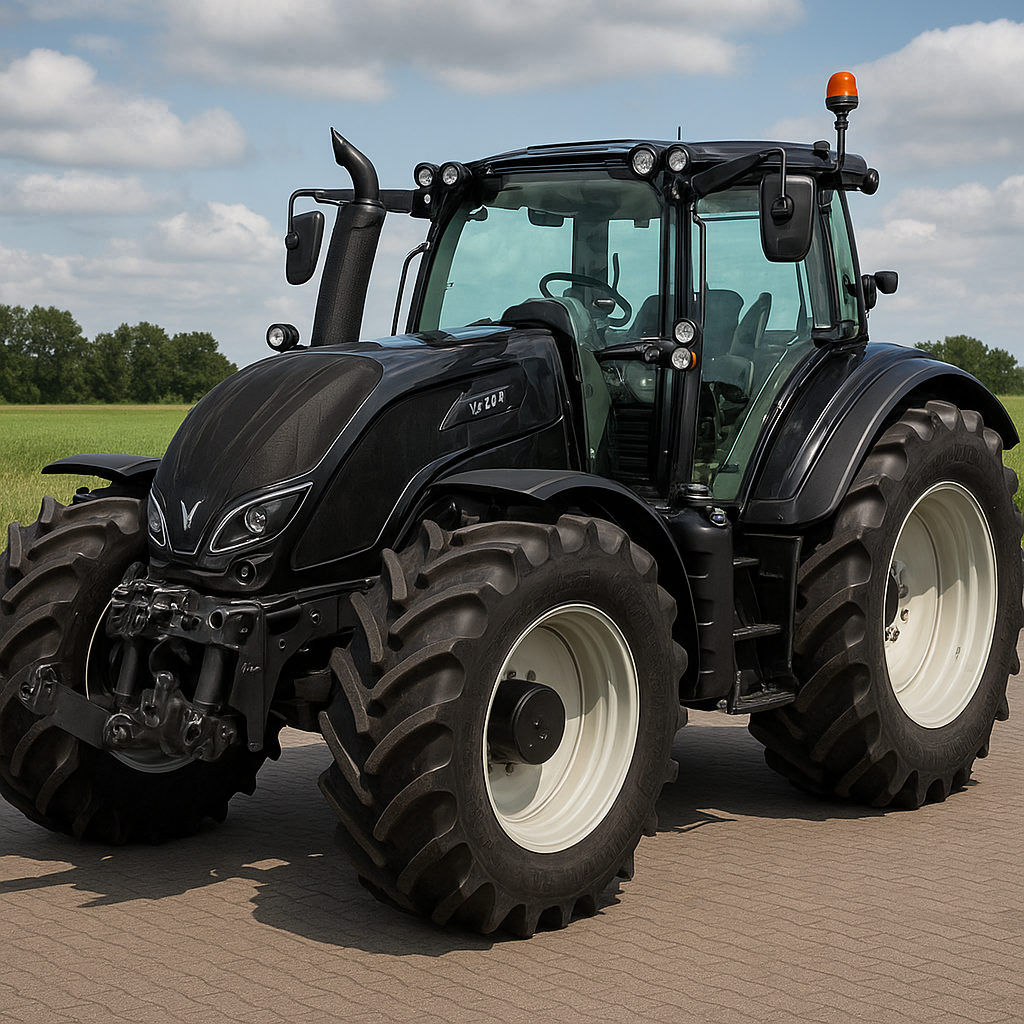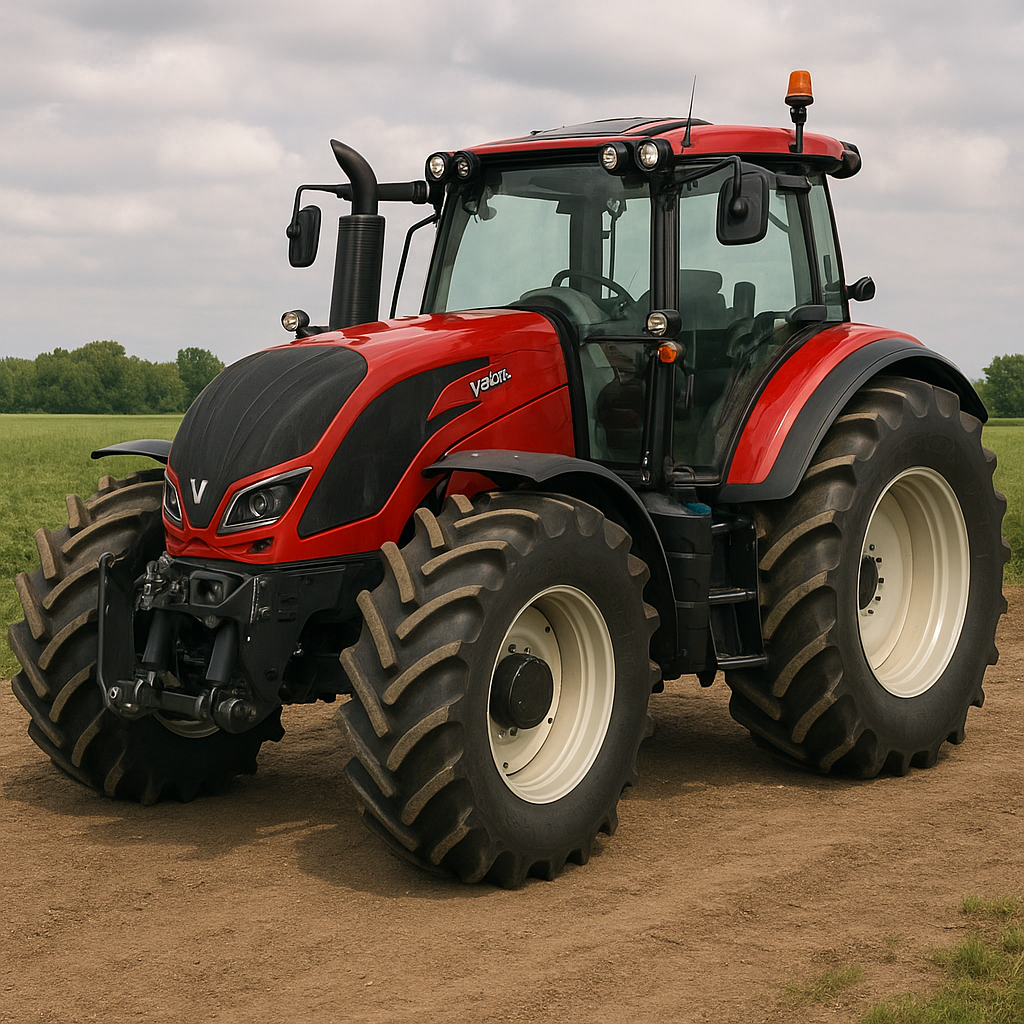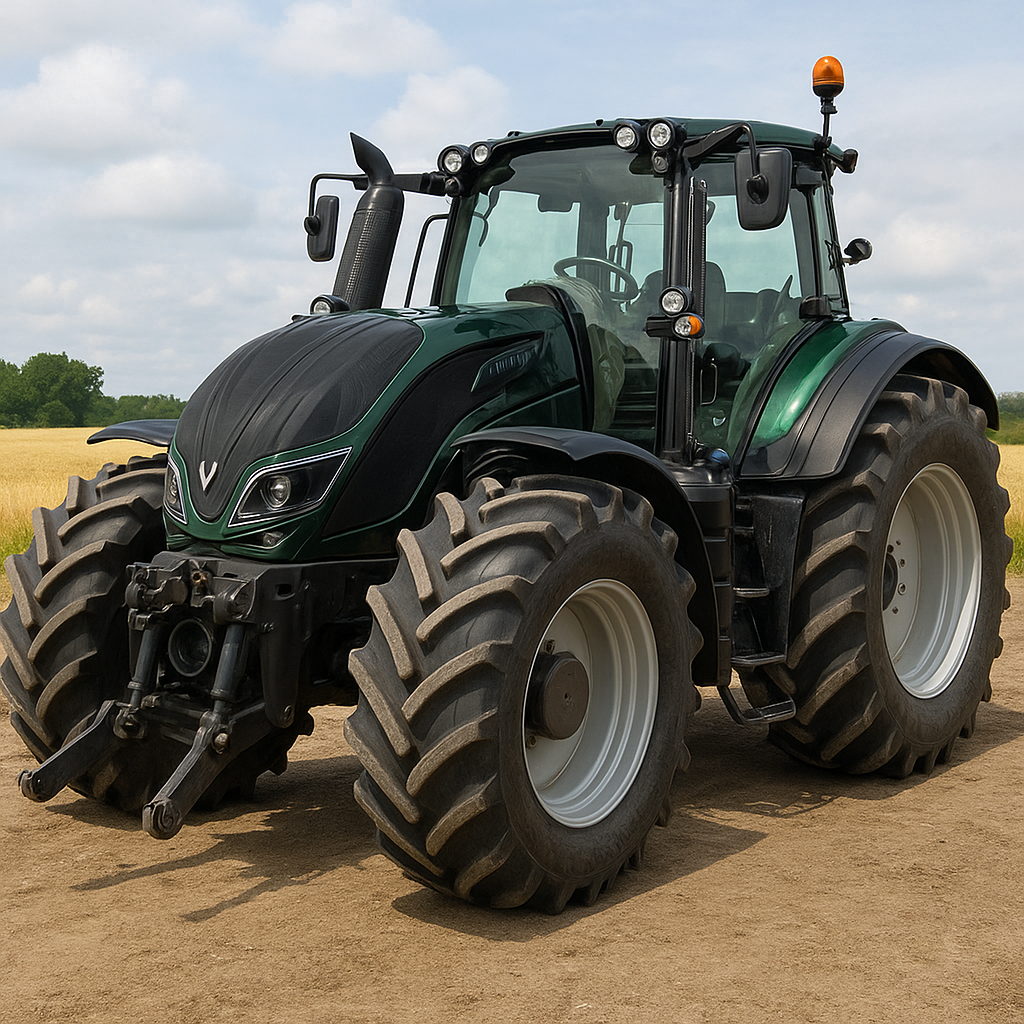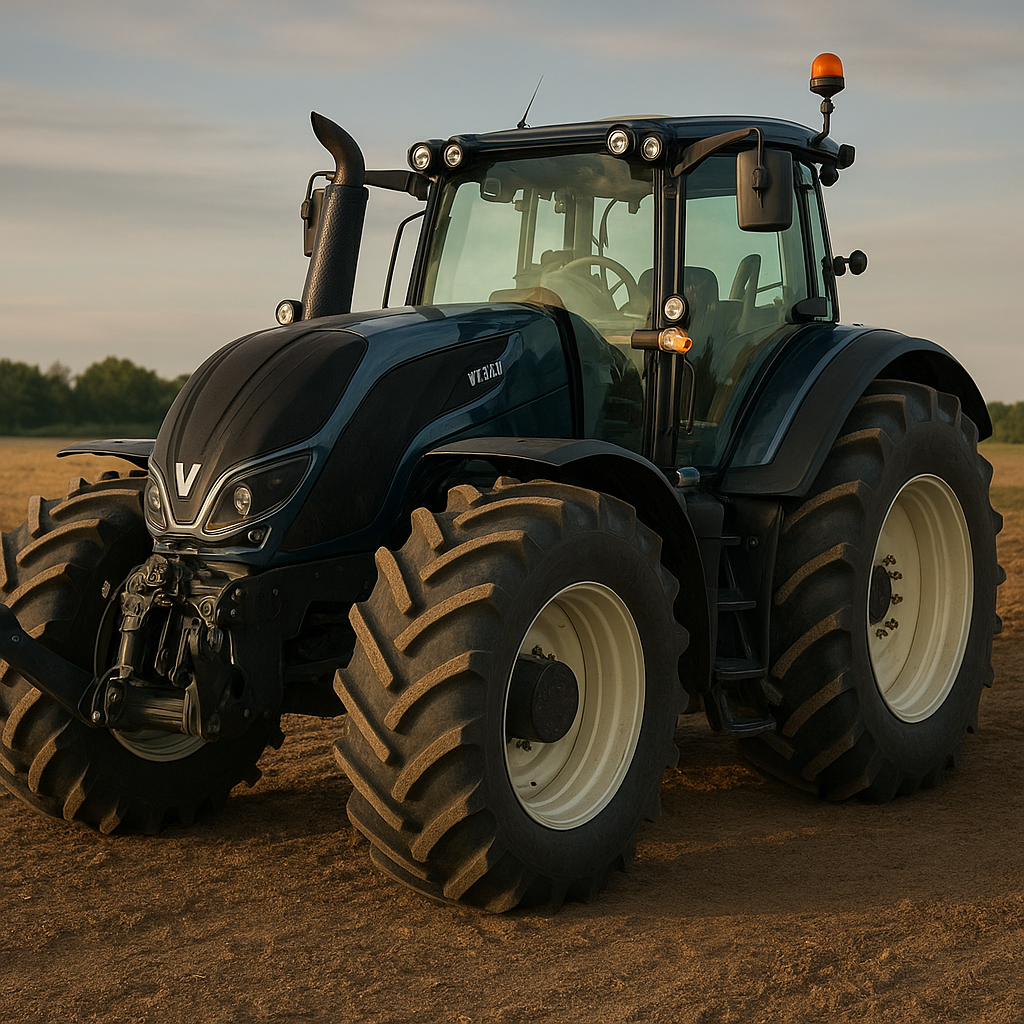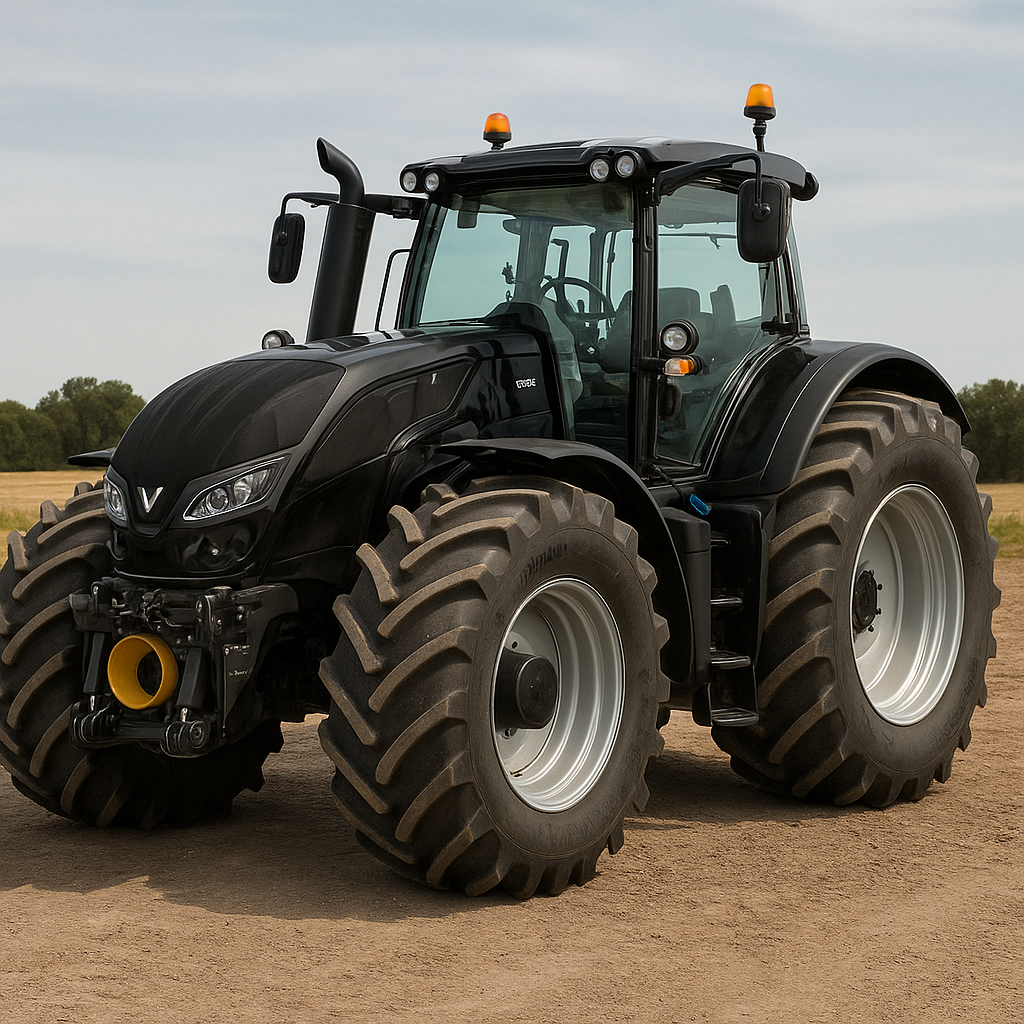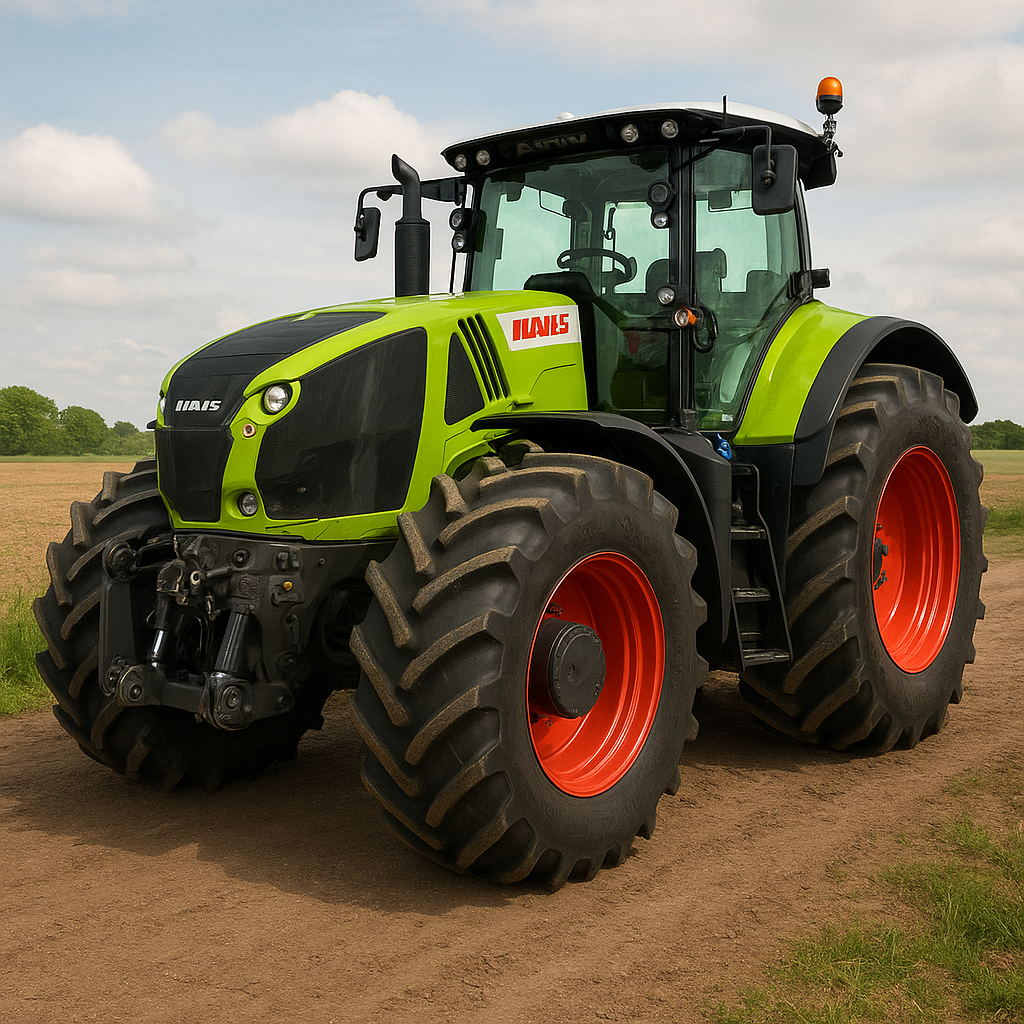
The Claas Axion 960 is a high-performance agricultural tractor designed to meet the demands of large-scale farming, contracting and mixed agricultural operations. Combining robust mechanical engineering with modern electronic systems and operator comfort, the Axion 960 stands out in the premium segment of tractors. Below you will find a detailed overview of its design, typical applications, technical highlights, operational considerations and economic aspects — information useful for farm managers, contractors, equipment buyers and enthusiasts.
Design and technology overview
The Claas Axion 960 belongs to the Axion 900 family, which is positioned as a series of powerful and versatile tractors offering a balance between heavy-duty capability and operator ergonomics. The basic philosophy behind the Axion series is to provide a machine that is equally efficient in field work, transport and implement handling. Key design elements include a strong chassis, advanced engine and transmission options, and a comfortable, technology-rich cab.
Engine and powertrain
- The Axion 960 is offered with high-output diesel engines tuned for agricultural duty cycles. Depending on model year and market configuration, power outputs for the Axion 900 range typically sit in the upper end of the market; the Axion 960 represents one of the most powerful variants in the range. Typical net engine power for the 960-class machines is in the high hundreds of horsepower brackets compared to lighter models in the family.
- Claas has equipped Axion tractors with engines from established manufacturers and integrated electronics for torque management, power boost and optimized fuel delivery. These features are intended to deliver a smooth torque curve across a broad rpm range, which improves implement performance and reduces frequent gear changes.
- Transmission choices over different model years have included multi-step powershift systems and continuously variable or stepless concepts (Claas CMATIC), depending on country and specification. These transmissions are designed to match engine output with working speeds, improving fuel efficiency and operator comfort.
Hydraulics, PTO and hitch
For modern large-scale operations the hydraulic and PTO systems are crucial. The Axion 960 typically features a high-capacity hydraulic system with multiple remotes, high flow rates and advanced electronic control for sensitive implements. The rear linkage is sized for heavy implements and can handle large lifting capacities. PTO speeds and control modes are suited for a wide range of PTO-driven machinery, from mowers and rotary tillers to large balers and forage harvesters.
Applications and typical use cases
The Claas Axion 960 finds application where high power, reliability and operational flexibility are required. Below are the major areas where this tractor is commonly used:
- Arable farming: Primary tillage with heavy ploughs, deep cultivations, seedbed preparation and high-speed cultivation for large fields.
- Planters and seed drills: Pulling large planters or seed drills across broad acreages, where consistent ground speed and hydraulic control are important.
- Harvest support: Power and traction for grain carts, large trailers and other transport tasks during the harvest window, enabling quick turnaround between fields and storage.
- Silage and forage: Operating balers, wrappers, forage wagons and mower-conditioners — situations where responsive PTO and hydraulic performance are essential.
- Contracting: Contractors who require a reliable, high-capacity tractor for multiple clients and diverse jobs frequently choose high-spec machines like the Axion 960 for its flexibility.
- Specialized tasks: Loader work, soil compaction control with ballast management, and precision farming applications using ISOBUS-compatible implements and guidance systems.
Performance, specifications and statistics
Specifications can vary by model year, regional regulation (e.g. emissions standards) and factory options. The figures below are typical ranges and characteristics associated with high-power Axion 900-series tractors like the 960. Exact numbers depend on the specific build and dealer configuration.
- Engine power: Upper-range models in the Axion 900 family typically deliver power in the higher horsepower bracket for agricultural tractors. The Axion 960 is positioned near the top of that family, with nominal outputs often marketed to cover demanding field and transport tasks.
- Torque: High torque across a broad rpm range is a design goal; torque reserves are important for draft work and pulling heavy implements. Torque characteristics are tuned to reduce the need to downshift under load.
- Weight: Kerb and operating weights for large tractors like the Axion 960 are substantial, often in the multi-ton range, to provide traction and stability. Ballasting options allow operators to adapt weight distribution for specific implements and soil conditions.
- Fuel capacity and consumption: Large tractors feature significant fuel tanks to permit long working days without frequent refuels. Fuel consumption depends heavily on task: light transport uses far less than intensive tillage. Typical consumption under heavy load can be significant, and manufacturers optimize engine maps and transmissions for improved economy.
- Hydraulic flow and linkage capacity: High-flow hydraulic pumps and robust three-point linkage design enable operation of large modern implements. Flow rates and lifting capacities are tuned to the expected working loads.
Because exact numeric specifications are model- and market-specific, those planning a purchase should consult factory published data sheets or local dealers for precise horsepower, torque, weight, hydraulic flow and fuel tank capacity for the exact Axion 960 variant being considered.
Cab, ergonomics and operator aids
Claas has emphasized operator environment and control ergonomics across its product range. The Axion 960 typically includes a spacious, well-insulated cab with excellent visibility, climate control, and a layout focused on easy access to frequently used functions. Typical features include:
- Advanced control console: A multifunction armrest with ergonomic levers, joystick options and electronic control units to manage transmission, hydraulics and PTO.
- Integrated displays: Color terminals for machine data, implement control and optional precision farming interfaces (guidance, documentation systems).
- Comfort features: Air-suspended seats, noise reduction, and low-vibration mounting reduce operator fatigue during long shifts.
- Assistance systems: Automated steering compatibility (autoguidance), headland management, programmable work sequences and telematics for fleet monitoring.
Precision farming, connectivity and telematics
Modern high-power tractors are not only strong mechanical platforms but also digital hubs for precision farming. The Axion 960 supports:
- ISOBUS compatibility: Enables plug-and-play control of compliant implements and simplifies section control and rate application.
- Autoguidance: Satellite-guided steering systems reduce overlap and improve field efficiency and fuel economy.
- Telematics: Remote data transfer for location, machine status, fuel use, and fault codes allows fleet managers to monitor performance, schedule maintenance and reduce downtime.
- Variable rate application: Integration with prescription maps for seed, fertilizer and crop protection optimizes input usage and can increase yields or reduce costs.
Maintenance, fuel economy and reliability
Owners of large tractors prioritize uptime and total cost of ownership. Claas has engineered the Axion 960 to be serviceable with long maintenance intervals where possible, but heavy-duty machines still require regular checks and periodic service. Key maintenance-related considerations include:
- Service access: Engine compartments and service points are designed for straightforward routine servicing — oil changes, filters and routine inspections.
- Consumables: Brake, clutch and hydraulic components are sized for heavy use; replacement schedules depend on operating hours and conditions.
- Fuel economy: Transmission management, engine tuning and optimized hydraulics contribute to improved fuel efficiency compared to older designs. Adopting appropriate working speeds, correct gearing and matching implement size can significantly affect fuel use per hectare.
- Reliability: A combination of robust components, manufacturer support and dealer networks affects overall machine uptime. Contracting operations often require extended warranty or service contracts to minimize unexpected costs.
Implements, compatibility and versatility
The Axion 960 is intended to be the power unit for many large implements. Typical implement pairings include:
- Large ploughs and cultivators for deep and primary tillage.
- High-capacity seed drills and planters for wide working widths.
- Trailers and grain carts for transport and logistics during harvest time.
- Forage harvest and baling equipment requiring powerful PTO output and hydraulic control.
- Front loaders and attachments where high hydraulic flow and stability are needed.
Versatility is increased by electronic control options, which allow fine-tuning of hydraulic flow rates, PTO engagement characteristics and hitch response to match a wide variety of implements and tasks.
Safety and environmental considerations
Safety and emissions are important for contemporary tractors. The Axion 960 adheres to emissions standards in markets where it is sold, employing aftertreatment systems and engine management designed to meet regional regulations. Safety features typically include:
- Robust braking systems and optional ABS for transport safety.
- Visibility aids — large mirrors, optional cameras and lighting packages for night work.
- Operator protection features in the cab and emergency shutdown systems.
From an environmental standpoint, operators can reduce fuel consumption and emissions by using advanced transmission strategies, precision application technologies and by selecting the appropriate gear and working speed for the task.
Economic considerations and total cost of ownership
Buying a high-power tractor like the Axion 960 is a major capital investment. The decision typically weighs purchase price, operating costs, expected working hours, resale value and the ability to perform revenue-generating contract work. Important economic factors include:
- Depreciation: Heavy-use tractors depreciate with hours and condition; good maintenance and up-to-date telematics records can preserve resale value.
- Operating cost per hectare: Fuel consumption, maintenance, tires and parts all factor into the cost of ownership. Matching implement size and correct operating strategies help reduce per-hectare costs.
- Financing and service agreements: Many buyers opt for finance deals or extended warranties; service contracts can protect against unexpected repair costs.
- Utilization: High-utilization scenarios such as contracting or large farms can justify the acquisition of a high-capacity machine more easily than lower-hour operations.
Comparisons and market positioning
Within the premium tractor market, the Axion 960 competes with high-power models from other major agricultural manufacturers. Buyers typically compare:
- Pure engine and drivetrain performance (horsepower, torque curves).
- Cab comfort and technological features (precision farming, telematics).
- Hydraulic capacity and PTO performance to match implements.
- After-sales support and local dealer network.
Claas positions the Axion series as a blend of strong mechanical capability and advanced electronics, often appealing to operators who need both performance and modern implement compatibility.
Buying advice and practical tips
If you are considering an Axion 960, here are practical steps to guide the purchase process:
- Assess your typical annual hours and tasks to ensure the machine is neither undersized nor over-specified.
- Ask for a detailed specification sheet and confirm engine, transmission and hydraulic ratings for the specific serial number or model year.
- Request demonstrations with your typical implements to verify PTO and hydraulic responsiveness under load.
- Check available options for precision farming, telematics subscriptions and any bundled services that affect long-term costs.
- Compare total cost of ownership across models by estimating fuel use, service intervals, expected parts wear and resale expectations.
Summary
The Claas Axion 960 is a heavy-duty, feature-rich tractor designed to serve the needs of modern, large-scale farming and contracting. Combining robust mechanical systems, advanced transmission choices and a comfortable, technology-equipped cab, the Axion 960 is built to handle demanding fieldwork, hauling and implement operation. While precise technical numbers vary by region and model year, the general strengths of this machine include high power availability, hydraulic capacity, ISOBUS and telematics readiness, and operator ergonomics. For operations that require a reliable, versatile and powerful tractor platform, the Axion 960 is a competitive candidate worth evaluating carefully against specific operational requirements and total cost considerations.