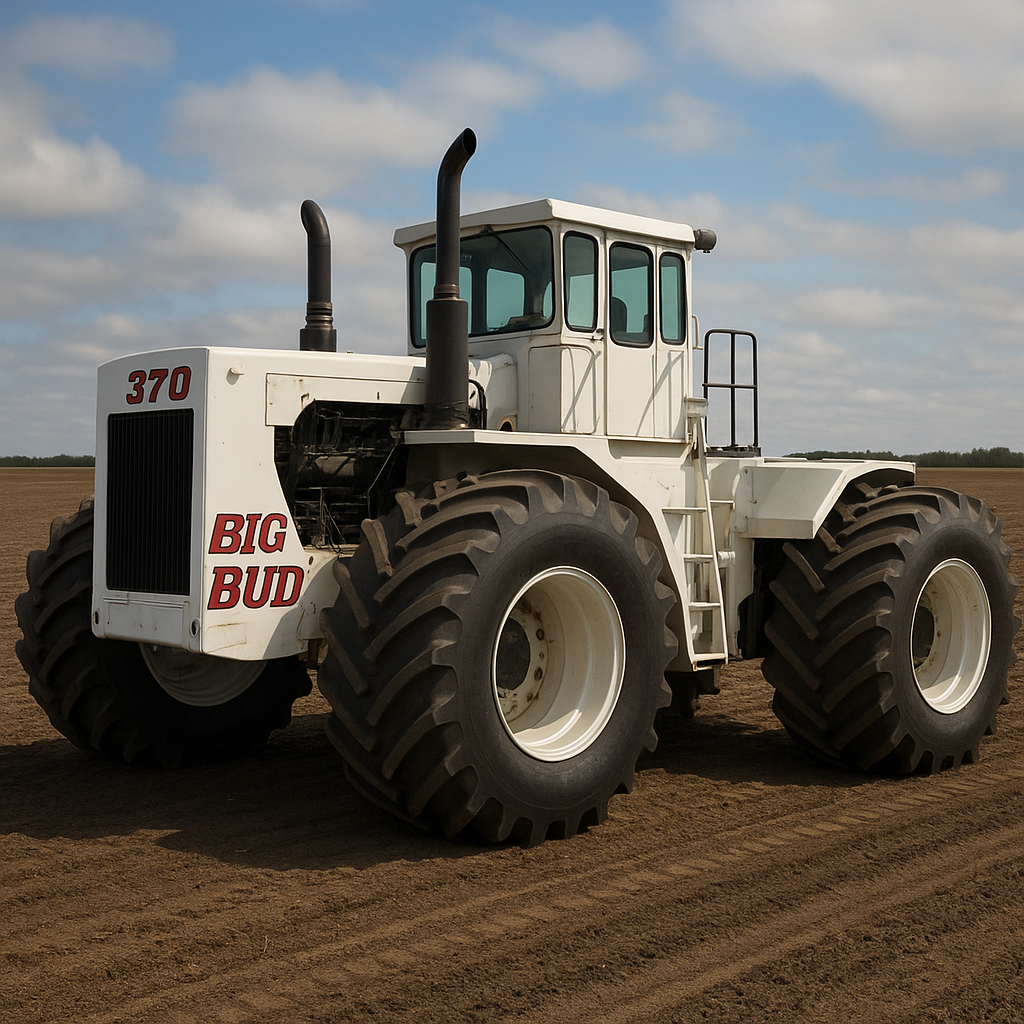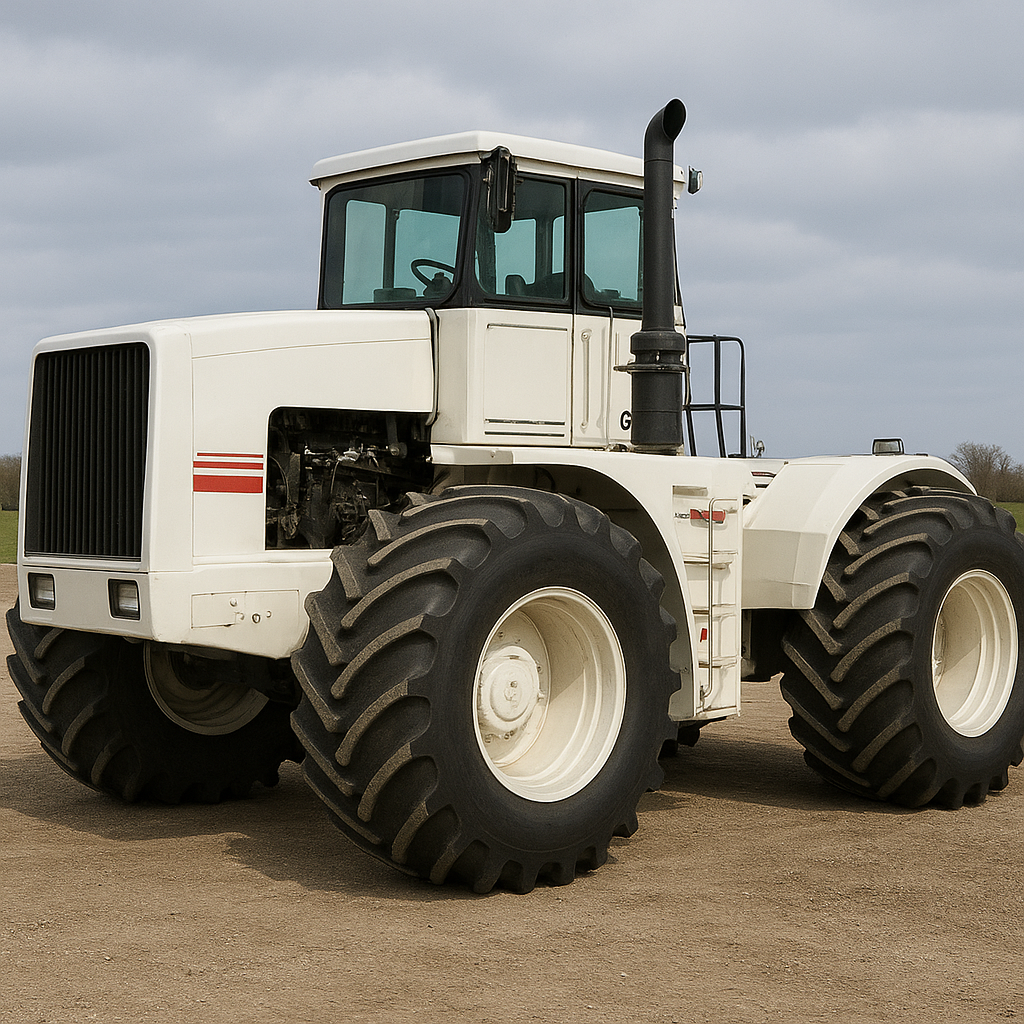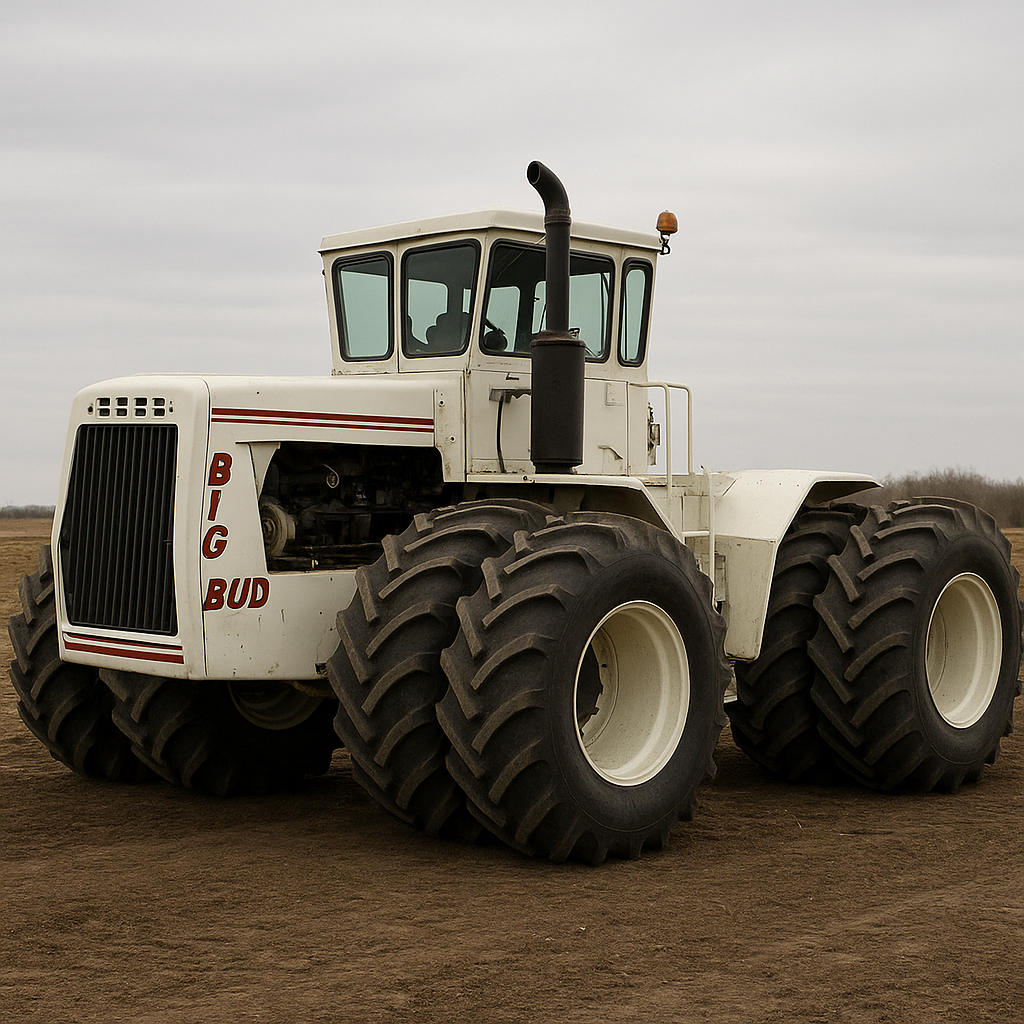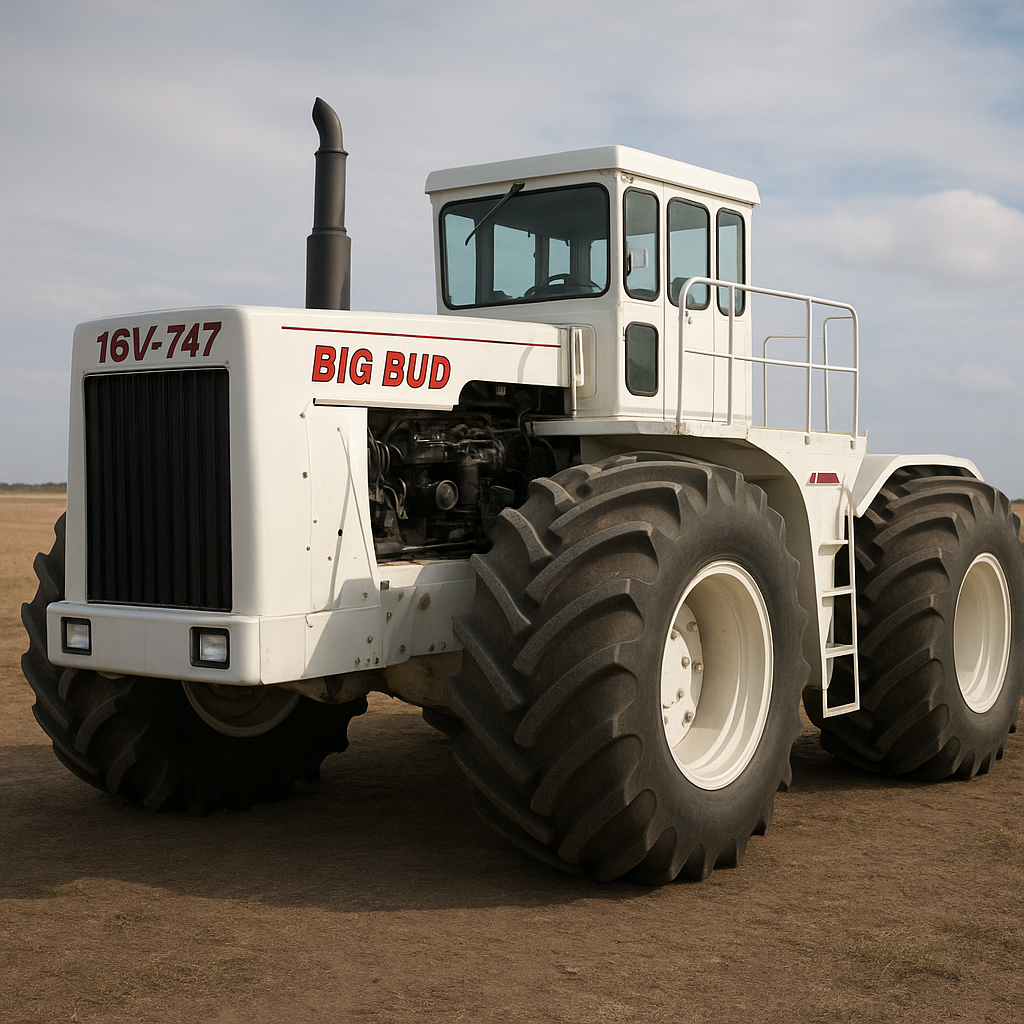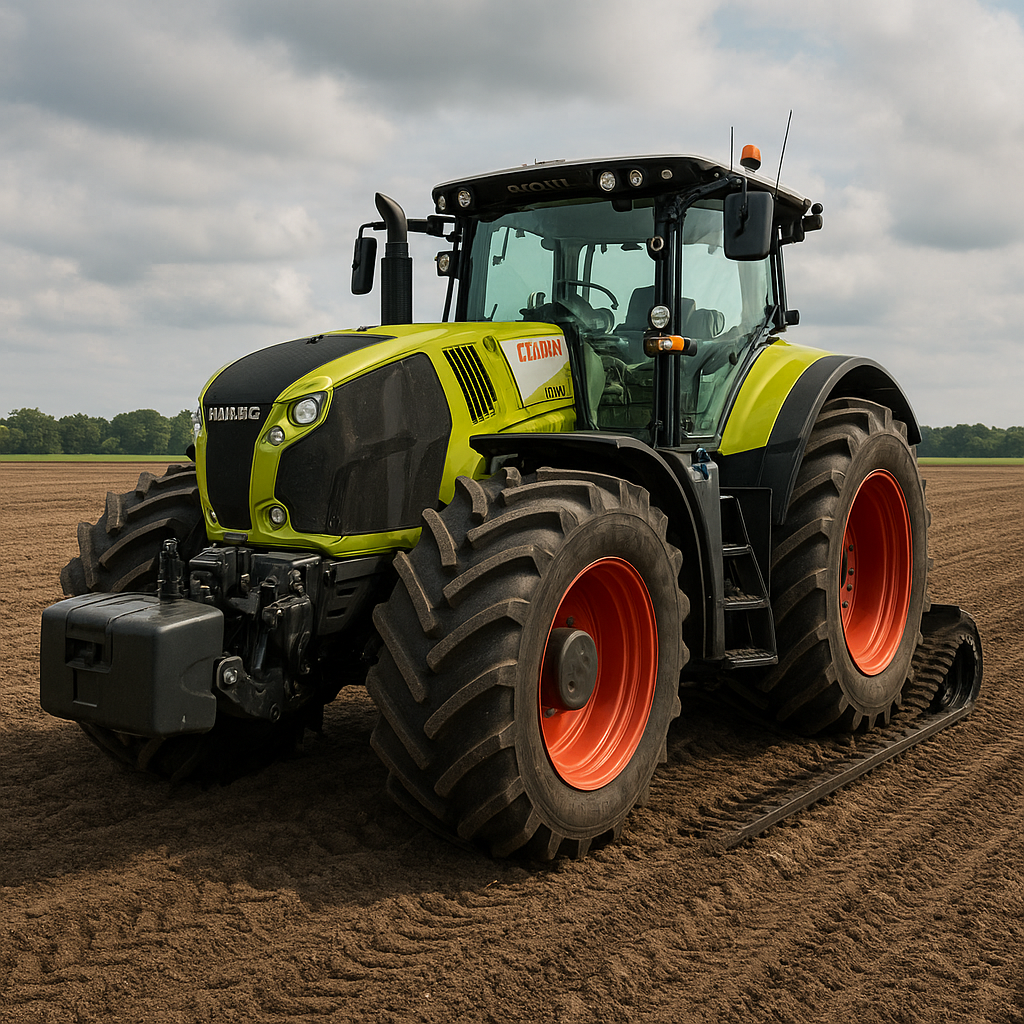
The Claas Axion 960 Terra Trac is a high‑performance agricultural tractor designed for heavy-duty fieldwork where maximum traction, reduced ground pressure and continuous operation are essential. Combining Claas’ Axion 900 series power and electronics with a factory‑fitted track system, the Terra Trac configuration targets large arable farms, contractors and operators of wide implements. The following sections describe the machine’s design, applications, technical highlights, economic and environmental implications, and practical guidance for selection and operation.
Design, powertrain and core features
The Axion 960 Terra Trac is built around the same platform as the wheeled Axion 900 series but replaces conventional rear wheels with an integrated track system. The tractor is powered by a robust, turbocharged 6‑cylinder diesel engine meeting modern emissions standards and combined with Claas’ advanced transmission and driveline controls. Key architectural elements include a reinforced chassis to accommodate track forces, a heavy duty front axle, and a rear lift and PTO arrangement designed to handle large implements.
The Terra Trac system is a factory‑integrated solution that includes a pivoting track frame, multi‑roller undercarriage and rubber tracks optimised for agricultural use. Tracks are designed to distribute weight over a larger area, delivering improved flotation and lower surface pressure than equivalent wheeled tractors. The transmission (Claas’ continuously variable or stepped automatics depending on specification) provides smooth power delivery and efficient pulling power across a wide range of speeds—important for both low‑speed tillage and higher‑speed transport.
Onboard electronics and operator aids are an important part of the Axion package. Most machines are fitted with the Claas CEBIS or similar operator terminal, full ISOBUS compatibility, and options for autopilot and precision guidance. Telemetry and remote diagnostics via Claas Telematics are often standard or optional, enabling fleet managers to monitor fuel use, hours, position and service intervals.
Where the Terra Trac excels — typical applications
The Terra Trac variant is particularly well suited to tasks where traction, low ground pressure and consistent field performance across varying soil conditions are required. Typical applications include:
- Primary tillage with heavy discs, subsoilers and cultivators on large fields;
- Large seeding and planting operations using wide planters and seed drills where even traction and consistent depth control are crucial;
- Pulling large slurry, manure or grain tankers where slippage must be minimised, especially in wet conditions;
- Sugar beet, potato and vegetable cultivation where soil structure protection and precise draft control are priorities;
- Contracting and haulage on soft fields, as well as operations that alternate between fieldwork and road transport (Terra Trac tractors still allow practical road speeds for relocation).
The advantages of the track solution make the Axion 960 Terra Trac popular with contractors and farms operating in heavy soils, or where seasonal wet windows reduce the number of workable days. In such contexts, improved traction reduces wheel slip and fuel waste, while lower compaction helps maintain soil structure and yields over time.
Technical highlights and performance considerations
While exact specifications vary by year, market and factory options, the Axion 960 Terra Trac belongs to the high‑power class of agricultural tractors and typically exhibits the following attributes:
- High continuous engine output suitable for large implements—Claas positions the Axion 900 series at the top of its row, with the 960 model representing the upper end of output for the line (typical quoted ranges for the Axion 900 family span the high hundreds of horsepower class, with the 960 marketed as the flagship in that family).
- Heavy‑duty rear hitch and PTO configurations to match modern large implements, with rear lift capacities in the multi‑ton range that allow safe operation of wide and heavy equipment.
- Advanced hydraulic systems with multiple remote valves and significant flow capacity to operate planter drives, hydraulic motors and implement systems efficiently.
- Integrated operator aids such as automatic traction control, wheel slip monitoring and weight transfer management to optimise performance in the field.
Tracks alter the traction curve compared with tyres. Where tyre machines can generate peak tractive effort in short bursts, tracked machines like the Terra Trac maintain high continuous traction across larger contact areas. This results in reduced slip for a given pulling requirement and consequently lower fuel consumption per hectare in comparable ground conditions. Road transport and legal speed limits are considered during design, and Terra Trac systems retain acceptable road behaviour for relocation between fields.
Soil protection, compaction and agronomic benefits
One of the principal selling points of the Terra Trac configuration is its impact on the soil. By spreading the machine’s mass over a wider area, track systems reduce peak ground pressure and can significantly reduce deep and surface compacting stresses. Reduced compaction delivers several agronomic benefits:
- Better root development and fewer restrictions on root growth for subsequent crops;
- Improved water infiltration and reduced runoff, which helps during heavy rainfall events and reduces erosion risk;
- Enhanced seedbed structure and more uniform emergence when planting follows root‑safe cultivation;
- Potential long‑term yield benefits in fields subject to frequent heavy traffic.
It’s important to highlight that tracks are not a universal cure: correct ballast, tyre/track pressure management and responsible field routing are still necessary. Overly narrow track widths, incorrect tensioning or inappropriate ballast can negate some benefits, while repeated high‑speed turning on sensitive headlands can cause rutting unless operators take care to avoid tight turns or use flotation tyres/tracks on headlands where appropriate.
Cab, controls and precision farming integration
The Axion 960 Terra Trac is engineered for long days in the cab and includes Claas’ well‑known operator ergonomics. The cab features climate control, suspended seats, low noise levels and a logical control layout focused on the multifunction joystick, power‑take‑off and hitch controls. Visibility is optimised for mounted implements and to monitor tracks in operation.
Claas emphasises digital integration:
- ISOBUS compatibility for implement control provides a single interface between tractor and modern implements;
- Guidance systems and autopilot reduce overlap and operator fatigue, improving work rate and saving fuel and inputs;
- Telematics and fleet management options allow managers to monitor use patterns, plan maintenance and document field operations for traceability and subsidy/compliance reporting;
- Variable rate control, section control and data logging enable precision approaches to seeding, fertilising and spraying that maximise input efficiency.
Operators can configure the control layout and visualisation screens to match their workflow, with the objective of reducing distractions and making complex implement tasks easier. The overall package supports modern precision‑agriculture strategies that focus on minimising inputs while maximising outputs.
Economic considerations: purchase, operation and resale
Investing in a Terra Trac version of a high‑power tractor is a capital decision driven by expected increases in effective working days, reduced soil damage costs and operational efficiencies. Key financial considerations include:
- Higher initial purchase price compared with the wheeled equivalent due to the integrated track undercarriage and additional heavy‑duty components;
- Potential reductions in fuel consumption per hectare when operating in conditions where wheel slip would otherwise be significant;
- Lower long‑term soil remediation costs and potential yield preservation because of reduced compaction;
- Maintenance and repair patterns differ: tracks and their running gear have distinct wear items (carriers, rollers, idlers, tensioners and the rubber track belt). Maintenance frequency depends on ground conditions, field surface and road use.
For contractors and large farms, the ability to work earlier in the season or finish planting/delayed harvest windows can translate into economic gains that offset the higher up‑front price. Resale values for factory‑built Terra Trac machines are typically strong in regions where tracks are commonly used, but regional market demand should be considered when purchasing.
Maintenance, service and operational tips
Proper maintenance extends the live life of the track system and the tractor as a whole. Practical guidance includes:
- Regularly inspect track tension and condition; correct tension avoids premature wear of rollers and belts;
- Monitor rollers, idlers and carrier bearings for wear signs—replace in matched sets when needed to prevent uneven load and further damage;
- Keep an eye on undercarriage mud build‑up: excessive buildup increases wear and reduces cooling and performance;
- Follow engine and transmission service intervals recommended by Claas, especially paying attention to hydraulic filter and fluid maintenance if operating heavy hydraulics continuously;
- Minimise fast, tight turns on sensitive headlands to avoid track scuffing and rutting—use controlled turning radii and adjust implement lift strategies where possible;
- When alternating between road and field, clean the undercarriage as needed to prevent foreign objects from damaging the belt or rollers.
Claas’ dealer network provides diagnostic tools, telematics setup and scheduled maintenance packages which help ensure uptime for high‑use tractors. Given the investment level, many owners choose extended support or service agreements to stabilise operating costs and ensure access to genuine parts.
Comparisons and selection advice
When choosing between a wheeled Axion and a Terra Trac variant, consider the following factors:
- Soil type and typical moisture conditions—heavy, wet soils and soft spring conditions favour a tracked machine;
- Implement width and type—if you routinely tow very wide or heavy implements that induce wheel slip, tracks can provide more effective drawbar performance;
- Field sizes and transport distances—long road transits can increase track wear, so assess the proportion of road vs. field time; some operations prefer tyre tractors if relocation frequency is high;
- Budget and expected life cycle—compare total cost of ownership including fuel, maintenance, yield effects and potential increased work windows;
- Resale market in your region—where tracks are popular, resale values remain favourable, but in other regions demand may be lower.
Test drives and trial periods under real farm conditions are strongly recommended. This lets operators compare steering behaviour, turning radii, implement performance and the subjective feel of traction and comfort before committing to a high‑value purchase.
Statistics and market context
Specific numerical specifications can vary with year, emission regulations and factory options. Claas positions the Axion 900 family as a top‑tier offering in its tractor range: the 960 model is the flagship of that family and is normally specified for very high‑power tasks. Typical performance indicators quoted in marketing and technical documentation for machines in this class include:
- Engine power in the upper range for row tractors, with marketed models often described in the region of several hundred horsepower—this supports large tillage and seeding systems;
- Substantial rear lift capacities measured in multiple tonnes to accommodate wide, heavy implements;
- Hydraulic flow capacities designed to operate complex modern implements efficiently;
- Telematics penetration: a large proportion of new high‑end Claas tractors are factory equipped or retrofittable with telematics systems that report machine hours, fuel use and faults for modern fleet management;
- Adoption trends show increased interest in track solutions on large arable farms and contracting fleets in Europe, North America and Australia where soil protection and traction are priorities.
If precise numeric values (engine displacement, exact rated and maximum horsepower, hydraulic flow rates, weight and ground pressure) are required for purchasing decisions or compliance, consult the Claas specification sheet for the model year and regional configuration. Dealer quotations will also reflect optional equipment and local emission‑stage differences.
Practical case examples
Example scenarios where the Axion 960 Terra Trac demonstrates value:
- Large mixed arable enterprise using wide seeders and cultivators: the Terra Trac allows stable drawbar pull and precise seed depth over variable soils, speeding up operations during narrow sowing windows;
- Contractor operating in wet spring conditions: the ability to reduce slippage and get implements working earlier in the season increases contracted area and reduces weather‑related delays;
- Intensive vegetable or root crop grower where soil structure is vital: reduced compaction preserves drainage and root zone quality, improving subsequent crop performance.
These examples reflect typical business cases where the premium paid for a track system is recovered through increased uptime, fuel savings and soil quality benefits over multiple seasons.
Summary
The Claas Axion 960 Terra Trac is a specialist, high‑power machine designed for large‑scale, demanding agricultural operations where traction, flotation and soil protection are high priorities. It combines the Axion series’ powertrain and electronics with an integrated track undercarriage to deliver consistent pulling performance and reduced field compaction. Key advantages include improved effective working days in challenging weather, better fuel efficiency under heavy draft, and compatibility with modern precision farming tools such as ISOBUS and telematics. Decision makers should weigh purchase price and maintenance specifics against operational gains, regional resale dynamics and the nature of their soil and implements. For precise technical data tailored to your market and the exact model year, request the detailed specification from a Claas dealer or the official product brochure.