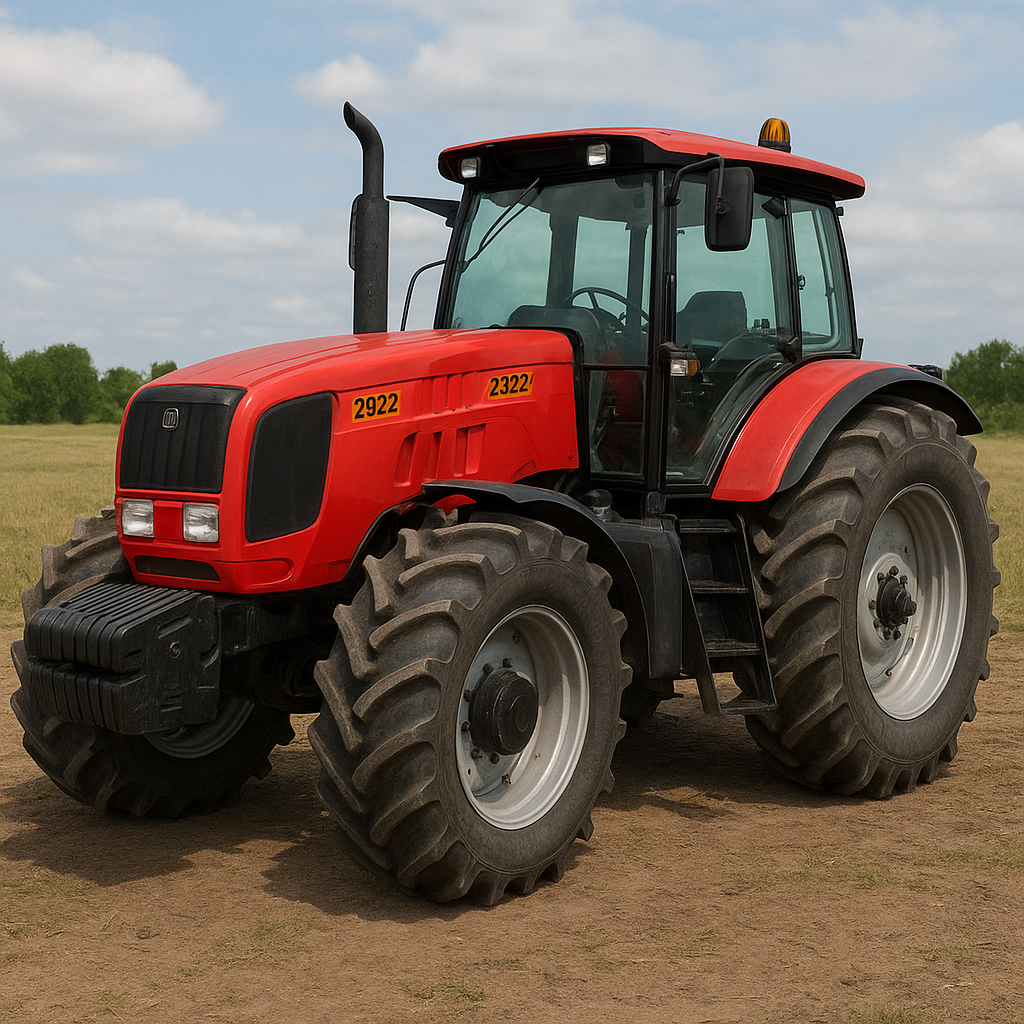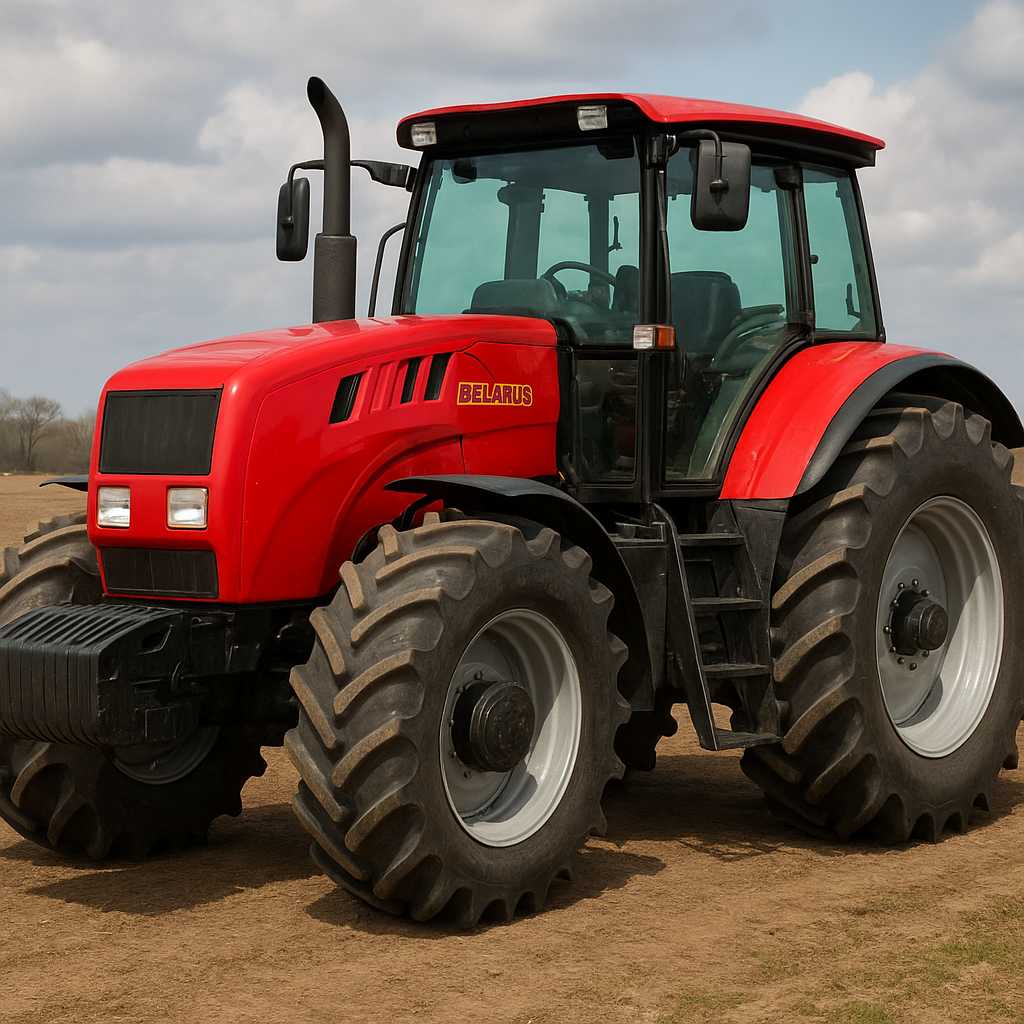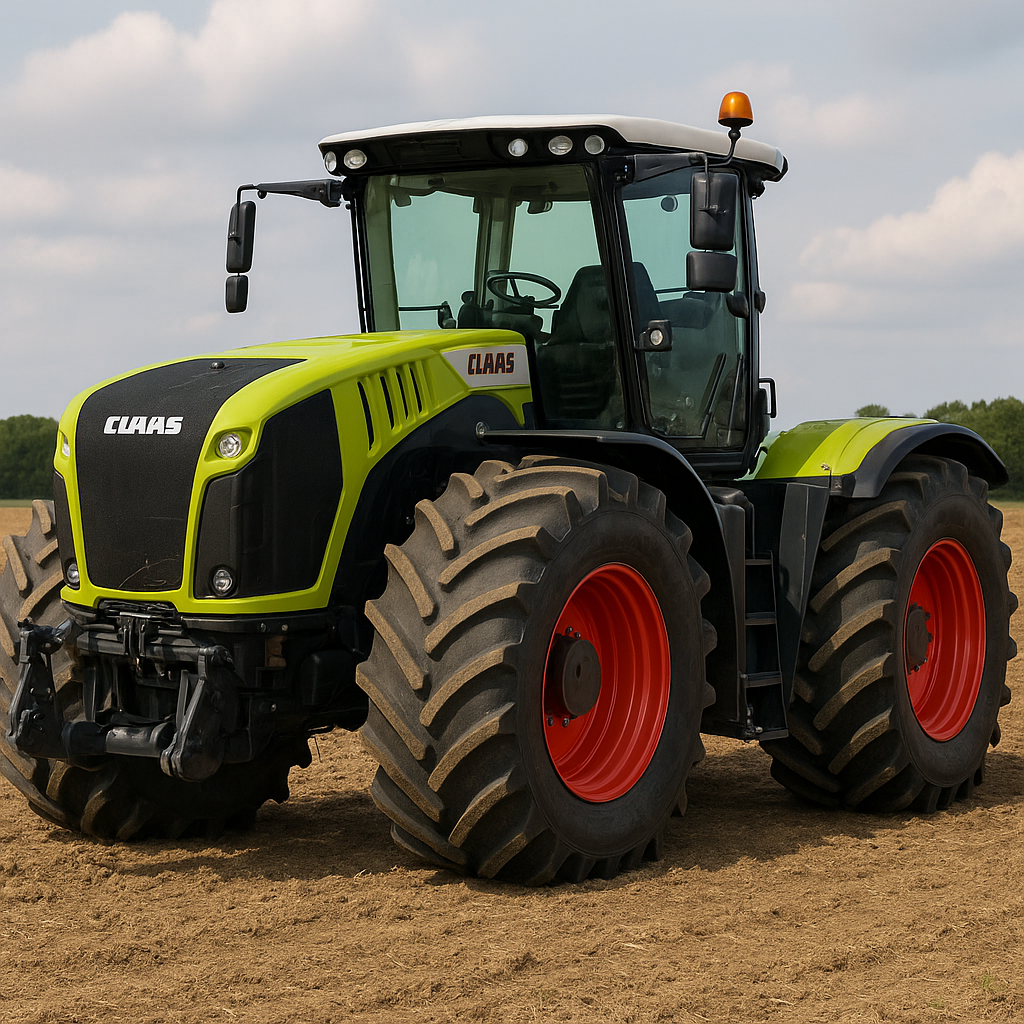
The Claas Xerion 3800 is a heavyweight model in the Xerion family designed for demanding agricultural and transport tasks. Known for combining high traction, flexible implement compatibility and a spacious operator environment, this tractor is engineered to perform in large-scale arable farming, specialist applications and everywhere a robust, high-output machine is required. In the following sections we will examine its design and technical characteristics, typical uses, operator features, economic aspects and some comparative context. Where figures are given they are intended as representative values for this model class and may vary with specific year, configuration and market versions.
Design and Core Technical Characteristics
The Claas Xerion 3800 is built around concepts of reliability, continuous power delivery and adaptability. At its heart, the machine features a high-displacement diesel engine optimized for sustained output and torque across low and mid RPM ranges, enabling heavy draft work and powering hydraulic systems and PTO-driven implements without frequent downshifts. The drivetrain and chassis emphasize all-wheel traction with low soil compaction when fitted with large agricultural tyres or tracks.
Key technical highlights
- Claas Xerion 3800 class: high-horsepower row-crop and specialist tractor
- Engine type: heavy-duty, turbocharged diesel (inline six-cylinder configurations are typical for this class)
- Approximate power range: around 350–400 hp (approx. 260–300 kW), depending on configuration and emissions stage
- Torque: engineered for high peak torque at low revs for draft and PTO work (typical peak torque figures in this class can exceed 1,200–1,600 Nm)
- Transmission: robust drive system designed for variable-field speeds and high-travel speeds for road transport (many Xerion models feature continuously variable-like behavior or advanced stepped transmissions tailored to heavy-duty use)
- Hydraulics: powerful and high-flow hydraulics to operate large mounted or trailed implements, often with multiple remote valves and flow rates in the high hundreds of liters per minute combined
- PTO options: front and rear PTO capability with common speeds such as 540/1000 rpm; PTO driveline designed to transfer large torque loads
- Steering systems: multi-mode steering including individual-wheel, all-wheel and crab/parallel steering modes for tight maneuvers and even tyre wear
- Weight and dimensions: a heavy machine by design — curb weight commonly in the range of 12–15 tonnes depending on tyres, ballast and track options
- Top speed: typical road speeds up to about 40 km/h, depending on regional regulations and gearing
Traction and ground impact are central design points: large diameter tyres, twin tyres or tracked undercarriages are options to reduce soil compaction while transmitting very high pulling forces. The chassis and wheel hubs are engineered to carry heavy loads and to interface with high-capacity three-point hitches and drawbars.
Applications and Practical Uses
The Xerion 3800 is intended for large-scale operations and specialized tasks where a single, extremely capable tractor simplifies logistics and equipment matching. Its strengths are most evident where sustained high power, hydraulic capacity and heavy implement compatibility are required.
Typical field applications
- Tillage: pulling large cultivators, ploughs and compact discs across wide working widths at consistent depths
- Sowing/seeding: operating high-capacity seed drills and air seeders which require steady forward speeds and reliable power delivery
- Heavy transport and road moves: with suitable drawbar or trailer setups, moving large loads between fields or to storage sites
- Spraying and spreading: powering and towing large sprayers or spreaders where hydraulic support and stable platform control are important
- Forestry and specialist towing: moving heavy trailers and specialized implements in mixed agricultural-forestry operations
- Loader and front-mounted implements: when equipped with strong front linkage, the Xerion can work with heavy front-mounted tools
Beyond conventional cropping tasks, the Xerion 3800 sees use in niche roles such as sugar beet cultivation, deep ripping, subsoiling, and as a prime mover for very large seed and fertilizer units where other tractors would require multiple passes or larger fleets to match output.
Operational advantages
- High continuous work rates reduce the need for multiple passes and shorten field windows.
- Configurable ballast and tyre/tracks allow adaptation to soil conditions and crop sensitivity.
- Strong hydraulics and robust PTO allow use of large implements that would otherwise require specialized machinery.
- Multi-mode steering improves maneuverability for wide implements and narrow gateways.
Operator Comfort, Technology and Safety
Claas places emphasis on the operator environment for the Xerion series because long hours and precise implement control demand a comfortable and intuitive workspace. The cab is designed to reduce operator fatigue, improve visibility and centralize controls for both driving and implement management.
Cab and ergonomics
- Spacious cab layout with excellent all-round visibility — important when handling wide implements or working close to obstacles.
- Climate control and sound insulation reduce stress during long shifts.
- Advanced seating with multiple adjustments and suspension options improves comfort over uneven terrain.
- Ergonomic placement of joysticks and switches for hydraulic and transmission control — critical when operating precision attachments.
Electronics and assistance systems
Modern Xerion machines typically include telematics, GPS guidance compatibility and implement control systems. These technologies increase field accuracy and operational efficiency:
- Guidance and autosteer compatibility for single-pass accuracy and reduced overlap
- On-board management systems to monitor fuel use, engine parameters and service intervals
- ISOBUS and universal implement communication to streamline control of a wide range of implements
- Camera integration and optional lighting packages for night work
Safety features
Safety is achieved through structural design, braking systems capable of handling high masses, and visibility aids. The tractor’s weight and power necessitate robust braking and stability systems for safe road transit.
Maintenance, Operating Costs and Economic Considerations
Owning and operating a Xerion 3800 requires planning for maintenance and fuel costs commensurate with its size and capability. However, on large farms or contracting operations the cost per hectare can be highly competitive due to high daily output.
Maintenance and servicing
- Regular service intervals for engine, hydraulic and driveline components are critical — heavy-duty engines require proper oil changes and filter replacements.
- Accessible service points are designed into the machine to reduce downtime for inspections and routine tasks.
- Long-life components and modular design of some systems can simplify repair work on-farm or at dealerships.
Fuel and running costs
Fuel consumption is inherently higher than smaller tractors, but expressed as fuel per hectare the Xerion can be efficient on very large, continuous tasks. Operators often measure economics in terms of productivity gains: fewer passes, faster completion of jobs and reduced need for multiple machines.
Resale and residual value
Well-maintained large tractors such as the Xerion generally retain value in markets with large-scale agriculture or contracting demand. Upgrades in electronics and emissions standards can affect resale, so buyers and fleet managers typically consider total cost of ownership and expected working life when budgeting.
Representative Performance and Statistical Notes
Below are representative statistics for a tractor of the Xerion 3800 class. These are indicative ranges rather than exact figures for every production variant. Exact values depend on model year, engine tuning, and optional packages.
- Engine output: approximately 350–400 hp (260–300 kW)
- Peak torque: commonly in the range of 1,200–1,700 Nm, optimized for low-RPM pulling power
- Hydraulic flow: high-capacity systems often delivering total flows that support multiple heavy functions (combined flows potentially in the hundreds of L/min depending on pump configuration)
- PTO capabilities: 540/1000 rpm options for rear PTO and sometimes front PTO configurations for specialized work
- Weight: typically 12,000–15,000 kg in common configurations (varies with tyres, ballast and tracks)
- Top road speed: up to around 40 km/h depending on gearing and local regulations
- Fuel consumption: highly task-dependent — expressed per hectare it can be efficient on large-scale jobs but absolute liters/hour are significant under full load
These figures should be used as planning benchmarks. For exact specifications consult the manufacturer data for a particular model year and regional variant.
Comparisons, Strengths and Limitations
In the spectrum of agricultural tractors the Xerion 3800 sits at the high end of raw capability and flexibility. Its main strengths are sustained power, implement compatibility and the ability to reduce fleet complexity by substituting a single machine for multiple smaller units.
Strengths
- Versatility: adaptable to many large-scale implements and configurations
- High continuous power and torque for heavy draft and PTO work
- Excellent operator environment for multi-hour operations
- Strong hydraulic and electrical systems for modern implements and precision agriculture tools
Limitations
- Higher initial purchase price and operating costs compared with smaller tractors
- Scale may be excessive for small and medium-sized farms
- Transport logistics and road restrictions may complicate movement of very wide setups without permits
Summary and Final Observations
The Claas Xerion 3800 represents a strategic choice for large farms, contractors and operations that need a single machine capable of covering a wide range of heavy tasks with high efficiency. Its design blends strong mechanical foundations — a robust engine, advanced drivetrain and heavy-duty hydraulics — with operator-focused features like a roomy cab, precision controls and modern connectivity. While the machine carries higher acquisition and operating costs, its productivity advantages, reduced pass counts and implement-handling capability can deliver measurable economic benefits at scale.
For prospective buyers evaluate your operation’s typical field sizes, implement roster and daily workload. Key decision points include matching the tractor’s power and hydraulic flow to your largest implements, considering tyre or track options to manage soil compaction, and accounting for service and fuel logistics. When chosen and configured thoughtfully, the Xerion 3800 becomes a high-impact tool for modern large-scale agriculture and heavy specialist applications.