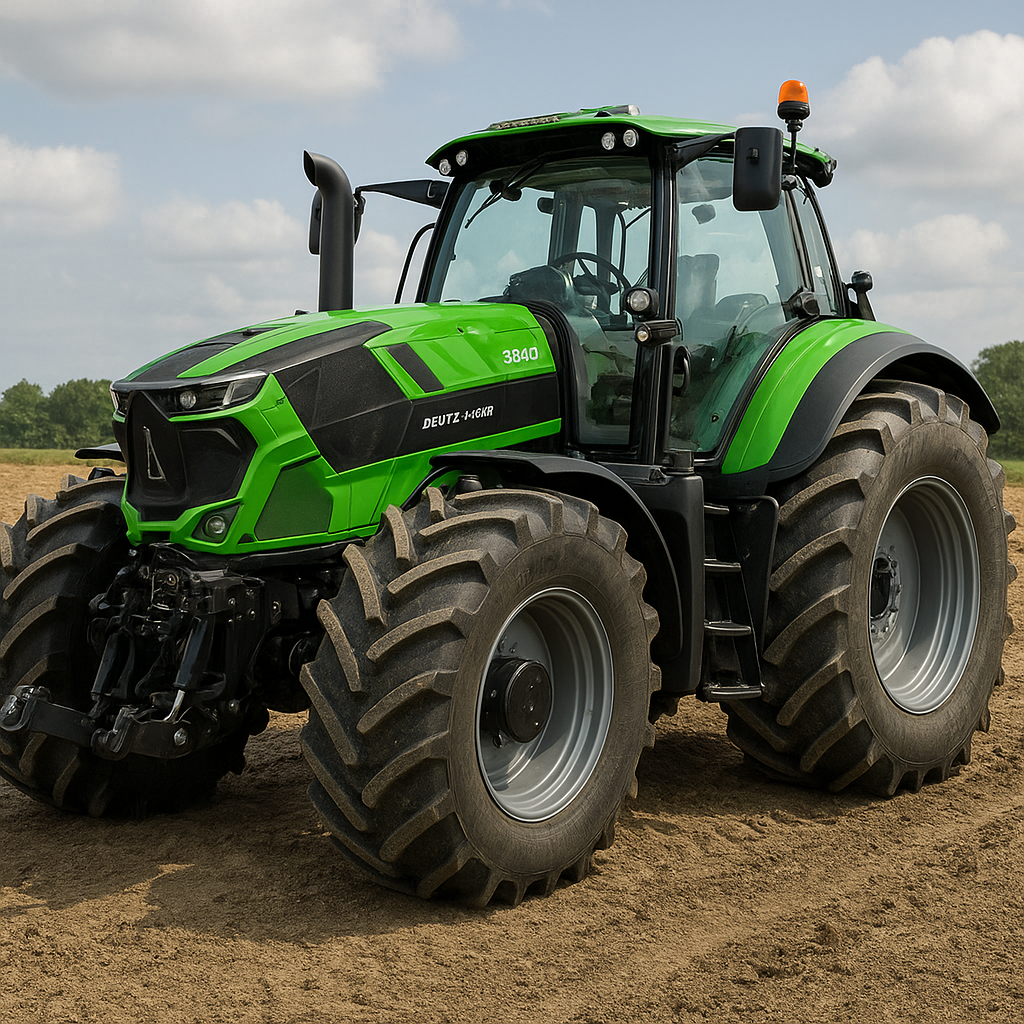
The Deutz-Fahr 9340 is a high‑performance agricultural tractor designed for demanding tasks on large farms and contractors. Combining modern engine technology, advanced transmission systems, and a cab engineered for long hours in the field, this model sits in the upper tier of Deutz‑Fahr’s Agrotron family. The following article outlines the tractor’s origins, typical technical characteristics, practical applications, and operational considerations. It also highlights the machine’s position within contemporary agricultural practices and the value it can deliver to professional users.
History and positioning
The Deutz‑Fahr brand has long been associated with innovation in diesel engines and agricultural machinery. The 9340 model is part of the Agrotron 9 range, which was developed to meet the needs of large arable farms and contractors seeking high output, reliability, and integration with precision‑farming systems. While specific configurations vary by market and production year, the 9340 generally targets the segment of the market that requires a combination of high power, robust build, and modern electronics for field management.
Development context
During the evolution of the Agrotron line, manufacturers placed emphasis on emission compliance (SCR and DOC aftertreatment systems), fuel economy, and operator ergonomics. The 9340 reflects these trends by incorporating contemporary engine solutions, often featuring an inline six‑cylinder unit with turbocharging and aftertreatment, coupled with a continuously variable transmission (CVT or TTV in Deutz‑Fahr terminology). This approach aims to offer a machine that can deliver consistent tractive effort while improving efficiency and emissions performance.
Market positioning
In the market, the 9340 competes with other flagship tractors from major manufacturers. It is positioned for buyers who need a tractor capable of heavy tillage, large seeding implements, and high‑capacity baling or forage operations, while providing the electronics and connectivity expected in modern fleets. This positioning emphasizes a balance between mechanical strength and digital functionality.
Technical characteristics and performance
The technical specification of a Deutz‑Fahr 9340 can vary by model year and optional packages, but several core features tend to be consistent across offerings. These include a powerful diesel engine designed to deliver sustained power under load, a smooth and efficient continuously variable transmission, substantial hydraulic capacity, and a cab designed for long shifts.
Engine and power
Most 9340 variants are powered by a six‑cylinder Deutz diesel engine. Typical characteristics include:
- Displacement in the approximate range of 6.0 to 6.5 litres (inline six).
- Rated power typically around the low to mid‑300 horsepower class (depending on configuration and boost functions).
- Engine management with common‑rail fuel injection, turbocharging, and exhaust aftertreatment such as SCR (selective catalytic reduction) using AdBlue/DEF.
These features aim to deliver strong torque at low engine speeds, which improves fuel economy and reduces wear during heavy draft operations. The combination of electronic engine control and aftertreatment systems ensures compliance with modern emission standards while maintaining reliability under heavy use.
Transmission and driveline
A highlight of the 9340 is its continuously variable transmission (often marketed as TTV). Key advantages include:
- Seamless acceleration and the ability to maintain optimal engine RPM for fuel efficiency.
- Technical capability to reach road speeds (often up to 40–60 km/h depending on gearbox and country regulations) while keeping the engine in an efficient band.
- Integrated electronic controls that allow automatic adjustment of drive parameters for tasks such as transport, fieldwork, or loader operations.
The drivetrain is engineered to transfer engine torque efficiently to the wheels and the PTO, with differential locks and selectable four‑wheel drive for traction management. This system contributes to consistent field performance in variable soil conditions.
Hydraulics and PTO
Hydraulic and PTO capabilities are central to the 9340’s versatility:
- High‑capacity hydraulic pumps provide flow rates that typically satisfy large planters, sprayers, and heavy implements. Typical flow rates may be in the high double digits up to around 160–200 litres per minute depending on options.
- Electronic valves and load‑sensing hydraulics allow precise control of implement position and responsiveness.
- PTO options commonly include 540/1000 rpm settings, sometimes with an ECO mode, enabling power delivery for a wide range of implements.
These systems are designed to optimize implement performance and reduce cycle times on demanding tasks like baling, drilling, or sprayer pump operation.
Cab, comfort, and controls
Operator comfort is a priority for machines intended for long shifts. The 9340 generally offers:
- Spacious cab with climate control, ergonomic seats (often air‑suspended), and good visibility over implements.
- Intuitive electronic controls, touchscreen terminals for machine settings, and interfaces for precision‑farming systems (ISOBUS compatibility).
- Advanced suspension for the cab and front axle (optional) to reduce operator fatigue and maintain traction at higher road speeds.
This focus on the operator environment aims to combine productivity with reduced fatigue, which contributes to overall farm efficiency.
Applications and practical uses
The Deutz‑Fahr 9340 is a multi‑purpose machine suited to a variety of tasks on medium to large farms and by contractors. Its design favors high‑output operations that demand sustained power and reliability.
Arable farming
For large‑scale arable farmers, the 9340 can handle:
- Primary tillage with large ploughs and discs — the engine torque and traction control systems help maintain consistent working depth and forward progress.
- Secondary tillage and seedbed preparation — the CVT allows precise speed control for consistent seed placement and reduced fuel consumption.
- High‑capacity seeding and fertiliser applications — hydraulic flow and linkage strength support wide implements and multiple rows.
In combination with precision‑farming guidance, the tractor can improve overlap reduction and input efficiency, directly affecting field profitability.
Forage and livestock operations
While primarily aimed at arable work, the 9340 is also well suited to heavy forage and livestock support:
- Baling and forage harvesting — robust PTO performance supports large balers and wrapper units.
- Silage and feedlot work — strong hydraulics and loader capacities enable rapid material handling.
- Transport tasks — the tractor’s power and transmission allow safe, efficient transport of heavy trailers over road and field.
The machine’s stability and torque availability help maintain productivity during peak harvest windows when reliability is crucial.
Contracting and municipal tasks
Contractors benefit from the 9340’s flexibility:
- Ability to work long hours with minimal downtime due to strong cooling systems and service intervals.
- Compatibility with a wide range of implements for diversified services — ploughing, subsoiling, drilling, and transport.
- Integrated telematics and fleet management options that improve scheduling and preventive maintenance.
The combination of power and connectivity makes the tractor attractive for businesses that need dependable machines across multiple job types.
Technology, precision farming, and connectivity
Modern agriculture increasingly relies on data and precision tools. The Deutz‑Fahr 9340 typically supports a suite of technologies intended to enhance productivity and reduce input costs.
Guidance and ISOBUS
ISOBUS compatibility and factory‑integrated guidance enable:
- Precision auto‑steering using GNSS (GPS/GLONASS/Galileo) receivers, reducing overlap and saving on seed, fertiliser, and fuel.
- Seamless communication with ISOBUS‑enabled implements for unified control via the tractor’s terminal.
- Section control and variable‑rate application when connected to the appropriate implement and farm management software.
These features support more accurate application of inputs and improve traceability of field operations.
Telematics and fleet management
Many operators opt for factory or dealer telematics packages that allow remote monitoring of:
- Machine location and working hours.
- Fuel consumption and operating parameters.
- Maintenance alerts and fault codes.
Telematics helps optimize utilization, schedule services proactively, and assess machine performance across different fields and tasks — all contributing to better asset management and lower operating costs.
Automation and assist systems
Advanced assist systems available on comparable tractors include automated headland management, field mapping, and engine‑transmission optimization. These reduce operator intervention and increase consistency, particularly across repetitive tasks such as seeding or spraying.
Operational economy, maintenance, and residual value
Investment decisions for a tractor like the 9340 must consider acquisition cost, operating expenses, maintenance requirements, and resale. The machine’s design tries to balance initial purchase price against lifecycle costs.
Fuel consumption and efficiency
Fuel burn depends heavily on duty cycle, terrain, and operator habits. Under heavy draft conditions, consumption for a high‑power tractor such as the 9340 can be in the range of approximately 15–30 litres per hour, with lower values during moderate transport work. Using a CVT/TTV to keep the engine in an efficient RPM range, combined with smart engine management and appropriate gear selection, helps reduce fuel use over long seasons. These figures are indicative and vary by implement and field conditions.
Maintenance and service intervals
Regular maintenance items include oil and filter changes, fuel system checks, coolant and aftertreatment inspections, and hydraulic service. Many modern units extend service intervals for engine oil and filters through improved filtration and monitoring systems, while telematics can prompt maintenance when needed. Dealer support and local parts availability are major factors influencing uptime for contractors and large farms.
Resale and total cost of ownership
Well‑maintained 9‑series tractors generally retain value due to their capability and the continuing demand for high‑horsepower machines. Factors that enhance resale include documented service history, low hours relative to age, and up‑to‑date electronics and guidance hardware. Total cost of ownership depends on utilization: high‑hour contractors often realize a faster payback per hour, while lower‑hour operators should weigh purchase price against possible leasing or custom contracting alternatives.
Strengths, limitations, and buyer considerations
When evaluating the 9340, consider the following:
Strengths
- Power and torque for heavy implements and prolonged draft work.
- Continuously variable transmission that enhances efficiency and operational smoothness.
- High hydraulic flow and PTO options supporting a broad implement range.
- Comfortable cab and advanced controls for long shifts.
- Compatibility with precision‑farming systems and telematics for modern farm management.
Limitations
- Higher initial acquisition cost compared with mid‑range tractors; careful analysis of utilization is required to justify purchase.
- Complex electronics require trained technicians for certain diagnostics and repairs.
- Fuel and operating costs can be significant under continuous heavy loads, making efficiency features and proper setup crucial.
Buyer checklist
Prospective buyers should review:
- Exact engine rating and torque curve for the planned implements.
- Transmission configuration and road speed options.
- Hydraulic flow and the number of spool valves required for specific implements.
- Factory guidance and telematics options or compatibility with existing farm systems.
- Local dealer support, warranty terms, and availability of service plans.
Making decisions with these criteria in mind helps align machine capabilities with farm needs.
Examples from the field and practical tips
Operators and fleet managers have reported the following practical observations when using tractors in this class:
Matching implements
Pair the 9340 with wide seeders, large cultivators, and modern balers to maximize productive hours. Ensuring that tyres, ballast, and three‑point hitch settings are optimized for the implement will improve traction and reduce soil compaction.
Setting for fuel economy
Use cruise and engine RPM management to keep the engine in its most efficient band. When possible, enable automatic transmission modes that adapt to load and reduce unnecessary throttle changes. Regularly audit fuel consumption during key operations (ploughing, drilling, transport) to establish baselines and spot deviations that might indicate maintenance needs.
Telematics for fleet efficiency
Implement telematics to track machine utilization, schedule preventive maintenance, and analyze field productivity. Over time, data-driven adjustments to routes, downtime, and equipment selection can reduce overall operating costs by improving match between machine and task.
Concluding remarks
The Deutz‑Fahr 9340 represents a modern, high‑power tractor platform designed to serve demanding agricultural operations. Its combination of engine technology, transmission flexibility, and electronic integration makes it a compelling option for large farms and contractors focused on productivity and data‑driven management. While investment and running costs require careful planning, the 9340’s capabilities for heavy tillage, high‑capacity seeding, and intensive forage work make it a versatile asset when matched to the operator’s workload.
Key considerations for prospective users: verify exact specifications for the model year and region, confirm dealer support for diagnostics and parts, and consider telematics and precision‑farming options to fully leverage the tractor’s capabilities. With appropriate application and maintenance, the Deutz‑Fahr 9340 can be a backbone machine for operations requiring strong performance and modern farm connectivity.