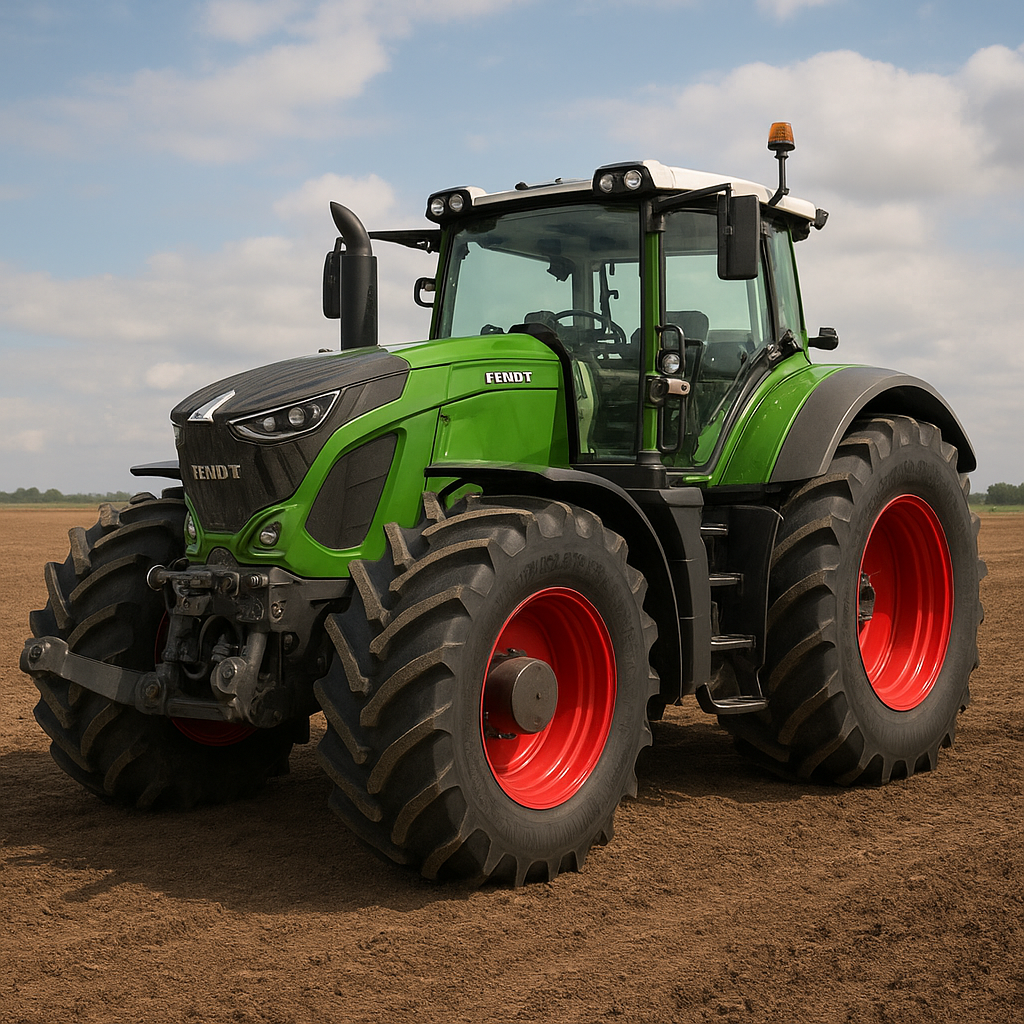
The Fendt 1033 Vario represents a powerful example of modern agricultural engineering, combining high output, advanced electronics and operator comfort to meet the demands of large-scale farming, contracting and specialized fieldwork. In this article I describe the machine’s design philosophy, typical technical characteristics, practical applications and some of the innovations that set it apart in the market of heavy tractors. Where available, I include approximate data and ranges so you get a clear picture of what to expect from a tractor in the 1000-series class.
Overview and design principles
The Fendt 1033 Vario belongs to Fendt’s top-tier family of articulated tractors designed for high-power tasks. Built with an emphasis on reliability, efficiency and operator ergonomics, the machine is aimed at farms and contractors that require sustained high performance across demanding field operations and road transport. The architecture of the tractor reflects a balance between robust mechanical systems and sophisticated electronics: a heavy-duty chassis and driveline are paired with integrated telematics, precision- farming interfaces and a continuously variable transmission.
Key design aspects include a rigid frame tailored to heavy implements, advanced suspension to reduce soil compaction and improve ride comfort, and a roomy cab that serves as an operational hub. The tractor’s external layout optimizes visibility to front implements and rear linkages, while service points are arranged for straightforward maintenance. In short, the Fendt 1033 Vario is engineered to minimize downtime, maximize productivity and make complex jobs easier for the operator.
Technical specifications (typical and approximate)
The exact specification of a Fendt 1033 Vario can vary by model year, market configuration and optional packages. The figures below are presented as typical values for tractors in this class and should be confirmed with manufacturer documents or a dealer for a particular machine.
Powertrain and performance
- Engine type: 6-cylinder diesel, typically from a major agricultural engine supplier, tuned for low-end torque and long service intervals.
- Rated power: approximately 300–350 hp at rated engine speed (varies by configuration).
- Max torque: typically in the range of 1,200–1,800 Nm (approximate peak torque depending on engine tuning).
- Transmission: the signature Vario continuously variable transmission (CVT), providing seamless acceleration without gear steps and excellent tractive efficiency.
- Top road speed: factory-set versions commonly allowed at 40–60 km/h depending on country regulations and transmission options.
Hydraulics, PTO and linkage
- PTO options: usually 540 / 1,000 rpm (and sometimes ground-speed PTO variants) to suit a wide range of implements.
- Rear hydraulic flow: available pump flows often in the range of 150–400 l/min depending on whether servo or load-sensing pumps and additional work pumps are fitted.
- Electronic valves: multiple remote valves with adjustable flow and timing for complex hydraulic control.
- Lift capacity (rear linkage): typical maximum lift around 8–12 tonnes at the hitch, enabling large ploughs, seed drills and heavy implement handling.
Weight, dimensions and capacities
- Operating weight: a heavy-class tractor like the 1033 Vario usually ranges from about 10,000 to 14,000 kg depending on ballast, dual wheels and front equipment.
- Fuel capacity: fuel tanks for long working days are commonly sized from 500 to 900 liters depending on optional tanks and regional specifications.
- Front axle and steering: heavy-duty front axle with optional suspension to improve traction and ride comfort; steering systems are optimized for large implements and transport maneuvering.
Electronics and connectivity
- Precision farming support: ISOBUS compatibility, section control and guidance-ready hardware for RTK-based auto-steer systems.
- On-board telematics: remote diagnostics, fleet management and performance monitoring available through factory or dealer packages.
- Operator interface: large multifunction displays, customizable Fendt control panels and integrated camera feeds to control implements and vehicle functions.
Primary applications and field use
The Fendt 1033 Vario is versatile and intended for operations that require sustained heavy power, precise implement control and long daily runtime. Typical applications include:
- Tillage and primary cultivation — pulling wide ploughs, discs and heavy cultivators at depth requires both high horsepower and reliable traction; the 1033 Vario is built to maintain consistent speed and draft control across variable soil conditions.
- Seeding and planting — when paired with large seed drills or planters, the tractor’s hydraulic control and precision farming systems ensure consistent seed placement and efficient field coverage.
- Forage harvesting and baling — as a traction and PTO power source for large forage harvesters, balers and wrapper combinations, the tractor provides the torque needed for high throughput.
- Transport and haulage — heavy trailers and transport tasks over farm roads or public highways benefit from the CVT’s ability to maintain efficient engine speed while controlling ground speed.
- Specialized contracting — contracting companies that perform large-area spraying, fertilizing or tillage will find the machine suited to long shifts, quick implement changes and telematics-based job tracking.
Because of its size and weight, the Fendt 1033 Vario is particularly effective on larger farms and in regions where field sizes and operation scale justify higher horsepower equipment. Care must be taken on light soils to manage compaction — wide tyres, duals or tracks and attention to ballast settings are common approaches to reduce soil imprint.
Advanced technology and innovations
Fendt invests heavily in systems that increase productivity while reducing operator workload. The 1033 Vario typically benefits from a package of technologies that reflects this philosophy:
Continuously variable Vario transmission
The Vario transmission is a central technology that differentiates Fendt tractors. Unlike stepped gearboxes, the CVT provides smooth, stepless acceleration and allows the operator to select an exact ground speed while the engine runs at the most efficient rpm for the task. This results in improved fuel economy, reduced drivetrain wear and better traction control during draft-intensive tasks.
Precision agriculture and automation
ISOBUS compatibility and optional guidance systems (including RTK GNSS support) allow automatic steering and section control for implements. These functions reduce overlap, save inputs and improve yield consistency across large fields. Integrated telematics systems enable remote monitoring of fuel consumption, service alerts and machine location—valuable for fleet management in contracting operations.
Hydraulic and PTO versatility
A high-flow hydraulic system supports complex, hydraulically driven implements while electronic controls manage flow prioritization, timing and pressure. PTO options and management systems allow smooth engagement, soft-start functions and programmable outputs for implements with sensitive drivetrains.
Operator environment and safety systems
Modern cabs include adaptive lighting, 360-degree visibility options via cameras, HVAC systems, ergonomic seating with integrated controls and vibration-damped platforms. Safety systems such as hill-hold, automatic parking brakes and electronic stability features help maintain control when moving heavy implements or operating on slopes.
Operator comfort, controls and human factors
The tractor is designed with long working days in mind. The cab layout centers around the operator, with joystick controls, touchscreen displays and logically grouped switches that reduce fatigue and speed up repetitive tasks. Important comfort and ergonomic features include:
- Adjustable, ventilated operator seat with extensive suspension travel and armrests that house key controls.
- Climate control with efficient heating and cooling, filtered fresh air and optional diesel-fired heaters for cold starts.
- Low interior noise levels and vibration isolation to reduce fatigue during extended operations.
- Ample storage and visibility aids such as panoramic glass, sunshades and integrated sun visors.
All of these aspects contribute to higher sustained productivity because a comfortable operator can maintain better situational awareness and make finer adjustments when managing implements and field conditions.
Maintenance, reliability and operating costs
Fendt places emphasis on reducing downtime through accessible service points, predictable maintenance schedules and remote diagnostics. Typical considerations for ownership include:
- Service intervals — modern engines and filters are engineered for extended intervals between major services; however, oil, filter and fuel system maintenance remain critical for longevity.
- Downtime reduction — remote telematics and dealer diagnostic support can minimize time off-field by preempting failures and enabling planned maintenance.
- Fuel efficiency — the combination of efficient engine maps and the Vario transmission improves specific fuel consumption, particularly during transport and variable-load work.
- Resale value and support — Fendt tractors generally maintain strong resale values in many markets; a worldwide dealer network supports parts availability and warranty services.
Economic performance will vary depending on utilization, fuel prices and local service costs. Large operations typically see the greatest relative benefit because the machine’s productivity offsets its higher acquisition cost.
Market position and comparisons
The 1033 Vario sits in the upper segment of tractor horsepower classes and competes with similar high- horsepower tractors from other European and North American manufacturers. Its strengths are often cited as the quality of finish, technology integration and operator ergonomics. For prospective buyers, the key comparison points include total cost of ownership, dealer support, available options (such as front loaders, dual wheels, or crawler tracks) and how the tractor integrates with existing precision farming ecosystems.
Contractors and large farms evaluate such tractors on a combination of fuel efficiency, hydraulic capacity, PTO performance and lift capacity. The availability of factory- fitted guidance and ISOBUS systems is a decisive advantage in modern farming operations where data-driven decisions and automated routines are standard.
Environmental and sustainability considerations
Modern high-power tractors incorporate features to reduce fuel consumption and emissions while improving operational efficiency. Common approaches include engine management systems tuned for optimal combustion and aftertreatment technologies to meet emissions standards, plus options for eco-driving modes and intelligent power management that reduce unnecessary fuel use. Operators can further improve sustainability by combining precision application of inputs with efficient machine management to reduce overlap, idle time and excessive field passes.
Choosing the right configuration
Buying the correct variant of a 1000-series tractor like the 1033 Vario involves matching the machine to the intended tasks:
- For heavy draft work: prioritize traction packages, ballast options, and high rear linkage capacity.
- For high-speed transport and roadwork: consider higher-speed transmission settings, optimized tires and extended cooling packages.
- For mixed operations with sensitive soils: explore wide tyres, tyre pressure control systems or tracked undercarriage options to reduce compaction risk.
- For precision agriculture: ensure RTK/ GNSS capability, ISOBUS compatibility and sufficient hydraulic outputs for modern implements.
Consultation with local dealers and trial sessions under real working conditions is strongly recommended. Real-world testing identifies the setup that yields the best balance between fuel economy, implement performance and operator comfort.
Conclusion
The Fendt 1033 Vario is a high-capacity tractor designed for demanding agricultural and contracting roles. Its defining attributes include the stepless Vario transmission, robust engine performance in the 300–350 hp class (approximate), advanced features for precision farming and a focus on operator comfort and productivity. Although initial acquisition costs for tractors in this class can be significant, the combination of efficiency, telematics support and durable construction often results in attractive long-term returns for large-scale users. Buyers should verify exact manufacturer specifications and options for their market and consider test-driving the machine under typical field conditions to tune configurations to their operations.