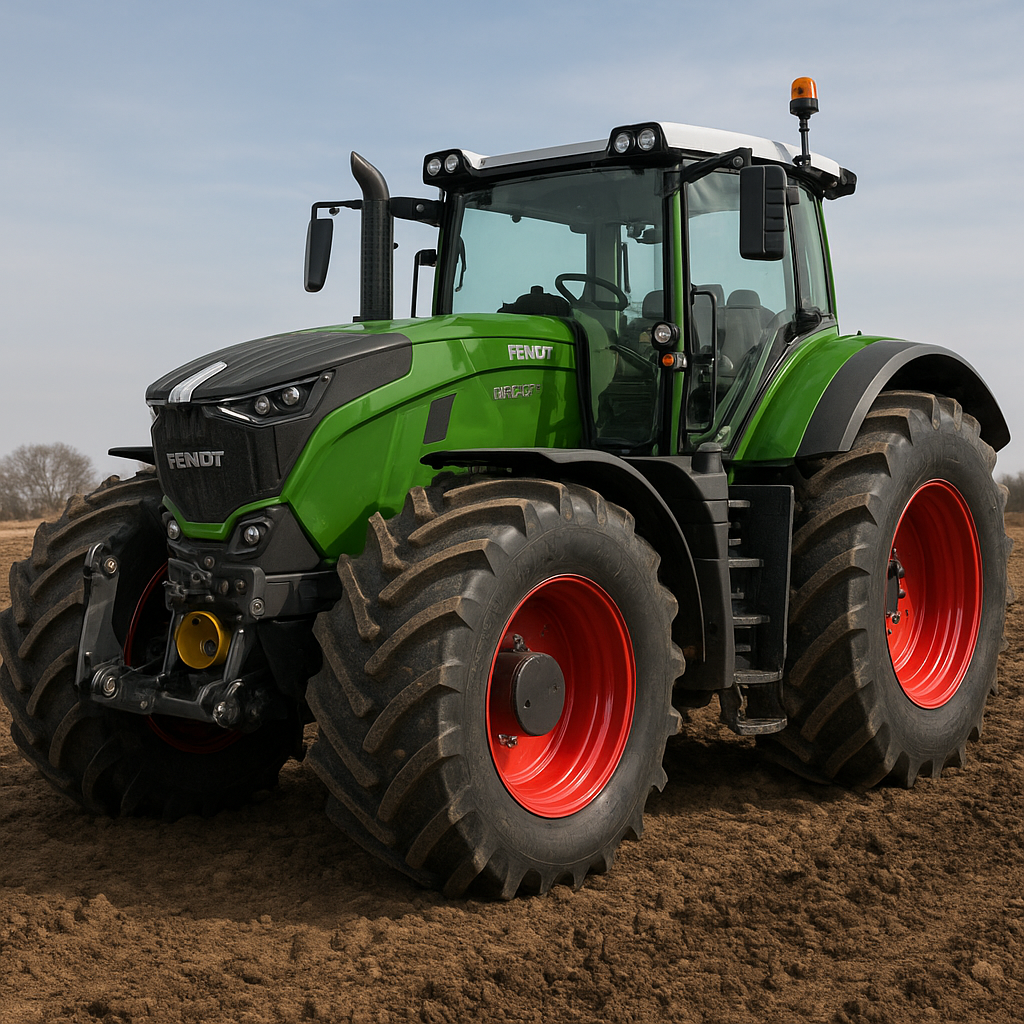
The Fendt 1042 Vario is a member of Fendt’s high-power range designed for large-scale and specialized agricultural operations. Combining advanced drivetrain technology with premium operator comfort and integrated electronics, this model is built to handle demanding tasks such as heavy tillage, large-scale seeding, high-capacity transport and specialized field operations. In this article I will describe its design and engineering, typical applications, performance features, maintenance and economics, environmental aspects and market-related facts. Throughout the text you will find notes on practical use, technological highlights and statistical context for farmers, contractors and fleet managers considering a machine of this class. Key concepts and important components are highlighted to make it easier to find the most relevant information.
Design and engineering philosophy
Fendt positions the 1042 Vario as a flagship in the high-horsepower tractor category. The machine is developed around a philosophy that blends mechanical robustness with electronic precision. At the heart of the concept is a continuous emphasis on system integration: the engine, driveline, hydraulics, cab electronics and telematics are designed to work together to maximize productivity, minimize fuel consumption and reduce operator fatigue.
Powertrain and transmission
One of the defining elements of the 1042 Vario is its continuously variable transmission (Fendt Vario concept). Instead of stepped gears, the Vario system provides seamless speed changes under load, allowing the tractor to maintain optimum engine speeds for the task at hand. This results in smoother operation, better traction control and improved fuel efficiency compared with traditional gearboxes on comparable machines. The transmission is matched to a high-displacement diesel engine optimized for torque delivery at low and medium engine speeds, which is crucial for field operations that require consistent pull rather than peak rpm.
Chassis, axles and ballast
The structural design of the 1042 Vario is robust to accommodate heavy implements and dynamic loads. The front and rear axle options, combined with adjustable ballast and tire choices, enable the machine to maintain traction while protecting the soil as much as possible for its size class. Many configurations allow for dual wheels or high-flotation tires to reduce soil compaction. Chassis stability is important when lifting large front-mounted equipment or working with wide trailed implements at speed.
Electronics and systems integration
Fendt has placed strong emphasis on integrated electronics. Systems such as advanced engine management, precision hydraulics control, ISOBUS compatibility and telematics enable the 1042 Vario to interact smoothly with modern implements and farm management systems. These systems not only improve operational accuracy but also provide rich data streams for maintenance planning and performance analysis.
Performance characteristics and technical data (typical)
Tractors in the Fendt 1000 Vario series, including the 1042, are built to deliver high tractive effort and hydraulic power. Exact specifications can vary by year, market and configuration. Below are typical technical characteristics and performance benchmarks you may expect for the 1042 Vario class. Where precise factory values depend on model year or regional configuration, I indicate approximate figures or ranges.
- Rated power: approximately 400–430 horsepower (hp) at rated engine speed. The model designation 1042 commonly corresponds to nominal engine output in the ~420 hp range.
- Maximum torque: peak torque is engineered to appear at low engine speeds to favor fuel-efficient draft work; typical peak torque for this class is in the range of 2,000–2,300 Nm (approximate).
- Engine displacement: large displacement 6-cylinder diesel engines typically in the 12–13 liter class are used in high-power models.
- Transmission: continuously variable Vario transmission with high torque capacity and multiple driving modes (field mode, transport mode, economy mode).
- Hydraulic system: main pump flows commonly range from 200 to 300 liters per minute for the implement circuit, with optional high-flow packages to suit demanding implements.
- Rear linkage capacity: lift capacities at the hitch can exceed 12,000 kg in many configurations, allowing the tractor to handle very heavy mounted implements.
- Weight: operating weight typically between 10,500 and 14,000 kg depending on ballast and configuration.
- Top speed: transport-speed options often include 40–60 km/h depending on local homologation and transmission settings.
- Fuel consumption: field consumption varies greatly with task and operator technique; typical medium-heavy field work values are often in the approximate range of 13–25 liters per hour. Long-haul transport will vary; economical operating modes and low-engine-speed strategies reduce consumption.
These figures represent a practical snapshot. For exact factory specifications consult the official technical sheet for the specific model year and regional variant. Nevertheless, the numbers above reflect how the 1042 Vario positions itself: a high-power, high-capacity tractor meant to be the workhorse on large farms and contract operations.
Primary applications and operational use cases
The Fendt 1042 Vario is engineered for tasks that require sustained power, high hydraulic output and robust mechanical strength. Key application areas include:
- Tillage and primary cultivation — large plows, cultivators and heavy discs demand consistent tractive effort. The 1042 Vario’s torque characteristics and weight distribution make it well suited for deep plowing and intensive soil preparation on wide implements.
- Seeding and planting — when fitted with large seed drills or combination planters, the 1042 can maintain field speed with high precision while supplying hydraulic and PTO power for press wheels, fertilizer units and seed meters.
- Spraying and application — for trailed or mounted booms with large tank volumes and high-flow pumps, the hydraulic capacity and stability of the machine provide dependable boom control and travel speed.
- Transport and logistics — when hauling heavy loads between fields and depots (grain wagons, silage trailers), the transmission and power-to-weight ratio allow for efficient, high-speed transport.
- Specialty uses — sugar beet harvesting support, heavy loaders or substrate tilling in horticulture where high power and hydraulic flow are required.
- Contracting fleets — many contractors favor high-power tractors that can be rapidly reconfigured. The 1042 fits into fleets where long working hours and multiple task types justify a premium investment.
Operator comfort, ergonomics and controls
Cab comfort and intuitive controls are critical for long shifts. The 1042 Vario integrates modern ergonomics and a suite of features that reduce operator stress and increase sustained productivity.
Cab environment and visibility
The cab typically features excellent all-round glass area, suspended seats and climate control systems designed for long working days. Noise and vibration levels are engineered to be low, and the air-suspension seat with multiple adjustments ensures ergonomic support for extended periods.
Controls, automation and driver assistance
Electronic controls and touchscreen displays allow operators to manage transmission settings, engine maps, hydraulic flow, PTO speed and ISOBUS implements from a central interface. Key features commonly found or available include:
- Automatic headland management for repeatable end-of-row sequences.
- Section control and variable-rate application through ISOBUS or proprietary systems to reduce overlaps and chemical use.
- Automated steering (RTK-capable) for precision field runs and reduced operator workload.
- FendtONE or similar telematics integration that enables job planning, remote diagnostics and data exchange with farm management software.
Hydraulics, implements and connectivity
The performance of heavy implements depends on hydraulic flow, hydraulic control precision and electronic integration. In the 1042 Vario class, these components are designed to match the highest demands.
- High-flow hydraulics feed multiple remote valves and high-demand implements such as seed drills, sprayer pumps and front loaders.
- PTO options provide multiple speed variants and robust shafts for rotational power to large implements.
- ISOBUS compatibility ensures plug-and-play communication with modern implements, enabling automated functions and data logging directly from the implement to the tractor display.
- Implement memory and tractor-implement management systems reduce setup time when switching implements across jobs.
Economics, serviceability and lifecycle costs
Choosing a high-power tractor like the 1042 Vario involves weighing purchase cost against productivity gains, fuel efficiency, uptime and resale value. The tractor’s premium market positioning means initial capital cost is higher than mid-size machines, but in many operations the increased field performance and reduced hours per hectare yield stronger economics.
Fuel and operating economics
Because this class of tractor can complete large tasks more quickly, the effective cost per hectare often improves when compared on a job-rate basis. Critical economic factors include:
- Fuel efficiency per hectare — while hourly fuel consumption is higher than smaller tractors, lower total hours per job can reduce fuel per hectare.
- Implement matching — running a wider implement at good field speed spreads fuel and labour costs over more hectares.
- Operator productivity — advanced automation and comfort reduce downtime and improve effective working time.
Maintenance and uptime
Fendt’s service architecture emphasizes scheduled maintenance windows, modular components and remote diagnostics. Telematics and predictive maintenance features can flag service needs before catastrophic failures, increasing fleet uptime. Important considerations include differential and transmission service intervals, hydraulic filter changes, and engine service planning. For large contractors, aftersales support networks and local dealer capacity are crucial in minimizing downtime.
Resale value and total cost of ownership
Fendt tractors generally retain strong resale values in many markets due to brand recognition and perceived build quality. Total cost of ownership calculations should account for financing costs, maintenance, fuel, insurance and predicted resale value. Buying decisions are often influenced by expected annual hours—machines used intensively will amortize differently than those in seasonal use.
Environmental impact and efficiency strategies
Modern high-power tractors face two simultaneous pressures: deliver high productivity while meeting increasingly strict emissions and environmental standards. Fendt addresses both through engine technology, management strategies and system-level efficiency improvements.
- Engine emissions compliance with current regional regulations is standard; exhaust aftertreatment systems (DEF, DOC, DPF) are part of modern engines to reduce NOx and particulate emissions.
- Low-rev operation strategies reduce fuel consumption and noise while increasing engine life when full revs are not necessary for a task.
- Precision farming helps reduce over-application of fertilizers and pesticides by enabling variable-rate application and section control, thus decreasing environmental footprint per hectare.
- Soil protection tactics such as wide tires, duals and controlled ballast reduce soil compaction, preserving soil structure and long-term productivity.
Market context, adoption and statistical observations
The Fendt 1000 Vario series, which includes the 1042, occupies a premium segment in Europe and select international markets. While exact sales data may vary by region and model year, general trends are clear:
- Premium tractors like the 1042 are often purchased by large-scale farms, contractors and enterprises that need long daily operating hours and the capacity to cover large areas quickly.
- In many European countries, Fendt is one of the leading premium brands and tends to hold a higher market share in the upper horsepower segments compared with many competitors.
- Telematics adoption: a growing percentage of new high-horsepower tractors are sold with integrated telematics and precision farming bundles, reflecting the increasing importance of data-driven farm management.
Statistical insights that are commonly referenced for machines of this class include average annual operating hours (often 600–2,000+ hours depending on user type), resale depreciation curves over 5–7 years, and fuel consumption benchmarks per hectare. For a contractor operating intensively, a machine like the 1042 Vario can be expected to accumulate a higher annual hour count and thus require strict maintenance discipline to protect asset value.
Innovations, optional packages and customization
Manufacturers of high-power tractors provide numerous options to tailor machines to specific farm or contractor needs. Typical optional areas include:
- High-flow hydraulics and additional remote valves for complex implements.
- Enhanced telematics packages integrating fleet management, remote diagnostics and over-the-air updates.
- Precision guidance with RTK for centimeter-level accuracy and automatic implement guidance.
- Cab comfort upgrades including leather seats, premium audio and extended suspension packages for long transport runs.
- Safety and lighting packs to support night-time operations and improve visibility on public roads.
For fleet managers, customizing software bundles (e.g., mapping, automatic documentation, job reports) often delivers quick returns through reduced errors and improved traceability of field operations.
Comparisons and strategic considerations
When comparing the 1042 Vario to other tractors in the same segment, consider the following strategic factors:
- Match implement width and weight — buying a tractor that can comfortably pull and power the implements you already own or plan to buy maximizes investment value.
- Annual hours and utilization — high initial cost requires high utilization to achieve attractive cost-per-hour economics.
- After-sales and dealer network — local service availability and parts logistics are critical for minimizing downtime for high-capacity machines.
- Technology lifecycle — telematics and software update policies determine how long the tractor’s electronics remain state-of-the-art.
Practical tips for owners and operators
To get the most from a 1042 Vario, consider the following operational tips:
- Use engine and transmission modes designed for the task; running at unnecessarily high rpm increases fuel use and wear.
- Match tire selection and ballast to soil type and the implement being used to reduce compaction and wheel slip.
- Keep up with scheduled maintenance and use telematics to track fluid change intervals and filter lifetimes.
- Leverage ISOBUS and implement-specific settings to reduce setup time and improve uniformity across fields.
- Train operators in use of automated headland sequences and precision steering to maximize consistent productivity.
Outlook and conclusion
The Fendt 1042 Vario represents a class of tractors that combines mechanical strength with advanced electronics to meet the needs of large farms and contractors. It is built to deliver sustained power, hydraulic capacity and integration with modern precision agriculture tools. While the initial investment is significant, the machine’s productivity, resale value and data-enabled maintenance strategies can provide compelling economics where utilization is high. As precision farming, data integration and emissions regulations continue to shape agricultural machinery development, tractors like the 1042 Vario will evolve with enhanced connectivity, automation and efficiency-focused technologies to meet future farm demands.