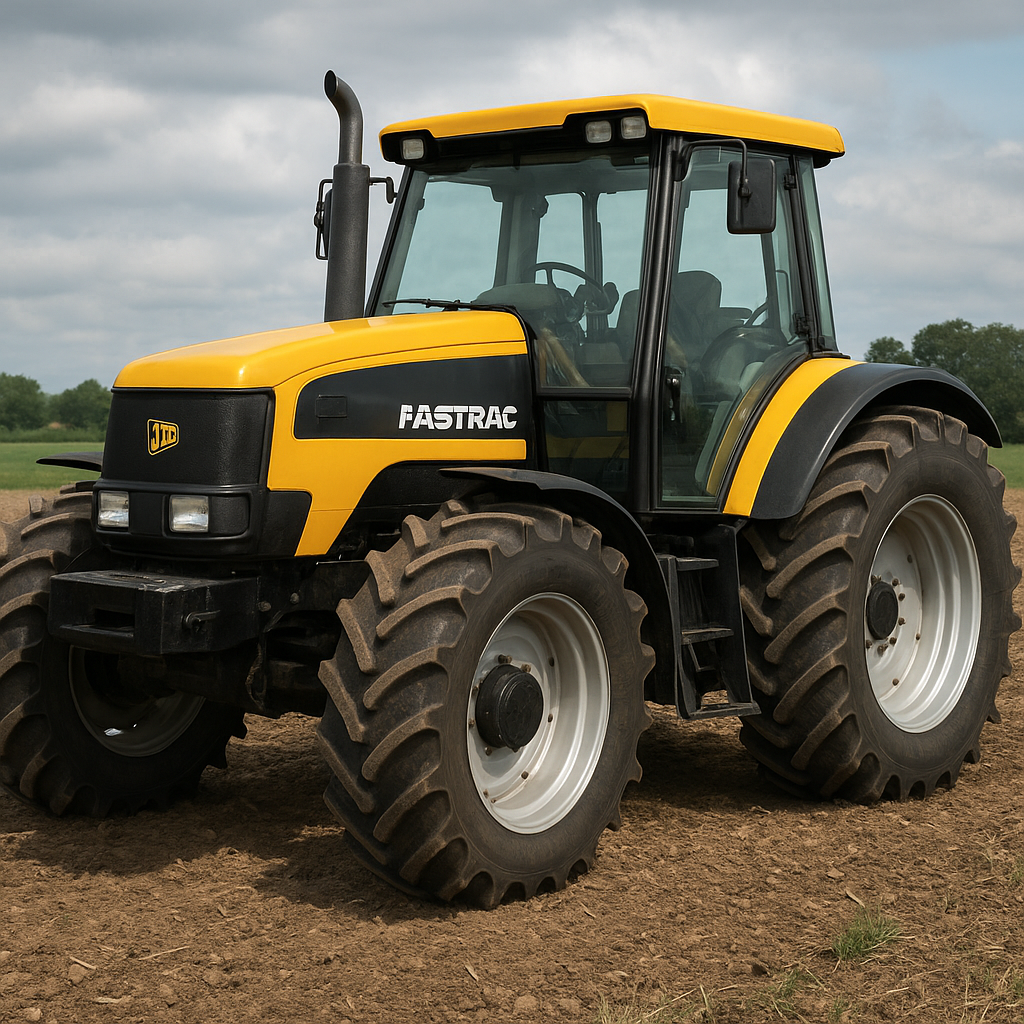
The JCB Fastrac 2140 stands out in the world of modern agricultural machinery as a machine that blends road speed, field capability and operator comfort. Designed and produced by JCB, a company widely known for construction and agricultural equipment, this model targets farms and contractors who need a versatile, fast and comfortable tractor capable of working long days on both roads and fields. The following article explores the design, typical applications, technical characteristics (where available), maintenance and economic considerations, and the practical advantages that make the Fastrac 2140 a recognizable name in many regions.
Design philosophy and distinctive features
JCB developed the Fastrac family to challenge the traditional concept of a tractor by placing equal emphasis on high-speed road travel and field productivity. The Fastrac platform is characterized by a chassis and suspension arrangement that delivers a ride quality closer to on-road vehicles than conventional agricultural machines. The 2140, as part of that lineage, reflects several of the most important innovations JCB introduced to reach this design goal.
Key design elements include a robust central frame, a focus on balance between front and rear axles, and a suspension system that reduces driver fatigue and implements stress during fast road travel. Where many traditional tractors prioritize low-speed tractive performance and heavy drawbar loads, Fastrac models like the 2140 combine those capabilities with a notably higher top speed and improved ride dynamics.
- Suspension: The Fastrac series is known for full suspension on front and rear axles, offering a smoother ride on the road and greater stability when towing or transporting implements.
- Speed: Designed for rapid transit between fields, some Fastrac variants reach road speeds significantly above typical tractors.
- Versatility: The layout supports diverse attachments—front loaders, rear-mounted implements, and trailed equipment—making the model suitable for mixed operations.
- Operator comfort: Enhanced cab ergonomics, visibility and noise insulation target long working days and reduced operator fatigue.
Technical overview and typical specifications
Exact specifications for the JCB Fastrac 2140 vary with year, optional packages and market. Below is a summary of typical technical data and performance characteristics that are commonly associated with the 2140 designation. Where precise values depend on configuration, ranges or approximations are provided.
- Engine power: The 2140 designation commonly indicates an engine output in the neighborhood of 140 horsepower (around 100–105 kW). Actual power can vary with engine tuning and emissions packages.
- Transmission: Fastrac models often use multi-range powershift or semi-powershift gearboxes with multiple forward and reverse speeds, optimized for both low-speed field work and high-speed road transport. Some later Fastrac designs moved toward more advanced continuously variable or electronically controlled transmissions as options.
- Top road speed: One of the Fastrac family’s hallmark traits is a high transport speed. Typical road speeds for comparable models often fall between 40 and 65 km/h, depending on gearing and regulations in the market.
- PTO and hydraulics: Rear PTO outputs are sized to match the engine power and are suitable for modern implements. Hydraulic flow rates on comparable machines generally support multiple remote valves and high-flow requirements for loaders and hydraulic motors.
- Weight and dimensions: Operating weight for tractors in this class commonly ranges from approximately 5.5 to 7.5 tonnes depending on ballast, attachments and cab options; wheelbase and overall dimensions vary by configuration.
- Fuel consumption: Fuel use depends on task intensity; for medium-heavy tasks average consumption may be in the order of 10–20 liters per hour. Efficient engine management and appropriate gearing influence hourly fuel use.
Note: Because manufacturers may revise specifications over production runs and because optional packages alter performance figures, consult specific technical datasheets or manufacturer resources for absolute values on a particular serial number or year-model.
Primary applications and operational roles
The JCB Fastrac 2140 is suited to a combination of tasks that exploit its road-going capability and field performance. Farms and contractors that transport implements between dispersed fields, deliver products on public roads, or run mixed operations often find the model particularly valuable.
Arable farming and tillage
For large arable farms the 2140 can pull cultivators, ploughs and power harrows with efficiency. Its combination of steady tractive power and comfortable cab allows operators to work long hours during peak seasons such as planting and harvest. The speed advantage reduces transit times between fields, helping multiple daily moves without excessive downtime.
Seeding, planting and spraying
When coupled with drills and planters, the Fastrac 2140’s hydraulics and PTO provide the necessary support. For spraying operations that require frequent road transit between fields or sites, the Fastrac’s higher transport speed reduces round-trip times and increases operational productivity while maintaining stability when towing tank sprayers.
Transport and logistics
Many users deploy Fastrac models for on-farm transport, moving trailers, bales, fertilizer or other goods. Contractors who provide haulage services or seasonal transport value the combination of agricultural capability with higher speed than conventional tractors.
Livestock and mixed-farm tasks
On mixed farms the model’s loader compatibility and hydraulic capacities make it suitable for feeding, bedding distribution, and yard work. Its comfortable cab is also appreciated for repeated short-distance trips and yard duties.
Performance characteristics and field behavior
In practice, the 2140’s strength lies in its ability to balance field torque and on-road agility. Operators report several tangible benefits in mixed-use settings.
- Time savings: Faster transport speeds translate into more effective hours spent on-task and fewer hours lost moving between locations.
- Reduced operator fatigue: The suspension and ergonomic cab reduce jarring on bumpy roads and rough headlands, improving concentration and productivity.
- Improved implement life: Smoother travel reduces shock loads to mounted implements during transport.
- Versatile tractive performance: Adequate torque for a range of implements means one machine can cover multiple roles across the season.
Maintenance, servicing and reliability
Long-term ownership costs and uptime depend on proactive maintenance and availability of parts. JCB’s global dealer network supports parts and service for Fastrac owners, but local conditions and model age affect support levels.
- Service intervals: Typical service schedules include frequent daily checks, oil and filter changes at intervals often between 250–500 hours depending on component (engine oil vs. hydraulic oil), and larger inspections at 1,000‑hour service points.
- Consumables: Brake checks, hydraulic filter replacements and PTO maintenance follow standard agricultural practices; wheel and suspension checks are particularly important on Fastrac models due to their higher road use.
- Parts availability: For widely sold models like the 2140, replacement parts are usually available through the JCB dealer network; however, older or region‑specific variants can require longer sourcing times.
- Reliability: Practical reliability depends on usage patterns. Machines used extensively on paved roads may need more frequent service on tires, brakes and suspension components, while machines primarily in-field will stress drivetrain and powertrain components more.
Economics and cost of ownership
When evaluating the Fastrac 2140 from an economic standpoint, potential buyers should consider acquisition cost, fuel efficiency, versatility and resale value. The higher initial cost compared to a basic agricultural tractor is often offset by time savings and the ability to perform a broader range of tasks with one machine.
- Fuel efficiency: While fuel consumption depends heavily on the work, optimizing engine speed, using the correct gearing and matching implement size to the tractor helps reduce operating cost.
- Resale: The enduring reputation of the Fastrac line can help maintain residual value, particularly when machines have been well maintained and there is strong dealer support.
- Productivity gains: Reduced transport times and multi-role capability effectively increase return on investment in many farm and contracting scenarios.
Operator experience and cab features
JCB emphasized operator comfort with the Fastrac series. The 2140 typically provides an ergonomic layout, good visibility, and controls intended for intuitive operation. These features contribute to safer, longer and more effective workdays.
- Ergonomics: Controls are grouped to reduce reach and movement; adjustable seats and steering columns are common.
- Visibility: A high-mounted cab and wide glazing improve view to implements and the road.
- Noise and climate: Sound insulation and effective heating/air conditioning systems enhance comfort in varied climates.
- Instrumentation: Multi-function displays in later models provide engine, transmission and hydraulic data for efficient operation and diagnostics.
Safety features and roadworthiness
Because one of the Fastrac 2140’s key aims is safe, rapid transport, safety and road compliance are crucial. Features that support safety include robust braking systems, lighting packages for road visibility, and advanced steering options that improve handling at higher speeds.
- Braking: Disc brakes and service systems sized for road speeds reduce stopping distances and improve control when towing loads.
- Lighting and signaling: Road-spec lighting, reflective markings and optional beacons increase visibility during transit.
- Stability controls: Suspension and chassis design aim to minimize trailer sway and improve dynamic stability at speed.
Comparisons, variants and alternatives
The Fastrac 2140 occupies a middle ground: more road-capable and comfortable than many basic tractors but not as specialized as very high-horsepower dedicated field machines. When comparing the 2140 within the market, consider:
- Traditional tractors with similar power but lower top speeds—often cheaper to buy but slower between fields.
- Higher-powered specialty tractors—better for extremely heavy draft work but less economical for road transport and mixed duties.
- Newer models with CVT or advanced transmissions—potentially smoother and more fuel-efficient but often with a higher purchase price.
The choice depends on operational patterns: if frequent road travel, quick turnaround and versatility matter, Fastrac’s concept is attractive. For strictly field-bound heavy draft work, a different configuration may be more efficient.
Practical tips for prospective buyers and operators
- Assess typical daily routes and tasks: if transporting equipment across public roads is common, prioritize models with higher transport speed and robust suspension.
- Consider tire selection and ballast carefully to balance traction with road stability.
- Plan maintenance intervals and ensure local dealer capacity for parts and service before purchasing an older or region-specific variant.
- Check for optional features that improve ROI: high-flow hydraulics, loader packages, and advanced transmissions can increase versatility.
Concluding observations
The JCB Fastrac 2140 represents a philosophy of multi-role capability where speed, comfort and utility converge. While exact specifications vary, the model typically provides around 140 horsepower, a higher-than-average road speed range, and the kinds of suspension and cab comforts that reduce fatigue and improve productivity. For operators and contractors who balance fieldwork with frequent transport, the 2140 is an efficient choice that reduces transit time and broadens operational flexibility. Sound maintenance practices and careful matching of implements to the tractor’s capabilities ensure long service life and favorable cost-of-ownership outcomes.