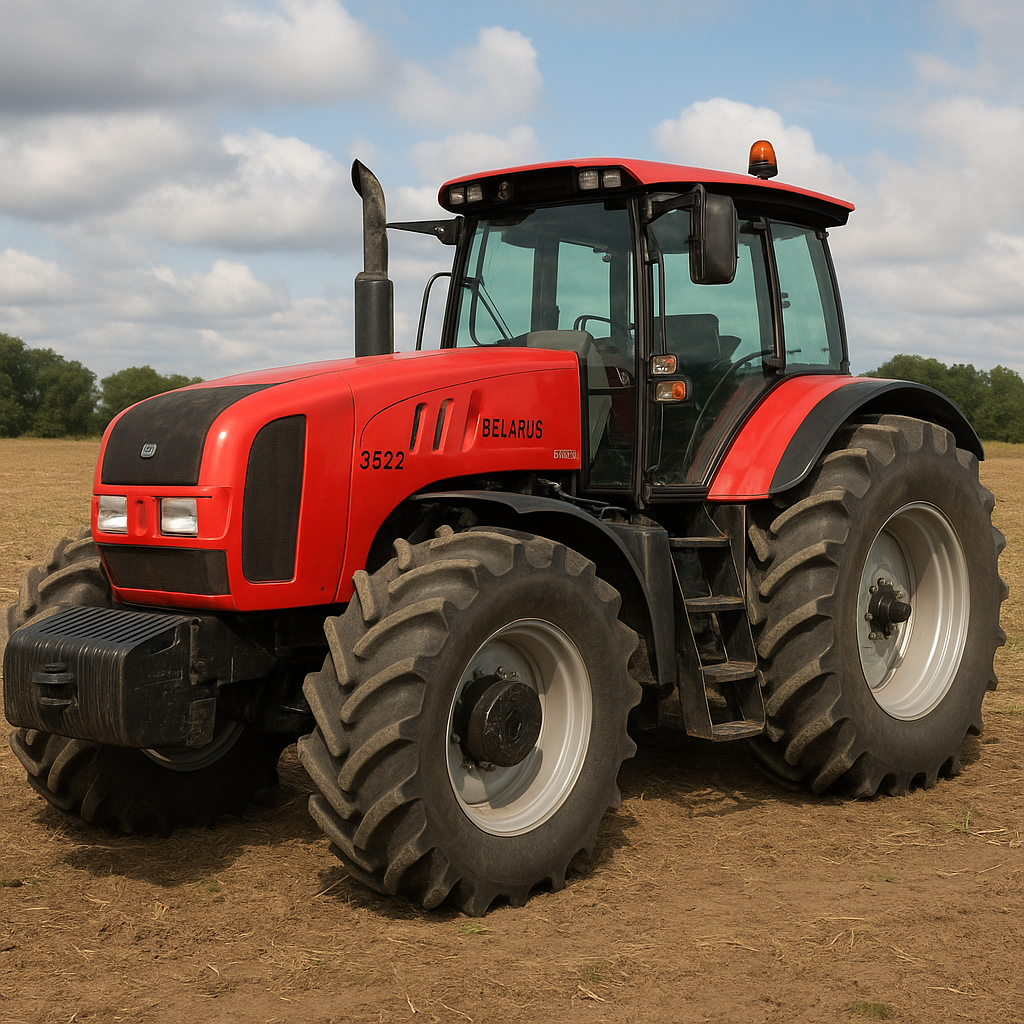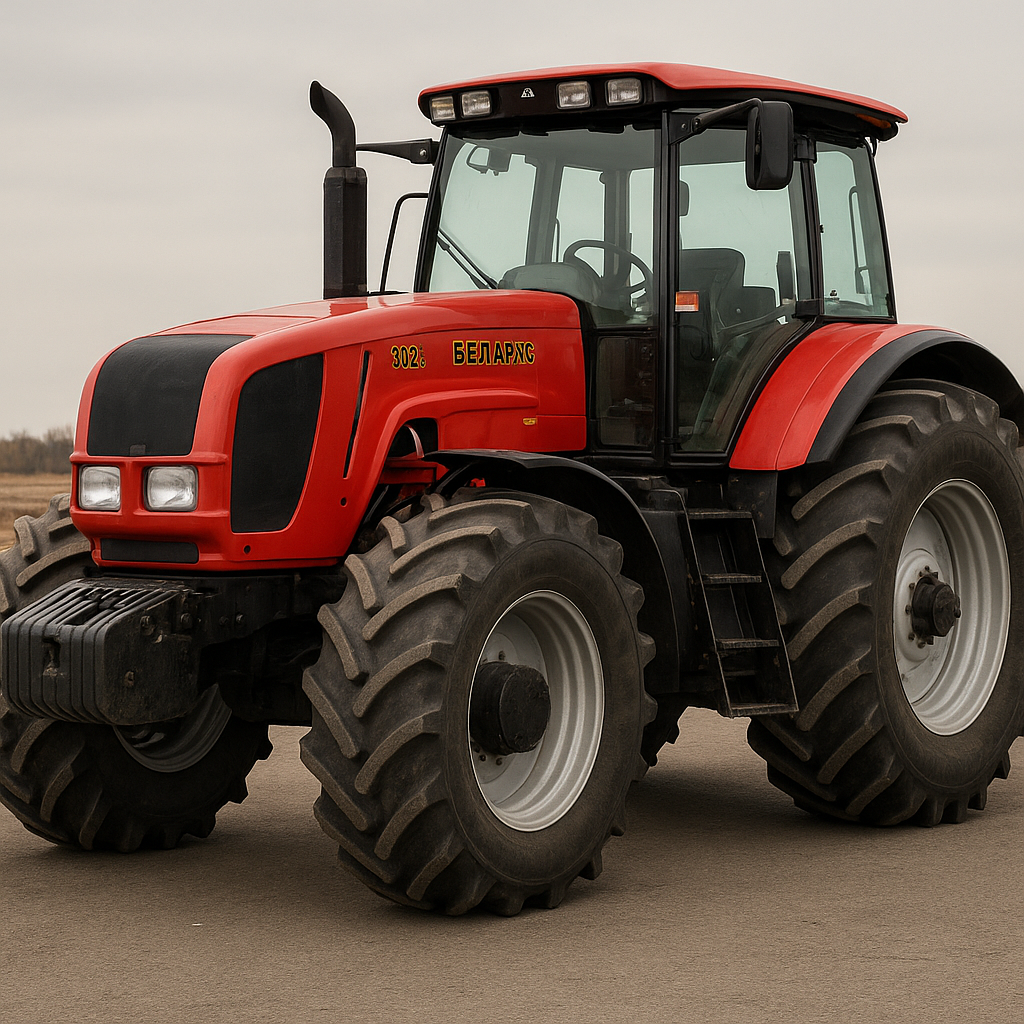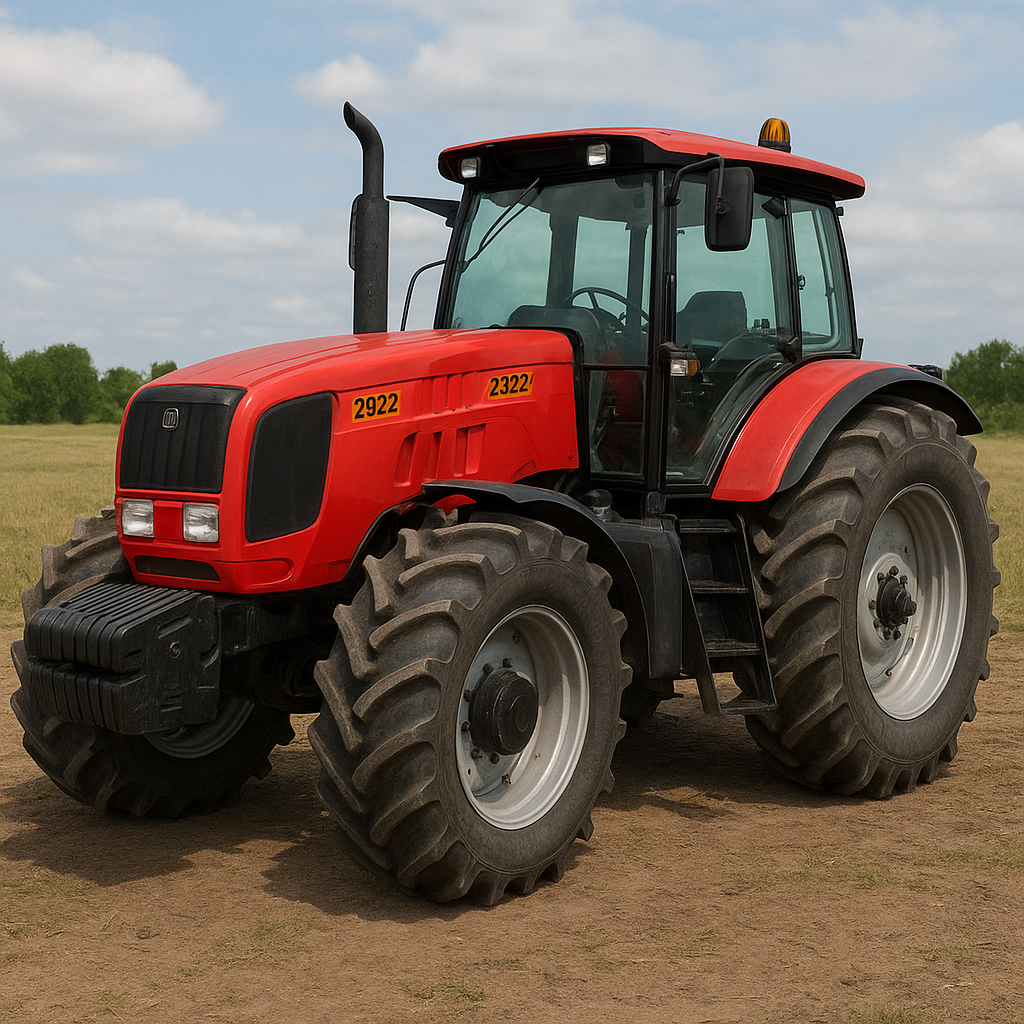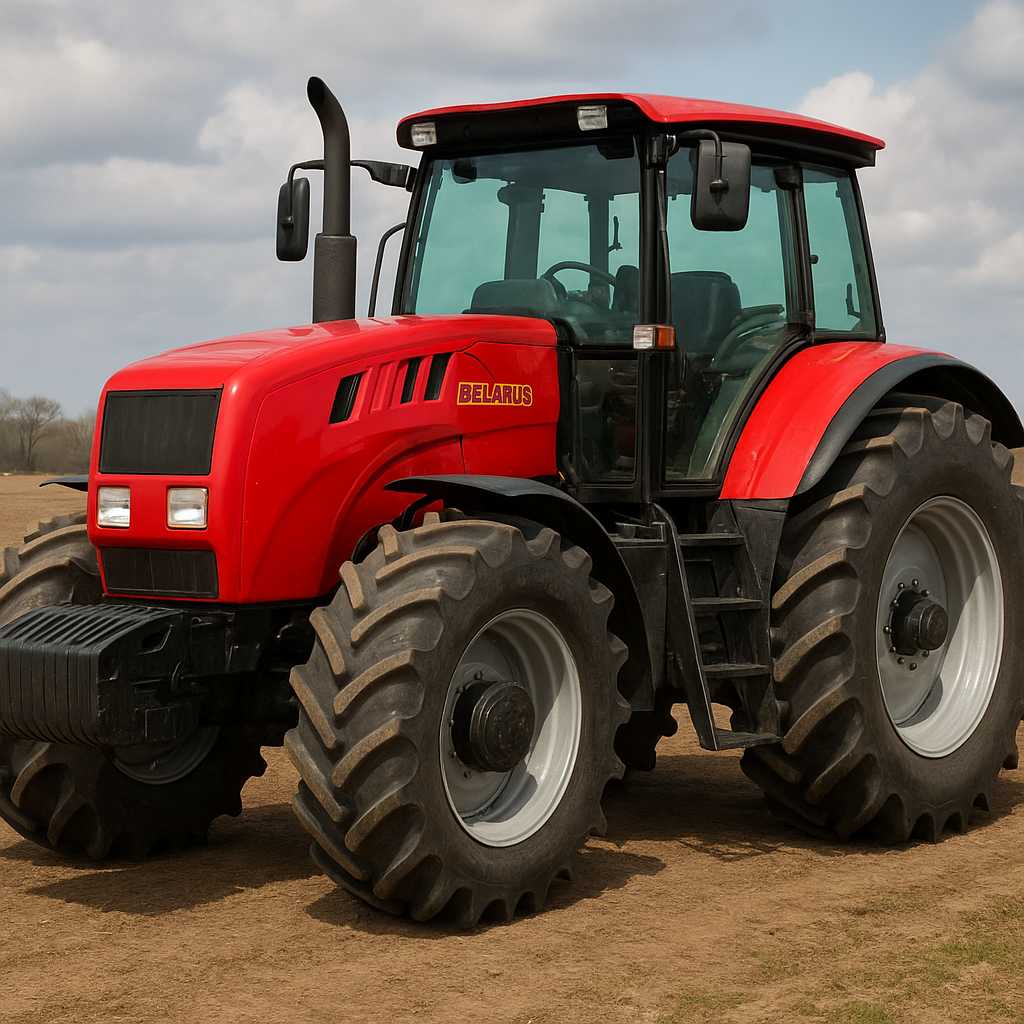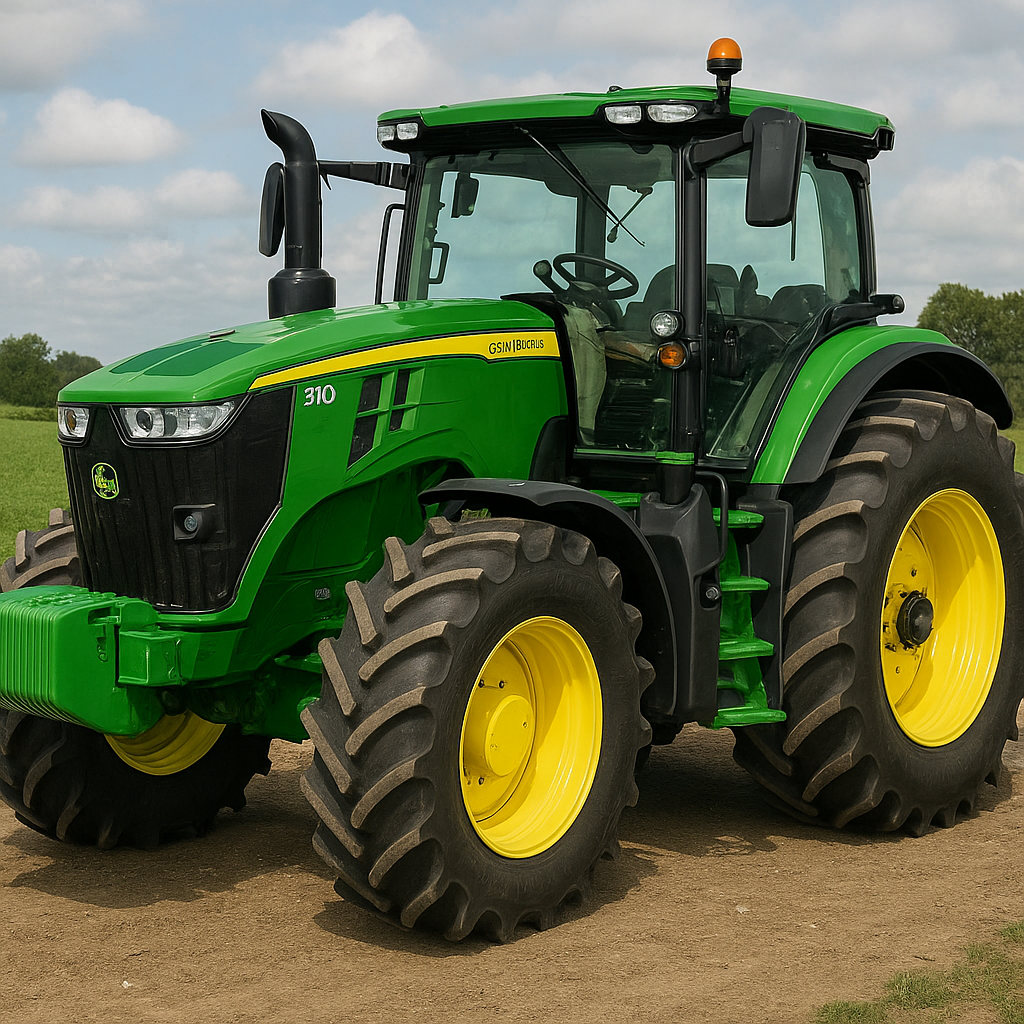
The John Deere 7R 310 is a versatile, high-performance agricultural tractor designed to bridge the gap between medium-heavy field work and demanding transport tasks. Built as part of John Deere’s 7R series, the 7R 310 combines robust mechanical components with advanced electronics and precision-agriculture systems to deliver consistent performance for modern farms and contracting businesses. This article examines the tractor’s technical characteristics, common applications, technological features, economics, operator environment, and practical guidance for buyers and users.
Design and technical overview
The John Deere 7R 310 is engineered around a balance of mechanical strength and electronic control. At its core sits a six-cylinder PowerTech engine delivering approximately 310 rated horsepower (about 231 kW), with torque and power curves optimized for pulling heavy implements and maintaining road transport speeds under load. The engine displacement is roughly 6.8 liters, and it complies with contemporary emissions regulations through a combination of exhaust aftertreatment components and engine-management strategies.
Transmission and drivetrain options are a major strength of the 7R family. Buyers commonly choose between the e23 PowerShift 23-speed transmission and John Deere’s Infinitely Variable Transmission (IVT), marketed as AutoPowr/IVT on some models. The e23 offers stepped ratios and efficient power transfer for steady-field work, while the IVT provides seamless speed changes, easy speed matching for headland turns, and improved fuel economy in variable-load operations. Both transmissions integrate with engine-control modules to deliver smooth power delivery and assist in long-term component longevity.
Hydraulics and hitch systems on the 7R 310 are designed to support large implements. Hydraulic flow options typically provide generous continuous flow to feed control valves, lift heavy three-point hitch loads and operate power-hungry implements such as large planters, cultivators, and mounting sprayers. Rear PTO speeds of 540/1000 rpm are standard or available, as is a front PTO for loader or mower work. The three-point hitch is robust, offering multiple hitch categories and lift capacities that allow use with a broad range of modern implements.
Braking, steering and soil-protection features are integrated with the drivetrain and hydraulics. The 7R 310 can be equipped with front-axle suspension and optional cab air-suspension or ActiveSeat systems to reduce operator fatigue. Axle configurations accommodate duals, triples, or narrow row-crop tires depending on the intended use, and weight distribution can be managed through ballast options and selectable front weights.
Applications and typical use cases
The 7R 310 is a multi-role tractor that suits both full-time farm operators and contractor fleets. Typical applications include:
- Tillage and primary cultivation: With sufficient drawbar pull and robust hydraulics, the 7R 310 handles large plows, discs, and cultivators used in medium-to-large acreage operations.
- Seeding and planting: When paired with high-capacity seed drills or planters, the 7R 310 supplies consistent forward speed and hydraulic control needed for precision seeding across wide widths.
- Spraying and liquid fertilizer application: The tractor’s horsepower and PTO options support large booms and tank systems, while electronics assist in section control and rate application through ISOBUS-compatible controllers.
- Baling and harvesting support: The 7R 310 is often used to pull large balers, tow trailers, and perform logistics tasks during peak harvest windows where sustained power and stability are essential.
- Loader and material handling: With a front linkage and optioned loader, the tractor can lift heavy palletized loads, manage feed, and move large bales.
- Transport and road work: The transmission choices and cab comfort make the 7R 310 suitable for long-distance field-to-field work and transport duties on public roads.
The model’s flexibility stems from configurable options—tire choice, ballast, front hitch and front PTO, and cab layout—so a single 7R 310 can be tailored to meet a wide range of seasonal demands. For larger-scale farms that rotate through seeding, tillage and harvesting seasons, the 7R 310 often represents a practical compromise between outright maximum horsepower and operational economy.
Precision agriculture and electronic systems
Modern 7R tractors, including the 310, are built to integrate advanced electronics and precision-agriculture tools. John Deere’s suite—AutoTrac guidance, JDLink telematics, GreenStar displays and ISOBUS compatibility—allows the tractor to function as the central platform for data-driven farming. Key capabilities include:
- AutoTrac GPS guidance for hands-free steering that reduces overlap, decreases operator fatigue and improves application efficiency.
- Section and rate control to automatically switch sprayer or implement sections on/off and vary application rates according to prescription maps, which reduces input costs and environmental impact.
- JDLink telematics for remote monitoring of machine health, location, fuel usage, and performance metrics—helpful for fleet management and preventative maintenance planning.
- ISOBUS and implement compatibility to ensure plug-and-play operation with many third-party implements, simplifying control and reducing cab complexity.
The integration of these systems yields measurable advantages: improved field efficiency (less overlap), reduced chemical and seed waste, and better documentation for regulatory compliance or grain contracting. For contracting operations and large farms, data collection and traceability add tangible value by enabling yield mapping and long-term planning.
Operator comfort, cab features and safety
Operator environment is an important consideration for tractors that spend long days in the field. The 7R 310 includes a comfortable, ergonomically laid-out cab with clear sightlines and user-friendly controls. Typical comfort and safety features include climate control, multi-adjustable seating, tilt-and-telescoping steering columns, and a noise-insulated cab shell.
Optional features that enhance the working day include ActiveSeat or air-suspension seats, premium sound systems, and high-intensity LED lighting packages for nighttime work. The cab often contains an easy-to-read touchscreen display that consolidates vehicle information, implement controls and guidance systems.
Safety elements include integrated rollover protection, robust braking systems, and visibility-enhancing mirrors and cameras. Electronic controls can incorporate automatic engine-management responses to prevent overheating or system overloads. When equipped with telematics, the tractor can transmit fault codes and diagnostics to service centers, helping to accelerate repairs and reduce downtime.
Fuel efficiency, operating costs and maintenance
Fuel efficiency and lifecycle cost are decisive factors for many buyers. The 7R 310 uses a combination of engine calibration, efficient transmissions and optional features like IVT and engine power management to optimize fuel use under variable loads. Operating costs are influenced by:
- Fuel consumption—varies with load, field conditions and transmission choice. IVT-equipped tractors tend to be more fuel-efficient in mixed duty cycles where speed changes are frequent.
- Maintenance intervals—regular oil, filter and coolant checks according to the manufacturer schedule preserve engine life and reliability.
- Serviceability—components are laid out for relatively straightforward access, and many operators value John Deere’s dealer network for parts availability and diagnostic support.
- Resale value—John Deere equipment frequently retains higher resale values relative to many competitors, driven by brand recognition and dealer support.
Routine maintenance items include engine oil and filter changes, fuel-filter replacement, air-filter inspection, hydraulic fluid checks, and greasing of moving components. The presence of telematics and onboard diagnostics helps reduce unscheduled downtime by flagging emerging issues before catastrophic failures occur. Economically, when comparing total cost of ownership, potential buyers should factor fuel, consumables, scheduled maintenance, insurance, and typical yearly utilization hours.
Market position and practical comparisons
The 7R 310 sits in a competitive segment of the tractor market—machines roughly in the 250–350 hp class. Its strengths are brand reputation, integrated precision-agriculture features, and the modular configuration options that allow buyers to tailor the tractor to work as a row-crop unit, a tillage powerhouse, or a transport-focused vehicle.
Compared with tractors from other manufacturers in the same class, the 7R typically offers:
- Deeper integration of telemetry and precision tools out of the factory
- Multiple transmission choices that cater to a range of operator preferences
- Strong dealer and service networks in many major agricultural regions
Choosing between models in this class often comes down to after-sales support, local dealer presence, specific implement compatibility, and personal preference for cab ergonomics and transmission feel.
Summary of specifications (typical values)
Specific values vary by model year and configuration, but typical specification highlights for a John Deere 7R 310 include:
- Engine: Six-cylinder PowerTech, approximately 6.8 L displacement
- Rated power: ~310 hp (≈231 kW)
- Transmissions available: e23 PowerShift (23-speed), IVT (Infinitely Variable)
- PTO: 540/1000 rpm options; front PTO available
- Hydraulics: high-capacity hydraulic pumps to support large implements; multiple SCV options
- Hitch: robust rear three-point hitch, suitable for large implements
- Cab: CommandView or similar comfortable cab with precision controls and display
Practical advice for buyers and operators
Pre-purchase checklist
- Verify the transmission choice and how it aligns with your operation (IVT for variable-speed tasks, e23 for steady pulling operations).
- Match hydraulic flow and remote control valve counts to your largest implements.
- Confirm PTO options—front PTO if you plan intensive loader or front-mounted implement work.
- Consider cab options that reduce operator fatigue during long shifts—ActiveSeat or air-suspension seats are valuable additions.
- Ask about telematics and data-service subscriptions; these can be vital for fleet management and warranty handling.
Operational tips
- Warm up engines properly in cold climates to reduce wear and improve fuel burn.
- Use recommended lubricants and adhere closely to service intervals noted in the operator manual.
- Calibrate guidance and implement controls after any change of tires, wheel spacing or gear ratios to maintain accuracy.
- Monitor tire pressures and wheel ballast to protect soil structure and ensure effective traction during field work.
- Use telematics data to analyze fuel trends and plan preventative service before failures occur.
Final remarks
The John Deere 7R 310 is a well-rounded tractor that appeals to full-time farmers, contractors and operations requiring robust power, modern electronics and flexible configuration options. It brings together traditional mechanical reliability and contemporary digital tools to support efficient, data-driven production. Whether used for deep tillage, precision seeding, large-scale spraying, or transport tasks, the 7R 310 remains a strong contender in the 300-horsepower class thanks to its blend of durability, operator comfort and integrated precision technologies.
For operators considering the 7R 310, the decision should weigh long-term support, total cost of ownership and the degree to which precision-agriculture systems will be used. When properly maintained and matched to implements, the 7R 310 can provide years of dependable service and be a central asset in modern farming operations.