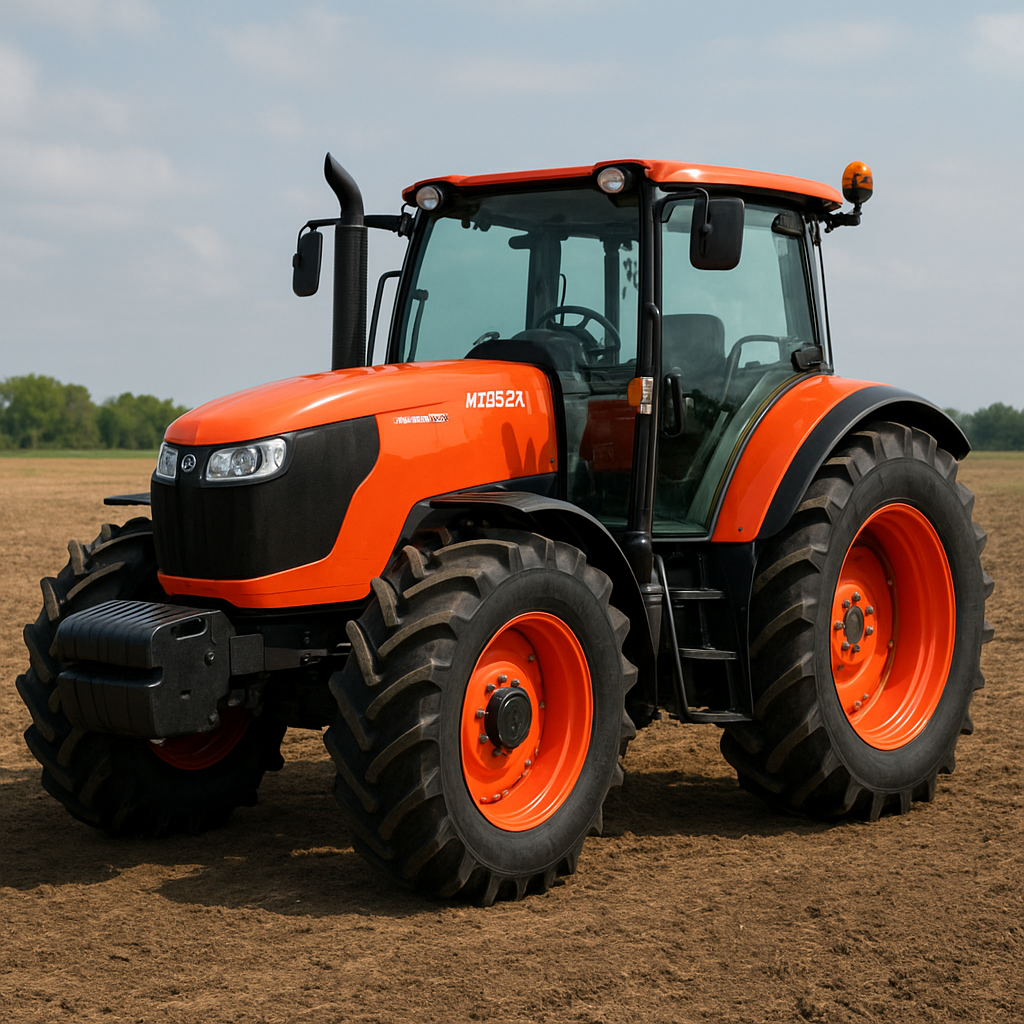
The Kubota M135GX III is a heavy-duty agricultural tractor that combines robust performance with modern ergonomics and versatility. Designed for demanding tasks on large farms, contract work and municipal services, it represents a class of machines meant to deliver reliable power, efficient operation and broad attachment compatibility. In this article you will find an overview of the machine’s design philosophy, practical applications, technical characteristics and ownership considerations — including approximate statistical data and guidance for operators and fleet managers.
Overview and design intent
The Kubota M135GX III is built for operators who need a workhorse that can handle a variety of jobs: deep ploughing, heavy tillage, loader work, transport and PTO-driven implements. From the outset, Kubota positioned this tractor to blend robust mechanical components with operator comfort and serviceability. The machine is engineered to deliver sustained power from its Kubota diesel engine and to provide the hydraulic capability required by modern implements.
Key design goals include durability in harsh operating conditions, simplicity of maintenance and a high level of adaptability. This adaptability is expressed in multiple transmission options, high-capacity hydraulics, and a heavy-duty three-point hitch and PTO layout that allow the tractor to accept a wide range of mounted and towed equipment. The “III” in the model name generally denotes the third generation or a series update, focusing on improved emissions, fuel economy and operator ergonomics compared with earlier versions.
Typical specifications and performance figures (approximate)
Below are typical figures associated with the M135GX III class. Exact numbers can vary by market, year of manufacture and optional configurations; use the values as a representative baseline for comparison and planning.
- Engine power: approximately 135 horsepower (continuous/rated at flywheel).
- Engine type: turbocharged diesel 4- or 6-cylinder, common rail or direct injection depending on production year.
- PTO: 540 / 1000 rpm selectable, with independent PTO option on many models.
- Hydraulic flow: typical total flow in the 80–120 L/min range with options for higher-flow pumps for loader and implement demand.
- Lift capacity at the rear linkage: approximately 4,000–5,000 kg (4–5 tonnes), depending on hitch and stabilizer options.
- Fuel tank capacity: commonly between 150–250 liters depending on configuration.
- Axles and drive: robust front and rear axles, standard four-wheel drive (4WD) with differential lock options for traction control.
- Weight: typical operating weight between 4,000–5,500 kg depending on ballast and attachments.
- Transmission: multiple options — from synchro-shuttle to fully powershift or power shuttle transmissions with many gears designed for optimum field and road speeds.
- Top road speed: often in the 30–40 km/h range with higher-speed gearbox options available for transport work.
Core systems explained
Engine and emissions
The engine of the M135GX III is optimized to balance high torque at low rpm and acceptable fuel consumption. Modern variants meet contemporary emission standards through turbocharging, charge air cooling and after-treatment systems if required by local regulations. This focus on emissions and combustion efficiency yields improved fuel economy and smoother power delivery under load.
Transmission and driveline
Transmission choices are a critical part of what makes this tractor versatile. Options typically span simple mechanical synchromesh boxes suited to durability and serviceability up to multi-range powershift or continuously variable transmissions that maximize operator convenience and productivity. The driveline includes heavy-duty clutch and differential components, with optional limited slip or locking differentials to increase traction in slippery or uneven terrain.
Hydraulics, hitch and PTO
Hydraulic capacity is a decisive factor for implements such as large seed drills, hydraulic rakes, balers and front loaders. The M135GX III class features high-flow hydraulic pumps and multiple remote valves to operate complex implement sequences. Rear linkage (three-point hitch) is designed for high lift capacity and precise draft control. The PTO is built to handle demanding, high-torque implements and is typically available in multiple speed settings.
Cab ergonomics and operator comfort
Operator comfort is a central consideration for machines in this segment because operators spend long hours in the cab. The M135GX III typically provides a spacious cab with excellent visibility, adjustable seating, heating and air conditioning, ergonomic control layouts and low-vibration design. These features reduce operator fatigue and increase productivity on long shifts.
Primary applications and practical uses
The Kubota M135GX III is a multi-purpose tractor commonly found in the following applications:
- Arable farming: primary and secondary tillage, sowing, crop establishment and cultivation on medium to large farms.
- Hay and forage: pulling large mowers, tedders, rakes and high-capacity balers, as well as silage trailers and forage harvest support tasks.
- Loader work: material handling, loading bulk materials, moving silage or feed, stacking bales — particularly when fitted with a front loader.
- Transport and logistics: moving trailers, tanker work and on-farm logistics where higher road speed and comfortable cabs add efficiency for long hauls.
- Contracting: heavy rotary tillage, deep ploughing and large implement towing for contractors who require reliable, high-power performance.
- Municipal and utility: snow clearing, street sweeping, forestry work and maintenance tasks (with dedicated attachments and protective equipment).
This broad applicability makes the machine attractive to diverse users: large-scale arable farms, dairy and mixed livestock operations requiring feed handling and bedding tasks, contractors who need a strong and reliable tractor for varied jobs, and municipalities that value multi-function capabilities.
Attachments and compatibility
One of the strengths of the M135GX III class is its ability to serve as a platform for a wide range of attachments. Common categories include:
- Front loaders (buckets, grapple forks, bale spears)
- Rear-mounted ploughs and multi-share cultivators
- Seeders, planters and precision drilling equipment
- Large square and round balers
- Slurry tankers and spreaders
- Rotary cutters, flail mowers and hedge trimmers for municipal operations
- Forestry winches, timber grapples and protective guards
Attachment compatibility is supported by standardized linkage geometry, electronic control options (in higher-spec machines), high-capacity hydraulics and strong PTO drives. This allows operators to switch between tasks quickly and maintain productivity across seasonal workflows.
Operational considerations and best practices
Fuel and economy
To optimize fuel consumption, operators should match engine rpm and gear selection to the implement’s load demands, use appropriate transmission modes, and maintain clean air and fuel filters. Modern engines on tractors like the M135GX III generally reach their most efficient specific fuel consumption at moderate load and rpm; running at excessively high rpm without load reduces efficiency.
Maintenance and serviceability
Regular maintenance is essential for durability:
- Daily checks: engine oil, coolant, fuel level, tyre pressure and visible leaks.
- Service intervals: follow manufacturer recommendations for oil and filter changes, hydraulic fluid checks and greasing pivot points.
- Cooling system: keep the radiator and intercooler clear of debris to prevent overheating during heavy work.
- PTO and linkage: inspect for wear and ensure secure attachment points and correct PTO shaft shielding for safety.
Safety
Key safety practices include using rollover protective structures (ROPS) or fully enclosed cabs, wearing seatbelts, ensuring PTO shields are in place, and employing proper ballasting to maintain stability with front loaders or heavy rear attachments. Operators should also be trained in hitching procedures and emergency shutdown.
Economic and ownership considerations
Purchasing a tractor like the M135GX III is a substantial investment. Buyers should consider the following economic factors:
- Total cost of ownership: purchase price, financing terms, predictable maintenance costs, depreciation and expected resale value.
- Utilization rate: tractors of this size are most cost-effective when used extensively — fitting the needs of larger farms, contractors or mixed-use operations.
- Resale and brand support: Kubota typically has a strong dealer network which supports parts availability and resale value in many markets.
- Attachment and accessory costs: a farm’s productivity is also a function of associated implements — front loaders, hydraulic couplers, GPS/autosteer kits and extra remotes add capability but increase initial expenses.
Consider adding telematics or basic fleet-tracking tools to monitor engine hours, fuel use and service intervals. This can reduce downtime and optimize scheduling for maintenance and work assignments.
Comparisons and market position
Tractors in the 120–150 hp class are offered by multiple manufacturers, and the M135GX III competes on durability, operator comfort and the breadth of optional configurations. Key comparison points:
- Reliability: Kubota’s reputation for robust diesel engines and solid drivetrains is a selling point against competitors.
- Comfort and ergonomics: modern cabs with adjustable controls often match or exceed competitor offerings in this class.
- Service network: availability of parts and local dealer support is crucial — Kubota has one of the broader service footprints in many regions.
- Price to capability: tractors in this segment must balance acquisition cost with long-term operating expenses; Kubota often positions its models competitively.
Environmental and regulatory aspects
Tractors evolve to meet progressively stricter emission standards (Tier/Stage regulations). The M135GX III era machines were designed to meet the regulations in force at the time of manufacture, using a combination of engine tuning, turbocharging and, where applicable, exhaust after-treatment systems. Users should check local emissions requirements when purchasing a used tractor and consider that retrofits or specific maintenance may be necessary to remain compliant in regulated zones.
Where the M135GX III shines
This tractor class is particularly effective when:
- Working long hours with heavy implements that demand consistent power and hydraulic flow.
- Performing a wide range of tasks across seasons — tillage in spring, planting, transport and harvest work in summer and autumn, and material handling in winter.
- Operating in mixed-use enterprises where a single, versatile machine reduces the need for multiple smaller tractors.
- Contractors require a dependable, serviceable machine that holds value and can be quickly reconfigured for different jobs.
Buying advice and selection checklist
If you’re considering a Kubota M135GX III (new or used), use this checklist to guide evaluation:
- Confirm engine horsepower rating and service history; check for signs of overheating or oil smoke under load.
- Inspect the transmission for smooth shifting and absence of clutch slippage.
- Test hydraulic circuit pressure and flow, particularly if the tractor will run heavy loaders or hydraulic implements.
- Examine the structural integrity of the frame and loader mounts for cracks or repairs.
- Verify PTO operation and shaft condition; check for unusual vibration under PTO load.
- Look into dealer support and parts lead times in your region.
- Assess cab comfort and control ergonomics for operator suitability on long shifts.
Maintenance planning and tips
A planned maintenance schedule preserves value and reduces downtime:
- Keep a log of operating hours, services performed and any repairs.
- Replace filtration elements on schedule and track fluid condition for signs of contamination.
- Use genuine or high-quality aftermarket parts for critical systems such as the fuel injection and hydraulic components.
- Ensure tires and ballast are correct for your primary tasks — correct tyre choice optimizes traction and reduces soil compaction.
- Consider seasonal maintenance prior to peak seasons: test electrical systems, top up coolant and replace any worn hoses or belts.
Final notes on suitability
The Kubota M135GX III is best suited to operators who need a robust, multi-purpose tractor in the mid-high power band. Its combination of strong diesel power, capable hydraulics and a wide range of available options makes it a practical choice for large farms, contractors and municipal users. While final selection should be based on a careful evaluation of work profiles, budget and local dealer support, the M135GX III class represents a well-balanced package for those seeking durability, versatility and comfort in a single machine.
In summary, when matched to its intended uses and properly maintained, the Kubota M135GX III provides dependable performance, flexibility across agricultural and utility tasks, and a cost profile that rewards heavy utilization and attentive ownership.