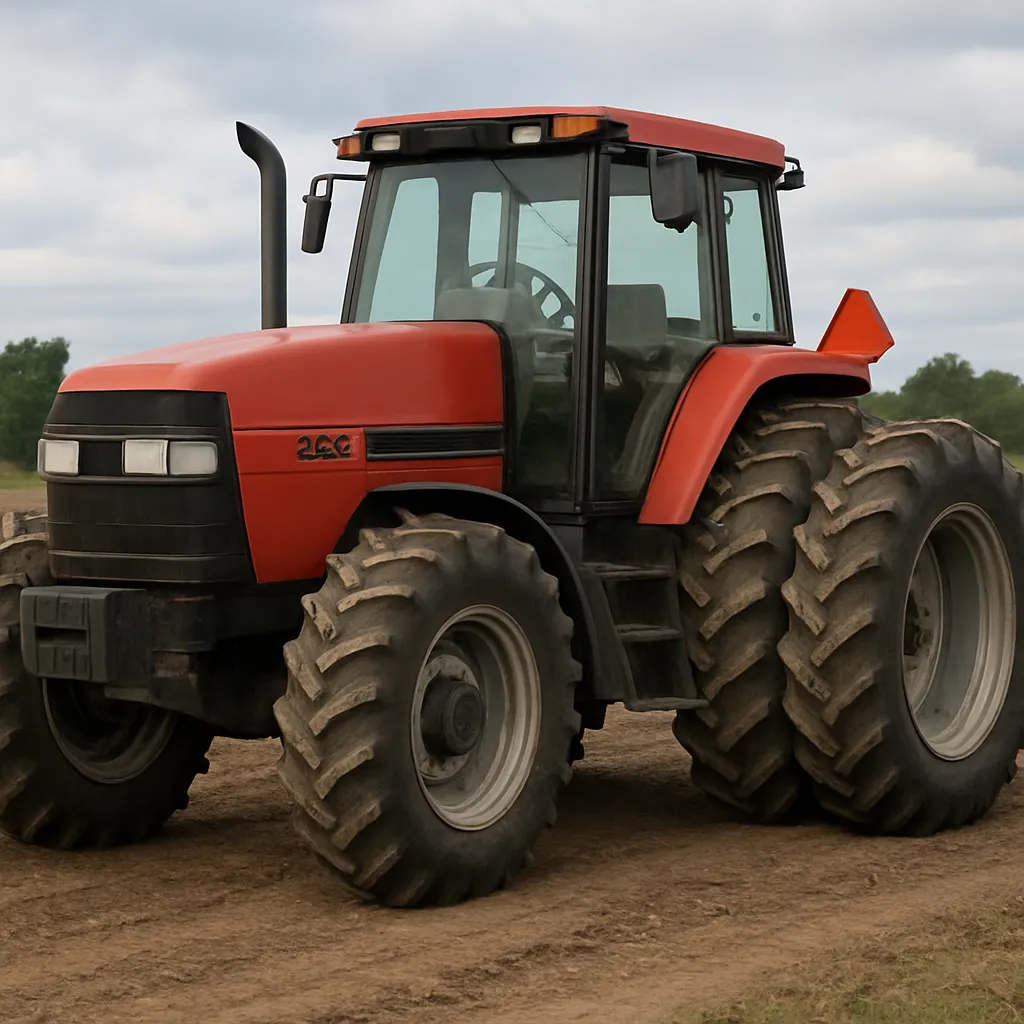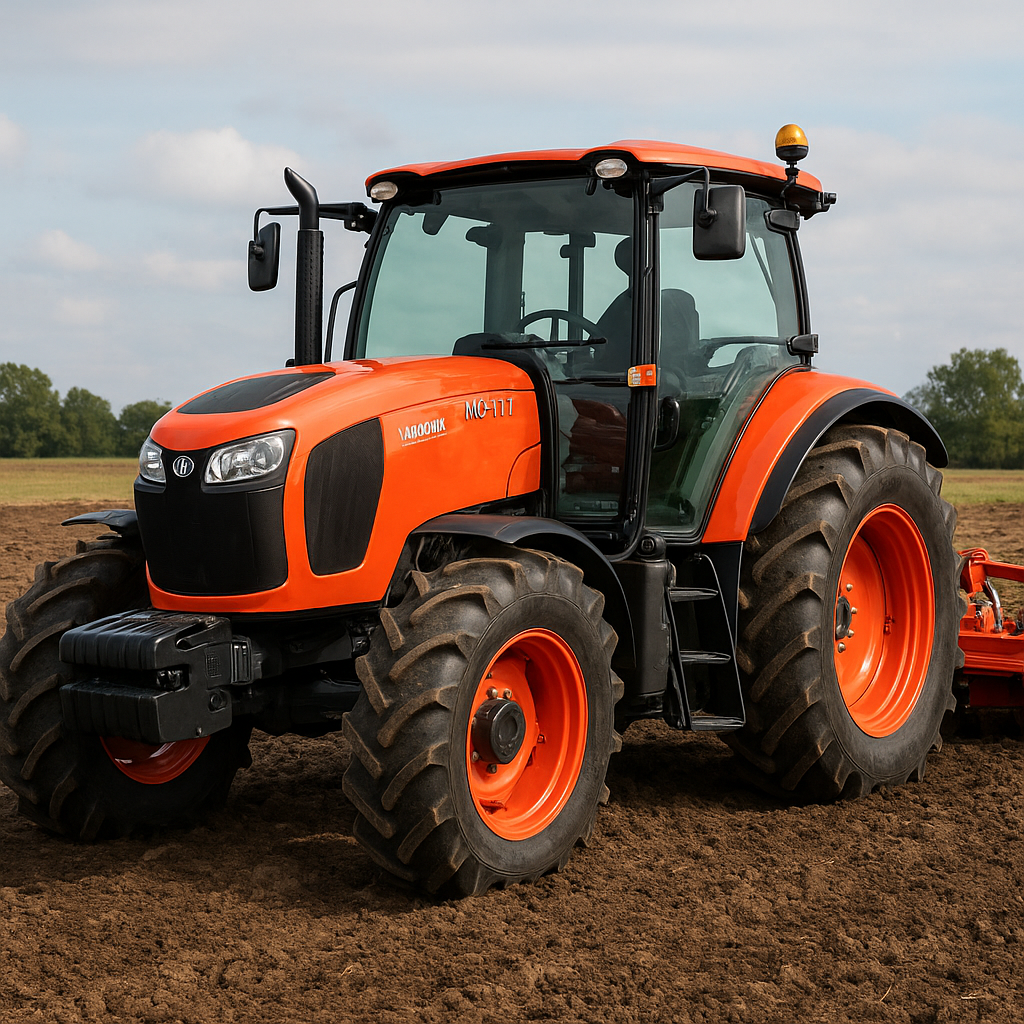
The Kubota M6-111 is a versatile mid-size agricultural tractor that combines modern engine technology, operator comfort and flexible hydraulics to meet the demands of mixed farms, livestock operations and light to medium contracting work. In this article you will find an overview of the tractor’s main features, typical applications, technical highlights and practical considerations for buyers and operators. Where available, typical specifications and performance figures are presented as approximate values to help understand the machine’s capabilities.
Design and technical specifications
The Kubota M6-111 is engineered as part of Kubota’s M6 series — a range intended to balance power, efficiency and comfort in a compact footprint. The machine’s architecture focuses on delivering reliable mechanical systems while offering modern electronic controls and optional features for specific tasks.
Engine and powertrain
- Engine: The tractor typically uses a 4-cylinder, turbocharged diesel engine with an approximate displacement of 3.8 liters. The powerplant is designed for strong mid-range torque and compliance with contemporary emissions standards.
- Rated power: Around 111 hp (ISO) at the flywheel. Peak or maximum engine output may be marginally higher depending on the configuration and any engine boost/torque management.
- Cooling and emissions: Modern versions include after-treatment systems appropriate for Stage IV / Tier 4 Final emissions levels in many markets, improving environmental performance without sacrificing torque.
- Transmission: Kubota often offers a variety of transmission choices on M6-class tractors. The notable option is the KVT (Kubota Variable Transmission), a smooth continuously variable-type system well suited for loader work and field operations that require frequent speed variation. Mechanical transmissions and powershift options are typically available as alternatives.
Driveline, PTO and hydraulics
- PTO: Commonly equipped with selectable PTO speeds such as 540/540E and optional 1000 rpm variants. The PTO layout and control are engineered for safe, easy engagement for implements like mowers, balers and slurry pumps.
- Hydraulics: Open-centre or closed-centre hydraulic systems are available depending on spec. Typical pump flows for this class of tractor range from 80 to 120 L/min (approximate), offering sufficient flow for demanding implements and quick loader cycles. Load-sensing options may be offered that optimize fuel use and hydraulic responsiveness.
- Three-point hitch: A robust rear three-point hitch with electronic hitch control is standard; lifting capacities commonly rated in the range of 4,500–6,500 kg at the lower link ends (approximate), enabling heavy implements to be used safely.
Chassis, axles and mobility
- Kerb weight: Typical operating mass for the M6-111 class is approximately 4,000–5,000 kg, depending on options such as front linkage, ballast and cab features.
- Front axle: A choice of rigid or suspended front axle configurations may be offered; front suspension improves comfort and reduces operator fatigue during road transport or loader work.
- Speed: Road speeds up to around 40 km/h are common with appropriate gearing and tire choices, making transport between fields efficient.
- Tire and track options: The tractor accepts a variety of agricultural tire sizes and can be fitted with ballast or duals for improved traction and flotation when required.
Applications and typical uses
The Kubota M6-111 finds a natural place on farms and small contracting fleets where versatility and operator comfort matter. Its power class and feature set enable a wide range of duties across many agricultural and light industrial tasks.
- Arable farming: Suitable for medium-sized ploughing, seedbed preparation, power harrowing and precision seeding when coupled with appropriate implements. The combination of torque and available hydraulic flow makes it competent for both soil-engaging tools and mounted planters.
- Hay and forage work: The tractor is often used for mowing, tedding, raking, baling (large round/square balers), and silage wagon operations. Reliable PTO performance and lift capacity are advantages here.
- Dairy and livestock operations: On livestock farms the M6-111 can handle feed-mixing wagons, front loaders for bedding and feed handling, manure spreading and other daily tasks. Good visibility and loader options improve efficiency in yard work.
- Loader and material handling: With the KVT or smooth mechanical transmission, the tractor is well suited for loader duties — stacking bales, moving pallets, emptying trailers — offering fine speed control and responsiveness.
- Contracting and municipal tasks: On small contracting jobs, municipal mowing, light excavation with backhoe or sweeping attachments, the tractor’s mid-range power and optional front linkage/valving make it a flexible choice.
- Specialist uses: Vineyard, orchard and specialty crop operators may value narrower configurations, remapped hydraulics and good manoeuvrability for tight operations. While the M6-111 is not an ultra-narrow specialty tractor, certain configurations can be adapted to such roles.
Performance, efficiency and environmental features
Manufacturers of mid-range tractors like the Kubota M6-111 emphasize a balance between performance and fuel economy. Improvements in engine management, transmission efficiency and hydraulic control contribute to lower operating costs and reduced emissions.
Fuel economy and emissions
- Engine efficiency: The turbocharged diesel engine with modern injection and after-treatment typically provides strong torque at low-to-mid RPM, enabling operators to perform many tasks at lower engine speeds and therefore lower fuel consumption.
- AdBlue/after-treatment: Where Stage IV / Tier 4 Final compliance is required, exhaust after-treatment systems such as diesel oxidation catalysts (DOC) and selective catalytic reduction (SCR) with urea dosing (AdBlue) may be incorporated, which reduce NOx emissions while maintaining fuel efficiency.
- Typical consumption: Actual fuel consumption depends heavily on the task. For field operations such as ploughing, typical consumption could range from roughly 10–25 L/h depending on load, soil conditions and implements. These figures are indicative and should be validated against real-world use.
Workrate and productivity
- Hydraulic responsiveness and PTO stability contribute to consistent implement performance — for example, maintaining baler pickup speeds or stable cutterbar rotation in mowers.
- KVT transmission models offer seamless speed adjustment and reduced downtime for gear changes, increasing effective hourly productivity particularly on mixed tasks where frequent speed changes are needed.
- Operation on slopes and in soft soils is supported by good weight distribution and optioned ballast configurations, improving traction and reducing wheel slip.
Comfort, ergonomics and operator aids
Long work days require attention to operator comfort, and the M6-111 typically includes a well-appointed cab with ergonomic controls that reduce fatigue and improve safety.
- Cab design: Spacious cab with good all-around visibility, climate control (heating and air conditioning), adjustable suspension seat and low noise levels for productive and comfortable working hours.
- Controls: Intuitive layout with electronic joystick or multi-function lever for loader operation, easy-to-reach PTO and hitch buttons, and configurable hydraulic spool controls for efficient implement handling.
- Display and telematics: Many versions include a multi-function monitor showing engine and transmission parameters, optional telematics for fleet monitoring and maintenance scheduling help reduce downtime.
- Lighting and visibility: High-output LED or halogen lights enhance early-morning or night-time operations, and optional rear-view camera systems improve safety when reversing or handling loads.
Maintenance, durability and total cost of ownership
Reliability and low maintenance contribute significantly to the total cost of ownership for a tractor. The Kubota M6-111 is designed with serviceability and durable components in mind.
- Routine maintenance: Easy-access service points such as ground-level filters, dipsticks, and grouped daily check points reduce time for daily and periodic servicing. Manufacturer-recommended service intervals should be followed for oil, filters and fuel system maintenance to maximize lifespan.
- Durability: Heavy-duty axles, reinforced hitch components and robust chassis construction are typical to handle repeated heavy implement use.
- Warranty and dealer support: Kubota’s global dealer network generally provides parts availability and after-sales support; warranty packages vary by market and configuration and should be checked at purchase.
- Resale value: Mid-range Kubota tractors often hold good resale value due to brand reputation, service network and proven durability, which helps total cost calculations over the machine’s life.
Attachments, implement compatibility and customisation
The M6-111’s modular approach allows operators to customise the tractor for specific farm systems or contracting tasks.
- Front loaders: Common loader models mount quickly and provide excellent lift and breakout force for material handling. Compatibility with quick-attach systems reduces swap times between tasks.
- Rear implements: Ploughs, cultivators, seed drills, planters, sprayers, mowers and balers are all standard implement partners for this power class.
- Hydraulic options: Multiple spool valves, flow-sharing hydraulics and electronic control of rear linkage make hydraulic implement integration straightforward.
- Optional extras: Choices often include front linkage and PTO, front weights, cab suspension, enhanced hydraulics, ISOBUS compatibility, and telematics packages for remote monitoring and diagnostics.
Market context and statistical overview
Understanding where the M6-111 sits in a market helps potential buyers choose the right tractor for their operations. The M6 segment competes strongly in the 90–130 hp class — a popular bracket for farms that require versatile capability without the cost or size of large tractors.
- Power segment: The 100–120 hp range is one of the most sought-after categories for general farming use, offering a compromise between fuel economy and implement capability. The M6-111 fits exactly into this niche with ~111 hp.
- Adoption and usage: Tractors in this class see the highest diversity of tasks — from field work to yard duties — and are commonly the primary tractor on many mixed farms. The flexibility of transmission options (from mechanical to KVT) broadens their usability.
- Typical ownership profile: Owners of M6-class machines are often mid-sized farm operations, contractors who require mobility between jobs, and specialist users who need reliable power with modern comfort features.
- Operational economics: Comparative studies and user reports suggest that modern mid-range tractors equipped with variable transmissions and efficient engines can reduce fuel costs per hectare, especially when matched correctly to implements and work profiles.
Buying considerations and practical advice
If you are considering purchasing a Kubota M6-111, or a tractor in the same class, here are practical points to evaluate before making the investment.
- Match power to implements: Make sure the rated PTO and hydraulic capacities are sufficient for your heaviest implements. Oversizing or undersizing can reduce efficiency and lifespan.
- Transmission choice: For operations with frequent loader work or variable-speed tasks, consider KVT or another continuously variable option. For simpler, predictable tasks a mechanical or powershift transmission may be more cost-effective.
- Check lift and hydraulic flow: Confirm that the rear linkage lift capacity and hydraulic flow meet your implement requirements, especially for large seed drills, slurry pumps or heavy front attachments.
- Cab and ergonomics: If long hours are expected, prioritise cab comfort, seat suspension and sound insulation. Visibility and easy access to controls will improve safety and productivity.
- After-sales and parts: Evaluate the dealer network strength in your region, parts availability and service plans. A strong local dealer makes maintenance and urgent repairs simpler.
- Test drive: Always request a demonstration under load to assess braking, steering, transmission feel, PTO smoothness and hydraulic responsiveness before purchase.
Conclusion
The Kubota M6-111 is a compelling option in the mid-power tractor category, offering a balance of power, efficiency and operator-friendly features. Its versatility across fieldwork, livestock duties and loader applications makes it suitable for many farm types and small contracting operations. When evaluating this model, focus on matching transmission, hydraulic flow and PTO capabilities to your implements and workflow, and check the availability of dealer support and optional features that matter most to your operation. With proper specification and maintenance, tractors like the M6-111 deliver productive, reliable service for seasons to come.