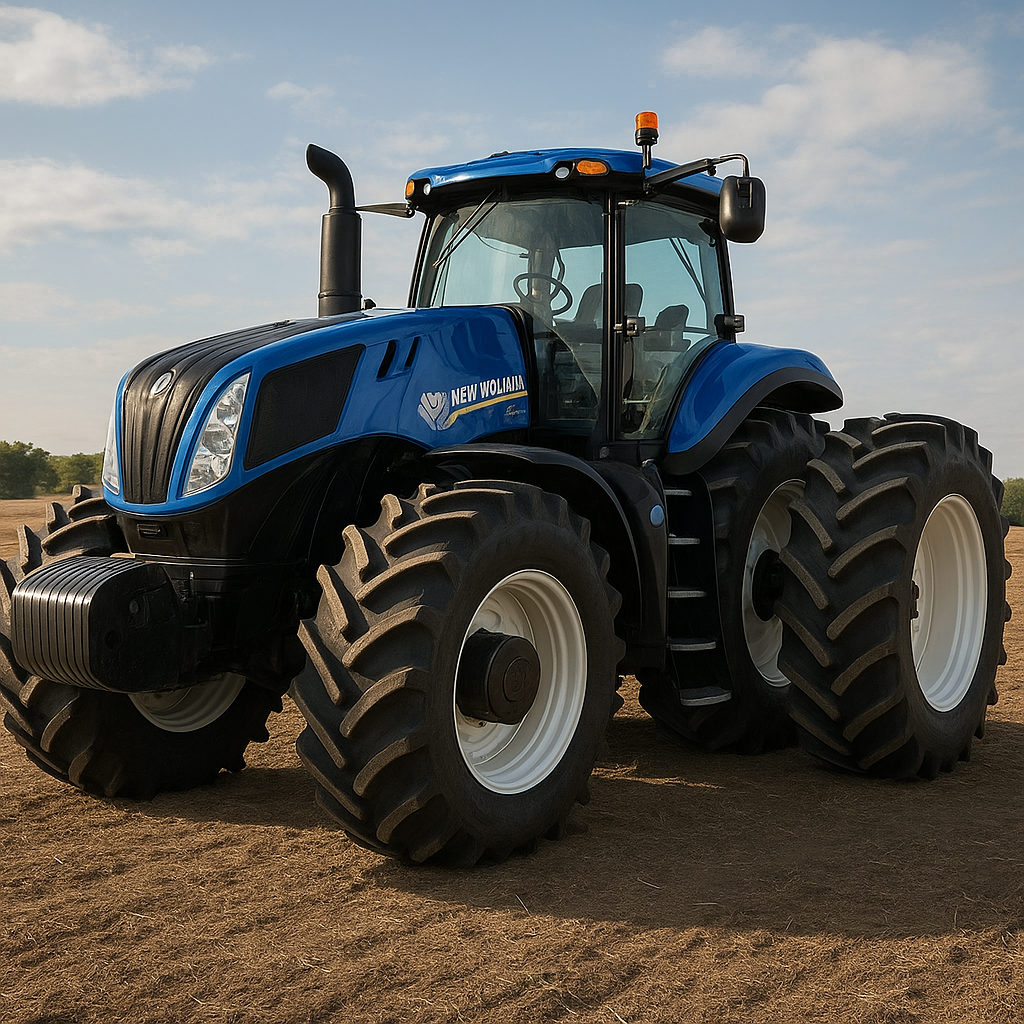
The New Holland T9.700 is a member of New Holland Agriculture’s lineup of large, high-horsepower tractors designed for heavy-duty fieldwork on large farms, contractors, and operations requiring maximum drawbar power. Combining modern engine technology, robust drivetrains, advanced hydraulics and operator-focused cab features, the T9 series targets tasks such as deep tillage, primary cultivation, heavy seeding and high-capacity transport. This article explores the machine’s engineering, typical applications, operator environment, maintenance considerations, and how it performs in real-world conditions.
Design and engineering highlights
The T9 family is built around the idea of delivering sustained, reliable power for long hours in challenging conditions. At its core the T9.700 is engineered for heavy draft work, with a strong frame, reinforced hitch points and powerful driveline components designed to transfer engine output to the ground efficiently.
Engine and emissions technology
- New Holland typically equips large T9 models with high-displacement, turbocharged diesel engines from FPT Industrial (Fiat Powertrain). These engines prioritize torque delivery at low engine speeds to move large implements with steady performance.
- Emissions control systems used in recent versions rely on selective catalytic reduction (SCR) and optimized fuel management to meet modern emissions standards while retaining fuel efficiency and reliability.
- Engine calibration emphasizes broad torque curves and low-end pulling ability, which helps minimize gear changes and maximize field productivity.
Transmission and traction options
- The T9 series offers transmissions designed for heavy-duty agricultural use—ranging from advanced powershift setups to continuously variable-type solutions in some configurations—to provide a wide range of speeds and smooth power delivery under load.
- Front and rear axles, differential locks and optional ballast packages allow operators to tailor traction for soil and implement demands. Many operators choose tracked undercarriages for improved flotation and traction on large-acreage farms.
- Traction systems in this class commonly integrate automatic slip control and traction management to maximize drawbar efficiency and minimize soil compaction.
Hydraulics, PTO and hitch
To match the tractor’s mechanical strength, hydraulic systems on the T9 are sized to support large multi-function implements. Typical features include high-flow hydraulic pumps, multiple remote spool valves, and strong three-point hitch components. PTO options and robust hitch capacity enable a wide selection of primary tillage, seeding and specialty implements.
Typical applications and where the T9.700 excels
The T9.700 is designed for large-scale operations and tasks that demand continuous, heavy pulling power. Its principal areas of application include:
- Primary tillage — pulling large ploughs, cultivators and discs across expansive fields, where the combination of traction, torque and stability keeps forward progress steady.
- Seeding and drilling — handling very wide seed bars or air drills, reducing the number of passes needed per field and improving efficiency on large farms.
- Heavy transport — moving high-capacity trailers and tankers at farms and between sites, benefitting from the tractor’s torque and transmission gearing.
- Specialist implements — powering large sprayers, balers when used in tandem with power carts, and other high-capacity farm machinery.
- Land reclamation and contractor work — supporting earthmoving or contract-based agricultural services where robust uptime and durable components are essential.
Operators on expansive grain, cotton, sugarcane and mixed farms find models like the T9.700 especially useful because they reduce the need for multiple smaller tractors by providing a single platform that can handle major primary and secondary field operations.
Operator environment and controls
Long hours in the field demand a comfortable, well-organized cab. New Holland places emphasis on operator ergonomics, visibility and control simplicity to reduce fatigue and maintain focus.
Cab comfort and ergonomics
- Spacious cabs with suspended platforms and seats that reduce vibration and jarring from rough fields.
- Intuitive control layouts, often featuring adjustable armrests, multifunction joysticks and touchscreen displays to manage tractor settings, guidance and implement controls.
- High-quality climate control and sound insulation so operators can sustain productivity during long shifts.
Technology and guidance integration
Large tractors like the T9.700 are often equipped with factory or dealer-installed precision farming systems. Typical integrations include:
- GPS-based auto-steer and section control for seeders and sprayers.
- Telematics and remote monitoring for fleet management—allowing owners to track hours, fuel use and machine health in real time.
- Onboard diagnostics and adjustable performance settings that help match engine and transmission behavior to the implement and soil conditions.
Performance, fuel economy and statistics
When evaluating a tractor of this size, buyers consider horsepower, torque, hydraulic capacity and overall efficiency. Below are general, indicative figures that reflect the class and typical configurations for New Holland’s top-end eight- to nine-series tractors. Exact values vary by year, emission package and optional equipment; always consult factory or dealer specifications for precise numbers on a particular machine.
- Horsepower: Models in the T9 family can reach very high power ratings; the “700” in the T9.700 designation denotes a machine in the roughly 600–700+ mechanical horsepower range at peak output, depending on boost and rated settings.
- Torque: Peak torque figures for tractors in this segment are engineered to be very high at low RPMs to deliver sustained pull—commonly in the multiple thousands of Newton-meters—supporting heavy draft work without frequent downshifting.
- Hydraulic flow: High-flow hydraulic systems often provide several hundred liters per minute (L/min) of pump capacity in total, enough to operate multiple remote valves and implement functions simultaneously.
- PTO: PTO capacity is sized to match implements; front and rear PTO offerings and high-rated output help when running large driven equipment.
- Weight: Operating weights for large tractors can vary widely with ballast and configuration; machines like the T9.700 typically fall into a class where operating weights are several tonnes (metric tons) higher than medium tractors, improving traction but affecting transport logistics.
- Fuel efficiency: Large engines are engineered to operate at optimal load factors; when matched correctly to implements and field tasks, specific fuel consumption can be competitive, but absolute fuel use is of course high in proportion to output. Telemetry and engine maps can optimize consumption for the task at hand.
Real-world performance depends heavily on correct implement matching, tire or track choice, field conditions and the operator’s ability to use electronic controls and guidance to maintain ideal operating points.
Maintenance, serviceability and lifecycle costs
Heavy tractors are capital investments where lifecycle cost management is as important as purchase price. The T9 platform is designed with service accessibility and long service intervals in mind to reduce downtime and ownership costs.
- Routine maintenance items—oil, filters, belts and coolant—are placed for accessible service checks, and many systems include extended service intervals when properly maintained.
- Advanced onboard diagnostics help technicians quickly identify and solve issues, and telematics can warn of developing faults before they cause unscheduled downtime.
- Because the tractor class uses large, durable components, rebuild and parts availability from dealer networks is important; strong aftermarket and OEM support can significantly extend productive life.
Durability and common wear points
Frequent heavy draft work places stress on axles, final drives, hitch components and hydraulic circuits. Proactive inspection of seals, hoses and bearings, and managing implement loads to avoid over-stressing the drivetrain, will improve component life. Operators typically manage wear through balanced tire/track selection, correct ballast and scheduled servicing—practices that reduce long-term repair costs.
Comparisons and market position
In the high-horsepower sector, the T9.700 competes with flagship models from other global manufacturers. Buyers consider several factors when choosing between brands and models:
- Power-to-weight and drawbar performance — the tractor that converts engine output into field work most efficiently can reduce pass counts and fuel per hectare.
- Dealer support and parts availability — for machines used intensively, a strong service network reduces downtime and total cost of ownership.
- Precision farming and data tools — compatibility with guidance, telematics and farm management solutions is often a deciding factor for large operations.
- Operator comfort and ease of use — reducing operator fatigue and simplifying complex machine and implement controls improves productivity.
New Holland’s strengths historically include solid engine and hydraulic platforms, a reputation for operator-friendly cabs, and integrated precision agriculture tools under the PLM (Precision Land Management) brand—assets that appeal to large-scale farmers and contractors.
Buying considerations and options
When considering a tractor of this size, a prospective buyer should evaluate:
- Task profile: Identify primary operations (ploughing, seeding, hauling) and ensure the tractor’s PTO, hydraulic and hitch specs match implement needs.
- Power management: Choose between factory configurations that match engine horsepower and transmission types to the intended work profile—over-spec’ing can waste fuel; under-spec’ing reduces productivity.
- Traction system: Decide between wide tires, duals, or tracks based on soil type, climate and compaction concerns. Tracks improve flotation and reduce slip in many large-acreage applications.
- Precision tech: Confirm availability of GPS guidance, section control, and telematics packages to help lower input costs and improve long-term records for farm management.
- Transport logistics: Consider local regulations for road transport, turning radius, and service access when choosing wheelbase, width and ballast.
Practical tips for operation
To get the most from a T9-class tractor, operators and managers typically follow these best practices:
- Match implement width and weight to the tractor’s drawbar and hitch ratings.
- Use precision guidance to keep the tractor operating at optimal load and reduce overlap—this saves fuel, time and reduces soil compaction from unnecessary passes.
- Monitor telemetry and engine load; adjust engine maps and transmission settings to maintain efficient RPM ranges during long operations.
- Plan maintenance intervals based on hours and load patterns rather than calendar time alone, ensuring components are serviced before failures occur.
- Train operators to understand advanced drivetrain and implement controls so they can adapt settings on the fly for changing field conditions.
Environmental and economic considerations
Large tractors are powerful workhorses but come with notable fuel use and emissions. Modern engines and aftertreatment systems are designed to minimize these impacts. From an economic perspective, the ability of a single high-horsepower tractor to replace multiple smaller tractors for large-field operations can reduce complexity, labor and some equipment costs—though initial capital outlay is significant.
Decisions about fleet composition should weigh fuel and maintenance costs, the value of reduced field passes through wide implements and precision technology gains, and residual values in the secondary market. Effective telematics and record-keeping can reveal operational efficiencies and justify the investment through measured gains in hectares covered per hour and fuel usage per hectare.
Summary and final thoughts
The New Holland T9.700 sits at the top end of agricultural tractor capability, intended for customers who require sustained high output for very large fields or heavy contractor work. Its combination of horsepower, robust driveline components, advanced hydraulics and operator-centric cab design makes it suitable for demanding tasks like primary tillage, large-scale seeding and heavy transport. While initial costs and fuel use are substantial, modern engine and management systems, when used with precision farming tools, can deliver efficiencies that justify the investment for large-acreage operations.
Choosing a machine in this class means matching the tractor’s capabilities to the farm’s implement inventory, soil conditions and operational plan. With correct specification and maintenance, a T9-class tractor can be a productive cornerstone of a modern large-scale agriculture operation.