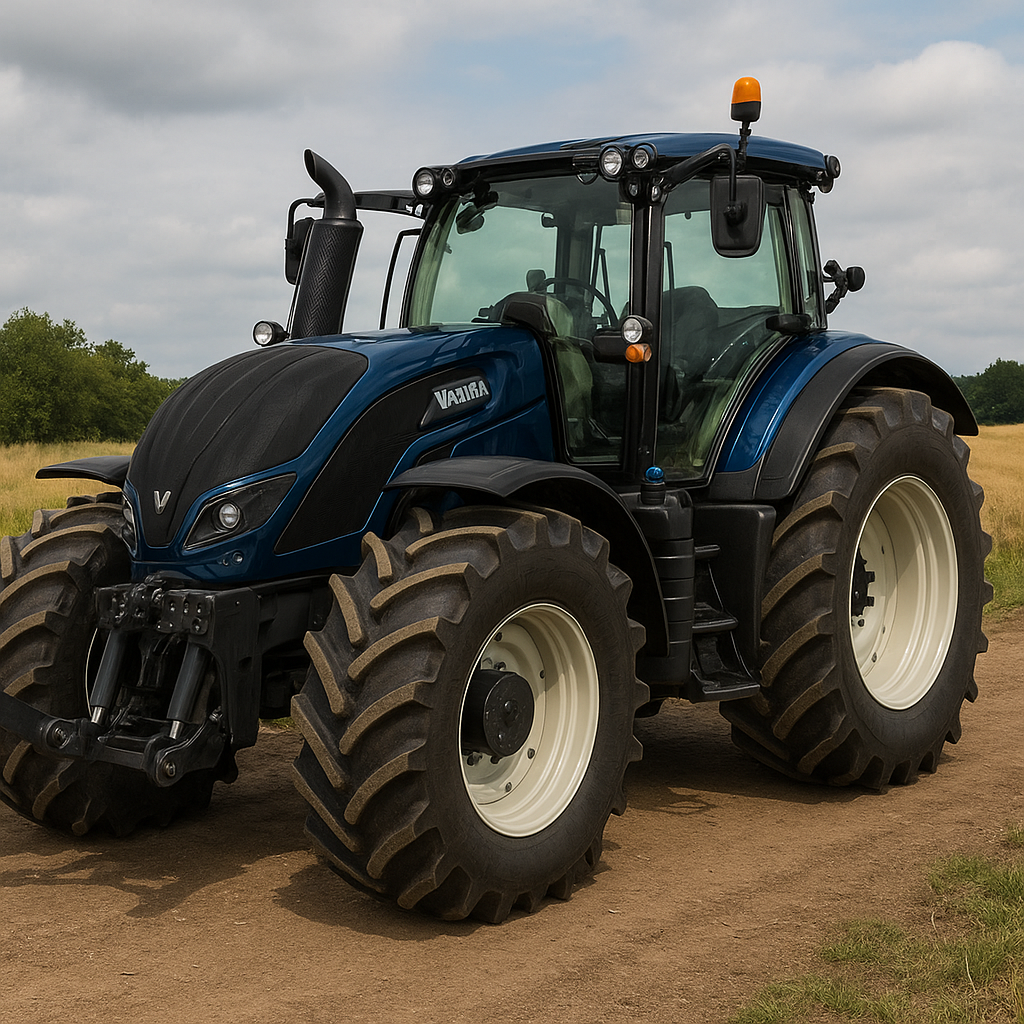
The Valtra T234 is a model within Valtra’s lineup that represents the brand’s focus on combining robust agricultural performance with modern technology and user-focused customization. Used in a wide variety of operations, the T234 is appreciated for its balance of power, reliability and adaptability. This article explores the key features, typical applications, technical aspects and practical considerations for owners and operators of the Valtra T234, offering context, examples and useful data where available.
Design and engineering philosophy
Valtra’s design approach emphasizes modularity, durability and operator-driven customization. The T-series tractors are built to cover a broad set of tasks across arable farming, livestock operations, forestry, municipal services and contractor work. The T234 is engineered to be a mid- to high-power workhorse that can be configured to match agricultural implements, loader tasks or specialized applications.
At the heart of the T234’s philosophy are three interrelated objectives:
- Reliability — heavy-duty components and simplified service access intended to reduce downtime;
- Versatility — a platform that accepts a wide range of PTO driven implements, hydraulics and loader packages;
- Operator-centric design — cabs, controls and ergonomics tuned for long hours and varied tasks.
Valtra is part of the AGCO group, which provides access to shared technologies, engines and precision farming systems. The T234 benefits from that ecosystem while maintaining Valtra’s particular emphasis on customization through programs such as Valtra Unlimited, which allows buyers to order factory-fitted special solutions and trims tailored to specific needs.
Typical applications and practical versatility
The T234 is suited to many farm and off-farm tasks thanks to its combination of power, hydraulic capacity and PTO capability. Typical areas of use include:
- Arable farming: primary tillage, seedbed preparation, seeding, fertilization and large-implement field work where consistent horsepower and traction are needed.
- Livestock farming: feed mixing and distribution, bedding handling, slurry application and bale handling with front loaders.
- Loader and material handling: heavy front loader duties, pallet and bale handling on mixed farms and contractors.
- Forestry and municipal tasks: roadside mowing, brush clearing, and operations that need robust torque and protective packages.
- Contracting and specialty work: contractors often choose models like the T234 for reliability and adaptability to a wide range of rented implements.
The machine’s versatility is reinforced by optional features such as different gearbox choices (powershift, CVT/direct-drive), selectable PTO speeds, high-flow hydraulics and front hitch/loader packages. This makes it straightforward to convert the same base machine from field-crop duties in the spring and summer to loader and transport roles in the fall and winter.
Technical specifications and performance (typical)
Manufacturers often offer multiple configurations for the same model designation, so the figures below are presented as typical ranges and examples rather than definitive single-figure claims. Exact values depend on the market, emission stage, and selected options.
- Engine: Typically a 6-cylinder turbocharged diesel from the AGCO Power family or equivalent supplier. Rated power for a T234-class machine is commonly in the region of 230–240 hp (engine-rated), with PTO power slightly lower depending on drivetrain losses.
- Torque: Strong mid-range torque for draft work and transport; peak torque typically available across a broad rpm band to assist in heavy-load traction situations.
- Transmission: Available in multiple variants—powershift, fully automated powershift and continuously variable transmissions (CVT or direct-drive). Transmission choice directly affects fuel economy, usability in loader work and comfort during road transport.
- PTO: Rear PTO standard with selectable speeds (e.g., 540/1000 rpm); optional ground-speed PTO or independent front PTO for specific implements.
- Hydraulics: Closed-center load-sensing hydraulics are often available, with pump flows varying by option. Typical flow rates for this class range from about 110 to 170 L/min depending on pump configuration and auxiliary systems.
- Lift capacity: Rear three-point hitch lift capacity often in excess of 8,000–10,000 kg (depending on category and specification), making it capable of lifting large implements and heavy rear-mounted equipment.
- Fuel capacity and operating range: Tanks in this class commonly range from about 300 to 450 liters, offering long operational intervals between refueling on large farms.
- Weight and axle load: Curb weights typically vary from about 6,000 kg to 9,000 kg depending on configuration (standard cab, ballast, dual wheels, loader installed). Ballasting options allow adaptation to traction demands.
These numbers highlight that a T234-class tractor is intended for demanding, continuous farm work where a balance of high power and serviceability is critical.
Cab, controls and operator comfort
Valtra pays strong attention to the operator environment. The T234 can be equipped with modern features to reduce fatigue and increase efficiency:
- Ergonomic cab layout: clear lines of sight, adjustable seat and steering column and logically arranged controls.
- Smart armrest and controls: user-friendly joystick and multifunction armrest integration that centralizes transmission, draft and hydraulics control.
- Climate control and noise insulation: efficient HVAC systems and sound-deadening measures to improve working conditions during long shifts.
- Connectivity: ISOBUS-compatible terminals, telematics and optional AutoGuide or other GNSS-based autosteering systems to support precision farming workflows.
- Visibility and lighting: high-performance LED lighting packages for safe night-time operation and improved work quality during low-light conditions.
Operator comfort translates directly to productivity; on commercial farms and contracting operations, better ergonomics and low fatigue mean higher effective output per hour.
Technology, automation and precision farming
Modern tractors increasingly integrate digital systems that allow for automating repetitive tasks, optimizing inputs and monitoring machine health. The T234, in many configurations, supports:
- Autosteering: GNSS-guided steering for precise passes, reduced overlap and lower fuel and input costs.
- Section control and variable-rate application: when paired with ISOBUS-capable implements and suitable controllers, enabling automated on/off control of sections and varying application rates within a field.
- Telematics: remote machine monitoring for fuel use, location, service alerts and utilization rates. Useful for fleet management in contractor fleets.
- Machine intelligence: integrated systems that can adjust engine mapping, transmission logic and hydraulics to optimize performance based on implement load and ground conditions.
These capabilities support both environmental goals (less overlap, reduced inputs) and economic ones (higher effective hectares per hour and lower operating costs).
Maintenance, serviceability and uptime considerations
A critical factor for any productive operation is minimizing downtime. The T234’s design attends to serviceability by providing:
- Accessible service points for oil, filters and fluid checks;
- Robust cooling systems sized for heavy fieldwork and transport duties;
- Diagnostics systems to help technicians quickly identify and resolve faults;
- Dealer networks (in many regions via AGCO/Valtra distributors) that offer scheduled maintenance and factory-trained technicians.
Regular maintenance intervals (oil and filter changes, hydraulic system checks, PTO and driveline inspections) are essential. Many operators report that proactive maintenance and using dealer-supported service contracts significantly extend machine uptime and resale value.
Economic factors: fuel, operating costs and resale
The running costs of a tractor like the T234 are influenced by fuel consumption, maintenance intensity, implement choice and utilization rates. A few general points:
- Fuel efficiency: depends dramatically on work type, transmission choice and engine mapping. CVT/direct-drive transmissions can provide improved fuel economy in transport and variable-load conditions by keeping the engine in optimal efficiency ranges.
- Depreciation and resale: high-spec tractors with modern electronics and documented service histories retain value better on the second-hand market—particularly when equipped for precision farming and when purchased through reputable dealer networks.
- Total cost of ownership: buyers should consider expected annual hours, the need for additional options (front loader, front linkage, high-flow hydraulics), and potential contracting income if the tractor is used commercially.
For contractors and large-scale farms, the economics favor machines that can be quickly adapted and maintained, with telematics and uptime support that minimizes unscheduled downtime.
Customization and special-purpose packages
One of Valtra’s distinguishing strengths is its customization program, often referred to as Valtra Unlimited. Through this program, buyers can request factory-fit modifications that include:
- Custom paint schemes, decals and branding for contractor fleets;
- Integrated front loaders and specific hydraulic circuits for loader operations;
- Winterization packages, forestry protection, and reinforced frames for heavy-duty applications;
- Cab modifications for specialist tasks such as ambulance-style cabs for municipal or emergency use, or additional seating and controls for multiple operators.
Customization reduces the need for aftermarket modifications, which can be costly and sometimes compromise warranty or reliability. For operators who need a machine tailored to a narrow set of tasks, factory options can be a compelling value-add.
Safety and regulatory compliance
Safety features on contemporary tractors emphasize operator protection, implement safety and environmental compliance:
- ROPS and cab integrity: protective structures and modern cab designs that meet regional safety regulations;
- Emission compliance: engines and aftertreatment systems designed to meet current emission standards in the target market (stages vary by region, e.g., Tier/Stage emissions);
- Operator aids: cameras, improved lighting and automatic parking brakes are common to increase on-farm and road safety;
- Implement control systems: systems to prevent accidental engagement of PTOs and to manage hydraulic flows safely during coupling and operation.
Adhering to maintenance and service intervals also contributes to safe operation; worn brakes, faulty hydraulics or poor lighting can create hazardous conditions in the field and on the road.
Real-world use cases and operator feedback
Farmers and contractors who select tractors in the T234 power class often cite the following practical benefits:
- High draft capacity and traction: enabling the use of large tillage implements with consistent forward speed;
- Good front-loader performance: when equipped with an appropriate loader package, the T234 handles heavy bales and pallet work reliably;
- Comfort for long days: modern cabs, suspension seats and low-noise environments reduce operator fatigue;
- Flexibility: the ability to quickly switch between field work and transport roles is especially valuable for mixed farms and contractors.
Operators also emphasize the importance of dealer support for diagnostic software, parts availability and training on advanced features like autosteering—particularly when machines are part of a larger mixed fleet.
Considerations when choosing a T234 or similar tractor
Before purchasing, prospective buyers should evaluate:
- Expected annual hours and dominant tasks (field vs loader vs transport);
- Whether advanced precision farming tools will be used and whether the tractor needs ISOBUS/AutoGuide integration;
- Hydraulic requirements for implements (flow rate and number of spool valves);
- Transmission preference based on operator skill and task types (powershift vs CVT);
- Finance, warranty and service network strength in the operating region.
A well-chosen configuration reduces operating costs and increases machine longevity; when in doubt, consulting with local dealers and experienced operators helps align machine specification with farm realities.
Summary and outlook
The Valtra T234 stands as a representative example of modern, medium-to-high-power agricultural tractors that blend robust mechanical design with advanced electronics and operator-focused features. With strong power delivery, flexible transmission choices, high hydraulic capacity and factory customization options, it suits many applications from large-scale arable work to intensive loader handling and specialized contracting tasks.
Key attributes that make the T234 attractive are its versatility, reliability, availability of precision-farming integrations for reduced input costs, and the possibility of bespoke factory modifications through Valtra’s customization channels. For farms and contractors seeking a dependable mid- to high-power platform, the T234 (or similarly specified tractors) offers a compelling combination of performance and adaptability.
If you are considering this class of tractor, assess your operation’s power needs, hydraulic requirements and long-term service arrangements to ensure the final specification supports both productivity and economic sustainability.