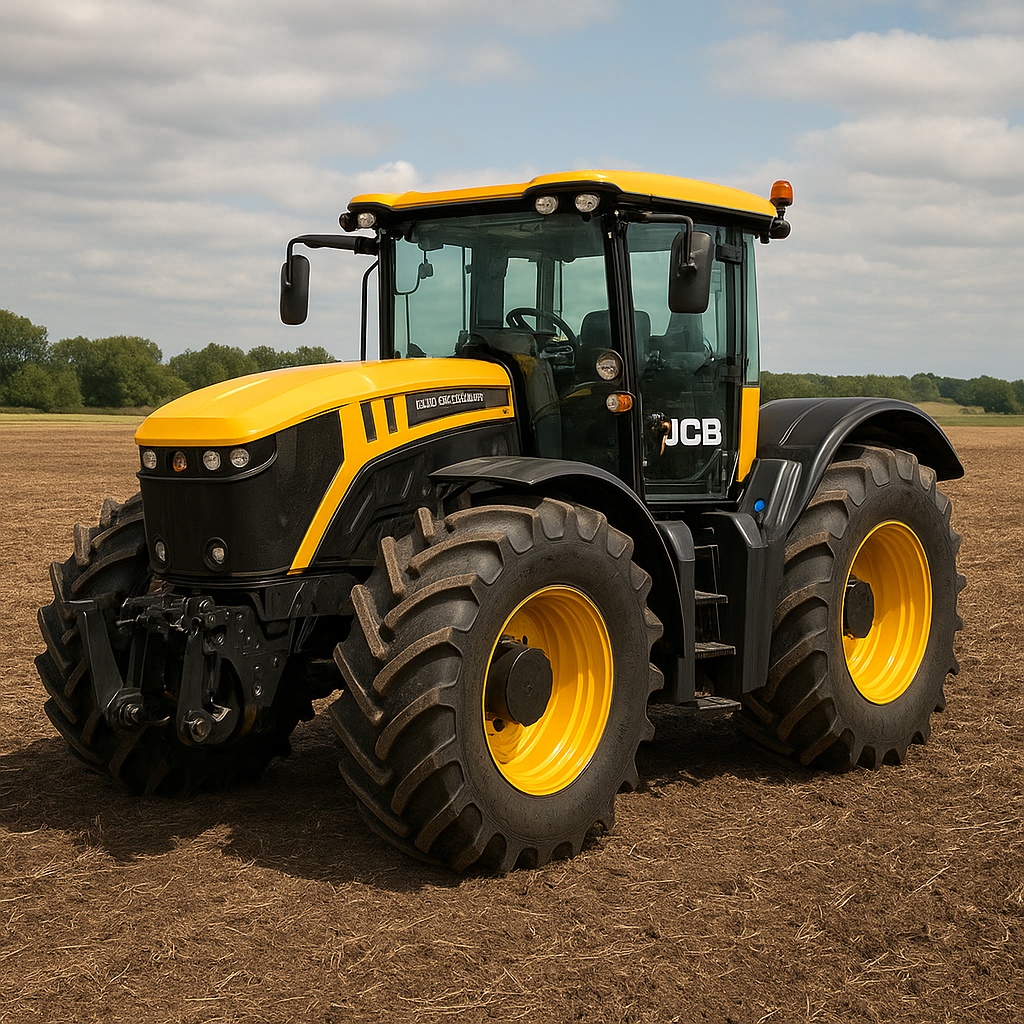
The JCB Fastrac 4000 Series represents a distinctive class of agricultural tractor that blends high-speed road capability with field-ready power and versatility. Designed by JCB to serve farmers, contractors and municipal operators who need to move quickly between sites while maintaining the traction and implement-handling capabilities of a modern tractor, the 4000 Series carries forward the brand’s long-standing emphasis on ride quality, stability and multi-role utility. This article explores the Fastrac 4000 Series’ design features, typical applications, performance characteristics and operational considerations, offering practical information for prospective users and fleet managers.
Design and engineering highlights
The JCB Fastrac family is widely known for combining a tractor’s agricultural capability with speeds closer to those of on-road vehicles, and the 4000 Series continues that tradition. Key engineering choices make the 4000 Series stand out:
- Full chassis concept: Unlike conventional tractors that rely on the implement frame and axles for structural stiffness, the Fastrac platform uses a rigid chassis that improves handling at speed and supports more complex hydraulic and implement systems.
- Suspension: One of the most notable features is the fitted front and rear suspension which enhances ride comfort and stability. This results in reduced operator fatigue on long journeys and better implement control in the field.
- Road speed: The Fastrac design prioritizes higher road speeds compared with typical agricultural tractors. Depending on configuration, models in this range are capable of travel speeds that significantly reduce transit time between fields and worksites.
- Cab comfort: Ergonomics, visibility and noise insulation are emphasized, with climate control, comfortable seating and controls laid out for prolonged operation.
- Versatile hydraulics and PTO: Multiple hydraulic circuits, robust PTO options and strong three-point linkage setups allow the 4000 Series to operate a wide array of implements — from heavy tillage tools to sprayers and road-going trailers.
Applications and typical uses
Because the Fastrac 4000 Series combines speed with agricultural capability, it finds a broad set of applications beyond those of a standard row-crop tractor. Typical uses include:
- Field work — tillage, seeding, cultivation and those tasks where consistent traction and implement control matter.
- Transport and haulage — fast movement of trailers, slurry tankers, forage or equipment between fields and farm yards, reducing the need for additional road tractors or trucks for short to medium range transport.
- Contracting — contractors benefit from the speed and maneuverability for seasonal work across large areas or multiple client sites in a single day.
- Spraying and precision farming — stable platform and precise implement control are desirable for sprayers and nutrient application systems.
- Municipal and roadside work — snow clearing, verge mowing and highway maintenance where transit speed and implement versatility are needed.
- Specialist roles — such as beet lifts, sugarcane operations and other applications where fast transport between harvest and processing points is an advantage.
Performance and specifications (typical ranges)
Specifications vary by specific model and market configuration. Below are typical ranges and characteristics commonly associated with the Fastrac 4000 Series:
- Engine power: approximately 150–220 horsepower (HP) depending on model and tuning. This range makes the 4000 Series a mid-to-high power tractor suitable for a wide range of implements.
- Transmission: multi-speed powershift or advanced gearboxes designed to provide efficient traction and smooth acceleration. Many configurations offer a wide spread of working speeds plus higher road gears for transit.
- Top road speed: capable of higher road speeds than conventional tractors — commonly quoted as up to around 60–65 km/h in certain configurations. This figure depends on local regulations and final drive ratios chosen by the customer.
- Hydraulic flow: high-capacity hydraulic systems with multiple outlets to power complex implements; typical combined flow rates vary by option but are designed to support high-demand implements.
- PTO options: standard 540 and 1000 rpm PTO options, with provision for ground-speed PTO in some configurations for specialist implements.
- Axle and gross vehicle mass: robust axle ratings and chassis design to support heavy implements and trailers — specific GVW ratings depend on model and local homologation.
- Cab and visibility: spacious cab with panoramic visibility, integrated controls and optional telemetry or ISOBUS-compatible interfaces for precision farming solutions.
Operational benefits and economic considerations
Operators and fleet managers choose the Fastrac 4000 Series for several economic and operational reasons:
- Time savings: higher road speeds reduce non-productive travel time during seasonal peaks, increasing the number of productive hours available per day.
- Fleet consolidation: one machine can serve multiple roles (field work, transport, municipal tasks), which may reduce the need for separate road tractors or trucks for short-distance hauling.
- Higher utilization: a versatile tractor with quick transit ability can be scheduled for more jobs each day, improving return on investment.
- Fuel economy: modern engine management and transmission strategies are aimed at balancing power delivery and fuel consumption; actual fuel use depends on duty cycle, implement load and operating speed.
- Comfort-driven productivity: improved ride comfort and reduced vibration lead to less operator fatigue and more consistent performance over long working days.
Comfort, ergonomics and safety features
Operator environment and safety are central to the Fastrac philosophy. Notable features that impact safety and daily operation include:
- Suspension and stability — the combination of chassis stiffness and suspension reduces bouncing and pitching at higher speeds, improving control and safety on variable road surfaces.
- Visibility and lighting — large glazing areas and powerful LED work lights provide improved sight-lines for both field work and night-time road travel.
- Braking and telematics — heavy-duty braking systems suitable for higher road speeds and optional telematics packages for monitoring machine health, location and fuel use.
- Operator aids — ergonomic controls, adjustable seats and often optional camera systems to assist with trailer coupling and rearward visibility.
Maintenance, serviceability and uptime
Reliable access to service points and sensible maintenance intervals help keep downtime low. For the Fastrac 4000 Series, manufacturers and dealers typically emphasize:
- Easy service access — grouped service points and accessible filters to reduce routine service time.
- Longer intervals available — modern engines often allow extended oil and filter change intervals when operated under recommended conditions, reducing maintenance cost per hour.
- Dealer support — JCB’s global dealer network offers parts availability and authorized service to maintain warranty and machine health.
- Telematics — optional remote monitoring helps pre-empt failures, schedule preventive maintenance and optimize fleet deployment.
Real-world use cases and examples
Across Europe and beyond, Fastrac machines have found supporters among farmers and contractors who need multi-role capability. Representative examples include:
- A mixed-farm contractor using a 4000 Series tractor to perform ploughing and seeding in the morning, then quickly transport trailers loaded with harvested crops to a nearby storage site in the afternoon.
- A municipal fleet deploying a Fastrac for winter services — fitting a front-mounted snow blade and rear salt spreader — that also doubles up in summer for verge cutting and trailer towing.
- A beet and potato harvester operator who benefits from a fast tractor to shift harvest wagons between fields and roadside banks, minimizing crop exposure time.
Environmental and regulatory considerations
As with all modern agricultural machinery, the environmental footprint and compliance with emissions standards are important:
- Emissions — engines in recent Fastrac models comply with applicable emissions regulations for their markets (for example EU Stage V, where applicable), using after-treatment systems as required by regulation.
- Soil protection — while the Fastrac provides excellent tractive capability, operators should still consider payload, tire selection and inflation strategies to minimize soil compaction.
- Road compliance — when operating at high road speeds, proper lighting, signage and compliance with local transport laws must be adhered to (weight limits, licensing and vehicle registration may apply).
Comparisons and market positioning
The Fastrac 4000 Series sits in a niche that balances field capability with on-road performance. Compared to conventional tractors of similar horsepower, the Fastrac typically offers:
- Higher transit speeds, which can reduce time wasted moving between jobs.
- Superior ride quality at speed due to suspension and chassis design.
- Potentially higher acquisition cost than a comparable static-chassis tractor, but offsets may be realized through multi-role use and reduced need for separate transport vehicles.
Practical buying and ownership tips
If you are considering a Fastrac 4000 Series unit, consider these practical points before purchase:
- Assess duty cycle — identify how much of the work will be high-speed transit versus prolonged field operation; this helps choose the right transmission and tire options.
- Implement compatibility — ensure hydraulic flow, hitch capacity and PTO options match your existing implements or planned purchases.
- Tires and ballast — select tires and weighting suitable for both field traction and road performance while minimizing soil compaction.
- Service network — check local dealer support, availability of spare parts and options for fleet telematics subscription to protect uptime.
Summary and outlook
The JCB Fastrac 4000 Series represents a pragmatic solution for operators who require a single machine capable of handling demanding field tasks and rapid, efficient transit on public roads. With its combination of chassis-based engineering, suspension, cab comfort and flexible hydraulic and PTO options, the 4000 Series targets farms, contractors and municipal fleets that value versatility, productivity and operator comfort. While specific model specifications and options vary by market and year, typical characteristics include an engine power band in the region of 150–220 HP, advanced transmission options, and road speeds significantly higher than those of traditional tractors, often up to around 60–65 km/h in permitted configurations.
Key strengths at a glance
- Speed: Rapid road transit reduces downtime between jobs.
- Comfort: Suspension and cab ergonomics support long operating hours.
- Flexibility: Capable of fulfilling roles from heavy fieldwork to municipal services.
- Serviceability: Designed with maintenance access and dealer support in mind.
- Safety: Stability and braking systems are designed for higher-speed operation.
Further considerations
For precise specifications, model-by-model comparisons and the latest emissions and performance data, consult official JCB documentation or contact an authorized JCB dealer. They can provide up-to-date technical sheets, option lists and localized regulatory information tailored to your intended use and country of operation.