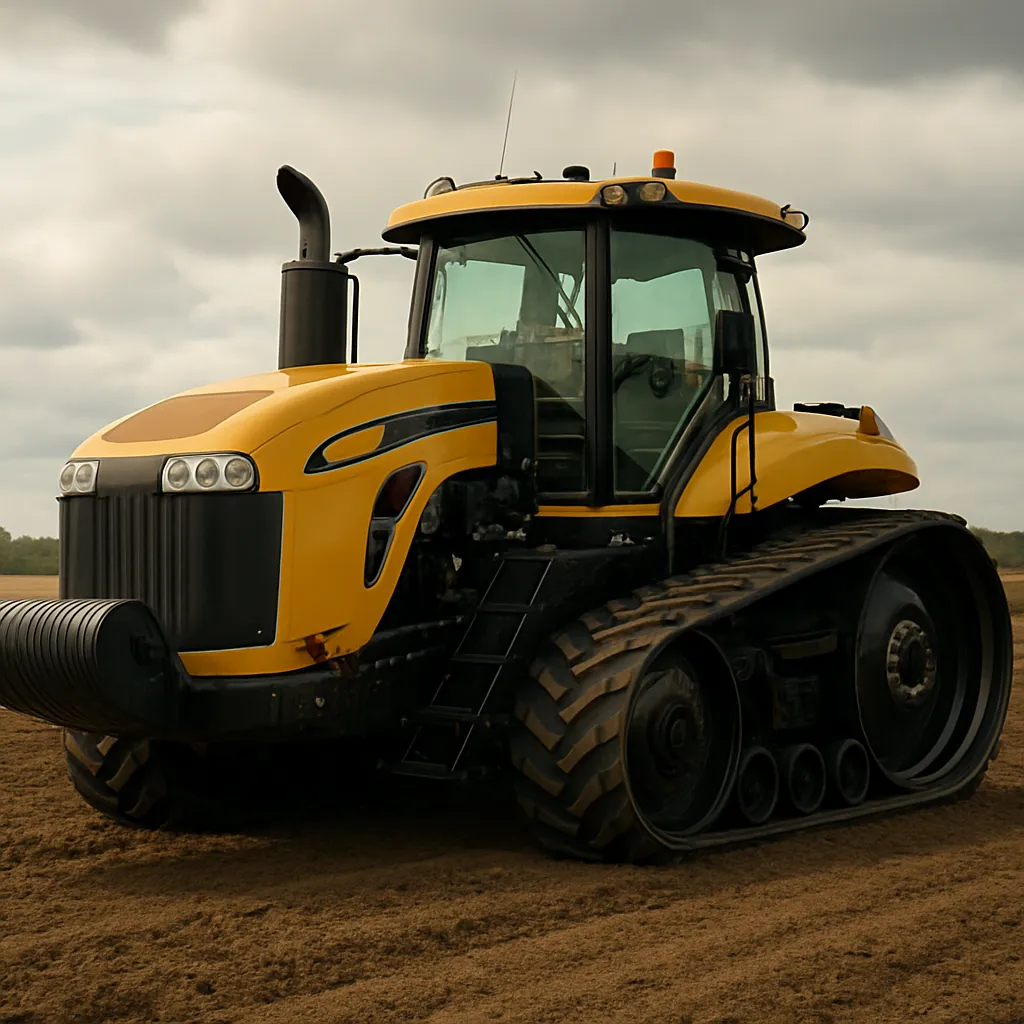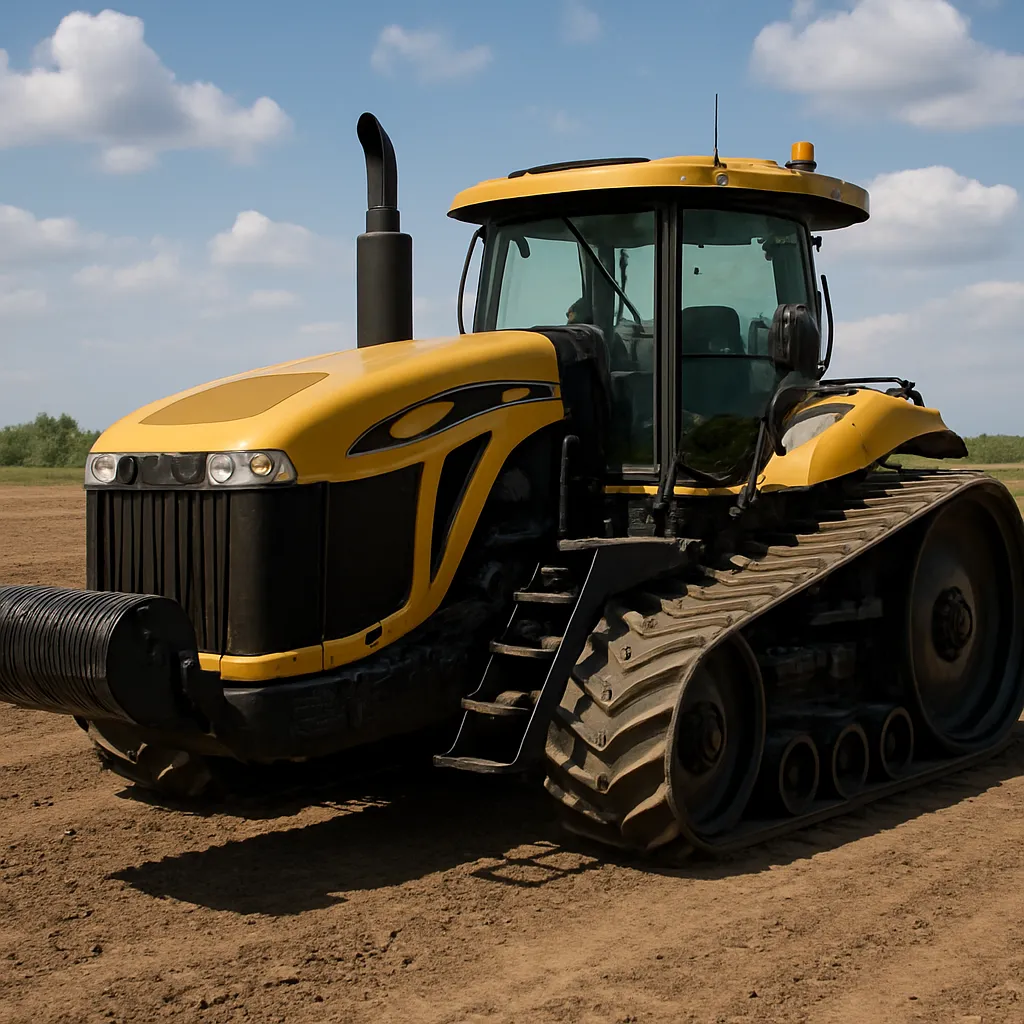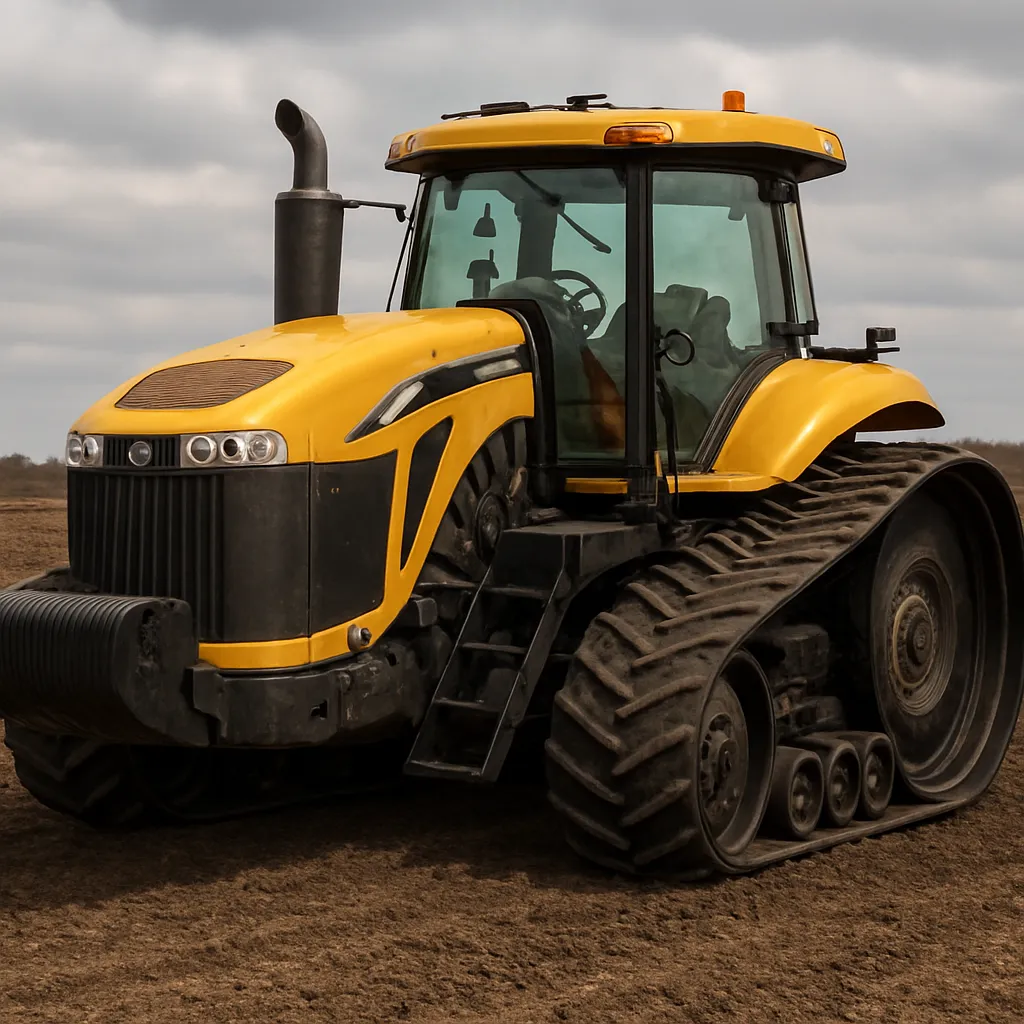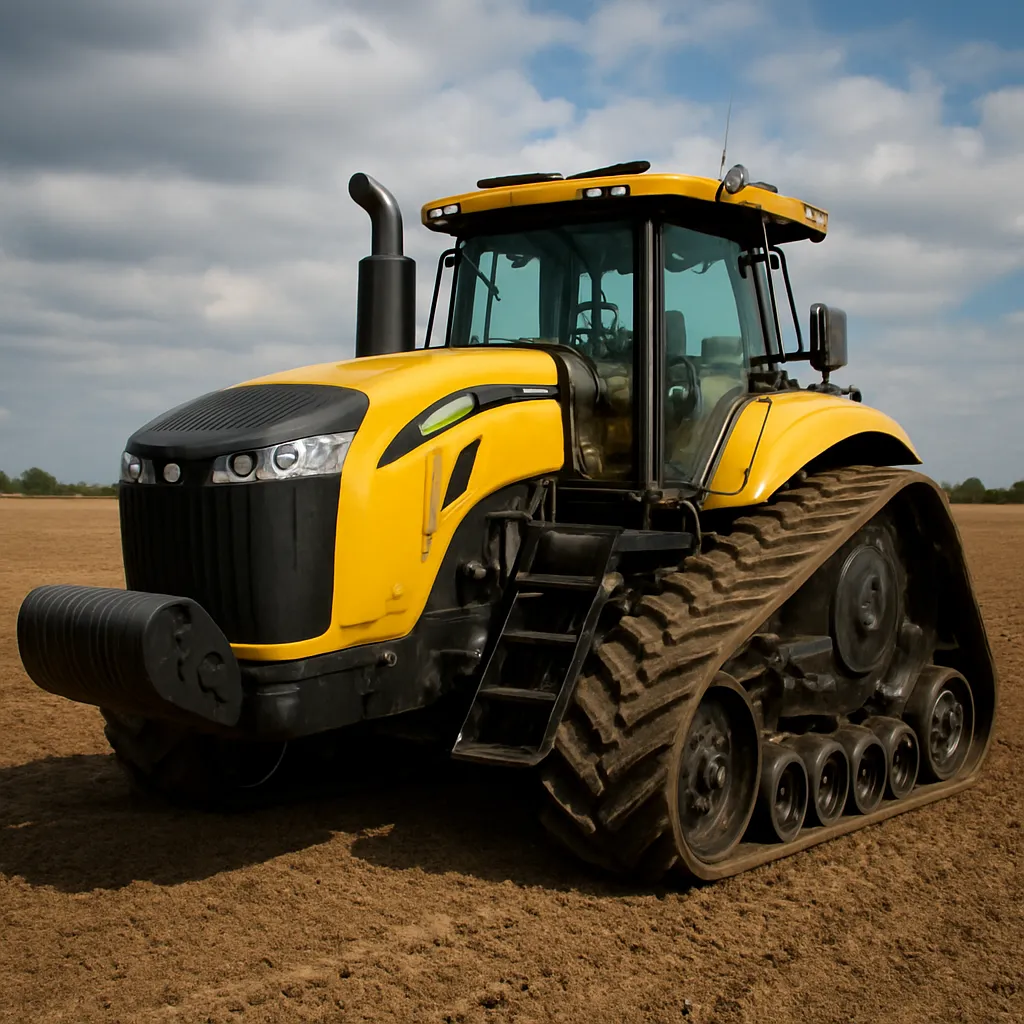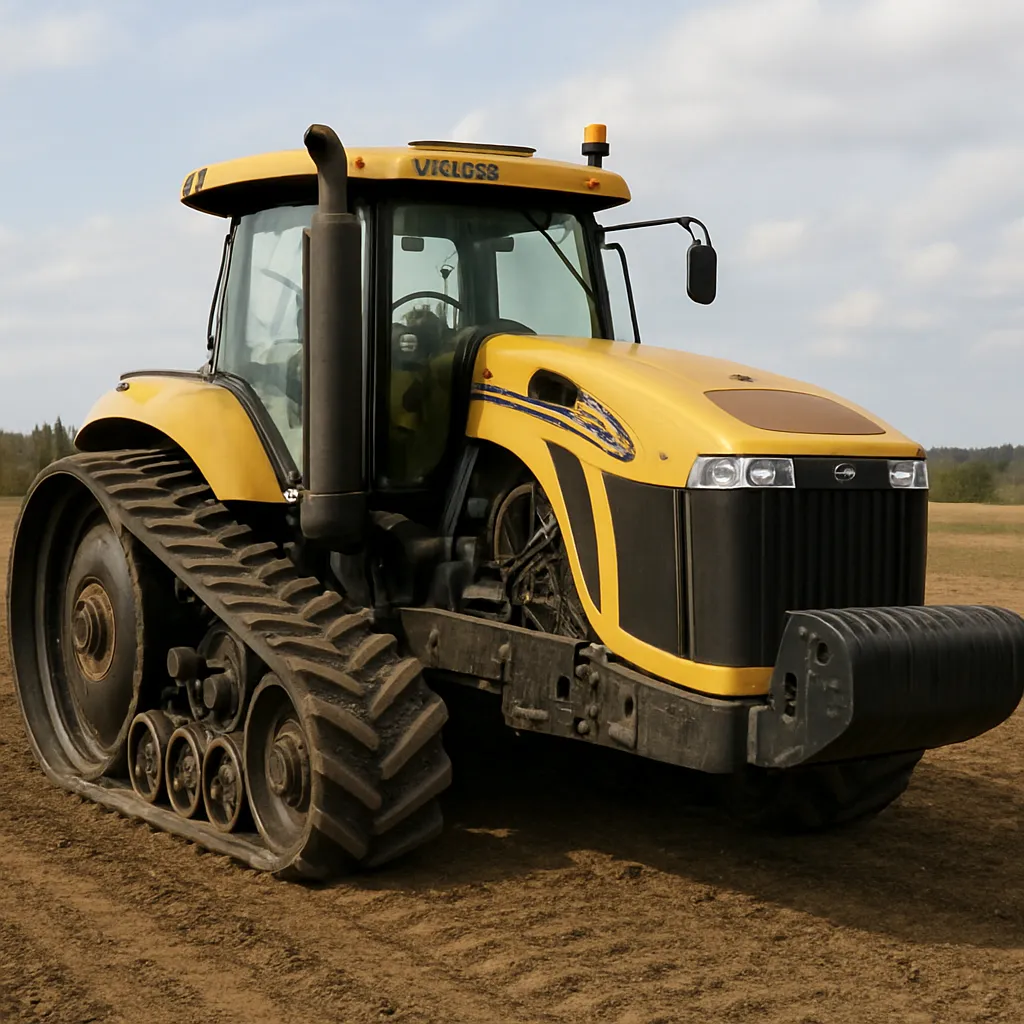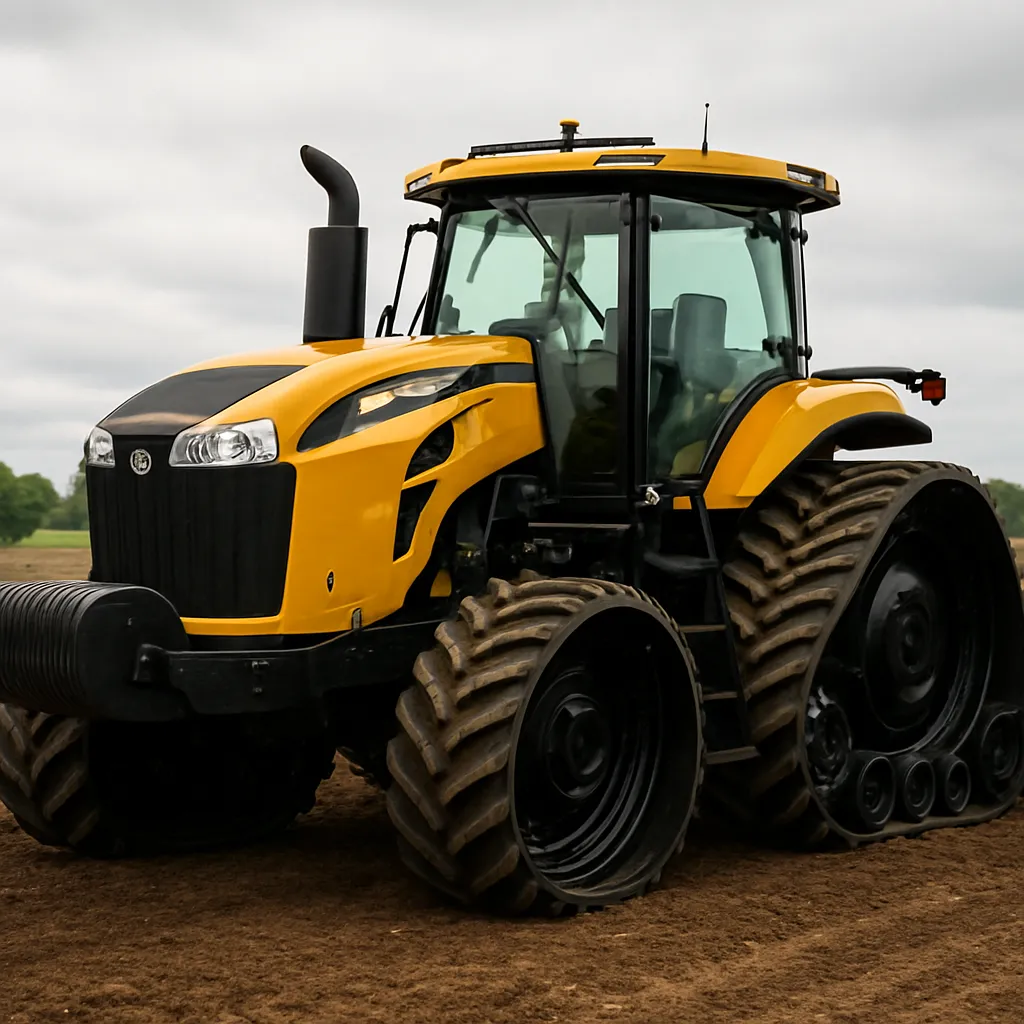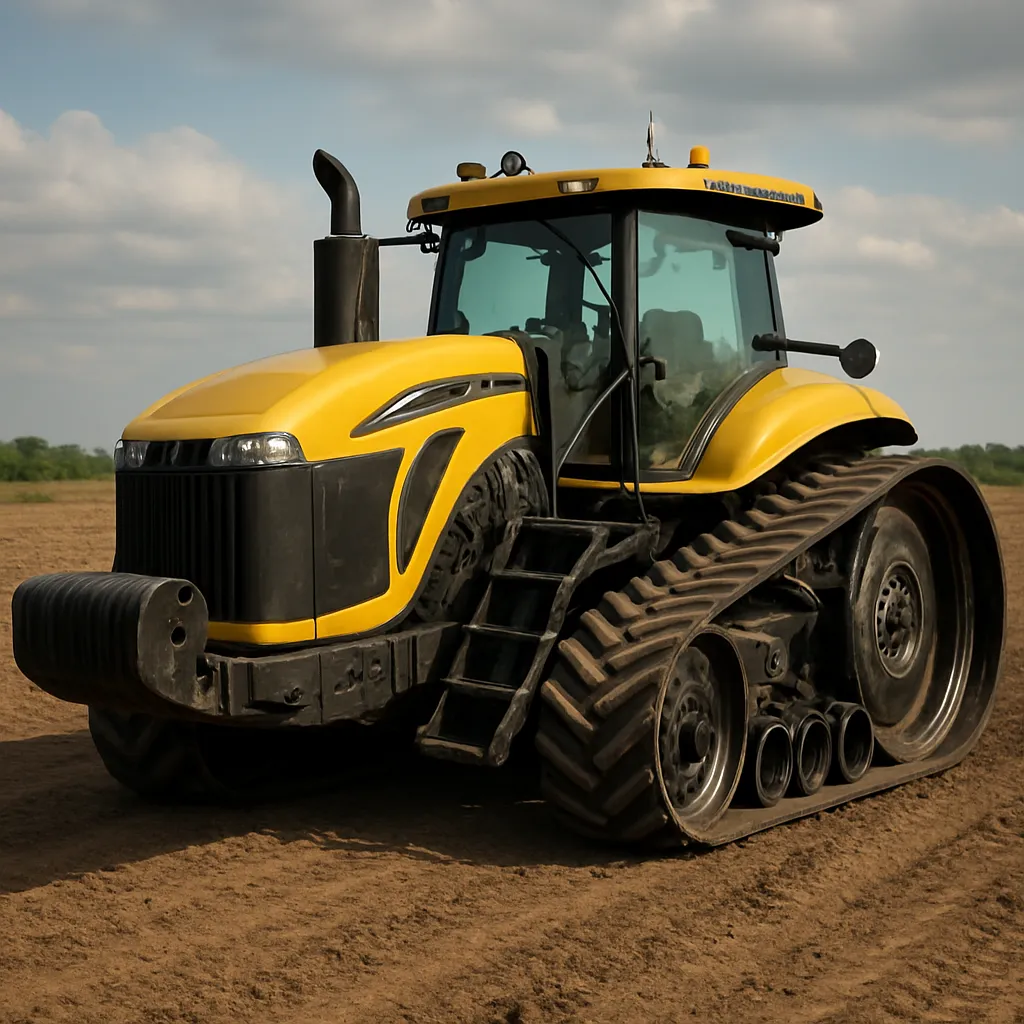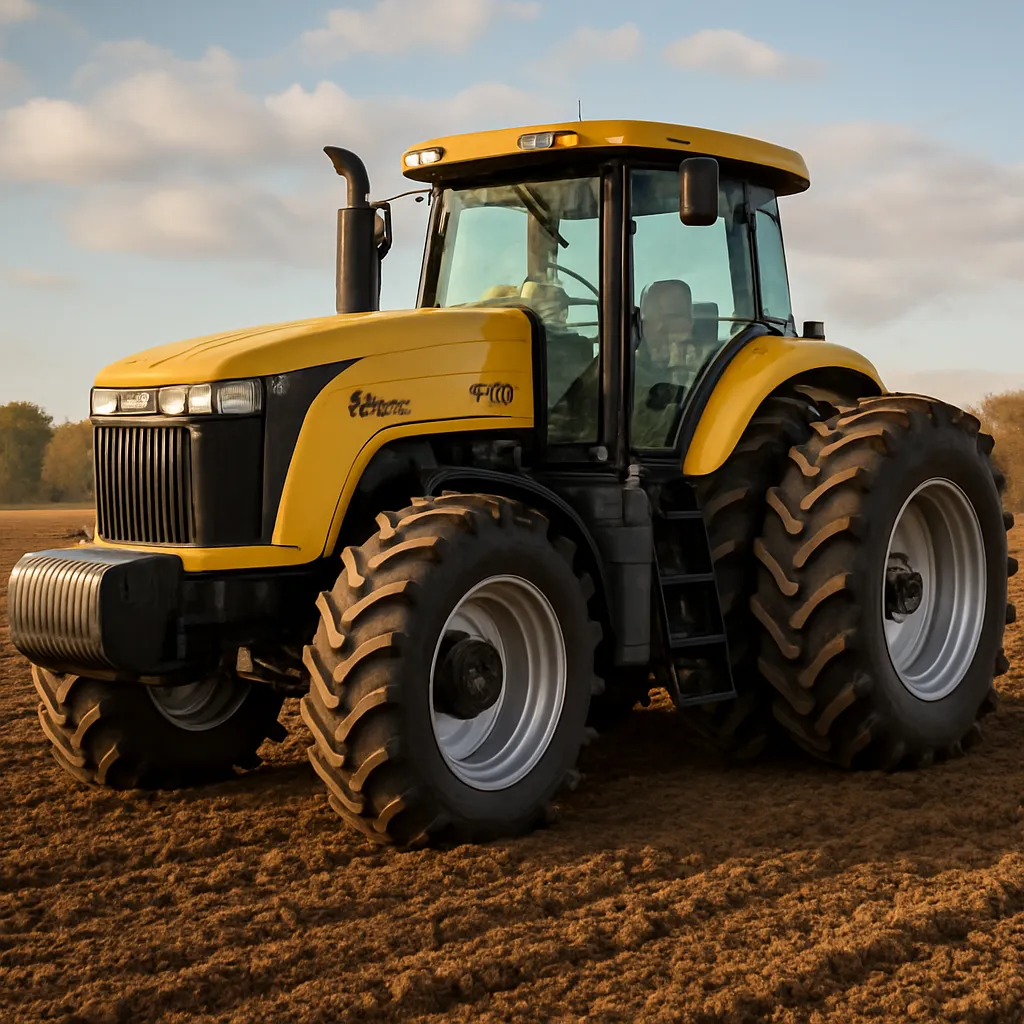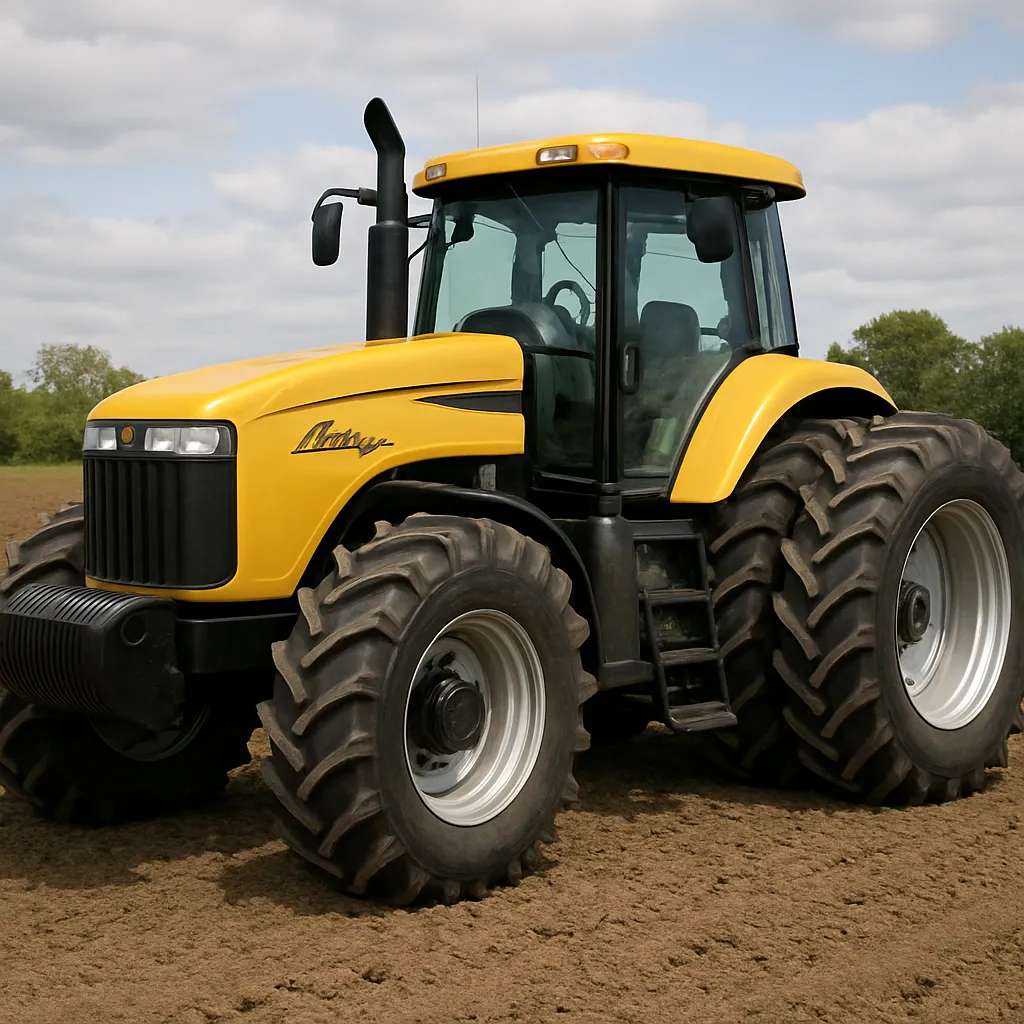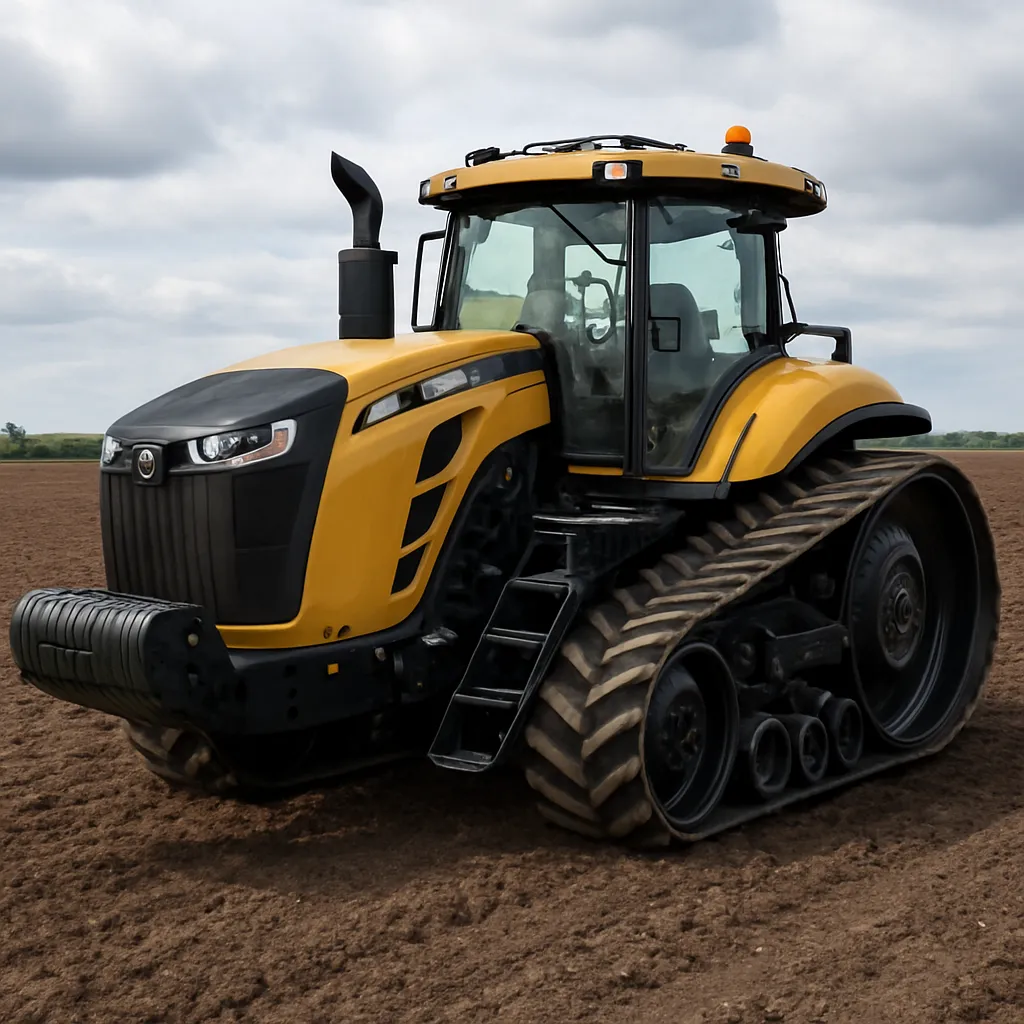
The Challenger MT865E is a heavy-duty, track-equipped agricultural tractor known for combining high pulling power with good field flotation and operator comfort. Designed primarily for large-scale farming and demanding soil-engagement tasks, this machine represents a class of tractors that prioritize traction, reduced soil compaction, and reliable performance with large implements. Below you will find a detailed overview of its design, typical specifications, real-world applications, maintenance considerations, and its place in modern agriculture.
Design and technical overview
The Challenger MT865E belongs to a family of tracked tractors built to handle heavy draft work where wheeled tractors might struggle. The core of its design centers on the undercarriage with wide rubber tracks, a robust engine, and a transmission built to convert power into consistent traction across soft or uneven terrain. The cab is typically engineered for long-day comfort and visibility, with controls placed for efficient implement management and easy monitoring of engine and transmission performance.
Powertrain and performance characteristics
Exact specifications can vary by year and market configuration, but typical characteristics of the MT865E include an engine output in the range of approximately 250–300 horsepower at the flywheel. PTO and drawbar performance are tuned to work with large implements such as deep tillage rigs, high-capacity seeders, and heavy planters. The transmission options commonly found in tractors of this class are powershift or similar multi-speed units that allow a smooth transfer of torque and fine speed adjustments under load.
Other technical highlights often associated with the model include:
- High-torque diesel engine with turbocharging and aftercooling for consistent performance under load.
- Wide rubber tracks and multi-roller suspension for better traction and flotation.
- Hydraulic systems capable of supporting large, high-flow implements with multiple remote valves and high flow rates.
- Large-capacity fuel tanks for extended field operation without frequent refueling.
Approximate specifications
Because manufacturers offer different options and updates over the years, the following figures are representative ranges rather than absolute values. Use them as a general guide when comparing machines or planning for operations.
- Engine power (rated): ~250–300 hp
- PTO power (typical): ~200–260 hp (varies by measurement standard)
- Operating weight (with tracks and ballast): ~16,000–20,000 kg (35,000–44,000 lb)
- Transport speed: up to ~30 km/h (varies with gearing)
- Hydraulic flow: often in the ~150–220 L/min range
- Number of track rollers / track width: configurations vary to match soil types and implements
These ranges highlight the MT865E as a heavy-class tractor intended for extended operations under significant loads. The combination of horsepower, weight, and track contact area gives it the ability to pull wide tillage tools at working depths that require substantial draft forces.
Applications and field performance
The Challenger MT865E excels in several agricultural roles and on farms where scale and soil conditions demand a robust traction solution. Typical applications include:
- Primary tillage — pulling large plows, disk harrows, and subsoilers over wide swaths where consistent draft and depth control are critical.
- Seeding and planting — operating heavy seed drills and air seeders, especially in no-till or reduced-till systems where weight distribution and traction affect seed placement.
- Heavy transport and trailer work — moving large loads on farm roads or within fields, where track flotation reduces rutting.
- Land leveling and reclamation — performing tasks that require stable pulling force across variable ground.
- Specialty implements — powering attachments such as large sprayers, balers (in certain configurations), and earthmoving implements where torque and traction are required.
In practice, operations that pair the MT865E with wide-width implements gain the most benefit from its track system. Tracks allow the tractor to distribute weight across a greater surface area, improving flotation in soft soils and wet conditions, which translates into less slippage, more consistent forward speed under load, and more uniform implement performance.
Field efficiency and productivity
Farmers often report productivity gains in large-acreage scenarios when replacing wheeled tractors with tracked units like the MT865E. Common advantages include reduced time per hectare for draft-intensive tasks and the ability to maintain working depth and ground speed in marginal conditions. Because slippage is lower and drawbar efficiency is higher with tracks in many soils, fuel consumption per hectare for high-draft operations can be improved even though the absolute engine consumption may be greater. The net effect is often better operational efficiency for the specific tasks these tractors are built to perform.
Advantages of tracks compared to wheels
Understanding why a farmer would choose a tracked model such as the MT865E requires looking at the strengths and trade-offs of tracks:
- Flotation: Tracks spread the machine’s weight over a larger area, reducing ground pressure and helping prevent deep ruts on soft soils.
- Traction: The contact patch of tracks generally increases traction and reduces wheel slip under heavy draft loads, allowing more of the engine’s power to be used productively.
- Reduced soil compaction: With lower ground pressure, subsoil compaction risks can be lessened compared to narrow dual-wheel setups, particularly important for root development and long-term soil health.
- Stability on slopes and uneven ground: Tracks provide a stable platform when operating wide implements on variable terrain.
However, tracks also introduce considerations:
- Higher initial cost and potentially higher repair/maintenance cost for track and undercarriage components versus standard tires.
- Transport considerations — wide track systems can be more challenging to transport on public roads and may require special permits or transport setups.
- On-farm infrastructure, such as tight gateways, can limit the effective use of very wide tracked tractors.
Operational considerations and maintenance
To get the best life and performance from a Challenger MT865E, operators must pay attention to several maintenance and operational practices. Proper care of the track system and attention to service intervals are essential for maximizing uptime and controlling lifecycle costs.
Track and undercarriage care
- Regular inspections for track wear, tears, or delamination are essential. Address small issues early to avoid costly failures.
- Maintain correct track tension as specified by the manufacturer to prevent accelerated wear of rollers and sprockets.
- Keep rollers and idler wheels clean of debris and check for proper lubrication and seal integrity.
Engine and drivetrain upkeep
- Follow oil and filter change intervals based on hours of operation and operating conditions—dusty, hot, or high-load usage may require shorter intervals.
- Monitor cooling system health; heavy draft work generates sustained heat loads so ensure coolant quality and radiator cleanliness.
- Transmission and final drive oil should be checked at recommended intervals; contamination or neglect can lead to expensive repairs.
Seasonal and operational best practices
- When possible, avoid prolonged operation in conditions that can trap debris in the undercarriage—mud and rocks accelerate wear.
- Plan field passes to minimize unnecessary road transport; if frequent road moves are required, consider transport wheels or specialized trailers.
- Train operators on optimal use of throttle and transmission settings to reduce slippage and unnecessary stress on components.
Economics, resale, and lifecycle
Investing in a machine like the MT865E should be evaluated against the specific needs of the operation. While initial purchase prices for tracked tractors are typically higher than comparable wheeled models, the decision often rests on the expected productivity gains and the reduction of field losses due to slippage or inability to work in marginal conditions.
Key economic considerations include:
- Total cost of ownership: factor in purchase price, fuel, maintenance of tracks and undercarriage, and expected lifespan of wear parts.
- Resale value: well-maintained tracked tractors from recognized brands tend to retain value if maintenance records are documented and undercarriage life is preserved.
- Financing and tax implications: many large farms look to depreciation schedules and financing options to spread acquisition costs over productive seasons.
For many large-scale operations, the ability to reliably finish fieldwork in optimal windows—such as planting or harvest prep—translates into measurable economic benefits that justify the investment.
Market context, history, and model lineage
Challenger as a brand emerged with a focus on track technology and high-horsepower tractors. The MT800 series and related models were developed to serve the high-draft market segment and to meet the needs of large commercial farms and contractors. Over the years, Challenger tractors have incorporated technological advancements such as improved engine emissions control, enhanced operator cabs, and more sophisticated electronic controls for monitoring and adjusting performance parameters.
Although specific production numbers for a single model like the MT865E are not always publicly disclosed by manufacturers, models in this class have seen broad adoption in regions with large-scale grain, oilseed, and mixed crop farming—especially in parts of North America, Europe, South America, and Australia where soil conditions and farm sizes suit tracked equipment.
Technological evolution
Later variants and successor models often include:
- Advanced telematics and remote diagnostics to monitor machine health and optimize fleet utilization.
- Refinements to track materials and undercarriage designs to extend service life.
- Improved cab ergonomics and optional precision-farming integrations such as auto-steer, section control, and variable-rate implement interfaces.
Safety, operator comfort, and precision farming integration
The MT865E typically provides a fully enclosed cab with climate control, noise insulation, and seat suspension to reduce operator fatigue during long shifts. Safety features may include ROPS-compliant structures, good visibility to the implement linkage and track area, and accessible emergency shutoffs.
Integration with modern precision-farming systems is common in this tractor class. GPS auto-guidance, implement control through ISOBUS-compatible systems, and data logging for field operations help farmers increase accuracy and reduce overlap, improving both productivity and input efficiency. When paired with precision tools, tractors like the MT865E become platforms for maximizing the effectiveness of large implements.
Summary and final considerations
The Challenger MT865E stands as a strong example of a purpose-built tracked agricultural tractor: a machine designed for high-draft work, improved flotation, and the ability to maintain productive field passes in challenging soil conditions. Typical owners of these tractors are large commercial farmers and contractors who value the combination of flotation, traction, and sustained pulling capacity. While purchase and maintenance costs can be higher than for wheeled tractors, the operational advantages—reduced slippage, better fieldworking windows, and compatibility with very large implements—often justify the investment in appropriate contexts.
When evaluating a tracked tractor such as the MT865E, consider the specific needs of your operation: soil type, typical weather conditions during critical fieldwork, implement sizes, transport logistics, and long-term maintenance planning. With proper care and the right farm strategy, this machine can be a cornerstone of a high-efficiency, large-acreage farming operation—delivering dependable performance across a range of demanding agricultural tasks.