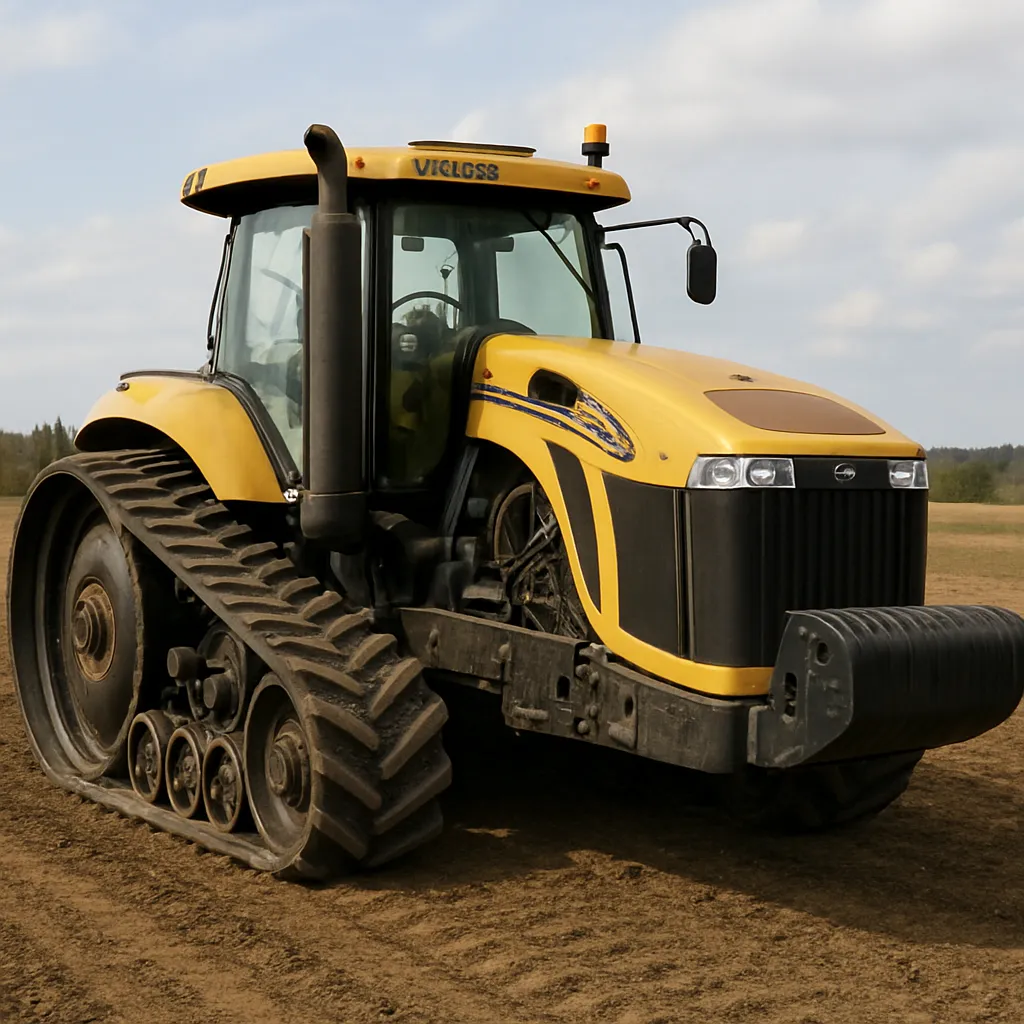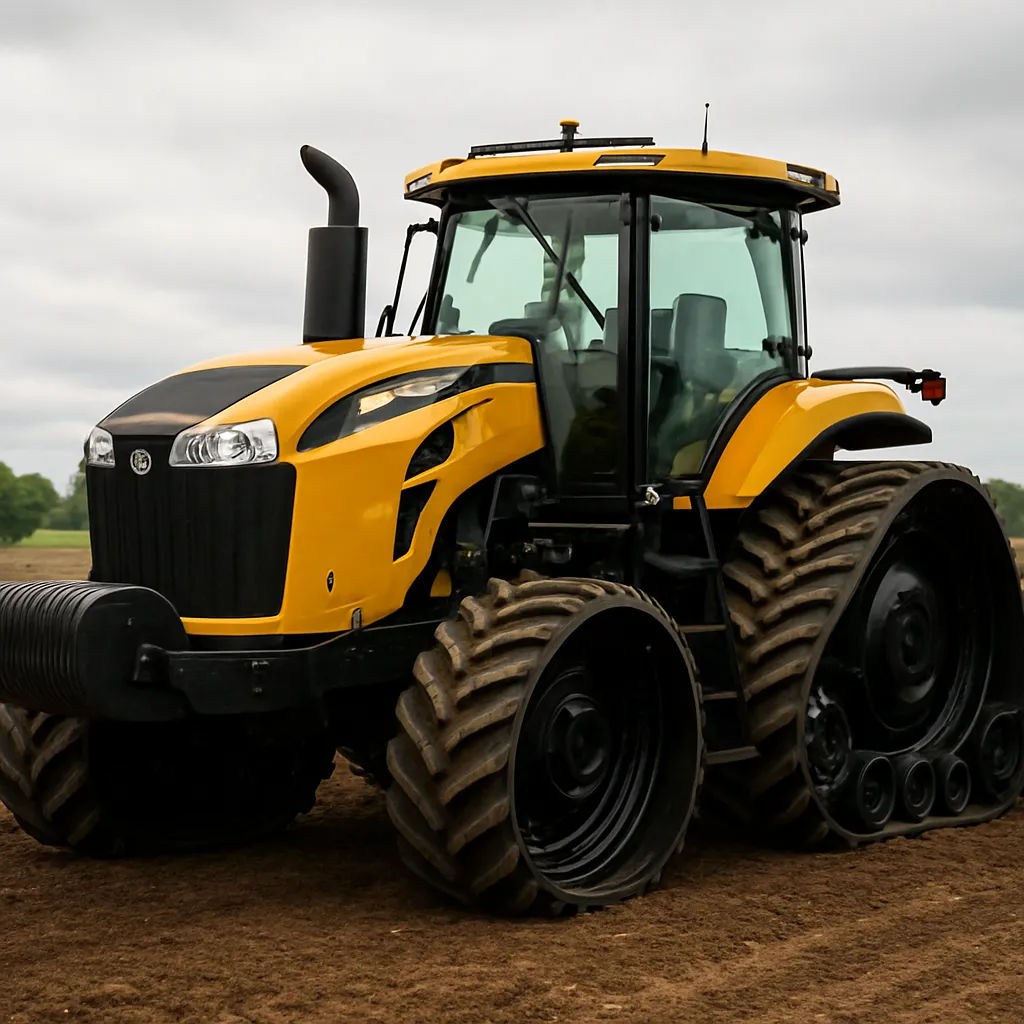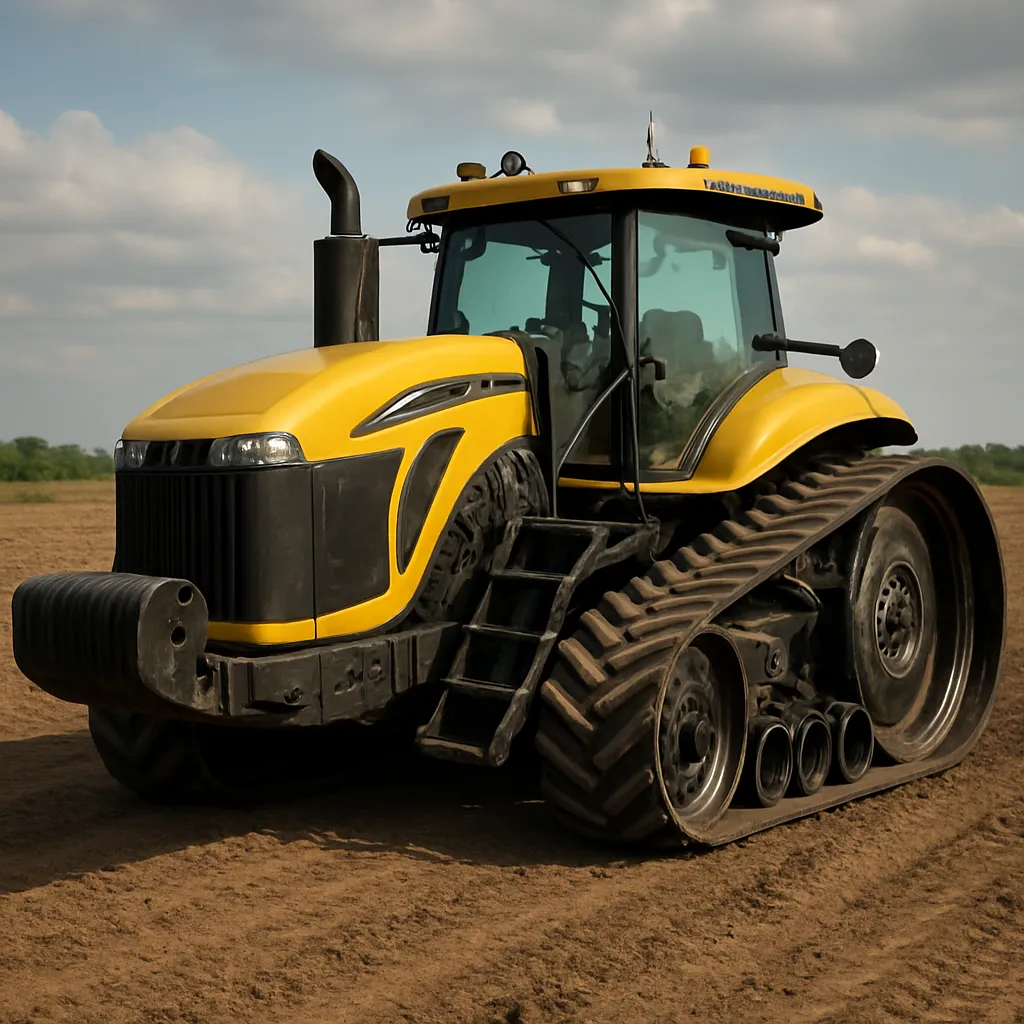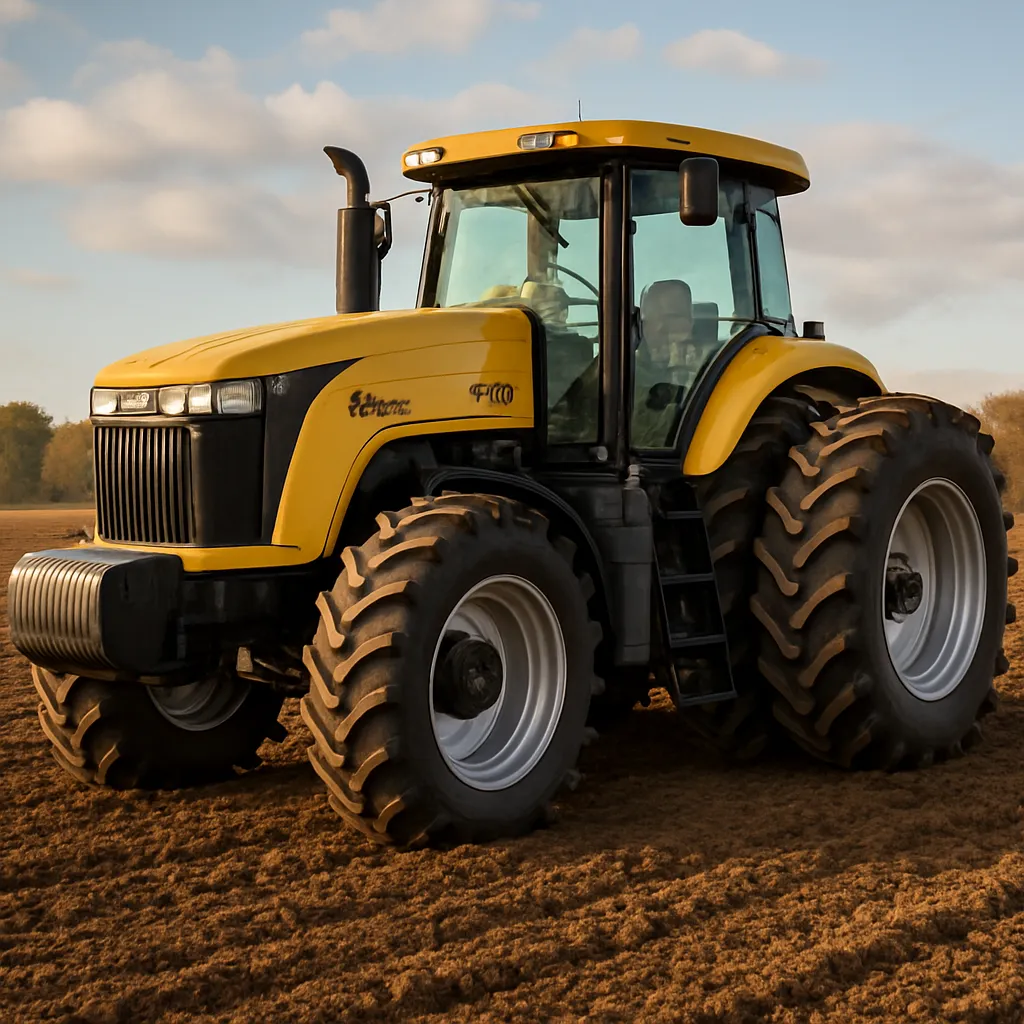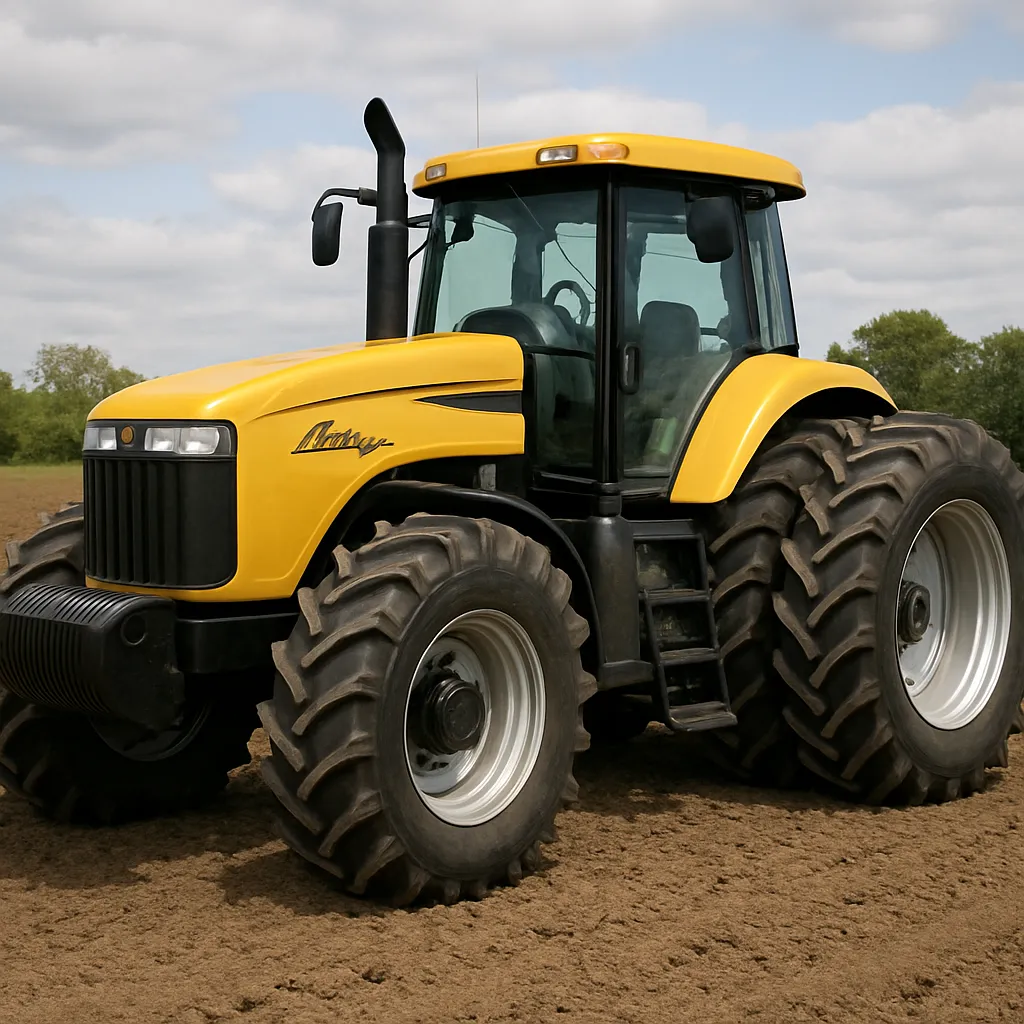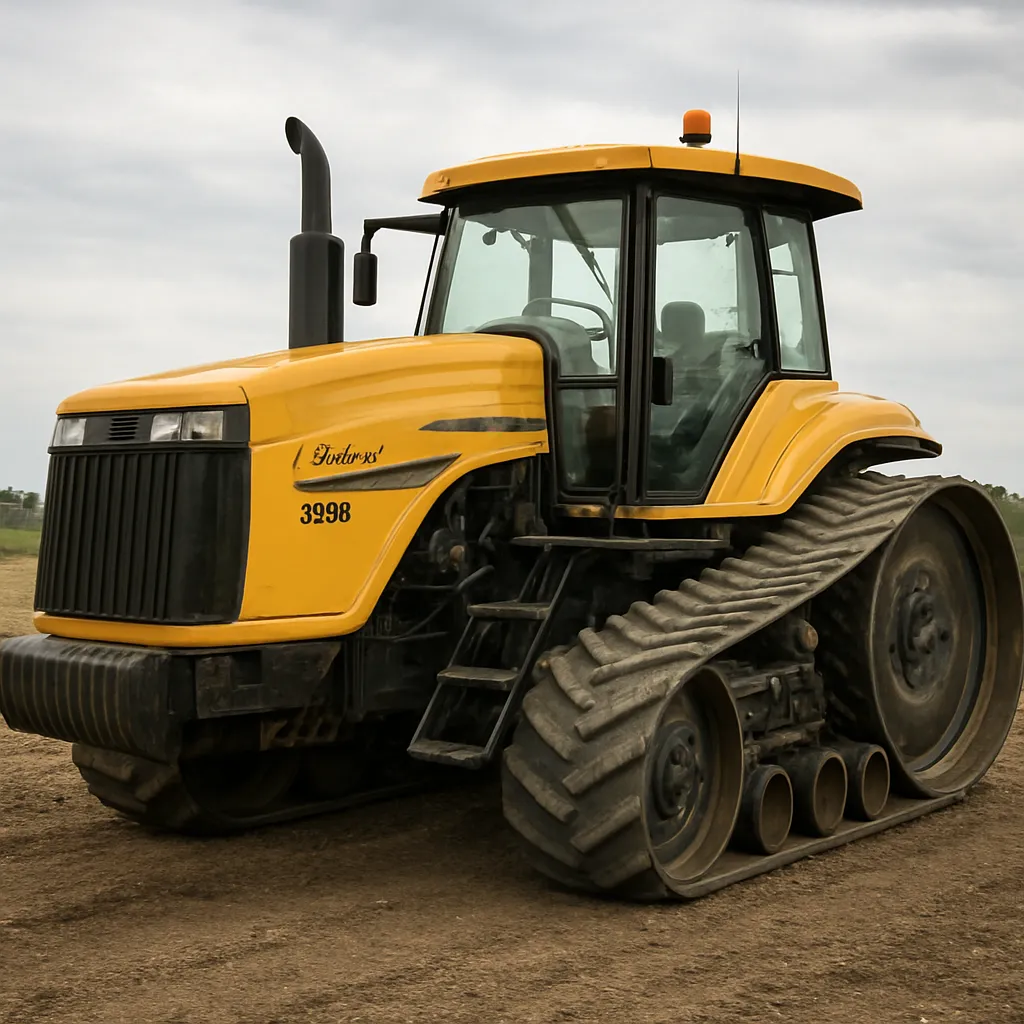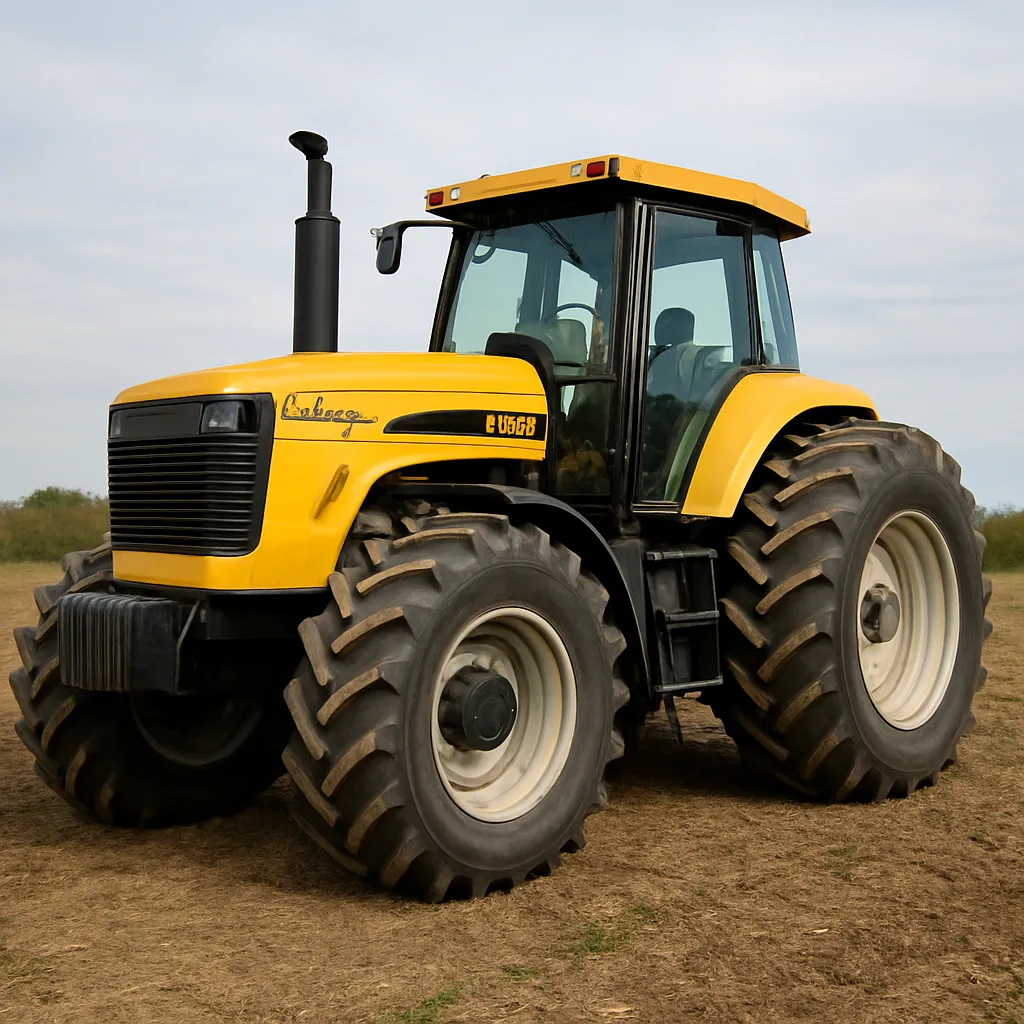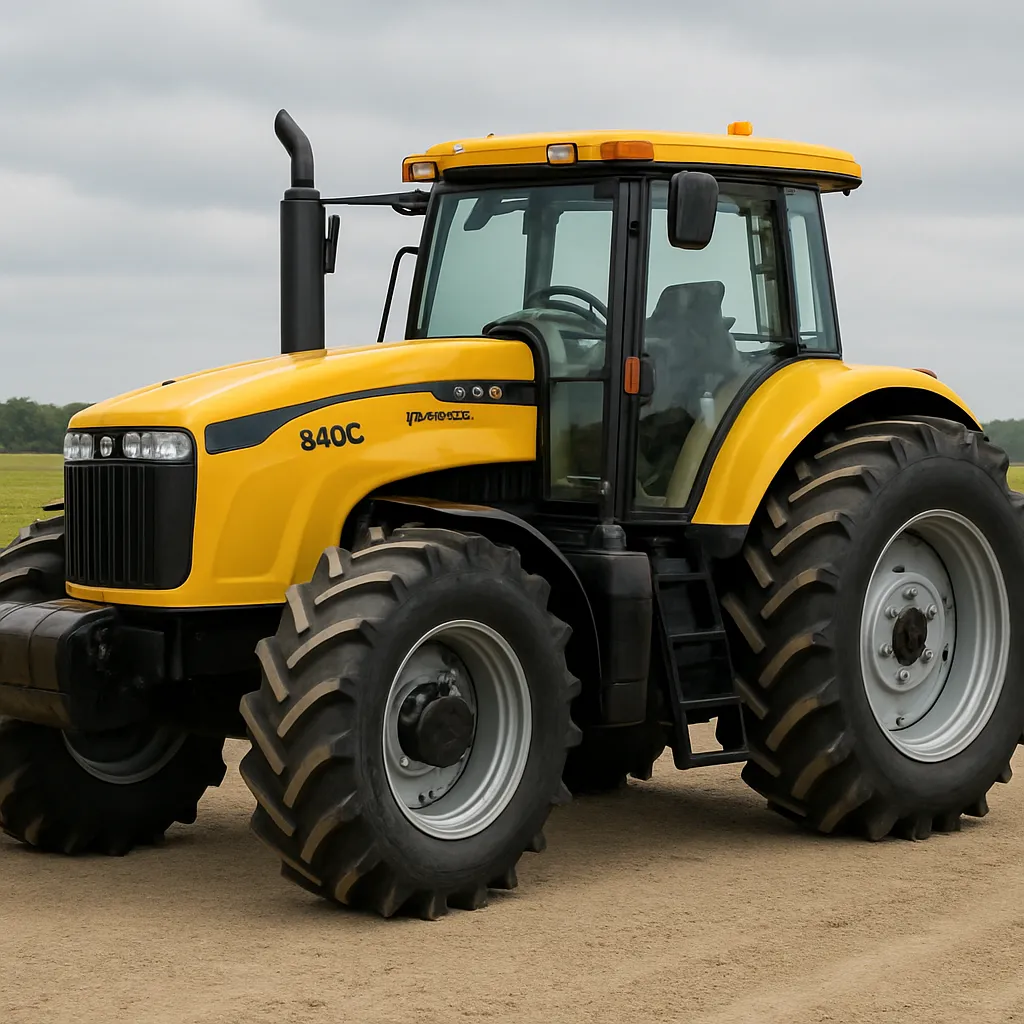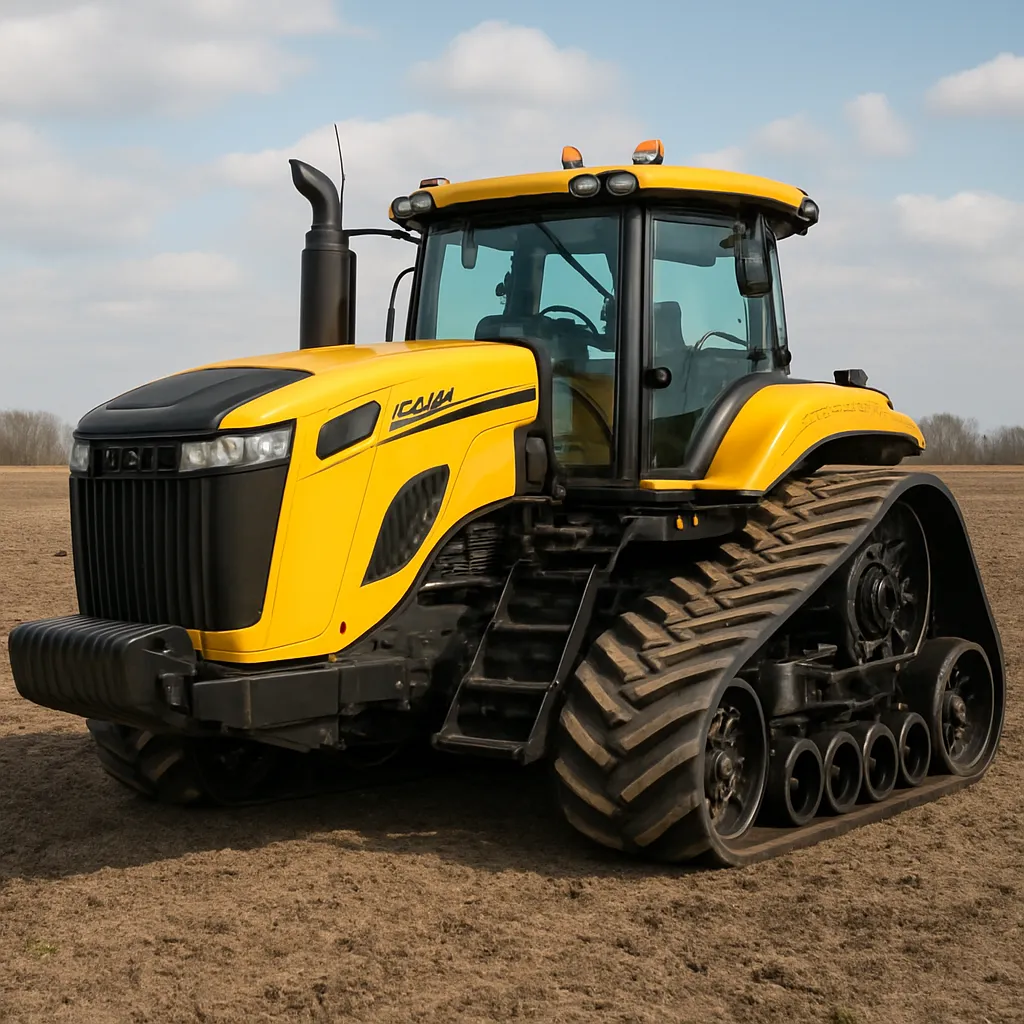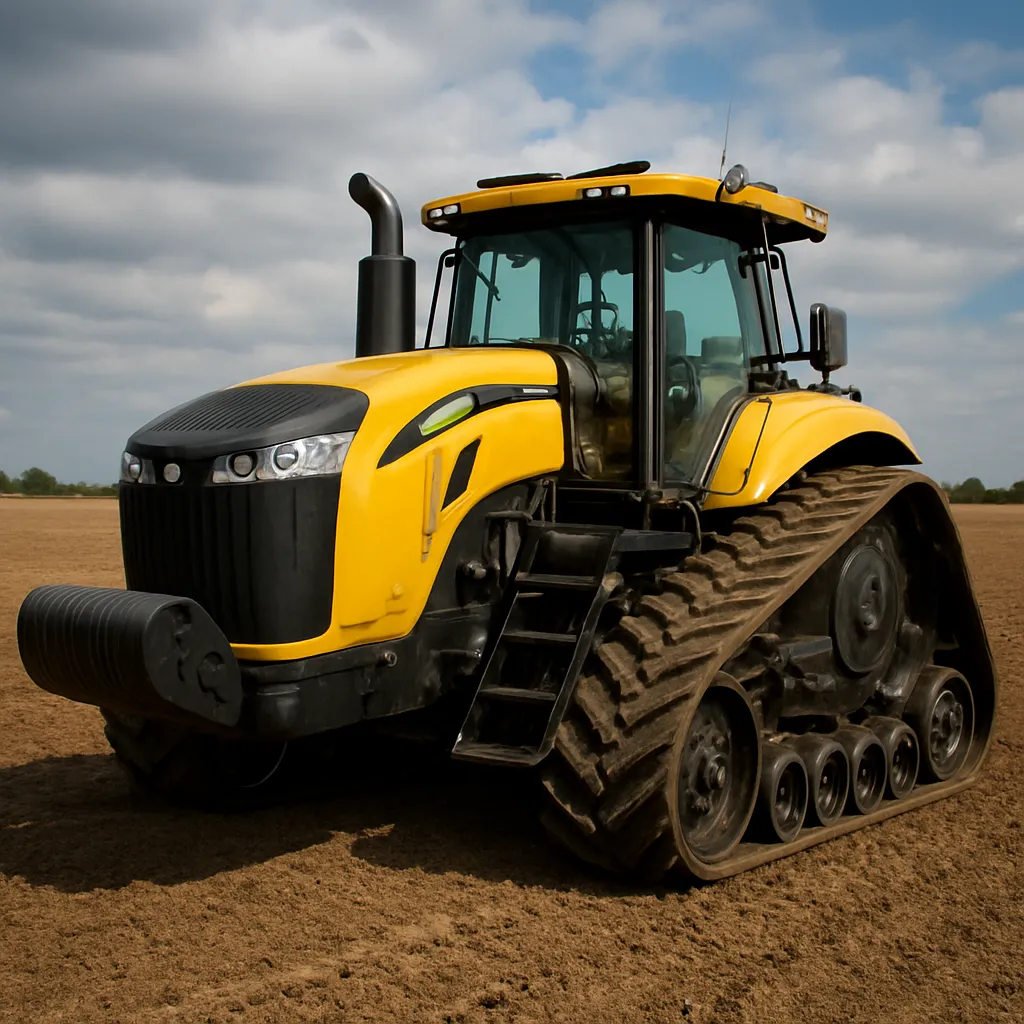
The Challenger MT845E is a heavy-duty tracked tractor designed for high-horsepower fieldwork on large farms and contracting operations. Combining the inherent advantages of a tracked undercarriage with robust powertrain and modern electronics, this model targets operators who need consistent traction, reduced soil compaction, and productivity across a wide range of tillage, seeding, and hauling tasks. Below you will find an in-depth look at its design, typical specifications, applications, operational considerations, and other interesting facts that make the MT845E a sought-after machine in large-scale agriculture.
Overview and key characteristics
The Challenger MT845E belongs to the MT8-series family of agricultural track tractors. Designed to deliver sustained high power and exceptional traction, it is optimized for operations on soft or uneven ground and for pulling large implements such as deep rippers, large disc harrows, and multi-section planters. The tracked configuration reduces ground pressure compared with comparable wheeled tractors, improving flotation and minimizing compaction — important on soils where preserving structure is a priority.
Design philosophy
Challenger built the MT845E around a few clear objectives: maximize field productivity, ensure durability for heavy-duty contracting, and provide operator comfort for long shifts. Key elements include a heavy-duty frame, a high-torque engine tuned for field loads, a continuously reliable track system with robust suspension and rollers, and a cab designed for visibility and operator ergonomics. Integration with precision-ag technologies (guidance, telematics) is a common option, reflecting the modern farm’s drive toward increased efficiency and data-driven decisions.
Notable features
- Tracked undercarriage for enhanced traction and lower soil compaction
- High-displacement, turbocharged diesel engine tuned for continuous load
- Heavy-duty final drives and reinforced chassis to withstand high draft forces
- Operator-centric cab with climate control, advanced controls, and optional guidance systems
- Compatibility with large 3-point and drawbar implements and hydraulic systems sized for heavy implements
Technical specifications (typical ranges and examples)
Exact specifications vary with year, market, and optional packages. Below are representative figures that describe the typical capabilities of an MT845E-class tractor. These numbers should be treated as general guidance; for purchase, leasing, or comparison, consult factory documentation or dealer specifications for the precise configuration.
- Engine power (rated): approximately 420–480 horsepower (ISO) — the MT845E name commonly corresponds to roughly 450 hp class
- Torque: high continuous torque curve tailored to heavy draft work (peak torque typically delivered at relatively low RPM to improve pulling ability)
- Operating weight: generally in the range of 15,000–20,000 kg (including tracks and ballast; varies by configuration)
- Maximum road speed: around 30 km/h depending on gearing and regional regulations
- Hydraulic flow: high-flow systems to operate large implements and implements with multiple hydraulic functions
- Drawbar pull and PTO: designed for heavy implements; PTO provision and drawbar capacity depend on selected options
- Fuel capacity: large tanks to support extended field time, often in the range of 800–1,200 liters (configuration dependent)
- Track width & ground contact: wide tracks providing low ground pressure and long contact length for stable flotation and reduced slippage
These numbers reflect the MT845E’s emphasis on sustained performance and operational endurance, favoring machines that can run long hours under heavy load without overheating or losing productivity.
Primary applications and agricultural roles
The Challenger MT845E is most often used where scale, soil type, and crop systems call for a high-horsepower tracked solution. Its best-suited applications include:
- Tillage: deep ripping, primary tillage, and heavy cultivations where large implements require consistent draft force and traction.
- Seeding & planting: pulling high-capacity planters and seeders across wide swaths, especially in no-till or reduced-till systems where track flotation preserves seedbed conditions.
- Field finishing: land leveling, power-harrowing, and other end-of-season tasks demanding long hours and minimal slippage.
- Transport & haulage: when configured for road speeds and with appropriate ballast or drawbar setups, the MT845E can tow heavy trailers between fields.
- Contracting: ideal for custom operators who need a versatile high-power unit capable of handling many tasks across different farms and soil conditions.
Because of its design, the MT845E excels in large-acreage operations and regions where soil preservation is important. Fields with wet windows for planting or harvesting particularly benefit from the tracked design because it allows work to proceed in conditions where wheeled tractors might cause excessive damage or become bogged down.
Performance, fuel efficiency, and field productivity
Performance of an MT845E in the field is governed by several interacting factors: engine tuning and torque delivery, track design and traction, implement matching, and operator technique. When properly matched to implements and soil conditions, tracked tractors like the MT845E can substantially increase effective field capacity and reduce wasted engine power due to slippage.
Traction and slippage control
The long contact length and wide tracks distribute weight and provide more effective traction than wheels in many conditions. Typical slippage rates for a well-ballasted tracked tractor pulling an appropriate implement can be kept below 10% in challenging soils — often lower than equivalent wheeled setups. Reduced slippage translates directly into better fuel economy per hectare and faster work rates.
Fuel consumption
Fuel consumption varies with load and speed. Under heavy draft loads, typical hourly consumption for large tractors in this class can range roughly from 25–55 liters per hour. During lighter transport or lighter field passes, consumption may be significantly lower. For planning purposes, operators should monitor specific-fuel-consumption figures for their implement and soil conditions and use telematics where available to optimize engine load and field speed.
Field efficiency
Thanks to lower ground pressure and reduced slippage, the MT845E often enables faster allowable field speeds and longer operating windows during wet conditions. This improves seasonal throughput — crucial during planting or harvest windows when timing is critical to crop outcomes.
Implements, attachments and compatibility
The MT845E supports a wide range of large implements used by large farms and contractors. Common pairings include:
- Large multi-section cultivators and deep rippers for primary tillage
- High-capacity planters and air seeders for large-scale planting
- Discs, finishing drills, and rollers for seedbed preparation
- Heavy-duty trailers and transport gear for inter-field hauling
- Front-mounted weights and ballast systems to optimize traction
Hydraulic and electronic compatibility is critical: modern MT-series tractors often include heavy-flow hydraulics, multiple SCV (selective control valve) circuits, and electrical interfaces for guidance and ISOBUS implements. This enables precise control of complex implements and smooth integration into precision-ag workflows.
Maintenance, durability and operating considerations
Because the MT845E is designed for heavy, continuous use, maintenance practices are central to retaining productivity and extending service life. Some practical maintenance & operating recommendations include:
- Adhere to scheduled engine oil and filter changes, using OEM-recommended fluids to protect turbocharged high-power engines.
- Inspect track undercarriage components frequently: rollers, idlers, sprockets and track tension systems are wear items that affect performance and fuel use.
- Monitor cooling system condition closely during heavy or prolonged operations to avoid overheating in high-load periods.
- Use telematics and engine-management tools (if available) to track hours, fuel use, and fault codes — enabling preventive maintenance and reducing unexpected downtime.
- Balance ballast and weights to minimize unnecessary slip while avoiding excessive ground pressure.
Regular care of the tracked system and final drives is particularly important, as replacement or major repairs can be expensive. Well-maintained units can serve reliably for many thousands of hours; many contractors report multi-year service lives when scheduled maintenance is followed strictly.
Operator experience and cab environment
The cab on MT-series tractors is designed for extended comfort during long shifts. Expectations and common options often include:
- Comfortable, adjustable seat with suspension to reduce operator fatigue
- Ergonomic control layout with joystick or multifunction armrest for implement management
- Climate control and low-noise insulation for a pleasant working environment
- Large glass surface area and camera options for improved visibility around tracks and implements
- Guidance-ready displays and compatibility with precision-ag software
Good operator training and familiarity with tracked-tractor handling enhance safety and operational effectiveness — tracked machines steer differently from wheeled tractors and behave differently on slopes and turns.
Market position, competitors, and resale considerations
Challenger, as a brand under the AGCO umbrella, positions its MT-series in the high-horsepower tracked segment, competing with machines such as the John Deere 8RT/9R tracked configurations, New Holland T9 series, and other heavy tracked tractors. Buyers typically weigh the following when choosing among competitors:
- Lifecycle cost including fuel, maintenance, and parts availability
- Dealer support network and access to service
- Compatibility with existing implements and precision systems
- Resale value and market demand for used tracked tractors in their region
Used units of this class are commonly traded among large farms and contractors; factors influencing resale price include hours of use, condition of the undercarriage, and documented maintenance history.
Environmental and agronomic impacts
One of the primary agronomic advantages of the MT845E’s tracked design is the ability to reduce compaction relative to comparable wheeled tractors. Lower ground pressure preserves soil structure and porosity, which can benefit root growth and water infiltration. This can translate to long-term productivity benefits on farms where compaction is a recurring issue.
Conversely, tracked machines require attention to field edge management and transport routes, because tracks can damage paved surfaces and require different handling when moving between fields. Thoughtful logistics and layout planning minimize non-field wear and infrastructure issues.
Interesting facts and operational anecdotes
- Challenger tracked tractors were pioneers in bringing wide-track agricultural traction to mass-market large-scale farming, shifting perceptions about feasibility of tracked systems beyond specialized applications.
- Many operators value tracked tractors for their ability to work within narrow weather windows, enabling planting or fall work to proceed after rains that would sideline wheeled tractors.
- Some contractors pair an MT845E with very wide air-seeders or multi-section planters to cover hundreds of hectares per day during peak planting season — a combination of horsepower, traction, and implement width drives very high daily outputs.
Choosing an MT845E: what to consider before purchase
If you are considering an MT845E or a similar tracked tractor, evaluate the following factors carefully:
- Farm size and typical implement widths — these determine whether the machine’s capacity will be fully used.
- Soil types and drainage — tracked vehicles benefit wetter soils and fields prone to compaction.
- Transport requirements — consider how often you will move between fields and whether tracked transport damages local infrastructure.
- Availability of parts and service — strong dealer networks and local service reduce downtime risks.
- Financing, resale markets, and total cost of ownership — calculate hours, expected fuel use, maintenance, and projected lifetime to determine cost-effectiveness.
Summary
The Challenger MT845E is a heavy-duty tracked tractor engineered for large-scale fieldwork where continuous high power, superior traction, and soil-preserving flotation are priorities. Typical users include large farms, custom operators, and contractors who demand steady productivity across variable conditions. While exact specifications will vary by model year and option packages, the MT845E class generally provides roughly 420–480 horsepower, substantial operating weight for traction, and systems built for extended heavy use. Proper implement matching, regular maintenance, and thoughtful operational planning maximize the value of an MT845E, making it a powerful tool in modern large-acreage agriculture.