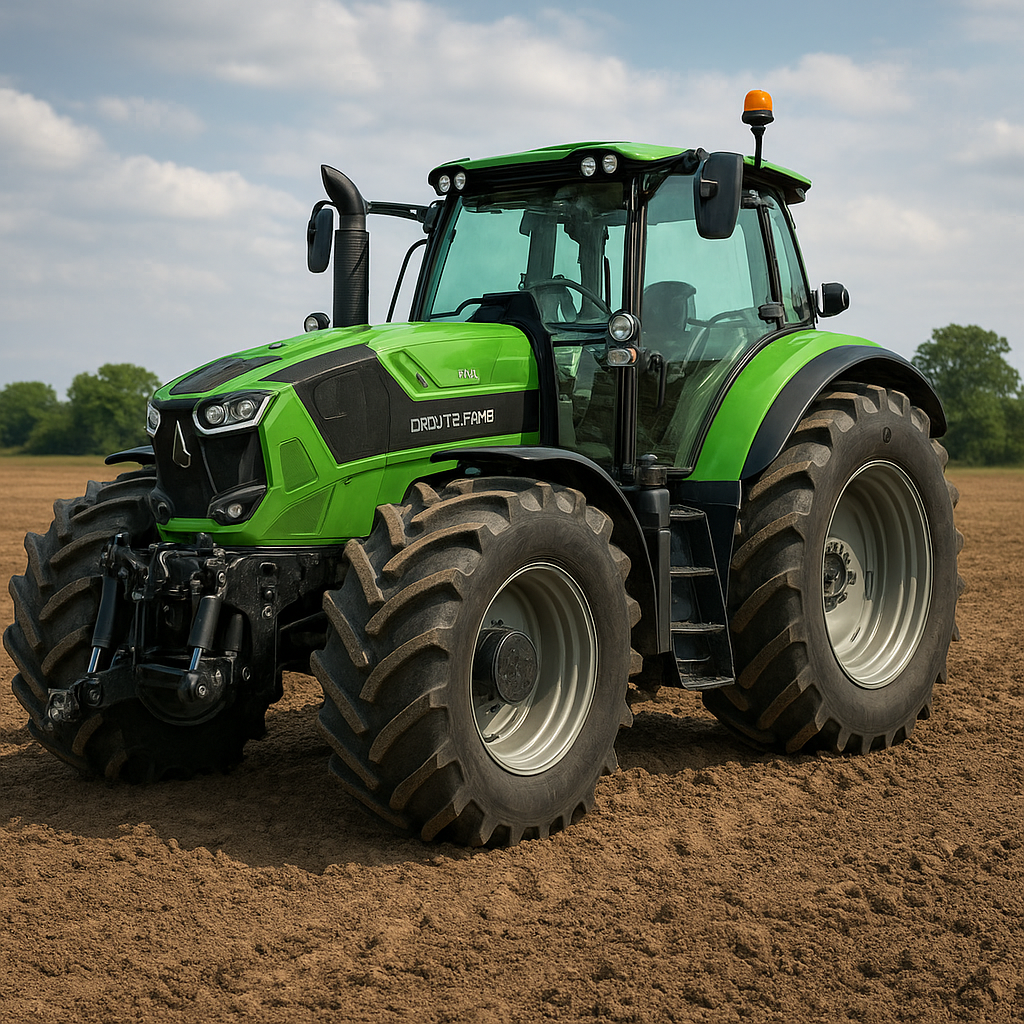
The Deutz-Fahr 6200 represents a practical blend of German engineering and agricultural versatility. Built to answer the needs of medium-sized farms and contractors, this tractor line delivers balanced performance, ease of use and broad compatibility with common implements. In this article you will find an in-depth look at its background, typical technical data, practical applications, operator comfort, maintenance considerations and market context. Highlights include the role of the engine, typical horsepower bands, drivetrain options and why the model is prized for its reliability and versatility across many tasks.
Overview and history
The Deutz-Fahr marque is part of SDF Group (SAME Deutz-Fahr), a manufacturer with roots stretching back to the 19th and 20th centuries and a reputation for robust agricultural machinery. The 6200 model name has been used in different generations and regional lineups; multiple series bearing the 6200 designation have been produced, offering slightly different features depending on market, year and emission regulations. What unifies these variants is a focus on medium duty performance suitable for both arable and livestock farms.
The 6200 tractors are often positioned between compact models and larger utility tractors, aiming at operators who need more power than a small farm tractor but do not require the complexity or cost of heavy-duty, large-horsepower machines. Over successive updates, manufacturers improved emissions control, operator comfort and electronic controls without sacrificing mechanical simplicity—an attractive trade-off for many users who value low running costs and easy maintenance.
Technical specifications and typical performance
Because the 6200 designation covers several sub-models and production years, specification details vary. The figures below represent the typical ranges and commonly found configurations for Deutz-Fahr 6200-class tractors. For any purchase or precise comparison, consult the exact variant documentation or VIN-specific spec sheet.
Engine and powertrain
- Engine configuration: common layouts include 4-cylinder turbocharged diesel engines designed for a balance of torque and compactness.
- Rated power: typically between 110 and 140 metric horsepower (about 81–103 kW) depending on the exact variant and tuning.
- Displacement: many variants fall in the 3.6–4.5 litre range, optimized for mid-range torque delivery.
- Torque characteristics: engines are tuned for high mid-range torque to support draft work and PTO-driven implements; maximum torque figures commonly range from roughly 400 to 550 Nm, depending on model and boost.
Transmission and driveline
- Transmission options: depending on the year and sub-model, transmissions can include fully mechanical synchromesh, powershift steps, or continuously variable transmissions (CVT/TTV) in higher-spec variants. The variety allows users to choose between simplicity, progressive shifting or stepless speed control for loader and transport duties.
- 4WD/2WD: most 6200 models are available with permanent or selectable four-wheel drive and differential locks for traction-heavy conditions.
- PTO: the tractors usually offer standard rear PTO speeds (540/540E/1000 rpm combinations frequently available) and optional front PTO for front-mounted implements.
Hydraulics, lifting and implement compatibility
- The hydraulic system capacity varies but typical closed-centre load-sensing systems in updated variants supply 50–95 L/min, allowing simultaneous operation of multiple attachments.
- Hydraulics support multi-function remote valves, quick couplers and electronic three-point hitch control for precise depth and position settings.
- Lifting capacity at the rear linkage commonly ranges from roughly 2,800 kg to over 4,000 kg depending on specification and whether the tractor is equipped with strengthened hitch components.
Other important technical data
- Fuel tank: typical capacities range from about 120 to 220 litres, trading off weight and endurance for application needs.
- Operating weight: depending on fitment (cabin, ballast, tyres) the tractor weight usually sits between 3,500 and 5,000 kg.
- Fuel economy: real-world consumption depends on task, but efficient mid-range diesel engines and optimized transmissions aim to keep specific fuel consumption comparatively low among its class.
Applications and common attachments
The Deutz-Fahr 6200 is targeted to perform a broad spectrum of farm tasks. Its design philosophy emphasizes multi-purpose capability rather than single-task specialization, which makes it attractive for mixed farms, contractors and municipalities.
Typical farm and non-farm uses
- Arable tasks: ploughing with medium-sized ploughs, cultivator work, harrowing, drilling and light-to-medium soil preparation.
- Grassland: mowing, tedding, raking and baling; the tractor’s powerband suits PTO-driven mowers and balers.
- Livestock support: feeding, bedding, manure handling and transporting feed or bedding materials with a front loader or trailer.
- Transport and haulage: moving trailers, slurry tankers and bulk material around the farm or between sites; transport-focused variants with higher gearing provide efficient road travel.
- Municipal and contractor work: roadside mowing, salt spreading, snow clearance and light construction site tasks when fitted with appropriate implements.
Common attachments and accessories
- Front loaders and pallet forks — turning the tractor into a material handling unit.
- Rear-mounted implements: ploughs, discs, cultivators, seed drills, fertiliser spreaders.
- PTO implements: mowers, balers, slurry pumps and power tedders.
- Hydraulic accessories: bale grapples, hydraulic top-links, multiple remote couplers, quick hitches for fast implement changes.
- Precision farming kits: GPS guidance, telematics and ISOBUS-compatible controllers available as factory options or dealer-fitted kits.
Operator comfort, cabin design and controls
Deutz-Fahr has emphasized ergonomics and visibility because effective operator design improves productivity and reduces fatigue over long days. The 6200 typically offers a functional cabin with good sightlines to implements and the front of the tractor.
- Cab features: air-sprung seats, adjustable steering columns, climate control (heating and optional air conditioning), and good all-round visibility via large glazed areas.
- Controls: logically grouped levers, rocker switches and optional joystick control for loader operations. ISOBUS and electronic hitch controllers make implement operation more intuitive for people used to modern tractors.
- Noise and vibration management: sound-damping materials and engine mounts reduce noise levels in the cabin—important for operator comfort during long tasks.
Maintenance, durability and total cost of ownership
One of the main selling points for the 6200 range is the balance between modern features and straightforward mechanical design that simplifies maintenance. Farm managers value machines that are easy to service, have reasonable parts costs and deliver predictable lifecycles.
Service intervals and routine work
- Oil and filter changes: typical intervals are governed by engine hours and terrain; modern diesels often have service intervals of several hundred hours for oil changes depending on oil type and duty cycle.
- Hydraulic and transmission servicing: periodic checks and filter replacements are crucial, especially if the tractor frequently runs heavy hydraulic loads or shuttle cycles.
- Cooling system and air filters: regular cleaning and periodic replacement will preserve engine life in dusty conditions.
Durability and common wear items
- Common wear parts include clutch components on manual gearboxes, brake pads, hydraulic seals and PTO driveline joints—items that are routinely replaced after years of heavy use.
- Tyres and axles: depending on field conditions, tyres wear at different rates; attention to correct tyre pressure extends life and improves fuel efficiency.
Resale value and lifecycle costs
Resale value depends heavily on service history, condition, hours and regional demand for mid-range tractors. 6200-class tractors tend to retain value well among small-to-medium farm buyers because they are recognized as practical, easy-to-maintain workhorses. Total cost of ownership calculations typically favor tractors that balance purchase price, fuel efficiency, maintenance cost and uptime; Deutz-Fahr models often score well due to accessible dealer networks and parts availability in many regions.
Market presence, statistical context and purchase considerations
Exact global production and sales numbers for a specific “6200” label can be fragmented because the designation has been used across different series and markets. Nevertheless, some general market observations and statistical perspectives apply:
- Market segment: the 100–140 hp range is one of the most popular tractor segments worldwide because it covers the needs of a majority of mixed farms and contractors.
- Adoption drivers: farmers choose tractors like the 6200 for their combination of sufficient horsepower, manageable size, and multi-role capability. Models with improved transmissions or electronics are often selected by operations that value precision farming or time-saving automation.
- Fuel use statistics: agricultural fuel consumption varies by operation; mid-sized tractors used for mixed tasks can average anywhere from 7 to 20 L/hour depending on load. Specific fuel consumption for diesel engines in this class under rated conditions is often around 200–230 g/kWh, though real-world values vary with task and operator technique.
Price ranges and acquisition advice
Prices for new or used Deutz-Fahr 6200 tractors vary by year, configuration and market. As a rough guide:
- Used older-generation models (10–20+ years) can be found at significantly reduced prices, depending on hours and condition.
- Newer or well-maintained recent models command higher premiums—especially those fitted with advanced transmissions, high-spec hydraulics and comfort packages.
- When assessing purchases, consider matched implements, hours, service records, presence of rust or frame damage and whether the tractor has been used for heavy contractor work or gentler farm duties.
Telematics and precision farming
In recent years, mid-range tractors like the 6200 have been outfitted increasingly with telematics and guidance systems. ISOBUS compatibility, GPS guidance, and remote diagnostics improve efficiency, reduce overlap in field passes and aid preventive maintenance. Farmers investing in precision kits often see improvements in input use efficiency (seed, fertiliser, fuel) and overall productivity.
Practical buying checklist and operating tips
Whether buying new or used, keep the following checklist in mind to ensure the tractor meets real farm needs and provides long-term value:
- Define tasks: list the primary implements and operations the tractor must handle (plough size, loader cycles per day, PTO-driven implements).
- Match PTO and hydraulic capacity: ensure the tractor can supply enough flow and hitch lift capacity for your implements.
- Transmission choice: choose mechanical simplicity for low-cost ownership, powershift for frequent gear changes, or CVT for loader and transport efficiency.
- Inspect service records and check for regular maintenance, any accident history and complete documentation for emissions-related parts like particulate filters if present.
- Test drive in representative conditions: check gearbox behavior, clutch feel, hydraulic responsiveness, PTO engagement smoothness and cab ergonomics.
Summary and outlook
The Deutz-Fahr 6200-class tractors occupy a crucial role for many agricultural operations: they are a pragmatic midpoint combining adequate power, a comfortable cab and flexible implement compatibility. Their appeal stems from a balance of fuel economy, dependable transmission choices, and well-engineered drivetrains, backed by dealer networks in many countries for parts and servicing. For farms that demand multi-purpose capability without the expense and complexity of larger machines, the 6200 motif continues to be a compelling option.
When considering a 6200-series tractor, examine the precise variant specifications carefully, prioritize a solid service history and match hydraulic, PTO and hitch capacities to your implements. With sensible selection and regular maintenance, a Deutz-Fahr 6200 can deliver many years of productive service across a wide range of agricultural and contractor tasks.