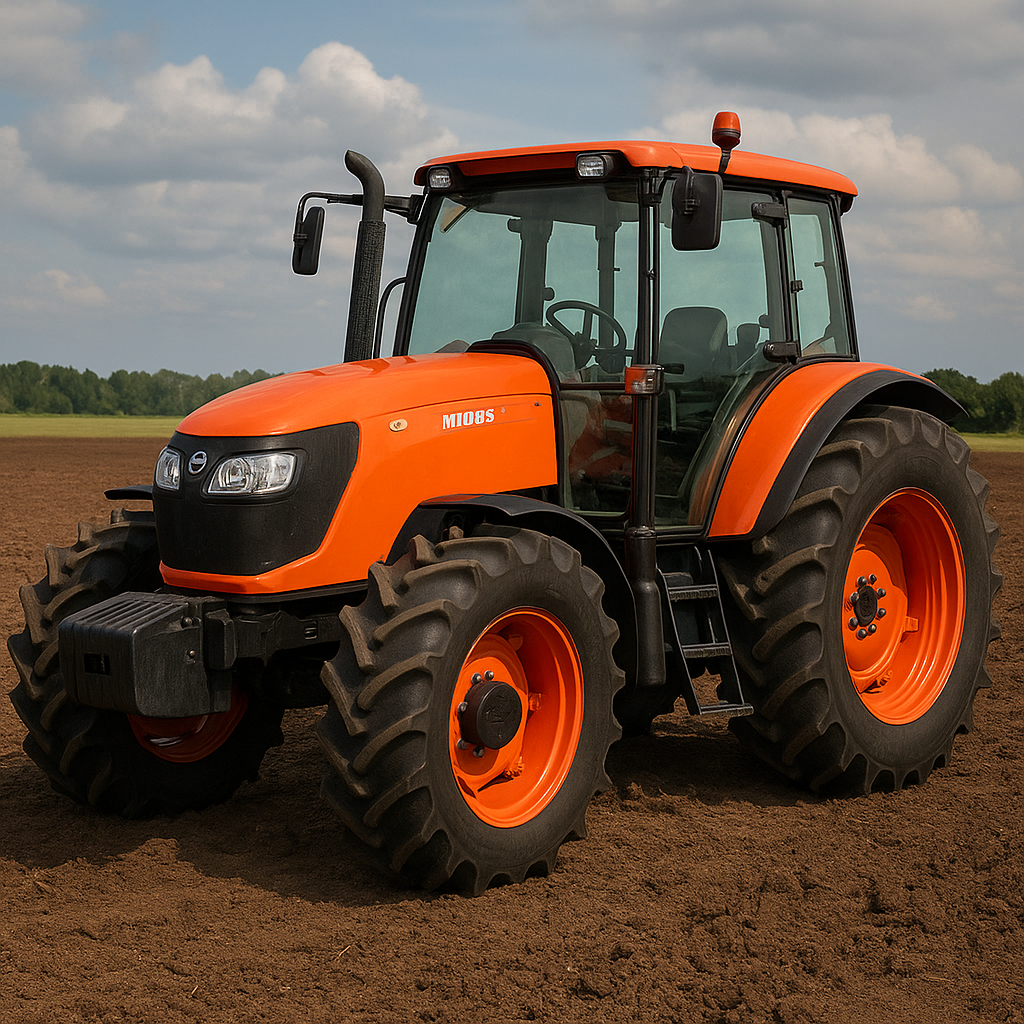
The Kubota M108S represents a blend of power, versatility and modern engineering aimed at farmers, contractors and municipal operators who require a reliable machine for heavy-duty tasks. Designed to deliver strong performance in the field while offering operator comfort and straightforward serviceability, this tractor has become a competitive choice in the compact-to-mid-size utility segment. The following article examines the machine’s design, technical characteristics, practical applications and economic considerations, providing a broad and informative view for anyone considering the Kubota M108S for agricultural, landscaping or contractor use.
Overview and design philosophy
The Kubota M108S is designed around the core principles of durability, efficiency and operator ergonomics. Built by Kubota, a manufacturer known globally for compact engines and agricultural equipment, the M108S aims to combine sufficient power with compact dimensions and smart systems that reduce operator fatigue and increase productivity.
Key design highlights include a robust chassis for stability during heavy implements use, a modern diesel engine tuned for torque delivery at lower RPMs, and modular systems for hydraulics and PTO to support a wide range of implements. The tractor’s layout accommodates both open-station and cabin configurations depending on market specifications, and ergonomics are emphasized through a well-laid-out console, accessible controls and clear instrumentation.
Kubota engineering places importance on low operating costs, simplified maintenance intervals and component longevity, making the M108S suitable for owners who expect many years of continuous service. The machine’s balance of power and maneuverability targets operators who require both field performance and versatility around a farm, estate or construction site.
Technical specifications and performance figures
Technical data for the Kubota M108S varies slightly by production year and market. Below are commonly reported figures and typical ranges that describe the M108S class. These figures should be treated as representative rather than definitive—exact specifications depend on the model variant, regional configuration and optional packages.
- Engine type: 4-cylinder, water-cooled diesel engine with turbocharging and intercooling to improve power and efficiency.
- Rated power (engine HP): approximately 108 engine horsepower (gross). This places the tractor in a segment suited to medium-to-heavy tasks without moving into the large-tractor class.
- PTO power: typical PTO output ranges from about 85 to 95 HP depending on drivetrain losses and model tuning. The PTO is available in 540 / 540E and optional 1000 rpm configurations for some markets.
- Torque: engines in this class usually produce peak torque at relatively low RPMs to maximize pull and implement drive—helpful for loader work, tillage and mowing operations.
- Transmission: options typically include synchronized gearboxes or powershift variants with multiple ranges. Reverse and shuttle arrangements aim for quick direction changes; loader and headland work benefit from responsive shuttle systems.
- Hydraulic capacity: hydraulic flow rates in the 60–100 L/min range are common, supporting multiple remote valves and high-flow implements like loaders, mowers and seeders. Closed-center load-sensing hydraulics may be available in higher-spec variants for improved efficiency.
- Lift capacity: rear three-point lift capacity is often in the 3,500–5,500 kg range (7,700–12,100 lb), enabling the use of heavy mounted equipment and large implements.
- Dimensions and weight: kerb weight tends to fall between 4,000 and 5,500 kg (8,800–12,100 lb), with gross vehicle width and wheelbase tailored to both field stability and transportability on narrow roads.
- Fuel tank: fuel capacity commonly ranges from 120 to 180 liters, allowing for long operating periods between refuels.
- Top road speed: typical maximum transport speeds are in the 30–40 km/h zone, depending on transmission gear ratios and local regulations.
These specifications make the M108S capable of handling demanding tasks while remaining nimble enough for frequent implement changes and yard work. The combination of horsepower, torque and hydraulic flow supports modern implements and attachments used across agricultural and commercial applications.
Primary applications and real-world uses
The Kubota M108S is versatile across a range of sectors. Its design and power envelope enable effective performance in the following areas:
- Agriculture — row-crop work, seedbed preparation, mid-size ploughing, disc harrowing, planting and PTO-driven implements such as balers and forage harvesters.
- Livestock operations — feeding equipment, silage handling, bale transport, and mucking-out with front loaders or specialized implements.
- Contracting and landscaping — hedge cutting, mowing large estates, soil cultivation and light earthmoving tasks using buckets, forks and backhoe attachments.
- Municipal and utility — snow clearing, street sweeping, roadside maintenance and other year-round municipal duties that require reliable hydraulic power and a compact footprint.
- Vineyards and orchards (where clearance and compactness allow) — modified versions or careful tire/track selection can let the tractor operate in narrower rows compared to large farm tractors.
Because the M108S offers strong PTO and hydraulic capabilities, the tractor is often used as a multi-role machine on medium-sized operations. A typical farm or contractor will mount a front loader for material handling and switch to rear-mounted implements such as seeders, rotary tillers or mowers within the same workday.
Operator comfort, cab features and ergonomics
Operator comfort is an important component of Kubota’s design. The M108S typically provides:
- A spacious cab with good visibility to the front loader and rear implements.
- Ergonomically positioned controls and a logically organized console to minimize fatigue during long shifts.
- Climate control and sound insulation options to increase operator comfort in harsh weather and reduce noise exposure.
- Adjustable seating and steering wheel to accommodate operators of varying sizes.
These features contribute to a productive working environment. Comfort improves attention, reduces fatigue-related errors and helps operators maintain steady work rates during long demanding tasks.
Hydraulics, PTO and implement compatibility
The M108S is built to support a wide variety of implements. Important functional elements include:
- Multiple remote hydraulic circuits to manage several implements simultaneously or to support implements requiring independent control.
- Strong rear hitch and category 2/3 three-point linkage (depending on exact model) with adjustable stabilizers for secure tool mounting.
- PTO driveline options, typically 540 / 540E with optional 1000 rpm, allowing compatibility with modern rotary mowers, balers and power-hungry attachments.
For contractors and large farms, the availability of a high-flow hydraulic option or load-sensing system is important; it allows demanding implements such as hydraulic-driven planter systems or heavy front-mounted grapples to perform effectively.
Maintenance, serviceability and total cost of ownership
Kubota tractors, including the M108S, are designed for relatively straightforward maintenance to reduce downtime and service costs. Features that contribute to favorable operating economics include:
- Accessible service points for routine checks (oil, filters, cooling system), making quick daily inspections feasible.
- Modular service components that reduce labor time for common repairs.
- Efficient engines that aim to balance power output with improved fuel economy and reduced emissions.
In terms of total cost of ownership, the tractor’s expected strengths are reliability and durable drivetrain components, which reduce major repair frequency. Fuel consumption varies with load and duty cycle, but operators commonly cite multi-year ownership with moderate maintenance budgets compared to similarly powered brands.
Safety features and regulatory compliance
Safety is addressed via structural and operational design elements, such as:
- ROPS (roll-over protective structures) or fully enclosed cabs meeting regional safety standards.
- Visibility aids including large mirrors and optional lighting packages for night or low-visibility work.
- Interlocks and safety switches for PTO engagement and hydraulic lockouts to prevent accidental operation.
Kubota tends to equip tractors for compliance with emissions and safety regulations applicable to the markets where the M108S is sold, including Tier/Stage engine emission standards in many regions.
Market positioning and comparative advantages
In its class, the M108S competes with models from other major manufacturers aimed at providing a balance of power and versatility. The tractor’s comparative strengths typically include:
- Brand reputation for durable diesel engines and long service life.
- Good resale values in many regions, driven by Kubota’s global presence and parts availability.
- Flexible configuration options that allow buyers to specify hydraulic packages, cab options and transmission types to suit particular tasks.
Buyers often choose the M108S when they need a unit capable of working long hours on varied tasks without stepping into the highest horsepower classes, where operating and capital costs increase substantially.
Sustainability and fuel efficiency trends
Modern tractors like the M108S reflect ongoing trends in fuel efficiency and emissions control. Common strategies employed in this category include turbocharged common-rail diesel injection systems, aftertreatment technologies (such as DOC/DPF where required by law) and more efficient hydraulic systems to reduce parasitic losses.
Operators focused on sustainability often notice improved fuel usage during transport and light-duty operations relative to older tractors of similar horsepower, mainly due to improved engine management and more responsive transmissions that keep engine revs optimized for load conditions.
Buying considerations and ownership tips
When considering purchasing a Kubota M108S, potential buyers should evaluate:
- Intended duty cycle and whether the tractor’s horsepower and hydraulic flow match the most common implements to be used.
- Local dealer support, availability of parts and warranty coverage, which are critical for minimizing downtime.
- Optional equipment such as front loaders, counterweights, high-flow hydraulics or specialty tires that may be necessary for specific tasks.
- Used market availability—these tractors can retain value, but a properly maintained used unit with service history often offers better initial cost-efficiency.
Routine maintenance practices—timely oil changes, filter replacement, proper tire care and attention to hydraulic fluid condition—extend service life and maintain performance across seasons.
Conclusion and final observations
The Kubota M108S is a robust, mid-range tractor that appeals to operators seeking a balance of power, versatility and manageable operating costs. Its combination of a torque-rich diesel engine, capable PTO and flexible hydraulic arrangements make it suitable for a broad spectrum of agricultural and commercial tasks. Ergonomics and serviceability further enhance its appeal for long workdays and multi-use operations.
While the exact specifications can vary with year and regional variants, the essential strengths of the M108S—durable construction, operator-focused design and broad implement compatibility—remain consistent reasons why many farms, contractors and municipalities consider it a practical investment. For specific numeric values and the most current technical data, consult your local Kubota dealer or official Kubota publications to confirm the configuration that best meets your operational needs.