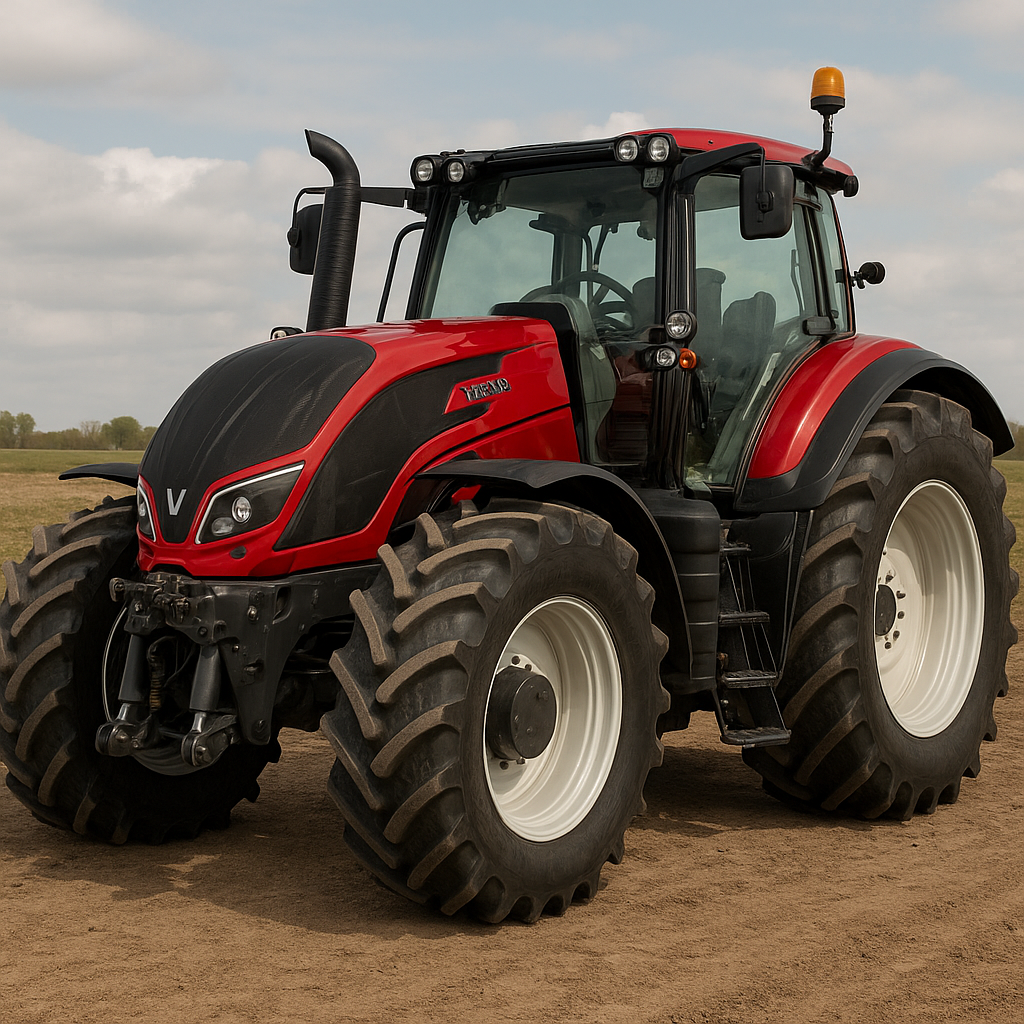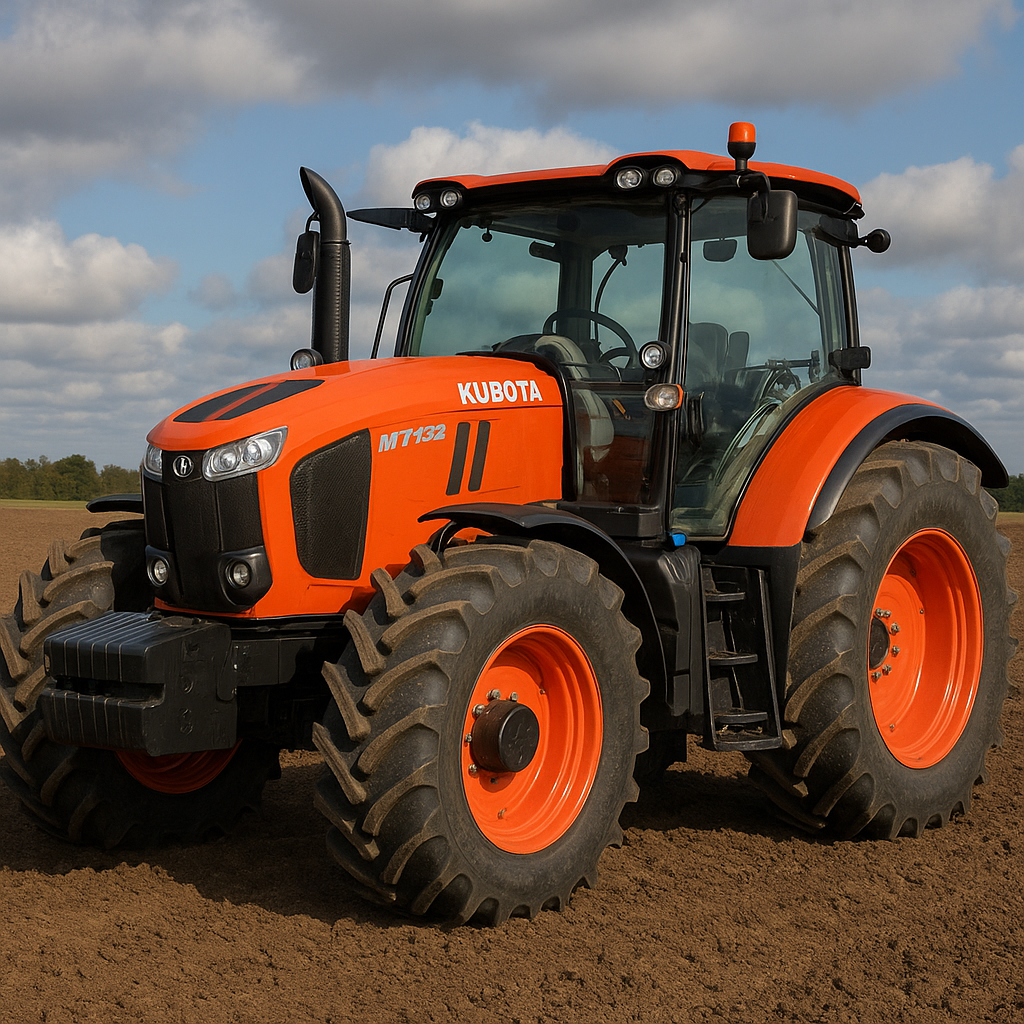
The Kubota M7-132 is a member of Kubota’s M7 series — a line designed to bridge the gap between compact utility tractors and larger, high-power agricultural machines. In this article, we will examine the M7-132’s design philosophy, typical technical characteristics, practical applications on farms and in municipal use, operator comfort and cab features, routine maintenance and operating costs, and its position in the market. Where precise numerical values are widely reported, they are presented as typical figures or ranges that may vary by configuration and market. The goal is to give a broad, practical overview that helps farmers, contractors, and equipment managers decide whether the M7-132 suits their needs.
Overview and design intent
The Kubota M7-132 was developed to offer a blend of power, versatility, and operator comfort for medium-to-large scale agricultural operations, contractors, and municipal fleets. As part of the M7 family, the M7-132 typically emphasizes efficient diesel power, advanced transmission options, and robust hydraulic and hitch capabilities so it can handle a wide spectrum of implements.
Kubota designed the M7 series to compete in the 120–180 horsepower segment with an emphasis on: durability for heavy duty work, modern emissions compliance, and operator ergonomics for long days in the field. The M7-132 generally targets operations that need a reliable mid-high horsepower tractor able to work with heavy tillage tools, large seed drills, sprayers, balers and loader duties without compromising maneuverability.
Typical technical characteristics
Exact specifications vary with model year and regional configurations, but there are recurring characteristics most commonly associated with the M7-132:
- Engine: Turbocharged diesel engine designed to meet current emissions standards, with intercooling and electronic fuel management. The model designation M7-132 typically indicates a rated engine output in the neighborhood of 132 horsepower (HP), with slight variations depending on manufacturer rating method and market.
- Transmission: The M7 series is offered with multiple transmission options in many markets — from powershift transmissions to continuously variable or Kubota’s variable transmission systems. This provides choices between simple, durable mechanical transmissions and smoother, more fuel-efficient continuously variable solutions.
- PTO: Standard rear PTO speeds (540/540E/1000 rpm) are usually available, and a front PTO (1000 rpm) is often offered as an option for front-mounted implements.
- Hydraulics: High-capacity hydraulic systems to support multi-function implements and front loaders. Flow rates and the number of remote valves vary by configuration but are designed to cover most moderate-to-heavy hydraulic demands.
- Rear linkage: Heavy-duty three-point hitch with electronic or mechanical draft control; lift capacities are configured to carry large implements securely. Typical maximum lift capacities in this class often range between 6,000 and 9,000 kg at the hitch depending on configuration.
- Cab and ergonomics: A comfortable, quiet cab with air conditioning, adjustable seat, and well-laid-out controls for daily operation. Visibility and noise reduction are design priorities for long working hours.
Example performance figures (typical)
Because markets and optional equipment change exact numbers, the following are typical, representative figures often associated with M7-132 configurations:
- Engine rated power: approximately 132 HP (engine output rating may differ by region)
- PTO power (approximate): 100–120 HP depending on transmission and gearing
- Fuel tank capacity: 200–300 liters (varies by configuration)
- Hydraulic flow (combined): 80–120 liters/minute depending on pump options
- Rear linkage lift capacity: typically in the 6,000–9,000 kg class (at hitch points)
- Operating weight: commonly between 5,000 and 7,000 kg depending on options and ballast
Note: Those numbers are broad estimates reflecting common builds. For purchase decisions, consult local Kubota dealer datasheets for the exact specification of the M7-132 available in your country and the chosen options package.
Primary applications and practical use cases
The M7-132’s design makes it suitable for a wide variety of agricultural and utility applications. Its balance of power, hydraulics and hitch capacity mean it can be the workhorse of many operations.
- Tillage and primary cultivation — The tractor can pull cultivators, disc harrows, and ploughs for medium to heavy soil preparation across broad-acre farms.
- Seeding and planting — With stable hitch control and precise PTO management, it performs well with large seed drills and planters, especially when paired with hydraulic or rate control implements.
- Crop care and spraying — When equipped with appropriate booms and sprayers, the M7-132 offers enough power to maintain forward speed while running large booms and pumping equipment.
- Baling and forage — It handles large balers, mowers, rakes and forage wagons, particularly where higher hydraulic flow is required for controls and pick-up systems.
- Loader work — With a front loader package, the M7-132 becomes a powerful material handler on farms and in municipal yards — moving silage, feed, pallets, and heavy materials.
- Transport and haulage — On medium-distance transport work around a farm or between fields, the tractor’s transmission options enable comfortable road speeds and fuel-efficient pulling.
- Municipal and contractor roles — Snow clearing (blade or blower), street sweeping, and ground maintenance benefit from the M7-132’s stability, PTO options and hydraulic capabilities.
Why operators choose the M7-132
Operators frequently select this model for its combination of versatility and reliability. It is powerful enough for demanding chores but still compact and nimble enough for tight-yard work. Here are common deciding factors:
- All-round utility — One tractor can cover many tasks, reducing the need for a large fleet.
- Operator comfort — Cab features and control ergonomics reduce fatigue.
- Aftertreatment and emissions — Modern engines with emissions controls reduce regulatory headaches in many markets.
- Serviceability — Kubota’s dealer network and design philosophy aim to keep maintenance straightforward.
Cab, controls and operator comfort
The operator environment is a key selling point for tractors intended for long hours. The M7-132 typically includes features designed to improve productivity and reduce operator fatigue.
- Spacious, climate-controlled cab with good outward visibility and often a high-mounted operator station for a wide field of view.
- Ergonomic layout with logically placed controls for the transmission, hydraulics and PTO. Adjustable steering columns and seats are common to tailor the fit.
- Advanced displays and monitors (depending on trim level) that provide telemetry on engine performance, fuel use, and implement control. Some configurations allow for ISOBUS compatibility for implement integration.
- Low noise and vibration levels through improved cab mounting and sound insulation.
These elements make the M7-132 suitable for operations where operators spend entire days running planting, spraying and harvest-support tasks. Comfort features also tend to increase resale value and operator retention.
Maintenance, fuel economy and operating costs
Owning and operating a mid-power tractor requires attention to running costs. The M7-132’s total cost of ownership will depend on how intensively it’s used, but several general points apply.
- Regular maintenance: oil, filters, fuel system checks and DPF (if equipped) maintenance are the backbone of long service life. Kubota typically designs service points for accessibility to minimize downtime.
- Fuel consumption: actual fuel use varies widely with load, terrain, and transmission choice. Typical fuel consumption for tractors in this horsepower class under average working loads ranges broadly — light draft tasks may use less than 8–10 liters/hour, while heavy draft operations can push consumption into the 12–25 liters/hour range. Choosing efficient transmission and optimizing engine RPM for the task reduces overall fuel costs.
- Service intervals and parts availability: Kubota’s global dealer network generally offers parts and scheduled maintenance plans. Local support reduces downtime in regions with official dealers.
- Resale value: mid-range tractors from established brands like Kubota often enjoy solid resale values, particularly when properly maintained.
Attachments, options and configuration flexibility
One of the M7-132’s strengths is the ability to tailor the tractor to a specific role through attachments and options:
- Front loaders and quick-attach buckets for material handling and farm yard chores.
- Front linkage and front PTO for snow blowers, front mowers or rollers.
- ISOBUS-compatible monitors and guidance systems for precision farming, auto-steer and data logging.
- Various tyre options for field work, transport or specialty applications (e.g., flotation tyres for wet soils).
- Hydraulic packages with multiple spool valves and increased flow for implements requiring rapid actuation or continuous high flow.
Plug-and-play compatibility with implements and modern electronic communication standards makes the tractor attractive to farms investing in precision farming or expanding their operations without buying several specialist machines.
Market position, competitors and statistics
The M7-132 sits in a highly competitive segment populated by several major manufacturers offering tractors in the 120–150 HP range. Competitors often include models from John Deere, New Holland, Case IH, Massey Ferguson and others. Buyers evaluate tractors on power, fuel efficiency, service network, cab comfort, and the specific implement ecosystem.
Some general market observations relevant to the M7-132:
- Popularity of mid-power tractors: Tractors in the 100–150 HP band are popular with mixed farmers and contractors because they offer a balance of power and operating economy compared to larger, more expensive units.
- Emissions compliance: Global emissions regulations (Tier 4 / Stage IV in many markets) have accelerated adoption of after-treatment technologies. Kubota’s M7 configurations typically incorporate compliant solutions, which can affect purchase cost and maintenance needs.
- Feature differentiation: Transmission type, hydraulic capacity and electronics packages are frequent differentiators; high-end buyers often prioritize CVT/KVT transmissions and ISOBUS compatibility.
Statistical figures for sales by model are proprietary and vary by region and year. However, in many regions the M7 series as a whole has become a notable offering for Kubota, helping the brand gain traction beyond its traditional compact and sub-100 HP base. For specific sales numbers, unit volumes and market share data by model year, consult Kubota’s regional sales reports or agricultural market research reports.
Operational tips and best practices
To get the most from an M7-132, consider these practical tips:
- Match implements to power: use implements within the recommended power range to avoid excessive fuel use or stress on drivetrain components.
- Optimize engine RPM: operate at the lowest engine speed that still provides functional implement performance to save fuel and reduce wear.
- Keep cooling and air systems clean: high-performance diesel engines rely on clean air and efficient cooling; regular cleaning of radiators and air filters reduces overheating risks.
- Follow scheduled maintenance closely: oil and filter changes, hydraulic fluid checks and monitoring of emissions-aftertreatment systems prolong life and maintain efficiency.
- Train operators: efficient operation and safe handling not only protect the tractor, but also lower operating costs and extend component life.
Strengths and potential limitations
Understanding where the M7-132 excels and where it may not be ideal helps buyers align expectations.
- Strengths:
- Versatility across implements and tasks
- Comfort and ergonomics for long days
- Emissions-compliant engine options for current regulations
- Robust hydraulic and hitch capacities suitable for heavy implements
- Potential limitations:
- Upfront cost of higher-spec transmissions and electronics can be significant
- Aftertreatment systems add maintenance considerations compared with older, simpler engines
- For very heavy, specialist fieldwork (e.g., deep ripping on very large farms), larger tractors in the 180–250 HP range may be more appropriate
Choosing an M7-132: checklist for buyers
Consider this checklist to see if the M7-132 matches your needs:
- Primary tasks: Are most jobs covered within the 120–150 HP range?
- Implements: Do you have heavy implements that require higher hydraulic flow or specific hitch capacities?
- Transmission preference: Do you need a simpler powershift or a smoother continuous variable solution for fuel savings and ease of use?
- Budget for options: Which packages (loader, front linkage, ISOBUS, auto-steer) are essential?
- Dealer support: Is there reliable after-sales support and parts availability in your area?
- Resale: Consider residuals — well-maintained Kubota tractors often retain value, but this varies regionally.
Conclusion
The Kubota M7-132 is designed as a versatile, comfortable and capable mid-power tractor suited to a wide range of agricultural and municipal tasks. With a focus on durability, operator comfort and modern emissions compliance, it fits well for mixed farms, contractors and operations requiring a single, multipurpose machine rather than a lineup of specialist units. Exact specifications and performance characteristics depend on market-specific configurations and optional packages, so prospective buyers should consult local Kubota dealers for detailed spec sheets and demo opportunities.
Kubota’s reputation for reliable machinery, combined with the M7-132’s balance of power, hydraulics, PTO capability and comfort, makes this tractor an attractive option in the 120–150 HP class. When chosen and maintained appropriately, it can deliver years of productive service across a variety of demanding tasks.