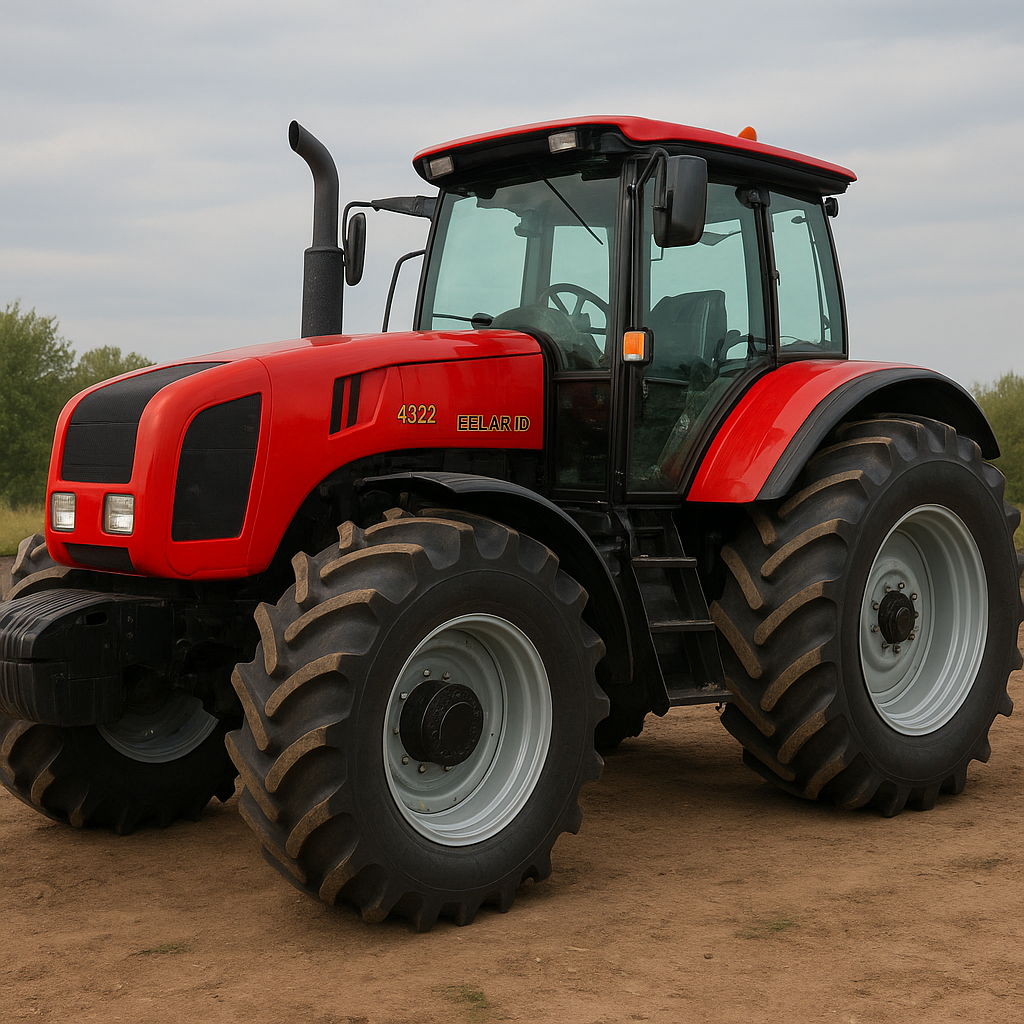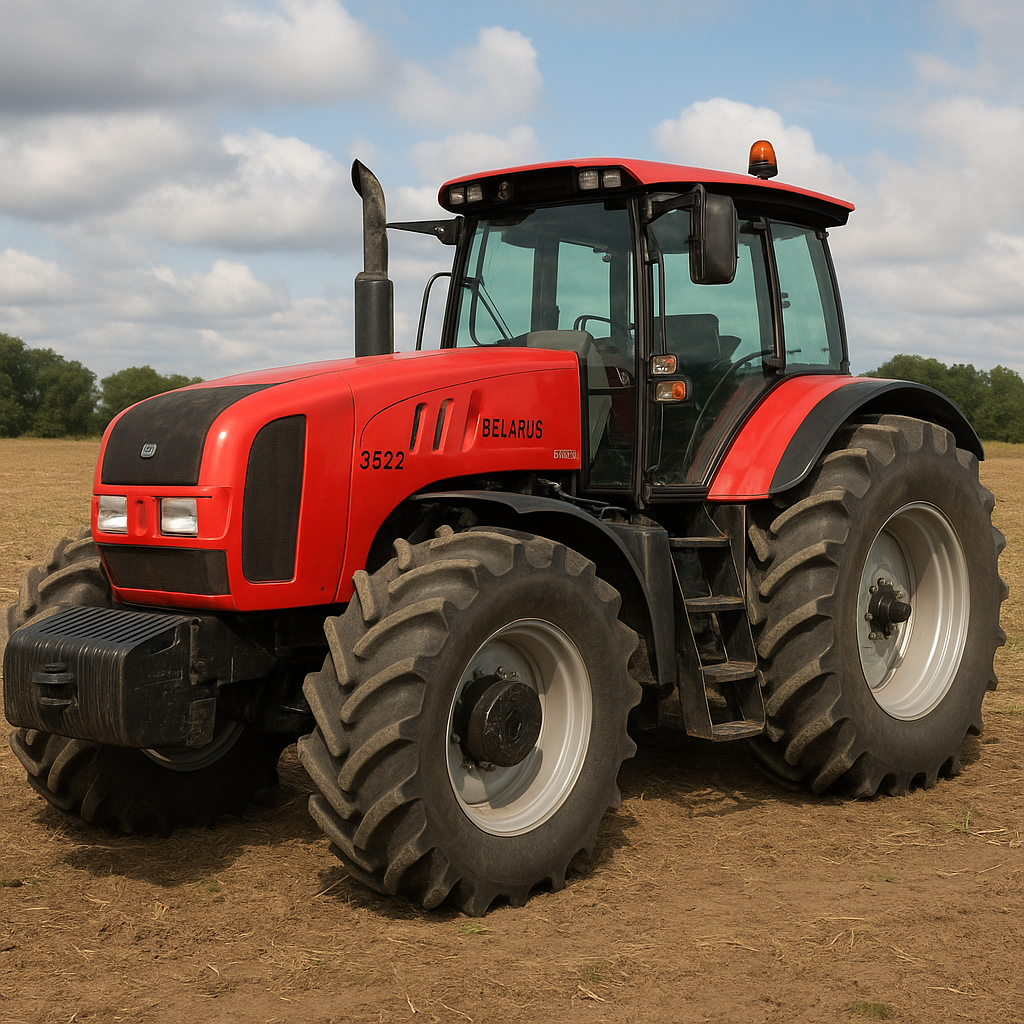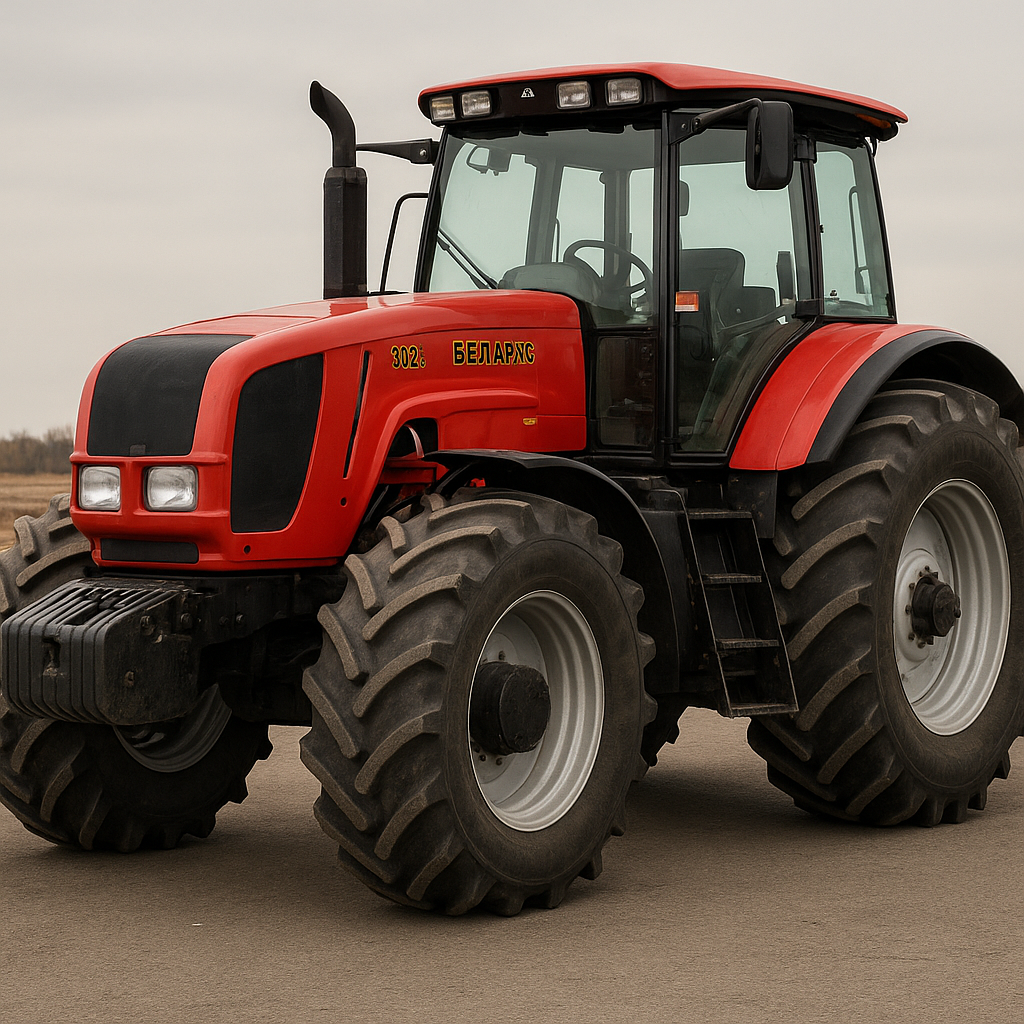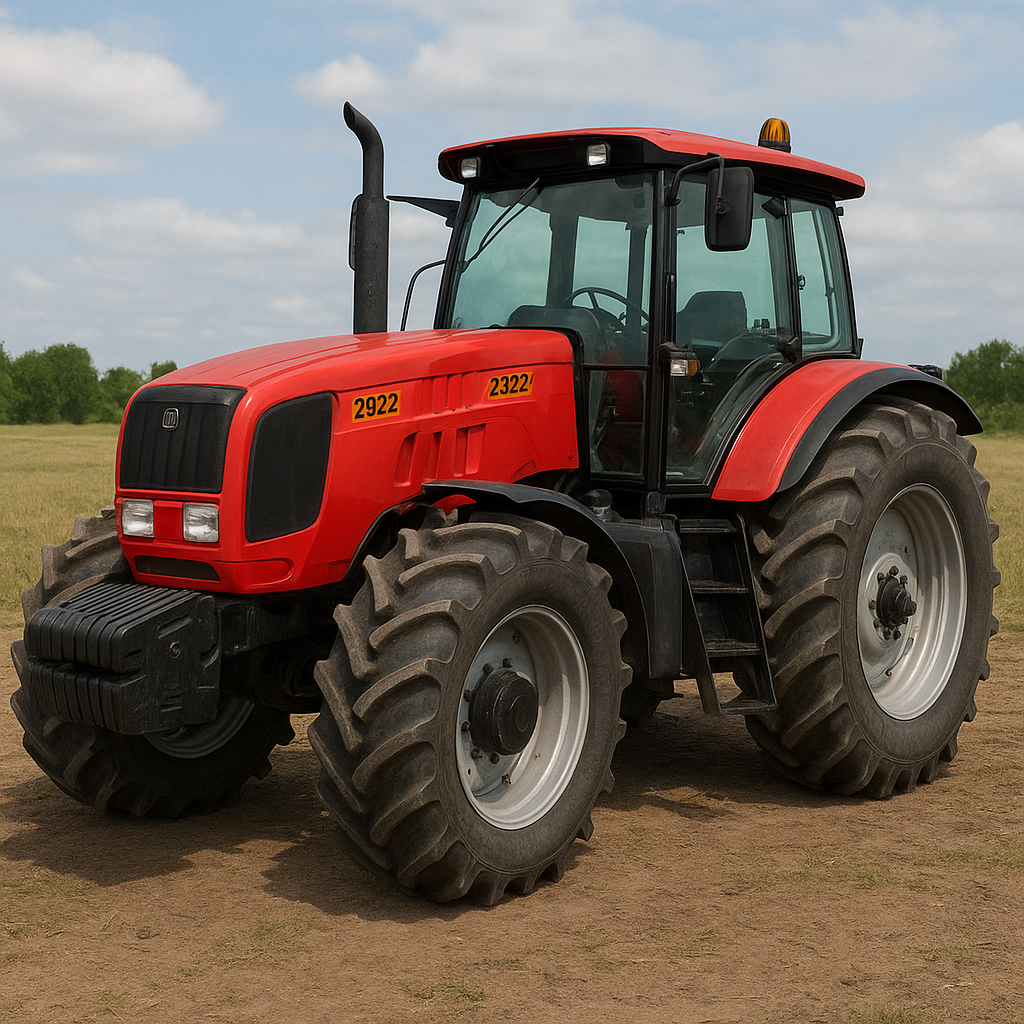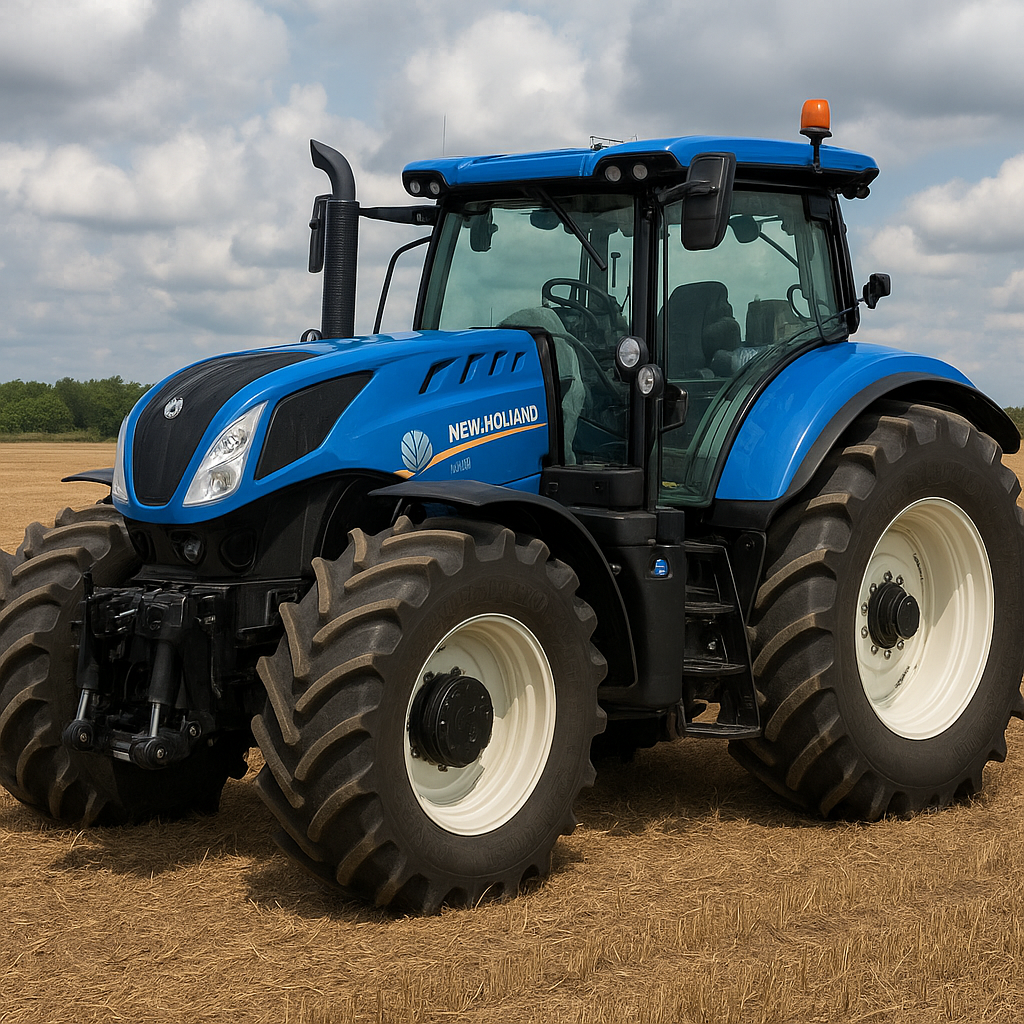
The New Holland T7.290 is a powerful and versatile tractor that sits in the upper-middle range of the T7 family, designed to meet the demands of modern arable, livestock, and mixed farming operations as well as contractors. In this article we will explore its technical characteristics, practical applications, operational economy, and user-oriented features, providing an in-depth picture of what the T7.290 offers to farmers and contractors. The content below covers typical specifications, common configurations, and considerations for purchase, operation and maintenance.
Design and technical overview
The New Holland T7.290 is built around a robust chassis and a modern 6-cylinder engine platform intended to combine high output with compliance to current emissions standards and reduced operating costs. It is often found equipped with the manufacturer’s Auto Command continuously variable transmission and the ECOBlue HI-eSCR emission aftertreatment system. The overall goal of the design is to deliver consistent power, good fuel economy and comfortable operation for long working days.
Engine and power
The heart of the T7.290 is its engine, commonly rated at about horsepower 290 (ISO). The tractor uses a six-cylinder FPT (Fiat Powertrain Technologies) or equivalent engine that emphasizes torque delivery across a broad rpm range, allowing operators to work at lower engine speeds for better fuel economy without sacrificing productivity. The engine is paired with advanced emissions control that focuses on SCR (selective catalytic reduction) technology to meet Stage IV / Tier 4 final regulations in many markets.
Key engine-related characteristics frequently highlighted by New Holland for this model include:
- Strong mid-range torque for draft and PTO work.
- Optimized fuel mapping for steady consumption under varying loads.
- AdBlue/DEF dosing system as part of the ECOBlue HI-eSCR aftertreatment.
Transmission and driveline
The T7.290 is often specified with New Holland’s Auto Command CVT system, which provides seamless speed control from creep speeds for heavy soil work up to road speeds (typically up to 40 or 50 km/h depending on local configuration). The transmission allows for infinite ratios within a given range and smooth transitions under load, which improves both comfort and implement control.
- Auto Command CVT with efficient torque management and an intuitive user interface.
- Alternative transmissions (in some markets) may include semi-powershift options or power shift ranges depending on model year and customer requirements.
- Fully mechanical or electronically controlled 4WD engagement with locking differentials for traction-critical situations.
Hydraulics, PTO and hitch
Hydraulic capacity and hitch strength are important for the T7.290, as this tractor is intended to handle heavy implements such as ploughs, seed drills, sprayers and large balers. Typical specifications are:
- High-capacity hydraulic systems designed to support multiple remote valves and high-flow implements; the tractor frequently offers open-centre or load-sensing hydraulics with auxiliary pump options.
- Rear linkage (three-point hitch) with strong lift capacity suitable for large mounted equipment; many configurations approach or exceed a 6–10 tonne lift capability depending on specification and lift geometry.
- PTO options commonly include 540/1000 rpm and economical modes (540E), with an electronically controlled engagement recommended for modern PTO-driven implements.
Practical applications and common uses
Thanks to its balance of power, hydraulic capacity and operator comfort, the New Holland T7.290 is used across a wide range of agricultural tasks. Its flexibility makes it popular among larger family farms, mixed farms, and contractors who need a single machine capable of many duties.
Arable farming
- Tillage: pulling deep ploughs and heavy cultivators where consistent draft and torque are essential.
- Seeding and planting: powering seed drills and planters with precise depth control and reliable hydraulic flow for variable-rate systems.
- Crop care: operating trailed sprayers and boom sprayers, often combined with GPS-assisted guidance for accurate application.
Hay and forage
- Haymaking: powering mowers, tedders and rakes; lifting and transport of large balers.
- Silage work: towing forage harvesters or trailers and driving high-flow hydraulic systems on forage equipment.
Livestock and mixed farm operations
- Feeding and bedding distribution with front loaders and large-capacity trailers.
- Manure and slurry handling: running tankers and slurry injectors where stable torque and precise low-speed control are beneficial.
Contracting and heavy transport
- Road transport of heavy loads between sites at permitted road speeds (via efficient transmission options).
- Contract tillage and large-scale field preparation where long working hours and reliability are essential.
Operator environment and controls
One of the real strengths of the T7.290 is its cab and control package, designed to reduce operator fatigue and improve productivity. New Holland has incorporated ergonomic layouts, advanced displays and suspension systems to keep drivers comfortable and in control during long operations.
Cab comfort and ergonomics
- Spacious cab with good 360-degree visibility and optional panoramic roof windows for loader work.
- Climate control with efficient heating and ventilation systems for year-round comfort.
- Seating options including air-suspension seats and fully adjustable controls to accommodate long shifts.
- Noise reduction measures and damping to minimize vibration and sound levels.
Control and precision farming features
The T7.290 commonly supports advanced precision farming systems to maximize field efficiency and reduce input costs. These include:
- GPS guidance compatibility and section-control features to limit overlap on spraying and seeding operations.
- Telematics and connectivity solutions (New Holland PLM systems) to monitor machine health and performance remotely.
- ISOBUS compatibility for plug-and-play implement control and simplified calibration.
Performance, fuel economy and emissions
Modern agricultural tractors must balance raw performance with operational economy and environmental requirements. The T7.290 emphasizes efficient power delivery and emissions control without excessive regeneration interruptions or complex maintenance steps.
Fuel consumption and operational efficiency
Fuel consumption is always dependent on work type, ground conditions and operator behavior, but the T7.290 is engineered to run economically in medium- to high-load scenarios. Strategies that improve efficiency include:
- Operating at reduced engine speeds where possible, thanks to a wide torque curve from the six-cylinder engine.
- Using CVT transmission to match engine speed to load without unnecessary revving.
- Employing precision farming tools to reduce overlaps, optimize working widths and apply inputs more accurately.
Emissions and aftertreatment
The T7.290 typically integrates ECOBlue HI-eSCR technology — a selective catalytic reduction system that treats exhaust gases post-combustion and minimizes the need for particulate filters. This setup provides:
- Compliance with Tier 4 final / Stage IV emissions regulations in many regions.
- Lower back-pressure and improved fuel economy compared with some DPF-based solutions.
- Requirement for AdBlue/DEF supply management as a routine operational task.
Maintenance, serviceability and ownership costs
Understanding maintenance intervals and service needs is key to estimating total cost of ownership for any high-horsepower tractor. The T7.290 was conceived to reduce downtime and ease service tasks for busy operators.
Routine servicing
- Regular checks include engine oil and filter changes, hydraulic oil and filters, fuel filters and AdBlue levels.
- Some components, like cooling systems and air filters, should be inspected more frequently in dusty or intensive environments.
- Extended service intervals are possible with synthetic oils and depending on operating conditions — always follow the manufacturer’s schedule.
Durability and reliability
New Holland designs the T7 line with robust components to withstand heavy use. Key elements affecting long-term reliability include drivetrain quality, cooling system efficiency and proper maintenance of the aftertreatment system. Operators who adhere to service schedules and use recommended lubricants and fluids typically see the best residual values.
Resale and depreciation considerations
Higher-end tractors such as the T7.290 tend to maintain value well when properly maintained. Factors that influence resale include overall hours of operation, maintenance history, condition of the cab and electronics, and the presence of optional packages such as telematics and upgraded hydraulics. Investing in preventative maintenance and record-keeping generally improves long-term ownership economics.
Technology, connectivity and attachments
New Holland has equipped the T7.290 to be compatible with the latest implements and farm-management systems. This makes it a platform not only for power delivery but also for data-driven farm optimization.
Telematics and data integration
Telematics offerings enable remote monitoring of machine position, fuel consumption, error codes and maintenance alerts. New Holland’s PLM Connect and related systems provide:
- Remote diagnostics and fleet management tools.
- Integration with farm management software for job tracking, documentation and compliance.
- Over-the-air updates or configuration downloads in supported regions.
Common attachments and implements
The T7.290 is frequently paired with a suite of implements to cover most farm tasks. Typical attachments include:
- Front loaders with quick-attach systems and hydraulic couplers for buckets, forks, and bale handlers.
- Large rear-mounted ploughs, discs and cultivators for primary and secondary tillage.
- Trailed seeders, sprayers and fertilizer spreaders for high-capacity field work.
- Baling equipment, forage wagons and silage trailers for dairy and beef operations.
Safety, regulations and operator training
Safety features and operator awareness are critical in machines of this size and power. The T7.290 includes many built-in protections and should be operated according to best practices.
- Robust lighting packages and optional work lights for night operations.
- Safety interlocks on PTO and hitch systems to prevent accidental engagement.
- Braking systems designed for heavy loads and optional trailer brakes when towing large implements on roads.
- Recommendations for operator training on telematics, precision farming systems, and PTO/hydraulic safety.
Market position, typical configurations and statistical notes
The New Holland T7.290 is positioned as a mid-to-high horsepower option within the T7 family, aimed at users who need more power than the lower-rated models but do not require the very largest tractors in the brand’s lineup. It competes with similar models from other major manufacturers in the 250–330 hp category.
Typical specifications (indicative)
Note: exact figures depend on year, market and optional equipment. The following are representative values often associated with the T7.290:
- Rated power: ~290 hp (ISO) under declared standards for the model name.
- Engine type: six-cylinder diesel with SCR aftertreatment (ECOBlue HI-eSCR).
- Transmission: Auto Command CVT (continuously variable) with configurable speed ranges.
- Maximum road speed: typically configured for 40–50 km/h.
- Fuel tank capacity: often in the several-hundred litre range (dependent on tank option).
- Rear lift capacity: engineered for heavy implements (manufacturer data should be consulted for exact numbers for a given configuration).
Sales and usage trends (general observations)
Within its segment, the T7.290 has been adopted by larger farms and contractors looking for a balance of tractive power, hydraulic output, and comfort. Growing interest in precision farming and telematics has also driven uptake of higher-spec machines such as this, which can carry the hardware and software packages necessary for modern, data-driven operations.
Buyer’s checklist and recommendations
If you are considering a New Holland T7.290, here are practical points to evaluate before purchase or lease:
- Match the tractor’s rated horsepower and torque curve to the implements you will run—avoid under- or over-specifying power.
- Decide on transmission preferences: CVT gives seamless control and fuel-saving potential; a powershift may be preferred by some for simplicity.
- Confirm hydraulic flow requirements for your implements and whether you need a high-flow hydraulic option.
- Consider cab options, visibility and comfort for long daily operating hours—test the seat, control layout and noise levels.
- Assess telematics and precision farming packages (ISOBUS, GPS guidance, PLM) based on whether you plan to pursue data-driven cost savings.
- Review maintenance intervals, local dealer support and spare parts availability to understand long-term serviceability.
Conclusion
The New Holland T7.290 is a versatile and capable tractor designed for demanding agricultural and contracting tasks. It blends modern engine and transmissions technologies with operator comfort and the ability to integrate precision farming systems. Whether used for heavy tillage, high-capacity transport, or intensive hay and forage operations, the T7.290 offers a compelling mix of efficiency, versatility and reliability. Prospective buyers should evaluate configurations carefully—particularly transmission, hydraulic capacity and telematics options—to ensure the tractor matches their operational needs and maximizes return on investment. Proper attention to maintenance and the use of connectivity features such as telematics will further enhance uptime and long-term value. Overall, the T7.290 is positioned as a strong choice for farms and contractors looking to combine high performance with modern efficiency and operator-focused features.