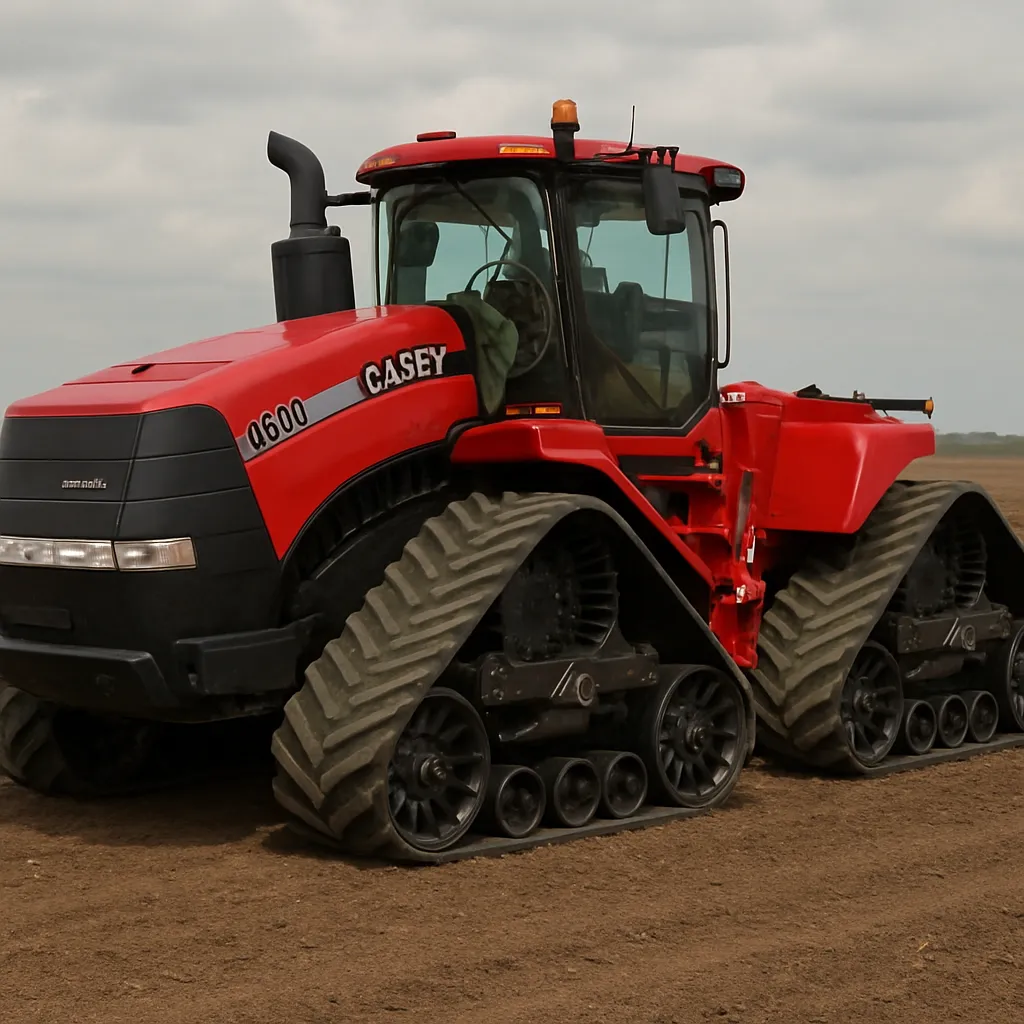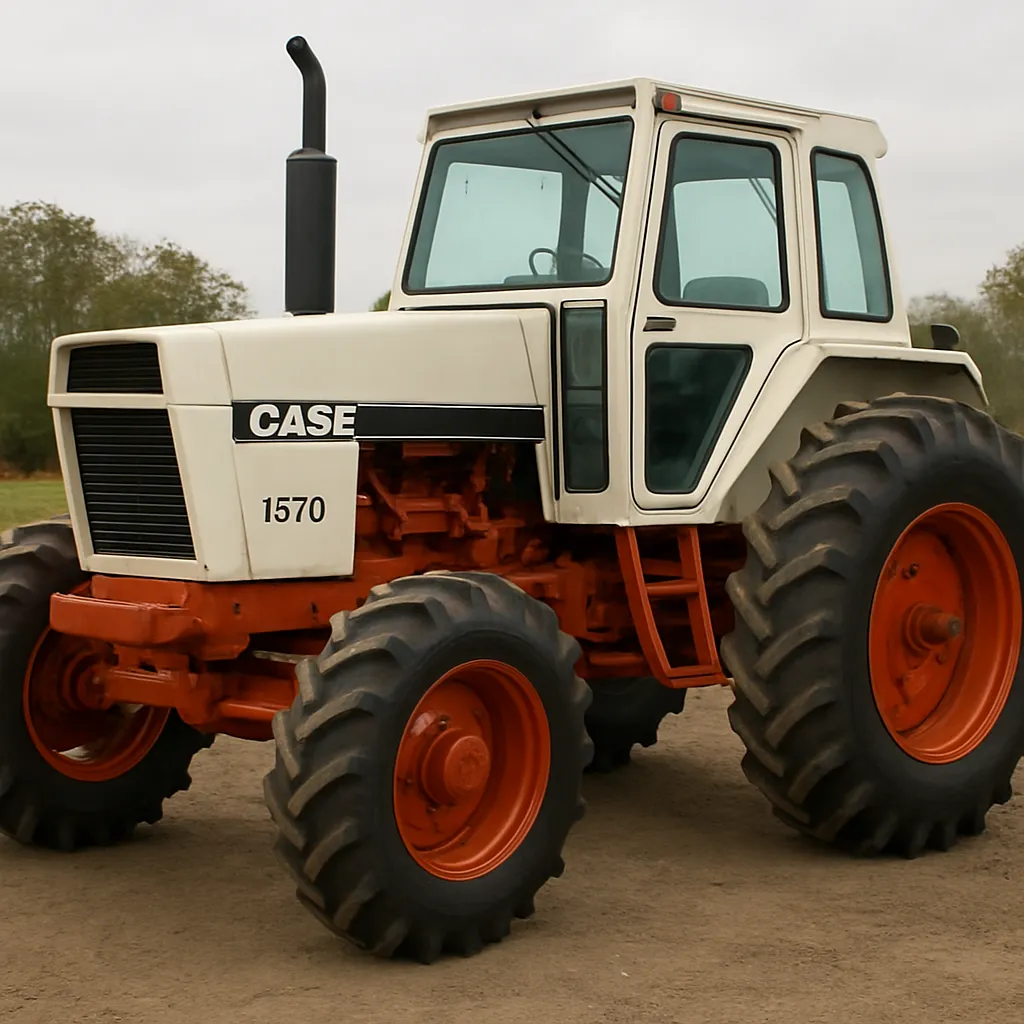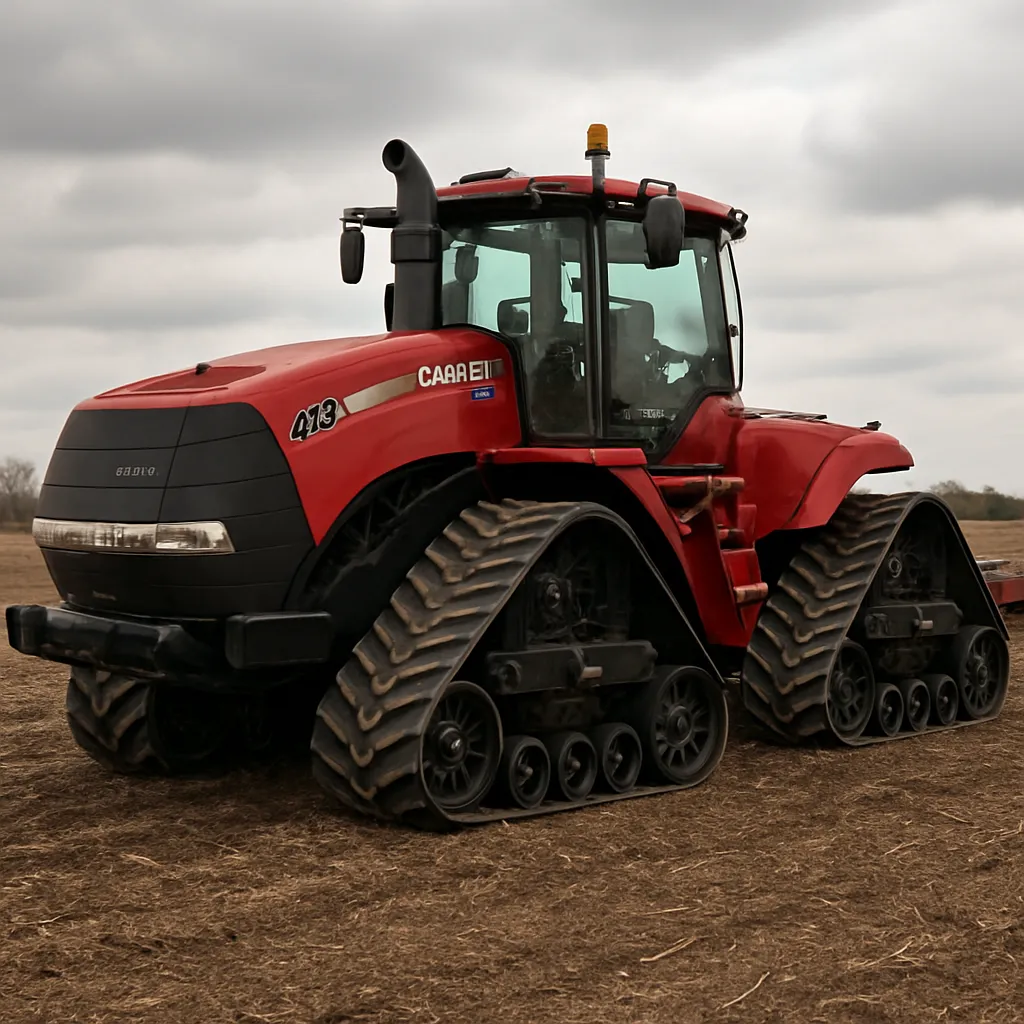
The Case IH Quadtrac 480 is a purpose-built, high-horsepower agricultural tractor designed for demanding fieldwork on large farms and contracting operations. Combining innovative track technology with modern engine management and precision farming systems, the Quadtrac 480 aims to deliver maximum traction, reduced soil compaction and dependable productivity across a wide range of applications. In the following sections, we explore its design, key specifications, typical uses, technological features, economic considerations and environmental impacts.
Overview and design philosophy
The Quadtrac family was developed to provide an alternative to large wheeled tractors and traditional dual-wheel setups by using four independent tracks that articulate independently. The Case IH Quadtrac 480 is positioned in the upper mid-to-high range of the product line and is engineered to give operators significant advantages in traction, flotation and field stability. The four-track configuration spreads machine weight more evenly and maintains continuous ground contact to maximize tractive effort and minimize slip.
The main design goals behind the Quadtrac lineup are improved field efficiency, lower soil compaction and better fuel economy under high-drawbar loads. By replacing conventional wheels with tracks, the Quadtrac 480 reduces the need for high ballasting and extra dual wheels, while offering consistent performance in sloppy, wet or uneven conditions where wheeled tractors often struggle. The cab is designed for operator comfort during long workdays, and the platform integrates modern electronics for monitoring, guidance and remote diagnostics.
Technical specifications and performance (typical and approximate)
Technical specifications can vary by model year and optional packages. The values below are representative of typical configurations for the Quadtrac 480 and should be treated as approximate.
- Engine: 6-cylinder turbocharged diesel, high-displacement industrial engine (commonly in the 12–13 liter class), with electronic fuel injection and emission control systems.
- Rated power: approximately 480 engine horsepower (continuous); with boost and management systems capable of delivering higher transient power under load.
- Maximum torque: high torque output across a broad rpm band to support heavy draft and transport operations (typical peak torque in the high Newton-meter range).
- Drivetrain: full-time four-track drive with independent suspension for each track module; robust final drives and planetary gearsets engineered for high-torque, low-speed pulling.
- Top road speed: typically up to around 40 km/h (depending on gearing and regional regulations).
- Operating weight: generally in the range of 16,000–20,000 kg (varies by configuration, ballast and attachments).
- Fuel capacity: large tanks to support prolonged field operations; many configurations provide several hundred liters to over 1,000 liters depending on options.
- Hydraulics: high-flow hydraulic systems with multiple remote valves and high-capacity pumps to operate large implements and powered attachments.
- Cab and electronics: climate-controlled, ergonomically designed cab with multi-function controls; integration with Case IH AFS Connect telemetry and precision guidance systems such as auto-steering and section control.
Performance in the field depends on implement, soil conditions and operator settings. Under ploughing or deep tillage loads, the Quadtrac 480 typically demonstrates higher fuel efficiency per hectare than comparable wheeled tractors due to superior traction and reduced slip. Typical fuel consumption can vary broadly—often in the range of tens of liters per hour (for heavy tillage operations consumption can exceed 30–40 L/h, while lighter operations will be lower).
Primary applications and typical working scenarios
The Quadtrac 480 is suited for high-intensity, large-area farming and contract work where power, traction and uptime are paramount. Common applications include:
- Tillage: primary ploughing, heavy cultivations, discing and power-hungry soil inversion tasks. The high pulling power and low slip improve pass-to-pass efficiency.
- Seeding and sowing: large planters and seed drills benefit from stable draft and consistent coulter pressure across the working width.
- Large-scale planting: enables contractors and large farms to complete planting windows faster, particularly in marginal weather when wheeled tractors might compact soil or lose traction.
- Harvest transport and heavy cartage: when equipped with appropriate hitches and transmissions, Quadtracs can move large grain carts or heavy trailers across fields with less rutting and better floatation.
- Subsoil ripping and deep tillage: the continuous torque delivery supports deep implements that place large resistance on the tractor.
- Specialty crops and wet soils: in crops like sugar beet or in regions with high rainfall, tracks help maintain operations when wheels would become bogged.
Contractors who move between different clients appreciate the Quadtrac 480’s ability to maintain traction and productivity across diverse soil types and conditions without constant re-ballasting or adjusting tire pressures.
Tracks, flotation and soil impact
The most distinguishing feature of the Quadtrac tractors is the four independent tracks. Each track module uses a set of bogies and a flexible belt that keeps a large proportion of the tractor’s weight distributed over a greater area than conventional tires. This results in several agronomic benefits:
- Reduced ground pressure: Tracks lower the effective ground pressure, often substantially compared with dual-wheel configurations. Lower pressure means less compaction in the topsoil and subsoil profiles, which can improve drainage and root penetration over time.
- Sustained traction: Continuous ground contact with multiple contact patches reduces slip and increases drawbar pulling capacity.
- Improved stability: On slopes and uneven terrain, independent track suspension provides consistent traction and lower rollover risk compared with large single wheels.
- Less regrounding and rutting: Wider contact area and lower pressure reduce deep ruts that require later remediation.
Quantitatively, ground contact pressures for tracked machines will vary with ballast and soil wetness but are commonly reported as noticeably lower than those of comparable wheeled tractors—often by a substantial percentage. Individual operators should consider local soil types and cropping systems to evaluate long-term benefits to soil health.
Advanced technology and precision farming features
Case IH equips Quadtrac tractors with a suite of electronics and software to maximize efficiency and uptime. Important features include:
- AFS Connect telemetry: remote monitoring of machine status, location, fuel use and fault codes. Enables fleet management and predictive maintenance workflows.
- Auto-steering and guidance: GNSS-based steering assists reduce overlap, increase accuracy and help operators maintain consistent implement control across large fields.
- Section and rate control: automated implement control for seeders and sprayers reduces input waste and improves field uniformity.
- Engine and transmission management: adaptive systems that adjust engine output and transmission behaviour to optimize fuel economy under variable loads.
- Operator ergonomics: configurable dashboards, touchscreen monitors, and memory settings for different implements and operators.
These technologies contribute to improved productivity, lower input costs per hectare and better record-keeping for regulatory and business planning purposes.
Economics, productivity and operating costs
From an economic standpoint, the Quadtrac 480 targets large farms and contractors where the high capital cost can be amortized across many hectares and high-value tasks. Key economic considerations include:
- Purchase price: premium compared with medium-size wheeled tractors; justified by improved field efficiency, reduced tyre and rim costs and potentially lower fuel use under heavy load.
- Fuel and consumables: fuel consumption varies by task; heavy tillage can be fuel intensive, but reduced slip can lower effective consumption per hectare versus wheels.
- Maintenance: tracks and undercarriage components have different maintenance profiles than tires—periodic inspection of track tension, wear on sprockets and bogies is required. Long-term costs depend on usage patterns and terrain.
- Resale value: high-spec machines from reputable brands often retain value well, assuming good maintenance and reasonable hours.
- Hectares per day: depends on implement width and soil conditions; Quadtrac tractors are typically used to move large implements enabling several tens to hundreds of hectares per day in seeding operations under favourable conditions.
When deciding on a Quadtrac 480, operators often perform a return-on-investment analysis comparing the machine’s higher initial cost with potential gains: faster completion of critical tasks (e.g., seeding windows), reduced need for extra equipment or deep tillage remediation, and lower soil degradation that can affect future yields.
Maintenance, durability and serviceability
Tracked tractors require targeted maintenance practices that differ from wheeled tractors:
- Regular inspection and adjustment of track tension to avoid premature wear or de-tracking.
- Monitoring undercarriage components such as rollers, idlers, sprockets and belts for wear and foreign object damage.
- Hydraulic system maintenance: filters, fluid changes and leak checks are crucial to ensure reliable implement operations.
- Engine and drivetrain service: keeping to prescribed intervals for oil and filter changes, coolant checks and transmission servicing.
- Software updates and diagnostics: leveraging the AFS Connect platform for remote diagnostics and over-the-air updates where available.
Case IH typically offers dealer networks and service plans to support large operators, including training for maintenance staff. Good preventive care greatly extends the working life of a Quadtrac and helps preserve resale value.
Environmental and agronomic impacts
The Quadtrac 480’s track design contributes to reduced compaction and improved soil structure when compared with heavy wheeled configurations. Benefits include:
- Lower compaction: better porosity and root zone conditions, supporting yield potential in many cropping systems.
- Reduced need for remedial passes: fewer passes to correct ruts or compacted layers can lower fuel and labor use.
- Potential for earlier operations: better traction in cool or wet conditions may allow some operations to proceed earlier in the season, improving scheduling flexibility.
However, the environmental benefits depend on correct use: overloading, excessively repeated passes and working when soils are overly saturated can still cause damage. Proper management and understanding of soil moisture, compaction thresholds and crop rotation are necessary to realize long-term benefits.
Comparisons and alternatives
Large farms and contractors considering a Quadtrac 480 typically evaluate several alternatives:
- Wheeled tractors with duals or triple wheels: often lower purchase cost and simpler maintenance, but potentially higher soil compaction and lower traction in poor conditions.
- Two-track (bi-trac) solutions: offer some flotation gains but less articulation and soil conformity compared with four independent tracks.
- Tracked crawler tractors: some crawler machines offer extreme traction but may lack the on-road speed and stability of Quadtrac systems.
Decisions hinge on local soil types, farm size, typical implements and the economic model for the operation. Quadtrac is often recommended where a balance between field performance, road transport capability and reduced soil compaction is desired.
Practical operator tips
- Monitor track tension daily during heavy use and after long transports to prevent accelerated wear.
- Use telemetry data to plan preventative maintenance and to analyze fuel and implement performance trends.
- Adjust ballast and implement settings to match soil conditions—less is often more for flotation while still preserving traction.
- Schedule heavy operations when soil moisture is favourable to avoid deep compaction despite the benefits of tracks.
- Train multiple operators on best practices for track care and electronic system usage to maintain machine condition and maximize uptime.
Summary and outlook
The Case IH Quadtrac 480 is a powerful solution for large-scale agricultural operations and contractors who require reliable traction, efficient power transfer and reduced soil impact under heavy-duty tasks. With advanced electronics, precision farming integration and the agronomic advantages of four independent tracks, the Quadtrac 480 enables operators to expand the operational window and maintain productivity across challenging field conditions. As precision and connectivity continue to evolve, machines like the Quadtrac 480 are likely to remain relevant by combining mechanical capability with data-driven farm management. Proper maintenance, informed agronomy and attention to operating conditions are key to maximizing the economic and environmental benefits of the machine.