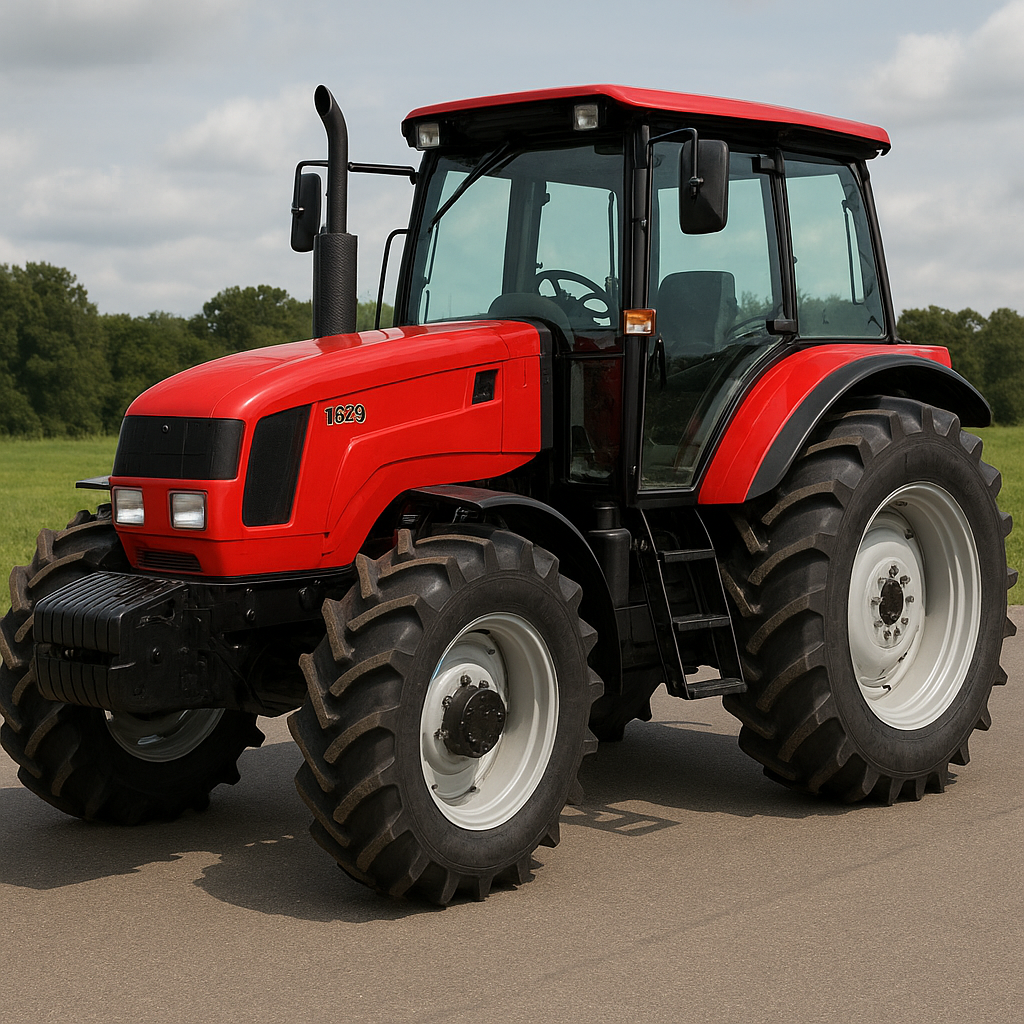
The Belarus 1523 is a versatile agricultural tractor produced under the Belarus (MTZ) brand, known for its robust construction, practical design and broad range of applications on farms and in industrial settings. In this article you will find an overview of its background, technical characteristics, practical uses, maintenance recommendations and market context. The text aims to provide both general readers and potential users with a comprehensive picture of what makes the Belarus 1523 a popular choice in many regions.
Overview and historical context
The Belarus line of tractors is manufactured by Minsk Tractor Works (MTZ), a company with decades of experience producing machinery designed for the often harsh climates and demanding working conditions of Eastern Europe and beyond. The model often referred to as Belarus 1523 belongs to the medium-to-high power segment of MTZ’s lineup and is positioned as a general-purpose, multi-role tractor. It draws on the brand’s philosophy of combining durability, simplicity and cost-effective ownership.
Since the Soviet era, Belarus tractors have been widely used across farms, state enterprises and municipal services. Over the years MTZ has modernized its product range with improved engines, more ergonomic cabs and updated electronic systems while retaining core design principles that make the machines easy to maintain in remote locations. The 1523 model series continues this tradition, often chosen where dependable performance and straightforward servicing are priorities.
Design philosophy and main features
The Belarus 1523 emphasizes a balance between power, traction and operator comfort. The machine normally features a rugged chassis and reinforced transmission to handle both heavy field tasks and demanding transport operations. Key design elements typically include a four-wheel drive system, a reinforced three-point hitch, and a power take-off (PTO) system compatible with a wide range of agricultural implements.
- Robust frame and reinforced driveline to withstand high loads and extended use.
Technical specifications (typical and representative)
Technical specifications for the Belarus 1523 can vary by production year, regional configuration and optional packages. The values below are representative figures commonly cited for this model range. For exact numbers it is always best to consult the seller’s spec sheet for a particular unit or production run.
- Engine: four-cylinder turbocharged diesel engine, intercooled (Euro II/III variants may exist depending on market).
- Power: nominal engine power around 150 hp (110–115 kW) — class-leading for medium-to-large field work.
- PTO output: typical PTO speeds 540 / 1000 rpm options; rated PTO horsepower slightly below engine rating (commonly 120–140 hp at PTO).
- Transmission: multi-speed synchronized or partially synchronized gearbox with multiple forward and reverse gears; optional power shift or range-split variants in certain markets (commonly 16F/8R up to 24F/12R arrangements).
- Four-wheel drive with differential lock(s) for improved traction on varied soil and slope conditions.
- Hydraulics: open-center hydraulic system with a category II/III three-point hitch; lifting capacity typically in the range of 3,500–6,000 kg depending on configuration and linkage.
- Fuel tank capacity: commonly between 180–300 liters for long operating intervals.
- Top road speed: typically 30–40 km/h depending on gearing and tires.
- Weight: operating weight often between 5,000–7,500 kg depending on options, ballast and implements.
- Cab: pressurized, optional air conditioning, air-suspension seat and modern control layout in newer versions.
Notes about variants and options
MTZ and regional distributors have historically offered a range of options for this model family. These include different transmission choices, front loader kits, dual or wide tires for traction, front and rear hitch configurations, and specialty packages for orchards, vineyards or municipal services. Emissions standards and safety equipment may vary by market and production year—some export markets may feature additional electronic engine management systems or comfort packages.
Primary applications and industries
The Belarus 1523’s combination of power and versatility makes it suitable for a wide variety of tasks across agriculture, industry and municipal services. The following outlines the most common uses where the 1523 stands out.
Agricultural applications
- Primary tillage: ploughing, heavy discing and deep cultivation where strong tractive effort is required.
- Secondary tillage and seeding: power for seed drills, cultivators and precision seeding equipment.
- Crop protection: powering sprayers (trail or trailed boom units) using PTO and hydraulic systems.
- Hay and forage: pulling mowers, balers and rakes, and towing forage wagons.
- Transport: hauling trailers loaded with grain, fertilizer or machinery between fields and storage facilities.
Construction, forestry and municipal roles
- Loader work: when fitted with a front loader, the 1523 can handle material loading, pallet work and site clearing.
- Forestry: skidder or winch attachments for light to moderate forestry tasks; advantage in rugged terrains due to strong frame.
- Snow removal and road maintenance: front blades, salt spreaders and municipal attachments for year-round utility.
Specialized uses
With appropriate conversion kits, the tractor serves in niche roles such as orchard or vineyard versions with reduced canopy heights, or as a prime mover for irrigation sets and mobile grain cleaning systems. The ability to run a variety of implements from seeders to large-capacity balers makes it attractive to cooperatives and larger mixed farms.
Operational strengths and practical advantages
There are several reasons why operators choose the Belarus 1523 when evaluating tractors in this horsepower class:
- Reliability: robust mechanical components designed for extended service life, even under harsh conditions.
- Serviceability: widespread parts availability in many export markets and a straightforward mechanical layout that allows repairs with basic tools.
- Cost-effectiveness: often priced competitively compared with Western equivalents, providing a favorable cost-per-horsepower ratio.
- Versatility: suitable for a wide range of implements and tasks, reducing the need for multiple specialized machines.
- Adaptability to local conditions: many units operate with simple electronics, which is an advantage in areas with limited diagnostic resources.
Fuel economy, emissions and running costs
Fuel consumption depends on working load, PTO usage and terrain; for a tractor of roughly 150 hp, average fuel consumption while performing heavy field duties may range roughly from 12 to 25 liters per hour. In transport or light-duty operations consumption will be lower. Modern variants sold in regulated markets may include engine management systems to reduce fuel use and meet emissions standards, but the core MTZ approach prioritizes durable mechanical solutions rather than the most advanced emission after-treatment systems.
Running costs are influenced by factors such as local fuel prices, availability of parts, and the cost of routine servicing. Operators often favor the Belarus 1523 because its mechanical simplicity translates into lower labour and parts costs over the machine’s lifespan compared with highly electronic competitors.
Maintenance, common issues and lifespan
Routine maintenance is straightforward and critical to long-term operation. Regular tasks include oil and filter changes, fuel system maintenance, cooling system checks, hydraulic fluid servicing and greasing of moving joints. The simplicity of many components means that operators in remote areas can perform significant repairs on farm.
- Common wear items: clutch assembly, brake components, belt drives and hydraulic seals—these are typical maintenance items on any heavy-use tractor.
- Emissions- and electronics-related care: newer models equipped with advanced engine management will require attention to sensors and electronic units, but many markets still use mechanically simpler engines to reduce complexity.
- Typical service intervals: depend on operating hours and conditions; following the manufacturer’s service schedule will maximize useful life.
With proper maintenance and sensible use, a Belarus 1523 can remain productive for decades—many MTZ tractors are known to achieve tens of thousands of operating hours before major rebuilds are required.
Market presence, exports and user base
Belarus tractors enjoy a large installed base in Eastern Europe, Central Asia, Africa, Latin America and some parts of the Middle East. Their popularity in these regions is due to historic distribution networks, competitive pricing, and adaptability to local repair ecosystems. The Belarus 1523 sits well in markets that demand a powerful tractor capable of heavy fieldwork without the total cost of ownership associated with some Western brands.
Key buyer segments include family farms upgrading to larger power, agricultural cooperatives, government and municipal fleets, and contractors who need a reliable workhorse for seasonal peaks.
Comparison to competitors
When compared to similarly rated tractors from other manufacturers, the Belarus 1523 typically competes on price, robustness and ease of maintenance. Western and Japanese manufacturers may offer more advanced electronics, smoother transmissions or slightly better fuel economy, but often at a higher purchase price and with greater service complexity.
- Advantages over cheaper compact models: more usable torque and better traction for heavy implements.
- Advantages over some premium models: simpler maintenance, lower initial cost, and higher tolerance for lower-grade fuels in some configurations.
- Potential disadvantages: may lack the most modern comfort or fuel-saving electronics found in latest Western offerings.
Operator experience and ergonomics
MTZ has steadily improved cab ergonomics and operator comfort over successive model updates. Typical modern cabs offered with the 1523 include adjustable seating, good all-round visibility, climate control options and an instrument panel arranged for practical field use. Controls are positioned for intuitive operation during long shifts, and optional packages may add conveniences such as radio, suspension seats and upgraded lighting packages for night work.
Interesting facts and lesser-known points
- The Belarus brand is often colloquially used to describe the tractor itself—users refer to their machine simply as “a Belarus.”
- Because of the model’s straightforward mechanics, many local workshops in developing countries are equipped to keep these machines running without factory-level diagnostics.
- The model’s heavy-duty design makes it a common choice for conversion into specialized industrial machines—examples include stationary power units, irrigation power sources and even mobile workshops.
- MTZ has supported regional dealers with parts distribution networks that helped solidify long-term customer confidence in replacement parts availability.
Acquisition and resale considerations
When evaluating a Belarus 1523 for purchase, prospective buyers should:
- Inspect service history and confirm routine maintenance—clutch and transmission condition are key indicators of past use.
- Verify hydraulic system performance, hitch function and PTO operation under load.
- Check for signs of heavy-frame damage or repeated repairs—these can increase future downtime.
- Consider availability and pricing of spare parts in your region and whether a local dealer or independent workshop supports the model.
Resale values vary widely by region and overall condition. Machines with documented service history and well-maintained cabins typically fetch better prices. Due to the strong parts network in many countries, used 1523s often retain practical resale value among agricultural buyers.
Practical tips for maximizing value
- Follow the manufacturer’s service schedule and document maintenance to enhance resale value.
- Use recommended lubricants and fuel filtration systems to protect the engine and injection equipment.
- Invest in operator training to reduce misuse and premature wear—fuel-efficient driving and correct implement matching extend component life.
- Store the machine under shelter where possible to preserve cab and painted surfaces, reducing corrosion and cab wear.
Where to find parts and support
Parts and service networks are available through official MTZ distributors, large agricultural dealerships and specialist independent suppliers. In regions with long-standing Belarus usage, local aftermarket supply chains often stock consumables such as filters, belts, clutch components and hydraulic seals. For major engine or transmission overhauls, factory or authorized service centers are recommended to ensure correct calibration and warranty compliance where applicable.
Summary
The Belarus 1523 is a practical, powerful and adaptable tractor aimed at users who need a robust machine capable of handling demanding agricultural and industrial tasks. Its strengths are durability, serviceability and competitive cost of ownership. While exact technical figures vary by configuration, the 1523 generally sits in the ~150 hp class and supports a wide array of implements via its PTO and hydraulic systems. For farms, contractors and municipal fleets seeking a no-nonsense workhorse, the Belarus 1523 is a compelling option—especially where simple maintenance, parts availability and proven mechanical design are priorities.