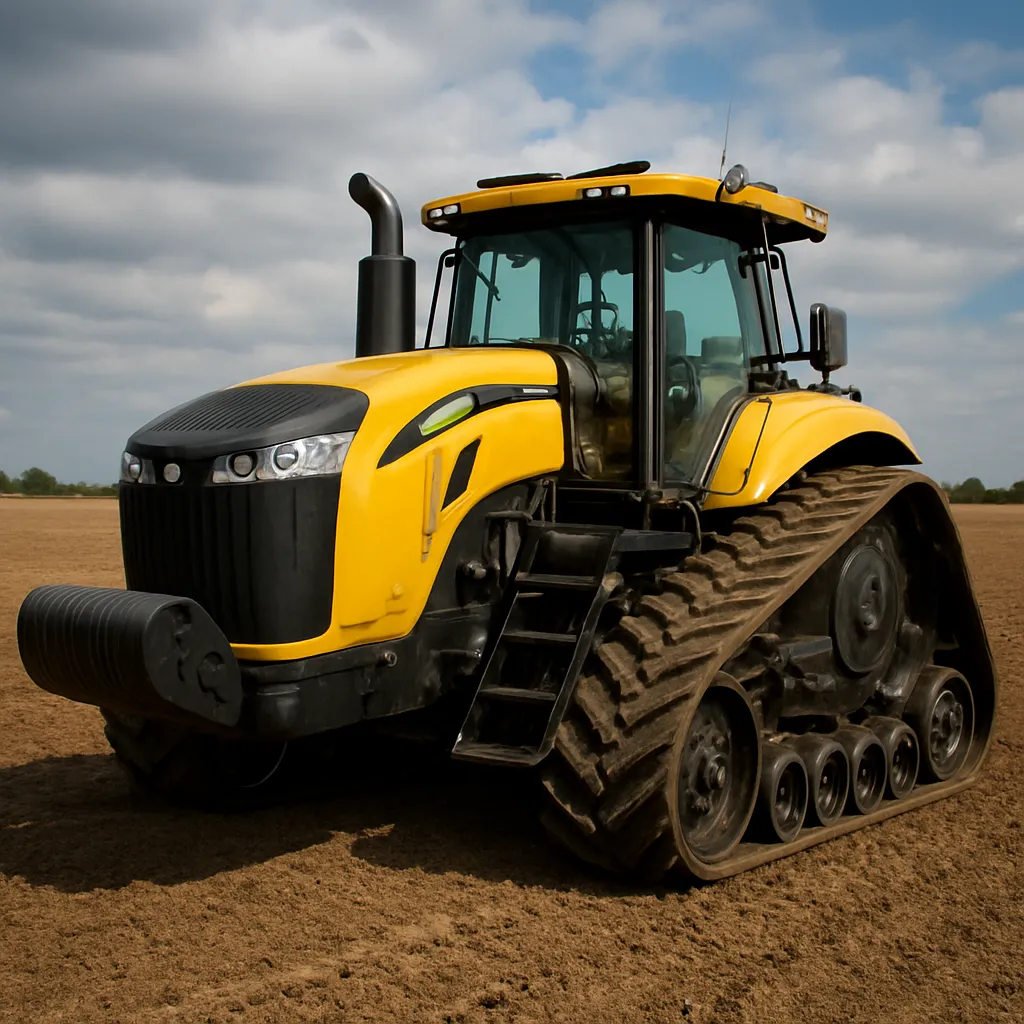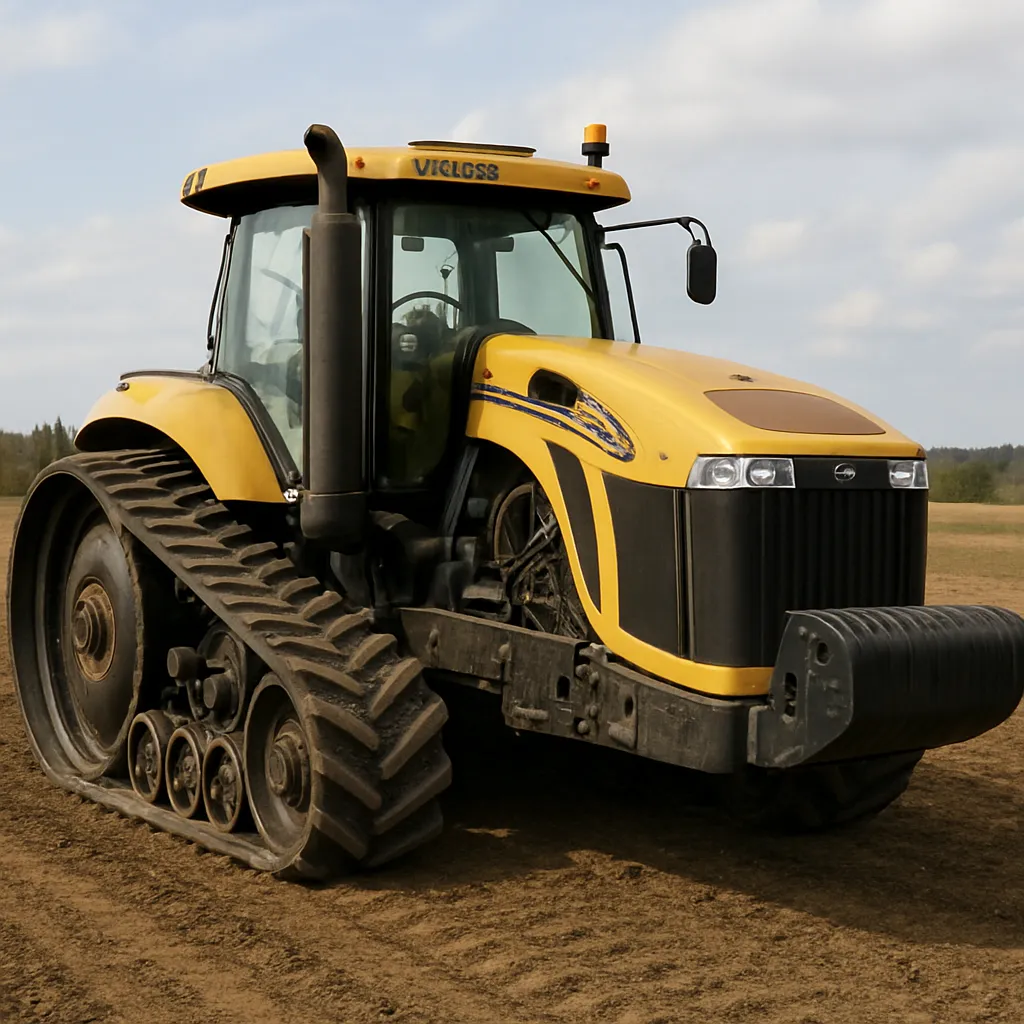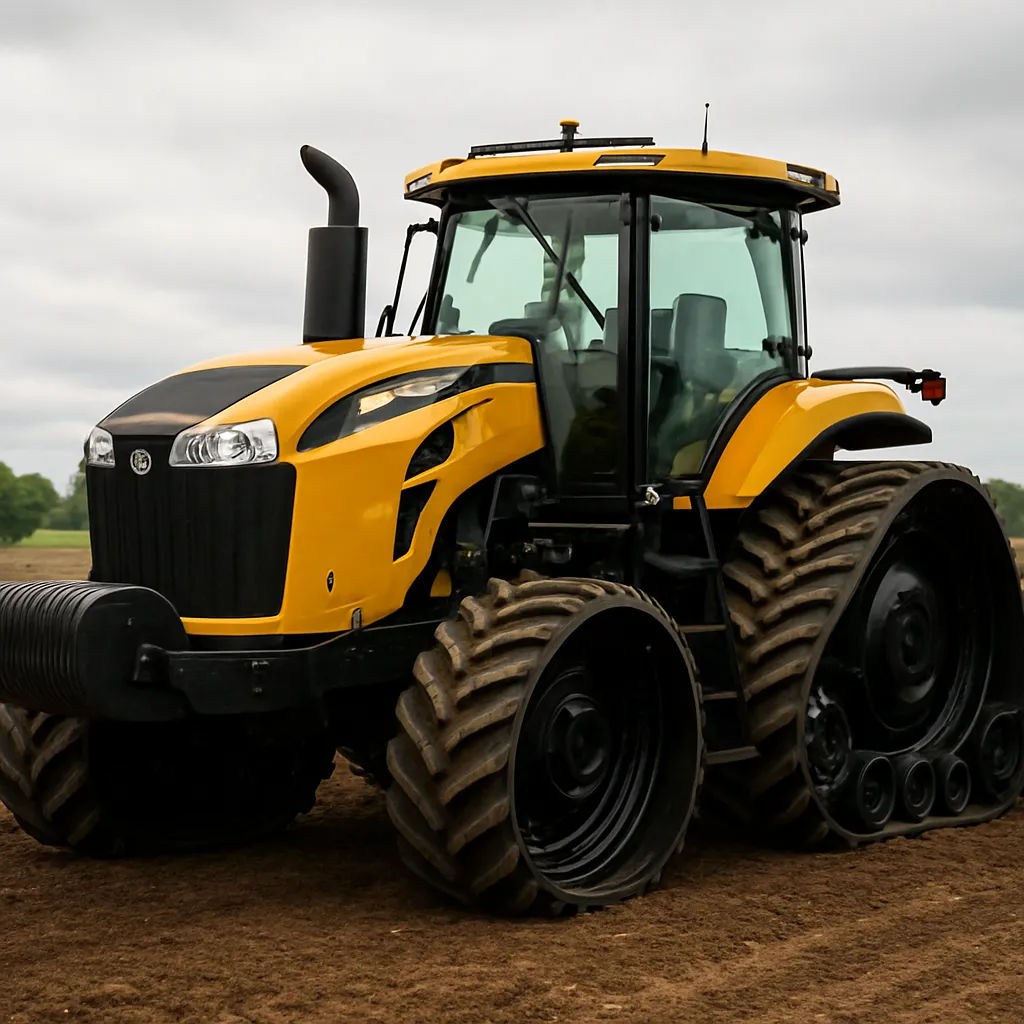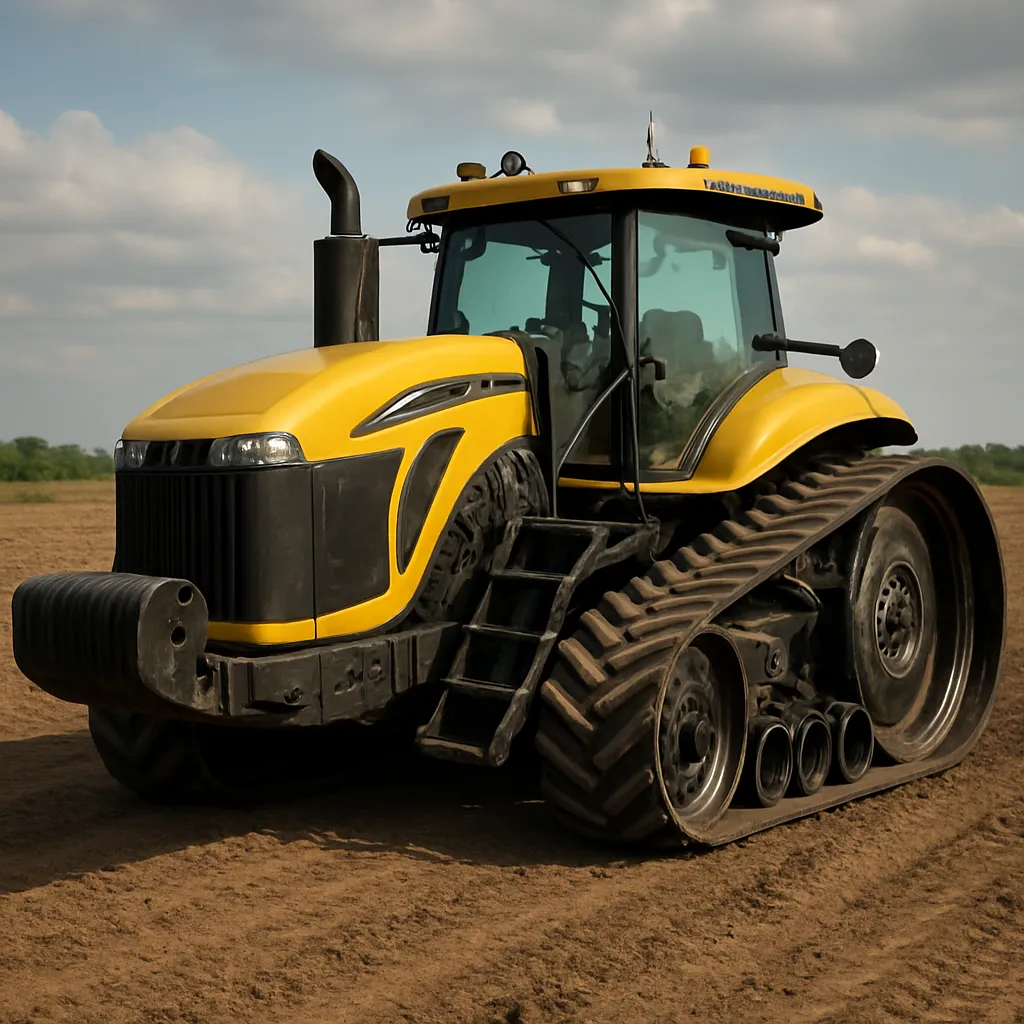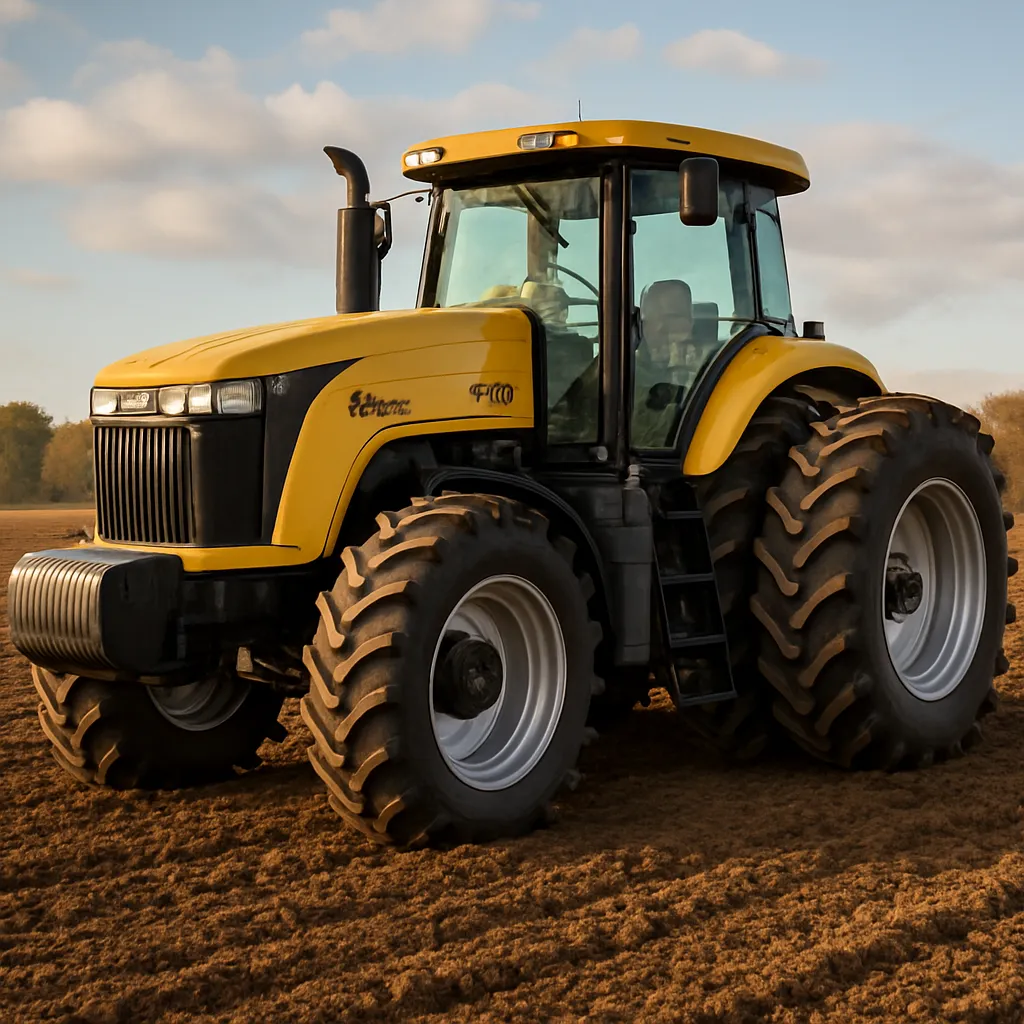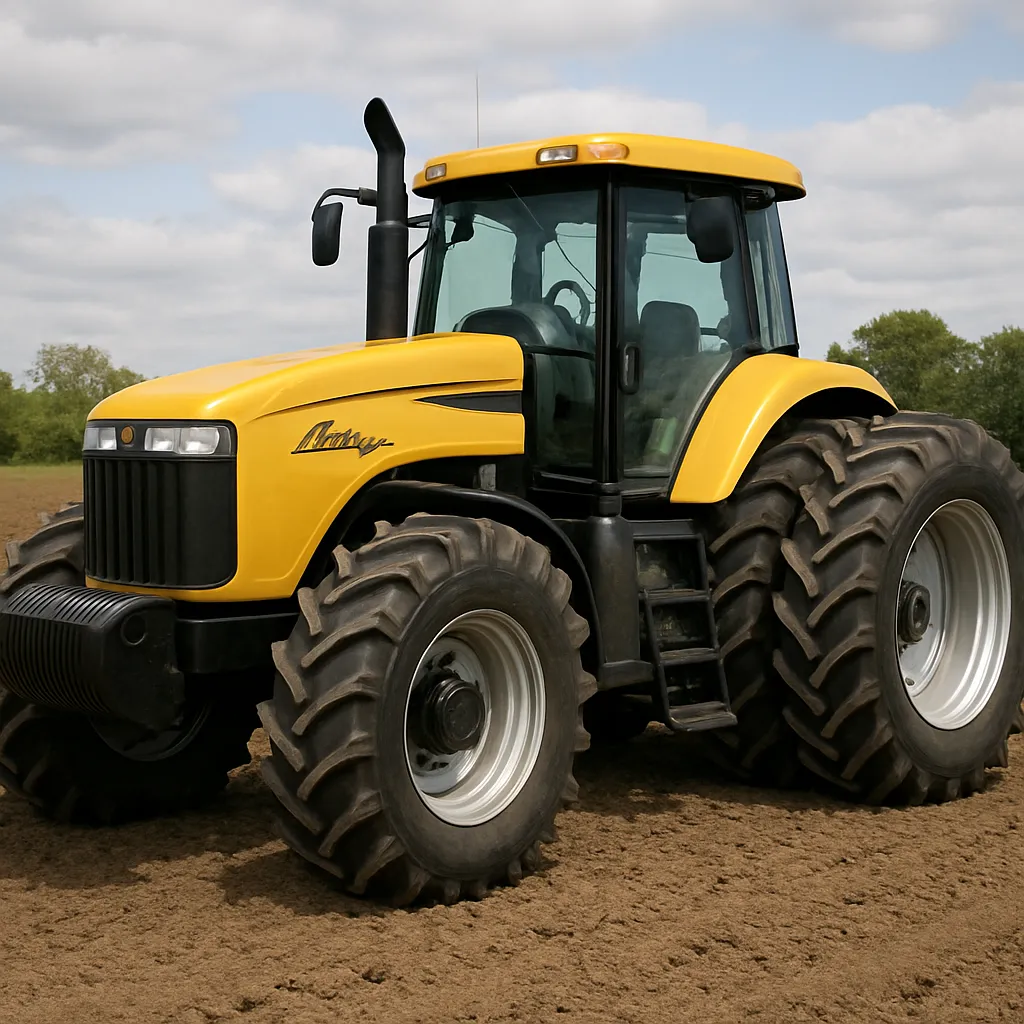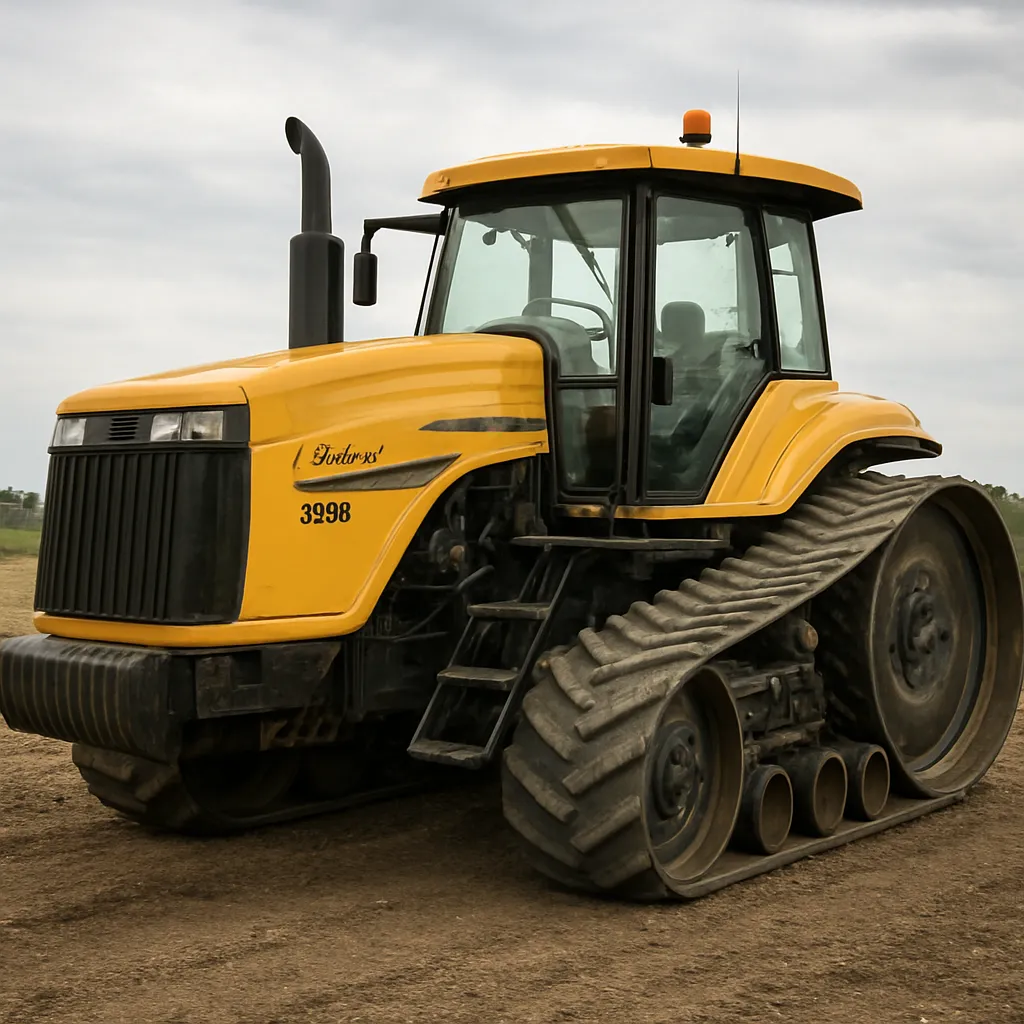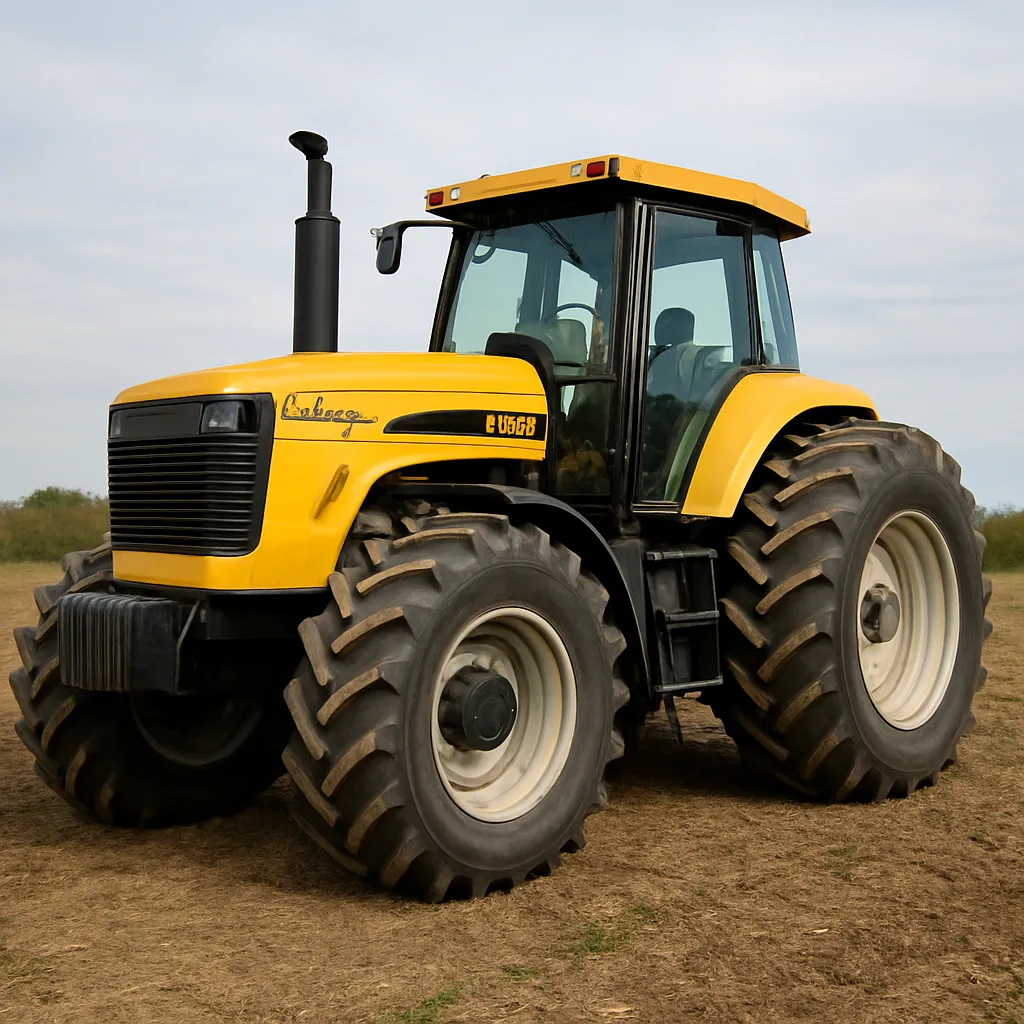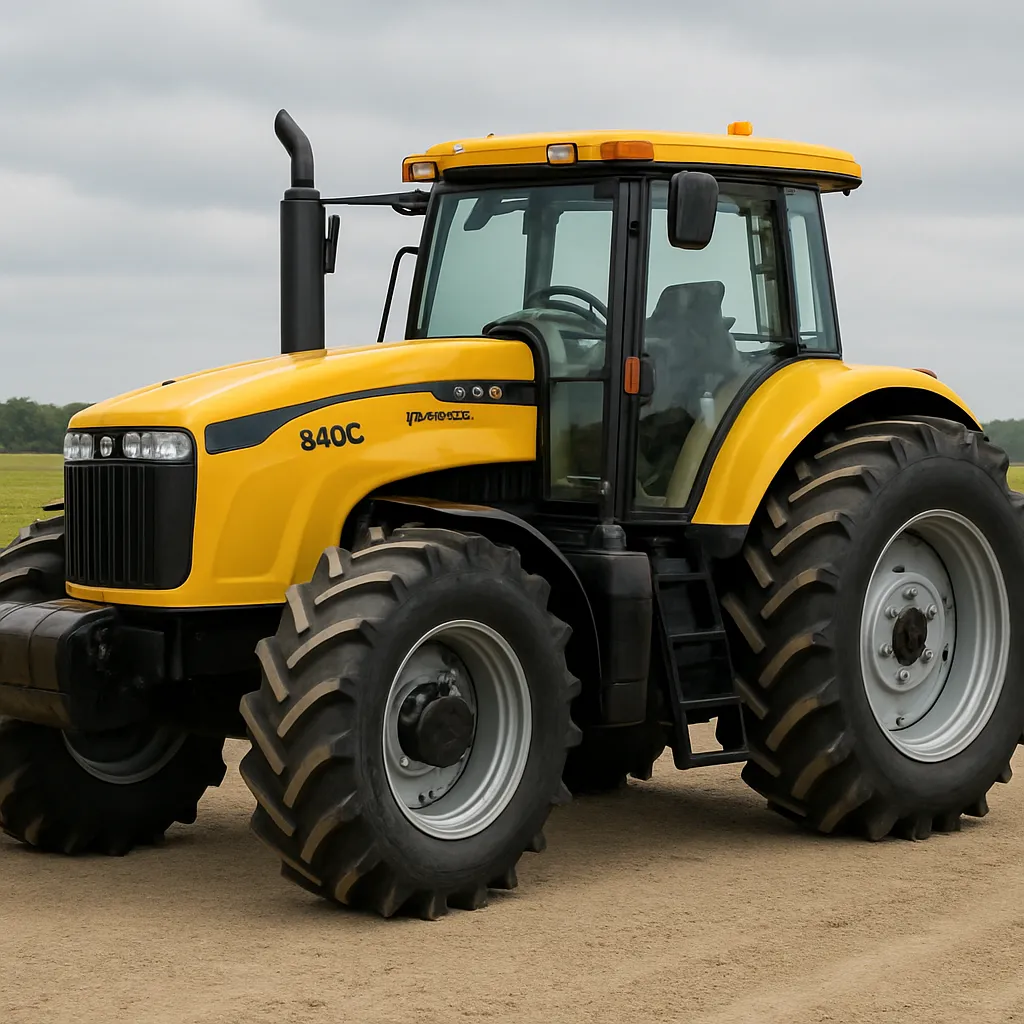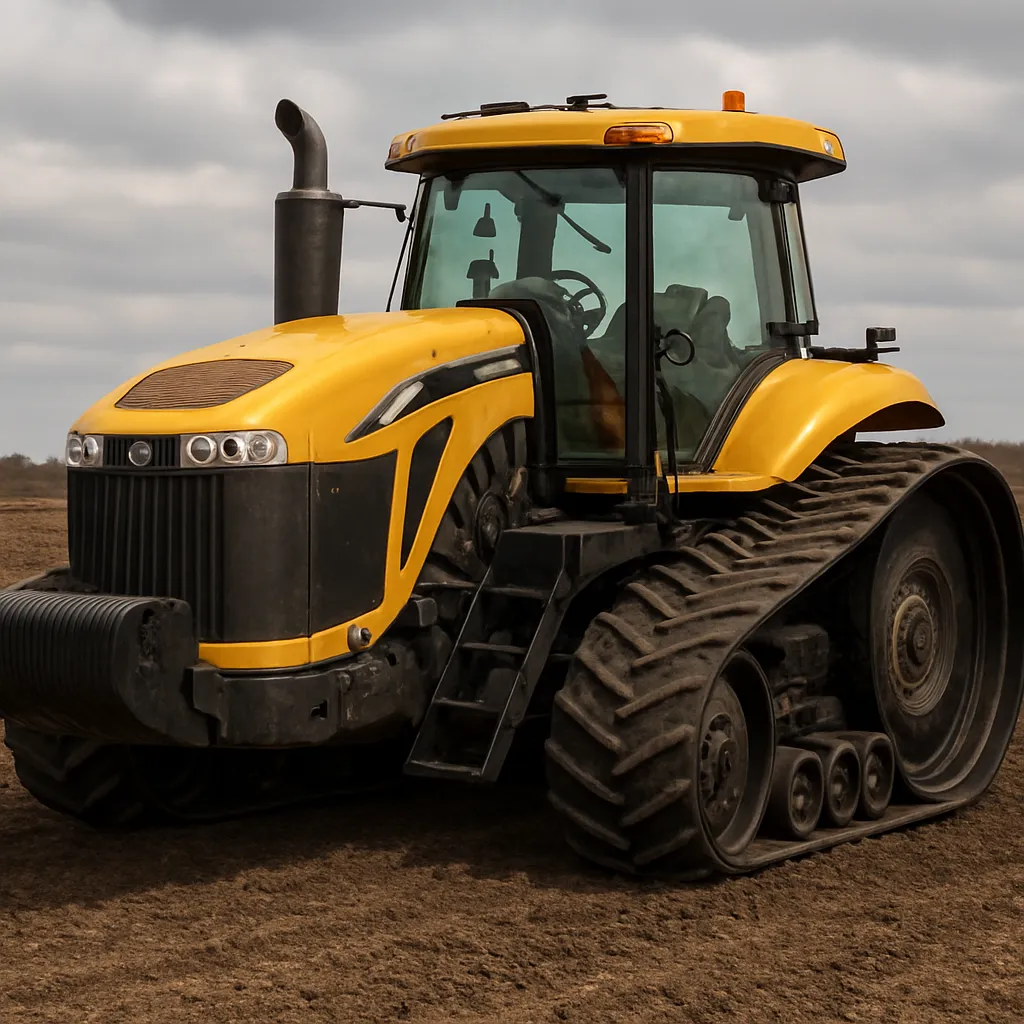
The Challenger MT855C is a heavy-duty, track-based agricultural machine designed for high-demand fieldwork on large farms and contracting operations. Combining robust construction with features aimed at improving traction, reducing soil compaction, and delivering consistent power across a wide range of tasks, the MT855C is part of a family of tractors that became notable for bringing crawler technology into mainstream large-scale agriculture. This article explores its design, typical applications, operational characteristics, maintenance considerations, and the advantages and limitations that define its role in modern farming.
Overview and design philosophy
The MT855C belongs to the class of tracked, high-horsepower tractors intended to replace or complement wheeled tractors on heavy tillage, seeding, and transport tasks. The model was developed for operations that require sustained tractive effort, minimal ground disturbance, and high productivity over large areas. The “C” suffix denotes the track/crawler configuration, which distinguishes it from wheeled counterparts.
The core design goals include delivering consistent engine output under load, maximizing traction through a wide contact footprint, and providing operator comfort during long shifts. Key components such as the chassis, undercarriage, and hydraulic systems are engineered to tolerate high stresses found in intensive field operations.
Technical characteristics and performance
While specifications can vary by market and specific configuration, the MT855C is generally classified as a very high-horsepower tractor suitable for the largest implements. Typical technical characteristics include:
- Engine output: approximately around 550 horsepower (depends on tuning and trim).
- Drive system: full-length rubber or steel track undercarriage providing continuous ground contact and enhanced traction.
- Transmission: heavy-duty, multi-range transmission or stepless options in some configurations, designed for smooth power delivery and torque management.
- Hydraulics: high-flow hydraulic systems with multiple remote circuits to supply large seeders, sprayers, and tillage implements.
- Weight: operating mass commonly in the range of roughly 17 to 23 tonnes, depending on track type, ballast and attachments.
- Fuel capacity and range: large fuel tanks are standard to support long field hours; typical capacities vary but are sized for whole-day operation without frequent refueling.
Important performance metrics for the MT855C are its tractive effort, drawbar power, and field efficiency when matched with large implements. The track design significantly increases the contact area compared with wheels, improving pull force while reducing slip. This translates into more consistent implement performance and the ability to handle wetter or softer soils when wheeled machines might struggle.
Power delivery and torque management
An emphasis on steady torque output is a hallmark. The MT855C’s engine map and driveline are optimized to keep implements running at their working RPM, absorbing load spikes without stalling or excessive slip. This results in improved fuel economy in real-world conditions and smoother operation when using heavy tillage gear.
Undercarriage and track systems
The undercarriage is central to the MT855C’s capability. Track width and length are selected to balance flotation and maneuverability. Commonly installed are wide rubber tracks that reduce ground pressure, limit rutting, and distribute machine weight over a larger area. Some operators may choose steel tracks or reinforced rubber depending on terrain and transport needs.
Primary applications and fields of use
The MT855C is tailored for large-scale agriculture and specialty contracting roles. Typical applications include:
- Agricultural tillage: primary and secondary tillage with large ploughs, discs, and cultivators where high horsepower and traction are required to move heavy soil and large implement widths.
- Seeding and planting: pulling large planters and air seeders across wide rows; the tractor’s consistent ground contact ensures uniform seeding depth and reduced variability.
- Soil conservation work: when equipped with conservation tillage tools, the MT855C can reduce wheel compaction and maintain residue cover while performing deep tillage.
- Transport and heavy hauling: in farm logistics or on-site earthmoving, tracked tractors can haul heavy loads where wheeled machines would experience more slip.
- Specialty cropping and wet conditions: in rice, peat soils or after heavy rains, the lowered ground pressure of the track system allows continued operation when wheeled tractors must wait.
Operators often pair the MT855C with wide implements (10+ meters of working width) to take advantage of its power and traction. This pairing increases field efficiency by reducing the number of passes required to cover a given area, which can translate to substantial savings in time and operating costs on very large farms.
Advantages compared with wheeled tractors
Track tractors like the MT855C offer several operational benefits:
- Lower ground pressure: the larger contact area reduces compaction, preserving soil structure and drainage.
- Better traction: improved pull under high load, reducing wheel slip and improving fuel efficiency for heavy tillage.
- Improved stability: broader footprint enhances stability on slopes and soft ground.
- Consistent implement performance: tracks maintain contact, delivering steady power and reducing the cyclic slip common to wheel systems.
These factors often result in higher productivity in tough field conditions and when using very large implements. For contractors, the ability to work in suboptimal conditions can be a competitive advantage, allowing contracts to be fulfilled under tighter time windows.
Limitations and considerations
Despite its strengths, the MT855C requires careful consideration before deployment:
- Transport and road use: tracked machines generally have lower road speeds and require special permits or transporters for long-distance moves. This increases logistics complexity compared with wheeled tractors.
- Initial cost: purchase and track undercarriage replacement costs can be higher than comparable wheeled models.
- Maintenance: while designed for durability, tracks, rollers, and undercarriage components demand diligent inspection and replacement at intervals determined by soil type and use intensity.
- Field accessibility: in narrow gate or field entrances, the wider footprint may limit access. Planning for turning radii and field layout is essential.
Operation, maintenance and lifecycle management
Maximizing the service life and performance of the MT855C depends on attentive operation and scheduled maintenance. Best practices include:
- Regular track inspection for wear, cuts, and proper tensioning. Proper maintenance extends undercarriage life and prevents breakdowns.
- Scheduled engine servicing, including oil and filter changes, to preserve fuel efficiency and power output.
- Hydraulic system checks to ensure operating pressures and flow rates remain within manufacturer recommendations for attachment performance.
- Chassis and connection point inspections where heavy implements attach; fastener and hitch wear should be monitored to avoid failures under load.
- Operator training in best practices for start-up, transport, and field operation to reduce avoidable stress on driveline components.
Lifecycle costs are influenced by how intensively the tractor is used, the soil abrasiveness (which affects undercarriage wear), and the availability of timely service. For many operators, the increased productivity offsets higher upkeep costs, particularly when the machine reduces the number of passes or completes work in marginal weather windows.
Economic and environmental impact
On the economic front, machines like the MT855C are investments aimed at increasing throughput and enabling larger-scale operations. Key economic considerations:
- Cost per hectare: When matched with large implements, the higher hourly operating cost can be offset by lower cost per hectare because of reduced pass count and faster job completion.
- Resale and market demand: High-horsepower track tractors hold value in regions where large-scale cropping and contracting are prevalent.
- Replacement cycles and refurbishment: Operators may choose track refurbishment or conversion programs to extend the machine’s useful life.
Environmentally, tracked tractors can contribute to improved soil health when used appropriately. Reduced compaction preserves pore space, supporting root development and water infiltration. However, improper use (e.g., repeated heavy passes in the same tramlines) can still cause localized compaction. The net environmental impact depends on management practices and the cropping system.
Real-world examples and typical use cases
Large grain producers in North America and Australia commonly employ tracked tractors for spring tillage and seeding when rapid field access is critical. Contractors working on deep ripping, primary tillage, and subsoil drainage installation value machines like the MT855C for their ability to pull wide tools consistently. Examples of typical use cases include:
- Spring chisel ploughing on vast prairie fields where timely soil preparation determines planting windows.
- Seeding large-format air drills across several thousand hectares during tight weather windows.
- Heavy-duty ripping and bed formation in irrigated areas, where persistent traction is needed to maintain working depth.
Case studies often highlight scenarios where the tracked tractor enabled work to proceed during marginal moisture conditions, avoiding days of downtime and protecting planting schedules. Farmers report improved uniformity in seeding depth and better overall field finish when using track-based tractors with appropriate implements.
Operator experience and comfort
Long hours in a high-horsepower tractor demand attention to ergonomics and operator comfort. The MT855C typically features a spacious cab, climate control, and advanced controls that reduce operator fatigue. Modern iterations or retrofits may include GPS guidance systems, telematics for remote diagnostics, and in-cab displays that communicate implement performance and fuel consumption in real time.
Comfort features paired with automation and guidance improve precision, reduce overlap, and allow operators to maintain steady work rates for long shifts. This contributes to both productivity gains and better fuel utilization.
Future outlook and innovations
Tracked tractors like the MT855C continue to evolve. Trends affecting the future of such machines include:
- Precision agriculture integration — tighter coupling with autosteering, variable-rate control, and data analytics for fuel and implement optimization.
- Powertrain developments — more efficient engines and hybridization may reduce fuel consumption and emissions while maintaining high torque outputs.
- Undercarriage materials and design improvements — longer-lasting tracks and modular undercarriage systems to reduce downtime and lifecycle costs.
- Remote monitoring and predictive maintenance — telematics that anticipate component wear and schedule service windows to minimize unscheduled downtime.
Manufacturers and aftermarket providers are actively developing solutions to make heavy tracked tractors more efficient and easier to operate and maintain. For large-scale operators, these innovations can further improve the return on investment by lowering operating costs and extending productive life.
Summary
The Challenger MT855C is a high-capacity, tracked agricultural tractor engineered for demanding tasks on large farms and among contractors. Its advantages—superior traction, reduced soil compaction, and robust performance under load—make it well suited to heavy tillage, large-scale seeding, and conditions where wheeled tractors are limited. While initial purchase and maintenance costs are substantial, the operational benefits and potential for increased field efficiency can justify the investment for appropriate users. Proper maintenance, thoughtful operation, and integration with modern agricultural technologies prolong its utility and maximize the value it delivers across seasons.