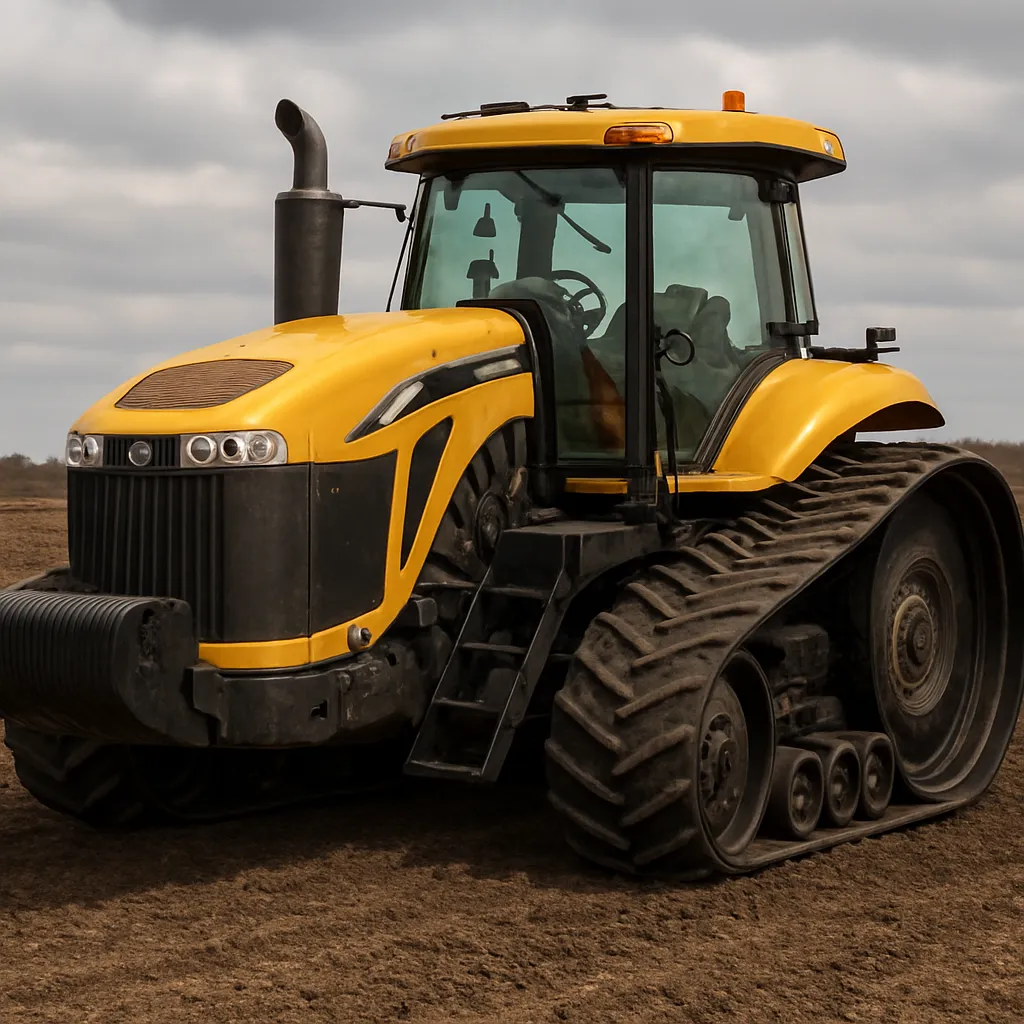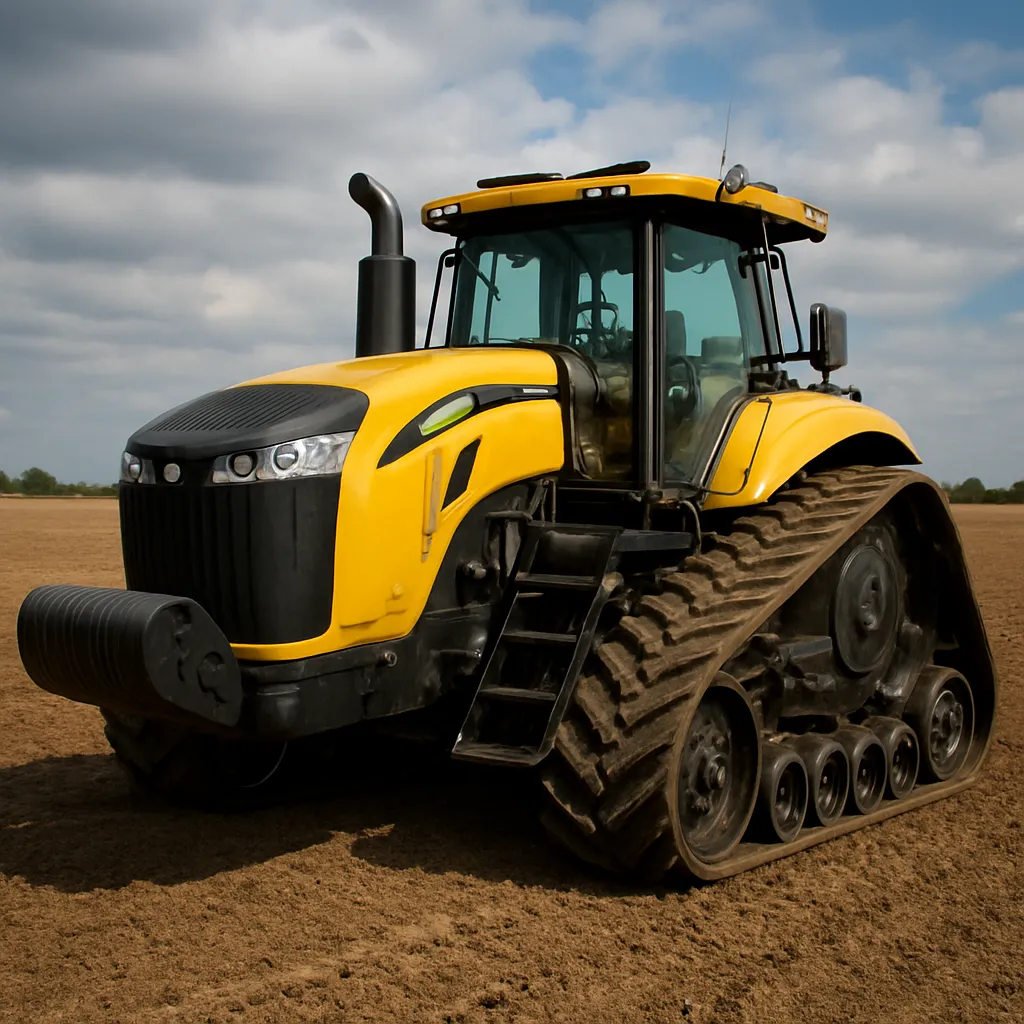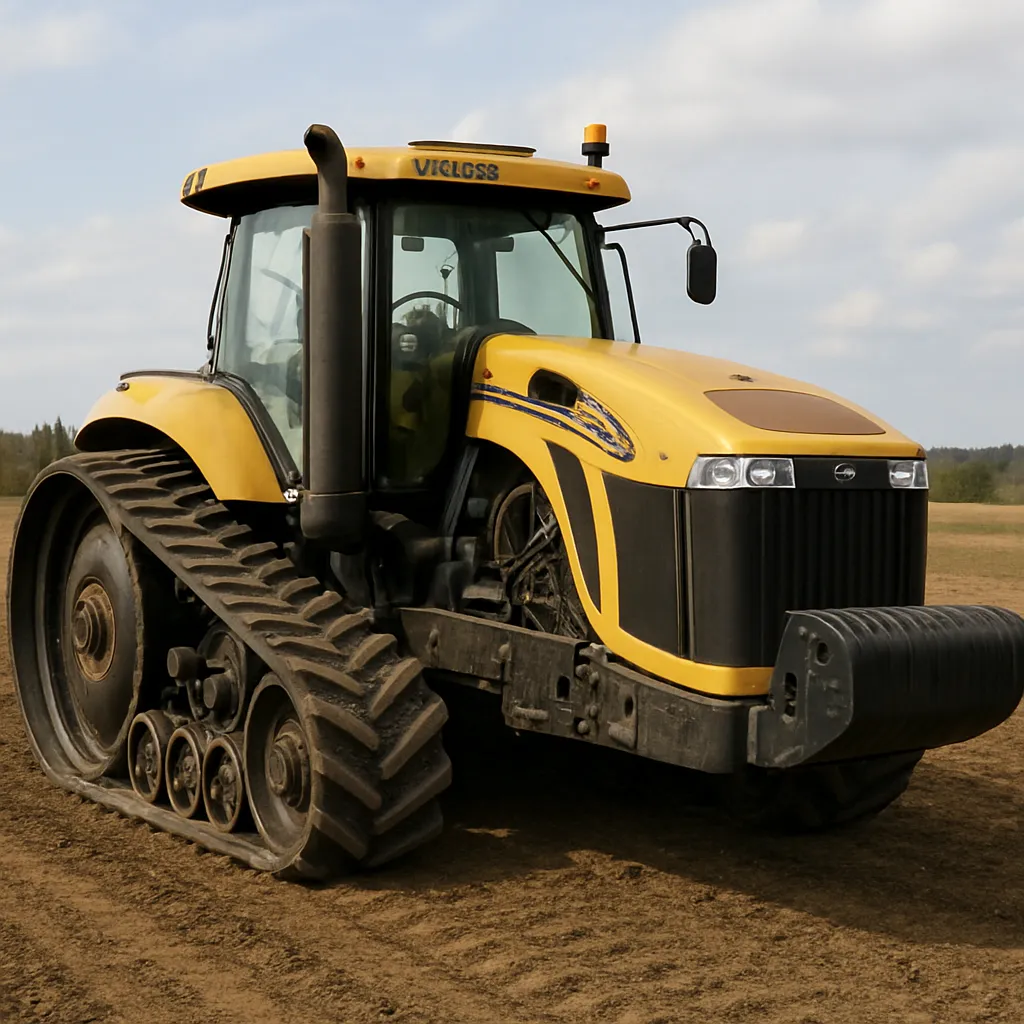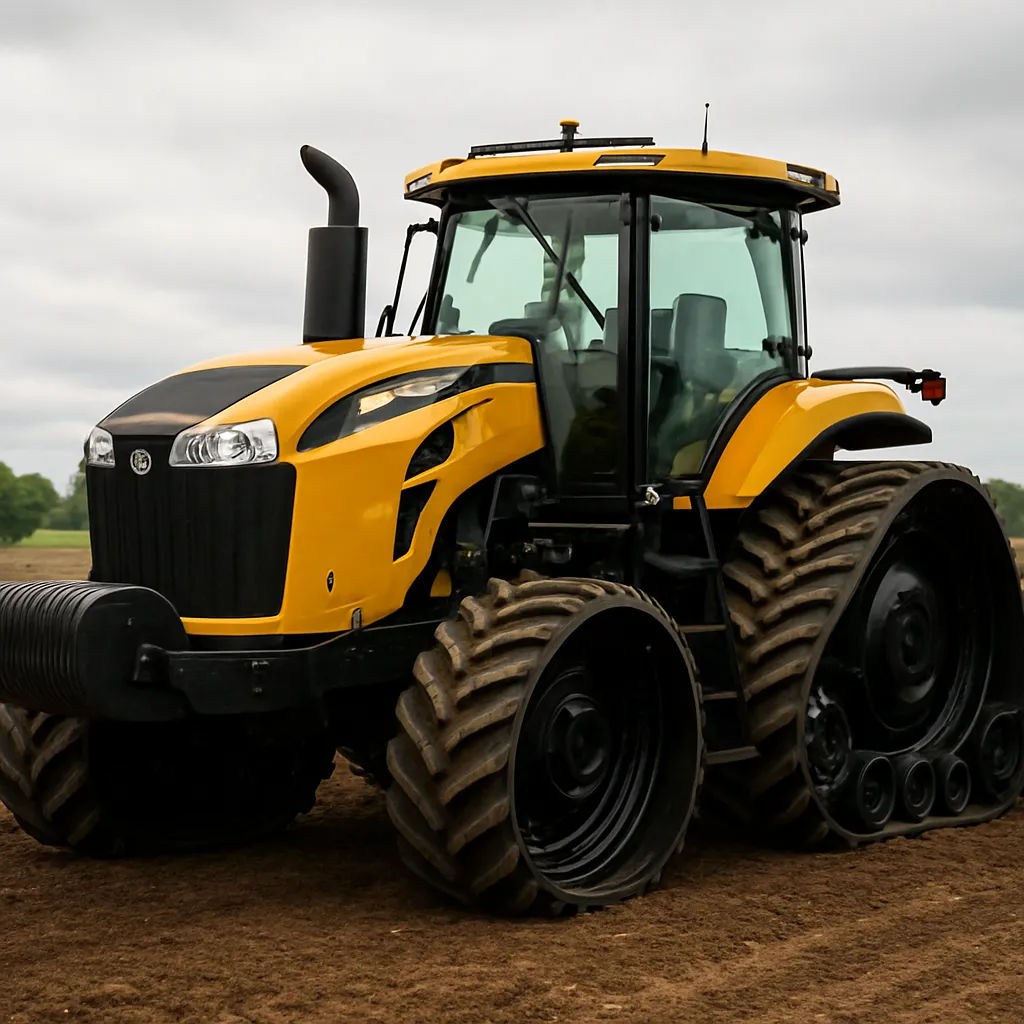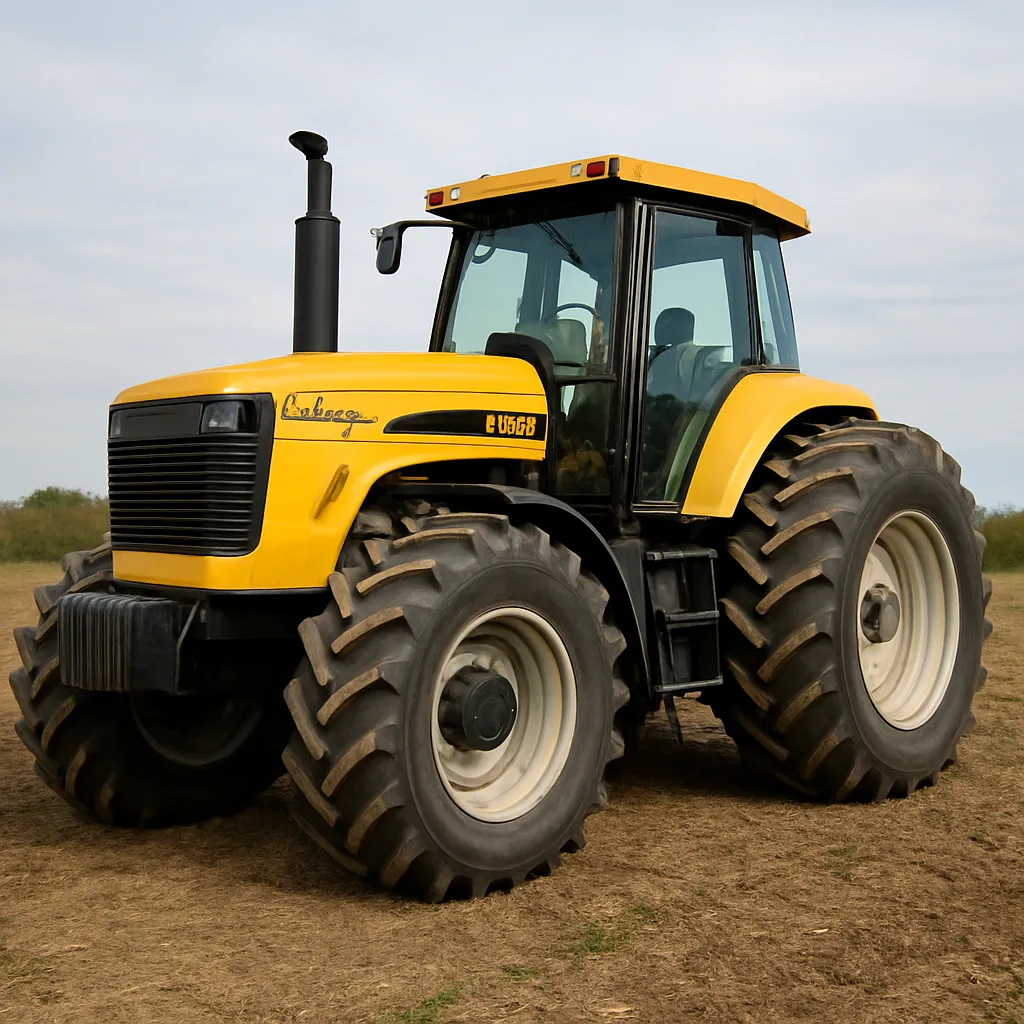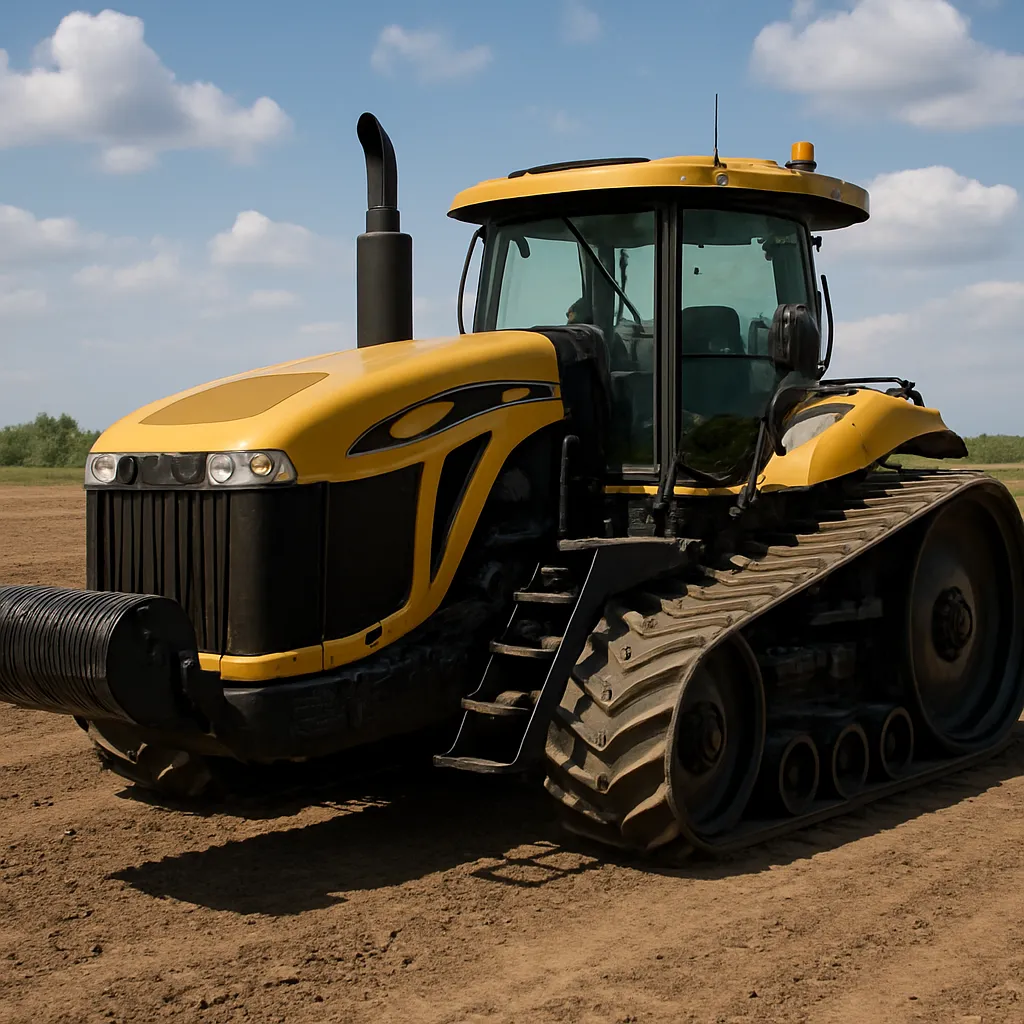
The Challenger MT865B is a heavy-duty, tracked agricultural tractor designed to deliver high power, traction and field performance for demanding farming operations. Built as part of Challenger’s MT8 series, the MT865B combines robust mechanical systems, a comfortable operator environment and technology aimed at maximizing productivity on large-scale farms. In the sections below you will find detailed descriptions of its design, typical uses, operational advantages and practical considerations for owners and operators. The article also includes approximate technical figures and performance observations where such data is commonly reported.
Design and technical characteristics
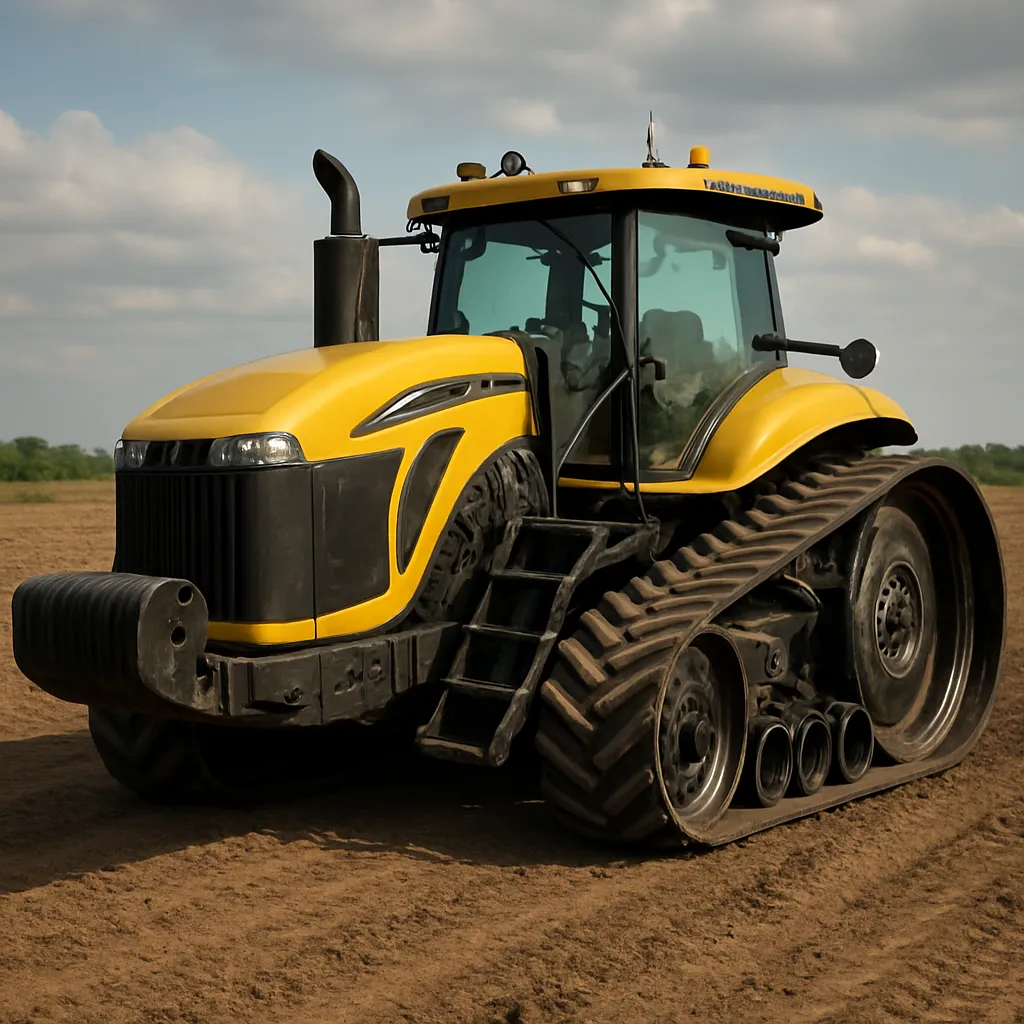
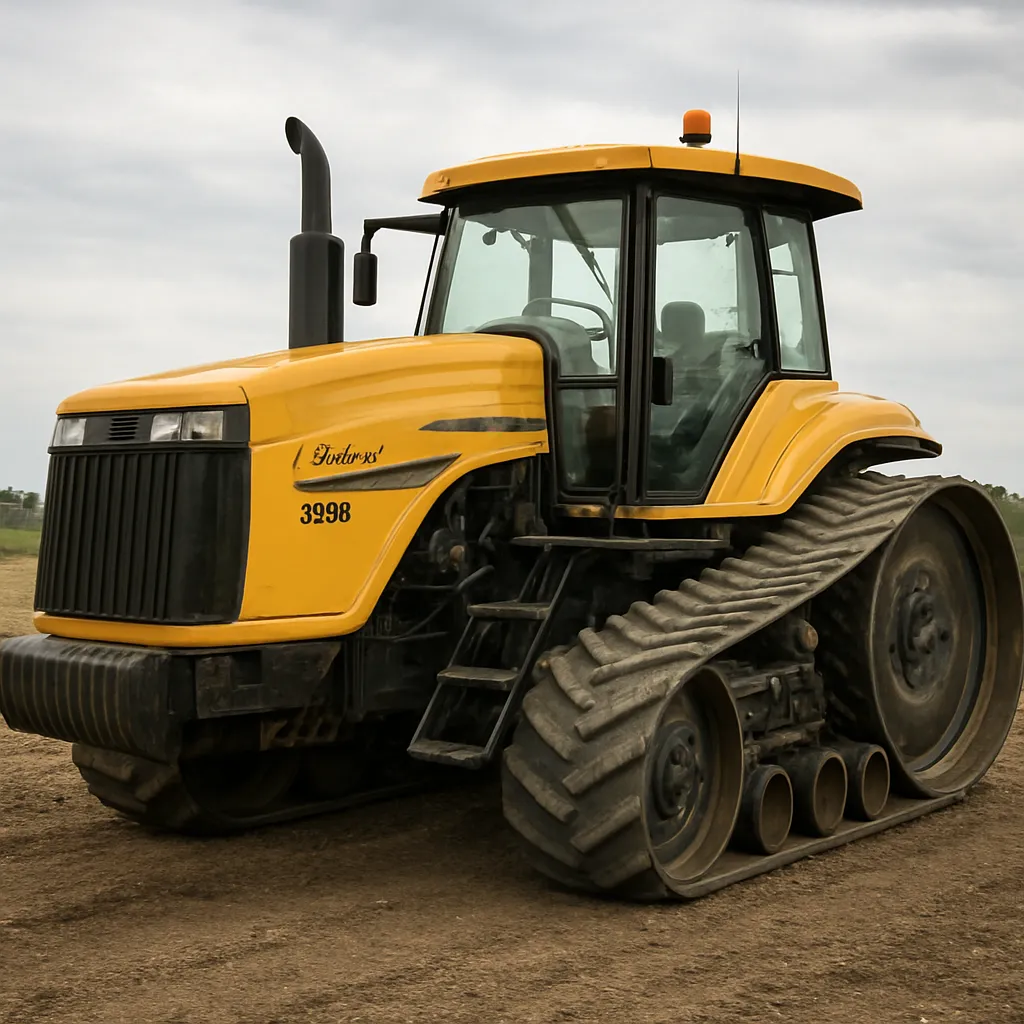
The MT865B was engineered with a focus on low ground pressure, high tractive effort and consistent pull in wet or uneven soils. The most distinctive feature is its full-track undercarriage that spreads weight over a large contact area, which provides significant flotation and traction benefits compared with wheeled tractors.
Powertrain and engine
Under the hood, the MT865B uses a robust diesel engine tuned for torque and durability. While exact engine tuning and options can vary by market and year, this model typically offers a rated power band suitable for heavy implements used in primary tillage and high-speed seeding. The engine is optimized for mid-range torque where most agricultural work occurs, delivering reliable draft power for deep tillage and heavy cultivations.
- Configuration: inline 6-cylinder diesel (typical in this class)
- Power: commonly reported in the range of 300–400 hp (approximately 220–300 kW) depending on specification and year
- Transmission: rugged powershift or modular transmission systems designed for continuous field work
- Cooling and filtration: heavy-duty cooling package and multi-stage air and fuel filtration for dusty conditions
Tracks and undercarriage
The undercarriage is a defining element of the MT865B. Long tracks and a wide footprint are intended to reduce soil compaction and improve traction. Track systems on this machine are engineered for stability and longevity, with reinforced track links, heavy rollers and tensioning systems to handle both field and road travel.
- Flotation: significantly reduced ground pressure versus comparable wheeled machines
- Traction: excellent pull on slopes and in wet soils
- Ride and stability: tracks spread load evenly, improving balance when carrying large rear-mounted implements
Applications and field performance
The Challenger MT865B finds its greatest value where high productivity and low soil disturbance are priorities. Its design suits a variety of large-scale farming tasks that demand sustained power and traction.
Primary and secondary tillage
Primary tillage with large ploughs or heavy disc cultivators is a natural role for the MT865B. The high draft ability and steady torque curve allow the tractor to pull wide implements at productive depths. In secondary tillage and seedbed preparation, the tractor’s consistent traction and flotation enable even finishes across large fields with less wheel slip and rework.
Seeding and planting
When paired with large seeders or planters, the MT865B can maintain ground speed and implement demands over long runs. The tracked undercarriage helps preserve soil structure, which benefits germination and crop establishment, especially in wetter planting windows.
Transport and specialty tasks
Although primarily an on-field machine, the MT865B can be configured for road transfer at moderate speeds. On mixed farms it is also used for heavy-duty tasks such as hauling large grain carts, powering PTO-driven equipment and carrying heavy-mounted implements.
Operational advantages
The MT865B offers several practical advantages that make it attractive to commercial farmers and contractors:
- Reduced soil compaction: The tracked platform distributes weight, lowering ground pressure and helping protect soil structure.
- Higher drawbar efficiency: Improved traction reduces slip and converts more engine output into useful pulling force.
- Steady performance in adverse conditions: Tracks maintain traction where wheels might struggle, increasing productive working windows after rain.
- Durability: Heavy-duty components and serviceable designs extend working life under continuous intensive use.
- Operator comfort: Spacious cabs, ergonomic controls and effective suspension systems reduce fatigue during long shifts.
These advantages translate into higher pass-per-hour productivity and lower costs related to redoing work, especially on large acreages.
Maintenance, serviceability and total cost of ownership
Owning a high-horsepower tracked tractor such as the MT865B involves both benefits and responsibilities. Proper maintenance is crucial to ensure longevity and minimize downtime.
Track and undercarriage care
Track systems require periodic inspection and adjustment. Owners should monitor track tension, roller wear and track pad condition. Replacing wear items on time prevents secondary damage to the suspension and frame.
- Inspect track tension weekly during peak seasons.
- Lubricate rollers and pivot points per service intervals.
- Replace worn pads or links before they cause accelerated wear.
Engine and driveline maintenance
Routine oil and filter changes, fuel system servicing and cooling system checks are essential. Given that heavy tractors often work long shifts, establishing a strict preventative maintenance schedule reduces the risk of catastrophic failures in harvest or planting windows.
Total cost considerations
Tracked tractors often have higher upfront purchase costs and specific maintenance items that differ from wheeled tractors (track pads, link assemblies, etc.). However, on farms where the MT865B’s advantages—reduced compaction, improved fuel efficiency per hectare and increased operator uptime—are important, the total cost of ownership can be favorable over the machine’s lifecycle.
Fuel use, efficiency and environmental aspects
Fuel consumption is influenced by field conditions, implement load and operator choices. While fuel burn for a high-horsepower tracked tractor will be significant under heavy load, the increased efficiency from better traction can mean lower fuel use per hectare compared with a struggling wheeled tractor.
- Typical field fuel consumption varies widely; operators report moderate to high hourly consumption under heavy draft but improved area coverage per tank.
- Modern engines and management systems help optimize fuel delivery and emissions; adherence to maintenance schedules keeps emissions and consumption in check.
- By reducing compaction and improving seeding conditions, the MT865B can indirectly contribute to better crop yields and soil health when used correctly.
Cab and operator-focused features
Long hours in the field require a comfortable, well-appointed cab. Challenger equipped the MT865B with features aimed at improving operator productivity and reducing fatigue.
- Ergonomic seat and controls with adjustable layout options
- Clear visibility for implement coupling and field operations
- Climate control, sound insulation and vibration damping to enhance comfort
- Instrument panels and optional electronic guidance systems for precise field work
Efficiency gains are often achieved not only by raw machine power but by improved operator comfort and control systems that reduce errors and optimize pass lines.
Comparisons and market positioning
The MT865B competes in a segment populated by other heavy tracked tractors and high-horsepower wheeled tractors. Its primary competitors are machines that offer equivalent horsepower but may differ in flotation, maneuverability and cost structure.
- Compared with similar wheeled tractors: the MT865B typically offers better flotation and lower compaction at equivalent drawbar outputs.
- Compared with other tracked models: differences come down to undercarriage design, engine tuning, dealer support and optional electronics.
For large grain, oilseed and row-crop farming operations that prioritize wide implements and consistent field speed, the MT865B is positioned as a productive, reliable choice.
Practical tips for operators
To get the most from an MT865B, owners and operators should consider the following best practices:
- Plan operations to match engine torque curves with implement demands—work in the engine’s optimal rpm band.
- Monitor and manage track tension and wear to prevent unplanned downtime.
- Use precision guidance and auto-steer where possible to reduce overlap and save fuel and time.
- Keep a stock of commonly replaced parts (filters, pads, belts) to reduce service downtime during peak seasons.
Common questions and realistic expectations
Potential buyers often ask how the MT865B performs in specific scenarios. Below are straightforward answers based on typical operator experience:
- Will it work on heavy clay? Yes—tracked traction helps, but correct implement selection and management of moisture conditions remain crucial.
- Is it cost-effective on smaller farms? Generally no; the MT865B is best suited to large-acreage operations where its capacity and footprint are fully utilized.
- How long do tracks last? Lifespan varies with use, soil abrasiveness and maintenance; well-maintained undercarriages can provide long service lives but will still require periodic rebuilds.
Summary and final considerations
The Challenger MT865B is a purpose-built tractor for high-demand agricultural tasks. Its tracked configuration, heavy-duty engine characteristics and operator-focused features combine to deliver strong field performance, especially on farms requiring wide implements and minimal soil compaction. While acquisition and maintenance represent significant investments, the tractor’s productivity, reliability and potential to protect soil structure make it an effective tool for many commercial operations.
Durability, maintenance, consistent power delivery and the benefits of track flotation are central to the MT865B’s appeal. For farmers considering this class of machine, matching the tractor to farm size, implement fleet and contractor availability is essential to achieving the best return on investment.