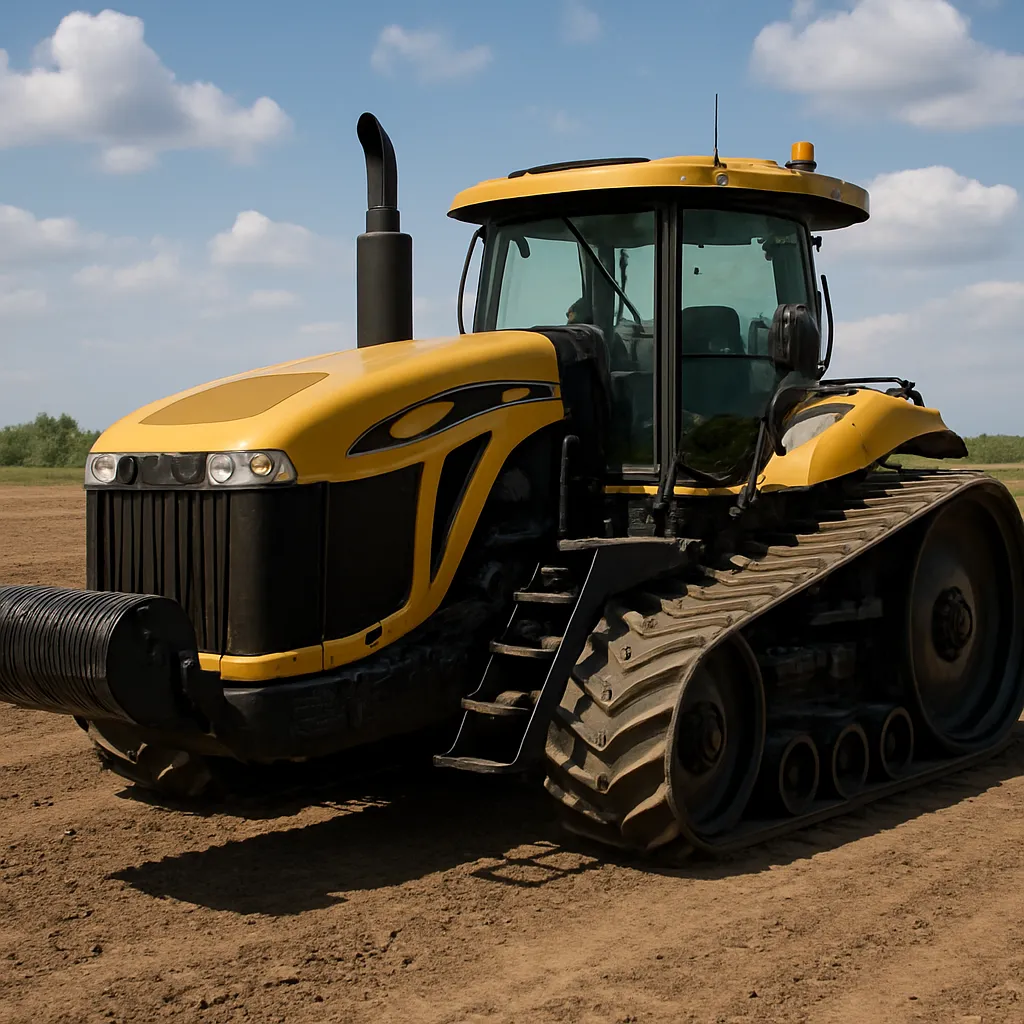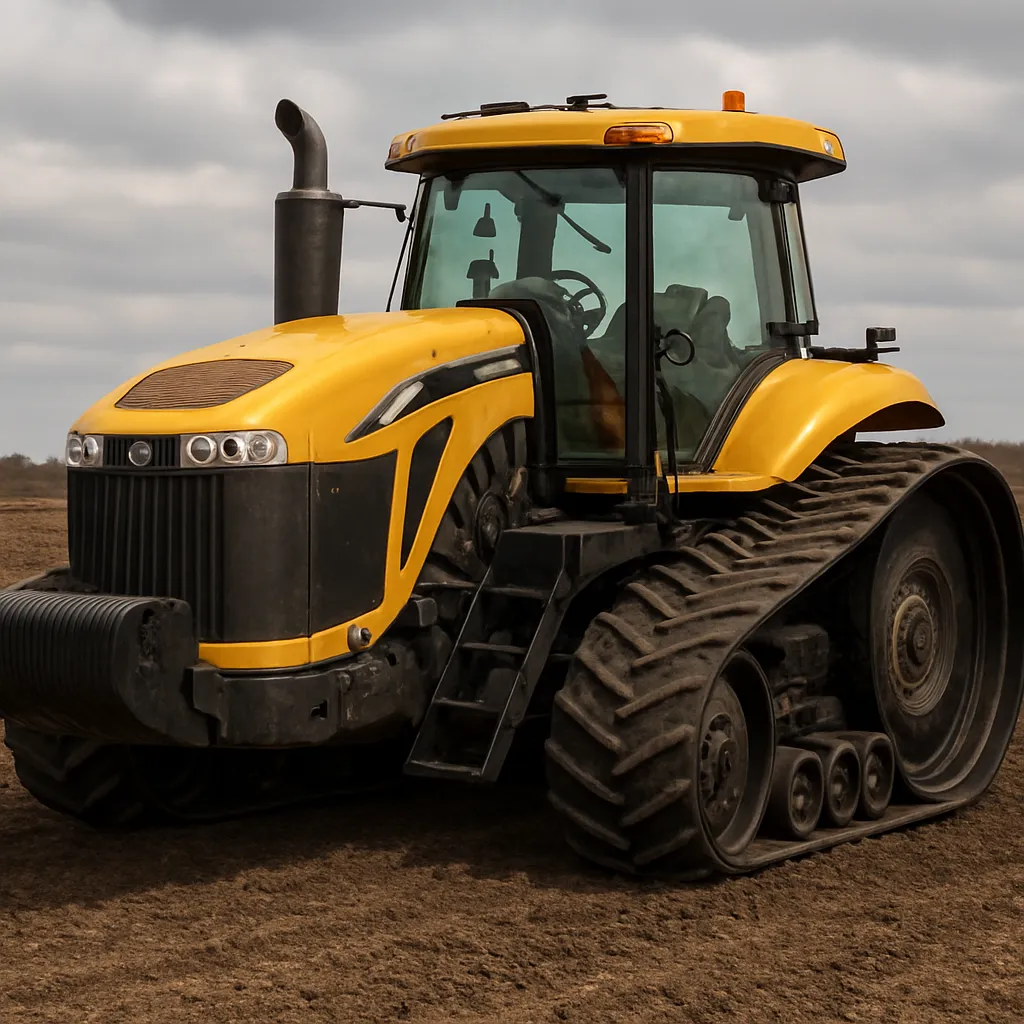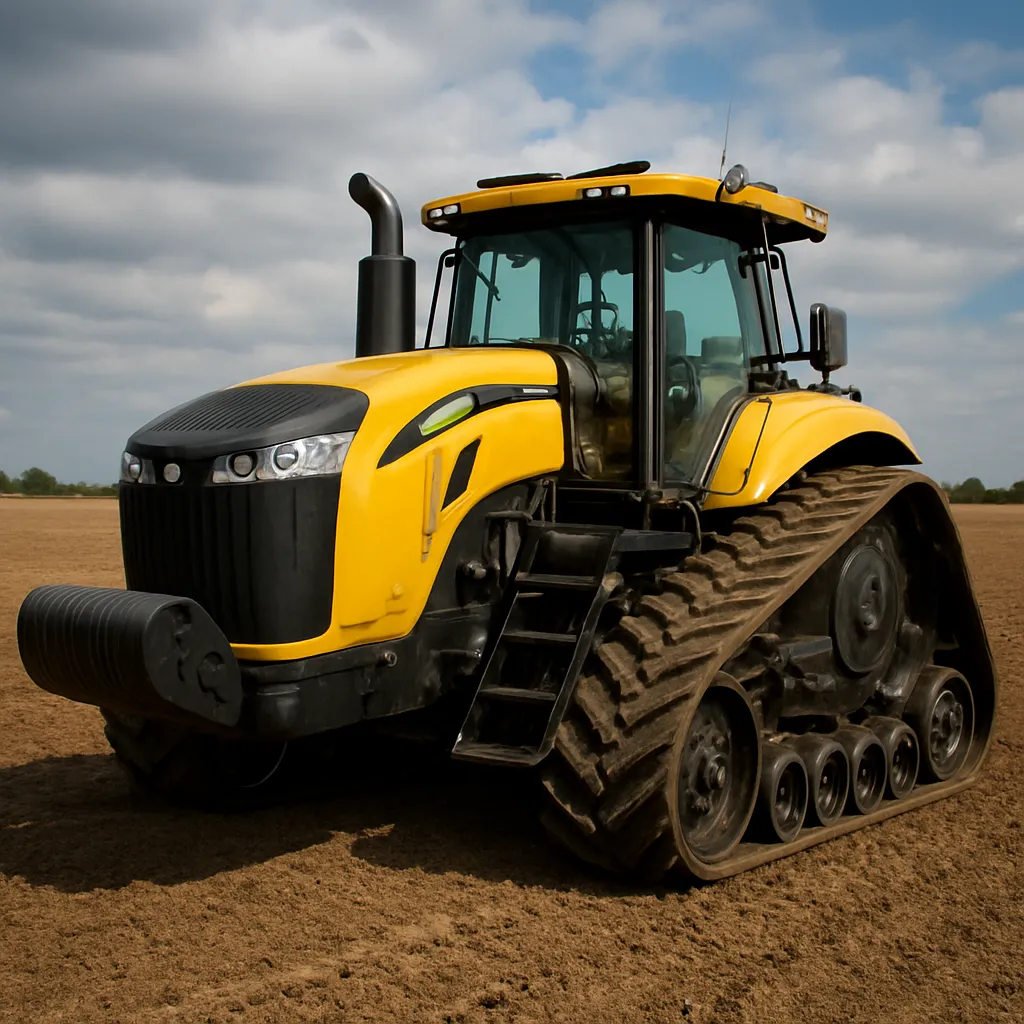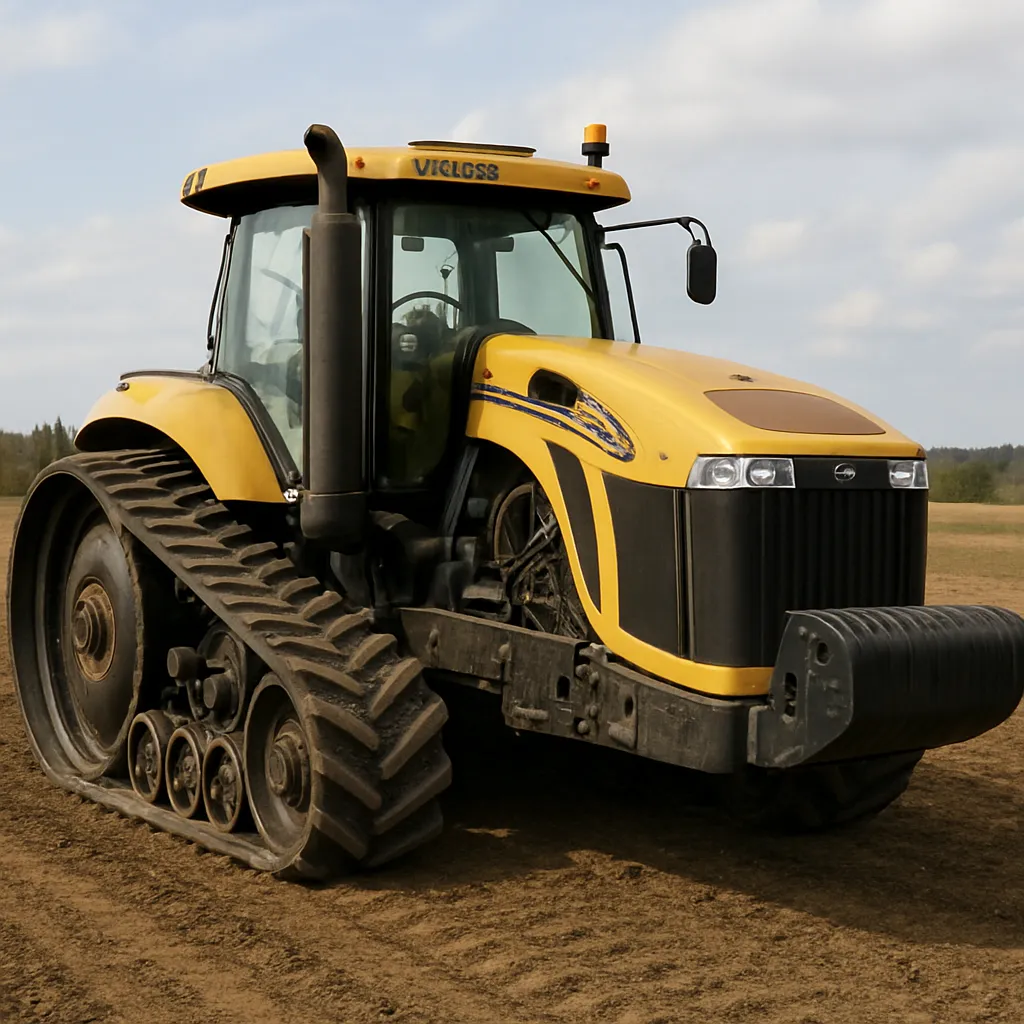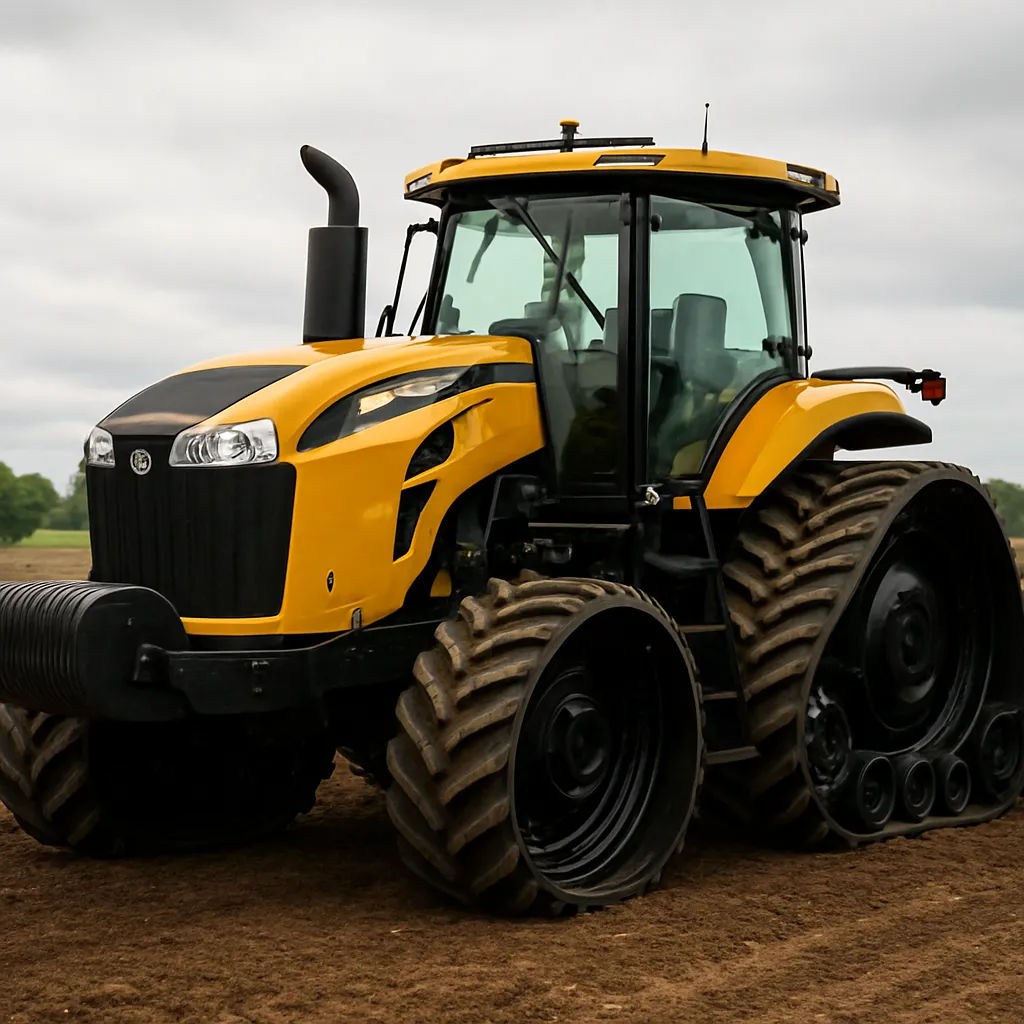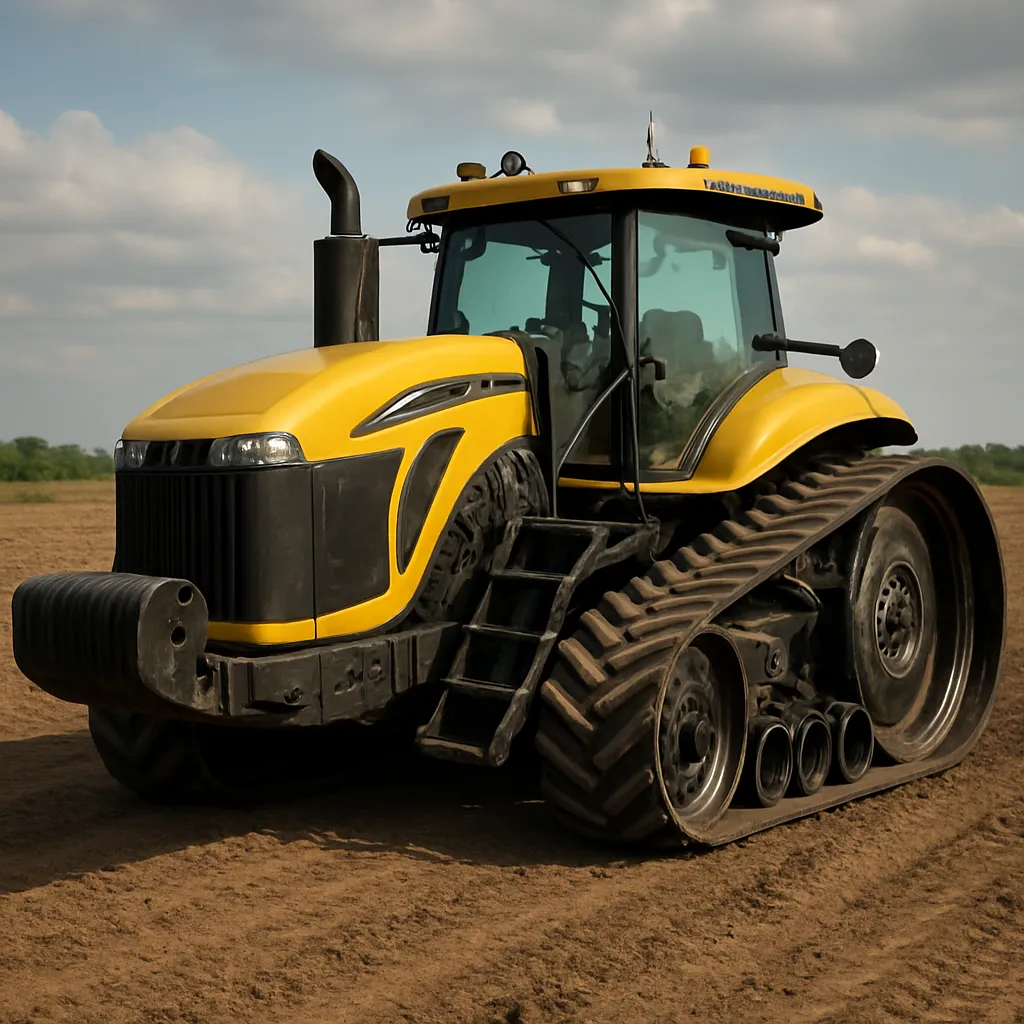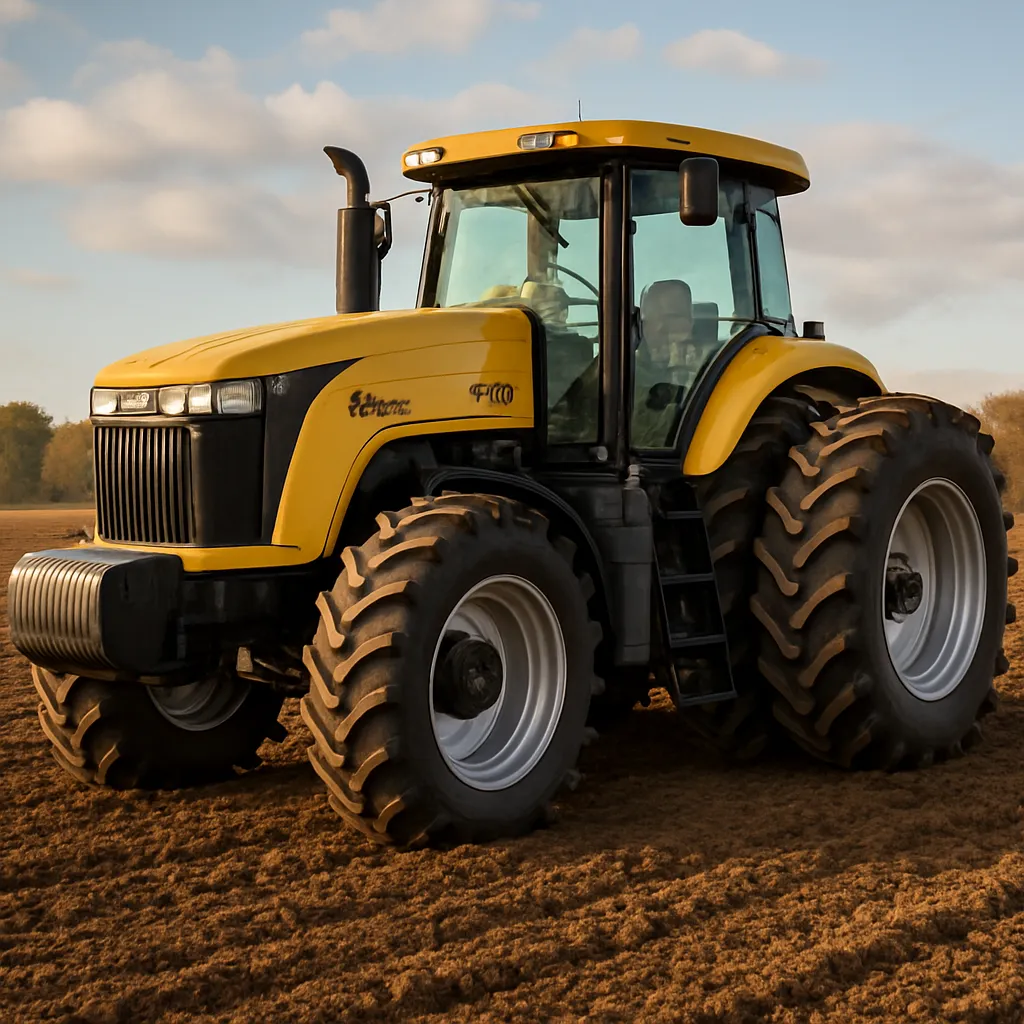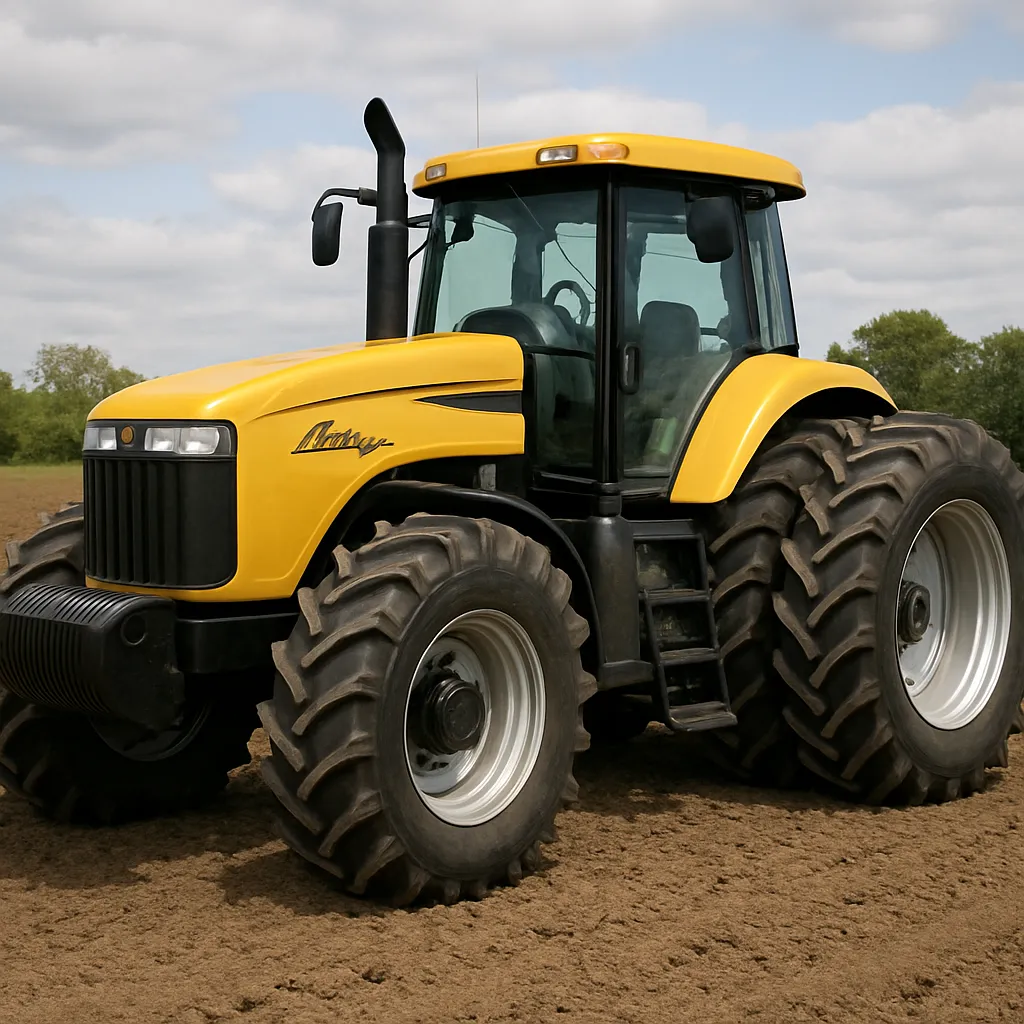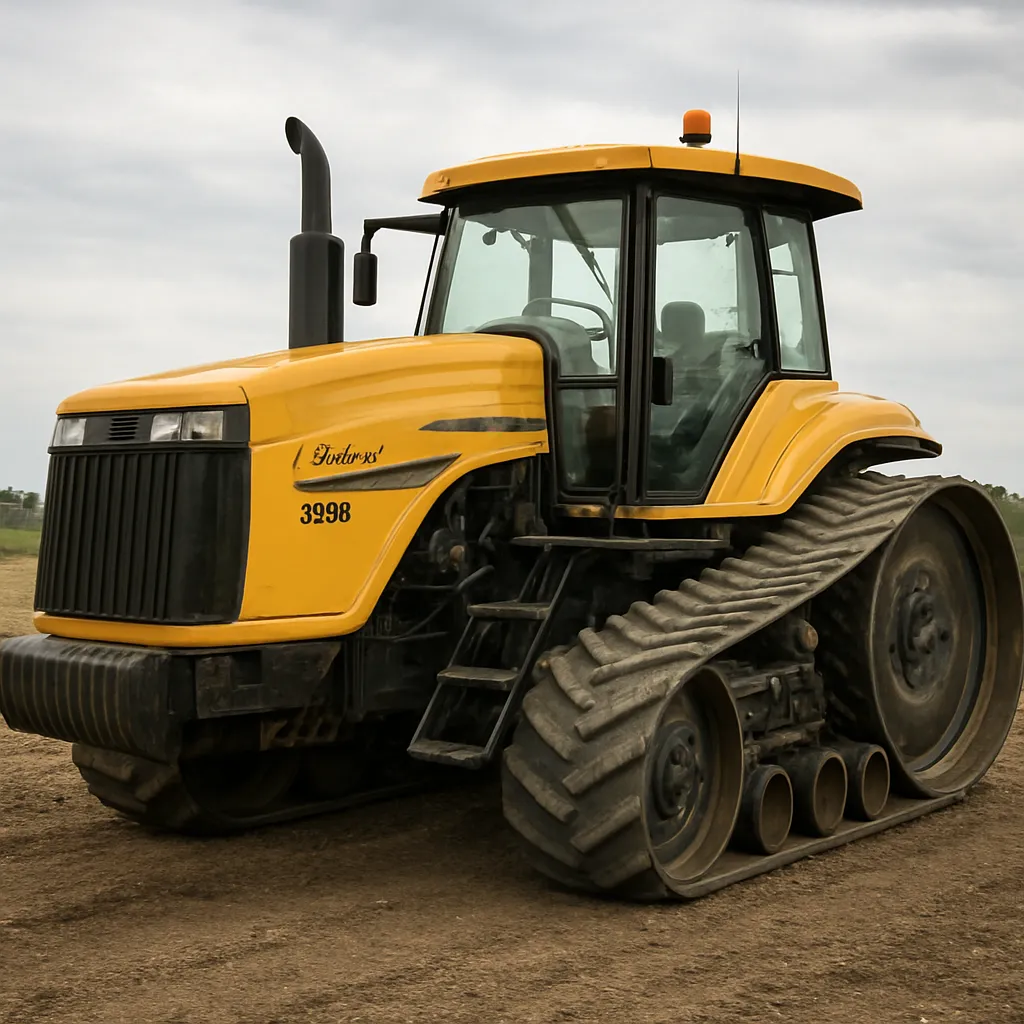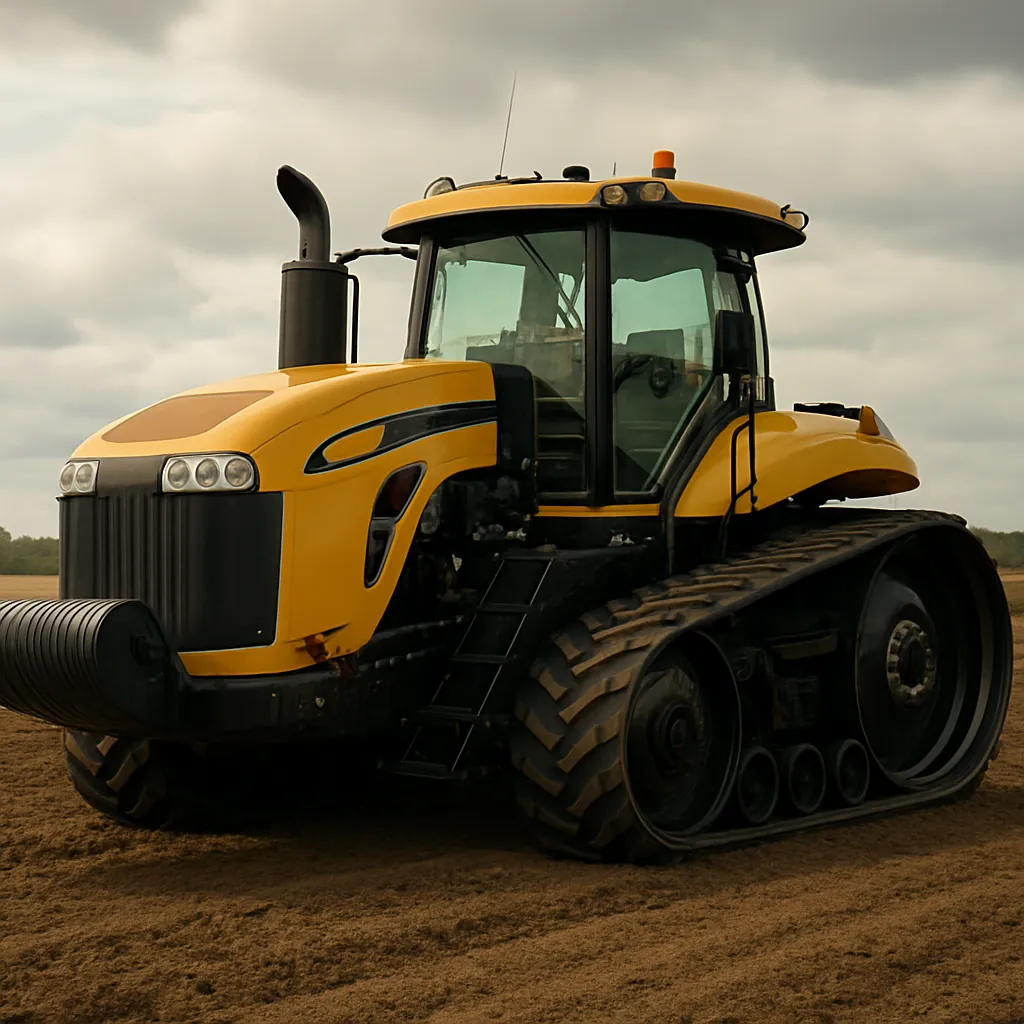
The Challenger MT865C is a heavy-duty tracked agricultural tractor designed for demanding fieldwork where traction, flotation and stability are essential. Built to operate in a variety of soil conditions and to tow or power large implements, the MT865C represents a class of machines that bridges large-scale farming, soil cultivation and specialized heavy-duty tasks. In the following sections you will find an overview of its design, typical applications, technical characteristics, operational benefits and practical considerations for owners and operators.
Design and technical overview
The Challenger MT865C follows the design philosophy of modern tracked tractors: low ground pressure, high tractive effort and a configuration optimized for heavy implement handling. Its undercarriage uses continuous rubber tracks instead of conventional wheels, which allow it to distribute weight more evenly across the soil surface.
- Engine: Models in the MT8xx family are commonly fitted with turbocharged diesel engines calibrated for continuous high-load work. Typical power output for tractors in this segment is often quoted in the 300–400 hp (approximately 220–300 kW) range depending on rating method and option package.
- Transmission: The MT865C usually employs a powershift or advanced step-less transmission system designed to deliver smooth transfer of torque to the tracks with multiple gear ranges suited for field speeds and road transport.
- Tracks and undercarriage: The continuous track system provides superior flotation and traction compared to two-wheel or four-wheel drive tractors. Track widths and configurations vary by specification, influencing ground pressure and maneuverability.
- Hydraulics and PTO: Heavy-flow hydraulic systems and robust PTO options enable the tractor to operate large seed drills, cultivators, plows, planters and other high-capacity implements. Hydraulic flow rates and number of circuit options are offered to match implement demands.
- Cab and ergonomics: The cab is designed for long-day comfort with ergonomic controls, climate control, and features to improve operator visibility and reduce fatigue during long operations.
Primary applications and field roles
The Challenger MT865C is engineered for tasks that require sustained traction and power. Its tracked configuration makes it particularly well-suited to operations where soil structure preservation and minimal compaction are priorities. Typical applications include:
- Tillage — Primary and secondary tillage with large plows, cultivators, disc harrows and subsoilers. The tractor’s weight and traction allow deep and uniform soil penetration even with large multi-section implements.
- Seeding and planting — Pulling wide planters and air drills for high-speed seeding across extensive acreages while maintaining consistent seed placement due to steady traction.
- Heavy transport — Towing large trailers and transport systems across fields where wheeled tractors might slip or compact soils excessively.
- Land leveling and earthmoving — Tasks such as land grading, ditching and moving soil for drainage when equipped with appropriate attachments or pushed implements.
- Specialist operations — Sugar beet, cotton, rice and other crop systems where machinery needs to operate in softer or wetter conditions; the tracks allow access when wheeled tractors would get bogged down.
Performance characteristics and statistics
Exact figures vary with model year, configuration and optional equipment, but the MT865C and similar models are characterized by several measurable attributes important to end users:
- Typical rated engine power: approximately 300–400 hp (approx. 220–300 kW), depending on the testing standard used (SAE, ISO).
- Operating weight: generally in the range of 14,000–20,000 kg (14–20 tonnes) depending on track type, ballast and installed options.
- Track ground contact length and width: these dimensions affect ground pressure and vary by factory or aftermarket track choices; wider tracks reduce ground pressure and improve flotation.
- Hydraulic flow: heavy-duty tractors in this class commonly provide high-flow hydraulic circuits, sometimes exceeding 200 L/min on combined systems when optional pumps are fitted.
- Fuel capacity and consumption: tanks are sized for long field days — fuel capacity can be several hundred liters, and fuel consumption depends on load but is optimized for sustained heavy work rather than short bursts.
Because the MT865C is part of a broader series and because manufacturers offer multiple configurations and upgrades, prospective buyers should consult manufacturer specification sheets for precise numeric values for a given year and trim level.
Advantages of tracked tractors compared to wheeled machines
Tracks change the operational profile of a tractor. The most notable benefits of the Challenger MT865C’s tracked design include:
- Lower ground pressure: Tracks distribute weight over a larger area, reducing soil compaction and preserving soil structure, which is critical for long-term field productivity.
- Improved traction: Continuous tracks provide higher drawbar pull and less wheel slip on soft or wet soils, increasing effective power transfer to implements.
- Smoother ride over rough terrain: Tracks can dampen shock from ruts and uneven surfaces, improving operator comfort and reducing stress on mounted implements.
- Access in adverse conditions: Tracked tractors can operate in conditions where wheeled tractors would be restricted — early spring, post-rain, or in fields with higher moisture content.
- Reduced risk of rutting: While heavy tracked machines still impose loads on the soil, the distributed pressure pattern lowers the depth and severity of wheel ruts, which can simplify subsequent field operations.
Implement compatibility and attachments
The MT865C is designed to work with a wide range of implements common to large-scale commercial farming:
- Large multi-section plows and disc harrows
- High-capacity planters and air seeders
- Subsoilers and deep rip implements
- Trailed spreaders and sprayers
- Front-mounted and rear-mounted loaders (where applicable) and graders for earthmoving
Because of its torque and hydraulic capacity, the tractor can power implements that require significant drawbar pull or hydraulic flow. Modern versions often include factory or dealer options to tailor hydraulics, hitch configurations and electronic controls (ISOBUS compatibility) to the implement suite in use.
Operator environment, controls and electronics
Manufacturers have emphasized operator comfort and ease of use for high horsepower machines because operators spend long hours in the cab. The MT865C typically incorporates:
- Ergonomic seating and control layout for reduced fatigue
- Climate control and sound insulation to maintain comfort during long shifts
- Advanced electronics for mapping, auto-steering and telematics — improving precision and enabling remote diagnostics
- ISOBUS-compatible controls to reduce compatibility issues between tractors and implements
High-end tractors in this class often include guidance systems that enable repeatable passes across fields with centimeter-level accuracy when paired with GNSS systems. This reduces overlap, saves inputs, and increases operational efficiency.
Maintenance, reliability and lifecycle costs
Tracked tractors such as the MT865C require a maintenance approach that balances heavy-duty use with track and undercarriage care. Key maintenance considerations include:
- Regular inspection and adjustment of track tension to avoid premature wear.
- Monitoring of undercarriage components (rollers, idlers, drive sprockets) for wear and replacement on schedule.
- Frequent filter and fluid changes for engine, hydraulics and final drives to preserve component life under heavy loads.
- Software updates and calibration for electronic systems to ensure guidance and engine management operate optimally.
From an ownership-cost perspective, tracked tractors often have higher initial purchase prices than comparable wheeled tractors but can deliver total-life advantages on farms where soil-sparing, traction and consistent field productivity are priorities. Factors that influence lifecycle costs include fuel consumption under load, downtime risk and the expense of undercarriage component replacement.
Economic and environmental considerations
Choosing a machine like the MT865C should be considered both from an operational and an environmental standpoint. Key points include:
- Input efficiency: Improved traction can reduce the time and number of passes required for fieldwork, lowering fuel use per hectare in certain operations.
- Soil health: Reduced surface compaction helps maintain soil structure, drainage and root penetration potential — benefits that compound over multiple seasons.
- Emissions and fuel: Modern powertrains are designed to meet emissions regulations and balance power with fuel efficiency. Operating practices, such as matching implement size to tractor power and using precision guidance, can reduce fuel consumption.
- Resale and depreciation: High-capacity, well-maintained tracked tractors retain value when there is strong demand in regions practicing large-scale arable farming. Depreciation is influenced by hours of use, undercarriage condition and service records.
Where the MT865C excels and limitations to consider
Strengths of the Challenger MT865C include:
- Outstanding traction and consistent power delivery for heavy implements
- Reduced compaction compared with similar-mass wheeled tractors
- Capability to operate in challenging surface conditions
- High hydraulic capacity for demanding implements
Limitations or considerations:
- Higher initial purchase cost and the potential for higher undercarriage maintenance costs compared to wheeled counterparts
- Transport considerations — wide track widths and longer ground contact can affect road transport requirements and may require special permits or escort depending on local regulations
- Field turning radius — depending on drive type and steering system, some tracked tractors require different turning techniques than wheeled tractors
Market context, ownership and typical users
The Challenger MT865C is aimed at large commercial farms, contractors and operations that need a tractor capable of sustained, high-power fieldwork. Typical users include:
- Large arable farms practicing broad-acre cropping systems
- Farm contractors who move between clients and must handle a variety of heavy implements
- Operations in regions with wet springs or where soil conservation is prioritized
Across the global market, tracked tractors have gained adoption in parts of North America, Australia and Europe where wide implements and the need to avoid compaction make them an attractive investment. Telematics and service networks have made it easier for owners to manage maintenance schedules and monitor machine health remotely, improving uptime.
Purchasing advice and practical recommendations
For potential buyers of an MT865C or similar tracked tractor, practical steps and considerations include:
- Define typical implement size and tasks to ensure the tractor’s power and hydraulic capacity match demand.
- Assess field conditions across seasons — if a farm frequently faces soft or wet soils, the flotation benefits may justify the investment.
- Evaluate total cost of ownership: purchase price, expected maintenance (especially undercarriage), fuel use, and resale prospects.
- Consider guidance and telematics packages to maximize efficiency and support preventive maintenance.
- Check dealer support, spare parts availability and service networks in your region to minimize downtime risk.
Concluding observations
The Challenger MT865C represents a class of agricultural machinery focused on delivering reliable power, excellent traction and soil-friendly operation on large-scale farms. While exact specifications differ by year and option set, tractors like the MT865C are valued for their ability to pull heavy implements, operate in challenging conditions and reduce soil compaction relative to comparable wheeled models. For operations matching its capabilities, the MT865C can be a central workhorse that increases daily productivity and supports sustainable soil management practices.
Challenger MT865C is best evaluated in the context of specific operational needs, implement compatibility and maintenance planning. Properly matched to its tasks and cared for over its service life, it can deliver strong performance for demanding agricultural and land-management roles.