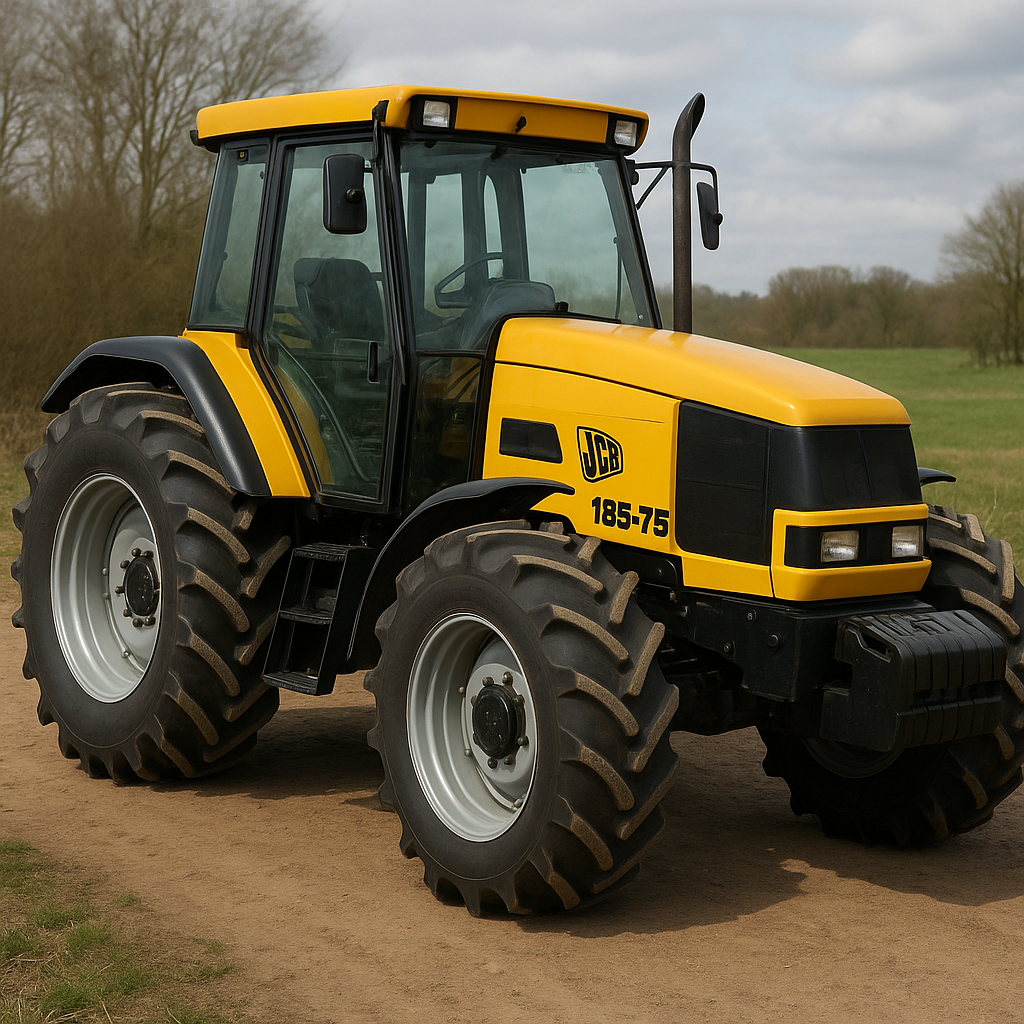
The JCB Fastrac 185-75 is a distinctive member of the high-speed agricultural tractor family designed to combine field capability with road-going performance. Built on the well-known Fastrac concept, this model targets operators who need a machine that can travel quickly between jobs, tow heavy loads, and still deliver precision work in the field. In the sections that follow, we examine the design philosophy, typical applications, operational performance and economy, maintenance considerations, and broader context that make the 185-75 an interesting option for contractors, large farms, and mixed operations around the world.
Design and technical characteristics
The Fastrac line has long been defined by several hallmark features: a robust yet agile chassis, advanced drivetrain that allows high road speeds, and a focus on operator comfort without sacrificing utility. The 185-75 reflects these principles and is engineered to sit between lighter utility tractors and heavier high-horsepower machines.
Power unit and drivetrain
- The numeric designation in the model name typically reflects an approximate engine output and maximum road speed: roughly 185 horsepower in standard tune, combined with a top transmission-calibrated road speed up to 75 km/h in the “75” variant. Exact engine figures and emissions packages can vary by market and production year.
- Engine options that have been commonly fitted to Fastrac machines include purpose-built JCB DieselMax derivatives and third-party engines depending on the production era. Engines are tuned for a balance of torque and fuel efficiency to handle both draft work and high-speed transport.
- The drivetrain is centred on a robust gearbox with multiple forward ranges and often incorporates an efficient powershift or continuously variable-like behaviour through advanced electronic control. A key trait is the ability to maintain high road speeds while carrying implements or towing trailers.
- Full-time four-wheel drive and heavy-duty axles are standard, with differential locks and selectable traction settings to match field conditions.
Chassis, suspension and brakes
The Fastrac concept prioritises ride quality: where conventional agricultural tractors rely on tyre and cab isolation alone, the 185-75 employs an engineered chassis with integrated suspension systems. This usually includes independent front suspension and a suspended rear axle (depending on specification), which improves stability at speed and reduces operator fatigue during long road transits.
- Braking systems are designed for both agricultural work and high-speed road travel; large disc brakes and multi-circuit hydraulics improve stopping power and safety when towing heavy loads.
- Steering systems offer precise control at low speeds in the field and stability at higher speeds on the road. Some configurations include four-wheel steering to enhance manoeuvrability in tight spaces.
Hydraulics, PTO and linkage
The 185-75 typically comes with a capable hydraulic system to support a variety of implements. Key features include:
- Multiple remote valves (electro-hydraulic options available) to control modern implements.
- Rear three-point linkage with substantial lift capacity for large implements and rear-mounted equipment.
- Standard PTO options commonly include 540 and 1000 rpm settings, sometimes with economy modes for fuel-efficient implement operation.
- Optional front linkage and PTO packages for full implement versatility.
Applications and real-world use
The Fastrac 185-75 is aimed at operators who need a multi-role machine: moving quickly between fields or depots, performing demanding fieldwork, and carrying out contractor tasks. Its design intentionally blurs the line between a field tractor and a transport vehicle.
Primary use cases
- Agronomic fieldwork: tillage, seeding, and application where a reliable drawbar and linkage, combined with controlled ground speed, are essential for consistent results.
- Transport and haulage: fast road speeds allow contractors to move implements, trailers, or towed equipment between long-distance job sites without the need for low-speed convoys.
- Contracting: fodder harvesting, baling and large-scale mowing where frequent road transit and field performance are required in the same shift.
- Transport of slurry and liquid manure: robust chassis and braking systems improve safety when hauling heavy tankers.
- Municipal and winter work: salt spreading and gritting operations benefit from road speed and implement flexibility.
Advantages over conventional tractors
Operators choose the 185-75 for a few clear advantages:
- Versatility: Serves as both a field tractor and a fast, road-legal transport machine.
- Time savings from reduced transit time between jobs, translating into higher daily utilization and greater overall productivity.
- Improved operator experience during long work days due to superior ride quality.
- Ability to safely tow larger trailers at legal speeds in many regions, reducing the need for additional haulage units.
Performance, fuel economy and statistics
Precise performance figures depend on configuration, engine tuning, and regional specifications. The model designation suggests an output close to 185 hp and a top road speed of up to 75 km/h, which aligns with JCB’s approach to model naming for the Fastrac line. Below are realistic ranges and considerations for operators evaluating the machine.
Power and torque characteristics
- Engine performance is tuned for mid-range torque to provide steady draft power for implements while retaining the responsiveness needed for road transport.
- Torque delivery at lower RPM supports heavy draft tasks and reduces the need to constantly shift gears under load.
Fuel consumption and operating cost
Fuel consumption varies widely with task and terrain. Typical operating observations from similar-class machines indicate:
- Light transport or road use: lower consumption per hour, as the engine runs at efficient cruise RPMs.
- Heavy draft or PTO-driven work: fuel consumption increases, with rates dependent on load, implement efficiency, and operator technique.
- On average, broad estimates for tractors in this power band under mixed-use conditions often fall into a broad range; real-world monitoring via in-cab systems can provide precise, task-specific data for cost calculations.
Productivity measures and utilisation
Operators can assess the 185-75’s productivity two ways: its effective field-hour performance and the transit time saved between tasks. High utilization on large farms and contracting operations often translates to an attractive operating cost per hectare or per job when compared with using separate machines for field and transport duties.
Operator environment, safety and electronics
Cabin design and electronic aids make a substantial difference in efficiency and safety. Fastrac models, including the 185-75, typically provide a high level of operator amenities and modern control systems.
Cab comfort and ergonomics
- Suspended cab design, climate control, adjustable seating and low-vibration layout reduce fatigue—particularly important given the high road speeds these machines can achieve.
- Visibility is generally excellent, with large glazed areas and optional cameras for rear implement monitoring.
Controls, connectivity and telematics
Modern Fastrac variants offer a suite of electronic controls and connectivity options. Typical features include:
- ISOBUS compatibility for plug-and-play implement control.
- Advanced onboard hydraulics and transmission management with programmable settings for repeatable tasks.
- Optional telematics packages for remote monitoring of machine health, fuel usage, location, and maintenance alerts—helpful for fleet managers and contractors.
Safety systems
- Load-sensing hydraulics and multi-circuit brakes improve control and redundancy.
- Operator protection systems and rollover protection are integrated into the cab structure.
- Lighting packages suitable for night-time fieldwork and road travel are available to meet regional regulations.
Maintenance, servicing and ownership considerations
Owning a Fastrac 185-75 involves evaluating lifecycle costs, parts availability, and service networks. JCB’s global presence supports good parts access in many markets, but specifics depend on local dealerships and aftermarket ecosystems.
Routine servicing
- Daily checks: fluid levels, tyre condition, linkage and visible hydraulic lines.
- Scheduled maintenance: oil and filter changes, gearbox and hydraulic service intervals, air filter replacement—common intervals follow manufacturer guidance to protect long-term value.
- Electronic diagnostics: modern models use onboard diagnostics to alert operators to service needs, reducing downtime when combined with proactive workshop routines.
Reliability and lifecycle value
The Fastrac family has built a reputation for sturdy construction. Longevity depends on appropriate maintenance, correct implement matching, and sensible operating practices. For contractors, regular scheduled maintenance and telematics-based monitoring often yield the best uptime and predictable lifecycle costs.
Comparisons, market position and purchasing advice
When choosing a tractor like the 185-75, buyers typically compare it to both high-horsepower field tractors and purpose-built transport units. The decision hinges on operational patterns and priorities.
Who should consider the 185-75?
- Contractors who frequently travel between sites and need a single machine to both transport and perform field tasks efficiently.
- Large arable farms where long transit distances make high road speed attractive and time savings translate directly into lower unit costs.
- Operations that value a comfortable working environment for operators who log long hours and require repeatable implement control.
Alternatives and trade-offs
Alternatives include conventional tractors with lower top speeds but sometimes lower purchase price and simpler maintenance, or a dedicated tractor-plus-truck model where field work and transport are separated. The 185-75 trades increased complexity and purchase cost for the flexibility of a single, multi-role machine.
Buying tips
- Specify the required PTO and linkage options to match your implement fleet.
- Consider telematics and extended warranty packages if operating a multi-machine fleet to reduce uncertainty in maintenance budgets.
- Test drive both field and road conditions to verify ride quality and handling meet expectations for your tasks.
Operational tips and best practices
To get the most from a Fastrac 185-75, operators should adopt a few practical measures:
- Use transmission and engine management settings tailored to the task—economy modes for steady road transit and high-torque settings for heavy draft work.
- Monitor tyre pressures: balanced pressure between field and road modes preserves both soil health and fuel economy.
- Schedule pre-season checks and mid-season health scans using telematics or workshop diagnostics to catch wear items early.
- Train drivers in both high-speed road handling and low-speed implement control to fully leverage the machine’s dual-role capability.
Summary and outlook
The JCB Fastrac 185-75 sits in an important niche of the agricultural machinery market: a high-speed workhorse that provides both field capability and rapid on-road transit. Its design emphasis on ride quality, versatility, and operator comfort makes it especially attractive to contractors and large-scale operations where time is a major cost factor. While acquisition and maintenance costs may be higher than those of simpler tractors, the potential gains in daily productivity and the reduction of secondary transport requirements present a compelling business case for many buyers.
As agricultural operations continue to evolve—placing greater emphasis on machine utilisation, precision farming and data-driven maintenance—the 185-75 and similar machines that integrate performance with connectivity are likely to remain relevant. For those seeking a blend of field performance and road-going agility, the Fastrac 185-75 is a strong candidate worth careful consideration.