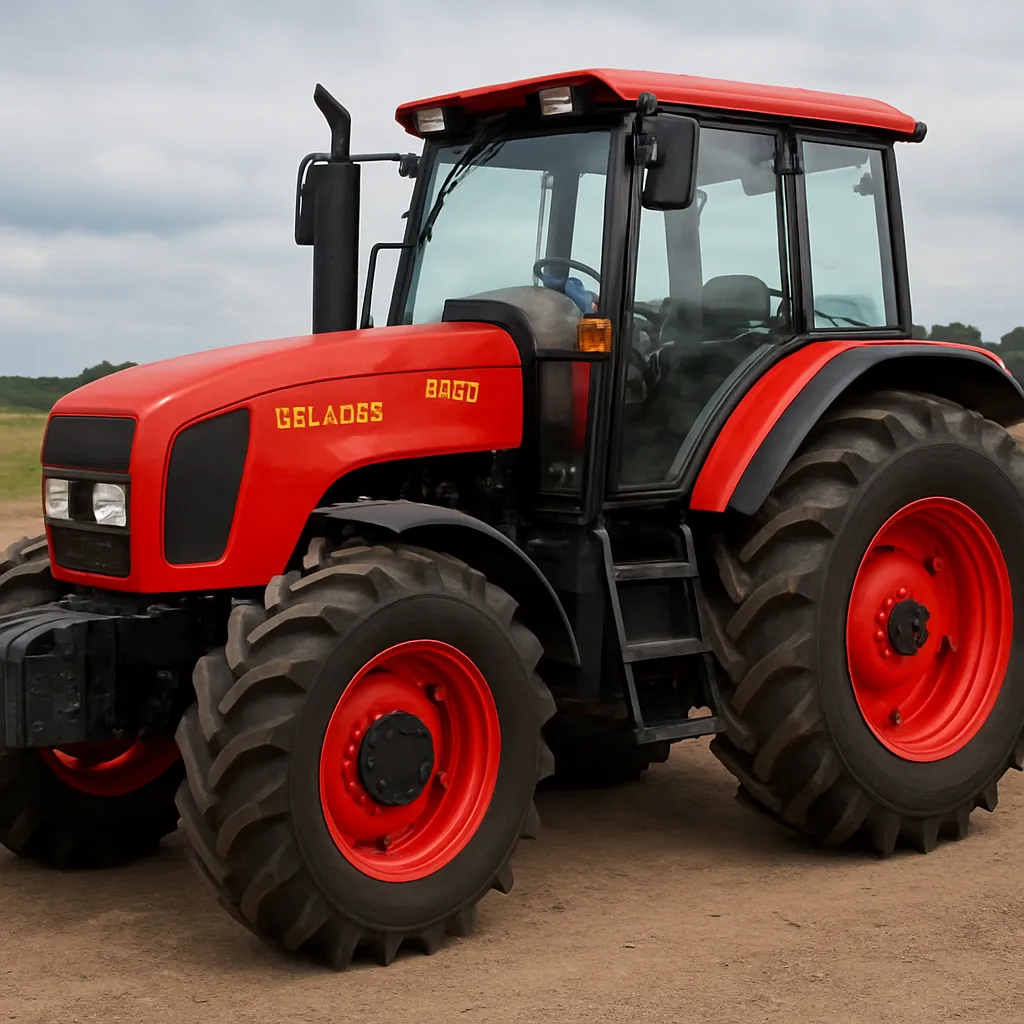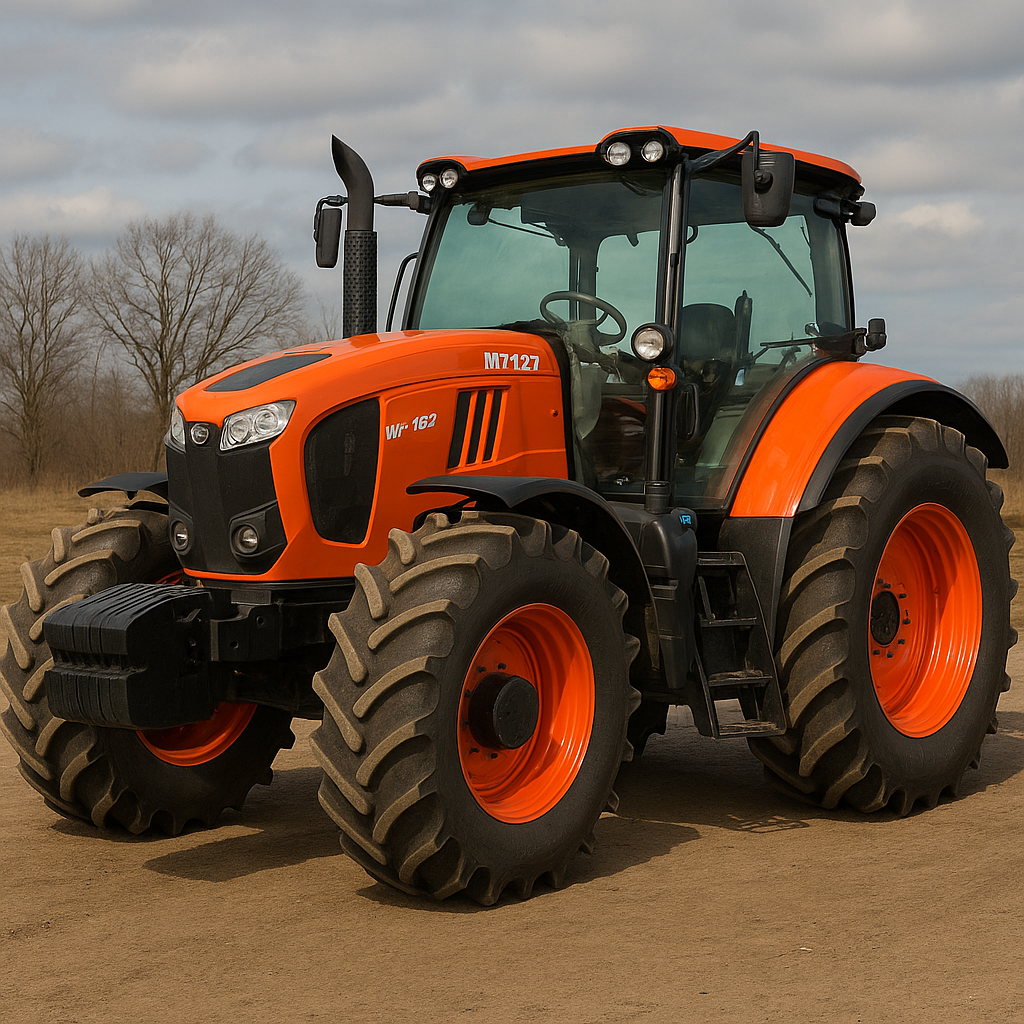
The Kubota M7-122 is a mid-size agricultural tractor designed to combine modern technology with robust performance for a wide range of farm and utility tasks. Belonging to the M7 series, this model targets farmers and contractors who need a reliable machine capable of handling heavy implements, loader work and long hours in the field while offering comfort and efficiency. The following article examines the M7-122’s main features, typical applications, technical highlights, operator comfort and maintenance considerations, plus practical tips for buyers and fleet managers.
Core design and technical highlights
The Kubota M7-122 is engineered to offer balanced power, hydraulic capacity and versatility. At its heart is a modern diesel engine and a durable drivetrain built to tackle both traction-heavy tasks and sensitive implement work. While specific specifications can vary by market and year of manufacture, the M7-122 typically provides the following characteristics and options:
- Engine: A turbocharged diesel engine, usually in the mid-120 horsepower class (often quoted as around 122 hp ISO). The engine is designed for strong low-end torque to pull heavy loads and provide stable PTO power for implements.
- Transmission: Available with multi-speed powershift or a continuously variable (CVT/KVT-style) transmission depending on configuration and region. These transmissions are tuned for smooth shifts, efficient fuel use and precise ground-speed control during implement work.
- PTO: Standard rear PTO speeds include 540 and optional 1000 rpm. Ground-driven PTO or economy PTO modes are often offered to improve efficiency with PTO-driven implements.
- Hydraulics: A robust hydraulic system with multiple remote valves and high flow options to support complex implements like ploughs, seed drills, sprayers and large front loaders. Typical hydraulic flow rates for tractors in this class range from approximately 110 to 150 L/min depending on pump configuration.
- Rear linkage and lift capacity: Category II/III linkage designed to lift heavy mounted implements. Maximum lift capacity at the ball is commonly in the region of several thousand kilograms (often between 4,500 and 6,500 kg depending on spec and ballast).
- Axles and tires: Heavy-duty rear axle options for field traction, with front axle suspension or front suspension options on some trims to improve ride quality and loader performance. Tire options range from agricultural flotation tires to high-speed transport tires for road work.
- Emissions and aftertreatment: Modern versions meet applicable emissions standards (e.g., Tier 4 / Stage IIIB / Stage V in various jurisdictions) using a combination of EGR, DPF and/or SCR systems. Some markets use DEF/AdBlue dosing as part of SCR systems; details depend on regional compliance.
- Cab and electronics: Comfortable cab with ergonomic controls, optional joystick for loader control, touchscreen displays or simple multi-function monitors, and ISOBUS compatibility for precision farming implements and data transfer.
These technical building blocks make the M7-122 a tractor intended to be both powerful and adaptable. The combination of mid-120 hp output and high hydraulic performance places it squarely in the sweet spot for many medium-to-large farms and mixed operations.
Typical applications and real-world uses
The Kubota M7-122 is intended for users who require an all-around workhorse. Its versatility means it’s commonly used in the following roles:
- Arable farming: Primary tillage, secondary cultivation, seeding and fertilizing. The stable powerband and strong linkage make it suitable for medium-to-large ploughs, cultivators and large seed drills.
- Hay and forage: Mowing, tedding, raking and baling. The tractor provides reliable PTO performance for balers and forage harvesters on medium-to-large operations.
- Dairy and livestock farms: Feeding tasks, manure spreading and loader work. The M7-122’s loader compatibility and ergonomic cab suit repetitive tasks around a busy livestock yard.
- Loader and handling: Front loader operations for materials handling, silage, bales and pallets. Good hydraulic flow and optional loader joysticks support efficient material movement.
- Transport and roadwork: With optional high-speed gearing and trailer towing capacity, the M7-122 can handle transport between fields, contractors’ short-haul work and municipal tasks.
- Specialist operations: Vineyard or orchard tasks if narrow-configured, or headland and precision work with GPS steering and ISOBUS implements on larger farms.
Because of its balanced specification, the M7-122 is particularly popular for mixed farms where a single tractor must perform a wide variety of tasks, especially where operators value a compromise between traction, fuel economy and implement capacity.
Operator comfort, ergonomics and controls
Kubota placed considerable emphasis on operator comfort and user-friendly controls in the M7 series. Typical features that improve productivity and reduce fatigue include:
- Spacious, sound-insulated cab with large glazing for all-around visibility, including easy sightlines to the front loader and rear linkage.
- Adjustable air-suspended or mechanical seats with armrests and clear access to a multifunction console.
- Ergonomic placement of levers, switches and an easy-to-use throttle. Optional joystick controls for loader functions and remote valves.
- Climate control systems (heating and air conditioning) to maintain operator comfort during long working days.
- Digital displays or integrated monitors that provide real-time data on engine RPM, fuel consumption, hydraulic flow, PTO speed and fault codes. ISOBUS compatibility enables direct implement control and data sharing with precision agriculture systems.
These comfort and control features contribute directly to productivity — operators achieve more accurate implement control and sustain higher output when fatigue is minimized and controls are intuitive.
Fuel economy, emissions and environmental considerations
Fuel efficiency is a key consideration for operators buying a mid-range tractor. The M7-122 is engineered to balance high torque with reasonable fuel consumption, especially when fitted with modern injection, turbocharging and aftertreatment systems. Points to note:
- Engine management systems optimize fuel delivery for a given load, improving economy during constant-speed tasks like baling or mowing.
- Transmission choices (e.g., CVT-style or efficient powershift) allow the operator to run the engine in an efficient RPM band while maintaining ground speed, reducing fuel burn.
- Emissions control packages (DPF, SCR and EGR where applicable) meet regulatory standards but can add maintenance items (e.g., DPF regeneration routines and AdBlue/DEF replenishment) that should be planned for in fleet operations.
- Proper matching of implements, tire selection and ballast management can significantly affect fuel consumption and soil compaction — key environmental and cost factors.
On modern models, telematics and onboard monitoring provide opportunities to measure and improve fuel efficiency across a fleet by tracking idle time, load profiles and travel routes, allowing managers to implement better operating practices.
Maintenance, reliability and lifecycle costs
Agricultural machinery is often judged not just by upfront price but by lifecycle cost and reliability. The M7-122’s strength is a conservative, serviceable design combined with Kubota’s dealer network in many regions. Important maintenance and ownership considerations:
- Routine oil and filter changes, air filter checks and fuel system maintenance are essential. Engine oil change intervals vary with duty cycle but following manufacturer schedules ensures long service life.
- Aftertreatment devices (DPF, SCR) may require occasional attention: DPF regeneration cycles, sensor checks and AdBlue/DEF top-ups where fitted.
- Hydraulics and linkage should be checked regularly for leaks and wear; hydraulic oil and filter changes protect pumps and valves from contamination.
- Transmission service intervals depend on the type (powershift vs CVT). Regular checks and fluid changes at recommended intervals avoid expensive failures.
- Availability of spare parts and factory-trained technicians in many markets reduces downtime and helps maintain resale value.
Planned preventive maintenance and a good relationship with an authorized service dealer are among the most effective ways to keep lifecycle costs predictable and ensure the tractor returns value over many seasons.
Comparisons and market position
In its class, the M7-122 competes with mid-range tractors from other manufacturers offering similar horsepower and options. Kubota’s strengths in this segment often include:
- Brand reputation for durable diesel engines and compact design philosophy carried over from strong utility tractor lines.
- Dealer network and parts availability in regions where Kubota has an established presence.
- Versatility—the ability to adapt to a wide variety of implements and farm types.
When comparing the M7-122 against rivals, operators typically evaluate total cost of ownership, dealer support, ease of use, available trims (loader-ready, high-hydraulic-flow packages, cab options) and how well the tractor integrates into their existing fleet and implements.
Buying considerations and configuration tips
If you are evaluating an M7-122 for purchase, consider the following practical points to ensure the machine fits your needs and maximizes value:
- Match horsepower and torque curves to the heaviest implement you plan to use. Over- or under-sizing can hurt efficiency and longevity.
- Choose the transmission type that suits your typical work: CVT/KVT for seamless speed control and transport, powershift for simpler cost-effective use.
- Select hydraulic pump options and remote valve counts based on intended implements (e.g., front loaders, seeders, sprayers require different flows and valve arrangements).
- Consider factory-fitted precision farming packages (GPS guidance, ISOBUS) if you plan to run modern planters or sprayers — retrofitting these systems later may be more expensive.
- Factor in cab comfort options if the tractor will be used long hours; a better seat, climate control and noise insulation improve operator efficiency.
- Ask about resale values in your region — tractors with popular specs and good service records retain value better.
Performance statistics and reasonable expectations
While specific figures vary by production year and market, the M7-122 is typically quoted with the following approximate performance figures to set expectations:
- Rated engine power: around 122 hp (ISO) — nominal and can vary slightly by region.
- Maximum transport speed: commonly up to about 40 km/h with appropriate gearing.
- Rear linkage lift capacity: frequently within the range of roughly 4,500–6,500 kg depending on spec and whether a front linkage is fitted.
- Hydraulic flow: typical high-flow options near 110–150 L/min for implements requiring high oil volumes.
- Fuel tank capacity: mid-200 liter range on many medium tractors, though exact capacity varies by configuration and market.
These numbers provide a baseline for matching the tractor to fieldwork, loader cycles and road travel needs. Always verify the exact specification of the model you intend to buy, since optional packages (heavy hydraulic, front linkage, higher-capacity pumps) change the capabilities materially.
Practical examples of use on farms
To illustrate how the M7-122 performs in practice, here are a few realistic scenarios:
- On a 300–600 hectare mixed arable and livestock farm, an M7-122 can handle seeding with a 4–6 m seed drill, pull a medium plough or disc harrow, and operate a medium-large baler or forage wagon while still providing loader capability during silage season.
- In a dairy operation with 200–400 cows, the M7-122 offers efficient feed mixing and silage handling, while also performing field work such as slurry spreading and light tillage.
- Contractors performing municipal or roadwork benefit from the M7-122’s towing capacity and transport gearing; fitted with a front loader it serves general-purpose handling tasks between contracts.
Final assessment
The Kubota M7-122 is positioned as a reliable, versatile mid-range tractor with enough power and hydraulic capability to serve a wide variety of farm and contractor tasks. Its strengths include ergonomic cab design, flexibility in transmission and hydraulic options, and compatibility with modern precision farming systems. For prospective buyers, the key considerations are the exact configuration required for their implements, the local dealer and service network, and long-term operating costs tied to fuel and aftertreatment maintenance.
Well-specified, maintained and matched to the right implements, the M7-122 can be a cornerstone machine in a mixed farm fleet — offering a balance of durability, comfort and operational efficiency that many medium-scale agricultural operations seek.