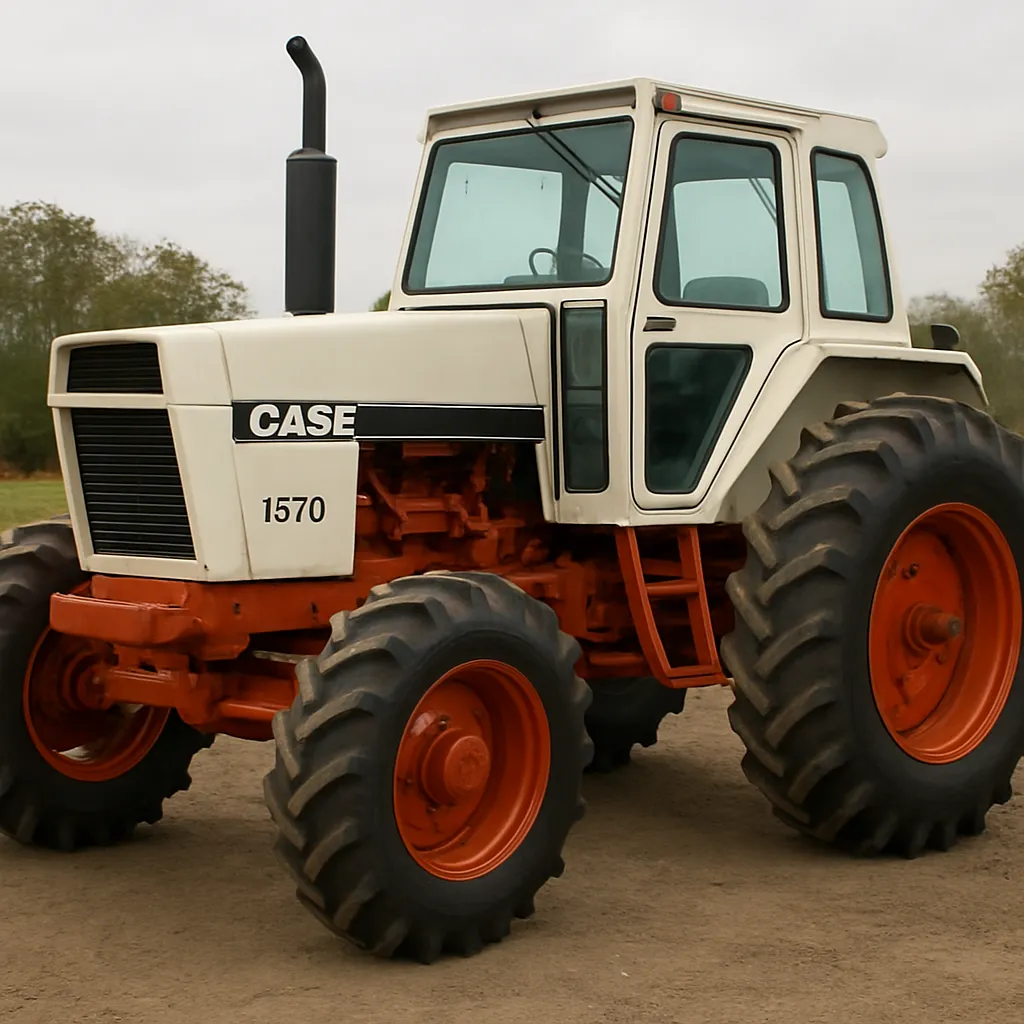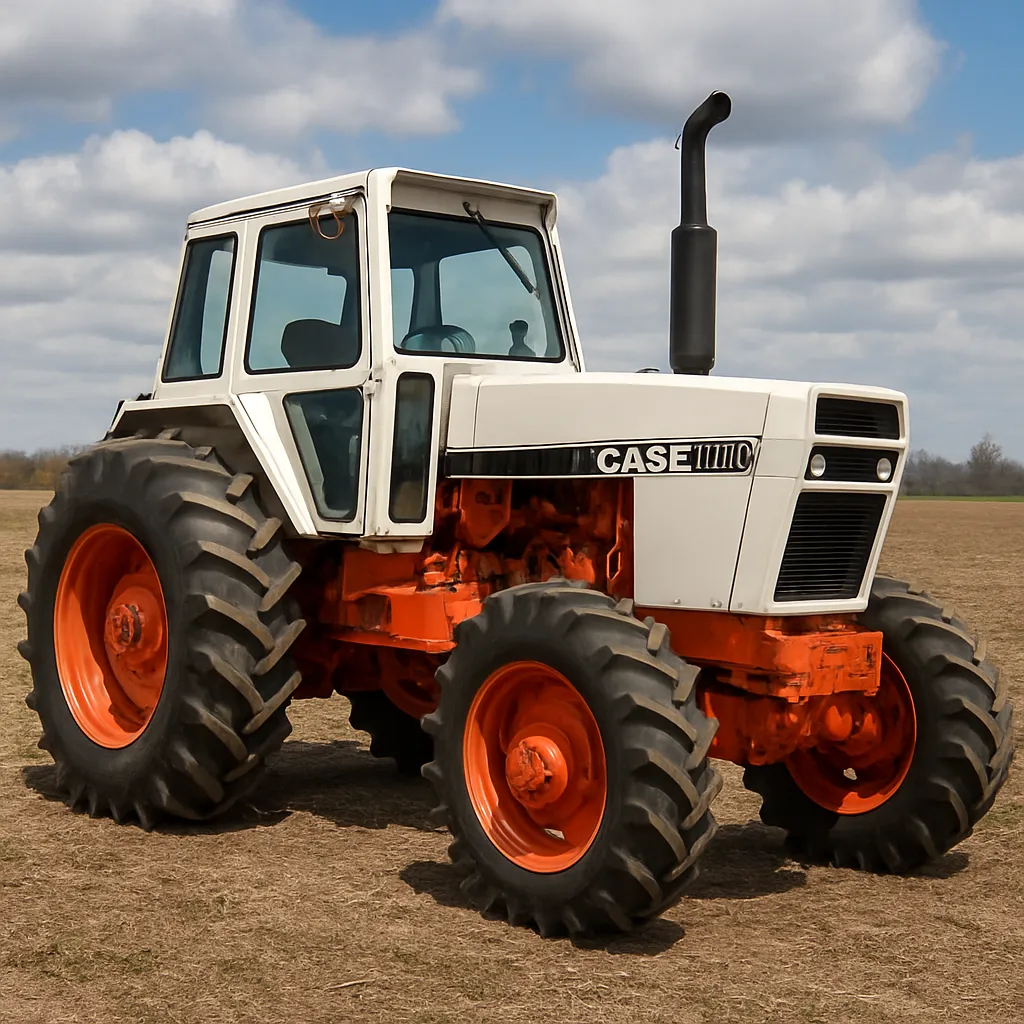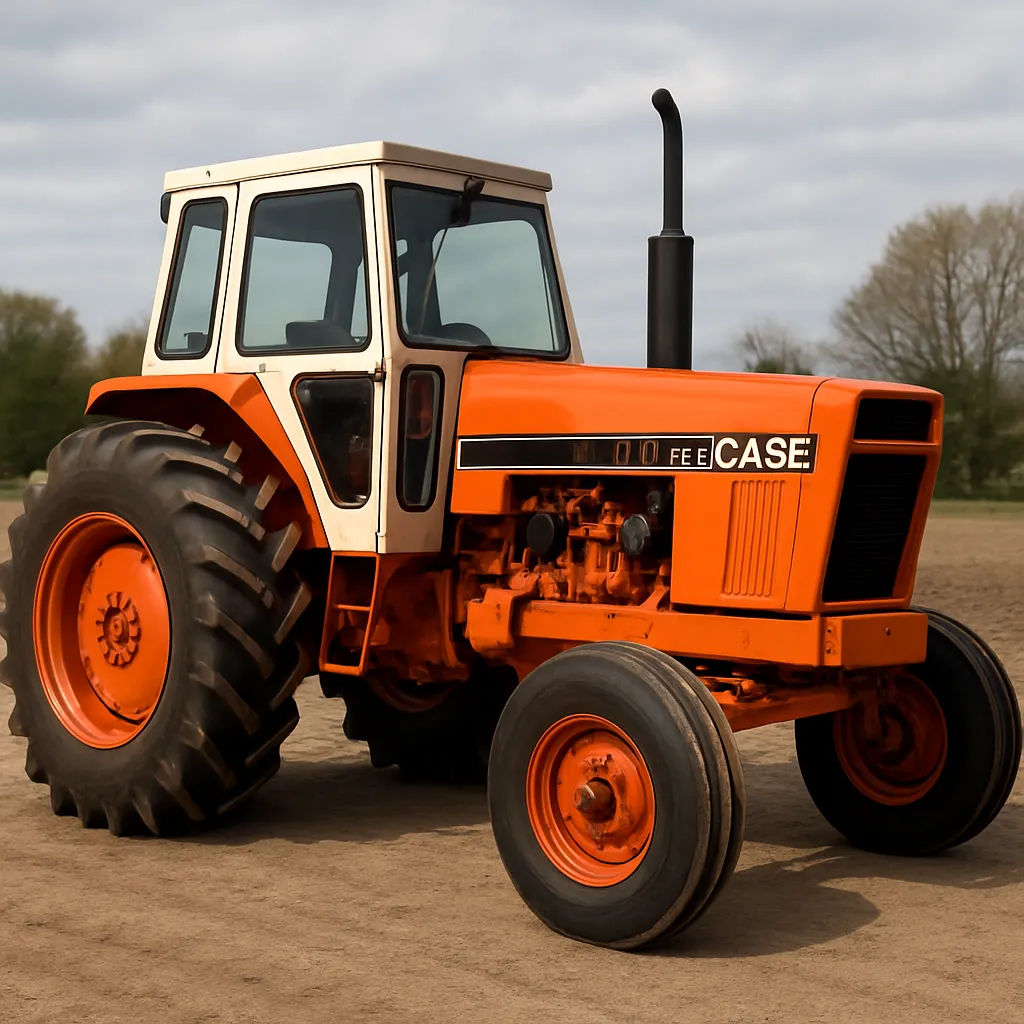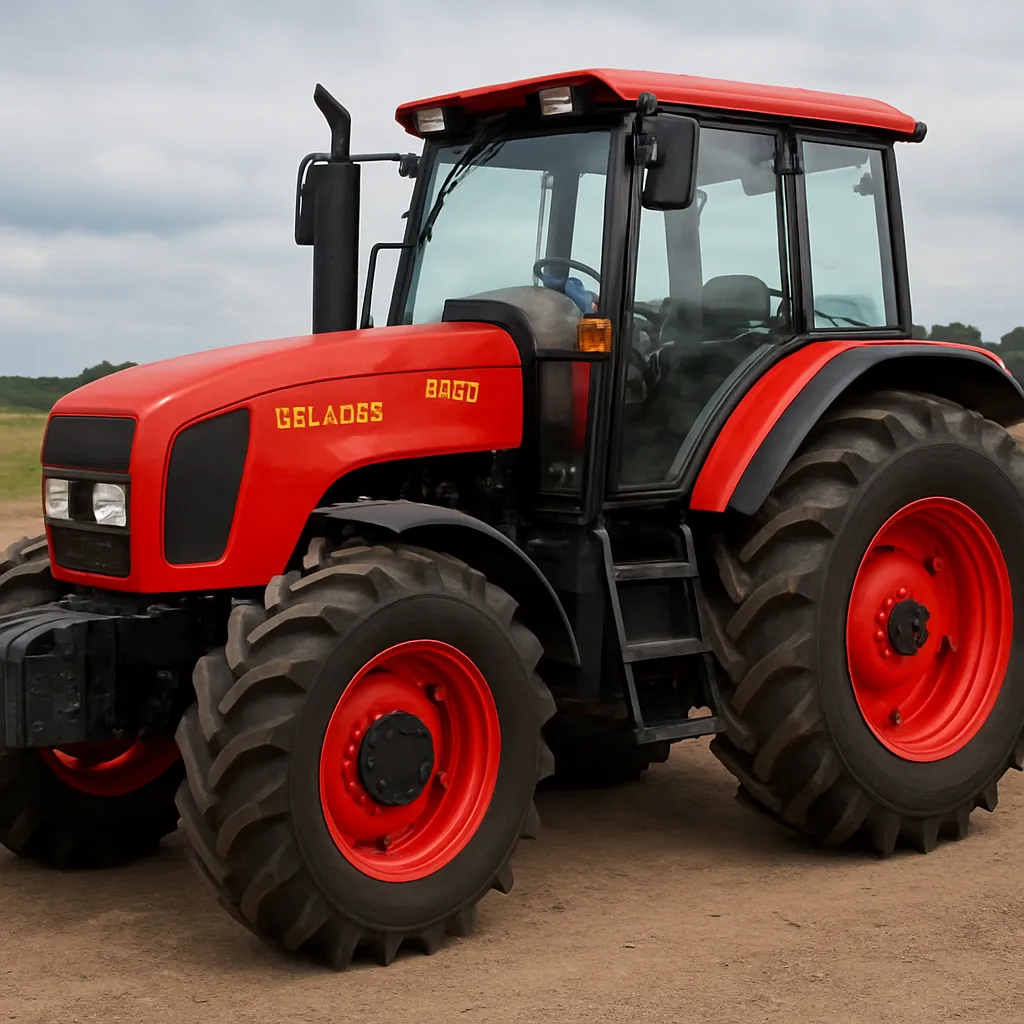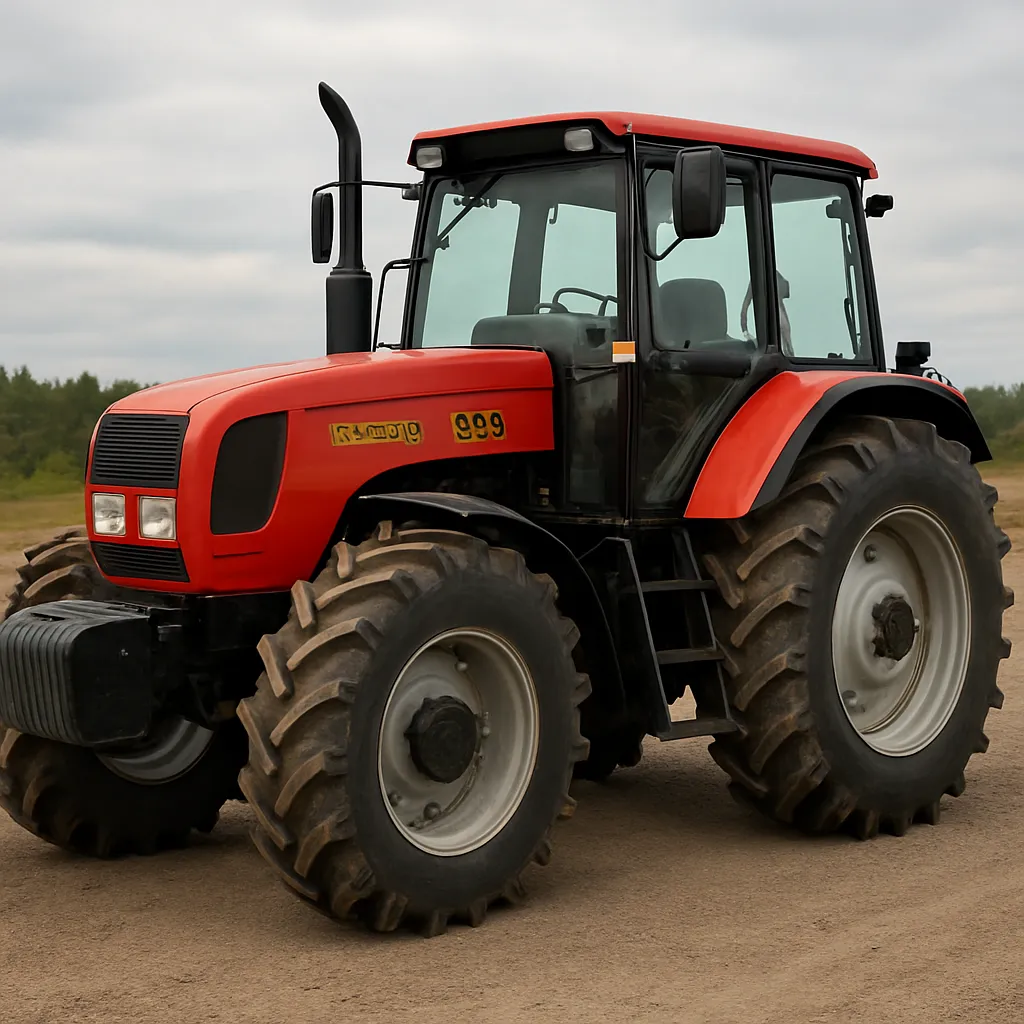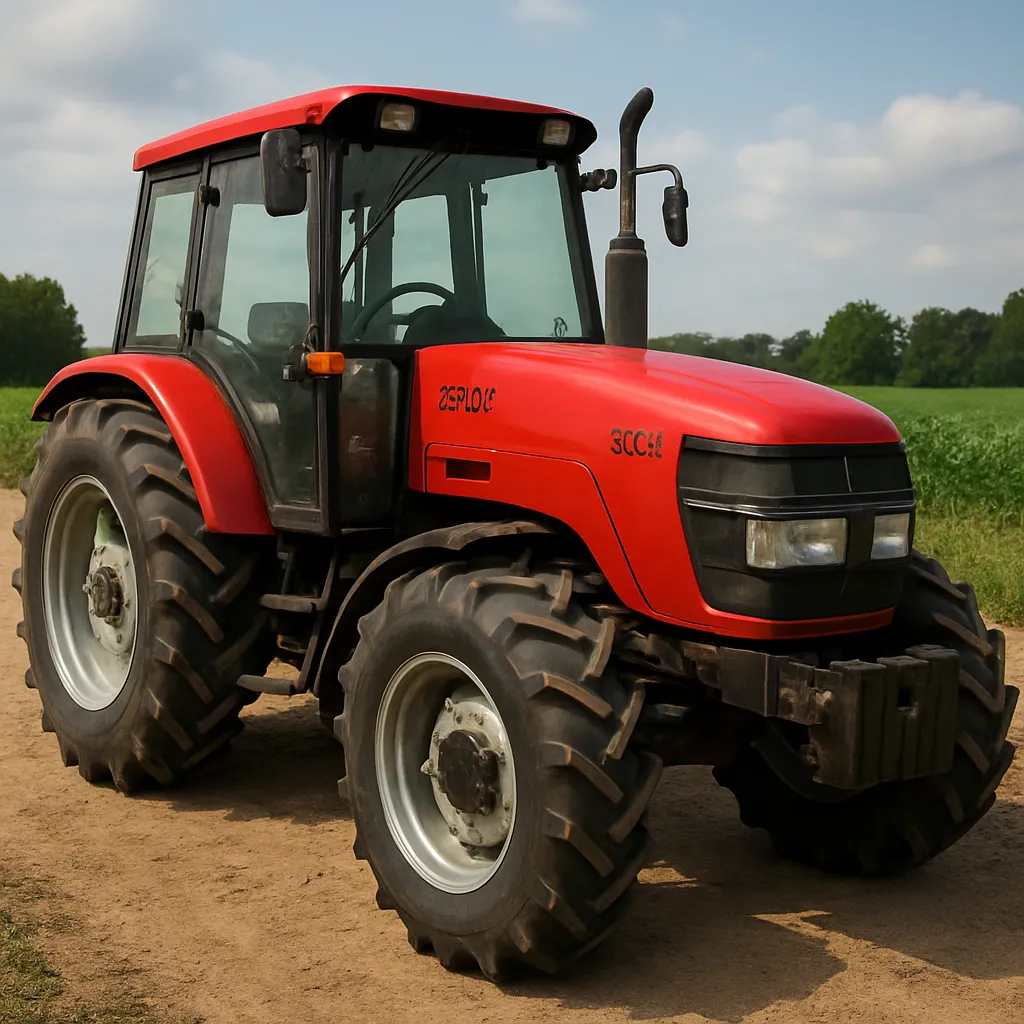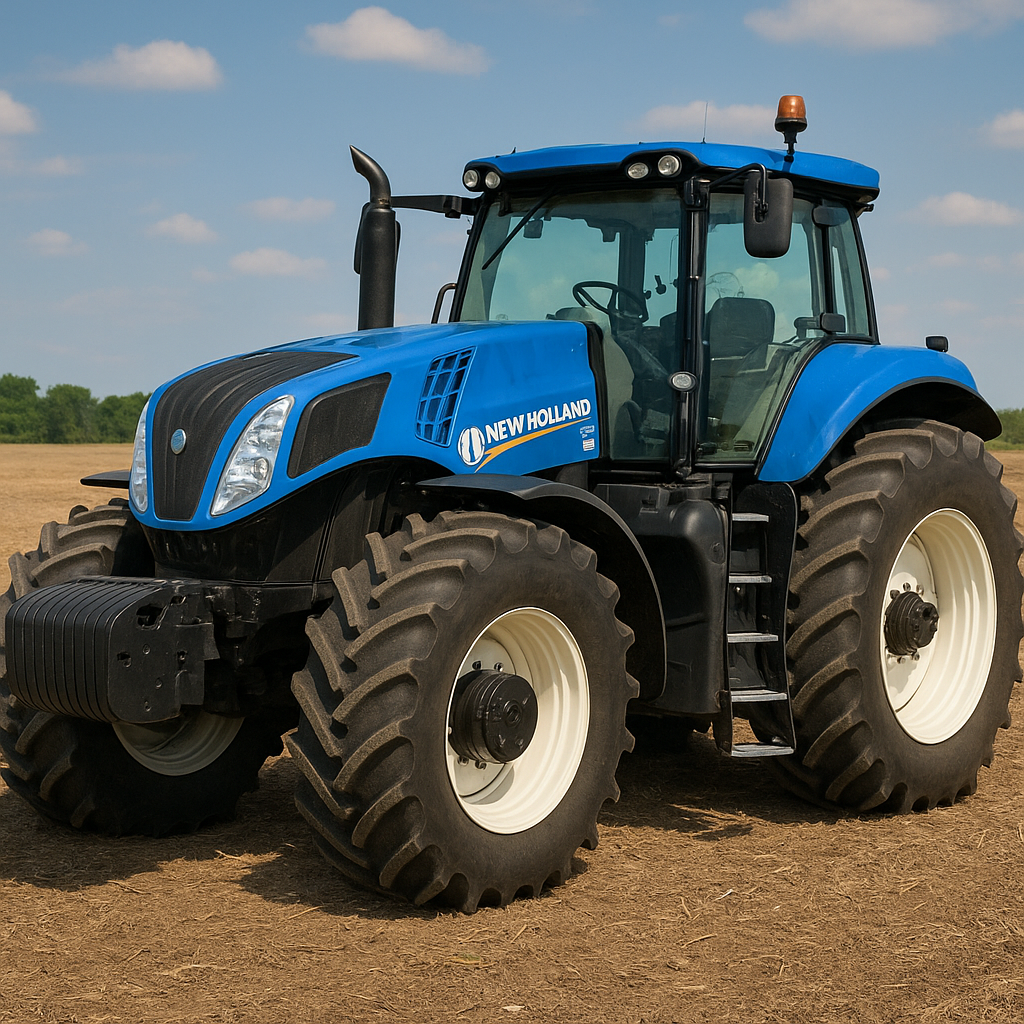
The New Holland T8.300 is a member of the T8 family of high-horsepower tractors designed for large-scale arable farming, heavy tillage, and demanding transport tasks. Combining robust mechanical components with advanced electronics, it aims to deliver high levels of reliability, comfort, and operational efficiency. In the following sections you will find a detailed overview of the tractor’s design philosophy, typical technical characteristics, practical applications, operator features, maintenance considerations, and the role the T8.300 plays in modern agricultural systems.
Design and Core Specifications
The T8.300 is engineered to deliver a balance of power, durability and serviceability suitable for intensive field work. At its heart is a high-displacement diesel engine developed by New Holland’s powertrain partner, providing rated output in the region of 300 hp (approximately 224 kW). The engine is paired with a stepless transmission option known as AutoCommand (a continuously variable transmission, CVT), which allows for smooth speed control and optimized fuel use during a wide spectrum of tasks.
Typical specifications and configuration highlights (actual values vary by market and optional equipment):
- Engine: high-displacement, turbocharged diesel with modern aftertreatment (ECOBlue / SCR based systems) to meet emissions regulations.
- Rated power: around 300 hp (approx. 224 kW), with available torque reserve for heavy draft operations.
- Transmission: AutoCommand CVT (stepless) as standard on many T8.300 models; power shift alternatives may be offered in some markets.
- Drive: four-wheel drive with robust front axle options and electronic differentials for traction control.
- PTO: rear PTO with standard 540/1000 rpm options; ground-drive and economy PTO modes available.
- Hydraulics: high-capacity hydraulic pumps providing strong implement flow, typically in the range of 160–200 l/min depending on specification and auxiliary pumps.
- Rear linkage lift capacity: designed for heavy implements; typical maximums are in the multi-tonne range and vary by specification.
- Top road speed: factory options commonly include 40 km/h and up to 50 km/h variants for transport efficiency.
New Holland equips the T8.300 with heavy-duty axles, large tires, and optional duals or tracks for improved flotation. Frame and linkage mounts are sized for heavy tillage implements, including deep rippers, large cultivators and three-point mounted planters.
Engine and Emissions Technology
New Holland has emphasized cleaner combustion and post-treatment technologies across its product range. The T8.300 typically uses a modern common-rail turbocharged diesel engine with electronic fuel injection and exhaust aftertreatment to meet Tier 4 / Stage V emission standards (market-specific). Key attributes include a strong low-end torque curve and reserve torque to handle transient heavy loads without significant power interruption.
Primary emissions and fuel-efficiency technologies often found on T8 models:
- SCR (Selective Catalytic Reduction) to reduce NOx emissions while allowing engine calibration for improved efficiency.
- Diesel Oxidation Catalyst (DOC) and Diesel Particulate Filter (DPF) where required by regulations.
- Advanced turbocharging (including variable geometry turbos on some variants) to expand usable powerband.
- Engine management systems that support engine braking, ECO modes and automatic idle management to minimize fuel usage in light-load conditions.
These systems contribute to lower fuel consumption per hectare and help large farms meet environmental and regulatory objectives without sacrificing productivity.
Transmission, Drivetrain and Hydraulics
One of the most significant operational advantages of the T8.300 is the AutoCommand CVT, which gives seamless speed control and the ability to precisely match ground speed to implement demands. CVT benefits include:
- smooth acceleration without shift shock;
- precise ground speed matching for planting, spraying and harvesting-related transport tasks;
- fuel efficiency gains when operating at the most efficient engine speeds;
- reduced operator fatigue thanks to simplified control.
The hydraulic system is sized for a wide range of implements. High-flow hydraulic circuits, multiple spools and electronic flow control allow simultaneous operation of complex attachments such as planters with hydraulic downforce, steerable trailers, front-end loaders, and hydraulic seed drills. Electronic linkage control provides precise depth and draft control during cultivation and seeding.
Operator Environment and Controls
Cab design on the T8.300 focuses on operator comfort and long working days. Typical features include an ergonomic console with joystick controls, multi-function armrest, climate control, and low noise levels. New Holland’s in-cab technology options support both convenience and productivity:
- touchscreen displays for machine settings and precision agriculture functions (often IntelliView series);
- integrated telematics and remote diagnostics for fleet management;
- automated steering and guidance compatibility (PLM – Precision Land Management systems);
- automated headland management and work routines to reduce operator workload and improve repeatability of field passes.
A comfortable and tech-rich cab is particularly important for long operations such as spreading, tillage, and transport between fields. Better ergonomics and integrated controls can also improve overall productivity by reducing downtime and operator errors.
Primary Applications and Farm Uses
The New Holland T8.300 is targeted at farms and contractors that require a high-power, versatile machine. Typical applications include:
- Tillage: pulling heavy cultivators, subsoilers and ploughs across large fields;
- Seeding and planting: powering large seed drills and air-seeders where precise speed control is critical for uniform seed placement;
- Spraying: when fitted with trailed or mounted sprayers requiring consistent ground speed for accurate application;
- Baling and forage: as a power unit for large balers or forage harvesters in transport and bale collection operations;
- Transport: moving trailers and tankers on-road between fields and farm sites, benefitting from high road speeds and comfortable cabs;
- Specialist contractor work: as a stable platform for mounted or trailed specialist implements, including deep ripping and multi-pass cultivation.
Because of its size and capabilities, the T8.300 is most often found on medium-to-large farms or in contracting fleets where a single tractor must cover a variety of heavy tasks across the season.
Precision Agriculture and Connectivity
Modern T8 tractors are equipped to support precision agriculture solutions. New Holland’s PLM integrated systems enable:
- automated steering with sub-meter to centimeter-level accuracy when paired with RTK corrections;
- variable rate application for fertilizers and seed, controlled automatically from the cab;
- data logging for field passes, fuel consumption and implement usage to support agronomic decisions;
- remote monitoring and diagnostics through telematics, enabling fleet owners to track location, fuel use and maintenance alerts.
These features extend the tractor’s value beyond raw horsepower, helping farms reduce input costs, improve yields through more precise applications, and plan maintenance activities proactively to reduce unplanned downtime.
Maintenance, Serviceability and Lifecycle Costs
Large tractors like the T8.300 are built for long service lives, but managing lifecycle costs is crucial. New Holland designs these machines for relatively straightforward maintenance access, and many features aim to reduce the time a machine spends out of service:
- easy access to service points such as fuel, oil and coolant levels;
- long service intervals for engine and transmission systems when OEM guidelines are followed;
- onboard diagnostics and telematics that can identify issues early and transmit codes to dealers for faster repairs;
- availability of factory-installed protection packages and optional warranties that can improve resale values.
From an economic perspective, owners evaluate a T8.300 by its fuel efficiency, uptime, resale value and versatility. The ability to attach many different implements and the presence of precision tools typically improve return on investment by reducing the need for additional specialized machines.
Safety Features
Safety is an integral part of design on modern tractors. The T8.300 typically includes:
- ROPS-certified cab with seat belts and optimized sight lines;
- electronic braking systems and options for engine braking for safer descents and transport;
- lighting packages adequate for nighttime field work, including work lamps and road lighting;
- camera and visibility options for coupling large implements and monitoring rear attachments;
- manual and automatic lockouts to prevent unintended implement movements.
Comparisons and Market Positioning
Within New Holland’s lineup, the T8.300 sits in the upper mid-range of the T8 series, combining high power with advanced features. Compared to competing manufacturers’ tractors in the same horsepower bracket, the T8.300 competes on:
- versatility — able to handle a wide variety of implements and tasks;
- operator comfort — roomy cabins and integrated tech to sustain long working hours;
- efficiency — modern fuel and emission systems designed to balance performance with operating costs;
- precision capabilities — connectivity and PLM systems for modern farming methods.
Contractors and large arable farmers often compare metrics such as fuel consumption per hectare, drawbar pull, hydraulic flow, lift capacity and cab ergonomics when choosing between brands. The decision frequently comes down to dealer support, total cost of ownership and existing fleet compatibility.
Practical Ownership Considerations
Potential buyers should evaluate several practical factors when considering a T8.300:
- intended workload (hours per year and typical implements used);
- fuel and maintenance budgets relative to expected gains in productivity;
- availability of dealership service, parts and expertise in the local market;
- desired precision agriculture options and whether to factory-install or retrofit later;
- tire or track choices for soil types and field conditions to minimize compaction and maximize traction.
Financing and resale expectations are also important: large high-spec tractors can retain strong residual values if well-serviced and if they remain aligned with evolving emissions regulations in their target markets.
Environmental Impact and Efficiency
The T8.300’s modern engine and aftertreatment systems reduce harmful emissions while enabling operators to run at lower engine speeds for many operations. Efficient transmissions and load-detection hydraulics further reduce fuel use. For sustainable farming systems, a few important points are:
- matching tractor size to implement width and task to reduce passes and total energy use per hectare;
- using precision application tools to reduce over-application of fertilizers and crop protection products;
- selecting tires and ballast configurations that reduce compaction and associated yield losses over time.
Summary
The New Holland T8.300 is a purpose-built high-horsepower tractor aimed at intensive agricultural operations and contractors who demand a combination of power, reliability and modern technological support. Its combination of a robust engine, AutoCommand CVT transmission, powerful hydraulics and in-cab precision tools make it a flexible platform for tillage, seeding, spraying and heavy transport duties. While specific technical numbers and optional configurations vary by year and market, the T8.300’s general strengths lie in its capacity to reduce operator workload, increase field productivity, and integrate into precision farming systems. Prospective buyers should assess workload, dealer support and total cost of ownership to determine whether this machine is the right fit for their operation.