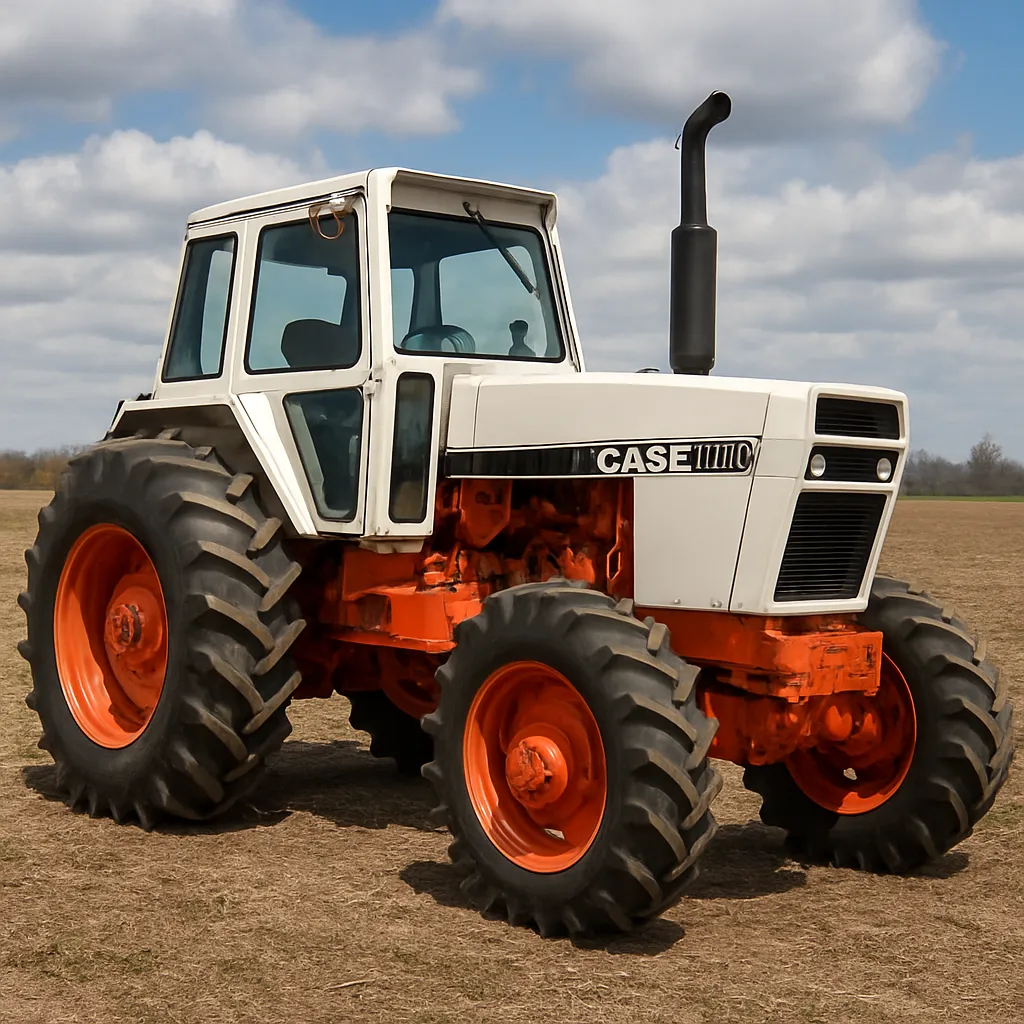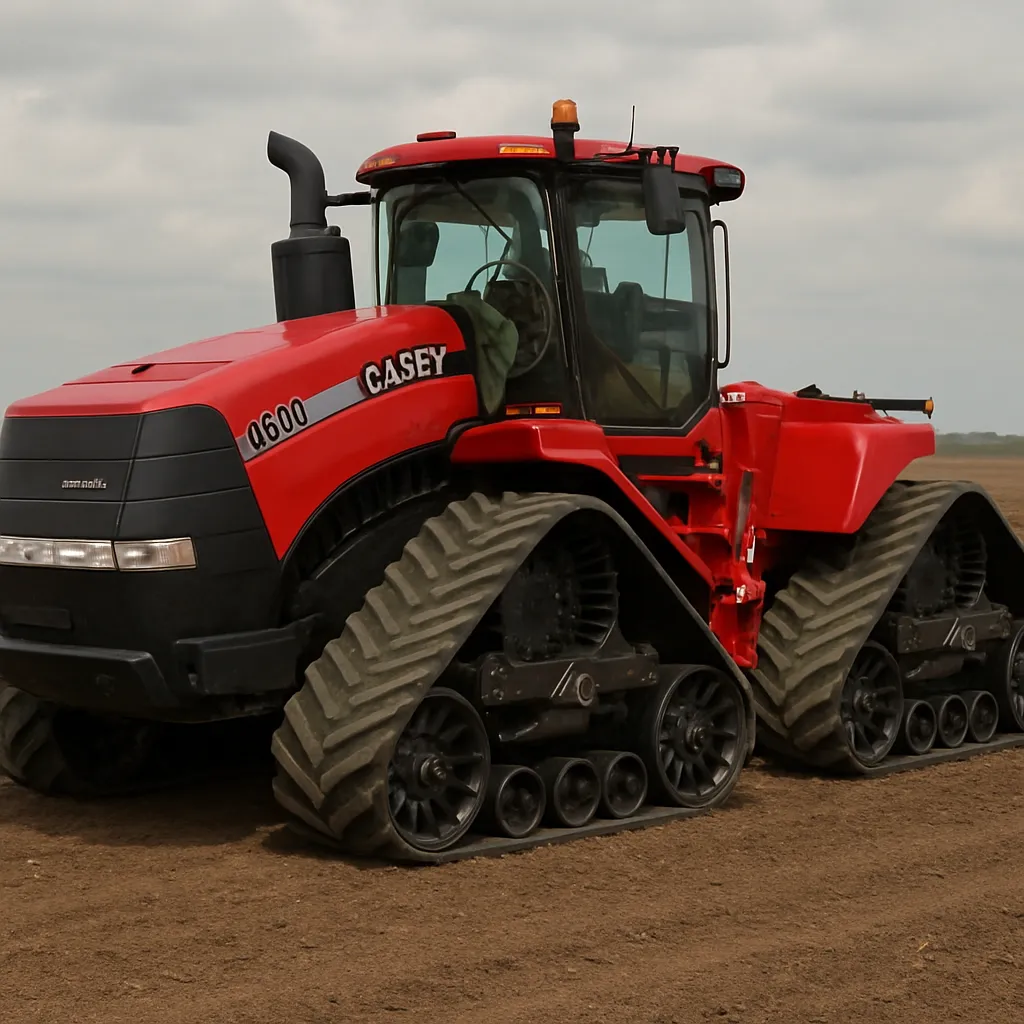
The Case IH Quadtrac 450 is a high-power, four-track agricultural tractor designed for modern large-scale farming, contracting and demanding fieldwork. Combining substantial engine output with a unique independent four-track undercarriage, this machine aims to maximize traction, reduce soil compaction and boost operational productivity across a wide range of heavy tillage, seeding and transport tasks. In the following sections you will find a detailed description of its design philosophy, technical characteristics, typical applications, operator features, maintenance considerations and market context.
Overview and design philosophy
The Quadtrac concept from Case IH is built around the principle that increased ground contact and even weight distribution lead to better traction and lower soil compaction than conventional wheeled tractors. The Quadtrac 450, with its model number reflecting nominal engine output, sits within Case IH’s line-up as a powerful option for operations that require pulling heavy implements or covering large areas quickly.
The most visible and defining feature is the four individually suspended tracks arranged in a true quadrilateral layout. Each track unit can articulate independently, allowing the machine to maintain more of its footprint on uneven terrain and to achieve tighter turns without the scuffing and slippage associated with rigid track rigs. This configuration improves field performance and reduces wear on both the machine and the soil.
Technical characteristics and (typical) specifications
Manufacturers typically publish a set of core specifications; below are the general technical characteristics commonly associated with a machine like the Case IH Quadtrac 450. Exact numbers can vary by year, region and optional equipment packages, so consider these as representative figures rather than a factory specification sheet.
- Engine power: Nominally around 450 horsepower (approximately 336 kW) at rated RPM — sufficient for heavy primary tillage and large implements.
- Engine family/emissions: modern Quadtrac units usually use high-displacement diesel engines equipped to meet current emission standards (e.g., Tier 4 Final / Stage V in many markets) with exhaust aftertreatment systems.
- Transmission: robust multi-range automatic or continuously variable transmission options designed to deliver steady drawbar power and efficient road speeds.
- Top transport speed: often in the 30–40 km/h (approx. 18–25 mph) range depending on gearing and regional limits.
- Operating weight: typically between 18 and 25 metric tonnes, depending on configuration, ballast and attachments.
- Track widths and contact area: a variety of track widths and belt options allow customization for flotation or traction; wider belts deliver lower ground pressure.
- Hydraulics and hitch capacity: high-capacity hydraulic flow and heavy-duty three-point and drawbar hitch systems to handle large cultivators, air seeders and planters.
- On-board electronics: integrated precision farming systems, ISOBUS compatibility, and telematics/AFS Connect for remote monitoring.
Power and torque characteristics place the Quadtrac 450 in the category of machines intended to replace multiple smaller tractors or to operate large single-pass implements. The emphasis is on sustained drawbar performance rather than short bursts of peak output.
Where the Quadtrac 450 is used (primary applications)
The Quadtrac 450 is targeted at large-scale arable farms, custom contractors and operations that require consistent traction across varied ground conditions. Common applications include:
- Primary tillage: pulling large ploughs, disc harrows and cultivators where high draft forces are required for deep soil turnover.
- Seedbed preparation and seeding: operating large seed drills and air seeders that cover wide swaths in a single pass.
- Strip till and conservation tillage: using controlled traffic and wide implements while maintaining favorable soil structure due to reduced compaction.
- Heavy haulage and transport: moving heavy implements between fields or performing road transport tasks thanks to high torque at low speeds and sufficient transport velocity.
- Subsoiling and ripping: applying consistent draft to break hardpans and improve root-zone conditions.
- Specialist contracting work: tasks where contractors need both power and traction to work efficiently across many fields and varied soil types.
Because of its ground-contact design, the Quadtrac 450 performs particularly well on soft or wet soils where wheeled tractors would struggle with slippage or unacceptable rutting. Its ability to maintain traction on slopes and uneven terrain also makes it suitable for rolling landscapes where even weight distribution and margin of safety are important.
Operator environment, technology and precision farming
Modern Quadtrac models integrate a suite of operator-focused and precision-agriculture technologies designed to increase productivity and reduce operator fatigue. Highlights typically include:
- Cab comfort: a spacious, quiet cab with ergonomic seating, climate control, and low vibration levels to support long working days.
- Intuitive controls: multifunction joystick or armrest-mounted controls that allow the driver to manage traction settings, implement controls, and transmission functions without excessive movement.
- Autoguidance: factory-integrated GPS guidance systems and AFS (Advanced Farming Systems) displays for centimeter-level accuracy in field passes.
- Telematics: remote monitoring solutions (e.g., AFS Connect) for fleet management, live diagnostics, and performance tracking.
- ISOBUS and implement compatibility: plug-and-play connectivity with modern implements, allowing standardized control and data exchange.
These technologies not only improve accuracy of field operations (reducing overlaps and skips) but also make it possible to measure and optimize fuel use, working speed and timeliness — all critical factors in large-scale production systems.
Advantages of the four-track design
The Quadtrac 450’s distinguishing four-track undercarriage offers several tangible benefits over conventional wheel tractors and even two-track crawlers:
- Improved traction: More contact area translates to greater tractive effort and reduced wheel slip under heavy loads.
- Reduced soil compaction: Spreading the machine’s weight over multiple tracks lowers ground pressure per unit area, which helps preserve soil structure and long-term field productivity.
- Tighter turning with less soil disturbance: independently articulated tracks reduce lateral scrubbing in turns, minimizing damage to crop beds and field surfaces.
- Smoother ride and stability: the independent suspension of each track absorbs uneven terrain, improving ride quality and implement control.
- Versatility across conditions: tracks can keep machines working in wet windows that would immobilize wheeled tractors, improving timeliness of operations.
For many farm managers, these advantages help justify the Quadtrac’s higher acquisition cost by enabling more reliable operations during narrow weather windows and by protecting yield potential through reduced compaction.
Operational considerations and limitations
No machine is without trade-offs. Important considerations for Quadtrac 450 ownership and operation include:
- Initial cost: Quadtrac systems and high-horsepower tractors carry a premium purchase price versus comparable wheeled tractors.
- Transport and road travel: track width and machine length require attention for road transport regulations and may need wide-load permits in some regions.
- Maintenance of track systems: while tracks reduce tire-related downtime, they introduce undercarriage wear components (rollers, idlers, tracks) that require periodic inspection and maintenance.
- Field residue and mud buildup: tracks can accumulate material that needs cleaning, especially in sticky soils; careful selection of track tread and cleaning systems helps mitigate this.
- Fuel consumption profile: high-power operations consume significant fuel; efficiency gains from traction and reduced slip help offset consumption but fuel remains a major operational cost.
Mitigating these constraints requires proactive maintenance planning, correct track selection for soil type, and thoughtful logistics for transport and storage.
Maintenance, lifecycle and resale considerations
Proper maintenance is crucial to protect the investment in a Quadtrac 450. Typical maintenance items and lifecycle considerations include:
- Regular inspection and adjustment of track tension to prevent premature wear of belts and undercarriage components.
- Periodic replacement cycles for track belts, rollers and bearings based on hours of operation and the type of terrain.
- Engine and aftertreatment servicing following manufacturer-recommended intervals (oil changes, filter replacements and exhaust system checks).
- Software updates and diagnostics via authorized dealerships to maintain efficiency, emissions compliance and feature availability.
- Resale value: high-horsepower tracked tractors tend to retain value well in markets with large-scale arable farming, especially when well-maintained and equipped with precision-farming packages.
Users often find that the total cost of ownership becomes favorable when the machine’s increased productivity and reduced compaction translate into better crop yields and fewer passes over fields.
Performance, fuel efficiency and productivity — practical metrics
Performance metrics for a Quadtrac 450 depend heavily on the task, soil conditions and implement used. Some general performance observations include:
- Implement capacity: the tractor can tow very large implements in a single pass, increasing hectares covered per hour compared to smaller tractors that require multiple passes.
- Effective working width: in seeding and tillage, using wider implements reduces overall field time and can improve timeliness for planting windows.
- Fuel efficiency: although absolute fuel usage is significant due to the high power, the machine may be more fuel-efficient on a per-hectare basis because of fewer passes, better traction and reduced slip losses.
- Time savings: contractors and large farms report substantial time savings in suitable conditions, which can be the primary economic justification for machines in this class.
Real-world data from operators indicate that when used for the right applications, the Quadtrac 450 can notably increase throughput while maintaining or even improving per-hectare fuel and soil-impact metrics. However, individual results vary by management practices and local soil conditions.
Market context and comparisons
Within the market for high-horsepower tractors, the Case IH Quadtrac 450 competes with wheeled and tracked offerings from other manufacturers that aim to serve large-scale agriculture and contracting. Key points when comparing machines include:
- Wheel vs. track trade-offs: wheeled tractors often cost less initially and have simpler maintenance for tires, but may suffer more slippage and compaction. Full-track crawlers offer good traction but can produce greater soil shear and may be less maneuverable.
- Quadtrac’s niche: four independent tracks aim to combine the advantages of stability and traction with less soil disturbance and better turning characteristics.
- Brand ecosystem: Case IH’s AFS precision farming tools, dealership network and parts availability are part of the value proposition when assessing total support and uptime.
Regional preference also shapes market share: in areas where large contiguous fields and wet soil windows are common, tracked solutions like Quadtrac are more widely adopted.
Case studies and operator experiences
Farmers and contractors using Quadtrac 450-class machines often highlight several recurring themes in field reports:
- Superior traction under heavy draft conditions, enabling the use of larger implements and faster ground speeds.
- Reduced rut depth after wet-field operations, facilitating follow-up passes and reducing the need for remedial tillage.
- Lower operator fatigue due to improved cab environment and stability when pulling heavy loads over uneven terrain.
- Requirement for staff trained in track maintenance to keep downtime minimal.
Many enterprises pair their Quadtrac tractors with high-capacity planters, air carts and cultivators to maximize the productivity benefits. Contractors value the capability to complete work in tight weather windows, which is often more critical than absolute hourly cost.
Final considerations when evaluating a Quadtrac 450
Deciding whether a Quadtrac 450 is the right choice depends on several farm-specific factors:
- Scale of operations: the machine best suits large fields and enterprises where high-capacity implements will be fully utilized.
- Soil type and climate: if wet conditions or soft soils frequently limit work windows, the Quadtrac’s flotation and traction offer clear advantages.
- Work mix: heavy tillage and large seeding operations favor tracked solutions; if the operation is mostly light tillage and transport, a wheeled tractor may be more economical.
- Budget and total cost of ownership: include purchase price, expected maintenance cycles, fuel use and potential gains from fewer passes and better timeliness.
- Aftermarket support and precision farming integration: strong dealer support and up-to-date guidance systems enhance returns on investment.
Overall, the Case IH Quadtrac 450 is engineered to deliver high productivity and dependable performance for demanding farm and contracting environments. Its combination of robust power, advanced track technology and integrated precision systems positions it as a compelling solution for operations that prioritize traction, soil preservation and the ability to work efficiently in challenging conditions.