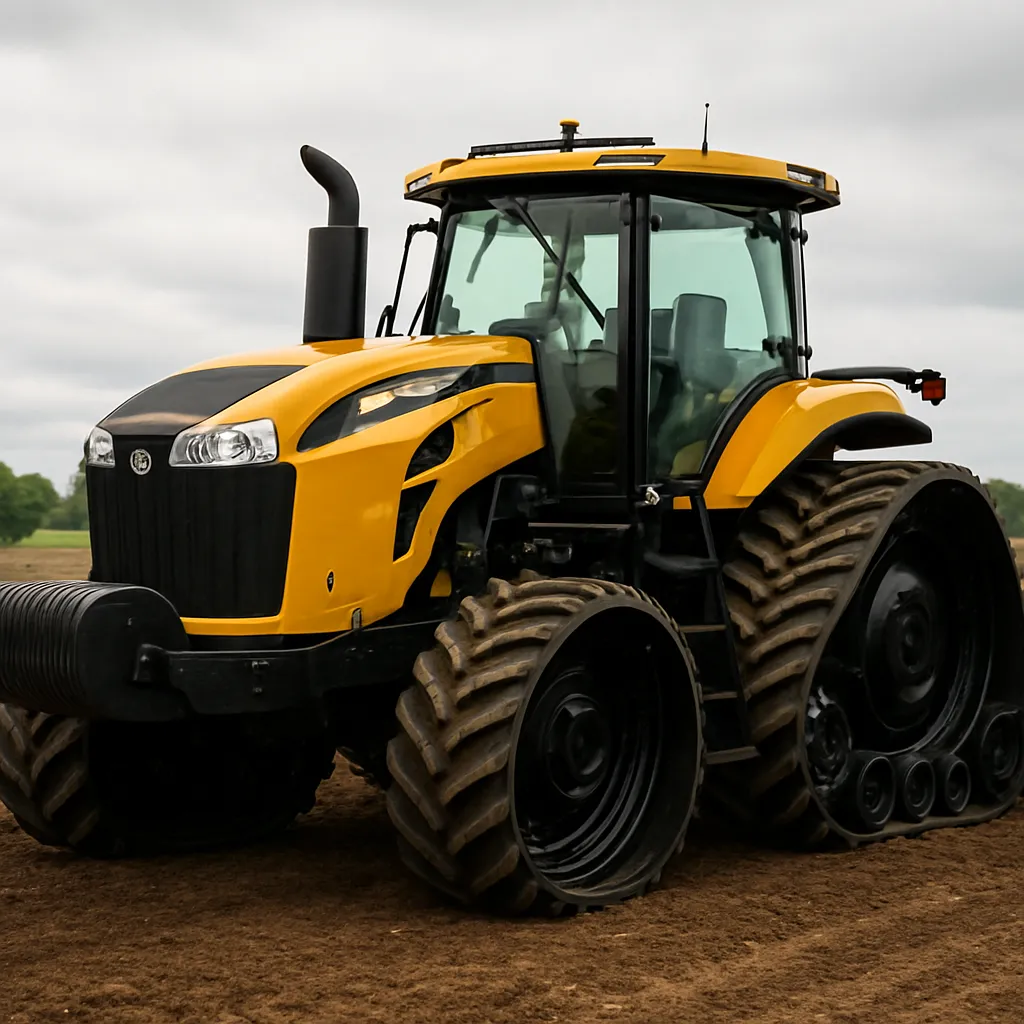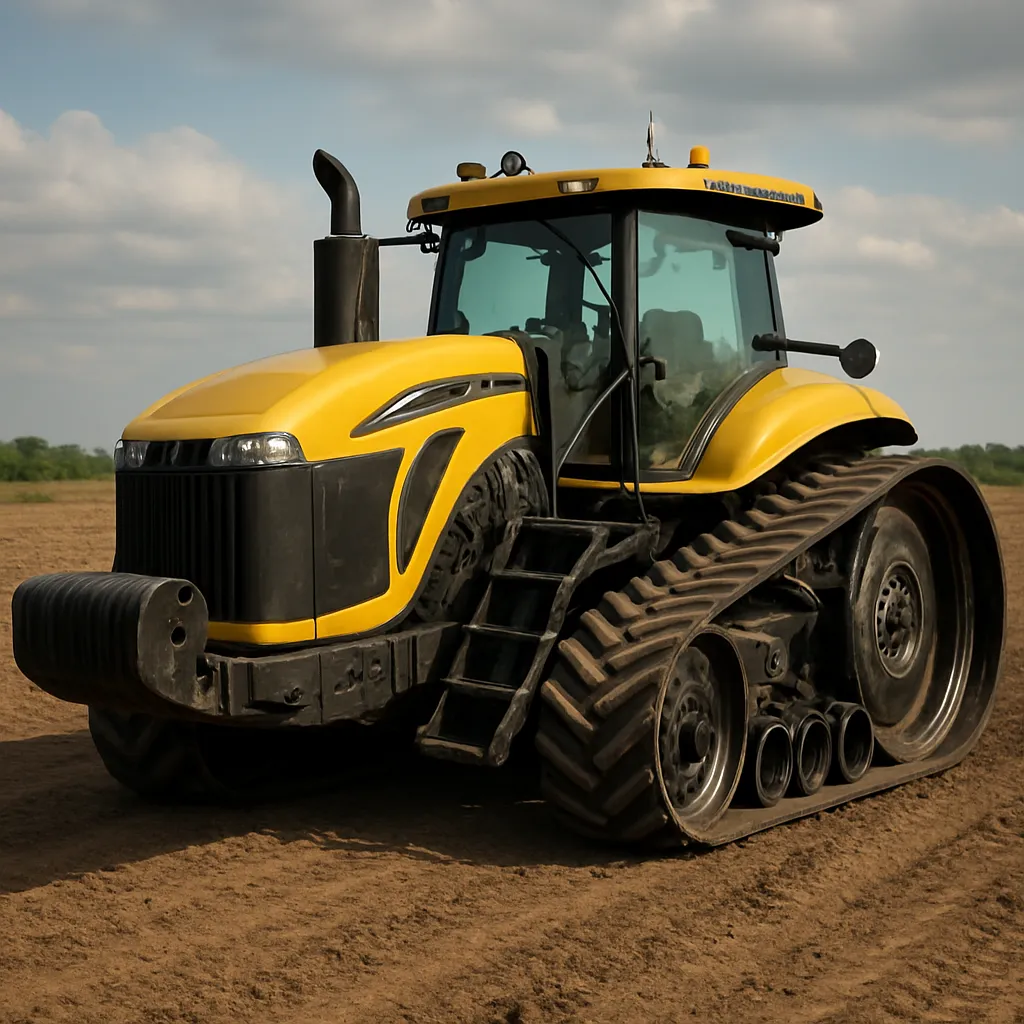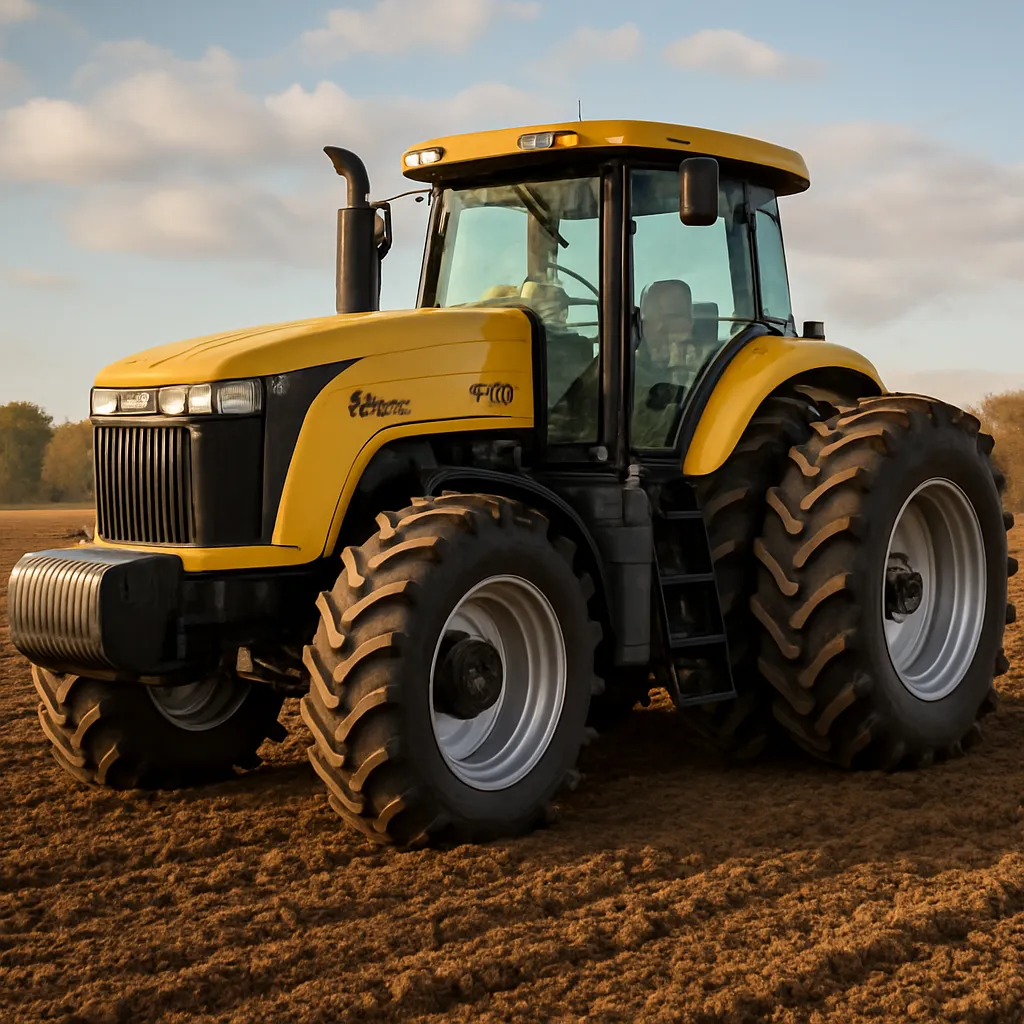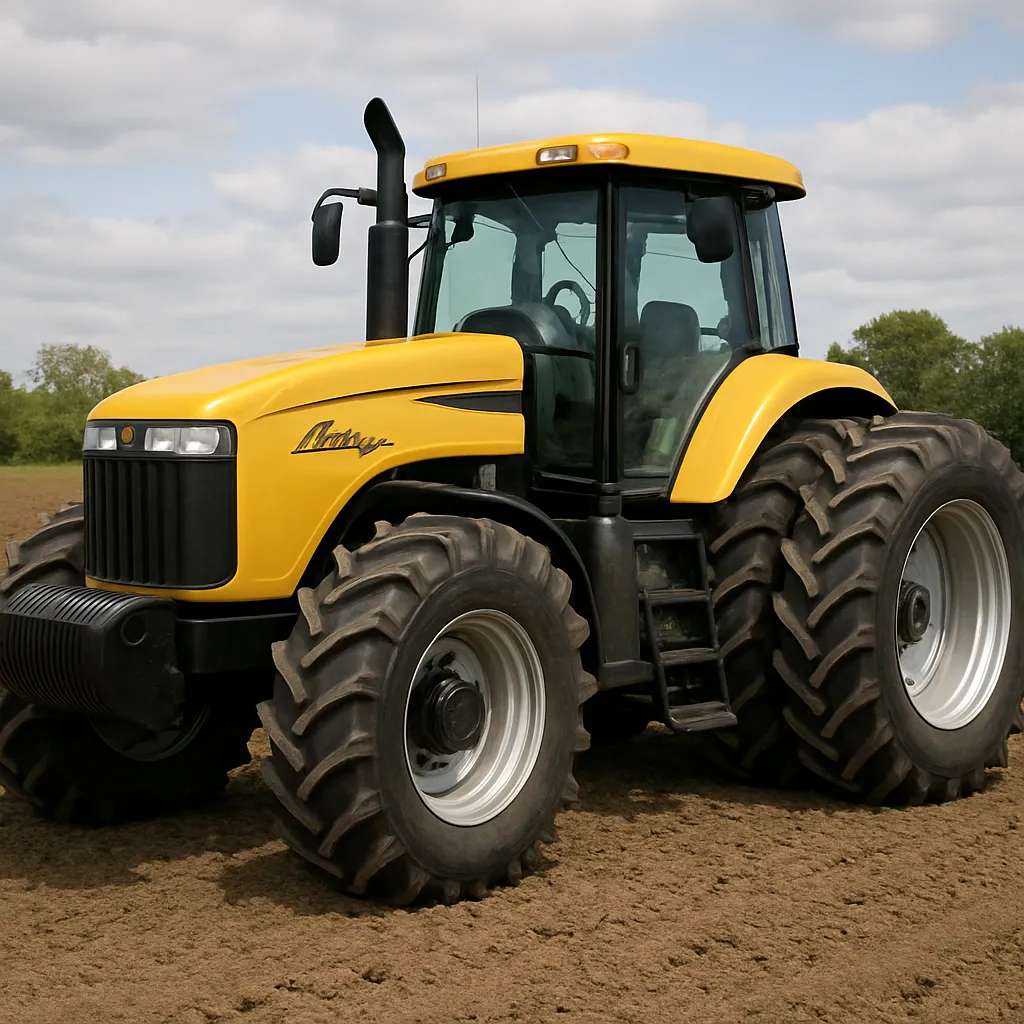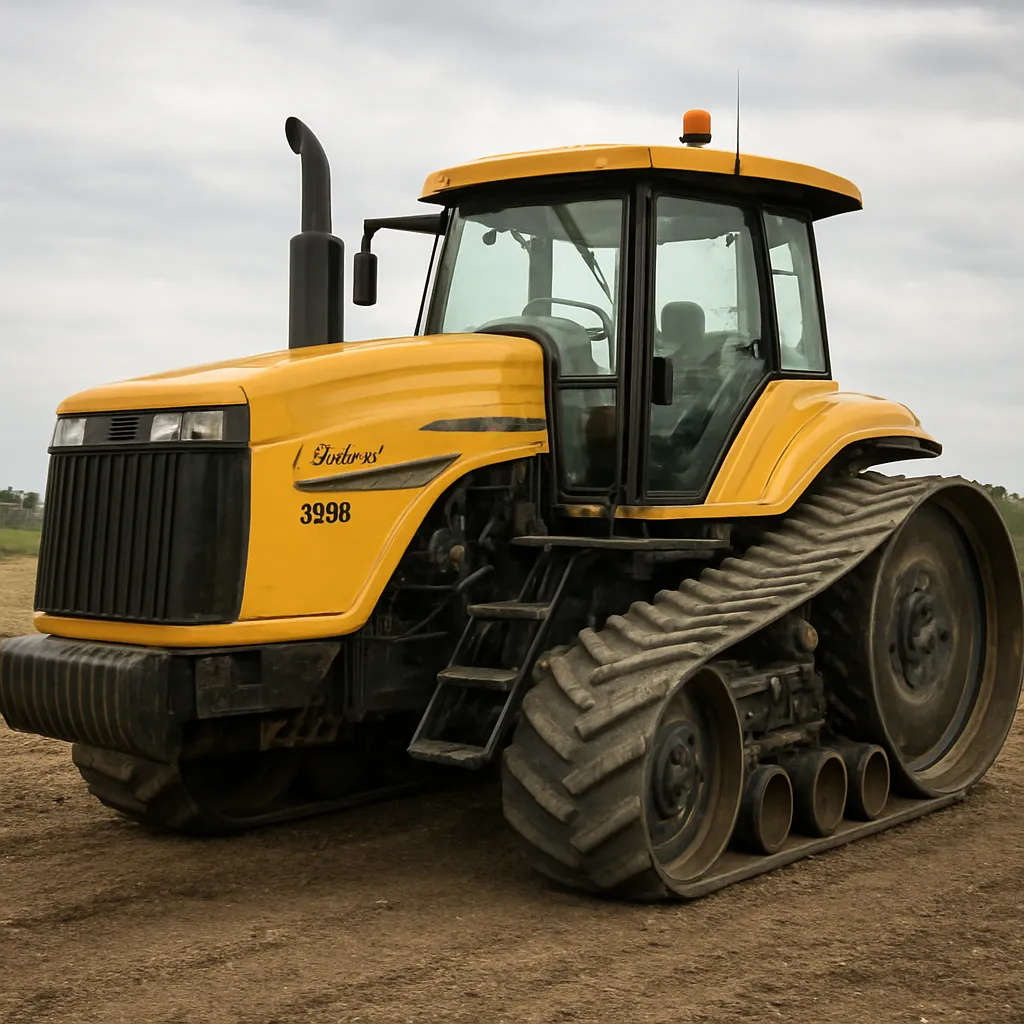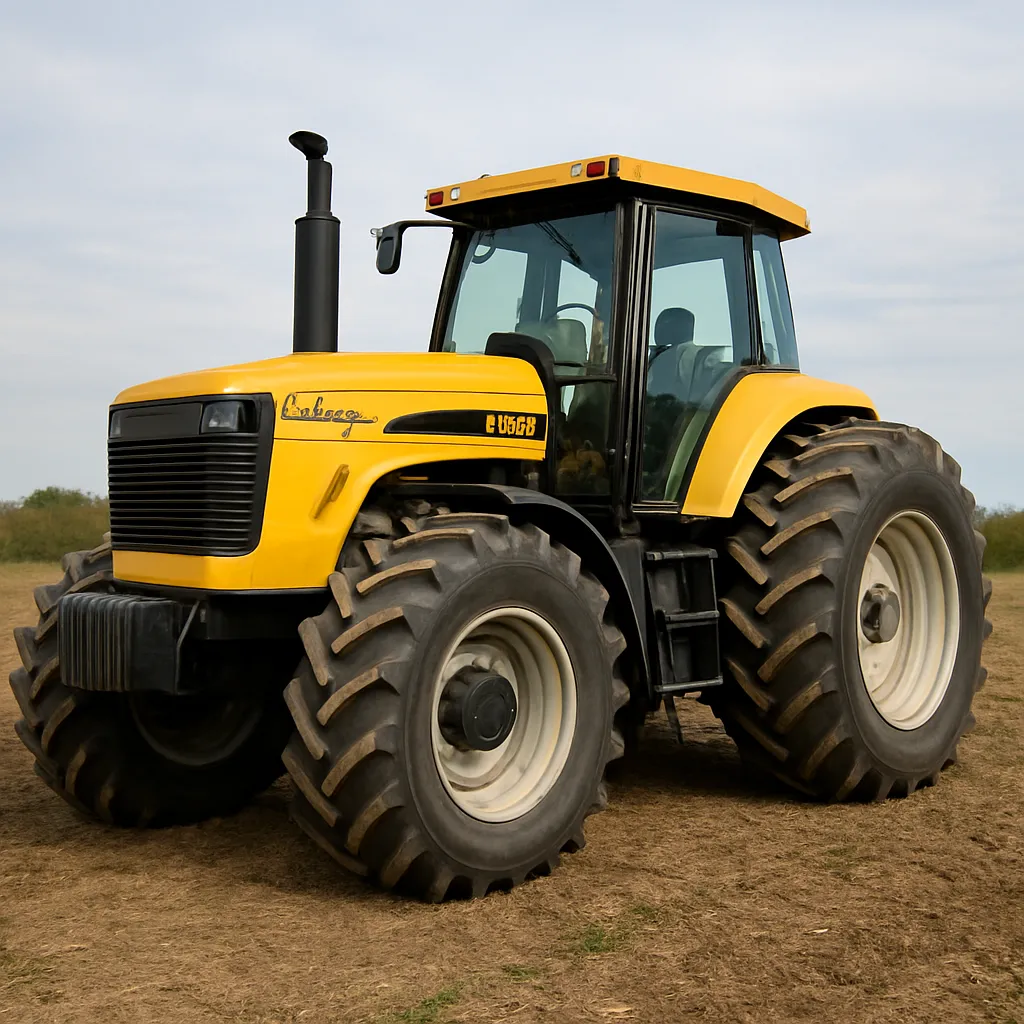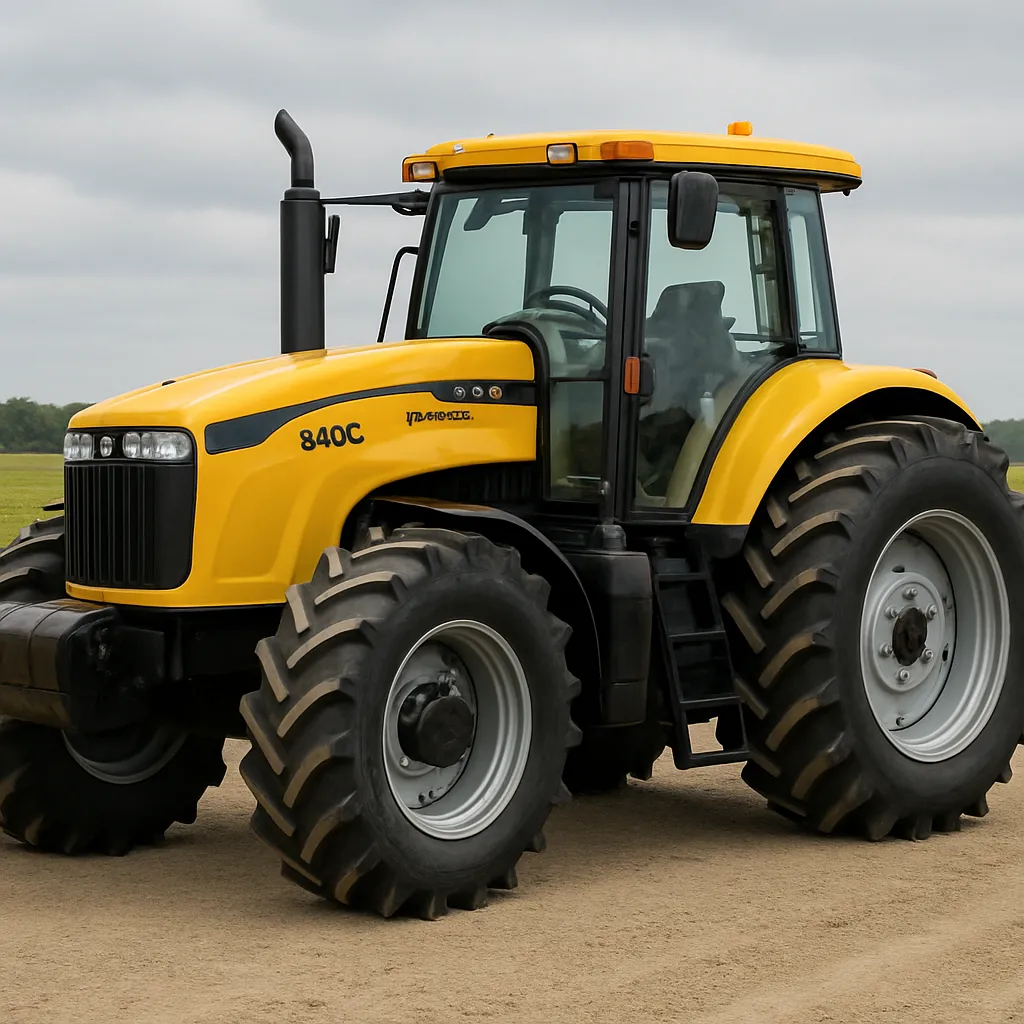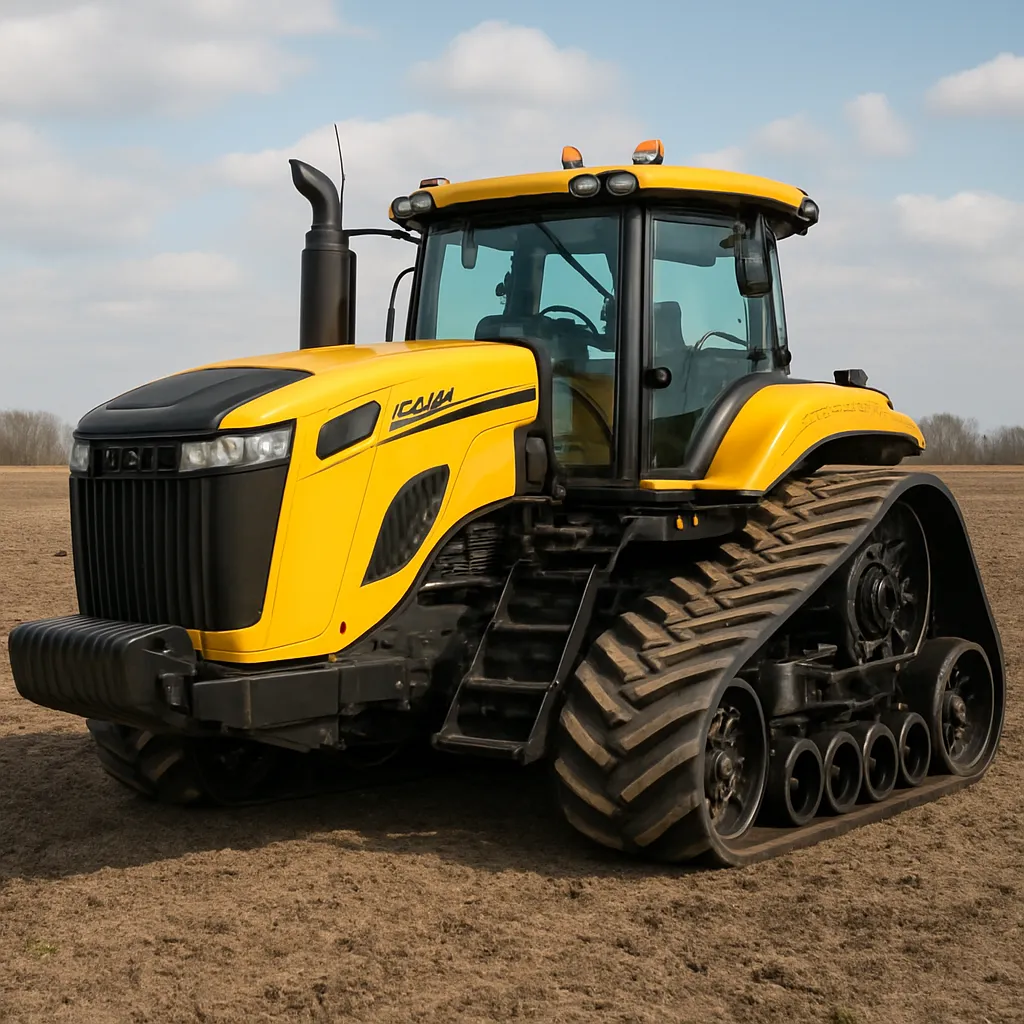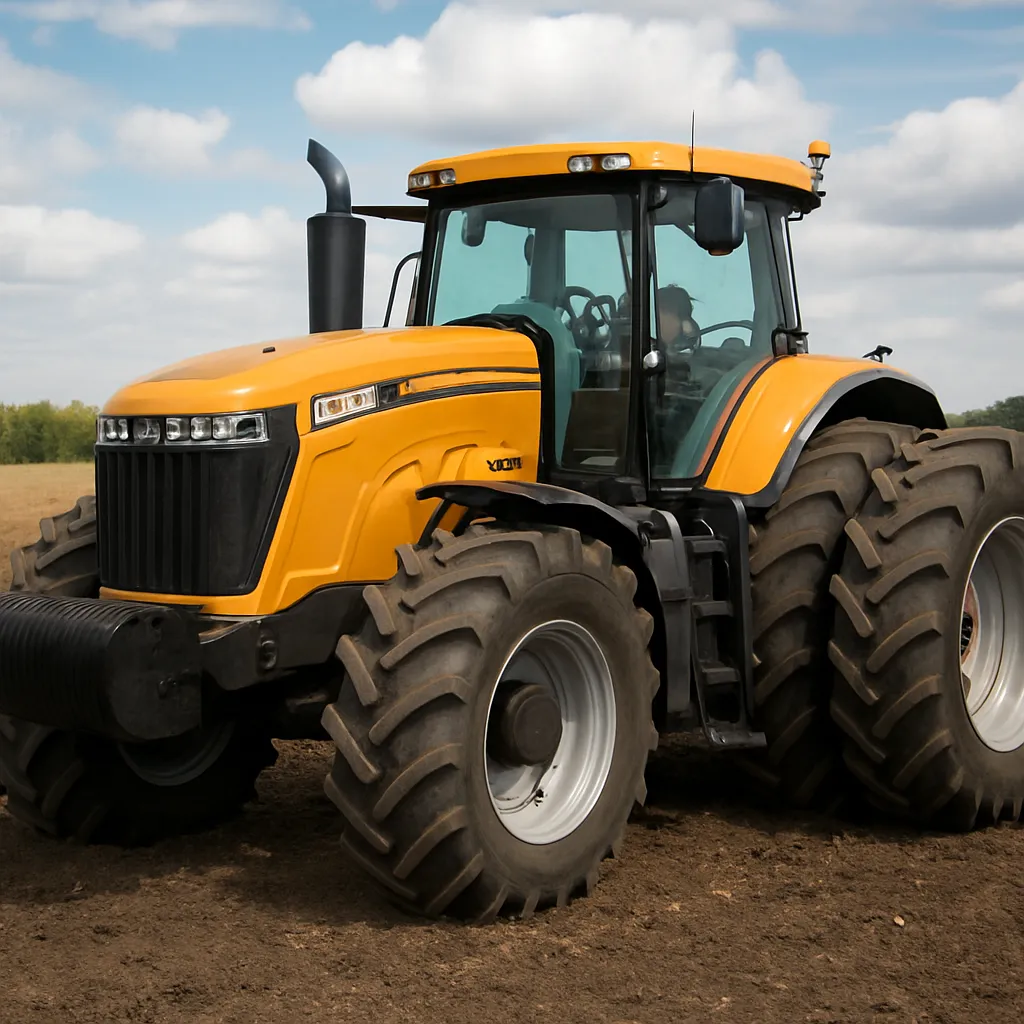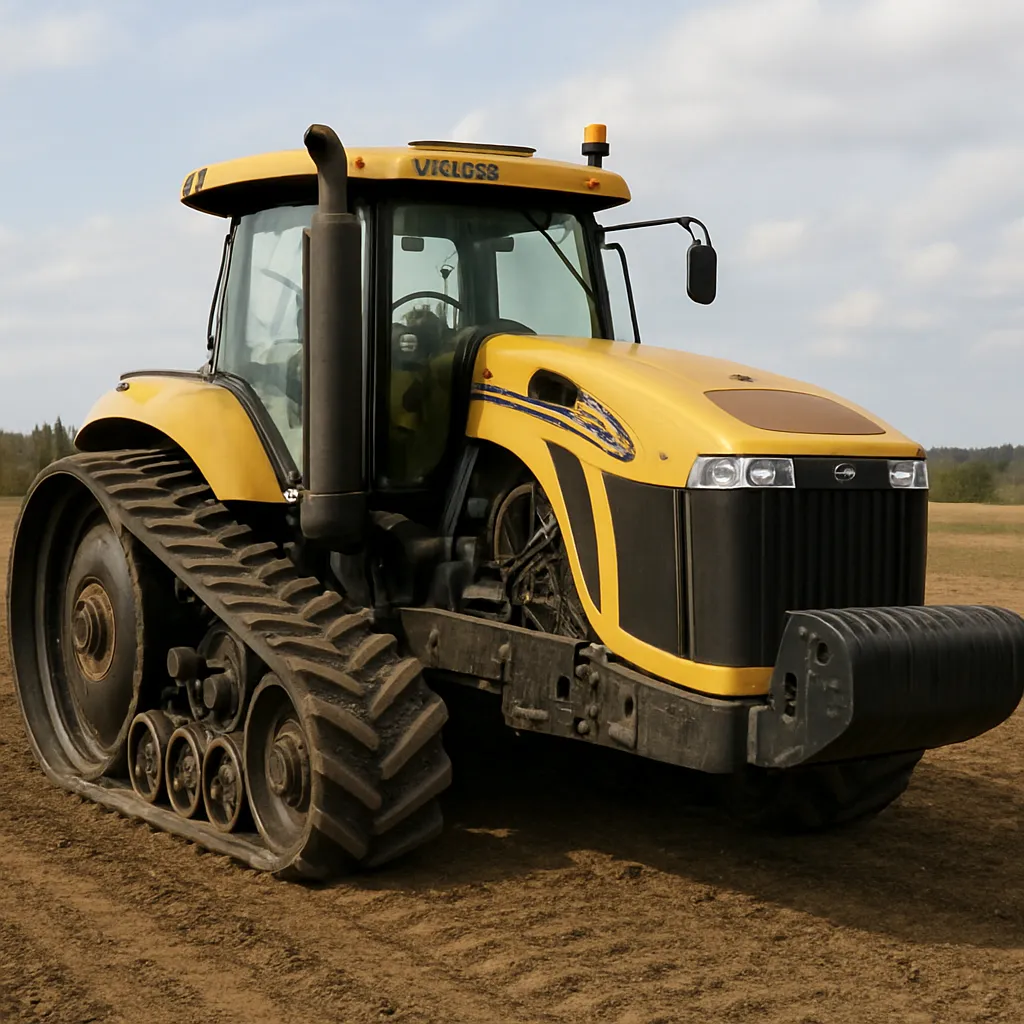
The Challenger MT845B is a heavy-duty agricultural machine designed to meet the demands of large-scale farming, specialized tillage and high-traction field work. Built as part of the Challenger series of tracked tractors, the MT845B combines robust mechanical design with features intended to improve field efficiency, reduce soil compaction and deliver power where it is needed most. In the following sections we will explore its technical characteristics, typical applications, operational advantages, maintenance considerations and practical advice for users considering or operating this model.
Design and technical characteristics
The Challenger MT845B is a representative of the family of articulated tracked tractors that prioritize continuous ground contact and improved weight distribution. Rather than conventional wheels, the MT845B uses rubber tracks to achieve high levels of traction and reduced ground pressure, making it suitable for heavy pulls and poor soil conditions.
Powertrain and performance
- The tractor is typically equipped with a robust diesel engine designed to deliver sustained power for long field operations. Depending on configuration and tuning, models in this class commonly offer a broad range of rated power suitable for large implements.
- Power transmission generally includes a multi-range gearbox or hydro-mechanical transmission coupled to a final drive designed for high torque at low speeds, optimized for pulling large tillage tools and seeders.
- Cooling systems and auxiliary components are sized for heavy-duty operation, supporting continuous work during long field days in summer conditions.
Chassis, tracks and undercarriage
- The undercarriage uses a system of rubber tracks and bogie wheels designed to spread the tractor’s mass over a large contact area. This reduces soil compaction and improves flotation on soft soils.
- Suspension and articulation points are reinforced to handle the stresses of heavy draft work and transport on uneven terrain.
- Track width and length options allow optimization for different soil types and crop rotations; wider tracks further reduce ground pressure whereas narrower configurations improve maneuverability in tighter field situations.
Hydraulics, three-point linkage and PTO
- Hydraulic systems are sized to supply multiple remote circuits and strong lift capacity for heavy implements. This supports large plows, cultivators and mounted seeders.
- The rear three-point linkage offers high lift capacity and compatibility with a wide range of agricultural tools; hitching points are reinforced for repeated heavy use.
- Power take-off (PTO) options allow powering of driven implements; PTO speeds and torque output are matched to the engine and transmission characteristics for efficient implement operation.
Typical applications and field performance
Farmers and contractors choose the MT845B for tasks that require sustained pulling power, consistent traction and minimized soil damage. Its design is oriented toward heavy field implements and large-area operations where productivity gains outweigh the higher initial investment.
Tillage and primary cultivation
- Primary tillage with heavy plows, chisels and subsoilers: the tracked configuration lets the tractor pull deep implements without excessive wheel slip, making it a preferred option for deep cultivation tasks.
- Large cultivator and harrow passes: the MT845B’s torque and hydraulic capacity allow operators to handle wide implements that reduce the number of passes needed to prepare seedbeds.
Seeding, fertilizing and transport
- Large planters and seed drills can be towed or carried, enabling high-acreage seeding rates when combined with farm logistics that support rapid refilling and precision guidance systems.
- When fitted with appropriate drawbar or trailer connections, the tractor is used for on-farm transport of heavy loads, especially in limited-slip or low-traction conditions where tracked vehicles out-perform wheeled tractors.
Specialized uses and contractors
- Land reclamation and drainage preparation: heavy duty dragging and ripping are typical contractor jobs where tracked tractors excel.
- Forestry edge clearing and site preparation: the track system reduces the tendency to get bogged down and spreads weight to protect the soil surface.
- Snow clearing and road maintenance in agricultural or rural facilities can also be supported when fitted with front-mounted implements or plows.
Advantages and operational benefits
The MT845B’s combination of design elements gives tangible benefits that directly impact field results and long-term soil health. Among these are increased traction, lower soil compaction and enhanced implement control. Below are several of the most notable advantages:
- Traction: Continuous tracks provide greater grip in soft or wet fields, reducing wheel slip and enabling consistent forward motion even under heavy draft.
- Reduced compaction: By distributing weight over a larger area, the tracked undercarriage lowers ground pressure compared to equivalent wheeled tractors, helping preserve soil structure and crop root development.
- Stability: Tracks improve lateral stability on slopes and uneven terrain, which is beneficial for precision operations and when pulling very large implements.
- Efficiency: In many conditions, reduced slip translates into lower fuel consumption per hectare, because less engine energy is wasted spinning wheels and more is used for forward motion and implement work.
- Durability: Heavy-duty frames and reinforced components are designed for the stresses of contract and large-farm operations, extending service intervals when properly maintained.
Maintenance, economics and lifecycle considerations
Owning and operating a large tracked tractor like the MT845B requires attention to maintenance routines and total cost of ownership. While the performance benefits can be considerable, operators must plan for specific maintenance tasks and lifecycle costs associated with tracked systems.
Routine maintenance tasks
- Regular inspection of tracks and undercarriage components for wear, proper tension and damage.
- Frequent checks on hydraulic lines and fittings, especially after heavy use or when attachments are changed.
- Engine servicing at manufacturer-recommended intervals: oil and filter changes, cooling system checks and fuel system maintenance.
- Monitoring electronics and sensors that manage engine functions and implement hydraulics, ensuring that calibration for precision farming tools remains accurate.
Replacement parts and cost drivers
- Track replacement is one of the larger maintenance costs over the life of a tracked tractor; track life depends heavily on field conditions, surface travel, and operator habits.
- Undercarriage components—bogie wheels, idlers and rollers—are subject to wear and require periodic replacement or refurbishment.
- Major overhauls to the powertrain or transmission are infrequent but significant in cost; regular preventive maintenance helps delay these expenses.
Economic evaluation
- The capital cost of a tracked tractor is typically higher than that of equivalent horsepower wheeled tractors. However, when evaluating cost per hectare on very large farms or for contractors who operate under challenging soil conditions, the operational efficiency can offset the initial price premium.
- Fuel usage depends on workload and field conditions. In many real-world applications, improved traction and reduced slip deliver better fuel economy per hectare, even if hourly consumption is similar or slightly higher than wheeled alternatives.
- Resale value for well-maintained tracked tractors is influenced by total hours, condition of tracks and undercarriage, and regional demand for large-track machines.
Practical operation tips and safety
To get the most from an MT845B-style tracked tractor, operators should follow best practices in both driving technique and implement matching. Safe and efficient operation reduces wear and improves productivity.
Field operation best practices
- Match implement width and working depth to the tractor’s nominal power and traction capacity; overloading increases slip and accelerates wear.
- Use proper track tension settings for the conditions; overly tight tracks increase wear while overly loose ones can derail.
- Limit excessive road travel on abrasive surfaces to extend track life; where road travel is necessary, consider transport wheels or run-flat options if available.
- Plan field passes to minimize turning and unnecessary maneuvering; tracked tractors handle turns differently than wheeled machines and excessive pivoting can stress the undercarriage.
Safety and operator comfort
- Ensure the cab and controls are adjusted for operator ergonomics; many tracked tractors include climate control and suspension seats to reduce fatigue.
- Follow safe hitching procedures and use rated hitch pins and connections for heavy implements.
- Train operators on emergency shutdown procedures and safe maintenance practices, especially when changing tracks or working under the machine.
Comparisons, market positioning and evolution
The MT845B belongs to a category of large, high-traction tracked tractors that compete with both wheeled tractors and other tracked brands. Compared with wheeled machines of equivalent rated power, tracked tractors like the MT845B offer better performance on wet soils and in heavy draft conditions, while wheeled tractors may retain advantages in transport speed, lower purchase cost and some aspects of maintenance simplicity.
Where tracked tractors have an edge
- Wet or soft soils where reduced compaction and flotation are priorities.
- Large-scale tillage that benefits from high drawbar pull and consistent traction.
- Steep or uneven terrain where track stability reduces rollover risks and improves implement control.
Market trends and lifecycle
- The agricultural machinery market continues to evolve with an emphasis on precision agriculture, telematics and operator assistance systems. Tracked tractor platforms have been adapted to support these technologies with integrated GPS, auto-steer and data logging systems.
- Environmental and soil health considerations give tracked machines continued relevance, as reduced compaction is a key element of sustainable land management strategies on many large farms.
Real-world performance and user feedback
Users of tractors in the MT800/MT845B class commonly report satisfaction with pulling power, stability and the machine’s ability to handle large implements. However, feedback often highlights the importance of disciplined maintenance to manage undercarriage wear and the higher initial cost compared with wheeled tractors.
Operational metrics and expectations
- Work rates depend on implement width, soil type and operator practice. In ideal conditions, single-pass seeding or tillage with very wide implements can significantly reduce hours per hectare compared with multiple narrow passes.
- Fuel consumption is influenced by load and soil conditions; many operators monitor fuel per hectare rather than per hour to evaluate efficiency accurately.
- Service intervals and total hours before major overhaul vary; with good maintenance, tracked tractors can provide many thousands of hours of productive use.
Summary of key points
The Challenger MT845B-class tractor is engineered for heavy-duty agricultural tasks where traction, reduced compaction and high drawbar performance are required. Its tracked undercarriage and robust powertrain make it a valuable tool for large farms and contractors conducting deep tillage, wide seeding operations and fieldwork in challenging soil conditions. While maintenance of tracks and undercarriage is a notable lifecycle cost, the operational benefits in certain environments often justify the investment. For operators prioritizing durability, consistent field performance and support for large implements, an MT845B-style tracked tractor remains a compelling choice.