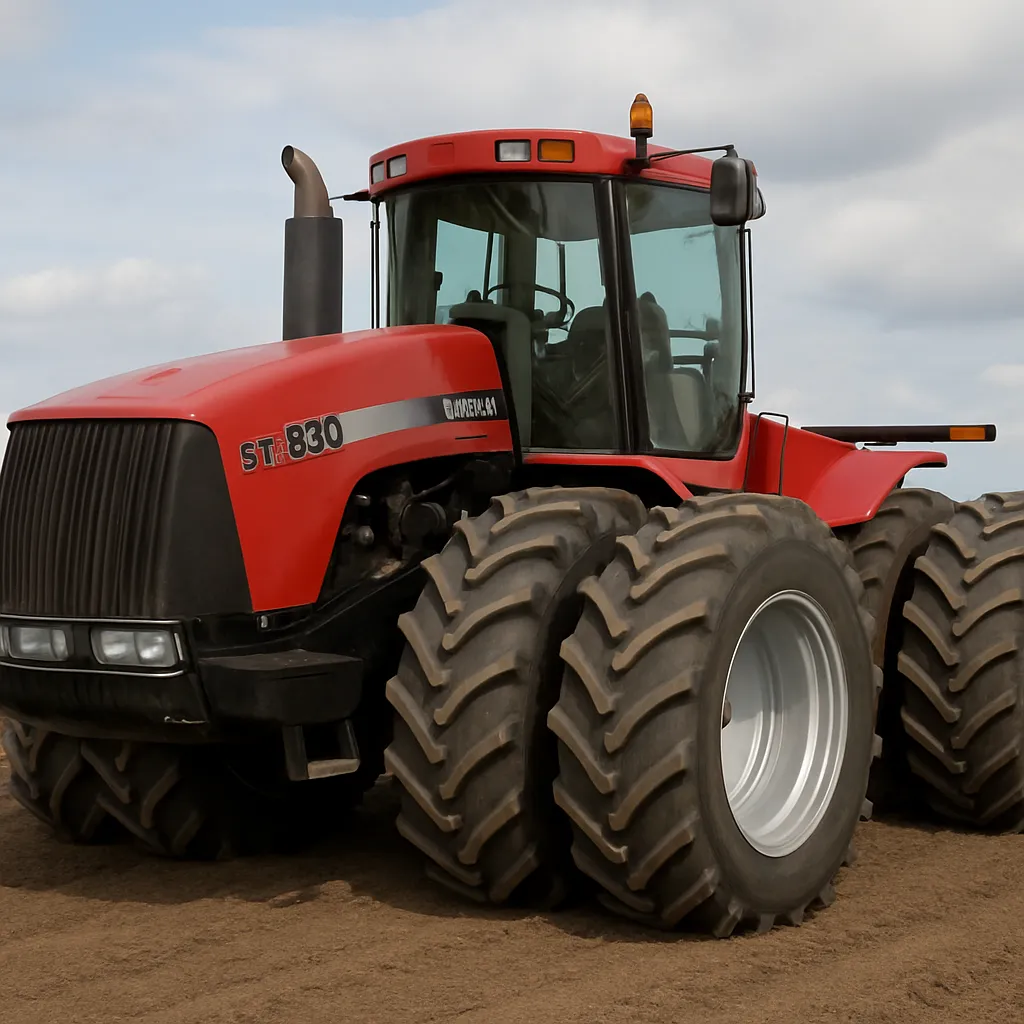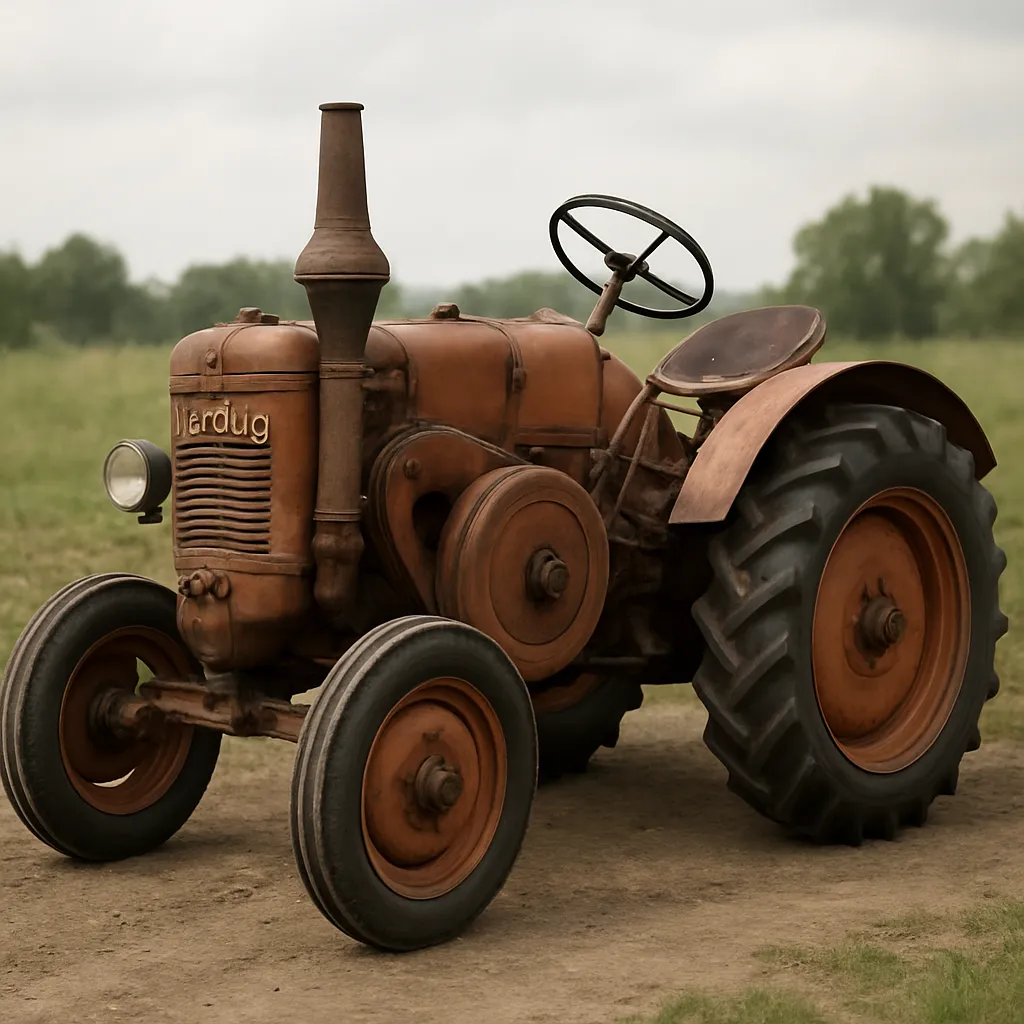
The Ursus 1934 tractor stands as a symbol of early mechanization in Polish agriculture and of the broader trend across Europe during the interwar years toward replacing animal power with mechanical traction. This article explores the historical background, technical characteristics, practical applications and legacy of tractors produced by Ursus in the mid-1930s. Where exact archival numbers are scarce, the discussion places the Ursus 1934 into context by comparing it with typical machines of the era, and highlights why collectors and historians still value these machines today.
Historical background and context
During the 1920s and 1930s, Poland and many European countries experienced a gradual yet important shift from traditional horse-drawn farming to mechanized agriculture. The company whose name became synonymous with Polish tractors — Ursus — played a crucial role in this process. By 1934, the company and its associated workshops were involved in designing and producing agricultural machinery adapted to local conditions, soil types and farm sizes.
The political and economic context of the period influenced both design choices and production capacity. Farms in Poland were often small and fragmented, so tractors had to be versatile, robust and relatively easy to maintain. The global economic climate of the 1930s (with lingering effects of the Great Depression) meant that cost-effectiveness and reliability were prioritized over innovation that would significantly raise purchase prices.
In broad terms, a machine referred to as an Ursus tractor from 1934 would typically reflect several priorities:
- ruggedness and durability suitable for varied soil;
- fuel and maintenance economy;
- compatibility with common agricultural implements of the time;
- simplicity of construction to facilitate repairs on small farms.
Design and technical characteristics
Exact factory documentation for a specific “Ursus 1934” model may be limited in public sources, but tractors from the early-to-mid 1930s share a number of technological features and typical performance ranges. Below is a summary of the most relevant technical traits one would expect from an Ursus tractor of that period.
Engine and powertrain
Tractors of the mid-1930s often used simple, low-revving internal combustion engines. Diesel adoption in tractors was growing but many machines still used gasoline or fuel mixtures. Typical engine characteristics include:
- Horsepower range: roughly 20–40 HP for most farm tractors of the era, depending on model and tuning. Such power allowed single tractors to pull ploughs with multiple furrows or to operate threshing and other stationary equipment.
- Few cylinders (commonly two to four) and an emphasis on torque rather than high rpm.
- Simple carburetion or early diesel injection systems, often with mechanical governors.
- Manual choke and ignition timing controls accessible to the operator.
Transmission and controls
Transmissions were mechanical and typically offered a small range of forward gears and one or two reverse gears. Gearboxes emphasized robustness and straightforward maintenance:
- gear ratios chosen to favor tractive effort at low speeds;
- clutch systems often of single-plate and dry-type construction;
- mechanical linkages for steering, throttle and gear selection.
Chassis, wheels and weight
The chassis was usually heavy-gauge steel with simple suspension, if any, and large steel or rubber-clad rear wheels designed to provide traction on soft ground. Typical features:
- weight in the range of approximately 1,200–2,500 kg depending on fittings and model;
- rear wheel drive as standard, sometimes with adjustable wheel widths to match crop rows;
- front axle designs ranged from rigid beam axles to pivoting single-axle arrangements for better maneuverability.
Implements and attachments
Because small and medium farms required versatility, the Ursus tractors of 1934 were intended to work with a range of implements. Common attachments included:
- mouldboard ploughs (one to three furrows);
- harrows and cultivators;
- seed drills and planters;
- portable threshing machines coupled by belt or PTO (if fitted);
- transport trailers and carts for produce transport.
Applications and typical uses
The primary role of an Ursus tractor in 1934 was to increase farm productivity by replacing or augmenting animal power in the most labor-intensive tasks. Key applications included:
Field cultivation
One of the most common uses was ploughing. Tractors enabled deeper and faster ploughing, allowed farmers to prepare larger areas for sowing and reduced the seasonal bottleneck of spring fieldwork.
Seeding and planting
Tractors provided the motive power to pull seed drills and planters, improving the uniformity and speed of sowing compared with small-scale horse-drawn methods.
Harvest logistics and threshing
While combine harvesters were not widespread in the 1930s, tractors were used to haul harvested crops and to drive stationary threshing machines via belt drives. This mechanization reduced manual labor requirements during peak harvest periods.
Road and transport work
Tractors also served as general-purpose power units, pulling trailers on short rural roads to move inputs and outputs between farms and local markets.
Production figures and statistical notes
Reliable, model-specific production statistics for a single year such as 1934 are not always easy to find in public-domain sources. The interwar industrial environment, variable national reporting and disruptions caused by geopolitical events mean that many original records are incomplete or dispersed among archives.
What is generally known or can be reasonably inferred:
- production volumes for tractors across Europe in the early 1930s were modest compared to post-war mass-production levels; many factories produced a few hundred to a few thousand units annually depending on demand and factory capacity;
- in Poland, tractor ownership per farm was low in the early 1930s, so early tractors were often bought by larger farms, state institutions, cooperatives or agricultural companies rather than by smallholders;
- by the late 1930s, increasing mechanization policies and state support in some countries accelerated tractor adoption.
If precise archival numbers are required for a particular Ursus model or batch from 1934, the best sources are specialized industrial histories, factory archives (if available), museum records and contemporary trade publications. Many museums and private collectors have undertaken cataloguing work that can shed light on production runs and surviving examples.
Survival, restoration and collecting
Tractors produced in the 1930s are now historical artifacts. Enthusiasts and preservation groups across Europe, including Poland, actively restore and exhibit interwar tractors. The Ursus machines attract attention for several reasons:
- they represent a formative period in national agricultural history and industrial development;
- their mechanical simplicity makes them attractive projects for restoration by hobbyists and small workshops;
- surviving examples are relatively rare compared with post-war models, which increases interest among collectors.
Common restoration challenges
Restorers of a 1930s Ursus must typically address:
- missing or corroded body panels and frames due to long-term exposure;
- engine wear and scarce original parts, which may require fabrication of components or adaptation of compatible substitutes;
- period-correct tyres and wheels, where steel rims or wooden components may need reproduction;
- documentation gaps that make it hard to determine original paint colors, decals and fittings.
Where to see restored examples
Historical tractors are displayed in:
- agricultural and transport museums;
- seasonal vintage machinery rallies and ploughing matches;
- private collections that sometimes open to the public.
Legacy and cultural significance
The Ursus tractors of the 1930s symbolize more than mechanical devices: they embody the social and economic shifts from manual and horse labour to mechanized farming. The legacy includes:
- contribution to modernization of rural economies and increased productivity;
- the emergence of a local industrial base capable of producing heavy agricultural equipment;
- an influence on later generations of tractors produced by the same company, where lessons in reliability and adaptability were passed on.
Collectors and historians often highlight the combination of practical engineering and cultural resonance. In some regions, the name Ursus became shorthand for the tractor itself, reflecting how integral these machines were to agricultural life.
Maintenance, operation and safety notes (historical practices and modern handling)
Operating a 1930s-era tractor safely today requires awareness of how technology and safety standards have changed. Historical operation practices emphasized mechanical understanding and constant operator involvement. For modern owners and demonstrators:
- perform detailed mechanical inspections before use — check brakes, steering linkages, fuel systems and cooling;
- be cautious with starting procedures; older engines may require hand-cranking or special starting methods;
- fit modern safety equipment when displaying or operating the tractor in public — for example, functioning brakes, fire extinguisher and secure guards around moving parts;
- use period-appropriate but safe fuels and lubricants, and avoid stagnant fuel tanks that may cause blockages or corrosion.
Comparative perspective and technology evolution
Comparing an Ursus tractor from 1934 with later post-war models highlights several evolutionary trends in agricultural machinery:
- power and efficiency increased significantly after WWII as diesel engines became dominant and multi-speed transmissions improved operational flexibility;
- hydraulics, power take-offs (PTO), and three-point hitch systems standardized the attachment and control of implements, raising productivity and reducing labor;
- operator comfort and ergonomics became more important, with cabs, suspension seats and controls laid out for extended use;
- mass production and standardized parts lowered unit costs and simplified maintenance, enabling widespread adoption among smallholders.
Nevertheless, the early designs, including those from 1934, laid the foundation for these later advances by demonstrating the feasibility and economic benefits of mechanized traction across varied farm sizes.
Final remarks on historical value and research directions
The Ursus tractors of the mid-1930s remain objects of fascination for historians, engineers and collectors. While precise production statistics for a specific Ursus 1934 model may require targeted archival research, the broader significance is clear: these machines helped to usher in a new era of agricultural productivity and industrial capability.
For those interested in deeper research, recommended avenues include visiting national and regional archives, consulting trade journals of the period, contacting agricultural museums and joining specialized collector associations. Such sources often yield the detailed serial-number data, production batch records and technical drawings that are invaluable for historians and restorers alike.