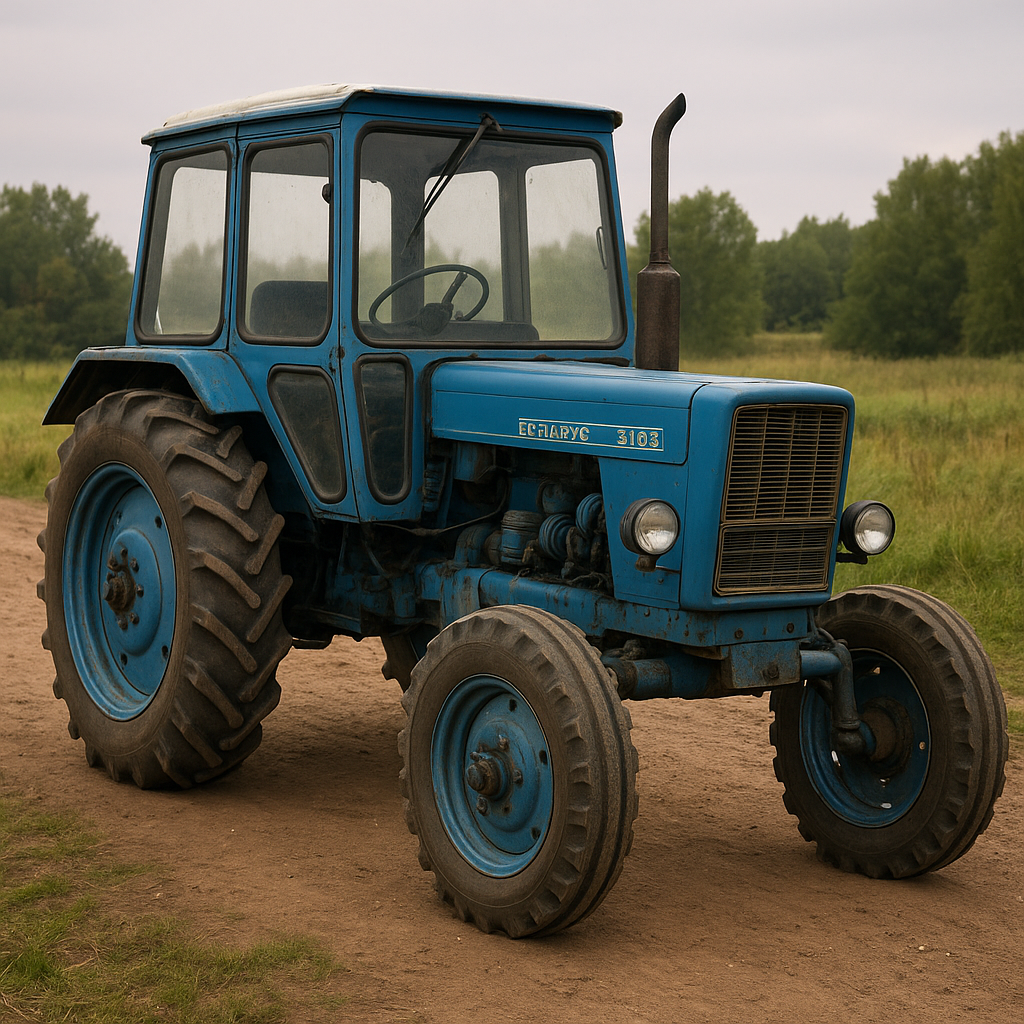
The Belarus 2103 tractor represents a class of compact, versatile agricultural machines produced by the Minsk Tractor Works (MTZ) and related manufacturers under the Belarus brand. Designed primarily for small to medium-sized farms, municipal services, and specialized tasks, this model is valued for its straightforward construction, ease of maintenance and strong after-market support. The following article explores the tractor’s history, technical features, common applications, operational characteristics, and practical buying and maintenance considerations. Throughout the text you will find highlighted terms that reflect the most important aspects of the machine.
Overview and historical context
The Belarus line of tractors has a long legacy originating in Belarus (then part of the Soviet Union), where the Minsk Tractor Works established a reputation for producing durable and simple agricultural machinery. The model often referenced as Belarus 2103 is positioned within the series of compact utility tractors that aimed to bridge the gap between garden tractors and larger field machines. While exact production timelines and variant names differ between markets, the philosophy behind the 2100-series models emphasizes simplicity, durability, and ease of repair.
Belarus tractors became widely exported to Eastern Europe, Asia, Africa, and Latin America due to competitive pricing and a strong spare parts network. The 2103—targeting lighter agricultural tasks and municipal services—gained adoption in regions where operators valued machines that could be serviced by local mechanics with basic tools and without specialized electronic diagnostic equipment.
Design and technical features
The Belarus 2103 exhibits design choices that prioritize robustness and straightforward functionality over advanced electronics and complex hydraulics. Typical design elements include a compact chassis, a reliable diesel engine, and a mechanical transmission. Below are core technical areas that characterize the tractor.
Engine and powertrain
The 2103 commonly uses a small displacement diesel engine optimized for torque at low engine speeds rather than high peak horsepower. Engines in this class are designed for long service intervals and tolerance to lower-grade fuels, which is important in remote or developing markets. Practical output for the model is generally in the compact utility range—suitable for PTO-driven implements and light-mounted tools.
The powertrain is typically mechanical with a manual gearbox, available in several gear ranges enabling both fieldwork and transport applications. A simple synchromesh or sliding-gear gearbox design improves robustness and keeps repair costs low. Many units are offered in rear-wheel drive (RWD) or four-wheel drive (4WD) configurations depending on intended use and regional preference.
Transmission and hydraulics
Hydraulic systems on the Belarus 2103 are purposefully uncomplicated. The three-point hitch (Category I or light Category II, depending on market) allows attachment of a wide range of implements. Hydraulics are generally single- or dual-circuit, providing sufficient flow for common implements such as mowers, loaders, and small ploughs. Hydraulic components are chosen for longevity and easy maintenance rather than maximum flow rates.
Chassis, brakes and steering
The chassis is compact and often reinforced in stress points to handle loader arms or rear-mounted implements. Steering can be mechanical with optional power assist in later variants; braking systems are hydraulic or mechanical drum brakes sized for the tractor’s weight class. Ground clearance and wheelbase are balanced to provide stability in field conditions while retaining maneuverability for orchards, small plots and road transport.
Applications and typical use cases
The Belarus 2103 is a multi-purpose compact tractor suitable for a variety of tasks. The model’s adaptability is one of its main strengths, making it a common sight across diverse sectors. Typical applications include:
- Agricultural fieldwork: cultivating small fields, harrowing, seeding with light planters, and towing small trailers.
- Horticulture and orchards: maneuverability and compact size permit use between tree rows and in vineyards.
- Municipal services: snow clearing, street sweeping, and small loader work for parks and public spaces.
- Livestock farms: feed mixing, manure handling (with appropriate attachments) and transport around farms.
- Construction and landscaping: light grading, transporting materials, and powering small hydraulic tools.
Because of its lower weight and smaller footprint compared to larger tractors, the 2103 performs well on firm and slightly uneven terrain where soil compaction and maneuverability are concerns. Coupled with front loaders, backhoes or mowers, the model can become a general-purpose workhorse for small enterprises.
Performance, fuel consumption and statistics
Official specifications for the Belarus 2103 can vary by model year and regional variant. However, some practical, generally observed performance characteristics and statistics for compact tractors in this class include:
- Engine displacement: often in the range of small diesel engines (approximate range rather than exact): 0.8 to 2.2 liters depending on the chosen variant and regional engine supplier.
- Rated power: compact-utility class ratings typically span approximately 15 to 35 horsepower (11–26 kW) in comparable models. The 2103 units commonly marketed under this name are usually near the lower to middle end of that range, making them efficient for light-duty tasks.
- PTO speed: standard PTO rotation speeds such as 540 rpm are common, enabling compatibility with a wide range of implements.
- Fuel consumption: typical fuel consumption for a compact tractor under load is often around 3 to 6 liters per hour, varying with task intensity, PTO load and operator techniques.
- Weight: unladen weight typically ranges from roughly 800 to 1500 kg depending on configuration and whether front loader or 4WD are fitted.
- Top road speed: transport speeds usually remain modest—often in the 15–30 km/h range—balancing safety and gearbox design.
These figures should be treated as indicative averages rather than precise factory numbers for every Belarus 2103 variant. Differences stem from production years, emissions requirements, and optional equipment. For exact technical data it is recommended to consult the model’s manufacturer documentation or an authorized dealer in the target market.
Operator comfort, ergonomics and safety
Even though the Belarus 2103 is a no-frills machine, later variants and aftermarket upgrades address operator comfort and safety. Common features and options include:
- Seating: adjustable mechanical seats with basic suspension or vinyl cushioning for durability.
- Cabin options: open-station models are common, with optional ROPS (roll-over protective structure). Enclosed cabins with heating and basic ventilation may be available in colder-climate markets.
- Controls: mechanical levers and pedals are arranged for intuitive operation. Some models add power steering or assist systems to reduce operator fatigue.
- Lighting and visibility: practical lighting packages for evening operation, and simplified instrument clusters focusing on essential gauges (oil pressure, engine temperature, fuel level).
- Safety features: ROPS, seat belts, and accessible shut-off switches; simplicity often aids safety because fewer electronic systems mean fewer modes of unexpected failure.
Maintenance, parts and lifecycle costs
The Belarus 2103’s greatest appeal for many owners is the low cost of ownership and straightforward maintenance. Typical maintenance traits include:
- Accessible engine bay and service points: filters, belts and fluids are easy to reach.
- Simple mechanical systems: clutch, gearbox and mechanical linkages that can be repaired with general workshop tools.
- Wide availability of spare parts in many markets: because Belarus tractors were sold globally and supported by long-standing distributors, replacement parts and used components are relatively easy to source.
- Low specialized tooling needs: minimal requirement for electronic diagnostic equipment or specialized service tools keeps service costs down.
Operating costs are influenced by fuel use, implement wear, and service intervals. Owners commonly report multi-year service lives when regular maintenance schedules are observed and when machines are not pushed beyond their designed tasks. The total cost of ownership can be particularly favorable for small-scale users who require reliable, economical performance rather than high-speed advanced features.
Variants and aftermarket modifications
The Belarus 2103 platform is often adapted to a wide range of local needs. Common factory or aftermarket variants and modifications include:
- 4WD conversions for improved traction and off-road capability.
- Loader and backhoe kits to expand capabilities into light construction.
- Orchard and vineyard configurations with narrower track widths and protective cabs.
- Custom PTO and hydraulic packages for specialized implements such as seeders, sprayers and wood chippers.
- Emissions and fuel-system upgrades in some markets to comply with local regulations.
Because of the tractor’s modular nature, local fabricators and tractor service shops frequently produce tailored attachments and improvements. This fosters long-term adaptability and value retention in diverse operating environments.
Market presence and global reach
Belarus tractors have been exported to many countries across Europe, Asia, Africa and the Americas. The 2103 and similar compact models found a niche among smallholders, municipal operators and agricultural contractors seeking an affordable, repairable machine. The strong dealer and parts network established by MTZ and independent distributors has been a key factor in sustaining sales and after-sales support.
In emerging markets, the value proposition of the 2103 often rests on lower acquisition cost relative to Western equivalents and more tolerant mechanical systems that accept lower-grade fuels and operate with minimal electronics. In developed markets, older Belarus tractors are commonly purchased on the used market by hobby farmers, contractors and restoration enthusiasts.
Comparison with competitors
When compared with compact tractors from manufacturers like John Deere, Kubota, New Holland or local brands, the Belarus 2103 stands out for:
- Lower initial purchase price in many regions.
- Simpler mechanical systems and easier local repairability.
- Robustness in harsh operating conditions and under fuel quality variability.
However, competing models may offer advantages such as improved operator comfort, advanced hydraulics, higher efficiency engines with modern emissions control, and dealer-backed finance options. Buyers should weigh total cost of ownership, local service infrastructure, and intended use to determine the best match.
Practical buying advice and what to inspect
Whether buying new or used, prospective owners should evaluate the following points to ensure a sound purchase:
- Service and maintenance history: look for regular oil changes, filter replacements, and documented repairs.
- Hydraulic system condition: oil clarity, absence of leaks, and proper lifting performance.
- Engine start and idle behavior: consistent idling, no excessive smoke, and predictable throttle response.
- Transmission and clutch operation: gear engagement smoothness and clutch wear signs.
- Tires and frame integrity: tire condition, absence of major weld repairs or structural damage.
- Availability of spare parts and local mechanic expertise for the model in your region.
For used units, a pre-purchase inspection by a qualified mechanic familiar with Belarus tractors is highly recommended. Test-running the tractor under load and checking for unusual noises or overheating will reveal most critical issues.
Environmental impact and modernization
Older tractors like the typical Belarus 2103 variants were designed before the introduction of stringent modern emissions regulations. As a result, they may emit higher levels of particulates and NOx compared with contemporary Tier 4 or Stage V engines. In many countries, retrofits or restricted usage may apply in certain environmental zones.
Modernization efforts often focus on:
- Upgrading fuel injection systems for cleaner combustion and improved fuel efficiency.
- Adding particulate filters or other emission control devices where feasible.
- Improving operator comfort to reduce fatigue and associated safety risks.
These upgrades can extend the operational life of the tractor while reducing its environmental footprint, though the cost-effectiveness of such retrofits should be evaluated against acquiring a newer, cleaner machine.
Final considerations
The Belarus 2103 is best understood as part of a continuum of robust, no-nonsense tractors designed to meet the needs of small-scale agriculture, municipal maintenance and light construction. Its main strengths lie in reliability, repairability, and an established parts network that keeps downtime to a minimum. For operators who prioritize straightforward mechanics, adaptability and low lifecycle costs, the 2103 remains an attractive choice.
When considering this model, weigh the balance between acquisition cost, fuel and maintenance expenses, emissions regulations in your area, and the availability of a skilled service network. With thoughtful selection and regular maintenance, a Belarus 2103 can provide years of dependable service across a wide range of tasks.